

What do you think?
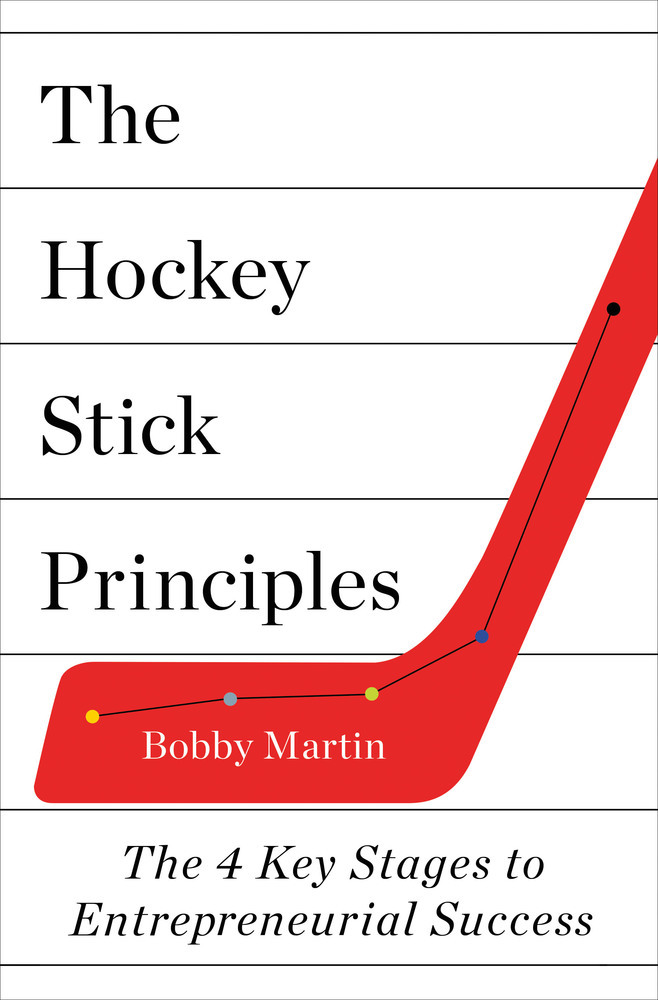
The Hockey Stick Principles: The 4 Key Stages to Entrepreneurial Success
Many business books fuel unrealistic notions about what a good idea looks like, how fast a founder should attract investment, and how quickly growth will take off. The problem with this mythology is that it can sometimes end with entrepreneurs abandoning their dreams too soon if they don't see immediate results. In The Hockey Stick Principles, author Bobby Martin shifts his focus away from all the hype about rapid growth and the pursuit of funding and instead takes a look at the real process behind getting a good idea off the ground.
Using a hockey stick as a metaphor and highlighting four key phases, Martin shows the healthy way a business should grow and uses entertaining stories and interviews with successful entrepreneurs like the founders of LendingTree, Under Armour, and iContact, woven throughout the book to not only share a wealth of advice, but to chronicle the ins and outs of these different phases:
-The Tinkering Period: The tip of the stick, or the time when you first develop and hone your idea.
-The Blade Years: The formative years when growth can be flat and navigating the unpredictable process of creating a company can be rocky.
-The Inflection Point: The crucial point in time right before your business takes off when it's important for entrepreneurs to prepare and make decisions to properly manage rapid growth.
-Surging Growth: Once your company proves that they have potential, you need to optimize that growth and scale up in a sensible way.
Innovation almost always involves a number of challenges, misdirections, and uncertainty and can take several years of struggle. But The Hockey Stick Principles gives aspiring entrepreneurs and those in the midst of the messy process a realistic, human, and inspiring understanding of what starting an innovative business is like, while teaching you what to look out for along the way as you shepherd your business through to success.
Using a hockey stick as a metaphor and highlighting four key phases, Martin shows the healthy way a business should grow and uses entertaining stories and interviews with successful entrepreneurs like the founders of LendingTree, Under Armour, and iContact, woven throughout the book to not only share a wealth of advice, but to chronicle the ins and outs of these different phases:
-The Tinkering Period: The tip of the stick, or the time when you first develop and hone your idea.
-The Blade Years: The formative years when growth can be flat and navigating the unpredictable process of creating a company can be rocky.
-The Inflection Point: The crucial point in time right before your business takes off when it's important for entrepreneurs to prepare and make decisions to properly manage rapid growth.
-Surging Growth: Once your company proves that they have potential, you need to optimize that growth and scale up in a sensible way.
Innovation almost always involves a number of challenges, misdirections, and uncertainty and can take several years of struggle. But The Hockey Stick Principles gives aspiring entrepreneurs and those in the midst of the messy process a realistic, human, and inspiring understanding of what starting an innovative business is like, while teaching you what to look out for along the way as you shepherd your business through to success.
- GenresBusiness
304 pages, Hardcover
First published April 26, 2016
About the author
Bobby Martin
22 books4 followersBOBBY MARTIN is the president and cofounder of Vertical IQ, and also cofounded First Research. He speaks frequently about entrepreneurship at universities around the U.S. and at corporate events.
Ratings & Reviews
Friends & Following
Create a free account to discover what your friends think of this book!
Community Reviews
Displaying 1 - 5 of 5 reviews

September 17, 2016
My interest was piqued by the title of this book, as I have often used a "Beware the Hockey Stick" warning in my teaching, based on experience with startup businesses and their "wishful thinking" business plans. (They always seems to in what Martin refers to as "the blade" stage, projecting great things just around the corner.) Anyway, I found the author's analysis and writing very convincing, and enjoyed his numerous examples.
November 3, 2019
This is a fantastic compilation of the various trials and tribulations that founders have at different stages of their business. A lovely vote of confidence that regardless of the idea and market, the route to execution for new ventures broadly follows a similar trajectory - makes me believe in the unsaid bond that entrepreneurs have.
A must read for those planning their own ventures, employed in startups or working alongside startup partners. The struggle is universal but also a winnable one!
A must read for those planning their own ventures, employed in startups or working alongside startup partners. The struggle is universal but also a winnable one!
October 4, 2016
**Disclaimer: I received this book via a Goodreads giveaways contest.
I thought this book was filled with practical advice that will be very useful to budding entrepreneurs. I particularly liked the chronological order of the book (with individual sections for each major startup phase), as it facilitates the use of the book as a reference. For instance, if my startup was in the "tinkering" phase, I would only need to focus on the first section of the book, and leave the rest of it unread until I needed it.
There were many references to the author's own startups (First Research and Vertical IQ), allowing for many practical situations that help clarify the points made in the book. Although not much about angel investing is there, the pros and cons of each funding situation are listed objectively, without trying to convince the reader that one option is best. This is in stark contrast to many books out there that try to convince people that achieving venture capital or going public is the only way to be successful.
As a summary, the book is organized into 4 main sections (1 per startup stage): (1) Tinkering, when the idea is being developed and refined; (2) Blade Years, when low growth is dominant and the business model is being perfected; (3) Growth-Inflection Point, when the business starts to take off and rapid growth occurs; (4) Surging Growth, when the idea has been sufficiently proven to work and the business must be scaled to keep going.
Overall, an excellent book. Strongly recommended for people with an entrepreneurial mindset, who are either considering starting their own company or are already (co-)founders of a startup.
I thought this book was filled with practical advice that will be very useful to budding entrepreneurs. I particularly liked the chronological order of the book (with individual sections for each major startup phase), as it facilitates the use of the book as a reference. For instance, if my startup was in the "tinkering" phase, I would only need to focus on the first section of the book, and leave the rest of it unread until I needed it.
There were many references to the author's own startups (First Research and Vertical IQ), allowing for many practical situations that help clarify the points made in the book. Although not much about angel investing is there, the pros and cons of each funding situation are listed objectively, without trying to convince the reader that one option is best. This is in stark contrast to many books out there that try to convince people that achieving venture capital or going public is the only way to be successful.
As a summary, the book is organized into 4 main sections (1 per startup stage): (1) Tinkering, when the idea is being developed and refined; (2) Blade Years, when low growth is dominant and the business model is being perfected; (3) Growth-Inflection Point, when the business starts to take off and rapid growth occurs; (4) Surging Growth, when the idea has been sufficiently proven to work and the business must be scaled to keep going.
Overall, an excellent book. Strongly recommended for people with an entrepreneurial mindset, who are either considering starting their own company or are already (co-)founders of a startup.

June 9, 2016
Who doesn't want hockey stick revenue growth for their business? The beauty of this book is that the author doesn't provide a silver-bullet solution to get you there. He's realistic while also encouraging about the rough road that often lies ahead for all entrepreneurs and ways to stay the course and navigate the terrain. And the growth charts and case studies throughout provide great proof of what really is possible. Awesome read for every entrepreneur.

Want to Read
May 19, 2016I have not had a chance to read this book at this time however I was so excited to receive it in the mail. I won this book through goodreads and can't wait to have the extra time to enjoy it. I will return in the future with a review. Again thank you for the opportunity of reviewing this book.
Displaying 1 - 5 of 5 reviews