Jump to ratings and reviews
Rate this book

Beverly

Rate this book
Nick Drnaso's comics mercilessly reveal the sterile sameness of the suburbs. Connected by a series of gossipy teens, the modern lost souls of Beverly struggle with sexual anxieties that are just barely repressed and social insecurities that undermine every word they speak.

A group of teenagers pick up trash on the side of the highway--flirting, preening, and ignoring a potentially violent loner in their midst. A college student brings her sort-of boyfriend to a disastrous house party with her high-school acquaintances. A young woman experiences a traumatic incident at the pizza shop where she works and the fallout reveals the racial tensions simmering below the surface. Again and again, the civilized façade of Drnaso's pitch-perfect surburban sprawl and pasty Midwestern protagonists cracks in the face of violence and quiet brutality.

Drnaso's bleak social satire in Beverly reveals a brilliant command of the social milieu of twenty-first-century existence, echoing the black comic work of Todd Solondz, Sam Lipsyte, and Daniel Clowes. Precisely and hauntingly recounted, each chapter of Beverly reveals something new--and yet familiar--about the world in which we live.

136 pages, Paperback

First published February 16, 2016

34 people are currently reading
3410 people want to read

About the author

Nick Drnaso

8 books551 followers
Nick Drnaso was born in 1989 in Palos Hills, Illinois. His debut graphic novel Beverly received the LA Times Book prize for Best Graphic Novel. He has contributed to several comics anthologies, self-published a handful of comics, been nominated for three Ignatz Awards, and co-edited the second and third issue of Linework, Columbia College's annual comic anthology. Drnaso lives in Chicago, where he works as a cartoonist and illustrator.

Ratings & Reviews

What do you think?
Rate this book

Friends & Following

Create a free account to discover what your friends think of this book!

Community Reviews

5 stars
1,096 (30%)
4 stars
1,549 (43%)
3 stars
751 (20%)
2 stars
156 (4%)
1 star
40 (1%)
Displaying 1 - 30 of 420 reviews
Profile Image for Sam Quixote.
4,804 reviews13.4k followers
September 28, 2018
When I first flicked through this one it looked like a short story collection. Then I started reading it and I realised – oooh, it’s all connected (albeit tenuously at times) by a single character. Beverly? Nope – a blonde teenage girl called Cara. There is a character called Beverly but I won’t give away any spoilsies here…

Still, it does read like a short story collection rather than a singular narrative despite the recurring characters. The two most memorable stories feature Cara and her disturbed little brother, Tyler. They first appear in The Lil’ King and you realise Tyler is a seriously messed up kid, particularly once you see his hallucinations. Nick Drnaso then abruptly and brilliantly shows Tyler as an adult in what might be foreshadowing and the preceding story was a dream or a memory and it’s even more shocking as you realise the violence he’s seeing might be his doing later in life. And then in the second story, King Me, we see middle-aged Tyler who’s no less troubled. Him walking the night streets in a balaclava is creepy enough but that final panel is shocking as, if he is the lunatic he appears to be, then that poor girl is lined up as his next victim.

What I like the most about Drnaso’s storytelling is how subtle it is. There’s no intrusive narrator, he never spoonfeeds the reader the story, and my impressions above could be interpreted completely differently by another reader. It’s astonishing that he’s as young as he is and crafting comics this sophisticated.

None of the stories were bad but some were less engaging. The Grassy Knoll is perhaps too understated, though Sal was an amusing kook, and Pudding, about two former high school friends who’ve grown apart, was meandering and a bit dull. Even then, there are aspects I appreciated, like the awkwardness and dynamic of the relationship that Drnaso captures so tangibly from the characters’ body language and dialogue.

The Saddest Story Ever told, about Cara and her mom watching a shitty sitcom pilot and some ads and then filling in a questionnaire was clever, and was indeed a dour portrait of Cara’s mom and the intrinsic sadness within her family (that might’ve contributed to Tyler’s mental problems), but overlong for what it was.

Virgin Mary was really good, showing small town politics when a teenage girl claims to have been assaulted by a Middle Eastern man – but is she telling the truth? Drnaso’s visual style is very gentle - lots of appealing bright colours, round figures, picturesque settings - so it’s especially jarring to see the sharp lines of the police artist’s sketch of Mary’s attacker.

On the art, Drnaso likes to have big pages full of detailed panels and lots of text which might look cumbersome but his writing is so strong that they perfectly complement one another. I love that his figures look like the kind you might see in safety guides on planes - it only adds another layer of shock to the subversiveness of his stories.

Fans of Drnaso coming to this after Sabrina won’t be disappointed by this earlier book and I think it’d also appeal to anyone after tales of compelling everyday drama. Beverly is buh-rill-yant – what an impressive new talent Nick Drnaso is!
Profile Image for Dave Schaafsma.
Author 6 books32.1k followers
October 23, 2022
Beverly is one of the Moments in Comics 2016, a first comics book--a collection of short stories-- by an already accomplished cartoonist. Beverly is a far southwestern neighborhood of Chicago, mostly white. I tend to think of it as a suburb of Chicago, but it is technically IN Chicago. I should also say that I talked to Drnaso at CAKE, and he said he did not grow up there, that he doesn't really know it all that well, he just liked that title! It is also the name of one female character in the story, but I think the main purpose of the work is in the tradition of Todd Solondz (Welcome to the Dollhouse, Happiness), Chris Ware (Building Stories, Jimmy Corrigan), David Byrne (Psycho Killer, Burning Down the House), American Beauty, Ice Storm, David Lynch's Blue Velvet, Penelope Spheeris's Suburbia. Suburban angst, nihilism, alienation, despair, a touch of black humor. What new things does it have to tell us about "suburbia"? I am not sure it does, or even has to, in a way; it's just part of that tradition, that bleak, Robert Munch scream, more of Conrad's "the horror, the horror". But it is a very very good and harsh contribution to this literature.

I won't summarize the various plots of the collected stories, you can read other reviews for that, but I will say that if you love yourself some social horror, you can have a huge heaping of it right here, with an artificially flavored cherry on top, set in what I can only call ironic, black-humor-based pink and powder blue pastels, orderly, straight line drawing and solid, assured cartooning. We have a story of a couple dragging their horrified kids to the place they got engaged, the boy having violent murderous fantasies in his silent rage. He's a future killer; we can see that. We have a party thrown by Pudding, a profoundly obese woman who invites a woman friend she once did some sexual experimentation with, and they fight; it is not a fun party, let me tell ya. We have racism, we have casual violence, and it is all a train wreck, you-can't-look-away storytelling. We have large and larger and larger (physically, as in plus size) people ballooning into monsters, their size proportional to their cluelessness and ennui and racism. There's a story of a faked kidnapping blamed on an Arab that is all too familiar.

All of it is a little disturbing, and maybe sometimes darkly humorous at times, all white pasty-faced people who never smile and hate each other and is all the more disturbing because it is set in a kind of neon and looks on the surface to be sort of beautiful art. It's a 21st-century Blue Velvet, the secrets nobody is talking about kept underneath the pink taffeta veneer. But is it all just cliches? This is white bread American Trump territory; I met some folks such as the one he depicts outside a Trump's failed rally in downtown Chicago. Is this the face of the future? Is this just a white disaffected nihilist's vision of the present party he thanks god he wasn't invited to but he had to endure growing up? I come down finally as seeing it as really insightful, scarily so. We are living in scary times.

I will say that though Chris Ware thinks Drnaso is the face of the future of cartooning, Drnaso misses the (few) moments of warmth that Ware manages to find in Building Stories (when he started to channel his Grandmother's advice to just tell simple stories of every day people). At the moment I think of Beverly as Drnaso's Jimmy Corrigan, more hopeless than Building Stories for sure. Patience by Daniel Clowes is less hopeless (how's that for an advertisement!) than Clowes's Daniel Wilson, too. What's the difference? Clowes and Ware had kids and they couldn't just be quite so nihilistic anymore?! Maybe!? Sorry for the psychoanalyzing, but I still give (Chicagoan!) Drnaso five stars for successfully disturbing me. As Sister Carrie once did, as Edith Wharton's Ethan Frome once did. Dark visions. Maybe there has always been a strain of elegantly articulated despair in literature. Goethe's The Sorrow of Young Werther. Melville's Bartelby preferring not to. There's a truth in Drnaso, like it or not. It's not a cry against capitalism, exactly, it's individualistic moral horror, horror of the soul.

It occurs to me that almost everyone in Beverly is reprehensible. Is this an artistic fault? It could be, but I don't think so. Compared to the author of Downers Grove (a not very good YA Chicago-area book I also once reviewed, and vilified), Drnaso creates a much more complex world with more real characters. True, most of them are horrible, but some are also victims and well, sometimes a little sympathetic. And the cartooning is just superb.

Here's an interview from February 2016 with Nick:

http://www.tcj.com/ive-fully-embraced...
Profile Image for Jan Philipzig.
Author 1 book310 followers
November 28, 2016
Trenchant, disturbing, darkly humorous swan song of what passes for “normal” these days—right on the nose, I’m afraid. Ouch. In the tradition of Chris Ware, Dan Clowes, and Adrian Tomine.
Profile Image for Liam O'Leary.
553 reviews145 followers
December 8, 2017
This was the best graphic novel I read in 2017.


ND: "...drawing without action or too much emotion — everyone in Beverly is very metered and quiet. I don’t think there’s a single motion line or sweat mark or exclamation in the entire book. It’s very bleak and frozen."

Interviewer: "And that’s on purpose?"

ND: "Yeah. It’s exactly what I’m trying to do."


Just how sad is Beverly?
Sadder than Lint (Acme Novelty #20) by Chris Ware—without the cynicism.

Sadder than Optic Nerve #8 by Adrian Tomine—without the boredom.

Sadder than Hey Wait... by Jason—without the apathy.

Almost as sad as Mother, Come Home by Paul Hornschemeier—without the wallowing.

I'd caution readers that Beverly is filled with what I'd call a male sadness, by which I mean most stories are told from a terse emotional POV of a male anti-hero and revolve around repressed aggression and sexuality. There are plenty of female characters, but they are at a greater emotional distance to the reader. If these kind of things bother you then I'd skip this.

As a debut this is very good. The events are fluid, perhaps because Nick Drnaso mentions they are closely related to events that happened in the early half of his twenties. The dialogue is a bit stilted, often on purpose but sometimes it seems like wasted space. But I think Nick Drnaso has great potential here even if he doesn't change his style much in his next works.

I was expecting this to be average because I didn't like the line or colouring style on the cover, but I'm glad my GoodReads friends' reviews changed my mind.
Profile Image for Rod Brown.
7,367 reviews282 followers
January 11, 2019
On the first page, Drnsa began to paint a world of white middle class suburban mundanity and quiet desperation. Having turned all the pages, I can verify that by the last one, the paint was indeed dry.
Profile Image for Doug.
2,557 reviews922 followers
August 23, 2018
2.5, rounded down.

I came to this after sampling Drnaso's Booker-nommed 'Sabrina', since I figured it would be just as quick to 'read', and to see if his debut book was significantly different and/or better (I didn't much care for 'Sabrina'). Still the same ugly drawings, still the same bleak, nihilistic, borderline psychotic dissection of the dregs of American society. Not for me, I'm afraid.
Profile Image for Mike.
113 reviews241 followers
May 30, 2016
It's a little shocking that Beverly is Nick Drnaso's first book, it's so singular and assured. It isn't so much that he'll be one to watch moving forward, but rather that his voice will be inescapable, his influence palpable.
Profile Image for Sarah.
1,252 reviews35 followers
June 18, 2019
I was introduced to Nick Drnaso's work last summer through his Booker longlisted Sabrina - the first graphic novel to make it onto the longlist and a book that divided readers greatly. While I enjoyed the graphics in Sabrina the story frustrated me somewhat and lost me towards the end. I'm pleased to report that Beverly didn't suffer from the same issues, and the art was even better than that in Sabrina.

The book comprises a series of short stories tied together by one character, Cara. These short stories are as (and perhaps more) dark as the narrative in Sabrina, and they were often unnerving but in a "wow that is a great observation of society" way which felt incisive. The characters in these stories have trouble connecting with each other and have dark thoughts - the Tyler character felt particularly disturbing and well done.

A short note on the art - the pages felt so well planned out from an aesthetic point of view. The simple colour scheme and images could have fallen flat, but this simplicity really helped to hammer home the impact of the narrative for me.

This won't be for everyone, but for me it felt like an intelligent graphic commentary on the (social) anxieties of many in the current climate.
Profile Image for Aloke.
209 reviews57 followers
April 25, 2019
Probably really five stars but docking a star for my own squeamishness.

Some random thoughts:
Adjacent territory to Burns' Black Hole but not as blatantly surreal. Also reminded me of Tomine's Killing and Dying.
Tyler might be disturbed but I'm not sure he's some kind of killer in training. Being ten is confusing. Maybe I'm deluded. He seemed genuinely affected by what happened when he was talking to the massage therapist.

Further reading: https://www.newyorker.com/magazine/20...
Profile Image for Rob Keenan.
113 reviews4 followers
January 2, 2020
I couldn’t put this down. Drnaso’s drawings are sterile and haunting, portraying a suburban sadness both disturbing and familiar.
Profile Image for Drew Canole.
3,179 reviews44 followers
February 26, 2017
I don't think comics get a whole lot better than this. Beverly is a collection of short slice-of-life stories in a similar vein to Chris Ware and Adrian Tomine.

I was captured by every story and character. Highly recommended, with the warning that it is a bit miserable - so be prepared for that.
Profile Image for Titus.
429 reviews56 followers
March 21, 2022
More than perhaps any other cartoonist I know, Nick Drnaso's work feels sharply contemporary. Like Chris Ware, Drnaso is interested in exploring ordinary lives, but while Ware strives for universality and timelessness, going straight for the heart of the human condition, Drnaso's focus is more societal, and therefore more contextually specific. In Beverly, as in Sabrina, Drnaso chillingly evokes the depersonalized North American suburbia of the early 21st century, where people travel by car from their pristine detached houses to soulless, sterile chain shops and restaurants, where kids spend hours on end plugged into online videogames, where middle-aged housewives watch their lives slip meaninglessly away, where sexuality is repressed, where the socially awkward harbour violent fantasies, and where classist and racist prejudices bubble barely below the surface.

Drnaso subtly explores the tensions simmering behind the pristine lawns and sanitized supermarkets. His suburbia is characterized by isolation and alienation, populated by people who are unable to meaningfully communicate with one another. Moreover, it’s a place where interactions are underscored by the threat of violence, or at least by the fear of potential violence, especially against women. At times, Beverly feels almost like a horror comic, though the horror at hand is simply the bleak, banal reality of life in this particular milieu.

Beverly focuses primarily on adolescents and young adults, so it also grapples with some of the issues associated with that demographic, such as burgeoning sexuality, uncertainty about the future, and alienation from the world of adults – all subjects that dovetail well with the work’s wider social themes. In some ways Beverly is reminiscent of Ghost World by Daniel Clowes, another comic with a strong sense of time and place, which also follows listless teenagers milling around in a grimly capitalist environment, but Beverly is overall much darker and less comedic.

Drnaso has a very spare style of cartooning, with clear lines, flat colours, minimalist backgrounds, limited detail on faces, and a generally very digital, inorganic feeling. It’s not particularly attractive to look at, but it’s perfectly suited to the mood and themes of his work. His characters aren’t unique individuals so much as representatives of archetypes – each one a stand-in for countless such people in similar towns and suburbs in the real world. The place they inhabit is lifeless, joyless and devoid of beauty; it’s often bright and colourful, but these are the dead, artificial colours of crass commercialism. What’s more, despite his simple art style, Drnaso makes expert use of composition and angles, always using his drawings to perfectly conjure up the desired atmosphere.

In short, Beverly is an impressive debut comic. It might not be quite as emotionally raw as Sabrina, Drnaso’s sophomore release, but it’s just as thoughtful, honest and insightful.
Profile Image for Electra.
635 reviews53 followers
July 14, 2019
Après Sabrina, j’enchaîne avec le premier roman graphique de Nick Drnaso. Le même malaise qu’il infuse si intelligemment dans Sabrina est de nouveau palpable ici. Je me laisse le temps de digérer !
Profile Image for Stephanie (aka WW).
989 reviews25 followers
July 31, 2018
This book is rather creepy and subdued in its simplicity of style, but I loved it for that. There is a special lens through which Drnaso views modern suburban life. It shows people as largely the same and interchangeable (except for size), and lays bare the reactions that humans have to life’s challenges and tragedies.

I had to re-read the first two-thirds of the book when I came to understand that the short stories were connected. The trail was not obvious and I had missed it. I would (and probably will) read it again, though, as I loved the feel of the stories. I hear Drnaso has a new book out – Sabrina. I can’t wait to get my hands on it.
Profile Image for Senga krew_w_piach.
813 reviews103 followers
May 14, 2023
Drnaso rysuje najnudniejsze, najbardziej monotonne i statyczne, najmniej ekscytujące komiksy świata, ale jedocześnie ten bezemocjonalny, płaski przekaz sprawia, że w człowieku zaczyna się w środku kotłować i dziać dużo, na przekór przykrej egzystencji portretowanej przez autora. Wydaje mi się, że analizując amerykańskie społeczeństwo dotyka on lęków nas wszystkich. Pokazuje nam smutny obraz człowieczeństwa, który sobie sami ukulaliśmy i chociaż chcielibyśmy kiwać głowami i mówić „w tej Ameryce panie, kto to widział”, to podskórnie czujemy, że to jednak o nas, a my bardzo nie chcemy tacy być, ale też nie chcemy takich ludzi spotykać, bo ta pozorność komunikacji, zablokowanie w sobie wszystkich przejawów czucia, stagnacja, wydają się obce i stwarzają poczucie zagrożenia. Nie wiemy jak się wobec tego ustawiać i reagować. „Beverly” nie jest jeszcze tak dobra jak „Sabrina” - to wcześniejsza praca Drnaso i preludium do tego co miało nadejść, ale bardzo porządne. Te komiksy są niebezpieczne, jątrzące, przygnębiające i pozostawiają mnie rozbitą. To jest ich siła. Warto.
Profile Image for Kevin.
Author 35 books35.4k followers
January 2, 2019
An ominous look at the underbelly of suburbia, family, and the dark thoughts of your neighbors.
Profile Image for Guillermo.
299 reviews170 followers
January 7, 2023
Uno de los mejores retratos de la «clase media» estadounidense que he leído.
Profile Image for Dani Mexuto.
78 reviews
August 25, 2018
Kitsch, grotesque a xeración X e Lynch deixaron de ser novidade desde o post-2000 Clowes (especialmente desde Ice Haven)

Decepcioname un pouco que un tío nado no 1989 me veña contando o mesmo que señores dos 60. Honestamente.
Profile Image for Doc..
240 reviews86 followers
January 30, 2021
It’s always interesting to read an artist’s debut after having already read his later, highly acclaimed work. It’s an opportunity to study the evolution of their art and writing. In this case, Drnaso’s ‘Sabrina’ was even longlisted for the Booker, but I much preferred this earlier disquieting picture of suburbia. ‘Beverly’ is a collection of interconnected short stories with stray overlapping characters set in a nondescript suburb of Chicago. The pitiful lives of its inhabitants and the silent tragedies of their daily existence reminded me of Daniel Clowes, but perhaps less on-the-nose than his more famous works like Ghost World or Wilson, and more like the obscure and sardonic Patience, without any science fiction hijinks.

Drnaso’s ligne claire art and similar-looking characters perfectly complement the bizarre outward conformity and mundanity of this white picket-fence neighbourhood. It sets in sharp contrast the underlying racism, sexism, and other not-so-perfect isms that abound in the US of A. Under all of that sameness lingers a simmering aggression and sexual perversion that is barely suppressed. The dialogue did feel a bit expositional at times, and the transitions lacked the smoothness or finesse of a seasoned writer. On the whole, though, I was impressed with the compact storytelling, the clever choice of a pastel palette, and the balancing act between themes and plot. I'm looking forward to reading more from Drnaso.

TL;DR: Read this to understand who would vote for the next fascist demagogue.
Profile Image for J.T..
Author 15 books38 followers
June 3, 2016
This book was both an amalgam of the best cartoonists around (Chris Ware, Adrian Tomine, etc.) and unlike anything I've read previously. Drnaso's drawing style is stylized and simplified, something akin to Marcel Dzama's drawings, which infuses a creepiness throughout even the mundane conversations.

"Beverly" contains four or five separate stories that each contain at least a few characters from the other stories. It skips around in time and place a bit, and I found myself flipping back to previous stories to suss out which characters were in previous stories (that's not a complaint).

The dialogue and interactions between the teenagers (and kids/adults) rang very true. Drnaso seems to have the skill to inhabit the mindset of youth with the same fluency as Lynda Barry.

I found this book incredibly intriguing and was impressed at how much of a definitive voice Drnaso seems to have out of the gate (this is his first book, as far as I can tell). I can tell this is one of those books that I'll find myself thinking about long after reading it.
Profile Image for Blue.
1,186 reviews54 followers
November 9, 2017
Nick Drnaso's graphic short stories are a grim look at life in suburbia. From crime to racism to coming-of-age, everything is studied in the sameness of suburbia, whether it be the cheap family vacation spots or expensive houses in between strip malls and farmland. Somehow, the stories felt like a male point of view about everything, something that was a bit strange and a bit interesting. The art is, besides being meticulous, a pastel world of minimalism that is creepy and tense.

Recommended for those who like to get massages, drive around in America's unlit suburban streets at night, and pizza parlors.
Profile Image for alexis.
313 reviews62 followers
October 29, 2022
I love the sterility of Drnaso’s paneling and drawing style. I think he’s a phenomenal writer, too,!but as far as like, post-9/11 white suburban “American Beauty” family dramas go, I just liked his 2018 follow-up graphic novel Sabrina way more.
Profile Image for ann :-).
98 reviews2 followers
March 20, 2023
to absolutely no one's surprise i LOVED this series of interconnected short stories featuring scenes from the lives of various people from the same terrible neighbourhood over a decades-long period. really captures how growing up in the suburbs literally rots your brain.
Profile Image for Sole.
Author 28 books219 followers
October 31, 2017
Trozos de una cotidianidad que termina revelando su oscuridad y perversion, perfectamente contados. Me dejó un sabor amargo y una sensación incómoda.
Profile Image for Helen.
735 reviews106 followers
April 16, 2016
This is a startlingly nihilistic graphic novel, from beginning to end. The "little king" Tyler clearly doesn't fit in - he's drawn awkwardly and rarely speaks, he is fated to grow up to work at the rec center, like his sister Cara once did. The plot is linear - the arc of the protagonist's development from silent little brother to rec center worker. The only thing Tyler has in his life at the end is Beverly. I will not give away the denouement of the book other than to say that Tyler's life boils down to his relationship with the character of Beverly. Of course this is an oversimplification: Both Beverly and Cara no doubt represent Tyler's sexual repression, his sexual repression must represent his alienation in general. Tyler is always the silent child - he is unable to break out of his shell, and his inability to do so leads to various violent fantasies, or fantasies of sexual connections. At least by the end of the book, even though he's a rec center employee, just like Cara once was, he seems despite his strangeness/alienation, to want to climb out of his isolation, and goes out of his way to help the terrified woman in the subway. At least this much is hopeful, but even so, the final image of the novel is of Tyler simply looking back at the woman's home - he is as alone as ever after having helped her, and must know that he probably will never see her again etc.

The book grabs you and is hard to put down, because you want to find out what will happen next. It does have some disturbing fantasy imagery, but all in all, tells the story of the phoniness and superficiality of middle-class suburban life in a series of frames that contain no violence or disturbing images. Tyler and Cara are perhaps the inevitable outcome of the dullness and boredom of life in the suburbs. Cara is obsessed with drinking, drugs, and seeing her boyfriend Kyle. The community talk is the typical gossipy chit-chat. Life may revolve around TV - another drug to assuage hopelessness. The weight of time and boredom is heavy on the community. The most touching sequence is the sitcom review chapter - at last it seemed that Cara's mom would find a meaningful way to contribute to the development of a sitcom, given her expertise in judging TV shows. The input requested did not turn out to be as expected - and in that moment, both the mom and Cara seemed to realize the hopelessness their lives, if even this one seemingly "worthwhile" effort had come to naught.

Pointlessness, boredom, superficiality, gossip, drinking and driving and getting killed in car accidents; alienation, phoniness - these are the subjects of the book, as played out in the lives of the characters. Cara responds to the stultifying life of the suburbs by looking for kicks, and Tyler responds by withdrawing into himself. Cara is perhaps more "well-adjusted" since most of her friends, it seems, most of the young people in her community, are doing the same thing - partying, drinking, taking various drugs. Tyler is in a vacuum though - he has no way of dulling the pain of living at home in the suburbs, but by the end of the book, in a conversation with a friend he runs into on the subway, he's become highly skilled at putting himself over as socially successful, exactly the way he puts over a mythology of success in talking with Beverly. The truth is of course, that he is a worker at the rec center, not a mechanical engineer as he lies to Beverly, and that he was not out drinking with friends as he lies to the acquaintance he ran into on the subway, because he may not have many friends or may not be a drinking/partying type. He never fit in with his family as a child - he was unable to communicate with them, since he's perpetually represented as silent, and drawn in subtly awkward positions. He's trapped within his own shell - by the end of the book, Beverly is the only person he looks forward to seeing. The central problem of the book is Tyler's response to his isolation - as a child, it consisted of either violent or sexual fantasies. Perhaps no-one in his family realized he was isolated, no-one took an interest in him because they were too busy caught up in their own escapism or self-medication through drinking, drugs, or sitcoms.

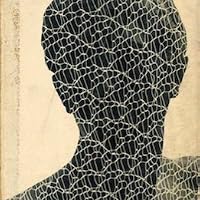
This is a disturbing graphic novel - the protagonist Tyler is in the end portrayed with black ovals for eyes, perhaps underlining the emptiness of Tyler's life. Is there a redeeming feature to the book, or is it simply a composition centered on despair? Does it need to have any redeeming features, such as a "moral of the story?" Does it matter if it doesn't? Ostensibly the author is poking fun at the dullness, hypocrisy, phoniness of middle American life in the suburbs, and the fallout resulting from this vacuous culture - the burnout & eventual destruction of Cara, and the alienation/withdrawal of Tyler. Suburban culture has reached a dead-end it seems with Cara and Tyler - both of whom have rejected it. Cara substituted getting high for the reality of suburban life, and Tyler withdrew from the suburban family scene and substituted various fantasies for the vacuousness or phoniness of the world around him. Perhaps a key to the book is in Tyler's name: He who places tiles, perhaps. The cover image resembles a trompe l'oeil 3-D optical illusion achieved by the placement of hexagonal tiles, and the frames of the graphic novel can also be said to be tiles. Tyler for all we know may be based on Nick's experiences growing up in the suburbs - and Beverly may represent a generalized "promised land" of rapport/communication. That may be simplifying the "message" of the book, though.

The reader will have to decide for himself if there is a "moral" or redeeming feature to the story, or if it is simply nihilistic, hopeless, from the first page to the last.

This is a thought-provoking first graphic novel - it gets under your skin, because the social critique is delivered in so many "nice" "normal" drawings and easy-to-read/predictable dialog. Perhaps it's too "real" - does not offer a way out, or hope, but instead simply leaves Tyler as usual on the outside looking in. He is still exactly where he started when he was a little kid - unable to connect, isolated. Maybe the author's "message" is, considering the phoniness of society around him, is Tyler's response perhaps not appropriate? However, if socialization is part of being human, is Tyler fated to live a life of pain in rejecting the phony suburban society? Again, the analysis of Tyler possibly having responded correctly to the all-encompassing phoniness of his family and suburbia by withdrawing into himself, leads to the emptiness and pain of the grown-up Tyler. Tyler may well be correct in rejecting suburban phoniness, but where does that leave him in the end: Attached tenuously to Beverly, with few other prospects for meaningful friendships. He is still "nowhere" - which is why the book's message may be to accept social nothingness (somehow).

Social nothingness seems a contradiction though; unfortunately, it's hard to imagine a future for Tyler unless either he or society changes or he manages to somehow effectuate a change of societies such as by moving to another less phony locale, where he might possibly forge actual friendships. He was already feeling revulsion/rage toward his family as a child - as symbolized by the violent fantasies. I won't give away one of the turning points of the book, which involved a sex fantasy of Tyler that Cara and a guy she had picked up accidentally stumbled upon, which traumatized the entire family and must have led to further isolation/withdrawal for Tyler.

Why are characters like Tyler fated to be outsiders? Does having the knack or gift of knowing what is phony and what isn't actually mean the person is inevitably fated to reject society, because he can see through its pervasive phoniness? Is it therefore a curse rather than a gift? Does society need people like Tyler - to hold up a grim mirror to their foibles? Yet, has any attempt to describe social hypocrisy, phoniness, cruelty, emptiness ever really led to social change, or is society today, except for a few modifications in the past 100 years to approach the problem of survival of all on a social basis, actually no different than society from the dawn of time - still beset with the same phoniness, many times unintentional cruelty, selfishness, escapism, superficiality, mindless consumerism. Once again, even if outsiders, sensitive people like Tyler, are an "antidote" to the usually "contented" "drugged" stupor of society, what has their suffering led to? Why did society never change? Considering Tyler's status from this standpoint too leads to hopelessness or nothingness - if we accept that society never really changed.

Drnaso's book is well-planned and drawn in a simplified, perhaps diagrammatic style, which includes a correspondingly simplified color palette - which did remind me of the "tasteful" "soothing" color palette one often sees in suburbia, at restaurants, in the range of colors available at suburban clothing stores and so forth - everything somewhat bland, coordinated, "tasteful." Characterization is on a symbolic level - the characters do not seem to have much self-awareness, although occasionally the parents (in Cara's family and in the sitcom Cara and her mom thought they were supposed to review) do realize they should interact with the kids, on a level other than "commanding" them to do this or that.

As a child, Tyler has violent fantasies and a sex fantasy/fetish - - perhaps graphic representations of lashing out at the authority figures of his parents while Cara, as a teen, has sex fantasies. Cara though is actually drinking and sleeping with guys but Tyler never acts on his rebelliousness except much later on a not so innocent level when Beverly is ministering to him. Tyler's rebellion remains a fantasy as he eventually fits into the same job Cara once had at the rec center. The reader however knows that Tyler would want to have the actual life he lies about, the life of being a mechanical engineer, having some sort of social status rather than being a complete outsider, the life of having a significant other or at least a friend, the life of being part of society, even if society itself is one tawdry never-ending lie. The reader knows this because Tyler himself knows this, he understands he is alienated and isolated, he of all the characters has self-awareness of the world of pain he is living in, but there isn't much he can do about it - and so the book, from cover to cover, remains, as I said above, essentially hopeless and nihilistic.


Profile Image for enricocioni.
303 reviews29 followers
January 7, 2019
One of my reading resolutions for 2019 is to read more books from THE PAST, i.e. any year before the current one, and today we travel all the way back to 2016. The last review I wrote before the holidays was for Nick Drnaso's Sabrina, the first graphic novel to be longlisted for the Man Booker Prize, so I thought it'd be neat for my first review after the break to be one of his debut, 2016's Beverly, a graphic collection of short stories loosely connected by a single character, a girl called Cara.

In most of these stories, Cara makes a very brief appearance, and in some she's only mentioned in passing. In fact, you could argue that she's basically just a device to thread the stories together, giving them the semblance of a novel. But that actually fits perfectly with some of the novel's central themes: the illusory nature of human connection, and the inevitably frustrated urge to make sense of our dull, pointless lives by turning them into a narrative, into something bigger than they really are. We want to be the main characters in a novel, but really our lives are just a string of random short stories, and most of the time, like Cara, we're extremely tangential to their plot.

To read the rest of my review, head over to my blog, Strange Bookfellows: https://strangebookfellowsblog.wordpr...
Profile Image for Jagoda Gawliczek.
101 reviews90 followers
July 28, 2022
Jestem chora i przez ból głowy ciężko mi się skoncentrować na czymkolwiek. Z pomocą przyszło wydawnictwo i egzemplarz recenzencki wspaniałego „Beverly” Nicka Drnaso. To powieść graficzna o przytłaczających amerykańskich przedmieściach, na których pozornie nie dzieje się nic. Autor kreatywnie korzysta z graficznego medium, tworząc przepyszne przeskoki narracyjne - ujawnia myśli postaci, kreuje seksualne napięcie czy podbija niezręczno��ć poszczególnych interakcji. Wszystko to podlewa sosem z niezwykle wyważonego poczucia humoru - jednocześnie groteskowego i bezlitosnego.

Równie ważnym elementem książki jest jej język - tu ukłon w stronę Krzysztofa Cieślika, który ponownie udowadnia, jak świetne ma ucho do slangu.

Wspaniała lektura
Displaying 1 - 30 of 420 reviews

Can't find what you're looking for?

Get help and learn more about the design.