

What do you think?

Mr. and Mrs. Disraeli: A Strange Romance
When Mary Anne Lewis met Benjamin Disraeli, she was married to Wyndham Lewis, a rich, mildly successful politician at the center of nineteenth-century British high society. The three became friends and with his deep pockets Wyndham helped Disraeli--young, ambitious, and swimming in debt--get his start in the political arena. Mary Anne even referred to him as her "Parliamentary protégé." But when Wyndham suddenly died of a heart attack, Mary Anne's friendship with Disraeli (fifteen years her junior) soon evolved into a peculiarly romantic and undoubtedly advantageous marriage: Mary Anne avoided life as a widow, while Benjamin used her financial means to stay out of prison and make a run for office.
Anecdotally the Disraelis cultivated an outrageous reputation. Once asked if he had read any new novels, Benjamin reportedly replied, "When I want to read a novel, I write one." Mary Anne, on the other hand, supposedly once told Queen Victoria that she always slept with her arms around her husband's neck. "My wife is a very clever woman," Benjamin said, "but she can never remember who came first, the Greeks or the Romans."
An unusual story of Victorian romance and politics, Mr. and Mrs. Disraeli moves beyond the anecdotes to reveal the interior life of one of Britain's most influential couples. Often eclipsed by Benjamin, Mary Anne had at least as much political acumen as her husband, and this dual biography shows that she was frequently his voice of reason. In the wake of British Romanticism, Daisy Hay examines the paths available to women like Mary Anne, and chronicles a relationship that is surprising, unconventional, and deeply inspiring.
Anecdotally the Disraelis cultivated an outrageous reputation. Once asked if he had read any new novels, Benjamin reportedly replied, "When I want to read a novel, I write one." Mary Anne, on the other hand, supposedly once told Queen Victoria that she always slept with her arms around her husband's neck. "My wife is a very clever woman," Benjamin said, "but she can never remember who came first, the Greeks or the Romans."
An unusual story of Victorian romance and politics, Mr. and Mrs. Disraeli moves beyond the anecdotes to reveal the interior life of one of Britain's most influential couples. Often eclipsed by Benjamin, Mary Anne had at least as much political acumen as her husband, and this dual biography shows that she was frequently his voice of reason. In the wake of British Romanticism, Daisy Hay examines the paths available to women like Mary Anne, and chronicles a relationship that is surprising, unconventional, and deeply inspiring.
320 pages, Paperback
First published January 8, 2015
Ratings & Reviews
Friends & Following
Create a free account to discover what your friends think of this book!
Community Reviews
Displaying 1 - 25 of 25 reviews

January 1, 2015
This review first appeared on my blog, Shoulda Coulda Woulda Books.
This is not the first time that I've read Daisy Hay, nor is it the first time I've read about Disraeli. Both of those experiences made me want to read more, so this was a pretty fortunate confluence of book events for me- very grateful that Hay's research lead her to this topic. This book is a natural outgrowth of her previous work in Young Romantics. In that book, Hay looked at the Byron-Shelley generation and attempted to break down the stereotype of the loner, the misunderstood Romantic genius flourishing in isolation in favor of emphasizing how none of these people would ever have become who they were without their repeated encounters with each other.
So it is fitting that her next book continues to insist upon the importance of relationships and connections in the lives of Great Men. This time, it is not Byron we focus on, but one of his most ardent disciples: Benjamin Disraeli. While many connections are covered, Mr. and Mrs. Disraeli specifically focuses on the connection that changed Disraeli's life- that with his wife, Mary Anne. In this book, Hay does not even have to make an argument that this connection is important- it is proven and accepted by history. No, here the task is much harder and more delicate: to complicate and question the very popular Victorian love story of this couple, a story in which both participants, and eventually the wider public (including the Queen) were heavily invested.
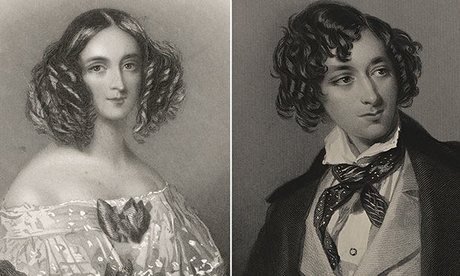 Before he met Mary Anne, Benjamin Disraeli was a dreamer of a young man, the son of the writer Isaac D'Israeli, and, honestly, a bit of a feckless waste of space for the first twenty-four years of his life. He had an unsurprisingly anti-Semitic experience at school* and never went to university**. He seemed to mostly prefer bumming around obsessing about Byron much of the time and writing occasionally. He eventually tried his hand at writing popular "silver fork" novels (read: chick lit/aspirational fantasy) of the 1830s and got laughed out of town on his first attempt (literally out of the country, actually- he fled to Europe to do a Byronic Grand Tour to escape his humiliation). He had some successive novels that did moderately well when his ego recovered a few years later, and his assumption of leadership of the "Young England" group of writers made his reputation grow a bit (these writers were, as far as I can make out, sort of vaguely for reform, but mostly about the importance of giving people heroes and arguing that writers would make amazing statesmen). However, his attempts to parley this into political success were similarly at first unsuccessful. By his mid-thirties he was also deeply in debt to the tune of thousands of pounds and perhaps about to be thrown into jail by his creditors- that this didn't happen is only thanks to his first electoral win, in which Parliamentary privilege prevented him from being prosecuted. Which is how he met Mary Anne.
When she met Disraeli, Mary Anne was Mary Anne Lewis, a poor sailor's daughter who had had had the good fortune to become the wife of Wyndham Lewis, a wealthy businessman and eventual Conservative MP. Mary Anne was a popular figure, who, in lieu of the children she never had, devoted much of her life to hostessing, socializing, and political campaigning. Her popularity and tireless work was undeniably a large factor in getting her seemingly rather taciturn and unimpressive husband elected (in his career in Parliament, Lewis rose to speak only eight times). She also had a long career as a flirt behind her, with many cisibeos and hopeful lovers still clustering around her, even in her mid-forties- Mary Anne loved to be adored, and at times walked the line of reputation-ruining gossip to get what she wanted. Disraeli entered the picture when Lewis' district became so strongly Conservative that the party wanted to put up a second candidate- Disraeli had been on the short list of go-to possible candidates for years, despite his losses, and this time Lewis could put up the money to support him getting the votes he needed***. Mary Anne campaigned for both him and her husband, and they grew close during that time. As it happened, Wyndham Lewis died not long after this, leaving his very wealthy widow (and unusually independently so, by the way) for the taking, and Disraeli as her husband's best-placed successor.
As Hay points out, it would be easy to tell the cynical story that must be positively leaping into your mind right now: Disraeli swooped in on the much older wealthy widow and lied his bad-poem-writing pants off to get her money, and Mary Anne jumped at maybe her last chance to be a pretty princess at a vulnerable moment in her life with a rising star in politics. And that's exactly what some snotty people in Disraeli's most successful years did think- and sometimes actually had the balls to say- when they met his wife, who many of them at first considered vulgar, overdressed, frivolous, and not smart enough for Disraeli.
But you know what's incredible? Nobody did think that by the end. Absolutely nobody at all. In fact, the Disraelis became celebrated for their marriage, and the Disraeli's great love story was a huge part of their popular appeal. Over the course of their twenty-five years of marriage, their family, their friends, Disraeli's colleagues and the public came to know their relationship as a true, chivalrous, old-fashioned romance, thoroughly devoted, a true partnership. And you know who believed in it the most, after all, in the end? Mary Anne and Dizzy themselves.**** Which is, considering everything, the most remarkable part of the whole thing.
This is Hay's real interest: discussing how this couple created a fictional fairy tale for themselves that they both came to believe. The Disraelis spun a romance out of some very unromantic circumstances. And then they made it happen. Just because they said so.
It was fascinating. From the beginning of their courtship, you can see the importance of stories to them and especially their sensitivity to the character part they have been cast in. Both of them insist upon ideals, dreams, to be heroes and heroines. And that's how they spoke to each other- in poetry and jealousy and longing. But even in spite of these instincts, the cynical story underlying it all tested them early on. Their marriage almost failed before it started. Disraeli really did urgently need her money to stave off his creditors and tried to rush her into marriage less than a year after her husband died- with ardor being the excuse, of course, and pushed too hard and too obviously (though he barely acknowledged these reasons to himself). Mary Anne didn't want to be rushed into remarriage, and was kind of enjoying the attention old admirers were giving her as a wealthy widow. She didn't want the gossip around them to even seem to be true (even though she was sleeping with him by this point- she would have been fine with just doing that for awhile). The story almost fell apart due to its actors not playing their roles very well. But ultimately, when she confronted him with his possible (definite) fortune hunting openly, she caused a huge dramatic storming-out-of-the-house fight. Disraeli pushed back wildly, indignantly and at length: Mary Anne had stepped outside the romantic narrative and he would not stand for it. For the only time, he addressed his less than noble motives openly, basically saying that yeah, he initially was interested in her money, but it wasn't as much as he thought in the first place, and he still loved and adored her, SO THERE. He was ready to give her up rather than be the gold digger in the marriage, no matter how desperate he was:
Now for your fortune: I write the sheer truth. That fortune proved to be much less than I, or the world, imagined. It was, in fact, as far as I was concerned, a fortune which could not benefit me to the slightest degree, merely a jointure...Was this an inducement for me to sacrifice my sweet liberty, and that indefinite future, which is one of the charms of existence? No; when months ago I told you one day, that there was only one link between us, I felt that my heart was inextricably engaged to you, and but for that I would have terminated our acquaintance. From that moment I devoted to you all the passion of my being...
...dramatic declarations of parting follow, I need hardly tell you. He wanted to be thought the ideal lover or nothing. Mary Anne decided she'd rather have the white knight too, no matter what the reality was. And there it was, the deal that lasted a lifetime. From that point on, neither of them backed away from that story, no matter what came up. This story lasted through Disraeli's continual lies about debts (and even when Mary Anne discovered them), through prolonged physical separation and Disraeli's rise in prominence and power. It lasted through Mary Anne's aging much earlier than he did, through his deep and sometimes even stronger confiding relationship with his sister, through her occasional failures to impress where he would have liked her to, through his years of opposition, through possible affairs with handsome young men***** and through family troubles on both sides.
Sometimes this fiction was best maintained at a distance. Sometimes they spent many silent evenings in different parts of the house so as not to break the story. Sometimes it threatened to become a necessary fiction rather than voluntary one, since Disraeli had long since turned the story of their devoted marriage into one of his greatest public assets (much like the Queen and Albert did, and much as many, many politicians would do after his example, as Hay points out). But the farthest Disraeli would go towards admitting imperfections would be to write coded messages in his yearly birthday poems to her, hoping for reconciliation, or in the absence of any poetry to her at all (which, considering the quality of some of it, some of us may think was actually a real sign of love). And he never broke loyalty to her publicly, not once in nearly thirty years.******
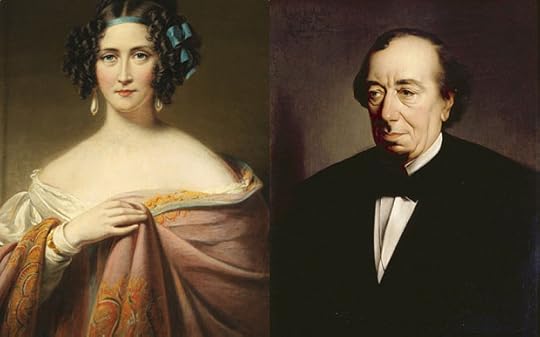 And in the end, it seemed, after twenty years, it was real. They got old, and the last five years of their marriage was everything they pretended it was for years before that, everything Mary Anne had ever wanted and only sometimes got from him, everything Disraeli wanted to be and only sometimes had the focus and time to follow through on. When offered a peerage during these years, Disraeli asked that it go to his wife instead, so she proudly became Viscountess Beaconsfield, able to look down her nose at her detractors at last. At this time, Disraeli would write her just because he missed her. Once, when they were both ill, they wrote back and forth to each other in their sickbeds on separate floors because they were too ill to be moved- Disraeli, by the way, had become ill after sitting up at her bedside for many days. And his last note to her, in the midst of her final illness, is quietly moving in its revelation of how truly he had become attached to her:
My dearest darling,
I have nothing to tell you, except that I love you, which I fear that you will think rather dull...Natty was very affectionate about you and wanted me to come home and dine with him; quite alone; but I told him that you were the only person now whom I could dine with and only relinquished you tonight for my country.
My country, I fear, will be very late; but I hope to find you in a sweet sleep.
Your own, D.
Despite everything ranged against her, her age, her class, her personality, her preferences, her money, Mary Anne made herself beloved, both of Disraeli and the country. In one of her last final illnesses, there were bulletins in the newspapers reporting on the state of her health and vigils outside her front door, like scenes out of Evita. The Queen had come to admire her almost in spite of herself, and the country went into virtual national mourning when she eventually did die in 1872. But Disraeli refused a grand funeral, refused display and attention. For one of the few times in his life, and also one of the few times people would have preferred he hadn't, he deliberately chose obscurity- something he chose again when he himself died. He could have been buried in Westminster with a public funeral and celebrity, and he chose a quiet grave in the country next to Mary Anne.********
As you can probably tell, I loved this. It touched me. Despite Hay revealing the cracks in this marriage- no, actually because of that, I found it very compelling. Ultimately, and much less dramatically, this is as revealing a portrait of marriage as Madame Bovary was for me, perhaps even more so in its way. Lucidly, Hay shows how most marriages are stories that the participants choose to believe in, no matter what evidence is arrayed against them. They are idealistic stories that are never, never what they seem or what the participants want them to be- at least not for more than fleeting moments, just enough to keep the dream alive. Marriages end when people opt out of these stories, don't live up to their end of the tale, or want a different story in the end after all and don't agree on what that is. But if both people choose to believe hard enough, if both people keep choosing to try to be the people they agreed they would be and act up to it enough times- well, that may truly be the last utopia.
*Disraeli's grandfather seems to have been the last practicing Jewish member of the family- his father broke with the synagogue over an argument and had Benjamin baptised as an Anglican at the age of 13- which is lucky since Jews were prevented from holding public office until the mid 1850s. Disraeli's career would not have been possible without this happening. There's a fascinating little story later in the book about how Louis Rothschild was elected to the House of Commons around that time and then provoked a crisis by refusing to swear his oath on the New Testament, which then caused the reform to be passed.
**(Something he was bitter about for the rest of his life- mostly because of the lost potential connections and status implications- it certainly didn't help that his younger brothers were sent to upper class schools where they learned all the class mannerisms that Disraeli had to try desperately to figure out from the outside- it gives his idolization of Byron a whole other spin when you think about it in terms of class, actually.)
***Oh man, the stories about how much money it cost to bribe people to vote for you were pretty incredible, actually. It makes being in Parliament sound like the sort of expensive status symbol that, I dunno, Apple Watches and Ferraris are now. Sort of your sign you could afford to flush enormous amounts of money down the drain and still keep your wife in diamonds, you know?
****Is there a more humanizing, bring-you-down-to-earth nickname that a Great Man could have than "Dizzy"? I submit to you there is not.
*****Never proven, but there are some racy letters that make me believe something was going down at least on Disraeli's side, even if it wasn't physical. Hay reminds us that dudes were much more comfortable expressing love for each other at this time, and Platonic friendships were a thing in this Greek and Roman worshiping age, but man, even so. I put money on some unexplored same sex attraction- that or its the most desperate need to be looked up to as an authoritative daddy figure I've ever seen.
******He was famous for it. There's several stories about it, but the one I remember is about how the Countess of Derby was rude to Mary Anne at a dinner party at her home, after Disraeli had been angling for an invite to that house for years. Mary Anne was hurt, and Disraeli politely, but firmly, refused to ever set foot in that house again, no matter how useful it would have been to him politically. This struck me because Disraeli was all about power and advancement and getting into the highest circles, and he was willing to give up one of his first breaks in that wall for her.
*******Even though after she died, he became attached to another woman a few years later and contemplated marrying again (her sister, she was already married) to be near her. He was also famous for his courtly relationship with the Queen- she knew he was buttering her up, and ate it up. Another woman who chose to believe in the best of Disraeli. Despite all of this, he still chose Mary Anne in the end. As he always, always did.
This is not the first time that I've read Daisy Hay, nor is it the first time I've read about Disraeli. Both of those experiences made me want to read more, so this was a pretty fortunate confluence of book events for me- very grateful that Hay's research lead her to this topic. This book is a natural outgrowth of her previous work in Young Romantics. In that book, Hay looked at the Byron-Shelley generation and attempted to break down the stereotype of the loner, the misunderstood Romantic genius flourishing in isolation in favor of emphasizing how none of these people would ever have become who they were without their repeated encounters with each other.
So it is fitting that her next book continues to insist upon the importance of relationships and connections in the lives of Great Men. This time, it is not Byron we focus on, but one of his most ardent disciples: Benjamin Disraeli. While many connections are covered, Mr. and Mrs. Disraeli specifically focuses on the connection that changed Disraeli's life- that with his wife, Mary Anne. In this book, Hay does not even have to make an argument that this connection is important- it is proven and accepted by history. No, here the task is much harder and more delicate: to complicate and question the very popular Victorian love story of this couple, a story in which both participants, and eventually the wider public (including the Queen) were heavily invested.
Before he met Mary Anne, Benjamin Disraeli was a dreamer of a young man, the son of the writer Isaac D'Israeli, and, honestly, a bit of a feckless waste of space for the first twenty-four years of his life. He had an unsurprisingly anti-Semitic experience at school* and never went to university**. He seemed to mostly prefer bumming around obsessing about Byron much of the time and writing occasionally. He eventually tried his hand at writing popular "silver fork" novels (read: chick lit/aspirational fantasy) of the 1830s and got laughed out of town on his first attempt (literally out of the country, actually- he fled to Europe to do a Byronic Grand Tour to escape his humiliation). He had some successive novels that did moderately well when his ego recovered a few years later, and his assumption of leadership of the "Young England" group of writers made his reputation grow a bit (these writers were, as far as I can make out, sort of vaguely for reform, but mostly about the importance of giving people heroes and arguing that writers would make amazing statesmen). However, his attempts to parley this into political success were similarly at first unsuccessful. By his mid-thirties he was also deeply in debt to the tune of thousands of pounds and perhaps about to be thrown into jail by his creditors- that this didn't happen is only thanks to his first electoral win, in which Parliamentary privilege prevented him from being prosecuted. Which is how he met Mary Anne.When she met Disraeli, Mary Anne was Mary Anne Lewis, a poor sailor's daughter who had had had the good fortune to become the wife of Wyndham Lewis, a wealthy businessman and eventual Conservative MP. Mary Anne was a popular figure, who, in lieu of the children she never had, devoted much of her life to hostessing, socializing, and political campaigning. Her popularity and tireless work was undeniably a large factor in getting her seemingly rather taciturn and unimpressive husband elected (in his career in Parliament, Lewis rose to speak only eight times). She also had a long career as a flirt behind her, with many cisibeos and hopeful lovers still clustering around her, even in her mid-forties- Mary Anne loved to be adored, and at times walked the line of reputation-ruining gossip to get what she wanted. Disraeli entered the picture when Lewis' district became so strongly Conservative that the party wanted to put up a second candidate- Disraeli had been on the short list of go-to possible candidates for years, despite his losses, and this time Lewis could put up the money to support him getting the votes he needed***. Mary Anne campaigned for both him and her husband, and they grew close during that time. As it happened, Wyndham Lewis died not long after this, leaving his very wealthy widow (and unusually independently so, by the way) for the taking, and Disraeli as her husband's best-placed successor.
As Hay points out, it would be easy to tell the cynical story that must be positively leaping into your mind right now: Disraeli swooped in on the much older wealthy widow and lied his bad-poem-writing pants off to get her money, and Mary Anne jumped at maybe her last chance to be a pretty princess at a vulnerable moment in her life with a rising star in politics. And that's exactly what some snotty people in Disraeli's most successful years did think- and sometimes actually had the balls to say- when they met his wife, who many of them at first considered vulgar, overdressed, frivolous, and not smart enough for Disraeli.
But you know what's incredible? Nobody did think that by the end. Absolutely nobody at all. In fact, the Disraelis became celebrated for their marriage, and the Disraeli's great love story was a huge part of their popular appeal. Over the course of their twenty-five years of marriage, their family, their friends, Disraeli's colleagues and the public came to know their relationship as a true, chivalrous, old-fashioned romance, thoroughly devoted, a true partnership. And you know who believed in it the most, after all, in the end? Mary Anne and Dizzy themselves.**** Which is, considering everything, the most remarkable part of the whole thing.
This is Hay's real interest: discussing how this couple created a fictional fairy tale for themselves that they both came to believe. The Disraelis spun a romance out of some very unromantic circumstances. And then they made it happen. Just because they said so.
It was fascinating. From the beginning of their courtship, you can see the importance of stories to them and especially their sensitivity to the character part they have been cast in. Both of them insist upon ideals, dreams, to be heroes and heroines. And that's how they spoke to each other- in poetry and jealousy and longing. But even in spite of these instincts, the cynical story underlying it all tested them early on. Their marriage almost failed before it started. Disraeli really did urgently need her money to stave off his creditors and tried to rush her into marriage less than a year after her husband died- with ardor being the excuse, of course, and pushed too hard and too obviously (though he barely acknowledged these reasons to himself). Mary Anne didn't want to be rushed into remarriage, and was kind of enjoying the attention old admirers were giving her as a wealthy widow. She didn't want the gossip around them to even seem to be true (even though she was sleeping with him by this point- she would have been fine with just doing that for awhile). The story almost fell apart due to its actors not playing their roles very well. But ultimately, when she confronted him with his possible (definite) fortune hunting openly, she caused a huge dramatic storming-out-of-the-house fight. Disraeli pushed back wildly, indignantly and at length: Mary Anne had stepped outside the romantic narrative and he would not stand for it. For the only time, he addressed his less than noble motives openly, basically saying that yeah, he initially was interested in her money, but it wasn't as much as he thought in the first place, and he still loved and adored her, SO THERE. He was ready to give her up rather than be the gold digger in the marriage, no matter how desperate he was:
Now for your fortune: I write the sheer truth. That fortune proved to be much less than I, or the world, imagined. It was, in fact, as far as I was concerned, a fortune which could not benefit me to the slightest degree, merely a jointure...Was this an inducement for me to sacrifice my sweet liberty, and that indefinite future, which is one of the charms of existence? No; when months ago I told you one day, that there was only one link between us, I felt that my heart was inextricably engaged to you, and but for that I would have terminated our acquaintance. From that moment I devoted to you all the passion of my being...
...dramatic declarations of parting follow, I need hardly tell you. He wanted to be thought the ideal lover or nothing. Mary Anne decided she'd rather have the white knight too, no matter what the reality was. And there it was, the deal that lasted a lifetime. From that point on, neither of them backed away from that story, no matter what came up. This story lasted through Disraeli's continual lies about debts (and even when Mary Anne discovered them), through prolonged physical separation and Disraeli's rise in prominence and power. It lasted through Mary Anne's aging much earlier than he did, through his deep and sometimes even stronger confiding relationship with his sister, through her occasional failures to impress where he would have liked her to, through his years of opposition, through possible affairs with handsome young men***** and through family troubles on both sides.
Sometimes this fiction was best maintained at a distance. Sometimes they spent many silent evenings in different parts of the house so as not to break the story. Sometimes it threatened to become a necessary fiction rather than voluntary one, since Disraeli had long since turned the story of their devoted marriage into one of his greatest public assets (much like the Queen and Albert did, and much as many, many politicians would do after his example, as Hay points out). But the farthest Disraeli would go towards admitting imperfections would be to write coded messages in his yearly birthday poems to her, hoping for reconciliation, or in the absence of any poetry to her at all (which, considering the quality of some of it, some of us may think was actually a real sign of love). And he never broke loyalty to her publicly, not once in nearly thirty years.******
And in the end, it seemed, after twenty years, it was real. They got old, and the last five years of their marriage was everything they pretended it was for years before that, everything Mary Anne had ever wanted and only sometimes got from him, everything Disraeli wanted to be and only sometimes had the focus and time to follow through on. When offered a peerage during these years, Disraeli asked that it go to his wife instead, so she proudly became Viscountess Beaconsfield, able to look down her nose at her detractors at last. At this time, Disraeli would write her just because he missed her. Once, when they were both ill, they wrote back and forth to each other in their sickbeds on separate floors because they were too ill to be moved- Disraeli, by the way, had become ill after sitting up at her bedside for many days. And his last note to her, in the midst of her final illness, is quietly moving in its revelation of how truly he had become attached to her:My dearest darling,
I have nothing to tell you, except that I love you, which I fear that you will think rather dull...Natty was very affectionate about you and wanted me to come home and dine with him; quite alone; but I told him that you were the only person now whom I could dine with and only relinquished you tonight for my country.
My country, I fear, will be very late; but I hope to find you in a sweet sleep.
Your own, D.
Despite everything ranged against her, her age, her class, her personality, her preferences, her money, Mary Anne made herself beloved, both of Disraeli and the country. In one of her last final illnesses, there were bulletins in the newspapers reporting on the state of her health and vigils outside her front door, like scenes out of Evita. The Queen had come to admire her almost in spite of herself, and the country went into virtual national mourning when she eventually did die in 1872. But Disraeli refused a grand funeral, refused display and attention. For one of the few times in his life, and also one of the few times people would have preferred he hadn't, he deliberately chose obscurity- something he chose again when he himself died. He could have been buried in Westminster with a public funeral and celebrity, and he chose a quiet grave in the country next to Mary Anne.********
As you can probably tell, I loved this. It touched me. Despite Hay revealing the cracks in this marriage- no, actually because of that, I found it very compelling. Ultimately, and much less dramatically, this is as revealing a portrait of marriage as Madame Bovary was for me, perhaps even more so in its way. Lucidly, Hay shows how most marriages are stories that the participants choose to believe in, no matter what evidence is arrayed against them. They are idealistic stories that are never, never what they seem or what the participants want them to be- at least not for more than fleeting moments, just enough to keep the dream alive. Marriages end when people opt out of these stories, don't live up to their end of the tale, or want a different story in the end after all and don't agree on what that is. But if both people choose to believe hard enough, if both people keep choosing to try to be the people they agreed they would be and act up to it enough times- well, that may truly be the last utopia.
*Disraeli's grandfather seems to have been the last practicing Jewish member of the family- his father broke with the synagogue over an argument and had Benjamin baptised as an Anglican at the age of 13- which is lucky since Jews were prevented from holding public office until the mid 1850s. Disraeli's career would not have been possible without this happening. There's a fascinating little story later in the book about how Louis Rothschild was elected to the House of Commons around that time and then provoked a crisis by refusing to swear his oath on the New Testament, which then caused the reform to be passed.
**(Something he was bitter about for the rest of his life- mostly because of the lost potential connections and status implications- it certainly didn't help that his younger brothers were sent to upper class schools where they learned all the class mannerisms that Disraeli had to try desperately to figure out from the outside- it gives his idolization of Byron a whole other spin when you think about it in terms of class, actually.)
***Oh man, the stories about how much money it cost to bribe people to vote for you were pretty incredible, actually. It makes being in Parliament sound like the sort of expensive status symbol that, I dunno, Apple Watches and Ferraris are now. Sort of your sign you could afford to flush enormous amounts of money down the drain and still keep your wife in diamonds, you know?
****Is there a more humanizing, bring-you-down-to-earth nickname that a Great Man could have than "Dizzy"? I submit to you there is not.
*****Never proven, but there are some racy letters that make me believe something was going down at least on Disraeli's side, even if it wasn't physical. Hay reminds us that dudes were much more comfortable expressing love for each other at this time, and Platonic friendships were a thing in this Greek and Roman worshiping age, but man, even so. I put money on some unexplored same sex attraction- that or its the most desperate need to be looked up to as an authoritative daddy figure I've ever seen.
******He was famous for it. There's several stories about it, but the one I remember is about how the Countess of Derby was rude to Mary Anne at a dinner party at her home, after Disraeli had been angling for an invite to that house for years. Mary Anne was hurt, and Disraeli politely, but firmly, refused to ever set foot in that house again, no matter how useful it would have been to him politically. This struck me because Disraeli was all about power and advancement and getting into the highest circles, and he was willing to give up one of his first breaks in that wall for her.
*******Even though after she died, he became attached to another woman a few years later and contemplated marrying again (her sister, she was already married) to be near her. He was also famous for his courtly relationship with the Queen- she knew he was buttering her up, and ate it up. Another woman who chose to believe in the best of Disraeli. Despite all of this, he still chose Mary Anne in the end. As he always, always did.

January 8, 2015
This is an oddly moving biography, which looks at the marriage of Benjamin Disraeli and his wife Mary Anne. Both Disraeli and Mary Anne had a tendency to romanticise and reinvent their backgrounds and, later, their marriage. Mary Anne came from a fairly humble background and her marriage in 1815 to Wyndham Lewis, a wealthy man, but much older than her and very different in temperament, was largely due to financial and social considerations. Indeed, stories at the beginning of each chapter – often from newspapers of the time – show how reliant women were on marriage for financial security and status. At one point in the book, Mary Anne shows a certain reluctance to see some unmarried sisters that she was friends with, because of their increasing desperation to find husbands, which made their visits uncomfortable for her and her guests. This also becomes relevant when we come to Disraeli’s life story and his beloved sister, Sarah, who remained unmarried. At times, he is torn between his sister and his wife, who becomes jealous of the attention he pays her.
When Disraeli meets Mary Anne she is the wife of Wyndham Lewis and he is an MP. His career brings him to London, but, sadly for his wife, it did not bring her the social acceptance and widening social circle she hoped for. Her first husband’s political career was to be as unremarkable as her second husband’s was to be remarkable. Meanwhile, Disraeli, increasingly in debt, had begun writing novels which appealed very much to Mary Anne – in fact, she was just the readership he was aiming for with his ‘silver fork novels’. Gradually, he begins to appear on her guest lists and she figures in his correspondence. We also read of Disraeli’s fledgling political career, linked to that of Wyndham Lewis, which, after Lewis’s death, brings him closer to Mary Anne.
When Mary Anne became widowed, she was forty seven and Disraeli was a thirty five year old dandy, mired in debt and not the only man intent on winning her fortune. For, it is apparent that Mary Anne’s wealth was very attractive – not only to Disraeli, but to others. Later, she was to admit openly that he married her for money, but there was more to their relationship than that. They reinvented their marriage of convenience as a grand romance, but, despite their age difference, it certainly was a happy union. Through letters and correspondence, the author uncovers their courtship – the way Mary Anne felt initially pushed by him, his joy – and relief – when he realises he has ‘won’ her, the shifting dynamics between them, and their family relationships.
In a way, this is a portrait not only of a marriage, but also of the society of the time and of the importance of marriage for women within that society. Disraeli’s rise to political power emerges, Mary Anne takes obvious delight in his achievements and we see the way the political landscape changed. Despite political success, their marriage was mocked and Mary Anne often referred to as ‘absurd,’ while Disraeli faced anti Semitism and career disappointments. Yet, despite all the difficulties they faced, ultimately their marriage was a success. Although Disraeli’s possible relationships with other men are explored, he certainly appreciated her support, her interest in his career, her friendship and her love. When she died, he was bereft, and Mary Anne had the delight, in her lifetime, of being recognised, and loved, by the public and also by her husband. This is a wonderful read and a very interesting portrait of a couple who, although they were not seen as an ideal match, made their marriage a resounding success for both of them.
When Disraeli meets Mary Anne she is the wife of Wyndham Lewis and he is an MP. His career brings him to London, but, sadly for his wife, it did not bring her the social acceptance and widening social circle she hoped for. Her first husband’s political career was to be as unremarkable as her second husband’s was to be remarkable. Meanwhile, Disraeli, increasingly in debt, had begun writing novels which appealed very much to Mary Anne – in fact, she was just the readership he was aiming for with his ‘silver fork novels’. Gradually, he begins to appear on her guest lists and she figures in his correspondence. We also read of Disraeli’s fledgling political career, linked to that of Wyndham Lewis, which, after Lewis’s death, brings him closer to Mary Anne.
When Mary Anne became widowed, she was forty seven and Disraeli was a thirty five year old dandy, mired in debt and not the only man intent on winning her fortune. For, it is apparent that Mary Anne’s wealth was very attractive – not only to Disraeli, but to others. Later, she was to admit openly that he married her for money, but there was more to their relationship than that. They reinvented their marriage of convenience as a grand romance, but, despite their age difference, it certainly was a happy union. Through letters and correspondence, the author uncovers their courtship – the way Mary Anne felt initially pushed by him, his joy – and relief – when he realises he has ‘won’ her, the shifting dynamics between them, and their family relationships.
In a way, this is a portrait not only of a marriage, but also of the society of the time and of the importance of marriage for women within that society. Disraeli’s rise to political power emerges, Mary Anne takes obvious delight in his achievements and we see the way the political landscape changed. Despite political success, their marriage was mocked and Mary Anne often referred to as ‘absurd,’ while Disraeli faced anti Semitism and career disappointments. Yet, despite all the difficulties they faced, ultimately their marriage was a success. Although Disraeli’s possible relationships with other men are explored, he certainly appreciated her support, her interest in his career, her friendship and her love. When she died, he was bereft, and Mary Anne had the delight, in her lifetime, of being recognised, and loved, by the public and also by her husband. This is a wonderful read and a very interesting portrait of a couple who, although they were not seen as an ideal match, made their marriage a resounding success for both of them.

April 30, 2015
Marriage had its peculiarities in the nineteenth century, but the marriage of Benjamin Disraeli and his Mary Anne was more peculiar than most. Nevertheless, this account of their marriage goes beyond simple boundaries. Before they wed in their middle age, both had a great deal of experience. Mary Anne was first married to a certain Wyndham Lewis, a man who benefitted greatly from the Industrial Revolution, and the opening of the book tells of their lives on the edge of high society, uncomfortably located between that semi-mythical state of wealth and power and the more staid world of the middle classes.
They inhabited a London residence called Grosvenor Gate, built more for display than for comfort, and its description is an early triumph in Daisy Hay’s brilliant book about lives lived in ambiguity. The dining room and the library, for example, are denominated “male spaces” while the rest of the large building is the domain of the female. Even in marriage – at least in this social class – there is more division than closeness in the relationship of the genders.
Dizzy himself spent those pre-marital years as a writer – a curious social anomaly in all ages. His closest friend was another novelist, Edward Lytton Bulwer, now known as Bulwer Lytton, but only from the death of his parents. Disraeli’s ambitions were high and his sense of material entitlement much greater than what could be supported by writing novels, so that in bachelor life and even later his debts grew to be enormous.
Marriage to a wealthy heiress, the widow of an industrialist, was one way out of his dilemma and a place in Parliament was another. It is extraordinary to follow his political career from this point of view – if his party gets into government he will be saved from financial disaster and social disgrace, without the need to go into exile. A precarious living. Marriage was essential, but love was not, and yet while both participants were taking advantage of each other, there was a genuine sympathy between them as well. They understood each other’s sometimes sordid needs.
Daisy Hay gives a good account of the novels Disraeli wrote – even during a busy political life – and of the more humble position of wealthy Mary Anne, but the greatest interest in the book is the stressed and strained life of the couple as such. Without underestimating the individuals, she places the marriage in the foreground. She adds depth to this by sketching extraordinary other – but relevant – marriages at the beginning of each chapter. Those who think of Victorian society as puritanical and dull will be astonished at the sexual shenanigans described here. The marriage of Sir Edward Bulwer and his wife Rosina is a dramatic and painful story in itself. When Rosina disrupted her husband’s political meetings ‘his face paled’ and the press had a wonderful time.
Daisy Hay has a lively and entertaining style without overdramatising what is already a dramatic story, so that the book is a pleasure from beginning to end. Although the persons she writes of can seem disgraceful, in her telling they have a peculiar grace of their own.
They inhabited a London residence called Grosvenor Gate, built more for display than for comfort, and its description is an early triumph in Daisy Hay’s brilliant book about lives lived in ambiguity. The dining room and the library, for example, are denominated “male spaces” while the rest of the large building is the domain of the female. Even in marriage – at least in this social class – there is more division than closeness in the relationship of the genders.
Dizzy himself spent those pre-marital years as a writer – a curious social anomaly in all ages. His closest friend was another novelist, Edward Lytton Bulwer, now known as Bulwer Lytton, but only from the death of his parents. Disraeli’s ambitions were high and his sense of material entitlement much greater than what could be supported by writing novels, so that in bachelor life and even later his debts grew to be enormous.
Marriage to a wealthy heiress, the widow of an industrialist, was one way out of his dilemma and a place in Parliament was another. It is extraordinary to follow his political career from this point of view – if his party gets into government he will be saved from financial disaster and social disgrace, without the need to go into exile. A precarious living. Marriage was essential, but love was not, and yet while both participants were taking advantage of each other, there was a genuine sympathy between them as well. They understood each other’s sometimes sordid needs.
Daisy Hay gives a good account of the novels Disraeli wrote – even during a busy political life – and of the more humble position of wealthy Mary Anne, but the greatest interest in the book is the stressed and strained life of the couple as such. Without underestimating the individuals, she places the marriage in the foreground. She adds depth to this by sketching extraordinary other – but relevant – marriages at the beginning of each chapter. Those who think of Victorian society as puritanical and dull will be astonished at the sexual shenanigans described here. The marriage of Sir Edward Bulwer and his wife Rosina is a dramatic and painful story in itself. When Rosina disrupted her husband’s political meetings ‘his face paled’ and the press had a wonderful time.
Daisy Hay has a lively and entertaining style without overdramatising what is already a dramatic story, so that the book is a pleasure from beginning to end. Although the persons she writes of can seem disgraceful, in her telling they have a peculiar grace of their own.

January 4, 2017
So I have a funny story regarding this book.
I first came across Disraeli during A Levels, in which I studied the Age of Gladstone and Disraeli. Disraeli became my favourite Prime Minister. Because who couldn't love Disraeli? :-) So, the first thing I do when I'm in a bookshop is look at the political history section, just to check up on the literature regarding Disraeli and other Prime Ministers of the time. I was in Waterstones in Piccadilly Circus in London in February 2015 when I first saw this book and I turned to my friend and said, "I really want it." And she responded, "but you have no money." And that was that. (Story isn't finished yet though, sorry!) In all the books I've read about Disraeli, his wife is rarely mentioned, and I really felt for her, because in the historical literature, she's always come across as important to Disraeli, but not important enough to hold part of the narrative herself, much like most women in history, I suppose. So I saved and bought it. Of course, I had to. It was a book on Disraeli and Mary Anne and my book buyers brain was niggling at me to buy it.
I was going to a book festival that year and as it was a new release that year, it was a featured book, with a talk given by the author. I was absolutely desperate to go. I took this novel on holiday with me to Ireland (Gladstone or Salisbury probably would have been better received though) and I read it and I got so invested in this novel that I felt sad nearing the end because, surprise surprise, Mary Anne and Disraeli die. As people tend to do at the end of historical biographies. And I finished the book the night before the talk at the festival. I had so many questions I wanted to ask and so many thoughts running through my head and then I met the author, and it was like I'd been struck mute. I couldn't even say hello. My friend had to speak for me. And now I'm pretty sure that the author thought that I was a stupid person who didn't know who the subject matter was and bought the book because it looked pretty. The book does look pretty though, I will admit. It's beautiful.
This is possibly one of my favourite biographies of Disraeli. Probably because it deals with Mary Anne as well, comparing her to other women of the time period and how the other women because footnotes in history. Unlike a lot of other historians, Hay focused on how neither of the Disraeli's should have been able to reach the social and political position they did, but still managed to make it. This book doesn't overtake other biographies written regarding Disraeli, but it is a pretty good biography of Mary Anne, and it treats her life and relationships with dignity and care, especially her first husband. Hay takes into account the effect Mary Anne's first husband had on Disraeli's career, which isn't a regularly recognized detail.
So yes, this book is amazing! :-)
I first came across Disraeli during A Levels, in which I studied the Age of Gladstone and Disraeli. Disraeli became my favourite Prime Minister. Because who couldn't love Disraeli? :-) So, the first thing I do when I'm in a bookshop is look at the political history section, just to check up on the literature regarding Disraeli and other Prime Ministers of the time. I was in Waterstones in Piccadilly Circus in London in February 2015 when I first saw this book and I turned to my friend and said, "I really want it." And she responded, "but you have no money." And that was that. (Story isn't finished yet though, sorry!) In all the books I've read about Disraeli, his wife is rarely mentioned, and I really felt for her, because in the historical literature, she's always come across as important to Disraeli, but not important enough to hold part of the narrative herself, much like most women in history, I suppose. So I saved and bought it. Of course, I had to. It was a book on Disraeli and Mary Anne and my book buyers brain was niggling at me to buy it.
I was going to a book festival that year and as it was a new release that year, it was a featured book, with a talk given by the author. I was absolutely desperate to go. I took this novel on holiday with me to Ireland (Gladstone or Salisbury probably would have been better received though) and I read it and I got so invested in this novel that I felt sad nearing the end because, surprise surprise, Mary Anne and Disraeli die. As people tend to do at the end of historical biographies. And I finished the book the night before the talk at the festival. I had so many questions I wanted to ask and so many thoughts running through my head and then I met the author, and it was like I'd been struck mute. I couldn't even say hello. My friend had to speak for me. And now I'm pretty sure that the author thought that I was a stupid person who didn't know who the subject matter was and bought the book because it looked pretty. The book does look pretty though, I will admit. It's beautiful.
This is possibly one of my favourite biographies of Disraeli. Probably because it deals with Mary Anne as well, comparing her to other women of the time period and how the other women because footnotes in history. Unlike a lot of other historians, Hay focused on how neither of the Disraeli's should have been able to reach the social and political position they did, but still managed to make it. This book doesn't overtake other biographies written regarding Disraeli, but it is a pretty good biography of Mary Anne, and it treats her life and relationships with dignity and care, especially her first husband. Hay takes into account the effect Mary Anne's first husband had on Disraeli's career, which isn't a regularly recognized detail.
So yes, this book is amazing! :-)

October 5, 2016
The marriage of Mary Ann and Benjamin Disraeli was uncommon in many respects. She was an wealthy independent widow, he a debt-ridden author with political ambitions. She was loud, flamboyant, outspoken, eccentric; he was controlled, ambitious, determined. He married her for her money but grew to love her. She valued her independence yet devoted herself utterly to his future career. They were visibly devoted to one another in an era when marrying for love was seen as utterly déclassé in the circles they moved in. Neither was of the Establishment - Mary Ann was born of distinctly middling stock and Disraeli's antecedents were Jewish, at a time when Jews could not hold political office.
And yet by the time of their deaths they were both beloved and respected by the public, the Queen and the political establishment, and neither could have achieved their positions in politics and society without the love and support of the other. Where Disraeli was unusual amongst his fellows was in his open acknowledgement of that fact, perhaps best exemplified by his request to Queen Victoria to ennoble his wife in her own right instead of him. It is only right therefore that this should be a dual biography - to tell Disraeli's story without giving his wife her rightful due would be a distortion of history.
History is fortunate indeed that both Disraelis were great collectors of personal papers, and Daisy Hay's book relies heavily on chronicling the Disraelis lives through their own words, which brings a realism and intimacy to these pages. One finds oneself growing quite fond of both of them. It also means there is so much less interpretation and extrapolation than one usually finds in biographies - there is no need for the 'X must have thought' or 'Y must have felt' because we know what Mary Ann thought or Disraeli felt, through the rich source of their letters.
This is the second of Daisy Hay's books I have read, after her 'Young Romantics' about Shelley and Byron and Mary Shelley, and I enjoyed it every bit as much. She is a fine writer and a fine historian.
And yet by the time of their deaths they were both beloved and respected by the public, the Queen and the political establishment, and neither could have achieved their positions in politics and society without the love and support of the other. Where Disraeli was unusual amongst his fellows was in his open acknowledgement of that fact, perhaps best exemplified by his request to Queen Victoria to ennoble his wife in her own right instead of him. It is only right therefore that this should be a dual biography - to tell Disraeli's story without giving his wife her rightful due would be a distortion of history.
History is fortunate indeed that both Disraelis were great collectors of personal papers, and Daisy Hay's book relies heavily on chronicling the Disraelis lives through their own words, which brings a realism and intimacy to these pages. One finds oneself growing quite fond of both of them. It also means there is so much less interpretation and extrapolation than one usually finds in biographies - there is no need for the 'X must have thought' or 'Y must have felt' because we know what Mary Ann thought or Disraeli felt, through the rich source of their letters.
This is the second of Daisy Hay's books I have read, after her 'Young Romantics' about Shelley and Byron and Mary Shelley, and I enjoyed it every bit as much. She is a fine writer and a fine historian.

March 15, 2015
It wasn't until the final chapter that I realised how emotionally involved I had become with the people and the narrative; it isn't until we experience loss that we realise the true extent of love, and it appears this was certainly the case for Disraeli. This biography deserves to be celebrated for finally shining a light on the woman behind the man, so often ignored or reduced to a mere footnote in the tale of her brilliant husband. It demonstrates how behind all human achievement there is love and support, and how the course of love does not run smooth, but the benefit of such intimate emotion and experience binds us together.

January 5, 2016
An astoundingly brilliant biography charting the relationship between one of this nation's greatest Prime Ministers, Benjamin Disraeli, and his wife Mary Ann. Daisy Hay really has done a fantastic job! Couldnt put it down!! The woman really doth maketh the man.

March 22, 2021
SUMMARY - A breezy love story that is nevertheless carefully researched and rendered. Mary Anne gets equal billing with Dizzy himself, and their story is captivating.
~~~
The lightness of touch in reading this breezy biography belies the hard labour of painstaking research and a highly editorial approach to its history. Hay's chapters begin with other lives, seemingly harvested from Mrs Disraeli's (Mary Anne's) newspaper cuttings. These vignettes introduce symmetries with the lives of the Disraeli's, including jilted brides, mismatched-but-happy couples, and women resigned to spinsterhood. Each serves to cut across the ponderous chronological tendencies of so many biographies, and introduce thematic interest. While we follow the years with the pages, readers are further asked to consider the vested interests in our closest relationships, the tendency of such relationships to morph into either mutual dependency or antipathy, and the complex and often competing family relationships and friendship bonds that vie for our love.
As well as helping make a bigger point, the clippings also reflect Hay's other main achievement, in that they bring in multiple voices. The effect is one of biographic dialogue, where Disraeli not only doesn't get the last word, but gets more realistically constrained by the actualities of his relational ties, by the realpolitik of his colleagues, and by the expectations of his countryfolk.
The melody is therefore complexly rendered, even in its seeming lightness and simplicity. Mr and Mrs Disraeli is about love, but played with the full range of the keyboard. The high notes in some years are matched with the angry lower register in others. Sisters and brothers carry out secret correspondences with both Disraeli's and compete for affections (and in some cases, money) unbeknownst to their spouse.
This book has been sat on my shelf for 10-11 months, bought in the first covid lockdown when I worried I would run out of things to read. My floors now resemble a bibliographic recreation of the Victorian London, rendered in towers of books. I have more to fear from being crushed to death than from running out of reading matter. Now I wonder why I skipped Hay's book for the others. It was worth the wait.
~~~
The lightness of touch in reading this breezy biography belies the hard labour of painstaking research and a highly editorial approach to its history. Hay's chapters begin with other lives, seemingly harvested from Mrs Disraeli's (Mary Anne's) newspaper cuttings. These vignettes introduce symmetries with the lives of the Disraeli's, including jilted brides, mismatched-but-happy couples, and women resigned to spinsterhood. Each serves to cut across the ponderous chronological tendencies of so many biographies, and introduce thematic interest. While we follow the years with the pages, readers are further asked to consider the vested interests in our closest relationships, the tendency of such relationships to morph into either mutual dependency or antipathy, and the complex and often competing family relationships and friendship bonds that vie for our love.
As well as helping make a bigger point, the clippings also reflect Hay's other main achievement, in that they bring in multiple voices. The effect is one of biographic dialogue, where Disraeli not only doesn't get the last word, but gets more realistically constrained by the actualities of his relational ties, by the realpolitik of his colleagues, and by the expectations of his countryfolk.
The melody is therefore complexly rendered, even in its seeming lightness and simplicity. Mr and Mrs Disraeli is about love, but played with the full range of the keyboard. The high notes in some years are matched with the angry lower register in others. Sisters and brothers carry out secret correspondences with both Disraeli's and compete for affections (and in some cases, money) unbeknownst to their spouse.
This book has been sat on my shelf for 10-11 months, bought in the first covid lockdown when I worried I would run out of things to read. My floors now resemble a bibliographic recreation of the Victorian London, rendered in towers of books. I have more to fear from being crushed to death than from running out of reading matter. Now I wonder why I skipped Hay's book for the others. It was worth the wait.

August 3, 2017
It's always fascinating to consider what makes for a long lasting and successful marriage/relationship and Daisy Hay's thorough analysis of the unlikely marriage between Mary Anne and Benjamin Disraeli provides a very intriguing example. What is at first a marriage of convenience between a heavily indebted dandyish Disraeli and a rich widow 12 years his senior becomes a close, loving, lifelong attachment. But this is not only a portrait of a famous marriage, it also foregrounds yet another important woman who had been overshadowed by her husband. While Daisy Hay has to cover Disraeli's political and writing career, she makes sure that Mary Anne stays sharply in focus throughout, especially when that ground has been so thoroughly covered by the numerous Disraeli biographers.
It is also fascinating to see how, in such a supposedly rigid class based society, this couple from the 'wrong ' social backgrounds could still rise to the top.
It is also fascinating to see how, in such a supposedly rigid class based society, this couple from the 'wrong ' social backgrounds could still rise to the top.

June 4, 2016
I have to say this book is a bit of a snooze. It’s subtitled “a strange romance” but nothing particularly strange emerges. At the beginning, the Disraelis had a marriage of convenience, with her quite a bit older and richer. Then they become genuinely fond of each other. Is this all that strange?
This rather pedestrian relationship is set against the cultural and political history of the Victorian era, and sometimes this history takes very interesting turns. At these times, the writing perks up. There are little vignettes detailing other women’s lives, and apparently Mary Ann Disraeli collected many of these fragments. But at other times, one gets tired of Benjamin Disraeli’s parliamentary ins and outs, and Mary Ann Disraeli’s notes and messages all seem rather alike.
I didn’t feel that I knew the two subjects of this biography particularly well at its end. Benjamin remains the political figure, more than anything else, although Mary Ann comes through as a little more human, a rather awkward and insecure society lady.
This rather pedestrian relationship is set against the cultural and political history of the Victorian era, and sometimes this history takes very interesting turns. At these times, the writing perks up. There are little vignettes detailing other women’s lives, and apparently Mary Ann Disraeli collected many of these fragments. But at other times, one gets tired of Benjamin Disraeli’s parliamentary ins and outs, and Mary Ann Disraeli’s notes and messages all seem rather alike.
I didn’t feel that I knew the two subjects of this biography particularly well at its end. Benjamin remains the political figure, more than anything else, although Mary Ann comes through as a little more human, a rather awkward and insecure society lady.

March 5, 2015
This well-crafted and readable narrative is the biography of a relationship, grounded in the history and culture of 19th century Britain. With sympathy for the main actors -- Benjamin and Mary Anne Disraeli -- but without sentiment, the book looks at their mutually beneficial, yet self-serving, arrangement: He got her financial support, she got dignity and stature of his public achievement, and the whole was greater than the sum of its parts, with the two developing a perhaps unexpectedly deep regard for each other. The author deftly interweaves anecdotes of other women's lives, illustrating their financially provisional existence. The author also exposes Disraeli's multiple motivations: His early desperate efforts to win public office were motivated in part by the insulation from arrest (for debt) enjoyed by MPs.

March 26, 2016
How many nonfiction books detail the history of a marriage? Mr and Mrs Disraeli takes into account the beginning (he married for money, she for social advancement), middle (she was his stalwart supporter through thick and thin, he would not allow people to disrespect her no matter how foolish she was) and end (she lived to see him become prime minister, he repaid all of her steadfastness with deferring his bestowal of a title from the queen to her). I was disappointed at first that there was not more political history in the book which would explain the significance of Disraeli but Daisy Hay set out to explain a Victorian marriage, its evolution, in contrast to many other examples besides.
July 24, 2017
This book was about the romance and relationship between Disraeli and his wife Mary Ann. The English history of the time, when so much reform was taking place, was only told in the background...a few short sentences for unfolding political events. I wish I had spent the time reading a book with more historical content. However, I certainly feel like a know Disraeli! I intend to read something with more content about the English history of the mid 1800s. I also want to explore the Disraeli/Queen Victoria relationship which was only touched on in this book.
I did not find their romance that strange. It was interesting and genuine. "Mary Anne was an wealthy independent widow, he a debt-ridden author with political ambitions. She was loud, flamboyant, outspoken, eccentric; he was controlled, ambitious, determined. He married her for her money but grew to love her. She valued her independence yet devoted herself utterly to his future career. They were visibly devoted to one another in an era when marrying for love was seen as uncommon. However, the 1830s saw passionate love marriages on the rise. Other societal changes greatly influenced the two Disraelis. In the 1820s, faced with the prospect of invasion by a new class of industrialists, the old order peerage responded by closing ranks. And Popular fiction of the period reflected anxiety by encroaching manufacturers threatening the purity of the aristocratic pool!
Disraeli showed great political sense from the beginning. He was among the first generation of politicians who needed to appeal to a middle-class electorate and he understood the power of giving himself a personal narrative about love and loneliness with which his recently enfranchised constituents could identify.
It was interesting that the public took to the two of them! By the time they died, they were both beloved and respected by the public, the Queen and the political establishment, and neither could have achieved their positions in politics and society without the love and support of the other. A true ROMANCE!
Disraeli was also a great romance novelist. I loved his words: . ‘You certainly have a most amiable and virtuous heart oh that you wo’d always consult its dictates when you seem overwhelm’d by an excessive flow of spirits – if you knew how bewitching you were in your softer moods you would never give way to any rhapsodies.’ very descriptive of Mary Anne's personality!
I did not find their romance that strange. It was interesting and genuine. "Mary Anne was an wealthy independent widow, he a debt-ridden author with political ambitions. She was loud, flamboyant, outspoken, eccentric; he was controlled, ambitious, determined. He married her for her money but grew to love her. She valued her independence yet devoted herself utterly to his future career. They were visibly devoted to one another in an era when marrying for love was seen as uncommon. However, the 1830s saw passionate love marriages on the rise. Other societal changes greatly influenced the two Disraelis. In the 1820s, faced with the prospect of invasion by a new class of industrialists, the old order peerage responded by closing ranks. And Popular fiction of the period reflected anxiety by encroaching manufacturers threatening the purity of the aristocratic pool!
Disraeli showed great political sense from the beginning. He was among the first generation of politicians who needed to appeal to a middle-class electorate and he understood the power of giving himself a personal narrative about love and loneliness with which his recently enfranchised constituents could identify.
It was interesting that the public took to the two of them! By the time they died, they were both beloved and respected by the public, the Queen and the political establishment, and neither could have achieved their positions in politics and society without the love and support of the other. A true ROMANCE!
Disraeli was also a great romance novelist. I loved his words: . ‘You certainly have a most amiable and virtuous heart oh that you wo’d always consult its dictates when you seem overwhelm’d by an excessive flow of spirits – if you knew how bewitching you were in your softer moods you would never give way to any rhapsodies.’ very descriptive of Mary Anne's personality!
June 17, 2017
The author assumes that the readers have a previous knowledge of British history and customs. "Erudite" is the word most often used to describe this biography of a romance and marriage of these two very different people. Daisy Hay relied mainly on letters and notes written by these two to each other. I learned a lot of interesting information, but I had to supplement reading this book with outside sources explaining Corn laws, status of women in 19th century Britain, and many other issues.
The book was not a smooth read, but challenging and sometimes too demanding.
The book was not a smooth read, but challenging and sometimes too demanding.
October 31, 2017
I now have a vivid picture of Victorian England and of a politician's life. The constraints for women and jews are evident form this account. There are a few stodgy parts but mostly it's well written and interesting.

November 4, 2021
Font was way too small in this book. It was boring with lots of details that had nothing to do with the Disraeli's.
June 5, 2025
Quenched
Detailed and thoroughly researched. Answered questions that I had regarding Disraeli. Great book if one likes details regarding g historical figures.
Detailed and thoroughly researched. Answered questions that I had regarding Disraeli. Great book if one likes details regarding g historical figures.

July 2, 2015
I was pretty unenthusiastic about the idea of reading YET ANOTHER DISRAELI BIOGRAPHY, but was hoping maybe Daisy Hay's different choice of focus would mean that the book wouldn't be yet another rehashing of the same old stories. Stories are exactly what surround Mrs. Disraeli, the former Mary Anne Lewis (and Mary Anne Evans before that)--she is a woman more clearly identifiable as a character-type than as a person in her own right, infamous for her social gaffes, garish clothing, adoration of her husband, and intense parsimony with guests and servants alike. With most of the stories it's hard to tell whether they're apocryphal or not, but they are trotted out regularly by most biographers of Benjamin Disraeli because his wife appears as a nebulous presence otherwise, worshiping and financing her famous husband, and doing little else.
Hay seems to attribute this to some sort of elaborate societal suppression of the voices of all women, writing Mary Anne out of the picture in past and present alike, but Mary Anne remains as much of a vague presence in Hay's book as she does in everything written by others in the past. Other women of the same era of varying levels of prominence seem to have left a much more substantial and interesting trail of letters behind them. (Sarah Disraeli, for one, comes off a much more intriguing character--at the very least, a much more intelligent and literate one. Rosina Bulwer-Lytton, insane though she may be, also comes across as a definite personality in her voluminous preserved correspondence & acrimonious revenge novels.) One starts the book wondering what on earth Disraeli could've seen in his future wife other than her money, and one ends the book wondering much the same thing. Hay puts forth her little thesis, but never seems capable of selling the reader on it. A lot about Mary Anne still goes unanswered or unexplained, like what caused her to have such frequent rows with members of the Disraeli family that her husband was not even allowed to write letters to his sister openly.
It goes without saying that the parts of the book focusing on Benjamin are easily outclassed by almost every other preexisting biography. The book more or less ignores the existence of the external political world, which makes for a number of factual blunders in Hay's writing, as well as misinterpretations of statements made by other political figures. The tone of the whole thing is belied by the fanciful chapter titles and the author's frequent digressions on unrelated works of fiction that she struggles to tie to the main narrative--as a literary device, this is overly cute and very trying on the reader's patience.
The only redeeming part of the book is that there are indeed a couple titbits scattered throughout it that I hadn't read anywhere before. There is generally a good reason for that, as they mostly relate to unbelievably trivial matters, like Mary Anne Disraeli sending off her and her husband's handwriting to a graphologist for analysis. A lot of the details, like gossip about runaway husbands mentioned in passing in letters to or from Mrs. Disraeli, are of no importance whatsoever in the narrative, yet Hay insists on making these the collective axis upon which the book turns. It's as if one were (for example) to write extensively about a tabloid story once mentioned by Jackie Kennedy in a phone call to a relation as if it were something with any bearing on her marriage to JFK, the politics of the 1960s, or the larger world.
Of course, I am rather fond of the random bits of trivia about Tita, Lord Byron's former manservant, who was acquired by Benjamin Disraeli while he was making his Grand Tour of Europe and the Middle East. The minutia on Tita and on Disraeli's three surviving siblings (two of which predeceased him) make for more interesting reading than the tale at the centre of the book, largely because they are presented without the need to force them into a larger, coherent thesis. Hay starts her book with a thesis, but struggles to fit the narrative into the theme due to the almost total absence of one of the halves in the dialogue. I don't think it can be convincingly argued that Mary Anne was in any way officially "silenced"; she was in a much better position than many women of her era to make her own way or have her own say if she wished to. The fact that she decided to devote her attentions solely to gardening and pennypinching and dressing up rather than other outlets of communication seems to be the result of her own desire rather than deliberate coercion.
Hay seems to attribute this to some sort of elaborate societal suppression of the voices of all women, writing Mary Anne out of the picture in past and present alike, but Mary Anne remains as much of a vague presence in Hay's book as she does in everything written by others in the past. Other women of the same era of varying levels of prominence seem to have left a much more substantial and interesting trail of letters behind them. (Sarah Disraeli, for one, comes off a much more intriguing character--at the very least, a much more intelligent and literate one. Rosina Bulwer-Lytton, insane though she may be, also comes across as a definite personality in her voluminous preserved correspondence & acrimonious revenge novels.) One starts the book wondering what on earth Disraeli could've seen in his future wife other than her money, and one ends the book wondering much the same thing. Hay puts forth her little thesis, but never seems capable of selling the reader on it. A lot about Mary Anne still goes unanswered or unexplained, like what caused her to have such frequent rows with members of the Disraeli family that her husband was not even allowed to write letters to his sister openly.
It goes without saying that the parts of the book focusing on Benjamin are easily outclassed by almost every other preexisting biography. The book more or less ignores the existence of the external political world, which makes for a number of factual blunders in Hay's writing, as well as misinterpretations of statements made by other political figures. The tone of the whole thing is belied by the fanciful chapter titles and the author's frequent digressions on unrelated works of fiction that she struggles to tie to the main narrative--as a literary device, this is overly cute and very trying on the reader's patience.
The only redeeming part of the book is that there are indeed a couple titbits scattered throughout it that I hadn't read anywhere before. There is generally a good reason for that, as they mostly relate to unbelievably trivial matters, like Mary Anne Disraeli sending off her and her husband's handwriting to a graphologist for analysis. A lot of the details, like gossip about runaway husbands mentioned in passing in letters to or from Mrs. Disraeli, are of no importance whatsoever in the narrative, yet Hay insists on making these the collective axis upon which the book turns. It's as if one were (for example) to write extensively about a tabloid story once mentioned by Jackie Kennedy in a phone call to a relation as if it were something with any bearing on her marriage to JFK, the politics of the 1960s, or the larger world.
Of course, I am rather fond of the random bits of trivia about Tita, Lord Byron's former manservant, who was acquired by Benjamin Disraeli while he was making his Grand Tour of Europe and the Middle East. The minutia on Tita and on Disraeli's three surviving siblings (two of which predeceased him) make for more interesting reading than the tale at the centre of the book, largely because they are presented without the need to force them into a larger, coherent thesis. Hay starts her book with a thesis, but struggles to fit the narrative into the theme due to the almost total absence of one of the halves in the dialogue. I don't think it can be convincingly argued that Mary Anne was in any way officially "silenced"; she was in a much better position than many women of her era to make her own way or have her own say if she wished to. The fact that she decided to devote her attentions solely to gardening and pennypinching and dressing up rather than other outlets of communication seems to be the result of her own desire rather than deliberate coercion.

December 26, 2017
I’m sure someone interested in this time period and Disraeli could find this intriguing but I just couldn’t take the pettiness. TOO well researched, possibly, because there was too much minutiae for my tastes.
November 1, 2015
Indeed an interesting look at social hierarchy in Victorian England, especially as experienced by women (with cautionary observations about women in the single state). What begins here as a marriage of convenience (Mary Anne being older and/but "of means") ends as a true romance of "seniors," and it is worth plodding through the pages to see that Mary Anne is finally and truly loved by "the people." Nevertheless, despite the continual insistence on Mary Anne's oddities, as related in the volumes of letters studied by the author, I never really got a concrete grasp of her unusualness (except for her improprieties of speech). We can follow the trajectory of Disraeli's rise to political power (and of his literary career), but for me Mary Anne was always the focus of the reading.
March 25, 2015
Shortish account of Disraeli's marriage. It communicates the deep regard that the couple had for each other and gives a deeper and more rounded portrait of Mary Anne. Most of the coverage of other parts of their lives is brief. Good b/w illustrations.

Read
April 13, 2016An interesting look at the personal relationship between Disraeli and his wife--neither wed for love, but a great and interesting affection developed between them as shown through the letters each wrote to the other. Mary Anne is a very interesting 19th century figure in her own right as well.

August 14, 2015
Superbly researched, engagingly written, would appeal equally to fans of fiction, biography, or history.

January 15, 2016
Charming. "There is... poetry to be found in the everyday romance of ordinary and extraordinary lives."
October 15, 2016
A fascinating look at an extraordinary couple.
Displaying 1 - 25 of 25 reviews