Paris at War chronicles the lives of ordinary Parisians during World War II, from September 1939 when France went to war with Nazi Germany to liberation in August 1944. Readers will relive the fearful exodus from the city as the German army neared the capital, the relief and disgust felt when the armistice was signed, and the hardships and deprivations under Occupation. David Drake contrasts the plight of working-class Parisians with the comparative comfort of the rich, exposes the activities of collaborationists, and traces the growth of the Resistance from producing leaflets to gunning down German soldiers. He details the intrigues and brutality of the occupying forces, and life in the notorious transit camp at nearby Drancy, along with three other less well known Jewish work camps within the city.
The book gains its vitality from the diaries and reminiscences of people who endured these tumultuous years. Drake’s cast of characters comes from all walks of life and represents a diversity of political views and social attitudes. We hear from a retired schoolteacher, a celebrated economist, a Catholic teenager who wears a yellow star in solidarity with Parisian Jews, as well as Resistance fighters, collaborators, and many other witnesses.
Drake enriches his account with details from police records, newspapers, radio broadcasts, and newsreels. From his chronology emerge the broad rhythms and shifting moods of the city. Above all, he explores the contingent lives of the people of Paris, who, unlike us, could not know how the story would end.
Extensively researched and captivating portrait of Paris during the war. The author does a fabulous job of providing a running commentary on both the politics and everyday life. It’s the detail of everyday life, often recounted through excerpts of the diaries of individuals, that creates such an intimate and pressing portrait of what the people of Paris went through.
It’s interesting that fiction often chooses to represent France through the resistance – The Nightingale, All the Light, The Baker’s Secret – because, on the evidence of this book, there’s very little resistance until the tide of the war turns against the Germans. Instead there’s mostly abject resignation but also a lot of tawdry and craven opportunism. At times France appears like Germany’s little brother desperately trying to ingratiate himself with his more powerful sibling. Never is this more apparent and reprehensible when, without any pressure from the Nazis, the French government introduce the race laws and begin persecuting the Jews. It’s also the French police who do the Gestapo’s work for them. Only when the Normandy landings have taken place do they change their tune and begin making life difficult for the Germans. Again the opportunism theme raises its head. Of course there were also small groups of brave individuals who fought the Nazis but these have had far more publicity than the more numerous individuals who not only aped Nazi cruelty but sometimes exceeded it.
The only faint reservation I had was that the author didn’t once mention the work of SOE. Perhaps though that has already been well documented. It's sometimes though forgotten that the French resistance was only possible thanks to the bravery of a handful of allied agents. All the necessary weapons and money came from London.
I have to say this book isn’t only riveting because of the war. I realised such an intimate portrait of any major city during any decade would be fascinating.
This book gives us an overview of Paris on the outbreak of war in September 1939 – and then the long occupation from mid-June in 1940 to the liberation in late August of 1944. There was an exodus from Paris in September, 1939 and then a much larger one in May-June of 1940 when the Germans invaded Holland, Belgium and France. This was when the real war descended on Paris – and it only got worse over the years. Food became more scarce, there was rationing, and the queue’s grew longer and more frustrating.
Parisians were humiliated by the German occupation of their city with the tri-colour replaced by swastika flags draped over their national monuments.
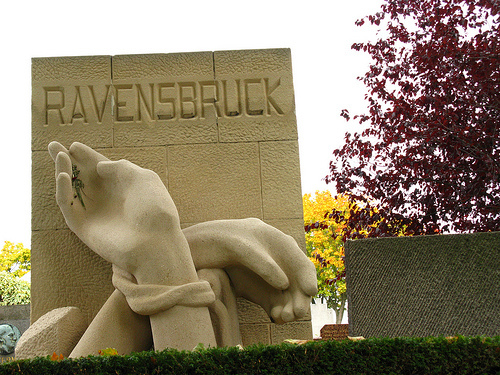
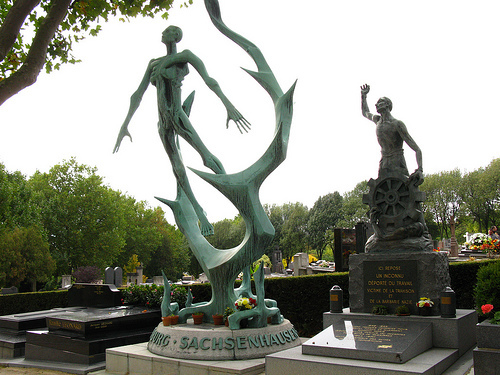
The Petain regime changed the national motto from “Equality, Liberty, Fraternity” to “Labour, Family, Country”. The full significance of this became clear when the Jews of Paris were rounded up and when their French citizenship was removed. Many died when sent by French police to camps like Drancy (on the outskirts of Paris); many more died when railroaded to Germany. In June 1942 the remaining French Jews were forced to wear the Star of David on their clothes at all times. It was then that some Parisians became aware of the forlorn treatment of their fellow citizens. The memorials at Pere Lachaise cemetery attest to this betrayal.
I also learnt that Paris was bombed by the Allies on several occasions. There was a Renault factory that made vehicles for the German army that was bombed. Railroad yards were also a target, particularly prior to the D-Day invasion on June 6, 1944. As with most bombing raids many of the bombs went askew – killing and maiming many Parisian citizens as well as destroying several homes.
The Resistance is also discussed – and the retaliation of the German occupiers who would kill off hostages every time there was an attack. And also the opposite occurred – there were French citizens who were truly infatuated by Nazi Germany – and some became, it would seem, more Nazi than the Nazis. One large group even sent French soldiers to fight with the Germans on the Russian front. Many saw Hitler and Nazism as the new European vogue that would unite Europe to fight Bolshevism, Jews, and decadent democracy. Some felt Petain was not going far enough to support Hitler and Nazism.
As the author says the vast majority of the French in Paris were stuck in the middle. On a day-to-day basis it was a struggle getting enough to eat. When liberation arrived in August, 1944 most did not know what was going on. Electricity was only available for 1 to 3 hours per day, the Metro systems were not working – it was only the sound of gunshots either far or close by that alerted them that something was occurring. The liberation euphoria wore off quickly as rationing continued, the railroad system was decrepit, and the war was not over – but the Germans were gone.
This book provides a very readable format and gives many personal insights of the daily struggles of life in Paris during the war years.
There is a famous quote attributed to Stalin: “A single death is a tragedy; a million deaths is a statistic”. This book, more than anything else, is an embodiment of this quote. Millions of people died or had their lives irreparably damaged by World War II, and almost everyone today is aware of the statistics. What this book brings home to the reader, through its use of diary entries of ordinary Parisians alongside the historical timeline, is how the German occupation of Paris impinged upon the every day life (and death) of every person within the city. I began writing this review by outlining what happened, what I learned that surprised me (lots!), things I thought that deserved wider attention ....I wrote more notes on this book (about 15 A4 sides!), than on any other book I have read in the last decade. And then I finally realised, that I want you to read this book – not my review. When reading this book, you get to know some of the individuals living (subsisting) in Paris during the occupation. You know that things are going to get worse before liberation, but you start the (mistakenly) believe that all “your” people will survive as their words have done, that history will change – at least in some small cases. And, yes – it is not all bleak. At the end of the book is a round up of what happened to the diarists, some of whom made it into the 21st century. But for me, one of the most upsetting sentences in the book was: “deported to Drancy (Auschwitz/ Bergen Belsen/ Sobibor ....) and never returned”. This is a book about the quiet heroism of ordinary people, and the veniality and evil of others. There are the historical facts, figure and statistics, but also the tragedies and triumphs of individuals. I cannot recommend this book highly enough. Stunning, compelling, informative, life-affirming and tragic. Read it!
We've all heard of the horrors of World War II but there's something about reading the everyday accounts of the ordinary people who lived through it that really brings the tragedy home.
This book covers the whole arc of the war, from the "Phoney War" in 1939 through the Nazi occupation, the Jew deportations and, finally, the liberation of Paris. The author relies heavily on the diaries and memoirs of Parisian men and women who lived through the war, some of whom didn't live to see its end. Their accounts turn what would be just another ordinary history book into a compelling story that highlights the highest heroism and lowest depravities the human spirit is capable of.
Although I knew that it was gonna be a dark read, that lots of the people mentioned in it wouldn't survive, of the unspeakable horrors the Nazis committed, I wasn't fully prepared for what I read. Many times I stopped mid-sentence because I just couldn't comprehend what I was reading. The words and grammar were right, but the gratuitous cruelty inflicted on innocent people at this time truly makes no sense.
This is a book that really pulls at your heartstrings and makes you feel like you're there, in Paris during the Nazi occupation, doing your best to survive and hoping your friends and neighbours will survive too. That's what should make it a mandatory reading in every school. Or just for everyone. Period.
have to point out something that's less annoying than simply, well, funny. To wit:
"_départements_, or departments --" pg 13
"Défense de la France (In Defence of France)" pg 180
"Rassemblement national populaire (RNP)" [here, perhaps, I could've used a helpful "National Popular Rally"] pg 182
"local town halls (_mairies_)" [this is more complicated. Why doesn't he use the one style, French first then parenthetical English. But, no. And, in the immediately following paragraph, he'll use the French or the English. Whatever!] pg 19
"Noyautage des adminstrations publiques (NAP), a clandestine organization of French officials devoted to subverting the work of the French administrative machine from within ... ." pg 306
"Mouvements unis de la Résistance (United Movements of the Resistance, or MUR)" pg 308
Yes, I needed the MUR so helpfully translated, but no, don't bother with the NAP.
and, there's this one:
?? which guy, Chamberin or Lafont or Chamberlin or Lafont? "... was headed by Henri Chamberlin, now known as Henri Lafont. "As the Germans advanced on Paris in June 1940, Chamberlin, then a thirty-eight-year-old small-time French crook, was one of a cohort of prisoners evacuated from the Cherche-Midi prison in Paris to a camp at Cepoy in the Loiret. In the subsequent chaos that swept throught France that summer, Lafont made his way back to Paris ... ." pg 315
Altogether very good. Two interesting things towards the end, though. Just one large paragraph about Oradure-sur-Glane, the terrible story of an SS troop massacring an entire village. No mention of the Alsatian malgré-nous involved.
Also, he writes, "... the rumours that the Germans had mined bridges across the Seine and packed dynamite into buildings across the city were completely untrue."
A fascinating traumatic account of Paris during the German occupation. This is the result of the author's 10 year research using diary and memoir accounts of the people who lived and worked during that awful time. It begins in 1939 - the time of the so called "Phoney War" and works up to the liberation with stories of courage and resourcefulness in between. Although liberation was welcomed, the war was not over as there were pockets of German soldiers holding out. The conclusion chapter pulls all the ends together covering the aftermath, how the Parisians rebuilt, coped with food shortages etc. Altogether a telling account of the lives of a very brave courageous people. I received a digital copy from the publisher via Netgalley in return for an honest unbiased review.
A good history of Paris during its occupation in WWII. It got a bit bogged down in some parts, however. It was particularly difficult to try and keep up with all of the different acronyms for the various organizations involved. Overall, a good read for all Francophiles. Particularly interesting were the stories related to the Jewish deportations from Drancy, and the descriptions of the various resistance units.
I'm reading everything I can about Paris before I spend some time there this year. Sometimes history books are dry and full of too many facts to track and remember but Drake does an excellent job telling the story of the Occupation, following the trek of both Germans and French alike, and describing how the years went by for ordinary citizens. I appreciated the description of post liberation challenges and what happened to the main characters after the war. Nicely done, great read.
An excellent companion to "When Paris Went Dark: The City of Light Under German Occupation, 1940-1944" (Rosbottom), perhaps even exceeding it in detail. Especially interesting is the author's use of 18 or so diaries that were kept between 1939 and 1944.
This was a great read adding a slightly different layer to the many volumes I have read about this time period and place. I am unsure why I find it all so endlessly fascinating and repulsive but I do. A great cover.
Kept my interest, despite ample detail of the daily lives of Parisians during the occupation. Worthwhile to get a flavor of what it was like to experience the gradual change from a tolerable government to one that committed atrocities beyond human imagining.
Terrifically detailed account of life in occupied Paris - held my breath all the way through, even though I knew the general outline of the real-life events.