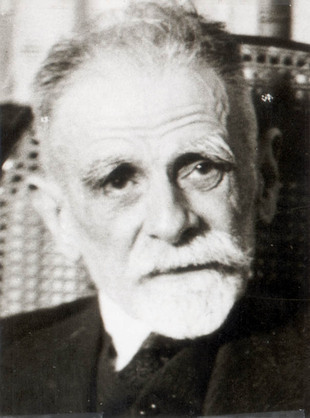
Η ποιητική σύνθεση του Κωστή Παλαμά ο Δωδεκάλογος του Γύφτου εκδόθηκε το 1907 και αποτελείται από δώδεκα λόγους. Θα μπορούσαμε να ισχυριστούμε ότι αποτελεί την κορυφαία ίσως έκφραση της «λυρικής σκέψης» του ποιητή. Η υπόθεση εκτυλίσσεται στα χρόνια της Αλώσεως του Βυζαντίου, περίοδος που σηματοδοτεί ευρύτερες εξελίξεις σε Ευρώπη και Ανατολή, περίοδος που η σκυτάλη παραδίδεται στην Αναγεννησιακή σκέψη. Αυτήν ακριβώς τη χρονική στιγμή τοποθετείται ο ερχομός των Γύφτων και του Γύφτου. Βάρβαροι μεν, με ειρηνικές προθέσεις δε... Η ιερή πόλη του ελληνισμού, η Κωνσταντινούπολη, το σταυροδρόμι της τότε οικουμένης, γίνεται το σύμβολο του παλαιού κόσμου που πεθαίνει και δίνει τη θέση του στο νέο κόσμο. Ο Γύφτος αν και γέννημα μίας ταραγμένης εποχής, αισθάνεται ότι κρύβει μέσα του την ελπίδα του μέλλοντος... Στο πνευματικό του οδοιπορικό θα συγκρουστεί με αξίες όπως η αγάπη, η πατρίδα, οι θεοί, η αρχαιότητα και το Βυζάντιο... Δεν ξέρει από πού είναι, μα μόνο ότι βλάστησε ανυπότακτος, φύση ελεύθερη, οδεύοντας προς μία μελλοντική κοινωνία στηριγμένη σε μία νέα ανθρωπογονία...
Kostis Palamas (Greek: Κωστής Παλαμάς) was a Greek poet who wrote the words to the Olympic Hymn. He was a central figure of the Greek literary generation of the 1880s and one of the cofounders of the so-called New Athenian School (or Palamian School, or Second Athenian School) along with Georgios Drosinis, Nikos Kampas, Ioannis Polemis.
Η ποίηση του Παλαμά με συγκινεί. Με συγκινεί σε ένα τόσο βαθύ σημείο της καρδιάς μου, που δεν ήξερα ότι μπορεί να φτάσει ποτέ κάποιος ήχος ή μια εικόνα. Αλλά ο Παλαμάς το κάνει. Την πρώτη φορά που διάβασα τον Δωδεκάλογο του Γύφτου οικτιρούσα την φωνή μου, που ούτε σε τρεις ζωές δεν θα μπορέσει να μιλήσει με τον λόγο του. Ο Παλαμάς δεν είναι μαγεία, είναι ένα μικρό θαύμα.
Κ’ έκραζες βραχνά- το κράξιμο σου Δεν μπορώ να τ’ απολησμονήσω,- Κ’ έκραζες: «Φωτιά! Να κάψω τον Παράδεισο» Κ’ έκραζες: «Νερό! Την κόλαση να σβήσω!»
Αυτή την φορά πέρα από την απόλαυση του ίδιου του λόγου, έσκυψα με προσοχή πάνω από το κείμενο για να αποκρυπτογραφήσω το νόημα. Σε αυτό το ποίημα ο Παλαμάς γίνεται ο "Ποιητής Μύστης", χρησιμοποιεί συμβολισμούς για να μιλήσει για παγκόσμια ζητήματα. Ο Γύφτος του αντιπροσωπεύει τον ποιητή, καλλιτέχνη και πνευματιστή που σπάει τα κατεστημένα, που αρνείται τα σύμβολα, που καταφέρνει να μην είναι τίποτα από όσα θέλει να είναι ο υπόλοιπος κόσμος και έτσι καταφέρνει να γίνει τα πάντα. Βεβηλώνει τους θεούς, ξεπερνά τους αρχαίους.
ω της πλάνης γιγαντέματα, θεοί εσείς αλίμονο σας! Απ’ την ώρα που άλλος ο άνθρωπος ξεβαλλικέψη εμπρος σας, (...) και τον ήλιο πως του κρύβετε βλέποντας, και για ν’ αναψη μια φωτιά για φως, για ζέσταμα πάρη κ σας κάψη!
Και ζει. Ερωτεύεται με πάθος, δουλεύει πολύ, αλλά σε ότι τον ευχαριστεί. Μαθαίνει τέχνες, είναι περίεργος για την ζωή και σε αυτήν πέφτει με φόρα. Και ζει. Μόνο τότε συναντιέται με τους Θεούς, όχι προσκυνώντας, αλλά όταν με την τέχνη του, τους συγκινεί και έρχονται αυτοί σε αυτόν.
Άσοφε, σοφέ και θεοσεβούμενε, Δίγνωμε και ίσε Κι άθεε, καταπάνου μας σκοντάφτεις Όποιος είσαι. (…) Τώρα γύρε εδώ, κι απάνου μας Καθρεφτίσου… Σ’αεροφέρνει ίσα μ’εμας, κ’ υψώνει, σε άνθρωπε Το βιολί σου.
Γιατί διάλεξε ο Παλαμάς έναν "γύφτο" για να μιλήσει για τα θέματα που τον απασχολούν; Γιατί μόνο ένα πλάσμα χωρίς πατρίδα, χωρίς να προσκυνάει έθνη, ήρωες, θεούς μπορούσε να μιλήσει με αυτά τα λόγια. Ο ήρωας του τριγυρνάει μέσα στην Κωνσταντινούπολη, την χαμένη δοξασμένη πατρίδα των Ελλήνων και τι είναι για αυτόν; Μια ακόμα πόλη που θα πέσει. Με αυτό το επικό, όμορφη ποίημα ο Παλαμάς αναιρεί όλα τα ιδεώδη και μας θυμίζει ότι τι είναι; Ιδέες. Πεθαίνεις για το χώμα, πεθαίνεις για τα ιερά, κλαίς παλιούς ήρωες που ποτέ δεν γνώρισες, μα απλώς για αυτούς άκουσες. Ο ήρωας του περιφρονεί όλα αυτά και τι κάνει; Κάνει πατρίδα του κάθε χώμα, καλεί τους θεούς κοντά του με την δουλειά του και γίνεται αυτός ήρωας και θεός του εαυτού του. Γίνεται υπεράνθρωπος! "ειμ' εγω των άθεων ο προφήτης κ' η ζωή μου είναι το θάμα"
Να επισημάνω εδώ, ότι γίνεται αισθητή η επιρροή της νιτσεικής φιλοσοφίας σε όλο το ποίημα. Εν κατακλείδι λατρεύω την ποίηση του Παλαμά. Η ποίηση του είναι αυτός ο εκρηκτικός συνδυασμός επίπονης προσωπικής εργασίας που φέρνει η αληθινή παιδεία με την βαθιά αντίληψη του κόσμου κ του λόγου, που πραγματικά νομίζω μου λείπει από τους σύγχρονους καλλιτέχνες. Είναι γεγονός πως στην μελέτη μου για τον Δωδεκάλογο, προσπάθησα να αναλύσω εν μέρει το νόημα του ποιήματος, αλλά για εμένα δεν έχει τόση σημασία. Ο λόγος για αυτό είναι, ότι η γλώσσα του είναι τόσο περίτεχνη, τόσο υπέροχη τόσο μουσική, που όπως λέει κ ένας πολύ αγαπημένος μου φίλος, για έναν άλλο μεγάλο έλληνα λογοτέχνη «Η γλώσσα του είναι τόσο ωραία που κ για την αναπαραγωγή του κορμοράνου να έγραφε εγώ θα έμενα έκπληκτος μόνο και μόνο από την αφήγηση του»
Διαβάζοντας το κλασικό αυτό του Παλαμά, δεν μπορούσα να μην αναρωτηθώ: Πήγα άραγε σχολείο; Και αν ναι, γιατί δεν μου έδωσε κανείς το ερέθισμα να ανακαλύψω αυτά τα έργα; Ή μήπως ονομάζεται ερέθισμα το μάθημα της νεοελληνικής λογοτεχνίας; Από την άλλη, χαίρομαι που το διάβασα σε αυτή την ηλικία, έχοντας διαβάσει και λατρέψει τον Ζαρατούστρα του Νίτσε από το οποίο εμπνεύστηκε σε τεράστιο βαθμό ο Παλαμάς.
When Greece regained its independence from the weakened Ottoman Empire in 1832 with the help of the Turks' imperial competitors, Russia, France and Great Britain,(*) its writers had to face the vexed decision of which language they were going to use to compose their works - the antiquarian Attic Greek of 4th century BCE Athens, which was maintained as the language of government and literature by the Byzantines, or the Greek spoken by the contemporary Greeks. You can well imagine the positions taken and the arguments made. Needless to say, tempers became a little hot, and the oligarchy quite simply imposed the archaistic katharevousa on public life, including the schools. So, unlike, say, the Koreans, who were forced by the Japanese to forget Korean and learn Japanese, the Greek people were forced by their own folk to learn a nearly unintelligible ancient Greek.
The poet Kostis Palamas (1859-1943) is considered by many to be the writer whose work settled the matter in favor of the demotic Greek, and his O Δωδεκάλογος του Γύφτου (Twelve Lays of the Gipsy - 1907) is held to be his best work.(**) Of course, Palamas had to enrich the relatively poor vernacular, but he consistently drew upon its heritage of folk-songs and ballads.
Some further points of relevance to this book: in 1897, the Greeks invaded the Ottoman Empire in an attempt to recover Constantinople and Ionia. Bad move.(***) The ignominious defeat was a crushing blow to the Greeks' nascent self-confidence and threw their emerging identity into question. At the same time, the writings of Marx and Nietzsche were roiling the Greek political waters (apparently, Nietzsche was seen by the Greek middle class as an alternative to the frightening spectre of a powerful working class).
All of these elements, and more, enter into Palamas' epic poem. As he wrote in his author's dedication, he "tried to thread together epic, lyric, drama, and, drawing on all the elements of poetical speech, on historical tradition, and on philosophical thought, on life and dreams, some visions of the mind and throbbings of the heart." Although it is possible to read this poem perfectly literally, it admits a reading as symbolism, if not as allegory. In any case, to read the poem on several levels enhances pleasure.
Written shortly after the 1897 defeat of the Greek attempt to regain Constantinople, the setting of this poem is ... Constantinople shortly before its fall to the Turks. A tribe of gypsies arrives outside its walls, a simple, tightly cohesive folk who are complete outsiders to the sophisticated and elegant Byzantine culture. The translator suggests that these gypsies represent the original Greeks as Nietzsche and others saw them - in perfect harmony with Nature, the Gods and their own society. However, it is possible to see them representing the 19th century Greeks, reduced and alienated from their splendid past, gazing with awe at the brilliant city from their miserable encampment. Among the gypsies is a poet/musician who, in contrast to the rest of his people, has recognized himself as an individual and knows himself to be alienated from the others. There is not much question whom he "represents," for the poem is related in his first person which at the end merges with the poem's author.
The poem follows this poet/musician through a series of experiences/personal developments, but I shan't try to summarize. In fact, the author himself (!) provides a four page summary at the beginning of the text. The many strands and elements of the poem indicated above have resulted in a mish-mash, in my opinion, not in a grand synthesis. The poem just does not hold together as a coherent piece, and, on occasion, made me shake my head in disbelief.(****) In the 50's and 60's Palamas was still being touted as the finest modern Greek poet, but not any longer. He has been replaced by his contemporary C.P. Cavafy and two brilliant generations of poets who came of age before and after the Second World War. There are moments of brilliance in this poem, but they are not sustained.
Nonetheless, Palamas' demonstration of what the demotiki, the demotic Greek language, was capable of in the right hands, together with the political overtones the language question was freighted with (the conservatives, royalists and elites for the katharevousa and the democrats and socialists for the demotiki), assured him a place in the hearts of the Greek people.
So, when Kostis Palamas died on February 27, 1943, in the midst of the German occupation, he had dominated Greek cultural life for decades. Though the funeral was held the next day and the Germans controlled the radio stations, it is claimed that several hundred thousand Greeks assembled for the event. The Germans must have been rather nervous...
(*) These selfless liberators saw to it that Greece did not become a republic; indeed, they imposed a Bavarian prince on the Greeks as King. When the Greeks finally drove this gentleman into exile in 1862, the Great Powers put a Danish prince on the throne of Greece!
(**) As an aside I'll mention that the lyrics of the Olympic Hymn are Palamas'.
(***) At least the consequences were not as bad as those of the second attempt in 1922, after which the Turks simply expelled over a million Greeks from their ancestral lands in Asia Minor.
(****) For example, Palamas has socialist sentiments standing alongside Nietzschean bombast about the Hero and the Superman - I was almost expecting to see the Superman singing the Internationale! I'm not joking. In Canto II the Poet's soul is telling him You are the one apart, unique, incomparable[,]
that his life is the sun with a death-dealing gaze (echoes of Also Sprach Zarathustra), and in the very next stanza his soul tells him Sun at play, wings in flight, incomparable! Do not boast! Lend a hand and help! Become a worker!
When Greece regained its independence from the weakened Ottoman Empire in 1832 with the help of the Turks' imperial competitors, Russia, France and Great Britain,(*) its writers had to face the vexed decision of which language they were going to use to compose their works - the antiquarian Attic Greek of 4th century BCE Athens, which was maintained as the language of government and literature by the Byzantines, or the Greek spoken by the contemporary Greeks. You can well imagine the positions taken and the arguments made. Needless to say, tempers became a little hot, and the oligarchy quite simply imposed the archaistic katharevousa on public life, including the schools. So, unlike, say, the Koreans, who were forced by the Japanese to forget Korean and learn Japanese, the Greek people were forced by their own folk to learn a nearly unintelligible ancient Greek.
The poet Kostis Palamas (1859-1943) is considered by many to be the writer whose work settled the matter in favor of the demotic Greek, and his O Δωδεκάλογος του Γύφτου (Twelve Lays of the Gipsy - 1907) is held to be his best work.(**) Of course, Palamas had to enrich the relatively poor vernacular, but he consistently drew upon its heritage of folk-songs and ballads.
Some further points of relevance to this book: in 1897, the Greeks invaded the Ottoman Empire in an attempt to recover Constantinople and Ionia. Bad move.(***) The ignominious defeat was a crushing blow to the Greeks' nascent self-confidence and threw their emerging identity into question. At the same time, the writings of Marx and Nietzsche were roiling the Greek political waters (apparently, Nietzsche was seen by the Greek middle class as an alternative to the frightening spectre of a powerful working class).
All of these elements, and more, enter into Palamas' epic poem. As he wrote in his author's dedication, he "tried to thread together epic, lyric, drama, and, drawing on all the elements of poetical speech, on historical tradition, and on philosophical thought, on life and dreams, some visions of the mind and throbbings of the heart." Although it is possible to read this poem perfectly literally, it admits a reading as symbolism, if not as allegory. In any case, to read the poem on several levels enhances pleasure.
Written shortly after the 1897 defeat of the Greek attempt to regain Constantinople, the setting of this poem is ... Constantinople shortly before its fall to the Turks. A tribe of gypsies arrives outside its walls, a simple, tightly cohesive folk who are complete outsiders to the sophisticated and elegant Byzantine culture. The translator suggests that these gypsies represent the original Greeks as Nietzsche and others saw them - in perfect harmony with Nature, the Gods and their own society. However, it is possible to see them representing the 19th century Greeks, reduced and alienated from their splendid past, gazing with awe at the brilliant city from their miserable encampment. Among the gypsies is a poet/musician who, in contrast to the rest of his people, has recognized himself as an individual and knows himself to be alienated from the rest of the gypsies. There is not much question whom he "represents," for the poem is related in his first person which at the end merges with the poem's author.
The poem follows this poet/musician through a series of experiences/personal developments, but I shan't try to summarize. In fact, the author himself (!) provides a four page summary at the beginning of the text. The many strands and elements of the poem indicated above have resulted in a mish-mash, in my opinion, not in a grand synthesis. The poem just does not hold together as a coherent piece, and, on occasion, made me shake my head in disbelief.(****) In the 50's and 60's Palamas was still being touted as the finest modern Greek poet, but not any longer. He has been replaced by his contemporary C.P. Cavafy and two brilliant generations of poets who came of age before and after the Second World War. There are moments of brilliance in this poem, but they are not sustained.
Nonetheless, Palamas' demonstration of what the demotiki, the demotic Greek language, was capable of in the right hands, together with the political overtones the language question was freighted with (the conservatives, royalists and elites for the katharevousa and the democrats and socialists for the demotiki), assured him a place in the hearts of the Greek people.
So, when Kostis Palamas died on February 27, 1943, in the midst of the German occupation, he had dominated Greek cultural life for decades. Though the funeral was held the next day and the Germans controlled the radio stations, it is claimed that several hundred thousand Greeks assembled for the event. The Germans must have been rather nervous...
(*) These selfless liberators saw to it that Greece did not become a republic; indeed, they imposed a Bavarian prince on the Greeks as King. When the Greeks finally drove this gentleman into exile in 1862, the Great Powers put a Danish prince on the throne of Greece!
(**) As an aside I'll mention that the lyrics of the Olympic Hymn are Palamas'.
(***) At least the consequences were not as bad as those of the second attempt in 1922, after which the Turks simply expelled over a million Greeks from their ancestral lands in Asia Minor.
(****) For example, Palamas has socialist sentiments standing alongside Nietzschean bombast about the Hero and the Superman - I was almost expecting to see the Superman singing the Internationale! I'm not joking. In Canto II the Poet's soul is telling him You are the one apart, unique, incomparable[,]
that his life is the sun with a death-dealing gaze (echoes of Also Sprach Zarathustra), and in the very next stanza his soul tells him Sun at play, wings in flight, incomparable! Do not boast! Lend a hand and help! Become a worker!
Τώρα πια ο Παλαμάς δεν συγκινεί τους περισσότερους αναγνώστες του. Ο Καβάφης τον νίκησε κατά κράτος. Ο Δωδεκάλογος και η Φλογέρα οι δυο μεγάλες συνθέσεις που ο φιλόλογος επιβάλλεται να έχει διαβάσει.
Ενδιαφέρον ποιητικό opus. Το μακροσκελές το μέγεθος του πάντως δεν με βοήθησε στην εύκολη σύνδεση στοιχείων, έστω και αν υπήρξε η μνημοτεχνική επανάληψη στοιχείων που επανεμφανίζονται σε όλα τα άσματα. Ο γύφτος λοιπόν ποιος είναι; Αν όχι η δύναμη της αλλαγής, τα καταπιεσμένα θέλω για μια μεταμόρφωση και επαναφορά στην φύση του ανθρώπου και του κόσμου γενικότερα; Σίγουρα πρέπει να το διαβάσει κάποιος για την ομορφιά της γραφής του Παλαμά και για της όμορφες εικόνες που εμφανίζονται με μια απλόχερη ποικιλία αστείρευτης ποιητικής φαντασίας με μέτρο (εννοώντας τον στίχο με ομοιοκαταληξία).
Δωδεκα διαφορετικά ποιήματα με διαφορετικές τεχνοτροπίες, εσωτερικό ρυθμό, ιδιαιτερη γλώσσα και συνταξη. Οικουμενικά διαχρονικά μηνυματα για την απελευθερωση του ανθρώπου από Θεούς, Πατριδες, Οικογενεια, Εξουσίες ακόμα και από τον ίδιο τον Έρωτα. Ένας Ανθρωπος, πλασμα της φυσης, χωρίς ριζες, άθρησκος, απατρις, διωκομενος, ταξιδευει συνεχώς, χωρις βαριδια και αποσκευές. Ένας Υμνος προς την Ελευθερία. Ο "Εθνικός"μας ποιητης οπως δεν τον ακουσαμε ποτε στο σχολείο. Τυχαίο? Δεν νομιζω!