Why do humans need ghosts? And what do our ghosts have to teach us?
“Gaines Quammen looks history straight in the eye.” —LEAH SOTTILE, Blazing Eye Sees All
This Haunted Land investigates some of America’s most enduring legends and uncovers how ghost stories can illuminate some of the most unsettling parts of history. With curiosity, a touch of skepticism, and an open-hearted willingness to learn from the living and the dead, Betsy Gaines Quammen takes readers on a journey into haunted towns, forgotten lives, and abandoned places. From a once-booming uranium mining community in Colorado to a fort on the coast of Florida that predates the United States itself, this riveting exploration of memory, mourning, folklore, and social anxiety shows that politicized efforts to rewrite history can only be defeated by bearing witness to the specters of the past.
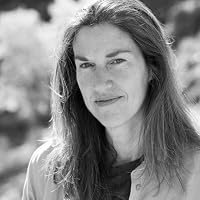
Betsy Gaines Quammen is a historian and award-winning writer. She is fascinated by how cultural views shape relationships to landscape—and she loves a good ghost story! Betsy received a PhD from Montana State University, where she studied religion, history, and the philosophy of science. Her dissertation focused on Mormon history and the roots of armed public land conflicts in the United States.
Betsy's work has appeared in the New York Times, New York Daily News, and the History News Network. She is the author of This Haunted Land, American Zion, and True West. She lives in Bozeman, Montana, with her husband, writer David Quammen, three big dogs, a sturdy cat, and a lanky rescue python.
In very readable and personal prose Quammen shows how we create and hang on to our ghostly legends out of fear, misunderstanding, and anxiety. But when we learn about and face the truth of our communal history then those ghosts become simply the stories of people just like us and we begin to understand them and each other.
This book isn’t at all what I expected; it was better! I was given the opportunity to read this as a free ARC by Knight’s Nook in Yukon, OK. I was thinking it was going to be filled with the typical “ghost stories” around the country, but it was much more. Quammen does a great job weaving together stories of people, land, and conflict, especially around issues of conservation and cultural memory. The historical content is presented in a respectful and balanced manner; Quammen doesn’t sensationalize the conflicts she discusses. Instead, she approaches them with care and nuance, honoring the complexity of the people and histories involved. She also adds a touch of personality that made me feel like I was in on the experience. This book consistently holds your attention while also capturing the unique ambience of the landscapes and communities she describes. While there are mentions of ghosts and hauntings, the heart of the book is really centered on the people, the towns, and their layered histories. Overall, it’s a thoughtful and engaging read that would appeal to anyone interested in hauntings, history, or the cultural narratives tied to land in the United States.
This Haunted Land: Reckoning with Ghosts and the Stories that Shape America by Betsy Gaines Quammen takes you on a journey through some of America’s most haunted locations, exploring local folklore, history, and darker truths that have shaped some of the stories we know today.
I didn't expect Quammen to weave so many of her personal experiences into each chapter while also diving deep into the often unsettling histories behind these locations, but I absolutely loved it. Although each chapter was rich in its own folklore and history, the stories of La Llorona and Quammen’s deeply personal account of her own ghostly experience involving her father really piqued my interest. Overall, This Haunted Land offers a unique perspective on what it means for a place or even a person to be haunted.
🎧 Now for the audio review: Leanne Woodward did a wonderful job bringing the history and folklore to life. The narration has an almost documentary-style feel to it, which compliments the book beautifully.
Favorite Quote:
“Obituaries, no matter how lovingly written, reduce a full life to a few details.”
Thank you so much to Blue Nose Audio for providing me with an ALC of this book! All opinions are voluntary and entirely my own.
Most of the chapters in this book would work as personal essays, but they don't come together in book form as well and start to sound pretty same-y. It was a lot more about the author's personal experience than I was expecting, although she clearly did a lot of research too. I think it's hard to write a "what do ghost stories say about us culturally" book when you hardcore believe in ghosts. If you believe every ghost story you hear, then the answer to "why do people tell this ghost story" is "because it happened" which ends the conversation and doesn't say much sociologically.
Also when she tried to convince me that a woman offering her fruit was ~spooky~ I rolled my eyes so hard lol.
I am fascinated like many people of the paranormal. This collection of stories features an array of different time periods and locations. It does not touch on just houses but this book also talked about all the lives lost when Hoover Dam was built. Each chapter focused on a different story. So, you can experience this book in the way you want.
As an audiobook listener, i enjoyed listening to the ALC. It is performed in single pov by Leanne Woodward. Leanne is a new narrator to me. I enjoyed listening to her voice. It is clear. If you enjoy nonfiction books and discovering history, you will enjoy this ALC.
A most unique non fiction piece filled with absolutely fascinating information that falls under actual historical events in areas of landscape, societies, religious beliefs, and cultural behaviors.
The author delves into some personal experiences that might raise the hair on the back of your neck, but that, just helps set the mood.
Are ghosts truly real? What might be some of the logical reasons for their timely appearances? Is it to truly scare people? Or are they trying to somehow communicate with those who cross paths with these filmy apparitions?
A fantastic read, perfect for fall and definitely a keeper for paranormal/supernatural enthusiasts.
It is quite literally the travel guide into terror!
Thanks to Torrey House Press for this incredibly frightening read!
Betsy takes a unique and respectful approach to the history and ghosts in each of the place she visits by writing about the history, honoring the people, and not relying on ghost stories and rhetoric.
Early in the book, the author defines the word haunted. It can mean a person who’s deeply troubled by a past tragedy, or a landscape that holds a memory of a defining event, or a place where ghosts dwell.
And yes, while there are ghosts in this book, their stories are interspersed in and told through the stories of America. The author takes us from Indian Boarding Schools to studying our past and current mismanagement of the water supply in the west, to the satanic panic, to a lovely chapter that taught me about the ivory billed woodpecker, the Cokesville incident, St. Augustine (which is one of my favorite Florida cities), even La Llorona gets her own chapter.
The author did an impressive job researching “haunted” places and their cultural and societal backgrounds and place in our story. I enjoyed learning more about the histories of the places visited in this book and the people and events that haunt them even still today.
I would like to thank the publisher for the opportunity to read this advanced copy.
⭐️ 4.25/5
This entire review has been hidden because of spoilers.
In her compelling book, Quammen masterfully interweaves ghost stories with an array of subjects, creating a rich tapestry that explores the depths of collective memory and cultural hauntings. By integrating immersive reporting, archival research, and folklore, the author embarks on a journey from Indigenous Boarding Schools, to the Cokesville incident, to the deep forests of Arkansas, where the spectre of the ivory-billed woodpecker looms large, St. Augustine, and La Llorona. These ghostly tales are not mere supernatural anecdotes but serve as poignant reminders of unresolved violence, displacement, and ecological devastation. Her insightful examination of moral panics, from the Satanic Panic of the 1980s to modern conspiracy theories, highlights the pervasive nature of these cultural phantoms. Quammen’s work is a profound meditation on how extinction and environmental degradation can manifest as a kind of ghost story, inviting readers to reflect on the deeper implications of loss and memory. A blend of travel narrative, cultural history, and storytelling, this original work resonates with those interested in narrative nonfiction, environmental writing, and the intricate layers of American cultural history. Leanne Woodward delivered a captivating performance in the audiobook produced by Blue Nose Audio. Her ability to engage listeners from start to finish showcases her talent for bringing stories to life through voice. It’s always exciting to discover a new narrator who can breathe life into a story and make it an unforgettable experience. Her skill in narration enhanced the storytelling experience, making it immersive and enjoyable. Woodward has made a memorable impression.
Ghost stories share much about a place and culture. They can reveal silenced histories, ordinary people, evil choices made by some, and more. Traditional ghost stories carry the fears and guilt of people as well.
In this unputdownable book, the author shares ghost stories from around the country, diving into the history of the place and people as well as the ghost story and her experiences visiting each site. She starts with Butte, Montana, which is well-known in Montana for many reasons, one of which is how haunted it is. She shares some tidbits of Butte history that I didn't know.
I have loved ghost stories since I was a child. They helped me feel less alone when I had paranormal experiences. They also helped me work through fears in a safe place (a book). I wrote my own ghost stories as a child. I have read many books of ghost stories and visited various haunted locations.
This isn't the typical ghost story book. Readers get more history than is typical, as well as more understanding of the author's experiences. She also delves into hauntology. With all of that, it's the best ghost stories book I've read in a while.
I highly recommend this, even--maybe especially--for those who've read many ghost stories books. Preorder it or request that your local library gets a copy.
Thank you to Edelweiss+ and the publisher for an advanced copy!
This book was a bit of a slog for me, primarily, I think, because I expected it to be a book of ghost stories, and while every tale was rooted in a ghost story, it went beyond that into the history and, often, the generational trauma of the tale. That was unexpected. Interesting, yet unexpected.
The tales seemed a bit disparate, but the last chapter, “Remember Me,” seemed to bring it all together. “…the idea of generational healing felt novel, ethereal—and what my own research and writing this book is ultimately about.” I feel Ike if the entire book had been recast from this perspective, if this idea/purpose had been shared from the first page, the entire book would have come together much more cohesively for me.
Did I find the stories fascinating? Absolutely. Did I pick up on this idea of generational trauma and healing? Indirectly, though now that I know it runs throughout, I see the roots of it in each story. I’m I sorry I read it? Not even a little bit. Would I recommend it? That depends. If you are looking for a book of scary ghost stories, this is not your book. If you are interested in history, the story behind the story, especially for marginalized groups, I highly recommend it.
I am not someone who normally reads books about ghosts. Honestly, I've never had much interest in them. So I was pleasantly surprised to discover that this book is about so much more than hauntings.
It takes a fascinating deep dive into the history surrounding several so-called haunted places and stories. The chapters are chock-full of historical detail, but they never felt like a dry history lesson. Instead, I felt like I was tagging along with Betsy Gaines Quammen on an adventurous and sometimes surprising road trip through the past. Her descriptions really take you there with her.
What impressed me most was the depth of the research. I even found myself checking out the bibliography...wow! I learned a great deal about events in our country's past and, just as importantly, came away thinking about how those events and the stories we tell about them continue to shape us across generations.
I picked up a book about ghosts and ended up getting a fascinating history lesson. I'm very glad I ventured outside my usual reading interests for this one.
What a great book to read during October and fall! Betsy has written a book that dives deep into a nation’s historical background and the haunts that remain. Each chapter is its own tale, filled with history, eerie details, and haunting stories that pull you in and leave you wanting to know more. I loved how each story offered something different while giving readers a glimpse into the past and the mysteries that continue to linger. The storytelling kept me completely invested from chapter to chapter, making this a perfect read for spooky season and anyone who loves history with a haunting twist!
This is the kind of book that makes nonfiction my preferred genre. This Haunted Land is super enjoyable to read and I also effortlessly learned a ton. In this case, I enjoyed the deep dive into ghosts and why people are fascinated with them, but I also learned about what is behind that fascination and how this relates to our understanding of American history. I will never think about ghost stories in the same way. I was fortunate enough to read an advance copy of This Haunted Land some six months ago and the novel insights shared by Gaines Quammen have stayed with me.
“I don’t believe in haunted houses, only haunted people.”
I lovingly called this book Woke Ghost Stories. I really enjoyed reading about the history of these ghost stories. Each chapter had a message, here are my summaries of some of the chapters:
Six Acres — the horrors of slavery and why white guilt creates ghost stories around it Feathered Phantoms — capitalism killed the environment Faces on the Wall — the horrors of colonialism The Town Underground — the ghost of capitalism Haunted waters — our dying water sources
As a former anthropology student who got REALLY into folklore I think the author does a wonderful job of going into both the history of a place and the haunts that are attributed to it. I also enjoyed the expansion of the definition of the word ‘haunt’ when it comes to animals, landmarks, etc. It adds to the cultural understanding and why there may be something you see out of the corner of your eye. In the end she emphasizes how living people carry on the stories and history of the past of these places and people and it’s something I really love about ghost stories.
Got off to a good start in Butte, Montana. This book explores regional ghost stories and folklore and how they tie into the history and fears of the local culture. In addition to a lot of history research, it’s anecdote-heavy. Not all the “hauntings” are ghosts of people. Chapters also dive into animal hauntings, cultural genocide, climate change, and extinction.
I wasn’t sure what to expect, but when I saw she was coming to the Boulder Bookstore with fellow author and friend who wrote Plastic Shaman, I had to go. Picked up both books and got to talk to both authors. Absolutely loved this book and the audio.
What I enjoyed: How the book weaves in traditional ghost stories with actual stories about ancestral fears due to racism and inequality. Very eye opening. This book should be on everyone’s shelves. The audio is a great addition to this important work.