

What do you think?

War Plan Red: The United States' Secret Plan to Invade Canada and Canada's Secret Plan to Invade the United States
It's known as the world's friendliest border. Five thousand miles of unfenced, unwalled international coexistence and a symbol of neighborly goodwill between two great the United States and Canada. But just how friendly is it really? In War Plan Red, the secret "cold war" between the United States and Canada is revealed in full and humorous detail.
With colorful maps and historical imagery, the breezy text walks the reader through every aspect of the long-simmering rivalry--from the "Pork and Beans War" between Maine and Newfoundland lumberjacks, to the "Pig War" of the San Juan Islands, culminating with excerpts from actual declassified invasion plans the Canadian and U.S. militaries drew up in the 1920s and 1930s. A perfect gift for history buffs (and Canadians and Americans alike), War Plan Red offers up a new wrinkle in the ever-evolving history of North American continental relations.
With colorful maps and historical imagery, the breezy text walks the reader through every aspect of the long-simmering rivalry--from the "Pork and Beans War" between Maine and Newfoundland lumberjacks, to the "Pig War" of the San Juan Islands, culminating with excerpts from actual declassified invasion plans the Canadian and U.S. militaries drew up in the 1920s and 1930s. A perfect gift for history buffs (and Canadians and Americans alike), War Plan Red offers up a new wrinkle in the ever-evolving history of North American continental relations.
147 pages, Kindle Edition
First published March 17, 2015
Ratings & Reviews
Friends & Following
Create a free account to discover what your friends think of this book!
Community Reviews
Displaying 1 - 30 of 40 reviews

April 5, 2025
As with almost everything about the Donald, his ideas about taking over Canada are both ridiculous and old hat, as one learns from this now timely 2015 little book by my long-ago boss. Despite a 1935 plan to invade Canada (just in case), the US are close allies that share intelligence and huge amounts of trade. Only an absurd bully could threaten our good northern neighbor.

December 31, 2015
Oh my goodness, this book was fun. The author explores, in a light-hearted way, the sometimes uneasy relationship between the USA and Canada, going all the way back to colonial times. Perhaps fortunately for both countries, a lot of their "secret" military adventures seemed to be downright comedic. The last two escapades in the book are particularly amusing. In the 1920s, Lieutenant Colonel James Sutherland Brown (otherwise known as "Buster" Brown) devised "Defence Scheme No. 1", in which he scouted along the border with New England, looking for weak spots for a future invasion. He kept a spy notebook of his observations. Here are a few of his notes, from page 65 in the book:
In rural Vermont he noted that "if [Americans] are not actually lazy, they have a very deliberate way of working and apparently believe in frequent rests and gossip".
"The women throughout the rural districts appear to be a heavy and not very comely lot."
Similarly, a large number of men of the state (Vermont) are "fat and lazy but pleasant and congenial".
On the USA side, "War Plan Red" was developed in 1930. The entire text of the plan is provided in an appendix. Apparently each country has coveted the neighboring land practically since the beginning. This book keeps tongue firmly in cheek as it skims through the highlights of our shared history, with many maps, drawings, and photos to liven the text.
In rural Vermont he noted that "if [Americans] are not actually lazy, they have a very deliberate way of working and apparently believe in frequent rests and gossip".
"The women throughout the rural districts appear to be a heavy and not very comely lot."
Similarly, a large number of men of the state (Vermont) are "fat and lazy but pleasant and congenial".
On the USA side, "War Plan Red" was developed in 1930. The entire text of the plan is provided in an appendix. Apparently each country has coveted the neighboring land practically since the beginning. This book keeps tongue firmly in cheek as it skims through the highlights of our shared history, with many maps, drawings, and photos to liven the text.

December 16, 2024
These days, the US-Canada border is both the longest land border in the world, and one of the most peaceful. This was not always true, of course. The two countries had an actual shooting war in 1812, and nearly came to blows several more times. Most weirdly, in the 1920s and 1930s, the two countries developed very similar plans to invade each other.
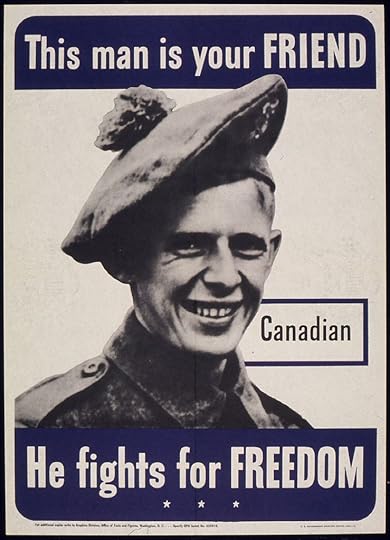
This man is your FRIEND. He fights for FREEDOM
War Plan Red is a quick, Buzzfeed-ish guide to the military aspects of US-Canadian relations, focusing mostly on the various farces of US invasions in 1812, and the the Fenian raids around the Civil War, where Irish Americans tried to use military force to get Britain to release Ireland, to no avail.
The documentation is attached at the end of the book. The US War Plan Red is a rather dry geographic description of Canada, noting the lack of strategic depth, but also difficult conditions along the St. Lawrence river. The Canadian Defence Scheme No. 1, product of Lt. Col. "Buster" Brown, is more scattered (apparently most of it was destroyed), but includes some rather arch observations on the rural residents of Vermont, and argues for a rapid attack against the industrial North East to throw the American response off balance. For most of this time, Canada was part of the British Empire, and the war plans were both formed to shape circumstances by the time the Home Fleet arrived to put things right. Ironically, the British plan in the event of either circumstance was probably to do nothing. Canada wasn't worth a war with the US.
This man is your FRIEND. He fights for FREEDOM
War Plan Red is a quick, Buzzfeed-ish guide to the military aspects of US-Canadian relations, focusing mostly on the various farces of US invasions in 1812, and the the Fenian raids around the Civil War, where Irish Americans tried to use military force to get Britain to release Ireland, to no avail.
The documentation is attached at the end of the book. The US War Plan Red is a rather dry geographic description of Canada, noting the lack of strategic depth, but also difficult conditions along the St. Lawrence river. The Canadian Defence Scheme No. 1, product of Lt. Col. "Buster" Brown, is more scattered (apparently most of it was destroyed), but includes some rather arch observations on the rural residents of Vermont, and argues for a rapid attack against the industrial North East to throw the American response off balance. For most of this time, Canada was part of the British Empire, and the war plans were both formed to shape circumstances by the time the Home Fleet arrived to put things right. Ironically, the British plan in the event of either circumstance was probably to do nothing. Canada wasn't worth a war with the US.

April 15, 2017
I struggled with how to rate this book: it technically fulfilled its purpose, but it didn't really feel like a rich read. It's just not terribly substantial, and reads more like a great longform magazine article that's been overstretched into a slim book.
The tone is light and mocking, which is a good fit for the subject matter, and the typography/graphic design of the illustrated elements is quite spiffy. It's a nicely packaged book, with the right tone for the quirky subject matter, but there's just really not enough meat to it.
The tone is light and mocking, which is a good fit for the subject matter, and the typography/graphic design of the illustrated elements is quite spiffy. It's a nicely packaged book, with the right tone for the quirky subject matter, but there's just really not enough meat to it.
November 7, 2016
I was really hoping for something else from this book. It's not really about War Plan Red, it's just a light book about fun encounters between Canada and America throughout history. And lots of pictures. It's all very light, frothy even, and bitty. It feels like something a cocky History student wrote in undergrad school to sound hip.

March 16, 2017
A rather quick and amusing read!
It's hard not to enjoy it with the author using such a light tone to describe the various border disputes that have happened over the years, none of them that serious. Without that tone, one might think that there have been serious worries even in more recent times but in reality, aside from the war of 1812, this is the first I've heard of any of this.
As a Canadian, I'm not too worried about either of the countries going as far as to invade the other one.
It's hard not to enjoy it with the author using such a light tone to describe the various border disputes that have happened over the years, none of them that serious. Without that tone, one might think that there have been serious worries even in more recent times but in reality, aside from the war of 1812, this is the first I've heard of any of this.
As a Canadian, I'm not too worried about either of the countries going as far as to invade the other one.

December 15, 2016
A very short but humorous look at border skirmishes and all out war contingencies over the years between Canada and America. It's a short book but there are some interesting factoids such as America and Canada nearly went to war over the shooting of a pig. Seward's purchase of Alaska from Russia and an attempt to buy Greenland from Denmark(!) was part of a plan to encircle Canada. As late as 1937 America had plans drawn up to invade Canada from 5 U.S. cities.
All in all a pretty fun, if not mentally taxing, read.
All in all a pretty fun, if not mentally taxing, read.

March 2, 2016
Good title for this puff book. Saw the author of C-Span, must have read his book to the audience, didn't learn any thing new by reading it. Text too small under the pictures. Half the book taken up by the appendix.

December 13, 2017
🇨🇦vs.🇺🇸
This was cute. I'm Canadian, married to an American, so I loved shoving facts and tables of Canada's dominant history in his face!
I liked how this was humorous and informative. I'm no history buff, but I felt this was laid out for someone like me. A little slow at the beginning though.
This was cute. I'm Canadian, married to an American, so I loved shoving facts and tables of Canada's dominant history in his face!
I liked how this was humorous and informative. I'm no history buff, but I felt this was laid out for someone like me. A little slow at the beginning though.

February 7, 2025
“President-elect Trump said Tuesday he was not considering using military force to make Canada part of the United States after repeatedly musing about the idea of the country becoming the 51st state.” Brett Samuels, “Trump Threatens Economic, Not Military, Force to Annex Canada”, The Hill, 07-Jan-25
An interesting read, pertinent in today’s political environment.
Historically, there have been occasional insignificant military clashes between Canada and the U.S. In 1782, post-American Revolution talks included the idea of a unified British North America under Americans. The War of 1812, sparked by the HMS Leopard firing at USS Chesapeake, saw Canadians burn down the White House and Capitol Building, with Maine customs duties funding Dalhousie University. In 1859, an American farmer/squatter in the San Juan Islands killed a Canadian pig, which nearly ended in armed conflict but was resolved through negotiation. 😊 During the Civil War, Britain armed the Confederates, leading the U.S. to propose acquiring Canada as compensation. The U.S. bought Alaska in 1867 and made repeated offers to buy Greenland, including in 1946.
In 1920, the Canadian Director of Military Operations and Intelligence came up with Defense Scheme No. 1. This report suggested that an invasion of Canada was possible and proposed a 5-pronged attack and occupation of the U.S. Only fragments of this plan still exist today.
At nearly the same time, the U.S. developed War Plan Red, which would defend against a potential British-led Canadian invasion spurred by England’s concern over America's growing global influence. Charles Lindbergh flew reconnaissance missions over Hudson’s Bay and recommended various military strategies. Congress approved an $87 million expenditure on the plan, which included building secret airfields along the border and conducting war games.
Currently, 3 million Canadians live full- or part-time in the U.S., and 35,000 commute to work every day in New York City. Additionally, more than one million Americans live in Canada, and 700,000 Indigenous Canadians have dual citizenship in the U.S. There are 59 million cross-border visits between the two countries every year.
An interesting read, pertinent in today’s political environment.
Historically, there have been occasional insignificant military clashes between Canada and the U.S. In 1782, post-American Revolution talks included the idea of a unified British North America under Americans. The War of 1812, sparked by the HMS Leopard firing at USS Chesapeake, saw Canadians burn down the White House and Capitol Building, with Maine customs duties funding Dalhousie University. In 1859, an American farmer/squatter in the San Juan Islands killed a Canadian pig, which nearly ended in armed conflict but was resolved through negotiation. 😊 During the Civil War, Britain armed the Confederates, leading the U.S. to propose acquiring Canada as compensation. The U.S. bought Alaska in 1867 and made repeated offers to buy Greenland, including in 1946.
In 1920, the Canadian Director of Military Operations and Intelligence came up with Defense Scheme No. 1. This report suggested that an invasion of Canada was possible and proposed a 5-pronged attack and occupation of the U.S. Only fragments of this plan still exist today.
At nearly the same time, the U.S. developed War Plan Red, which would defend against a potential British-led Canadian invasion spurred by England’s concern over America's growing global influence. Charles Lindbergh flew reconnaissance missions over Hudson’s Bay and recommended various military strategies. Congress approved an $87 million expenditure on the plan, which included building secret airfields along the border and conducting war games.
Currently, 3 million Canadians live full- or part-time in the U.S., and 35,000 commute to work every day in New York City. Additionally, more than one million Americans live in Canada, and 700,000 Indigenous Canadians have dual citizenship in the U.S. There are 59 million cross-border visits between the two countries every year.

June 26, 2017
An off-beat topic, presented with flair and humour, opinionated (eg. there's no way the British should've lost the 1812 War) but nicely researched so that there's no doubt of the veracity of the events describehttps://www.goodreads.com/review/edit.... Given its length there's no way it pretends to be exhaustive and indeed it's a survey at best of the conflicts between Canada and the U.S. including some you've never heard of. And yes, there WERE secret plans on both sides of the "longest undefended border" and, according to the speculation at the very end of the book, despite Obama's definite "No" to a direct question, Lippert thinks that one of the many scenarios that the U.S. government has mapped out for almost all eventualities, may yet be another. Light-hearted, short and interesting.

April 26, 2021
Well, that couldn't have gone very, very differently. This is a really interesting look at the more possible than you'd think possibility of the US having invaded Canada in the 1930s. It gets into US-Canadian hostilities going back to the American Revolution, but especially getting into some of the tomfoolery around the War of 1812. I always think of the US, Canada & England as being fast friends by the end of WWI, but this book looks at how that really wasn't the case and that there were war hawks on both sides of the border who were very interested in changing the geopolitical landscape of North America. The fact that England had pretty much decided Canada was on its own if things went down is also pretty grim.
Anyway, worth checking out if you're interested in the strange what-might-have-beens of History.
Anyway, worth checking out if you're interested in the strange what-might-have-beens of History.

July 3, 2017
A bit slimmer than anticipated, but a good, if brief, summary on Can-Am border skirmishes and debates over the past 200+ years of coexistence. Alas, the titular War Plan Red is not given a very thorough treatment (despite the book's Canadian focus, the plan was for war with the entire British Empire), but the juxtaposition with the eerily parallel Canadian Defence Plan No. 1 is much appreciated. So too are the appendices, which contain partial reproductions of both military plans.
The bibliography is a short but valuable resource - I know where to go to read much more detail about this part of history!
The bibliography is a short but valuable resource - I know where to go to read much more detail about this part of history!

February 7, 2025
This is a pretty slight book, reading more like a series of short blog posts than a serious history book. That said, it provided a good overview of the various conflicts and potential conflicts between the US and Canada.
One factual item I came across is the book asserts that because of the Jay Treaty of 1794, people of the First Nations of Canada are dual Canadian and US citizens automatically. This seemed wild to me, and at least as far as my Googling would allow, this does not appear to be true. The Jay Treaty only allows First Nations and/or Native Americans the free ability to cross the international border with no issues, which is a separate thing than having dual citizenship.
One factual item I came across is the book asserts that because of the Jay Treaty of 1794, people of the First Nations of Canada are dual Canadian and US citizens automatically. This seemed wild to me, and at least as far as my Googling would allow, this does not appear to be true. The Jay Treaty only allows First Nations and/or Native Americans the free ability to cross the international border with no issues, which is a separate thing than having dual citizenship.
January 26, 2018
A very short, sometimes amusing, and informative little summary of the history of cross-border tensions between Canada and the US, from colonial times to post-9/11. More of a springboard to inspire further reading on lesser-known incidents such as the Pork and Beans War (it was a real thing) and the various incarnations of merger plans/proposals. A bit thin on details in some places, but again, a good trigger-point for further reading.

June 6, 2025
The book is based on 1932 proposed plans to invade Canada. The background of the historical failed attempts by the U.S. to invade, pre World War I, is enlightening. The detailed listing of the US plan to invade Canada and by association, the United Kingdom (referred to in the plans as Crimson versus Canada as Red). It was a good read, although not for every taste. Eye opener for Canadians to see how vulnerable we are to our once trusted neighbour to the south.

April 5, 2026
Very short book that covers the War of 1812, brief border skirmishes in the 19th century, and a high level overview of US and Canada war plans to invade each other. At least half of the pages in this short book (150 total) are appendix that are reprints of the original war planning documents. Not much discussion of the plans.

June 13, 2017
Treads the line well, poking fun (mainly at the Americans) whilst skipping through the centuries of low key border conflict between Canada and the Merkins.
And he's from Leeds so of course it's brilliant.
Shorter than I'd have liked though.
Fun fact about how the Americans came to fund Dalhousie.
And he's from Leeds so of course it's brilliant.
Shorter than I'd have liked though.
Fun fact about how the Americans came to fund Dalhousie.

November 7, 2017
"The Prairie Command should converge towards Fargo in North Dakota...and then continue a general advance in the direction of Minneapolis and St Paul. The occupation of Minneapolis and St Paul would cut most of the lines leading to Duluth..."
I'd call this a hare-brained scheme, but tempting.
I'd call this a hare-brained scheme, but tempting.

December 15, 2024
Brief but fascinating and sometimes humourous overview of the various occasions Canada and the US have invaded each other, as well as the war plans each country had in place in the early 1900's for the invasion of each other. Hopefully updated versions of these will never be needed!


April 7, 2018
An informative snippet of our relationship with our northern neighbors, and how that relationship has not always been so cordial.

September 12, 2018
A very quick read, but a very fascinating one! I didn't know anything about the hostilities between Canada and the U.S. and Lippert presents it in a non-academic way with a sense of humor.

February 10, 2020
As you might gather from the subject matter, this is a not ENTIRELY serious-minded take on what turns out to be a surprisingly long history of stupid border disputes and ridiculous arguments between Canada and the United States. Lippert takes a light comedic tone, suiting the topic, and doesn't spare either nation, but he does keep it informative. The book itself is a little short; half of it is actually the primary sources he refers to in the title. Still, a brisk and thankfully lighthearted bit of military history.
February 14, 2023
Dry and biased with some interest

May 22, 2024
Want to read about our now de-classified plans to invade Canada (and vice-versa)? Read this book.

January 28, 2025
Lazy writing, forgoes to mention details before giving explanations. This could have been a ChatGPT question and answer.

December 14, 2015
Lippert's book is disappointingly brief for such a provocative concern. That Canada would attempt a pre-emptive invasion of the United States is a stretch of imagination, which is likely one of the reasons Lippert's book takes a rather light-hearted approach to the idea of war between the two countries.
His assessment of US plans to invade Canada are unnecessarily similarly light. Given the traditional dynamics between the two countries, that the US had plans to occupy Canada - from Manifest Destiny onwards - and that it had the capacity to do so (as if physical invasion was even really necessary after NAFTA) would seem reason to approach the idea with more circumspection.
For more comments, see:
http://generationpositivecanada.blogs...
His assessment of US plans to invade Canada are unnecessarily similarly light. Given the traditional dynamics between the two countries, that the US had plans to occupy Canada - from Manifest Destiny onwards - and that it had the capacity to do so (as if physical invasion was even really necessary after NAFTA) would seem reason to approach the idea with more circumspection.
For more comments, see:
http://generationpositivecanada.blogs...

October 2, 2015
It had an interesting premise, and the chapter on the Pig War was interesting, but overall, it lacked depth. I should have suspected as much when I picked up the book, it's short (144 pages, half of which are dedicated to the full text of actual invasion plans for both countries), and it's small, too (in width and height). So many paragraphs barely hint at the details of the events under discussion before moving on to something else. And the chapter Buster Brown never made clear to me *why* he was singled out for a chapter. A disappointing book.

February 18, 2016
A short, fun read for anyone interested in the history of relations between the USA and Canada.
The tone of the book is light, and writing style is casual.
My first thought was to give the book a 4-star rating, but it is a bit too short for that. As others have pointed out, it could easily be larger by putting things into context rather better. I can understand how the author might wish to focus on a single topic without getting bogged down in a rather complex topic, but he tends to be a bit too terse.
The tone of the book is light, and writing style is casual.
My first thought was to give the book a 4-star rating, but it is a bit too short for that. As others have pointed out, it could easily be larger by putting things into context rather better. I can understand how the author might wish to focus on a single topic without getting bogged down in a rather complex topic, but he tends to be a bit too terse.
Displaying 1 - 30 of 40 reviews