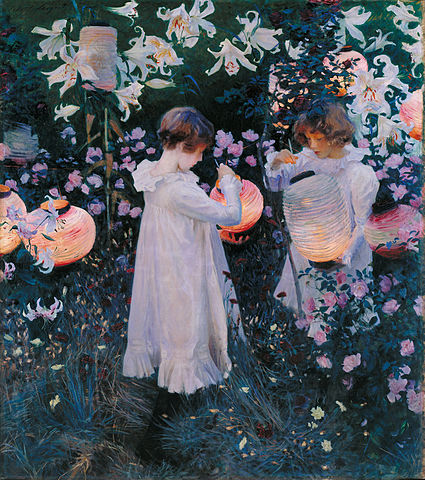
16 years ago, I bought Maria Costantino’s The Impressionists from a pavement bookseller in Delhi’s Daryaganj Book Bazaaar. Because of this, John Singer Sargent's Carnation, Lily, Lily, Rose (which took him so long to execute that he began referring to it as Darnation Silly Silly Pose).
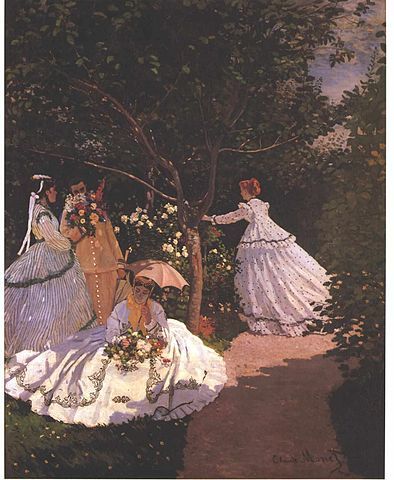
And this, Monet's Women in a Garden.
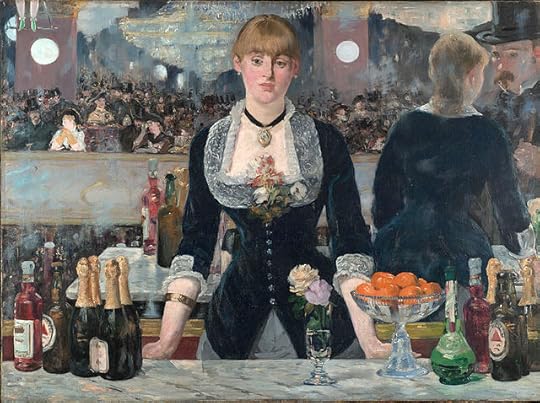
And this, Manet's famous The Bar at the Folies-Bergère.
And dozens of other plates, all beautifully printed on glossy art paper. A fine display of just about every painter who was affiliated, in some way or the other, to some extent or the other, to the art style known as Impressionism, which emerged in around the 1870s in France and, though more or less gone by the first decade of the 20th century, was to leave behind some of my favourite paintings.
Costantino’s coffee table book on the men and women who comprised this art movement begins with a fairly lengthy introduction to the Impressionists. Not so much to Impressionism itself (and this was what I found lacking; as someone who’s never formally studied art, I only have a basic idea of what Impressionism looks like, not the specific rules and techniques that govern it). In the introduction, Costantino discusses how the movement grew, both in Europe and outside (specifically in the US and Australia), its successes and failures, its main exponents, and so on. There are photographs of painters, there are details about their collaborations, exhibitions, and so on. A history, so to say, of the Impressionists.
The bulk of the book—its best part—is however in the plates that follow. These are arranged in order of artist, some of the major ones (Manet, Monet, Cezanne, Van Gogh, Degas, Gauguin, Seurat, etc) having several works featured, while lesser-known ones often have only one or two works featured. For each plate, Costantino provides basic information (size, medium, current ownership, date) and then goes on to add notes about the painting.
This is what I enjoyed the most about this book: Costantino’s notes on the paintings provide interesting insights into so much related to the Impressionists, their work, and the times they lived in. This was where I learnt most about Impressionist techniques (avoiding the use of black; using short brushstrokes; putting complementary colours next to each other); the value they placed on light, on colour and atmosphere. The influences (Japanese art was one). The societal norms and restrictions (for instance, the fact that women painters couldn’t hire models and so ended up mostly painting family and friends—also usually female—in domestic settings). There are insights into particular paintings, the history behind them, the way artists wove in their own friends and colleagues, put the spotlight on an urban middle class going about its daily work and at leisure….
If you have ever sighed over Starry Night or Waterlilies, if you’ve ever admired the quirkiness of a Toulouse-Lautrec or one of Degas’s many ballerinas, this book is for you. A feast for the eyes, and much to be discovered.