

What do you think?

Scent of the Nameless
Scent of the Nameless traces the quiet unravelling of an ordinary life in urban India.
An unnamed middle-class office clerk lives with his wife and young daughter in a modest Mumbai apartment, leading a life of contented monotony—until a credit card unleashes desires he never knew existed. What begins as convenience becomes compulsion, then catastrophe. Debt seeps into everything: his relationships, his dignity, even his sense of self. As his humiliation deepens, the unseen machinery of markets, power, and privilege tightens its grip around him.
Blending satire with hallucinatory lyricism and psychological tension, this novel by Geet Chaturvedi, in Anita Gopalan’s translation, is a piercing meditation on modern capitalism and the insidious violence of economic inequality. Written with restraint and moral precision, it stands in quiet kinship with Coetzee, Sebald, and Bernhard.
An unnamed middle-class office clerk lives with his wife and young daughter in a modest Mumbai apartment, leading a life of contented monotony—until a credit card unleashes desires he never knew existed. What begins as convenience becomes compulsion, then catastrophe. Debt seeps into everything: his relationships, his dignity, even his sense of self. As his humiliation deepens, the unseen machinery of markets, power, and privilege tightens its grip around him.
Blending satire with hallucinatory lyricism and psychological tension, this novel by Geet Chaturvedi, in Anita Gopalan’s translation, is a piercing meditation on modern capitalism and the insidious violence of economic inequality. Written with restraint and moral precision, it stands in quiet kinship with Coetzee, Sebald, and Bernhard.
224 pages, Paperback
Published July 24, 2026
About the author
Geet Chaturvedi
16 books40 followersBorn on 27 th November 1977 in Mumbai, Geet Chaturvedi is one of the most widely read contemporary literary authors in Hindi. He has published eleven books including two collections of novellas and three collections of poems. His books 'Nyoonatam Main' and 'Khushiyon Ke Guptchar' are included in the bestselling lists even though they are hardcore literary poems. His celebrated essays on literature, cinema and music are collected in 'Table Lamp' and 'Adhuri Cheezon Ka Devta'.
For poetry, Geet is the recipient of Bharat Bhushan Agrawal Award, Spandan Kriti Samman and Vaagdhara Navratna Samman. For fiction, he has received Krishna Pratap Katha Award, Shailesh Matiyani Award, Krishna Baldev Vaid Fellowship and Syed Haider Raza Fellowship. He is considered one of the best Indian authors by many literary forums and publications including the Indian Express.
Geet Chaturvedi’s works have been translated into 22 languages. In 2019, his book of poems in English translation ‘The Memory of Now’ was published in the USA. The English translation of his novella Simsim, translated by Anita Gopalan, was awarded ‘PEN-Heim Translation Grant’ by PEN America. Geet lives in Bhopal, India.
गीत चतुर्वेदी का जन्म २७ नवम्बर १९७७ को मुम्बई में हुआ। उनके दो कविता-संग्रह न्यूनतम मैं (२०१७) और आलाप में गिरह (२०१०) प्रकाशित हैं। उसी वर्ष लम्बी कहानियों की दो किताबें सावंत आंटी की लड़कियाँ व पिंक स्लिप डैडी आयी। उन्हें कविता के लिए भारत भूषण अग्रवाल पुरस्कार, गल्प के लिए कृष्ण प्रताप कथा सम्मान मिल चुके हैं। ‘इण्डियन एक्सप्रेस’ सहित कई प्रकाशन संस्थानों ने उन्हें भारत के सर्वश्रेष्ठ लेखकों में शुमार किया है। उनकी रचनाएँ देश-दुनिया की सत्रह भाषाओं में अनूदित हो चुकी हैं। उनके नॉवेल सिमसिम के अँग्रेज़ी अनुवाद (अनुवादक : अनिता गोपालन) को ‘पेन अमेरिका’ ने अन्तरराष्ट्रीय स्तर पर प्रतिष्ठित ‘पेन-हैम ट्रांसलेशन ग्रांट २०१६’ अवार्ड किया है।
गीत इन दिनों भोपाल रहते हैं। उनका ईमेल पता है : geetchaturvediofficial@gmail.com
For poetry, Geet is the recipient of Bharat Bhushan Agrawal Award, Spandan Kriti Samman and Vaagdhara Navratna Samman. For fiction, he has received Krishna Pratap Katha Award, Shailesh Matiyani Award, Krishna Baldev Vaid Fellowship and Syed Haider Raza Fellowship. He is considered one of the best Indian authors by many literary forums and publications including the Indian Express.
Geet Chaturvedi’s works have been translated into 22 languages. In 2019, his book of poems in English translation ‘The Memory of Now’ was published in the USA. The English translation of his novella Simsim, translated by Anita Gopalan, was awarded ‘PEN-Heim Translation Grant’ by PEN America. Geet lives in Bhopal, India.
गीत चतुर्वेदी का जन्म २७ नवम्बर १९७७ को मुम्बई में हुआ। उनके दो कविता-संग्रह न्यूनतम मैं (२०१७) और आलाप में गिरह (२०१०) प्रकाशित हैं। उसी वर्ष लम्बी कहानियों की दो किताबें सावंत आंटी की लड़कियाँ व पिंक स्लिप डैडी आयी। उन्हें कविता के लिए भारत भूषण अग्रवाल पुरस्कार, गल्प के लिए कृष्ण प्रताप कथा सम्मान मिल चुके हैं। ‘इण्डियन एक्सप्रेस’ सहित कई प्रकाशन संस्थानों ने उन्हें भारत के सर्वश्रेष्ठ लेखकों में शुमार किया है। उनकी रचनाएँ देश-दुनिया की सत्रह भाषाओं में अनूदित हो चुकी हैं। उनके नॉवेल सिमसिम के अँग्रेज़ी अनुवाद (अनुवादक : अनिता गोपालन) को ‘पेन अमेरिका’ ने अन्तरराष्ट्रीय स्तर पर प्रतिष्ठित ‘पेन-हैम ट्रांसलेशन ग्रांट २०१६’ अवार्ड किया है।
गीत इन दिनों भोपाल रहते हैं। उनका ईमेल पता है : geetchaturvediofficial@gmail.com
Ratings & Reviews
Friends & Following
Create a free account to discover what your friends think of this book!
Community Reviews
Displaying 1 - 16 of 16 reviews

September 16, 2026
SCENT OF THE NAMELESS
By Geet Chaturvedi
Translated by Anita Gopalan
This is my third book by this author translator duo, and I enjoyed reading it.
This is the story of an unnamed, middle-class clerk who is neck deep in debt, and we can partly blame the credit card industry for it. Day in and day out, the debt haunts him like a ghost, never allowing his mind to be at peace. He hallucinates, imagines things and can hardly get through a normal conversation with his wife and daughter.
The nameless character suffers throughout the novel, somewhat like Raskolnikov in Crime and Punishment, though the context of their suffering is completely different. He hallucinates, or perhaps he does not, and what is real and what is not is something the reader can never really decipher. Even the ending feels real yet unreal.
There are scenes where he seems to be running away from something, or perhaps even a dog is chasing him. Whether it is real or imaginary, one cannot be sure. But some things are definitely real, including his cow piss smelling armpits, because of which he takes a bath even in the middle of the night!
Some of the scenes are quite Kafkaesque, like the watch turning into an earthworm.
The story moves in a real and surreal manner and spans over a few months, perhaps, as there is no definite timeline. To the people trying to recover their money, this man is an offender. But to a common man from the lower middle rung of society, he is more pitiable than anything else.
The book also made me think about credit cards and how alluring yet deceptive they can be. They make it so easy to buy things beyond our means. We can feel powerful when we buy something with just one swipe, but the difficult part is knowing where to draw the line. That point where we tell ourselves, “This far and no more.”
But why is the man nameless?
Is he symbolic of the millions of unknown people who suffer similarly because of debt? Has debt stripped him of his individuality? Or is it because someone like him can easily get erased in society?
I also enjoyed reading the translator’s note at the end of the book. Anita Gopalan talks about how her career as a stockbroker began in 2008, during the global financial meltdown. Having translated two other books by Geet Chaturvedi that I have read, Simsim and The Master of Unfinished Things, she feels that Scent of the Nameless has been the most exacting work of literary fiction she has translated.
A strange, surreal and thought provoking read that leaves you wondering about what is real, what is imagined and why this man has been made nameless.
Grateful to Penguin Random House India and Anita Gopalan for ensuring this book reached me here in the UAE — such a thoughtful gesture.
By Geet Chaturvedi
Translated by Anita Gopalan
This is my third book by this author translator duo, and I enjoyed reading it.
This is the story of an unnamed, middle-class clerk who is neck deep in debt, and we can partly blame the credit card industry for it. Day in and day out, the debt haunts him like a ghost, never allowing his mind to be at peace. He hallucinates, imagines things and can hardly get through a normal conversation with his wife and daughter.
The nameless character suffers throughout the novel, somewhat like Raskolnikov in Crime and Punishment, though the context of their suffering is completely different. He hallucinates, or perhaps he does not, and what is real and what is not is something the reader can never really decipher. Even the ending feels real yet unreal.
There are scenes where he seems to be running away from something, or perhaps even a dog is chasing him. Whether it is real or imaginary, one cannot be sure. But some things are definitely real, including his cow piss smelling armpits, because of which he takes a bath even in the middle of the night!
Some of the scenes are quite Kafkaesque, like the watch turning into an earthworm.
The story moves in a real and surreal manner and spans over a few months, perhaps, as there is no definite timeline. To the people trying to recover their money, this man is an offender. But to a common man from the lower middle rung of society, he is more pitiable than anything else.
The book also made me think about credit cards and how alluring yet deceptive they can be. They make it so easy to buy things beyond our means. We can feel powerful when we buy something with just one swipe, but the difficult part is knowing where to draw the line. That point where we tell ourselves, “This far and no more.”
But why is the man nameless?
Is he symbolic of the millions of unknown people who suffer similarly because of debt? Has debt stripped him of his individuality? Or is it because someone like him can easily get erased in society?
I also enjoyed reading the translator’s note at the end of the book. Anita Gopalan talks about how her career as a stockbroker began in 2008, during the global financial meltdown. Having translated two other books by Geet Chaturvedi that I have read, Simsim and The Master of Unfinished Things, she feels that Scent of the Nameless has been the most exacting work of literary fiction she has translated.
A strange, surreal and thought provoking read that leaves you wondering about what is real, what is imagined and why this man has been made nameless.
Grateful to Penguin Random House India and Anita Gopalan for ensuring this book reached me here in the UAE — such a thoughtful gesture.
August 30, 2026
What a remarkable, strange, exhilarating book Scent of the Nameless turned out to be! I loved it. Hallucinatory, darkly comic, anxious, philosophical, political, absurd, and above all, deeply human.
At the heart of the novel is a man trying to understand a world in which everything has a price but almost nothing has value. The movement from the mundane to the metaphysical is one of the novel’s great strengths. Its philosophical ideas are never presented as abstract lectures. They erupt from lived experience. A discussion on management can turn into a critique of social hierarchy. A railway journey (in the exceptionally beautiful Sant Gyaneshwar episode) becomes an allegory of inclusion and exclusion—of who gets to enter, who is pushed to the edge, and who is allowed to remain safely inside.
There are memorable characters like Baba, whose insistence that a manager must remain outside the system—observing, identifying flaws, and telling those inside how to fix them—becomes a miniature theory of power. The joke, of course, is that the man who claims the authority to diagnose the system is precisely the person who refuses to get his hands dirty inside it. The novel repeatedly exposes this gap between those who administer systems and those who live inside their consequences. The credit-card trap at the heart of the novel is an example of this.
Beneath the satire is a persistent concern with invisibility. The debt-ridden, nameless narrator; the nameless women in their varied roles; workers, indispensable but disposable; labour everywhere, yet somehow disappearing from the value assigned to the things it produces. The novel’s recurring obsession with the “inside” and the “outside” becomes more than a spatial metaphor; it becomes its governing social logic.
Geet Chaturvedi is an exceptionally inventive writer. He can take an innocuous image and make it carry social, political, psychological, and philosophical weight. His writing makes the reader “hear” the sentence. The clever references to Zagajewski’s Fire and Brecht’s poem, which we get to know more about in the insightful translator’s Afterword, acquire meanings far beyond themselves.
Chaturvedi’s imagination creates a novel in which Indian textures are audible, while its anxieties, status, debt, paranoia, the rat race, and consumerism are unmistakably global.
That is perhaps where the novel ultimately finds its contemporary force. Its world may be recognisably Indian, but its questions are not confined to India. Who owns the system? Who gets to sell? Who gets to buy? Who gets to stand inside? Who is pushed to the edge? What happens when the things we call “assets” lose their value, while the people who produce value lose theirs even faster?
The novel answers these questions not with a theory but with a fever dream.
And that fever dream is its achievement. It takes the everyday humiliations of ordinary life and magnifies them until they become strange enough for us to see them clearly.
The book’s sound is beautiful. Read aloud, some passages almost become incantations. Repetition becomes rhythm; rant becomes poetry; muttering becomes music. The final movements of the novel are particularly haunting because the voice that has spoken so insistently begins to approach silence. That movement—from noise to silence, from certainty to uncertainty—is beautifully handled.
For this, Anita Gopalan’s translation deserves special praise. It does not smooth away the abrasions of the original or make the voice artificially elegant. It preserves the narrator’s rawness, comic timing, repetitions, abrupt turns, and lyricism while producing English that feels alive.
For a book like this, I found the translator’s Afterword an excellent companion. It opens another door into the novel.
The Borges section is highly enjoyable, and the translator’s anthem gives us a sense of how much thought, instinct, research, improvisation, and risk went into bringing this intense, ranting, strangely beautiful work into English.
What has stayed with me most is that the book can be, all at once, disturbing, absurd, lyrical, and even ugly when the truth demands it.
And it keeps muttering even after you have stopped reading.
And we are left wondering: how far are we from that rope?
At the heart of the novel is a man trying to understand a world in which everything has a price but almost nothing has value. The movement from the mundane to the metaphysical is one of the novel’s great strengths. Its philosophical ideas are never presented as abstract lectures. They erupt from lived experience. A discussion on management can turn into a critique of social hierarchy. A railway journey (in the exceptionally beautiful Sant Gyaneshwar episode) becomes an allegory of inclusion and exclusion—of who gets to enter, who is pushed to the edge, and who is allowed to remain safely inside.
There are memorable characters like Baba, whose insistence that a manager must remain outside the system—observing, identifying flaws, and telling those inside how to fix them—becomes a miniature theory of power. The joke, of course, is that the man who claims the authority to diagnose the system is precisely the person who refuses to get his hands dirty inside it. The novel repeatedly exposes this gap between those who administer systems and those who live inside their consequences. The credit-card trap at the heart of the novel is an example of this.
Beneath the satire is a persistent concern with invisibility. The debt-ridden, nameless narrator; the nameless women in their varied roles; workers, indispensable but disposable; labour everywhere, yet somehow disappearing from the value assigned to the things it produces. The novel’s recurring obsession with the “inside” and the “outside” becomes more than a spatial metaphor; it becomes its governing social logic.
Geet Chaturvedi is an exceptionally inventive writer. He can take an innocuous image and make it carry social, political, psychological, and philosophical weight. His writing makes the reader “hear” the sentence. The clever references to Zagajewski’s Fire and Brecht’s poem, which we get to know more about in the insightful translator’s Afterword, acquire meanings far beyond themselves.
Chaturvedi’s imagination creates a novel in which Indian textures are audible, while its anxieties, status, debt, paranoia, the rat race, and consumerism are unmistakably global.
That is perhaps where the novel ultimately finds its contemporary force. Its world may be recognisably Indian, but its questions are not confined to India. Who owns the system? Who gets to sell? Who gets to buy? Who gets to stand inside? Who is pushed to the edge? What happens when the things we call “assets” lose their value, while the people who produce value lose theirs even faster?
The novel answers these questions not with a theory but with a fever dream.
And that fever dream is its achievement. It takes the everyday humiliations of ordinary life and magnifies them until they become strange enough for us to see them clearly.
The book’s sound is beautiful. Read aloud, some passages almost become incantations. Repetition becomes rhythm; rant becomes poetry; muttering becomes music. The final movements of the novel are particularly haunting because the voice that has spoken so insistently begins to approach silence. That movement—from noise to silence, from certainty to uncertainty—is beautifully handled.
For this, Anita Gopalan’s translation deserves special praise. It does not smooth away the abrasions of the original or make the voice artificially elegant. It preserves the narrator’s rawness, comic timing, repetitions, abrupt turns, and lyricism while producing English that feels alive.
For a book like this, I found the translator’s Afterword an excellent companion. It opens another door into the novel.
The Borges section is highly enjoyable, and the translator’s anthem gives us a sense of how much thought, instinct, research, improvisation, and risk went into bringing this intense, ranting, strangely beautiful work into English.
What has stayed with me most is that the book can be, all at once, disturbing, absurd, lyrical, and even ugly when the truth demands it.
And it keeps muttering even after you have stopped reading.
And we are left wondering: how far are we from that rope?

August 26, 2026
Brilliant! That’s one word for this literary novel, Scent of the Nameless by Geet Chaturvedi, translated by Anita Gopalan.
This is a thinking book. It makes you pause, ponder, and sit with your thoughts. Geet Chaturvedi writes with such élan and with such distinct voices.
The story starts with a bang:
“One night, suddenly, I felt what gathered under my armpits, what slid and glistened over my forehead, crawled down my brows toward my ears and pooled in my hair, turning it into sewage sludge: that goddamn sweat stank like cow urine.”
Made me sit up.
The train massacre chapter, the encounters with the Finance Minister, the dogs-chasing episode and Sant Gyaneshwar are especially stunning, not just in conception but also in execution.
Wait... Is it a hallucination? Reality? Surrealism? Magic realism? You are left asking for more. Chaturvedi is a mighty good storyteller.
One standout feature of the book is its wonderfully crafted dialogue - sharp and so perfectly suited to the characters who speak it. They come across so well in English. And the ranting is great fun to read.
Then there is the music of the prose - lyrical and smooth, coarse and jagged. The long sentences, the short ones, the very short ones, all seem to have their own rhythm. Amidst all this, I also loved the tender moments with the daughter.
And that last, long sentence of the novel left me unsure whether to feel sad for the narrator, or something else entirely. But whatever I was meant to feel, it was an emotional ride.
Wait... There’s another gem at the end of the novel - the Translator’s Afterword by Anita Gopalan. It is a piece of literature in itself. This stunning essay is full of fascinating insights and information. What I especially loved about the Afterword is that it makes you want to return to the story and read it again. You begin to see a whole new angle to the narration.
Scent of the Nameless is a beautiful, thought-provoking book, followed by an equally remarkable afterword.
A must-read.
This is a thinking book. It makes you pause, ponder, and sit with your thoughts. Geet Chaturvedi writes with such élan and with such distinct voices.
The story starts with a bang:
“One night, suddenly, I felt what gathered under my armpits, what slid and glistened over my forehead, crawled down my brows toward my ears and pooled in my hair, turning it into sewage sludge: that goddamn sweat stank like cow urine.”
Made me sit up.
The train massacre chapter, the encounters with the Finance Minister, the dogs-chasing episode and Sant Gyaneshwar are especially stunning, not just in conception but also in execution.
Wait... Is it a hallucination? Reality? Surrealism? Magic realism? You are left asking for more. Chaturvedi is a mighty good storyteller.
One standout feature of the book is its wonderfully crafted dialogue - sharp and so perfectly suited to the characters who speak it. They come across so well in English. And the ranting is great fun to read.
Then there is the music of the prose - lyrical and smooth, coarse and jagged. The long sentences, the short ones, the very short ones, all seem to have their own rhythm. Amidst all this, I also loved the tender moments with the daughter.
And that last, long sentence of the novel left me unsure whether to feel sad for the narrator, or something else entirely. But whatever I was meant to feel, it was an emotional ride.
Wait... There’s another gem at the end of the novel - the Translator’s Afterword by Anita Gopalan. It is a piece of literature in itself. This stunning essay is full of fascinating insights and information. What I especially loved about the Afterword is that it makes you want to return to the story and read it again. You begin to see a whole new angle to the narration.
Scent of the Nameless is a beautiful, thought-provoking book, followed by an equally remarkable afterword.
A must-read.

September 27, 2026
The Scent Of The Nameless by Geet Chaturvedi, translated from the Hindi गोमूत्र (Gomutra) by Anita Gopalan, is the story of an unnamed protagonist, a middle-class office clerk living in Mumbai with his wife and daughter. His life was going smoothly until a credit card entered and brought chaos with it. With the card came desires, which soon turned into catastrophes, resulting in debt that couldn't be paid. And debt changes everything. Read this book to find out how an ordinary life in urban India changes with the market and economy.
I previously read Sim-Sim by the author last year, and it was one of my favorite reads of 2025. And so it was natural for me to have the same expectations from it, and it didn't disappoint. Though both of the books cover protagonists and themes that are vastly different from each other, the linkage between them, i.e., the author, brings elements that make them so interesting with the characterization and showing things beyond reality and yet mirroring it.
In this book, the author, through our protagonist, moved between reality and hallucinations, between real and surreal, almost making it a work of magical realism, and yet it is so much grounded in reality. The story talks about the economy, market, socio-economic development, capitalism, religion, spirituality, humanism, gender marginalization, and so many other things, and I almost felt like there was too much going on in between all the transitions from real-surreal, and it would lead to chaos that wouldn't make sense by the end. But the ending of the book is a masterclass in writing, showing how to pull up all the loose threads and deliver a heartwrenching story that cannot be forgotten.
The translator's afterward is another part of the book that shines on its own, making me realize a lot of things and references the author referred to about which I wasn't aware of. It talks about how the translation from Hindi to English was a task in itself and shows the nuances of doing it (and I have read the short version of this story in Hindi that is available in the collection named पिंक स्लिप डैडी/Pink Slip Daddy), and I must say, the translation really captures the essence of the book. Its connection with Godan by Premchand was one of my favorite things about this book as well, and the translator talked about it very fascinatingly here as well.
Overall, it's a book that should be read by everyone for how it talks about a middle-class person in today's time and society and how the author navigates between time and space with themes that will stay with you long after you finish reading the book.
P.S. Before beginning the book, I was really curious to know why the title was translated from गोमूत्र (Gomutra/Cow urine) to Scent of the Nameless, and what began as some skepticism turned into fascination by the end of the book! A job done really well.
I previously read Sim-Sim by the author last year, and it was one of my favorite reads of 2025. And so it was natural for me to have the same expectations from it, and it didn't disappoint. Though both of the books cover protagonists and themes that are vastly different from each other, the linkage between them, i.e., the author, brings elements that make them so interesting with the characterization and showing things beyond reality and yet mirroring it.
In this book, the author, through our protagonist, moved between reality and hallucinations, between real and surreal, almost making it a work of magical realism, and yet it is so much grounded in reality. The story talks about the economy, market, socio-economic development, capitalism, religion, spirituality, humanism, gender marginalization, and so many other things, and I almost felt like there was too much going on in between all the transitions from real-surreal, and it would lead to chaos that wouldn't make sense by the end. But the ending of the book is a masterclass in writing, showing how to pull up all the loose threads and deliver a heartwrenching story that cannot be forgotten.
The translator's afterward is another part of the book that shines on its own, making me realize a lot of things and references the author referred to about which I wasn't aware of. It talks about how the translation from Hindi to English was a task in itself and shows the nuances of doing it (and I have read the short version of this story in Hindi that is available in the collection named पिंक स्लिप डैडी/Pink Slip Daddy), and I must say, the translation really captures the essence of the book. Its connection with Godan by Premchand was one of my favorite things about this book as well, and the translator talked about it very fascinatingly here as well.
Overall, it's a book that should be read by everyone for how it talks about a middle-class person in today's time and society and how the author navigates between time and space with themes that will stay with you long after you finish reading the book.
P.S. Before beginning the book, I was really curious to know why the title was translated from गोमूत्र (Gomutra/Cow urine) to Scent of the Nameless, and what began as some skepticism turned into fascination by the end of the book! A job done really well.
September 24, 2026
⭐"When sorrow strikes, whistle,
just whistle,
but never give your heart to a joker".⭐
🔸A man wakes in the night and finds he smells of cow urine. He scrubs, tries scented soaps, scrubs again. The smell stays. That opening grabbed me at once, and I kept reading with a strange mix of discomfort and curiosity.
🔸'Scent of the Nameless' by Geet Chaturvedi, translated by Anita Gopalan, set against the background of new capitalist regime where an unnamed middle-class man in Mumbai, living with his wife and small daughter. Then a credit card arrives. It looks like convenience. Slowly it becomes wanting, then spending, then debt, then shame. That changed the whole life for the worst.
🔸What struck me is that he never gets a name. After a while it stopped feeling like a technique. He could be anyone, and the system treats him that way, as a number. Ordinary city life sits right beside the surreal, and the smell ends up being the most honest thing in the book.
🔸It is about debt, but not only money. It asks who taught us to want what we cannot afford, and it shows how owing seeps into marriage, dignity and self-image. The style is satirical and dreamlike, with tension humming underneath. Little essence of Kafka's psychology are reflecting throughout the book where it shows how carefully the shifting voices are held.
🔸What touched me most was the smell as shame. He keeps washing something that will not wash off. It made me think of how money worry settles into the body before anyone says a word.
🔸Read it because it treats debt as a wound, not a statistic. It is unsettling, and strangely tender. Exploitation is like a cycle without which market will fail to take shape.
🔸I would recommend it to readers of translated Indian literature, social satire and Kafkaesque fiction. Skip it if you want a light, and plot-driven read.
just whistle,
but never give your heart to a joker".⭐
🔸A man wakes in the night and finds he smells of cow urine. He scrubs, tries scented soaps, scrubs again. The smell stays. That opening grabbed me at once, and I kept reading with a strange mix of discomfort and curiosity.
🔸'Scent of the Nameless' by Geet Chaturvedi, translated by Anita Gopalan, set against the background of new capitalist regime where an unnamed middle-class man in Mumbai, living with his wife and small daughter. Then a credit card arrives. It looks like convenience. Slowly it becomes wanting, then spending, then debt, then shame. That changed the whole life for the worst.
🔸What struck me is that he never gets a name. After a while it stopped feeling like a technique. He could be anyone, and the system treats him that way, as a number. Ordinary city life sits right beside the surreal, and the smell ends up being the most honest thing in the book.
🔸It is about debt, but not only money. It asks who taught us to want what we cannot afford, and it shows how owing seeps into marriage, dignity and self-image. The style is satirical and dreamlike, with tension humming underneath. Little essence of Kafka's psychology are reflecting throughout the book where it shows how carefully the shifting voices are held.
🔸What touched me most was the smell as shame. He keeps washing something that will not wash off. It made me think of how money worry settles into the body before anyone says a word.
🔸Read it because it treats debt as a wound, not a statistic. It is unsettling, and strangely tender. Exploitation is like a cycle without which market will fail to take shape.
🔸I would recommend it to readers of translated Indian literature, social satire and Kafkaesque fiction. Skip it if you want a light, and plot-driven read.

September 22, 2026
Scent of the Nameless by Geet Chaturvedi, translated from Hindi by Anita Gopalan, is a short but compelling read.
It follows an unnamed middle-class office worker in Mumbai. He has a wife, a young daughter and a fairly ordinary life. Then a credit card enters the picture. What starts as a simple convenience slowly turns into mounting debt. And that debt starts affecting everything. His marriage. His work. Even his understanding of himself.
The book gets increasingly unsettling from there. Haunted by the immense debt he is under he started to forget what's reality is. The protagonist starts experiencing things that make you question what is actually happening. He smells of cow urine for no apparent reason. He has strange visions, encounters bizarre situations. I kept wondering whether I'm reading reality, or a hallucination or something in between and I really liked that uncertainty.
The book explored a very important thing - The reality of Credit Cards and Consumerism. How a debt can consume an ordinary life seems unreal... A purchase by a credit card seems very alluring,an instant gratification which leads to a financial burden for later we sometimes forget .
You'll feel equally disturbed while staying inside the protagonist's increasingly disturbed mind. His financial problems become psychological ones and shame becomes paranoia.
I really liked the writing. It's my first Geet Chaturvedi's Work and I am very eager to read some of his other works . The translation by Anita Gopalan preserves the unusual rhythm and the shifting movement between the reality and the surreal.
It follows an unnamed middle-class office worker in Mumbai. He has a wife, a young daughter and a fairly ordinary life. Then a credit card enters the picture. What starts as a simple convenience slowly turns into mounting debt. And that debt starts affecting everything. His marriage. His work. Even his understanding of himself.
The book gets increasingly unsettling from there. Haunted by the immense debt he is under he started to forget what's reality is. The protagonist starts experiencing things that make you question what is actually happening. He smells of cow urine for no apparent reason. He has strange visions, encounters bizarre situations. I kept wondering whether I'm reading reality, or a hallucination or something in between and I really liked that uncertainty.
The book explored a very important thing - The reality of Credit Cards and Consumerism. How a debt can consume an ordinary life seems unreal... A purchase by a credit card seems very alluring,an instant gratification which leads to a financial burden for later we sometimes forget .
You'll feel equally disturbed while staying inside the protagonist's increasingly disturbed mind. His financial problems become psychological ones and shame becomes paranoia.
I really liked the writing. It's my first Geet Chaturvedi's Work and I am very eager to read some of his other works . The translation by Anita Gopalan preserves the unusual rhythm and the shifting movement between the reality and the surreal.

September 25, 2026
Scent of the Nameless by Geet Chaturvedi, seamlessly translated from Hindi by Anita Gopalan, is one of the most compelling and deeply reflective literary novels I have read in a long time.
The story follows an unnamed middle-class office clerk in Mumbai whose ordinary, quiet life spiraling into chaos after he gets a credit card. What begins as a simple convenience rapidly turns into mounting debt, unravelling his marriage, his work, and his sanity.
What makes this book extraordinary is how Chaturvedi captures the psychological toll of financial ruin. The line between reality, hallucination, and surrealism completely dissolves. From Kafkaesque moments to the haunting, phantom smell of cow urine under his armpits, the protagonist’s financial anxiety morphs into raw paranoia.
The prose is wonderfully rhythmic and lyrical, switching effortlessly between sharp rants and quiet, tender moments with his daughter. High-impact sequences—such as encounters with the Finance Minister and the dog-chasing episode—keep you completely hooked. To top it off, Anita Gopalan’s Translator’s Afterword at the end is a masterclass in itself, offering fascinating insights that make you want to re-read the book immediately.
Part Kafka, part Dostoyevsky, this novel is a piercing wake-up call about consumerism and plastic money. Highly recommended for anyone who loves thought-provoking, high-caliber literary fiction!
The story follows an unnamed middle-class office clerk in Mumbai whose ordinary, quiet life spiraling into chaos after he gets a credit card. What begins as a simple convenience rapidly turns into mounting debt, unravelling his marriage, his work, and his sanity.
What makes this book extraordinary is how Chaturvedi captures the psychological toll of financial ruin. The line between reality, hallucination, and surrealism completely dissolves. From Kafkaesque moments to the haunting, phantom smell of cow urine under his armpits, the protagonist’s financial anxiety morphs into raw paranoia.
The prose is wonderfully rhythmic and lyrical, switching effortlessly between sharp rants and quiet, tender moments with his daughter. High-impact sequences—such as encounters with the Finance Minister and the dog-chasing episode—keep you completely hooked. To top it off, Anita Gopalan’s Translator’s Afterword at the end is a masterclass in itself, offering fascinating insights that make you want to re-read the book immediately.
Part Kafka, part Dostoyevsky, this novel is a piercing wake-up call about consumerism and plastic money. Highly recommended for anyone who loves thought-provoking, high-caliber literary fiction!
September 28, 2026
"I never asked for a credit card. Never asked for a loan. Never told the economy to boost my purchasing power. Never asked the stock market to take me in. Never begged the big, glitzy shops to offer me their goods. They were the ones who came to me, pleading. And when they did, I swelled with pride, thinking I was a consumer they simply add to their list."
Scent of the Nameless by Geet Chaturvedi is an extraordinary literary fiction which keeps the readers hooked till the end. It is a thought-provoking read about modern capitalism, economic inequality and psychological conflict. The story revolves around a nameless middle-class man who lives with his wife and his young daughter in Mumbai.
First of all, after reading this book I just sat with various thoughts in my mind. This book will make the readers pause and reflect. Scent of the Nameless shows us how desires and debts can slowly damage lifes. The main thing which change the protagonist life here is the credit card. His credit card spending leads him into debt. Slowly, the debt turns into shame. He begins to hallucinate and imagine things. Such a brilliantly written read which keeps us glued to the page.
The author's flawless narrative makes everything vivid. The writing style is unique and exquisite. The language used is lucid and easy to understand. It is a satirical, haunting and a strange read. I loved the translator's afterword. This book stays with the readers even after the last page. The credit card may look like a blessing at first, but it slowly turns the protagonist's life upside down. The important thing about this book is it questions who taught us to buy what we can't afford? Why are people buying more worthless things? There are many things which are valuable only in name. In reality, they hold no value. Overall, I loved this book and would strongly recommend it to all.
Scent of the Nameless by Geet Chaturvedi is an extraordinary literary fiction which keeps the readers hooked till the end. It is a thought-provoking read about modern capitalism, economic inequality and psychological conflict. The story revolves around a nameless middle-class man who lives with his wife and his young daughter in Mumbai.
First of all, after reading this book I just sat with various thoughts in my mind. This book will make the readers pause and reflect. Scent of the Nameless shows us how desires and debts can slowly damage lifes. The main thing which change the protagonist life here is the credit card. His credit card spending leads him into debt. Slowly, the debt turns into shame. He begins to hallucinate and imagine things. Such a brilliantly written read which keeps us glued to the page.
The author's flawless narrative makes everything vivid. The writing style is unique and exquisite. The language used is lucid and easy to understand. It is a satirical, haunting and a strange read. I loved the translator's afterword. This book stays with the readers even after the last page. The credit card may look like a blessing at first, but it slowly turns the protagonist's life upside down. The important thing about this book is it questions who taught us to buy what we can't afford? Why are people buying more worthless things? There are many things which are valuable only in name. In reality, they hold no value. Overall, I loved this book and would strongly recommend it to all.
September 25, 2026
Scent of the Nameless is a most compelling, strangely beautiful book that lingers long after you’ve finished reading.
It was for me a supremely enjoyable and deeply memorable read. ✨✨
It was for me a supremely enjoyable and deeply memorable read. ✨✨
October 3, 2026
What happens when the impact of real life struggles blurs the line between reality and hallucinations.
The protagonist in the story who remains unnamed lives a normal life with his wife and a daughter. But behind this normality is the ghost of a debt which constantly haunts his life. This constant burden makes him kind of delirious where he loses the grasp of reality at times and is not able to do mundane tasks.
This story explores the theme of the financial instability often faced by middle class men in a lyrical and poetic manner. The emotional toil experienced by the protagonist is portrayed through his constant struggle to maintain his life. The credit trap and its effect on the social life at large has been discussed in a nuanced manner.
The namelessness of the characters forces the reader to focus solely on the plot and the narration. The image of the protagonist remains faceless for the reader while his strife creates an evocative image in the minds of the reader.
The narration as well as the translation deserves an applause here. The story keeps you in its grasp till the end. The narration leaves a lot of interpretation to the reader making the reader an important part of the story. The exploration of various emotions like hopelessness, anxiety, despondency etc have been weaved nicely in the storytelling.
This is a story which puts forward a life blurred by its deteriorating financial health vacillating between the realms of reality and absurd.
The protagonist in the story who remains unnamed lives a normal life with his wife and a daughter. But behind this normality is the ghost of a debt which constantly haunts his life. This constant burden makes him kind of delirious where he loses the grasp of reality at times and is not able to do mundane tasks.
This story explores the theme of the financial instability often faced by middle class men in a lyrical and poetic manner. The emotional toil experienced by the protagonist is portrayed through his constant struggle to maintain his life. The credit trap and its effect on the social life at large has been discussed in a nuanced manner.
The namelessness of the characters forces the reader to focus solely on the plot and the narration. The image of the protagonist remains faceless for the reader while his strife creates an evocative image in the minds of the reader.
The narration as well as the translation deserves an applause here. The story keeps you in its grasp till the end. The narration leaves a lot of interpretation to the reader making the reader an important part of the story. The exploration of various emotions like hopelessness, anxiety, despondency etc have been weaved nicely in the storytelling.
This is a story which puts forward a life blurred by its deteriorating financial health vacillating between the realms of reality and absurd.

October 3, 2026
A credit card. A middleclass man in Mumbai. A wife, a young daughter and an ordinary life that seems perfectly manageable until it isn’t. There is something almost absurd about how such a familiar object can become the beginning of a complete unravelling.
The protagonist is not some larger than life character making outrageous mistakes. He is an ordinary man trying to navigate everyday life, and that makes his gradual loss of control all the more uncomfortable to witness.
What struck me most was the idea of a man losing more than just money. With every step deeper into debt, he seems to lose a little more of his place in the world. His dignity becomes negotiable, his relationships get caught in the mess and the life he once took for granted begins to feel like something he can no longer afford.
It was not always an easy read but it definitely made me think about money, class and the pressure to maintain a certain kind of life.
I went into this expecting a story about debt but it's really about so much more and the fact that it all begins with something so ordinary is what makes it unsettling.
The protagonist is not some larger than life character making outrageous mistakes. He is an ordinary man trying to navigate everyday life, and that makes his gradual loss of control all the more uncomfortable to witness.
What struck me most was the idea of a man losing more than just money. With every step deeper into debt, he seems to lose a little more of his place in the world. His dignity becomes negotiable, his relationships get caught in the mess and the life he once took for granted begins to feel like something he can no longer afford.
It was not always an easy read but it definitely made me think about money, class and the pressure to maintain a certain kind of life.
I went into this expecting a story about debt but it's really about so much more and the fact that it all begins with something so ordinary is what makes it unsettling.

September 26, 2026
The book tells the story of Gomutra, a middle-class man living in Mumbai with his wife Gauri and daughter Gudiya. His life is quite normal in the beginning, but things slowly start changing when a credit card becomes a part of his life. 💳
He starts spending more, and what seems helpful at first soon becomes a big problem. The bills and debt keep increasing, bringing stress into his everyday life. It also starts affecting his relationship with Gauri and the peaceful life of his family. The story shows how difficult it can become when someone gets stuck in a cycle of spending and debt. 🏙️
There are also some unusual and strange moments in the book. At times, it became difficult to separate what is actually happening from what Gomutra is imagining. This gives the story a different feel and also shows how much pressure he is going through. 🌫️
The book talks about money, family, social pressure and our wish to have a better lifestyle. Through Gomutra's life, it shows how one small financial decision can slowly change many things. ✨
He starts spending more, and what seems helpful at first soon becomes a big problem. The bills and debt keep increasing, bringing stress into his everyday life. It also starts affecting his relationship with Gauri and the peaceful life of his family. The story shows how difficult it can become when someone gets stuck in a cycle of spending and debt. 🏙️
There are also some unusual and strange moments in the book. At times, it became difficult to separate what is actually happening from what Gomutra is imagining. This gives the story a different feel and also shows how much pressure he is going through. 🌫️
The book talks about money, family, social pressure and our wish to have a better lifestyle. Through Gomutra's life, it shows how one small financial decision can slowly change many things. ✨

September 30, 2026
An ordinary life changed with the markets and the economy.
In this book the reality hits hits you and it does it fast as soon as the book opens it is doing it's work.
Living in Urban India is chaos which slowly dies to being done and alone with a rising pressure of survival or rather how to survive.
There are scenarios where the main character states hypothetical pr rather you call them hallucinations situations that incite an understanding inside you that something is stirring and it's so beyond our hand and we fee like we are drowning.
Life slowly dies we forget living forget having a smile on our faces women just became the carer rather than the actual equal partner. This book depicts how urbanisation has killed humanity and its happiness all good days are over all we do is stress about loans and debts and panicking forever and loving never, no we don't have the time because again we are tightly packed from toe to head with the ways we think and overthink about our situation.
In this book the reality hits hits you and it does it fast as soon as the book opens it is doing it's work.
Living in Urban India is chaos which slowly dies to being done and alone with a rising pressure of survival or rather how to survive.
There are scenarios where the main character states hypothetical pr rather you call them hallucinations situations that incite an understanding inside you that something is stirring and it's so beyond our hand and we fee like we are drowning.
Life slowly dies we forget living forget having a smile on our faces women just became the carer rather than the actual equal partner. This book depicts how urbanisation has killed humanity and its happiness all good days are over all we do is stress about loans and debts and panicking forever and loving never, no we don't have the time because again we are tightly packed from toe to head with the ways we think and overthink about our situation.

October 2, 2026
What happens when a single piece of plastic turns a quiet life upside down? Scent of the Nameless by Geet Chaturvedi is a powerful story about an ordinary office worker in Mumbai living with his family. Everything changes when he gets a credit card. At first, it seems easy and useful, but soon he starts spending too much money. Heavy debt creeps in, causing big problems for his marriage and peace of mind. I loved how real and sad this story felt. It clearly shows how money stress can hurt a normal family. I highly recommend it!

Read
October 2, 2026The Unease Beneath the Ordinary: Review of Geet Chaturvedi’s Scent of the Nameless, tr. Anita Gopalan.
An unusual, unconventional book.
It is slow-paced and dreamlike on the surface, but beneath that stillness, there is a constant sense of unease. The unnamed protagonist seems lost, and as the story progresses, it becomes difficult to tell what is real and what may be a dream. Dreams fascinate me, so I found this aspect particularly interesting.
Detailed review on The Hooghly Review:
https://thehooghlyreview.com/review-s...
An unusual, unconventional book.
It is slow-paced and dreamlike on the surface, but beneath that stillness, there is a constant sense of unease. The unnamed protagonist seems lost, and as the story progresses, it becomes difficult to tell what is real and what may be a dream. Dreams fascinate me, so I found this aspect particularly interesting.
Detailed review on The Hooghly Review:
https://thehooghlyreview.com/review-s...
October 1, 2026
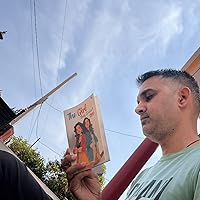
Scent of the Nameless by Geet Chaturvedi, translated by Anita Gopalan, is a gripping and darkly funny exploration of modern life in urban India. The story follows an ordinary middle-class office clerk living in Mumbai whose quiet, predictable life begins to unravel after getting a credit card. What starts as a simple convenience quickly turns into a trap of endless debt, shedding light on how consumer culture, money, and power subtly control our daily choices.
Displaying 1 - 16 of 16 reviews