

What do you think?

The Salt King
A novel about belief, religion, and the power of myth that blends the gripping, end-of-the-world storytelling of The Passage with Natasha Pulley’s biting wit and queer romance.
Jesuit priest Avelyn Brocken was born into a mining family in Hreodwater, a small, isolated salt town in England. At 16, after a mining disaster killed his family, he fled.
When a fellow priest is miraculously healed only to then be turned to salt after a visit to Hreodwater, Avelyn is sent to investigate. When he arrives, the town’s doctor, Jericho, tells him that the priest is not the only one experiencing strange cures—and may not be the only one in danger from a substance in the mine that the locals call “salt light.”
As Avelyn and Jericho team up to protect the Hreodwater from salt light, strange happenings occur at mines around the world. At an archaeological dig on the Dead Sea, electrical devices froth salt, while at a huge salt works in Poland, communication is lost, and rumors circulate of total annihilation.
As salt light devastates cities around the world, Avelyn must decide what to believe—and whether his faith is strong enough to withstand an apocalypse.
Jesuit priest Avelyn Brocken was born into a mining family in Hreodwater, a small, isolated salt town in England. At 16, after a mining disaster killed his family, he fled.
When a fellow priest is miraculously healed only to then be turned to salt after a visit to Hreodwater, Avelyn is sent to investigate. When he arrives, the town’s doctor, Jericho, tells him that the priest is not the only one experiencing strange cures—and may not be the only one in danger from a substance in the mine that the locals call “salt light.”
As Avelyn and Jericho team up to protect the Hreodwater from salt light, strange happenings occur at mines around the world. At an archaeological dig on the Dead Sea, electrical devices froth salt, while at a huge salt works in Poland, communication is lost, and rumors circulate of total annihilation.
As salt light devastates cities around the world, Avelyn must decide what to believe—and whether his faith is strong enough to withstand an apocalypse.
16 pages, Audiobook
First published August 18, 2026
About the author
Natasha Pulley
15 books3,137 followersNatasha Pulley is the author of The Watchmaker of Filigree Street, The Bedlam Stacks, and quite a lot more. An international bestseller, The Watchmaker of Filigree Street won a Betty Trask Award and was shortlisted for the Author’s Club Best First Novel Award, the Locus Awards, and remained on the Sunday Times bestseller list for much of summer 2016. The Bedlam Stacks was longlisted for the Walter Scott Award and shortlisted for the Encore Award.
Natasha has lived in Japan as a Daiwa Scholar, as well as China and Peru. She was a 2016 Gladstone Writer in Residence, and she teaches Creative Writing at Bath Spa University, alongside short courses at the Cambridge Institute of Continuing Education. She has also taught various courses for the Arvon Foundation and is always happy to be contacted about other residential teaching too.
Natasha has lived in Japan as a Daiwa Scholar, as well as China and Peru. She was a 2016 Gladstone Writer in Residence, and she teaches Creative Writing at Bath Spa University, alongside short courses at the Cambridge Institute of Continuing Education. She has also taught various courses for the Arvon Foundation and is always happy to be contacted about other residential teaching too.
Ratings & Reviews
Friends & Following
Create a free account to discover what your friends think of this book!
Community Reviews
Displaying 1 - 30 of 190 reviews

August 30, 2026
Natasha Pulley has become one of those authors who I will just blindly buy because I know that the flavour of her plots, characters and romance just seem to tickle me the right way and this was no exception.
The small, isolated island town of Hreodwater finds itself the centre of a modern day miracle when a visiting priest becomes miraculously healed, only to then unexpectedly turn entirely into salt. To investigate the nature of this ‘miracle’, the Vatican sends Jesuit priest Avelyn Brocken to investigate, due in large part to his personal connection to the town, which he fled when he was 16 years old following the death of his family in a mining accident.
With the assistance of the Jericho, the kind and gentle local doctor, Avelyn starts to unravel the mysteries of the healings and their potential link to The Salt King, a local god, and the strange salt light which has been getting progressively brighter with no explanation.
I have to admit I had a moment of hesitation given the religious elements of the story because I am not religious in the slightest and find that plot points that feature religious themes rarely land for me. However, I found the way that belief was used in the over-arching plot and how it was utilised to explore themes of moral goodness, belief and devotion was quite clever.
As with all of Pulley’s romances, the relationship between Avelyn and Jericho exists as a subplot and is rooted much deeper in the emotional connection between them rather than the physical, but is, as always, delicious, and I was utterly charmed by the two of them. That being said Avelyn was not the easiest of Pulley’s MCs to live within, as there are some elements of his conservative worldviews that are a challenge to digest, however it does allow for several passages in which Jericho is able to challenge those more rigid conservative worldviews to encourage Avelyn’s eventual growth.
I am one of those people who certain books will evoke a clear mental cinema experience and one of the most unique and lovely elements of this book was the VIVIDLY STUNNING colour palette threaded throughout. There was a number of instances where I had to just stop what I was doing to sit in the imagery because it was just so lovely.
If you are one of those people that Pulley doesn’t work for, saying that the plot is too slow or there isn't enough romance, then honestly I don’t that this would be the book to convert you to her as an author. The tone, plot and pacing of this book is quintessentially Pulley. But if, like me, you are someone who loves the brand of whimsy, love and devotion these books so often possess then you will very likely love it.
4.5 🌟This book was right up there on my list of most anticipated reads of the year and I am delighted that it didn’t let me down. As always for me with Pulley’s books, I listened to this via audiobook and it was a wonderful listening experience. Pulley’s narrators are always exceptional and Luke Francis continued the trend bringing a vibrant life and character to Avelyn and the magical world of Hreodwater.
Consider following my instagram
The small, isolated island town of Hreodwater finds itself the centre of a modern day miracle when a visiting priest becomes miraculously healed, only to then unexpectedly turn entirely into salt. To investigate the nature of this ‘miracle’, the Vatican sends Jesuit priest Avelyn Brocken to investigate, due in large part to his personal connection to the town, which he fled when he was 16 years old following the death of his family in a mining accident.
With the assistance of the Jericho, the kind and gentle local doctor, Avelyn starts to unravel the mysteries of the healings and their potential link to The Salt King, a local god, and the strange salt light which has been getting progressively brighter with no explanation.
I have to admit I had a moment of hesitation given the religious elements of the story because I am not religious in the slightest and find that plot points that feature religious themes rarely land for me. However, I found the way that belief was used in the over-arching plot and how it was utilised to explore themes of moral goodness, belief and devotion was quite clever.
As with all of Pulley’s romances, the relationship between Avelyn and Jericho exists as a subplot and is rooted much deeper in the emotional connection between them rather than the physical, but is, as always, delicious, and I was utterly charmed by the two of them. That being said Avelyn was not the easiest of Pulley’s MCs to live within, as there are some elements of his conservative worldviews that are a challenge to digest, however it does allow for several passages in which Jericho is able to challenge those more rigid conservative worldviews to encourage Avelyn’s eventual growth.
I am one of those people who certain books will evoke a clear mental cinema experience and one of the most unique and lovely elements of this book was the VIVIDLY STUNNING colour palette threaded throughout. There was a number of instances where I had to just stop what I was doing to sit in the imagery because it was just so lovely.
If you are one of those people that Pulley doesn’t work for, saying that the plot is too slow or there isn't enough romance, then honestly I don’t that this would be the book to convert you to her as an author. The tone, plot and pacing of this book is quintessentially Pulley. But if, like me, you are someone who loves the brand of whimsy, love and devotion these books so often possess then you will very likely love it.
4.5 🌟This book was right up there on my list of most anticipated reads of the year and I am delighted that it didn’t let me down. As always for me with Pulley’s books, I listened to this via audiobook and it was a wonderful listening experience. Pulley’s narrators are always exceptional and Luke Francis continued the trend bringing a vibrant life and character to Avelyn and the magical world of Hreodwater.
Consider following my instagram

October 6, 2025
as a distinguished Pulleyhead I am delighted to report that this did what every Natasha Pulley book does: delivered exactly what I expected in one hand (chaste romance, Englishisms, handwavy attitudes to religion, irreverence, and the occasional octopus) while pulling the rug out from under me with the other (everything else).
glad to see that after confusing me with radiation (is that how it works?) and Ancient Greece (is that what they did?) and blowing my whole tiny mind with Mars (??????) she decided to just invent her own world-within-a-world so that nothing could be accused of being inaccurate. still left me feeling like I would have coped better if I had a couple of doctorates, but I loved every page. I want to keep her brain in a jar.
p.s. salt your food
glad to see that after confusing me with radiation (is that how it works?) and Ancient Greece (is that what they did?) and blowing my whole tiny mind with Mars (??????) she decided to just invent her own world-within-a-world so that nothing could be accused of being inaccurate. still left me feeling like I would have coped better if I had a couple of doctorates, but I loved every page. I want to keep her brain in a jar.
p.s. salt your food

Review of advance copy received from NetGalley
This review (and many others) plus essays and booklists are now available on my blog!
At age sixteen, Avelyn fled his small isolated hometown of Hreodwater—home to a salt mine and a culture that lives, breathes, and speaks the mythology of their Salt King—and ran off to become a Jesuit priest at the Vatican in desperate search of guidance and the nurturing embrace of the God he left behind. Twelve years later, Avelyn is called back to Hreodwater when another priest visiting the town inexplicably turns to salt. Upon his homecoming, Avelyn meets Jericho—a mysterious doctor who has an understanding of Hreodwater that should be impossible for an Outsider—and the two join forces to make sense of the strange changes happening in the mines and, increasingly, all over the world.
Anyone who knows me will tell you that I simply do not shut up about books that I like, and that's true. Usually, when I love a book I want to tell everyone about it (read: shove it in their faces) so that they can read it and love it too. However, there are also certain books that I love in a way that makes them very difficult to talk about, because they're just something else. Natasha Pulley is easily one of my favorite authors and several of her books fall into this category, including The Salt King, but I'll do my best.
Pulley's books are so magical, that they actually make me angry. I'm mad because:
1. Why can't I live in a world that is as magical, even when it's terrible, as this one?
2. Why can't every book be like this? and
3. Why can I only experience this book for the first time once?
The Salt King is more horror leaning than any of her other books, maybe The Half-Life of Valery K gets the closest, and yet it is the most enchanting horror story you'll ever read. I talked about this in an essay, but it is the magic that makes the horror so truly disturbing. It's so much more unsettling that the same force that lights up the An El cathedral with spectacular images and can miraculously heal people can also turn birds into bricks of salt mid-flight and bring nightmares to life, rather than if it were some wholly ugly force of intentional evil. Avelyn's world is magical enough to be so much more wondrous than our own and terrible enough that it makes sense, in the way that our world also has potential for great beauty and great horrors.
The book explores faith and belief from a lot of different angles, but in both the Dedication and the Acknowledgements Pulley alludes to the fact that faith (at least in the religious sense) is not something she can really experience or understand. She also mentions that for people who do experience and understand it, they can't imagine what it's like not to. I also don't understand faith at all and don't think I would have even if I had been raised with more religious surroundings. I am maybe a particularly bad case, because I don't believe in God but I also don't confidently believe that God does not exist. Frankly, I'm not sure it's any of my business. (I don't even think I ever believed in Santa Claus. I vividly remember being maybe five or six and tearfully asking my sister if Santa was real, not because I believed and was having doubts but because I was trying to figure out if I was the only one who didn't believe in the slightest, worried that there was something wrong with me. She surely knew by then that Santa was not real but tried to assure me that he was, which was nice of her but in my case did not help the situation.)
Sometimes we treat faith like it's a muscle you can exercise, and that with enough time and practice or a strong enough influence, anyone can become a believer. Honestly, I think it's more of a personality trait that you're born with, like being curious or assertive or loyal, and if you aren't born as a faithful person you're just kind of left in a godless world. In the opposite direction, a lot of the time people who join extremist groups or cult religions (cult is a nebulous term but you know what I mean), those people are often also current or former members of a religion. I think if you are born a faithful person, it's hard to live without something to believe in, so even if you decide the church you grew up in was too toxic you might be inclined to find something else to have faith in.
Avelyn falls into kind of an interesting grey area. Worship of the Salt King doesn't necessarily require the faith that believing in the Christian God does because the Salt King is a lot more tangible, at least to the Hreod people. When Avelyn leaves, be joins the Church because he seeks the same kind of wholeness and love he got from the Salt King, but he's disappointed by how hands-off God is and can never really feel faith. In this way, Avelyn is very much a believer but isn't very faithful, and there are a lot of discussions between him and Jericho and him and Father Li teasing out how different people manifest faith and belief. There's a lot more to the role of belief in the story, but in the interest of keeping this spoiler-free I won't go any further.
As usual with Pulley's books, there's just a touch of romance and somehow it's still the most intensely-yearning, heart-rending, soul-crushingly epic love story (or really, two love stories). I always enjoy that the pairings are kind of complicated and messy without the idealism you find in a lot of romances because it just adds flavor to the story and the characters and doesn't feel forced. I love Pulley's writing across the board, but the way she writes love and emotional intimacy always gets me. It's done with such a light hand that every little touch or glance feels momentous.
While I'm talking about the writing, there were so many passages that just blew me away. I was reading the ARC on Thorium which is a reader that does not allow you to highlight and save lines like you can on Kindle, so I just took screenshots of all of my favorites and now I have a folder on my computer with like thirty screenshots of this book. I might need to get an ebook copy after it releases anyway just to get those lines saved properly.
Don't ask me about the plot. I don't know what the hell was happening and I couldn't describe it to you if I tried, but when you're reading it, it all makes sense.
Natasha Pulley has yet to disappoint and as usual I'm absolutely dreading the time I will have to wait for her next release, but I'll be seeing her on her US tour in a few weeks and I can't wait!
Thank you to Natasha Pulley and Bloomsbury Publishing for this ARC in exchange for my full, honest review!
Happy reading!
At age sixteen, Avelyn fled his small isolated hometown of Hreodwater—home to a salt mine and a culture that lives, breathes, and speaks the mythology of their Salt King—and ran off to become a Jesuit priest at the Vatican in desperate search of guidance and the nurturing embrace of the God he left behind. Twelve years later, Avelyn is called back to Hreodwater when another priest visiting the town inexplicably turns to salt. Upon his homecoming, Avelyn meets Jericho—a mysterious doctor who has an understanding of Hreodwater that should be impossible for an Outsider—and the two join forces to make sense of the strange changes happening in the mines and, increasingly, all over the world.
Anyone who knows me will tell you that I simply do not shut up about books that I like, and that's true. Usually, when I love a book I want to tell everyone about it (read: shove it in their faces) so that they can read it and love it too. However, there are also certain books that I love in a way that makes them very difficult to talk about, because they're just something else. Natasha Pulley is easily one of my favorite authors and several of her books fall into this category, including The Salt King, but I'll do my best.
Pulley's books are so magical, that they actually make me angry. I'm mad because:
1. Why can't I live in a world that is as magical, even when it's terrible, as this one?
2. Why can't every book be like this? and
3. Why can I only experience this book for the first time once?
The Salt King is more horror leaning than any of her other books, maybe The Half-Life of Valery K gets the closest, and yet it is the most enchanting horror story you'll ever read. I talked about this in an essay, but it is the magic that makes the horror so truly disturbing. It's so much more unsettling that the same force that lights up the An El cathedral with spectacular images and can miraculously heal people can also turn birds into bricks of salt mid-flight and bring nightmares to life, rather than if it were some wholly ugly force of intentional evil. Avelyn's world is magical enough to be so much more wondrous than our own and terrible enough that it makes sense, in the way that our world also has potential for great beauty and great horrors.
The book explores faith and belief from a lot of different angles, but in both the Dedication and the Acknowledgements Pulley alludes to the fact that faith (at least in the religious sense) is not something she can really experience or understand. She also mentions that for people who do experience and understand it, they can't imagine what it's like not to. I also don't understand faith at all and don't think I would have even if I had been raised with more religious surroundings. I am maybe a particularly bad case, because I don't believe in God but I also don't confidently believe that God does not exist. Frankly, I'm not sure it's any of my business. (I don't even think I ever believed in Santa Claus. I vividly remember being maybe five or six and tearfully asking my sister if Santa was real, not because I believed and was having doubts but because I was trying to figure out if I was the only one who didn't believe in the slightest, worried that there was something wrong with me. She surely knew by then that Santa was not real but tried to assure me that he was, which was nice of her but in my case did not help the situation.)
Sometimes we treat faith like it's a muscle you can exercise, and that with enough time and practice or a strong enough influence, anyone can become a believer. Honestly, I think it's more of a personality trait that you're born with, like being curious or assertive or loyal, and if you aren't born as a faithful person you're just kind of left in a godless world. In the opposite direction, a lot of the time people who join extremist groups or cult religions (cult is a nebulous term but you know what I mean), those people are often also current or former members of a religion. I think if you are born a faithful person, it's hard to live without something to believe in, so even if you decide the church you grew up in was too toxic you might be inclined to find something else to have faith in.
Avelyn falls into kind of an interesting grey area. Worship of the Salt King doesn't necessarily require the faith that believing in the Christian God does because the Salt King is a lot more tangible, at least to the Hreod people. When Avelyn leaves, be joins the Church because he seeks the same kind of wholeness and love he got from the Salt King, but he's disappointed by how hands-off God is and can never really feel faith. In this way, Avelyn is very much a believer but isn't very faithful, and there are a lot of discussions between him and Jericho and him and Father Li teasing out how different people manifest faith and belief. There's a lot more to the role of belief in the story, but in the interest of keeping this spoiler-free I won't go any further.
As usual with Pulley's books, there's just a touch of romance and somehow it's still the most intensely-yearning, heart-rending, soul-crushingly epic love story (or really, two love stories). I always enjoy that the pairings are kind of complicated and messy without the idealism you find in a lot of romances because it just adds flavor to the story and the characters and doesn't feel forced. I love Pulley's writing across the board, but the way she writes love and emotional intimacy always gets me. It's done with such a light hand that every little touch or glance feels momentous.
While I'm talking about the writing, there were so many passages that just blew me away. I was reading the ARC on Thorium which is a reader that does not allow you to highlight and save lines like you can on Kindle, so I just took screenshots of all of my favorites and now I have a folder on my computer with like thirty screenshots of this book. I might need to get an ebook copy after it releases anyway just to get those lines saved properly.
Don't ask me about the plot. I don't know what the hell was happening and I couldn't describe it to you if I tried, but when you're reading it, it all makes sense.
Natasha Pulley has yet to disappoint and as usual I'm absolutely dreading the time I will have to wait for her next release, but I'll be seeing her on her US tour in a few weeks and I can't wait!
Thank you to Natasha Pulley and Bloomsbury Publishing for this ARC in exchange for my full, honest review!
Happy reading!
August 20, 2026
It pains me to say this, but I can’t finish it. As a Natasha Pulley mega fan (I have read everything she has written, minus Valery K) I’m genuinely upset (yes, maybe I need to get a grip!) Maybe it’s me, maybe I will come back to it, but here’s what I think is going on:
Firstly, the book had a stonking good start. The chapters set in Jordan are mature, the characters in those sections are interesting, and the story she is laying down here is fascinating. In fact, the whole set up is fantastic.
However, the pacing, dear lord. About a third of the way through I started to feel really…bored? I’m not sure that’s the right word. Profoundly irritated? Essentially, the book needed a massive overhaul. It is bloated, unwieldy, overly self-indulgent to the point of confusion. As someone who loves her first four books with a passion, I understand Pulley’s style. It’s…I hesitate to say “quirky.” It’s unusual, mostly lovely to read, and a thoroughly good time. This was not a good time. This was under-thought, meandering, and really bloody irritating.
Everyone talks in the exact same jokey, knowing way. Everyone is blithe about serious matters, which can work if the writer knows what their doing, but if they don’t it is a recipe for disaster because, once you make light of serious things happening in your story, you are inviting your audience to think lightly about them.
The novel doesn’t feel self contained…I’m not sure how to explain that. I guess it feels more like a splurge of the author’s thoughts throughout the day, rather than a thematic, narratively cognisant story.
Religion: As someone raised Catholic, I think she did an exceptional job in understanding the feeling of faith, and the feeling of Catholicism which is very tribal in nature. However, the footnotes were, aside from being quite annoying, wrong. The Bible was not first written in elegant Greek. yes, it was written in Greek, but elegant it was not, hence all the Greek philosophers mocking it. She also goes to extreme lengths to smack you over the face with “my main character is a good guy. He’s not a crazy religious nut like those American weirdos, and he certainly isn’t a pervert.” Yes, of course you cannot talk about the Catholic priesthood without mentioning child SA, but did it need to be mentioned THAT many times? It started to feel less like purposeful characterisation and more like Pulley nervously reminding me that “Avelyn is good I swear!”
I think Pulley gets so wrapped up in her world, she can’t tell how people who don’t know anything about it are going to perceive it. So much of this was incomprehensible and sorted out through dialogue that was tonally irritating. None of this would be a problem, however, if it was grounded in well-written characters.
Tallis and Sally aside, these were not well written characters, nor were the relationships well written.
The romances in her last two books were lacklustre, and this one is no different. I don’t know if it’s a coincidence that all these books were published by Gollancz, whereas her books published by Bloomsbury UK had romances that made me pull my hair out crying sobbing, on my knees. I genuinely believe that The Kingdoms is the best love story ever told, so what happened?
Well, it feels as though someone has told Pulley, ‘this slow burn thing is ass, speed it up please.’ The problem is that, I just don’t think Pulley’s skills lie in insta-love. She is brilliant at instant interest or rather instant connection that cannot be described or contained, but instant romantic connection? She relies on phrases like ‘I had never met someone like this before’ or over the top word usage like ‘glorious.’ The characters act like they know what to expect from this stranger they have just met, like they have an instant understanding of their quirks and foibles. I felt alienated every time Avelyn and Jericho interacted - it actually made me oddly uncomfortable? And not in a good way?
There was no groundwork for their relationship. Take her second novel, The Bedlam Stacks. These characters barely say a word to each other. They touch maybe twice? And yet the romantic tension is thick enough to choke on. It might also be to do with the fact that neither Avelyn nor Jericho (but especially Jericho) felt well drawn. Who are these people? Their sense of purpose is clear and that does a lot of the heavy lifting, but their personalities outside of backstory? I couldn’t tell you. I had no idea what to expect from them, yet they seemed to intuitively know what to expect from each other and instead of that being romantic, it was inexplicable.
Like a lot of recent publications I’ve read, this felt like a first draft. The prose were out of control and stuffed to the brim with random thoughts, little asides or things that seem like character details but really aren’t. In fact, many of these little details felt off-the-cuff, like she had just thought of it in the moment. None of them serve a wider purpose, or any purpose at all, really.
I desperately want to know the truth of what’s going on in the salt mines, with Jericho, all of it, because it is SO fascinating, but the prose is making the journey to those truths excruciating. If anyone is reading this, should I just push through and go on? Is the payoff worth it?
I think this is going to have to be the last Pulley book I read for a while, and I know that I have ranted like a mad person for a thousand words now, but I do want to reiterate, this woman is a magnificent author. Her first four books are stunning works. Clearly this book is working for people and I am definitely in the minority.
Firstly, the book had a stonking good start. The chapters set in Jordan are mature, the characters in those sections are interesting, and the story she is laying down here is fascinating. In fact, the whole set up is fantastic.
However, the pacing, dear lord. About a third of the way through I started to feel really…bored? I’m not sure that’s the right word. Profoundly irritated? Essentially, the book needed a massive overhaul. It is bloated, unwieldy, overly self-indulgent to the point of confusion. As someone who loves her first four books with a passion, I understand Pulley’s style. It’s…I hesitate to say “quirky.” It’s unusual, mostly lovely to read, and a thoroughly good time. This was not a good time. This was under-thought, meandering, and really bloody irritating.
Everyone talks in the exact same jokey, knowing way. Everyone is blithe about serious matters, which can work if the writer knows what their doing, but if they don’t it is a recipe for disaster because, once you make light of serious things happening in your story, you are inviting your audience to think lightly about them.
The novel doesn’t feel self contained…I’m not sure how to explain that. I guess it feels more like a splurge of the author’s thoughts throughout the day, rather than a thematic, narratively cognisant story.
Religion: As someone raised Catholic, I think she did an exceptional job in understanding the feeling of faith, and the feeling of Catholicism which is very tribal in nature. However, the footnotes were, aside from being quite annoying, wrong. The Bible was not first written in elegant Greek. yes, it was written in Greek, but elegant it was not, hence all the Greek philosophers mocking it. She also goes to extreme lengths to smack you over the face with “my main character is a good guy. He’s not a crazy religious nut like those American weirdos, and he certainly isn’t a pervert.” Yes, of course you cannot talk about the Catholic priesthood without mentioning child SA, but did it need to be mentioned THAT many times? It started to feel less like purposeful characterisation and more like Pulley nervously reminding me that “Avelyn is good I swear!”
I think Pulley gets so wrapped up in her world, she can’t tell how people who don’t know anything about it are going to perceive it. So much of this was incomprehensible and sorted out through dialogue that was tonally irritating. None of this would be a problem, however, if it was grounded in well-written characters.
Tallis and Sally aside, these were not well written characters, nor were the relationships well written.
The romances in her last two books were lacklustre, and this one is no different. I don’t know if it’s a coincidence that all these books were published by Gollancz, whereas her books published by Bloomsbury UK had romances that made me pull my hair out crying sobbing, on my knees. I genuinely believe that The Kingdoms is the best love story ever told, so what happened?
Well, it feels as though someone has told Pulley, ‘this slow burn thing is ass, speed it up please.’ The problem is that, I just don’t think Pulley’s skills lie in insta-love. She is brilliant at instant interest or rather instant connection that cannot be described or contained, but instant romantic connection? She relies on phrases like ‘I had never met someone like this before’ or over the top word usage like ‘glorious.’ The characters act like they know what to expect from this stranger they have just met, like they have an instant understanding of their quirks and foibles. I felt alienated every time Avelyn and Jericho interacted - it actually made me oddly uncomfortable? And not in a good way?
There was no groundwork for their relationship. Take her second novel, The Bedlam Stacks. These characters barely say a word to each other. They touch maybe twice? And yet the romantic tension is thick enough to choke on. It might also be to do with the fact that neither Avelyn nor Jericho (but especially Jericho) felt well drawn. Who are these people? Their sense of purpose is clear and that does a lot of the heavy lifting, but their personalities outside of backstory? I couldn’t tell you. I had no idea what to expect from them, yet they seemed to intuitively know what to expect from each other and instead of that being romantic, it was inexplicable.
Like a lot of recent publications I’ve read, this felt like a first draft. The prose were out of control and stuffed to the brim with random thoughts, little asides or things that seem like character details but really aren’t. In fact, many of these little details felt off-the-cuff, like she had just thought of it in the moment. None of them serve a wider purpose, or any purpose at all, really.
I desperately want to know the truth of what’s going on in the salt mines, with Jericho, all of it, because it is SO fascinating, but the prose is making the journey to those truths excruciating. If anyone is reading this, should I just push through and go on? Is the payoff worth it?
I think this is going to have to be the last Pulley book I read for a while, and I know that I have ranted like a mad person for a thousand words now, but I do want to reiterate, this woman is a magnificent author. Her first four books are stunning works. Clearly this book is working for people and I am definitely in the minority.

December 15, 2025
Natasha Pulley fans need to run, not walk, to the bookstore for this one. If you love the magical settings and quirky writing, the deep dives into nerdy and niche topics (particularly radiation, linguistics, and also a little theology), as well as the characters and romance archetypes (aka sad pathetic men who are in love with one another) in other Pulley books, then you will love The Salt King. Also, this might be too niche but if you are a Natasha Pulley fan and and Ethel Cain fan I think you’ll really connect with this book.
There are so many things about this book that I loved. For me, this is my favorite Pulley book since The Kingdoms came out. I loved that even though this book was set in the modern world, it was primarily set in an area so isolated and magical that the author was able to truly create her own rules for the world and let her imagination take free rein. I loved the dark, gothic vibes of the book, particularly the theological arguments around what constitutes an angel and what should be considered a demon. To me, as someone who has struggled with deconstructing my faith, the main strength of this book is its analysis of faith vs belief. I also loved Jericho, the love interest, as a character and he may be my new favorite Pulley character.
Ultimately, this book is about learning to accept love from the people around you, and how that makes us all better and stronger. It’s about what it means to believe or have faith in something and that ways that can be both empowering and harmful. It does lean heavily into the concept of a biblical apocalypse, however, and can feel very dark, dire and hopeless in moments, so just know that going into it. I highly recommend this book and I will be thinking about it for a long time to come.
There are so many things about this book that I loved. For me, this is my favorite Pulley book since The Kingdoms came out. I loved that even though this book was set in the modern world, it was primarily set in an area so isolated and magical that the author was able to truly create her own rules for the world and let her imagination take free rein. I loved the dark, gothic vibes of the book, particularly the theological arguments around what constitutes an angel and what should be considered a demon. To me, as someone who has struggled with deconstructing my faith, the main strength of this book is its analysis of faith vs belief. I also loved Jericho, the love interest, as a character and he may be my new favorite Pulley character.
Ultimately, this book is about learning to accept love from the people around you, and how that makes us all better and stronger. It’s about what it means to believe or have faith in something and that ways that can be both empowering and harmful. It does lean heavily into the concept of a biblical apocalypse, however, and can feel very dark, dire and hopeless in moments, so just know that going into it. I highly recommend this book and I will be thinking about it for a long time to come.

August 21, 2026
Genuinely the first Pulley book I was actively bored by and also kind of hated. The plot is all over the place and yet also moves at a glacial pace, but most of all the main character's headspace is just so exhausting to be in. He's catholic and thinks he grew up in a cult, so he hates his heritage, he's gay but also homophobic, and it's just A Lot. Natasha Pulley has called this book "an exercise in empathy" in that she purposefully tried to write a very conservative character and try to make you see his worldview. I think that's interesting in an abstract way, but a) it's exhausting to read and b) it's Genuinely not what I wanted from an author that got successful writing dreamy yearning queer romance novels. To go expecting that vibe and be confronted with a protagonist who says things like "being trans is a mental illness" (a literal dialogue taken from this book) just makes me feel tired. I also just think even if she wanted to show an evolution of beliefs, this book was doing it in very shallow way, which then just leaves a bad taste in my mouth. If you want to read a better version, "Some Desperate Glory" to name just one was a much better book in that regard. Really cannot recommend. Giving one star more only because at least there's a better treatment of women than usual.

August 25, 2026
Oczekiwania miałam wysokie. Rozczarowanie okazało się bolesne.
Po przeczytaniu opisu miałam nadzieję na książkę idącą podobnym tropem jak Knives Out: Wake Up, Dead Man z delikatną nutą atmosfery jak w Kruczym Cyklu. Trudno jest inaczej to odczytać: młody ksiądz powraca po dekadzie do rodzinnej wioski, odciętej od świata przez swą wiarę w Solnego Króla mieszkającego na dnie solnej kopalni; wysłany z misją zbadania, czy faktycznie w kopalni miał miejsce cud uzdrowienia, musi zmierzyć się nie tylko z duchami przeszłości, ale odpowiedzieć również na pytania: czy w ogóle jego wiara istnieje? Czy wyjście z tak zamkniętej społeczności w ogóle jest możliwe?
Z początku faktycznie ta książka była wszystkim, czego chciałam – Pulley ma genialny plan na światotwórstwo, zadbany i wypełniony szczegółami, które ożywiają cały świat. Niestety wybory, które w tej narracji popełnia, kompletnie to omijają. Zamiast pozwolić czytelnikowi eksplorować społeczność mieszkańców okolic kopalni, pozwolić wchodzić z nimi w interakcję (szczególnie, że Amery jest jedyną postacią, która w ogóle może to zrobić, bo to jego ojczysty język) woli pisać dialogi z postaciami z zewnątrz, które mówio tej kulturze.
Generalnie znudził mnie kierunek, w którym zaczęła podążać fabuła. Koncept tej ,,apokalipsy" jest dobry w teorii, w praktyce jednak autorka nie potrafi jej interesująco opisać. Skupia się na tematach od niej oderwanych, w rozrachunku sprawiając, że cały zamysł na miejsce akcji staje się wątkiem pobocznym. Z opisu wyraźnie wynika, że jest to opowieść traktująca o religii, i faktycznie – Amery, wychowany w wierze w mitologię swojego folkloru, ucieka przy pomocy walijskiego księdza do Watykanu, i tam przyjmuje święcenia kapłańskie. Nigdy jednak nie odczuwa obecności Boga, jego doświadczenia różnią się od doświadczeń pozostałych kapłanów, bo ich nie ma – wielokrotnie podkreśla, jak panicznie wręcz stara się odnaleść więź z twórcą, by jego ucieczka miała sens. Ale to się nie udaje. Świetny grunt pod ciekawe rozważania, prawda? Moglibyśmy mieć drugie Konklawe. Pulley ogrywa to jednak w sposób przypominający dramę w Internecie: wdaje się w dyskusje o aborcji, możliwości dopuszczenia kobiet do kapłaństwa czy o osobach transpłciowych. Amery, jako postać, która prawdziwego siebie chowa, aby przekonać samego siebie, że odnajduje się w tej wierze, przyjmuje część poglądów postrzeganych jako te przyjęte przez religię. Nie jest to jednak obiecywana eksploracja wewnętrznego konfliktu wiary – to książka napisana jakby pod tezę, przez kogoś, kto uważa religię katolicką za coś negatywnego, i puentą tej książki jest że nie da się nic w niej zmienić i wszyscy w niej są okropni. I fakt, wiele przytoczonych w książce kwestii jest warte krytyki i zmiany, ale brak tu jakiejkolwiek wrażliwości względem własnego bohatera. Ten temat można tak ciekawie ugryźć, a zamiast tego mamy Amery'ego, który kłóci się, że bycie trans to objaw choroby psychicznej. I po co to komu było.
Mam również problem z odczytaniem poglądów politycznych autorki, ktore bardzo się w tej książce przebijają. Jest tu zaskakująo dużo wzmianek o Izraelu, w sposób, który trudno mi zakwalifikować jako not biased; nawet po dłuższych przeszukiwaniach Internetu nie znalazłam jednoznacznej odpowiedzi. Ale podobnie jak kwestie religii (z informacji, które znalazłam, wynika, że autorka jest ateistką) wydaje mi sie, że jak na autorkę ,,historycznej fikcji" (wg niej samej) jest tu bardzo niewiele szerszego spojrzenia na jakieś konteksty. Idziemy jedną ścieżką, z której nie wolno nam zboczyć. Zero złożoności, zero niuansów.
Wielka szkoda.
Po przeczytaniu opisu miałam nadzieję na książkę idącą podobnym tropem jak Knives Out: Wake Up, Dead Man z delikatną nutą atmosfery jak w Kruczym Cyklu. Trudno jest inaczej to odczytać: młody ksiądz powraca po dekadzie do rodzinnej wioski, odciętej od świata przez swą wiarę w Solnego Króla mieszkającego na dnie solnej kopalni; wysłany z misją zbadania, czy faktycznie w kopalni miał miejsce cud uzdrowienia, musi zmierzyć się nie tylko z duchami przeszłości, ale odpowiedzieć również na pytania: czy w ogóle jego wiara istnieje? Czy wyjście z tak zamkniętej społeczności w ogóle jest możliwe?
Z początku faktycznie ta książka była wszystkim, czego chciałam – Pulley ma genialny plan na światotwórstwo, zadbany i wypełniony szczegółami, które ożywiają cały świat. Niestety wybory, które w tej narracji popełnia, kompletnie to omijają. Zamiast pozwolić czytelnikowi eksplorować społeczność mieszkańców okolic kopalni, pozwolić wchodzić z nimi w interakcję (szczególnie, że Amery jest jedyną postacią, która w ogóle może to zrobić, bo to jego ojczysty język) woli pisać dialogi z postaciami z zewnątrz, które mówio tej kulturze.
Generalnie znudził mnie kierunek, w którym zaczęła podążać fabuła. Koncept tej ,,apokalipsy" jest dobry w teorii, w praktyce jednak autorka nie potrafi jej interesująco opisać. Skupia się na tematach od niej oderwanych, w rozrachunku sprawiając, że cały zamysł na miejsce akcji staje się wątkiem pobocznym. Z opisu wyraźnie wynika, że jest to opowieść traktująca o religii, i faktycznie – Amery, wychowany w wierze w mitologię swojego folkloru, ucieka przy pomocy walijskiego księdza do Watykanu, i tam przyjmuje święcenia kapłańskie. Nigdy jednak nie odczuwa obecności Boga, jego doświadczenia różnią się od doświadczeń pozostałych kapłanów, bo ich nie ma – wielokrotnie podkreśla, jak panicznie wręcz stara się odnaleść więź z twórcą, by jego ucieczka miała sens. Ale to się nie udaje. Świetny grunt pod ciekawe rozważania, prawda? Moglibyśmy mieć drugie Konklawe. Pulley ogrywa to jednak w sposób przypominający dramę w Internecie: wdaje się w dyskusje o aborcji, możliwości dopuszczenia kobiet do kapłaństwa czy o osobach transpłciowych. Amery, jako postać, która prawdziwego siebie chowa, aby przekonać samego siebie, że odnajduje się w tej wierze, przyjmuje część poglądów postrzeganych jako te przyjęte przez religię. Nie jest to jednak obiecywana eksploracja wewnętrznego konfliktu wiary – to książka napisana jakby pod tezę, przez kogoś, kto uważa religię katolicką za coś negatywnego, i puentą tej książki jest że nie da się nic w niej zmienić i wszyscy w niej są okropni. I fakt, wiele przytoczonych w książce kwestii jest warte krytyki i zmiany, ale brak tu jakiejkolwiek wrażliwości względem własnego bohatera. Ten temat można tak ciekawie ugryźć, a zamiast tego mamy Amery'ego, który kłóci się, że bycie trans to objaw choroby psychicznej. I po co to komu było.
Mam również problem z odczytaniem poglądów politycznych autorki, ktore bardzo się w tej książce przebijają. Jest tu zaskakująo dużo wzmianek o Izraelu, w sposób, który trudno mi zakwalifikować jako not biased; nawet po dłuższych przeszukiwaniach Internetu nie znalazłam jednoznacznej odpowiedzi. Ale podobnie jak kwestie religii (z informacji, które znalazłam, wynika, że autorka jest ateistką) wydaje mi sie, że jak na autorkę ,,historycznej fikcji" (wg niej samej) jest tu bardzo niewiele szerszego spojrzenia na jakieś konteksty. Idziemy jedną ścieżką, z której nie wolno nam zboczyć. Zero złożoności, zero niuansów.
Wielka szkoda.

August 27, 2026
There’s a lot of food for thought around faith and belief in this and I’m sure my thoughts about those things will percolate some more as the days go by, but for now I’m just going to put down what I liked and also what didn’t quite work for me. First off, I have read a number of books by Pulley, some of which I’ve absolutely loved. Kingdoms was the first I read and based on the strength of that book I went on to read several others. Though she doesn’t write the same story twice, there are elements between all the books that are similar. There’s a magical, almost whimsical quality to her worlds with characters that are usually incredibly decent and likeable. There is usually a queer love interest and it’s usually written with such yearning and loveliness that I find myself always rooting for the couple and swept up in the story. Those elements are present in this book as well, but not as successful as in some of her previous books. Partly, for me, it’s because of Avelyn. There was an inconsistency with his character that made him hard to like. Little things about how he thought or what he believed that were just in conflict and so I never quite got a handle on him or the relationship with Jericho. Some of the dialogue, both internal and with others didn’t always make sense to me in the framework of his character. I did enjoy the world building and it was an interesting perspective of the apocalypse. So overall, I liked it. Maybe one day I’ll reread it and some of what I thought were inconsistencies will align better. Maybe some of what the author is trying to say about faith and belief will resonate better for me as it’s all had time to percolate in my brain. Not my favourite, but I still love this author’s work and the things that are unique to her writing.

September 4, 2026
aug. 30, 2026.
rtc maybe everything is so daunting idk what i can say.
tldr: horniest np book ever tho.
__
sept. 5, 2026
One of my favorite short stories in the world is about how a group of people make their beliefs so powerful it transforms their once dreary lives into something beautiful. It didn’t matter what the reality might have been, only that they had a personal truth and it mattered to them, and in turn, manifested a change unlike any other into their reality for generations to come.
Natasha Pulley explores belief and its transformative properties in The Salt King, much like the aforementioned short story— “The Handsomest Drowned Man in the World” by great Colombian writer Gabriel Garcia Marquez. Among Pulley’s previous protagonists, from pianists to Greek soldiers, Avelyn Brocken stands out particularly with his modern sensibilities but familiar aching nature. And it’s not that it’s her first time writing priests, as seen in The Bedlam Stacks or her short story “The Salt Miracles”, but it’s her first time taking a deep 400 page venture into something as ugly as the Catholic religion (I think I can say that as a sometimes-Catholic woman), layered in with the complexities of belief and love.
Speaking of love, it’s the relationships Pulley builds that always keep me coming back. The themes, the storytelling, the writing are superb as usual, but it’s the characters, and what they mean to each other, that I look forward to meeting. Jericho, who I only wished had a chapter in his own perspective, who feels so deeply towards Avelyn, like your childhood friend waiting for you to come home (iykyk).
Don’t get me started on Tallis and Sally. Tallis is a Pulley protagonist too, in all the heartwrenching ways, and whenever I discovered that her chapter was next I was thrilled. Her feelings towards Sally, and her arc about her own belief was such a joy to read.
I don’t want to be that reader who’s like “You have to reread it to get it,” because trust me, I think I got it the first time, but The Salt King is just something I’m going to reread again and again. LITERATURE IS BACK!!
rtc maybe everything is so daunting idk what i can say.
tldr: horniest np book ever tho.
__
sept. 5, 2026
One of my favorite short stories in the world is about how a group of people make their beliefs so powerful it transforms their once dreary lives into something beautiful. It didn’t matter what the reality might have been, only that they had a personal truth and it mattered to them, and in turn, manifested a change unlike any other into their reality for generations to come.
Natasha Pulley explores belief and its transformative properties in The Salt King, much like the aforementioned short story— “The Handsomest Drowned Man in the World” by great Colombian writer Gabriel Garcia Marquez. Among Pulley’s previous protagonists, from pianists to Greek soldiers, Avelyn Brocken stands out particularly with his modern sensibilities but familiar aching nature. And it’s not that it’s her first time writing priests, as seen in The Bedlam Stacks or her short story “The Salt Miracles”, but it’s her first time taking a deep 400 page venture into something as ugly as the Catholic religion (I think I can say that as a sometimes-Catholic woman), layered in with the complexities of belief and love.
Speaking of love, it’s the relationships Pulley builds that always keep me coming back. The themes, the storytelling, the writing are superb as usual, but it’s the characters, and what they mean to each other, that I look forward to meeting. Jericho, who I only wished had a chapter in his own perspective, who feels so deeply towards Avelyn, like your childhood friend waiting for you to come home (iykyk).
Don’t get me started on Tallis and Sally. Tallis is a Pulley protagonist too, in all the heartwrenching ways, and whenever I discovered that her chapter was next I was thrilled. Her feelings towards Sally, and her arc about her own belief was such a joy to read.
I don’t want to be that reader who’s like “You have to reread it to get it,” because trust me, I think I got it the first time, but The Salt King is just something I’m going to reread again and again. LITERATURE IS BACK!!

September 1, 2026
Learning recently that there was a massive shift in Pulley's editing & publishing team between The Half Life of Valery K and Mars House has become something of a Roman Empire for me. The previous team was clearly doing something right (likely in the editing department) that just hasn't carried the magic forward. I had HIGH hopes for this novel during, approximately, the first 100 pages. These first chapters lured me into anticipating a return to form (& excellence) that never really manifested. Although Pulley still impressed with at the stylistic elements solidly in her wheelhouse (dreamy prose, speculative fiction spun from a highly specific real-world scientific phenomena) the rest was...somewhat of a letdown.
I think Pulley is, at her core, a historical fiction author. She soars when the story focuses on specific aspects of environment, ethnography, and culture. Her talents as a researcher are incredibly apparent, and her books & characters clearly benefit from her ability to immerse herself & her readers in a unique snapshot of a specific place & time. When this genre is her foundation, the inclusion of light speculative elements serves only to enhance the themes & emotion of the story being told. It allows her to hone in on a small handful of characters, rather than working to juggle and differentiate an expansive POV cast. I often joke about Pulley's protagonist's being clones of one another, but usually there is enough of a unique foundation (and enough time paid to development) that they shine as individuals in their own right. Jericho and Avelyn are some of the blurriest protagonist's I've encountered in Pulley's fiction, and many of the other POV characters walk a tenuous line between stereotype and self-insert. As usual, there's a lot to chew on thematically, and the theological discussions are one of the more interesting aspects of the story. However, I'm also realizing that historical fiction generally prevents Pulley from wading inexpertly into contemporary political commentary, which she does here in ways that are alternately confusing, mildly offensive, or painfully simplistic.
All of this to say....much like Greek Myth retellings & political space operas, apocalypse novels just are not Pulley's forte. The quality of the chapters that take place in Hreodwater, compared to those that take place elsewhere, are almost night and day. Pulley is so clearly drawn to linger in this place - a fictional town, but one clearly based in legitimate English/Welsh history. Here, the story is able to breathe, settle in to itself, and become real through the small, lovingly inane details that are so immersive & essential to Pulley's style. Much of this care, interest, and attention vanishes when the story migrates to other people and other places.
I have other issues with this book - the unbridled millennial cringe allowed to permeate almost all dialogue, for one thing - but my problems ultimately boil down to there being an actual good book trapped like the smallest Matroyska doll within layers and layers of unnecessary bloat. This book - just like the last two - is just too broad in scope for Pulley's style to adapt. I'm can't be sure whether this diversion from quieter, character-focused novels towards larger, plot-driven epics is publisher driven or Pulley driven, but it is ultimately a loss for readers of speculative fiction.
I think Pulley is, at her core, a historical fiction author. She soars when the story focuses on specific aspects of environment, ethnography, and culture. Her talents as a researcher are incredibly apparent, and her books & characters clearly benefit from her ability to immerse herself & her readers in a unique snapshot of a specific place & time. When this genre is her foundation, the inclusion of light speculative elements serves only to enhance the themes & emotion of the story being told. It allows her to hone in on a small handful of characters, rather than working to juggle and differentiate an expansive POV cast. I often joke about Pulley's protagonist's being clones of one another, but usually there is enough of a unique foundation (and enough time paid to development) that they shine as individuals in their own right. Jericho and Avelyn are some of the blurriest protagonist's I've encountered in Pulley's fiction, and many of the other POV characters walk a tenuous line between stereotype and self-insert. As usual, there's a lot to chew on thematically, and the theological discussions are one of the more interesting aspects of the story. However, I'm also realizing that historical fiction generally prevents Pulley from wading inexpertly into contemporary political commentary, which she does here in ways that are alternately confusing, mildly offensive, or painfully simplistic.
All of this to say....much like Greek Myth retellings & political space operas, apocalypse novels just are not Pulley's forte. The quality of the chapters that take place in Hreodwater, compared to those that take place elsewhere, are almost night and day. Pulley is so clearly drawn to linger in this place - a fictional town, but one clearly based in legitimate English/Welsh history. Here, the story is able to breathe, settle in to itself, and become real through the small, lovingly inane details that are so immersive & essential to Pulley's style. Much of this care, interest, and attention vanishes when the story migrates to other people and other places.
I have other issues with this book - the unbridled millennial cringe allowed to permeate almost all dialogue, for one thing - but my problems ultimately boil down to there being an actual good book trapped like the smallest Matroyska doll within layers and layers of unnecessary bloat. This book - just like the last two - is just too broad in scope for Pulley's style to adapt. I'm can't be sure whether this diversion from quieter, character-focused novels towards larger, plot-driven epics is publisher driven or Pulley driven, but it is ultimately a loss for readers of speculative fiction.

August 27, 2026
3.4.
I've seen some strong criticism of Natasha Pulley's other work and couldn't fully understand how it was arrived at, but perhaps because I know a little more about the world this book is set in, the flaws in her writing seemed more obvious to me here.
The good: the magical atmosphere inherent in all of her books, and romance that's focused on connection and easing loneliness, not on lust.
The plot: was mostly a long introduction to the world, the core themes, and the characters. It lacked a stronger resolution - we have much build-up, and subsequently half of the resolution happens off page.
Character voice: strangely, everyone's thoughts sound the same. Everyone has the same quirky, provocative humour. The supposedly so devout Catholic is introduced with very critical, stereotyping thoughts about the Church and fellow clergymen.
The portrayal of Christian faith: I would have liked to see different personalities with different paths to/connections to God, and I lacked a sense that this religion is not just about rules and teachings but about community.
Avelyn never gives a positive reason for why he believes, nor does any other character. The author states that the people she talked to couldn't clearly explain the reasons for their belief, but I think that expects a rational decision, not a complex weave of personal experience. This lack of different perspectives gave me the impression that the author couldn't shake her own scepticism.
Sexual abuse by clergymen seems to be at the front of her thoughts. Not sure how it's woven into the narrative is helpful or tactful.
Power dynamics: talking of unsavoury relationships, Avelyn is in two of those, and that tension is never acknowledged let alone resolved. Both Father Li and the Salt King are much older men in a position of power over Avelyn who influence him strongly. The Salt King knew him from childhood and misleads him/does not reveal his identity (as obvious as it was to me) for a long time. The relationship with Father Li is complex, presumably good but also a source of oppression (due to the doctrines he introduces). It makes me uncomfortable that for all his clever wordplay, Avelyn clearly is not truly self-aware in this regard and just fumbles his way through relationships. It's realistic (I know many neurodivergent people with this characteristic), but I wish the author addressed this more.
The small details gone wrong:
* 11th century knights talking about compasses not working - they wouldn't be carrying any.
* William the bastard was Norman, not French.
* Policepeople living near Hreodwater not knowing about the strange independent state nestled into England? Extremely unlikely. It would be a much discussed oddity.
* No-one is surprised that a salt mine keeps going for millennia, and its inhabitants with very traditional values and isolationist attitudes are still extremely successful in capitalism.
I've seen some strong criticism of Natasha Pulley's other work and couldn't fully understand how it was arrived at, but perhaps because I know a little more about the world this book is set in, the flaws in her writing seemed more obvious to me here.
The good: the magical atmosphere inherent in all of her books, and romance that's focused on connection and easing loneliness, not on lust.
The plot: was mostly a long introduction to the world, the core themes, and the characters. It lacked a stronger resolution - we have much build-up, and subsequently half of the resolution happens off page.
Character voice: strangely, everyone's thoughts sound the same. Everyone has the same quirky, provocative humour. The supposedly so devout Catholic is introduced with very critical, stereotyping thoughts about the Church and fellow clergymen.
The portrayal of Christian faith: I would have liked to see different personalities with different paths to/connections to God, and I lacked a sense that this religion is not just about rules and teachings but about community.
Avelyn never gives a positive reason for why he believes, nor does any other character. The author states that the people she talked to couldn't clearly explain the reasons for their belief, but I think that expects a rational decision, not a complex weave of personal experience. This lack of different perspectives gave me the impression that the author couldn't shake her own scepticism.
Sexual abuse by clergymen seems to be at the front of her thoughts. Not sure how it's woven into the narrative is helpful or tactful.
Power dynamics: talking of unsavoury relationships, Avelyn is in two of those, and that tension is never acknowledged let alone resolved. Both Father Li and the Salt King are much older men in a position of power over Avelyn who influence him strongly. The Salt King knew him from childhood and misleads him/does not reveal his identity (as obvious as it was to me) for a long time. The relationship with Father Li is complex, presumably good but also a source of oppression (due to the doctrines he introduces). It makes me uncomfortable that for all his clever wordplay, Avelyn clearly is not truly self-aware in this regard and just fumbles his way through relationships. It's realistic (I know many neurodivergent people with this characteristic), but I wish the author addressed this more.
The small details gone wrong:
* 11th century knights talking about compasses not working - they wouldn't be carrying any.
* William the bastard was Norman, not French.
* Policepeople living near Hreodwater not knowing about the strange independent state nestled into England? Extremely unlikely. It would be a much discussed oddity.
* No-one is surprised that a salt mine keeps going for millennia, and its inhabitants with very traditional values and isolationist attitudes are still extremely successful in capitalism.

October 15, 2025
Sometimes I feel like Natasha Pulley's biggest fan and biggest hater at once. I feel delusional when I like Natasha Pulley's books because I like them so much that all the things I would normally dislike I love. So I am going to give this one five stars but with a lot of caveats. On the one hand, I love it. I love it so much I could cry. On the other hand, there are some things that make you wonder, "Why was that in there? Did that have to be in there?" so I need some time to think about it. This book deals with some controversial topics and I'm not sure all the tact is really there.
There were so many things I adored about this book. The Englishness of it all. The linguistic nerdiness (loved all the tidbets on Hreod). The dumb jokes, the simple sentences, I love them so much. I love our woke king Jericho and our evil sinful Avelyn. I love how much they flirt with each other. I love that they actually crave each other. I feel like sometimes the romance is really understated in Natasha Pulley's books, and don't get me wrong I like that, but it was kind of a breath of fresh air to have Avelyn want Jericho so badly and openly.
I didn't realize this wasn't historical fiction. Imagine my surprise at seeing TikTok, Covid, and AI in a Natasha Pulley book. At least it made the corny jokes and slang actually appropriate for the time. It was kinda hard to take at some points, though. I just don't really like books that show off their modern settings so much like that. The "why did he have to say that feeling" is something I get in all of her books, but in her early historical work, it felt a bit more like a representation of the times, so you could hold it against the characters a bit less. In her non-historical books, every unsavory opinion that goes unchallenged leaves you wondering how exactly you're supposed to like a character that thinks that way in the modern era.
I adored the salt magic. It was so cool. There were some things I could see coming and many that I did not and I loved it. Towards the end it kinda went off the rails, but in a good way, I think.
I didn't like the jumping between Avelyn and Tallis. I actually liked Tallis, and Natasha Pulley actually wrote a pretty good female character for once, and I loved Sally, but when it's in the middle of the book and all the interesting magical stuff is happening to Avelyn, I just want to keep reading about Avelyn. I didn't like being interrupted by Tallis and Sally.
There should have been more pushback when Avelyn called being trans a mental illness. Jericho makes fun of him for it, but Avelyn never confronts that belief in the same way he confronts his faith. It was just a really careless line that didn't have to be in there.
I appreciate the firm condemnation of genocide, and Israel is not painted in a good light, but for the multiple times it is mentioned, you'd think Palestine would be explicitly named at least once.
The footnotes and some other things reminded me of The Mars House, which was not a happy reminder for me. Fortunately I think the message of this book is a little bit better portrayed than that one. Some things are kind of on-the-nose, especially towards the end. It's okay though, because I'm delusional.
It's a happy ending but I'm so sad for the characters. All of Pulley's endings have this quiet devastation to them but it was just so intense in this book. I'm just so sad for Avelyn.
I liked when Jericho burned in Hell.
____
yay! sounds like The Bedlam Stacks x The Watchmaker of Filigree Street. fingers crossed it's anything like them. I'm still waiting to feel again the magic of Pulley's early works.
There were so many things I adored about this book. The Englishness of it all. The linguistic nerdiness (loved all the tidbets on Hreod). The dumb jokes, the simple sentences, I love them so much. I love our woke king Jericho and our evil sinful Avelyn. I love how much they flirt with each other. I love that they actually crave each other. I feel like sometimes the romance is really understated in Natasha Pulley's books, and don't get me wrong I like that, but it was kind of a breath of fresh air to have Avelyn want Jericho so badly and openly.
I didn't realize this wasn't historical fiction. Imagine my surprise at seeing TikTok, Covid, and AI in a Natasha Pulley book. At least it made the corny jokes and slang actually appropriate for the time. It was kinda hard to take at some points, though. I just don't really like books that show off their modern settings so much like that. The "why did he have to say that feeling" is something I get in all of her books, but in her early historical work, it felt a bit more like a representation of the times, so you could hold it against the characters a bit less. In her non-historical books, every unsavory opinion that goes unchallenged leaves you wondering how exactly you're supposed to like a character that thinks that way in the modern era.
I adored the salt magic. It was so cool. There were some things I could see coming and many that I did not and I loved it. Towards the end it kinda went off the rails, but in a good way, I think.
I didn't like the jumping between Avelyn and Tallis. I actually liked Tallis, and Natasha Pulley actually wrote a pretty good female character for once, and I loved Sally, but when it's in the middle of the book and all the interesting magical stuff is happening to Avelyn, I just want to keep reading about Avelyn. I didn't like being interrupted by Tallis and Sally.
There should have been more pushback when Avelyn called being trans a mental illness. Jericho makes fun of him for it, but Avelyn never confronts that belief in the same way he confronts his faith. It was just a really careless line that didn't have to be in there.
I appreciate the firm condemnation of genocide, and Israel is not painted in a good light, but for the multiple times it is mentioned, you'd think Palestine would be explicitly named at least once.
The footnotes and some other things reminded me of The Mars House, which was not a happy reminder for me. Fortunately I think the message of this book is a little bit better portrayed than that one. Some things are kind of on-the-nose, especially towards the end. It's okay though, because I'm delusional.
It's a happy ending but I'm so sad for the characters. All of Pulley's endings have this quiet devastation to them but it was just so intense in this book. I'm just so sad for Avelyn.
I liked when Jericho burned in Hell.
____
yay! sounds like The Bedlam Stacks x The Watchmaker of Filigree Street. fingers crossed it's anything like them. I'm still waiting to feel again the magic of Pulley's early works.
August 22, 2026
I’m a fan of most of Natasha Pulley’s other works, and I really wanted to like this book more than I did. I think there was something really wonderful hiding underneath this story, but, like some of the other reviews here said, it needed a good editor to bring it all together, and this final version doesn’t hit the mark.
First, the things I did like: the worldbuilding was so fascinating. I loved the creativity of the entire premise, and Hreodwater as a place was delightful. I wanted to know so much more about it, especially the customs and culture of the people from there. I thought the explanation behind everything was also really interesting, and would have loved a closer look at the two factions of “angels” and how their whole thing worked. The idea of a salt apocalypse is also just so original.
I also loved the contrast between Avelyn and Tallis’s perspectives on this apocalypse that centered so much around belief. There was so much here that could have been expanded on, especially at the end of the book when the contrast in their perspectives served to save different audiences. I would have loved to have seen more of this!
Where The Salt King fell flat for me was in the pacing and characterization. Avelyn could have been a character with a clear and obvious journey from his own views of his home, influenced by his time in Rome and his Jesuit training, to learning to appreciate and embrace it again. I think this is what Natasha Pulley attempted to do with this story, but it didn’t work — the most significant amount of the growth happens off screen during a time skip, and suddenly he’s very different. Why has he changed his beliefs? I would have LOVED to see that, but because of the pacing here, we were denied that journey.
The primary romantic relationship and the yearning also felt strangely flat to me for a Pulley book. Avelyn started acting like he knew everything about Jericho immediately, including his mannerisms and tells, instead of them truly getting to know each other. I think there was a lot of telling rather than showing, and it was a shame, because I really wanted to like them more than I did.
The plot of this book also relies on Avelyn being hugely dense, and I hate it when a plot twist is completely obvious and the main character keeps missing it for the majority of the book. He even notices some of the evidence of the twist over and over again and dismisses it every time. It’s so absurd and frustrating. We’re told he’s extremely smart, but he can’t even connect the two most obvious dots? Characters blinded by their own POV and experiences can be done well, but this was just annoying. Why did he forget everything he’d once known about Hreodwater? He still grew up there, and his ignorance around the basic premise of how things work there is so weird.
The thing I disliked most in this book was how it fell back on old, disproven tropes about how people behave in disasters; turning on one another, immediate lawlessness and looting, etc. I’ve studied this, and these behaviors are largely a myth — please read “A Paradise Built in Hell” by Rebecca Solnit. Communities largely come together to support and take care of each other in the case of extraordinary disaster. The antisocial behavior everyone thinks about tends to come later, after elites have the chance to spin the disaster to their own political ends. This book has a fallacious and pessimistic view of humanity and perpetuates so many of these myths.
The ending with Father Lee [not sure of the spelling of his name as I listened to the audiobook] and his awful reunion with Avelyn also felt extremely out of nowhere, especially after all the chapters where we got to know him. It felt like it was wedged in to show that Avelyn had changed, but there were no hints in the earlier parts of the book that the Catholic/believer side of this was going in that direction. It actually felt like Father Lee was realizing that he’d been wrong about what he’d told Avelyn about Hreodwater, and then he shows up out of nowhere months later as an enemy? The timeskip, once again, really slammed us with developments out of nowhere that I would love to have seen actually happen in the book itself.
I was so frustrated by the wasted potential of this book that I’m leaving a long review, something I rarely if never do. This could have been such a fun and interesting story, and watching a character like Avelyn slowly begin to understand and transform his beliefs could have been such a cool experience. I’m still giving this book three stars for being a good read, and perhaps would even bump it to 3.5; I did read it over the course of three days, and the experience wasn’t something I regretted. But it could have been SO much better, and there was so much more I wanted from it.
First, the things I did like: the worldbuilding was so fascinating. I loved the creativity of the entire premise, and Hreodwater as a place was delightful. I wanted to know so much more about it, especially the customs and culture of the people from there. I thought the explanation behind everything was also really interesting, and would have loved a closer look at the two factions of “angels” and how their whole thing worked. The idea of a salt apocalypse is also just so original.
I also loved the contrast between Avelyn and Tallis’s perspectives on this apocalypse that centered so much around belief. There was so much here that could have been expanded on, especially at the end of the book when the contrast in their perspectives served to save different audiences. I would have loved to have seen more of this!
Where The Salt King fell flat for me was in the pacing and characterization. Avelyn could have been a character with a clear and obvious journey from his own views of his home, influenced by his time in Rome and his Jesuit training, to learning to appreciate and embrace it again. I think this is what Natasha Pulley attempted to do with this story, but it didn’t work — the most significant amount of the growth happens off screen during a time skip, and suddenly he’s very different. Why has he changed his beliefs? I would have LOVED to see that, but because of the pacing here, we were denied that journey.
The primary romantic relationship and the yearning also felt strangely flat to me for a Pulley book. Avelyn started acting like he knew everything about Jericho immediately, including his mannerisms and tells, instead of them truly getting to know each other. I think there was a lot of telling rather than showing, and it was a shame, because I really wanted to like them more than I did.
The plot of this book also relies on Avelyn being hugely dense, and I hate it when a plot twist is completely obvious and the main character keeps missing it for the majority of the book. He even notices some of the evidence of the twist over and over again and dismisses it every time. It’s so absurd and frustrating. We’re told he’s extremely smart, but he can’t even connect the two most obvious dots? Characters blinded by their own POV and experiences can be done well, but this was just annoying. Why did he forget everything he’d once known about Hreodwater? He still grew up there, and his ignorance around the basic premise of how things work there is so weird.
The thing I disliked most in this book was how it fell back on old, disproven tropes about how people behave in disasters; turning on one another, immediate lawlessness and looting, etc. I’ve studied this, and these behaviors are largely a myth — please read “A Paradise Built in Hell” by Rebecca Solnit. Communities largely come together to support and take care of each other in the case of extraordinary disaster. The antisocial behavior everyone thinks about tends to come later, after elites have the chance to spin the disaster to their own political ends. This book has a fallacious and pessimistic view of humanity and perpetuates so many of these myths.
The ending with Father Lee [not sure of the spelling of his name as I listened to the audiobook] and his awful reunion with Avelyn also felt extremely out of nowhere, especially after all the chapters where we got to know him. It felt like it was wedged in to show that Avelyn had changed, but there were no hints in the earlier parts of the book that the Catholic/believer side of this was going in that direction. It actually felt like Father Lee was realizing that he’d been wrong about what he’d told Avelyn about Hreodwater, and then he shows up out of nowhere months later as an enemy? The timeskip, once again, really slammed us with developments out of nowhere that I would love to have seen actually happen in the book itself.
I was so frustrated by the wasted potential of this book that I’m leaving a long review, something I rarely if never do. This could have been such a fun and interesting story, and watching a character like Avelyn slowly begin to understand and transform his beliefs could have been such a cool experience. I’m still giving this book three stars for being a good read, and perhaps would even bump it to 3.5; I did read it over the course of three days, and the experience wasn’t something I regretted. But it could have been SO much better, and there was so much more I wanted from it.
This entire review has been hidden because of spoilers.
Did Not Finish
September 21, 2026DNF'ing at 45%. I paused and then picked up again this book several times during the last couple of weeks, but couldn't read more than a couple of pages each time (I even switched from the audiobook to the ebook, thinking it could just be an issue with the narration, but sadly it was not). The plot is not advancing much so I'm just finding it boring. And it's a pity because the worldbuilding is so interesting and the start was actually quite good, but I just can't seem to get past this midway slump.
Also, the characters are Ok but not as compelling as others that Natasha has written (definitely not as brilliant as Joe and Kite from The Kingdoms) so I don't really care enough to continue.
Also, the characters are Ok but not as compelling as others that Natasha has written (definitely not as brilliant as Joe and Kite from The Kingdoms) so I don't really care enough to continue.

August 20, 2026
I feel very torn with this book! As a certified pulleyhead who read all of her other works, I think this was the first time I felt so perplexed with certain dialogue that I pray doesn't indicate a belief the author has, that I greatly disagree on. On the other hand, the themes and setting were so tailored to what I like so it was impossible for me not to enjoy my read anyway.
Including but not limited to : casual transphobia ( hopefully it's just to nail home how conservative Avelyn is in the start of the book?), a joke? About a character being Israeli and I don't even want to talk about what comes next, I just find it sort of horrible how Israel is mentioned multiple times in this book with no mention of Palestine/ the West Bank. I can also think of many other words to use other than Israeli, because that points to a very specific demographic and the whole dialog felt so horribly tone deaf.
Otherwise, I loved this book and though I agree with another review stating it felt tiring being in Avelyn's head, that was also a highlight for me, as someone who related to Avelyn's views on religion / shame a fair bit. I was also delighted with how much more frontal the main couple was towards each other as the book progressed.
Including but not limited to : casual transphobia ( hopefully it's just to nail home how conservative Avelyn is in the start of the book?), a joke? About a character being Israeli and I don't even want to talk about what comes next, I just find it sort of horrible how Israel is mentioned multiple times in this book with no mention of Palestine/ the West Bank. I can also think of many other words to use other than Israeli, because that points to a very specific demographic and the whole dialog felt so horribly tone deaf.
Otherwise, I loved this book and though I agree with another review stating it felt tiring being in Avelyn's head, that was also a highlight for me, as someone who related to Avelyn's views on religion / shame a fair bit. I was also delighted with how much more frontal the main couple was towards each other as the book progressed.

August 31, 2026
Respectfully, this is a mess.

Read
August 22, 2026Not rating this one--in the acknowledgements, Natasha thanks everyone who was willing to talk to her about religious beliefs she finds incomprehensible, and what I will say is, you can tell that she finds it incomprehensible, because Avelyn, though he is a lovely well-developed character in many regards, does not read as an authentic portrayal of a religious person, which unfortunately ruined the book for me.
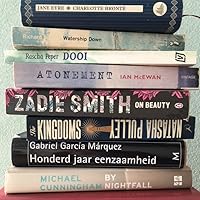
September 2, 2026
Natasha Pulley wrote an excellent short story called The Salt Miracles in The Winter Spirits, and I spent the first 100 pages of this book in confusion because I wasn’t sure if this was going to be the same story or not. It wasn’t. It turns out that Natasha Pulley just really likes writing about salt.
If I’m being honest, this book is one of my least favourites by her. That I’m still giving it four stars is testament to how well she writes. The story is so unusual and complicated that I didn’t always follow what was going on. How does she come up with these stories? It’s incredible. The romance was really taking a backseat here (much to my regret). But maybe that’s just me being greedy haha.
As a non religious person I was cheering when I read this:
You say that your god is love, but it’s astonishing how disgusted you are by love in the real world. Almost as though you resent it; almost as though, not being allowed much of it, you see it as a privilege to be awarded to the chosen, cooperative few, and not a basic fact of humanity, and almost as though your imagination is so starved by your tortuous doctrine, you cannot see any kind of love that isn’t just lust in the end. Which I imagine is enormously reassuring for you, because it allows you to imagine you aren’t amputating the best and most human part of yourself and calling it virtue.
All in all, a good story but not one I see myself rereading.
If I’m being honest, this book is one of my least favourites by her. That I’m still giving it four stars is testament to how well she writes. The story is so unusual and complicated that I didn’t always follow what was going on. How does she come up with these stories? It’s incredible. The romance was really taking a backseat here (much to my regret). But maybe that’s just me being greedy haha.
As a non religious person I was cheering when I read this:
You say that your god is love, but it’s astonishing how disgusted you are by love in the real world. Almost as though you resent it; almost as though, not being allowed much of it, you see it as a privilege to be awarded to the chosen, cooperative few, and not a basic fact of humanity, and almost as though your imagination is so starved by your tortuous doctrine, you cannot see any kind of love that isn’t just lust in the end. Which I imagine is enormously reassuring for you, because it allows you to imagine you aren’t amputating the best and most human part of yourself and calling it virtue.
All in all, a good story but not one I see myself rereading.

August 25, 2026
After loving “The Salt Miracles”, in “The Winter Spirits”, I knew I had to read “The Salt King”.
I loved the setting of the story : the Catholic Church in Rome vibes. The setting during Christmas time with the Christmas trees around. I enjoyed the folk- horror feel mixed in with a little cultish elements. There were so many pieces woven throughout the story that I found to be interesting; like the knights rode off into a never ending ride. Or the witches that went into some realm and never came back out. Another part that I found to be creepy, was when characters were meeting at a NYC bank at 3 am to discuss encryption. In a few words the author was able to give me a sense of dread with her writing.
I found the concept of people believing places were covered with nuclear activity surrounded by salt to be very interesting.
I did feel that the story could have been a bit shorter though which is why I am giving it 3 stars. I think I expected a more dramatical or suspenseful ending. But, if the author wanted to leave the reader with a thought of faith then I think she accomplished that.
**Thank you to the publisher for allowing me to review this book. **
I loved the setting of the story : the Catholic Church in Rome vibes. The setting during Christmas time with the Christmas trees around. I enjoyed the folk- horror feel mixed in with a little cultish elements. There were so many pieces woven throughout the story that I found to be interesting; like the knights rode off into a never ending ride. Or the witches that went into some realm and never came back out. Another part that I found to be creepy, was when characters were meeting at a NYC bank at 3 am to discuss encryption. In a few words the author was able to give me a sense of dread with her writing.
I found the concept of people believing places were covered with nuclear activity surrounded by salt to be very interesting.
I did feel that the story could have been a bit shorter though which is why I am giving it 3 stars. I think I expected a more dramatical or suspenseful ending. But, if the author wanted to leave the reader with a thought of faith then I think she accomplished that.
**Thank you to the publisher for allowing me to review this book. **

August 24, 2026
4.5
this was really good. i've enjoyed all pulley novels so far (some more, some less. cough, the mars house, cough.) and this one was in some ways a classic pulley novel and in others very different.
+
yes, it has all the things you expect of pulley's novels: awkward protagonists, a queer lovestory, weird pets, magical realism, interesting characters... but this one was a lot bigger in scale. more characters, a b-plot on the other side of the world, a c-plot at the vatican, a whole struggle/discussion/song and dance about religion and the church (a lot more central than in bedlam stacks), deeper world-building, a conlang, mythology spun into folk horror. it all slotted together neatly. the characters were lovely. the influence of the did a lot of heavy lifting for the romance, which was new. and i do love the usual hand-wringing and overthinking of the protagonists, but avelyn instantly clocking his attraction and behaving very catholic about it was a lot of fun too.
-
i didn't like:
- everyone speaks so... pulley-esque. you know what i mean. i can cope with one or two characters going on like this per book but this was almost everyone. it's not so bad when you read it, but the audio book was testing me, i was so annoyed.
- so many quirky animals. oh, there's an octopus! and a snail. :) and owls. and magic eels. and pigs. and foxes. oh, and . and horsies.
- the sexual side of could've been a little more freaky
this was really good. i've enjoyed all pulley novels so far (some more, some less. cough, the mars house, cough.) and this one was in some ways a classic pulley novel and in others very different.
+
yes, it has all the things you expect of pulley's novels: awkward protagonists, a queer lovestory, weird pets, magical realism, interesting characters... but this one was a lot bigger in scale. more characters, a b-plot on the other side of the world, a c-plot at the vatican, a whole struggle/discussion/song and dance about religion and the church (a lot more central than in bedlam stacks), deeper world-building, a conlang, mythology spun into folk horror. it all slotted together neatly. the characters were lovely. the influence of the did a lot of heavy lifting for the romance, which was new. and i do love the usual hand-wringing and overthinking of the protagonists, but avelyn instantly clocking his attraction and behaving very catholic about it was a lot of fun too.
-
i didn't like:
- everyone speaks so... pulley-esque. you know what i mean. i can cope with one or two characters going on like this per book but this was almost everyone. it's not so bad when you read it, but the audio book was testing me, i was so annoyed.
- so many quirky animals. oh, there's an octopus! and a snail. :) and owls. and magic eels. and pigs. and foxes. oh, and . and horsies.
- the sexual side of could've been a little more freaky

August 28, 2026
You never know what you're in for with a Natasha Pulley novel, and yet you know exactly what to expect. Already, I can tell The Sat King is a book I'll both appreciate and understand better upon reread. While this was a little bloated (we didn't need the footnotes, those were done better in The Mars House) and it was slower to start, this story centers belief in a way I found fascinating as someone who's nondenominational Christian. How do our beliefs shape our understanding of reality? Do we disbelieve gravity because we can't see it? There are so many questions to consider, to savor like a jawbreaker. The insular, claustrophobic setting of Hreodwater came across very much in the storytelling and descriptions, and what Aveyin explained and didn't explain perfectly captured the sense of homecoming, of returning to a place you left but that's never left you. Me personally, I'd kill for a twelve-volume history of the village and its culture. The priest/witch comparison was pretty apt due to the overlap between paganism and Catholicism, although I think Pulley could have gone further critiquing the Church as an institution than she did, and in more nuanced ways. Avelyn and Jericho were the traditional angsty, touch-starved, witty leads who inevitably fall in love while thinking that love's unrequited—my bread and butter. What made them stand out from some of her other characters, though, was that they genuinely enjoyed being with one another while having such vastly different beliefs, something that made for excellent conflict. The mystery deep in the mine intrigued me: I had some guesses as to what the salt light and the King were but didn't expect the direction Pulley went it—and that was delightful. Perhaps most unexpected of all, I really loved the side plot of Tallis and Sally investigating the Dead Sea site, and by the climax, I truly got an apocalyptic sense of the world unravelling.

September 8, 2026
4 stars--I really liked it.
The only Natasha Pulley I've read before is a short story, "The Eel Singers," in The Haunting Season: Ghostly Tales for Long Winter Nights, which I loved. Between that and this novel, I think I'll seek out more of her writing. She has a sly sense of humor that I adore.
This is a novel about belief (and disbelief). Though it got a bit muddled in the middle and was (perhaps!) overlong, I really enjoyed the ancient folk customs, the creepy "angelic" plot, and most of all, the characters.
The only Natasha Pulley I've read before is a short story, "The Eel Singers," in The Haunting Season: Ghostly Tales for Long Winter Nights, which I loved. Between that and this novel, I think I'll seek out more of her writing. She has a sly sense of humor that I adore.
This is a novel about belief (and disbelief). Though it got a bit muddled in the middle and was (perhaps!) overlong, I really enjoyed the ancient folk customs, the creepy "angelic" plot, and most of all, the characters.
August 22, 2026
Deep in the salt mines in Hreodwater, England, people make pilgrimage for the healing powers the mine can offer. Avelyn Brocken lived in Hreodwater until he was 16, then ran away to Rome to become a Jesuit priest. Now, he's been sent back to investigate whether or not Hreodwater's mines possess a miracle or whether they are controlled by some other supernatural force. Meanwhile, in Jordan archeologists have encountered a strange potentially nuclear phenomenon and in the Wieliczka Salt Mines in Poland something is stirring deep below.
This worked very specifically for me. I'm sure Natasha Pulley wrote it for other people, too, but this is perhaps the surprise Meggiest book of the year so far. It's speculative fiction and horror wrapped up with theology and religious fervor and a looming apocalypse caused by... salt. But if you've ever been in a salt mine, you know that Pulley's worldbuilding nails the eerie feeling that there could in fact be a Salt King, or a god, the deeper you go in the mines. The electronics that go haywire around the salt feel akin to leaving salt out for the household gods or the salt lines that the demons cannot cross.
Avelyn is a fascinating POV character. We spend most of the story with him in his native Hreodwater. He's there to investigate the potential miracle, but we get flashes from his past growing up in the mine and the habits and fears he falls back into. We spend a lot of time with him as he contemplates the religion of the mine and the religion of his training, and his deepening obsession with Jericho, the Hreodwater doctor. When we are not in Hreodwater, we are primarily at an archeological site outside of Amman, Jordan, near the Dead Sea (i.e. another place inundated with salt), where a nuclear scientist is assessing the high Geiger meter counts with an assistant many years her junior. We get some scientific musings while with them, but also some beautiful reflections of life.
Listening to this audiobook was, in a way, like stepping into a mine. Pulley is guiding us through the chambers of the story she wants to tell, but just beyond, in the next room, something more is lurking. It's the definition of atmospheric. The pacing is on the slower side, and yet, stays even keeled throughout the book, and I could not stop listening. This book won't be for everyone, but damn, it was for me.
Thank you to LibroFM for an ALC. The Salt King is out 8/18/2026.
This worked very specifically for me. I'm sure Natasha Pulley wrote it for other people, too, but this is perhaps the surprise Meggiest book of the year so far. It's speculative fiction and horror wrapped up with theology and religious fervor and a looming apocalypse caused by... salt. But if you've ever been in a salt mine, you know that Pulley's worldbuilding nails the eerie feeling that there could in fact be a Salt King, or a god, the deeper you go in the mines. The electronics that go haywire around the salt feel akin to leaving salt out for the household gods or the salt lines that the demons cannot cross.
Avelyn is a fascinating POV character. We spend most of the story with him in his native Hreodwater. He's there to investigate the potential miracle, but we get flashes from his past growing up in the mine and the habits and fears he falls back into. We spend a lot of time with him as he contemplates the religion of the mine and the religion of his training, and his deepening obsession with Jericho, the Hreodwater doctor. When we are not in Hreodwater, we are primarily at an archeological site outside of Amman, Jordan, near the Dead Sea (i.e. another place inundated with salt), where a nuclear scientist is assessing the high Geiger meter counts with an assistant many years her junior. We get some scientific musings while with them, but also some beautiful reflections of life.
Listening to this audiobook was, in a way, like stepping into a mine. Pulley is guiding us through the chambers of the story she wants to tell, but just beyond, in the next room, something more is lurking. It's the definition of atmospheric. The pacing is on the slower side, and yet, stays even keeled throughout the book, and I could not stop listening. This book won't be for everyone, but damn, it was for me.
Thank you to LibroFM for an ALC. The Salt King is out 8/18/2026.
August 27, 2026
Обожнюю, що всі книги у неї різні, але при цьому в кожній є ті елементи, за які я її полюбила.

September 4, 2026
I’m gonna cry myself to sleep over HOW GOOD THIS WAS 🥰
…and now I need to once again wait for a new Pulleys book for a year or so… 😭😭😭
…and now I need to once again wait for a new Pulleys book for a year or so… 😭😭😭

September 12, 2026
I never want to read the words "salt light" again. This started off so promising, and I loved the sections in Jordan, but it fell apart maybe a third or so in, and never really got back on track. At least the women weren't terrible in this one.

Did Not Finish
August 18, 2026DNF @ 28%. Has lots of flirting and romance that I hadn’t anticipated. The attempted humor distracts from an otherwise intriguing story. This writing style just isn’t working for me, too much awkward ‘witty banter.’

Did Not Finish
August 20, 2026Dnf at 14%, y'know what I'm ok with not hearing about middle eastern geopolitics or how they're viewed by westerners in my fantasy fiction.
September 14, 2026
I give Pulley this: there is finally a woman character in one of her books that is not: villainous; brutally killed; or antagonistic in some way and brutally murdered to get her out of the way of interfering with the lead couple. Or a woman so briefly featured that she is a token with no significance. I liked Tallis. She had wants and insecurities that were relatable and not over emphasized, like Grace or Pepper or the queen in Dionysus, and she wasn't expected to sacrifice herself for the benefit of the men like Pepper or the wife in The Halflife of Valery K. The sequences with Tallis and Sally were the most interesting parts of the book.
That is me damning this book with fine praise. You can tell Pulley was writing this while working on The Hymn of Dionysus. The language about witches and god/ungodly events reads the same. This book has a more obvious focus on Catholicism, but the theme of upheaval against the current faith system is the same. As usual, Pulley works in mentions of clockwork and ancient mechanisms that have a mystical feel to them, without ever having to nail down an actual magic system or consistent lore behind them. Pulley likes clockworks, which is fine, but that loses a lot of its charm when it is used the same way in almost every book. The magic around the salt and the mines is interesting at first--the way most of Pulley's magical elements are-- until you realize that there are few to no rules to how it actually works, and the book is never really going to explain it outside of winding incomplete musings. How the belief system works only makes sense if you don't think about it: things only exist if you believe in them....but what if two people are standing side by side and one person believes in the giant devil monster and the other doesn't? What impact belief has is mostly based on what result is most dramatic at any given moment.
Avelyn is a modern version of Phaidros: a conflicted flawed man with a tragic past, trapped in a broken system he still feels loyal too regardless of how much it ruins his life, and who treats most of the people around him with sarcastic annoyance or open contempt. Avelyn substitutes Phaidros' romantic fixation on a dead mentor who raised him with a blinkered platonic loyalty to a mentor who raised him. Then this fixation is replaced by an obsession with a beautiful mysterious yet oddly familiar "stranger" who upends Avelyn's understanding of the world. Jericho is a modern-ish version of Dionysus: a mystical insightful cryptical figure who is magically captivating and enchanting, but tragically isolated and misunderstood based on the destruction their powers wreak. I would praise Pulley for branching out from her original pattern of "meek socially awkward white man has his life revolutionized by a mysterious quietly dangerous but wonderful Asian man," but it seems she's just switched which of the characters in her main couple is the meek one and which is the abrasive one.
Avelyn is a deeply unpleasant character to read. He's constantly snide and takes great pleasure in being rude to people he's supposed to be helping or objectively interviewing, which he never grows out of. His loyalty to the Catholic Church is disassembled over the course of the book, but he basically switches his obsessive faith to a different target. His relationship with the other members of his isolated community are barely explored. To top it off, he is casually transphobic to the point of spouting conservative talking points verbatim, and is never directly called out on it. After the casual transphobia in The Mars House, I'm not as forgiving about another Flawed Main Character being transphobic as simply a character flaw or a clumsy misstep on Pulley's part. Avelyn doesn't so much grow as a character as he does change which system of faith he uses to entirely dictate his beliefs and personality.
Jericho is....fine. Mysterious. Kind. A doctor. Tragically beautiful. Secretly powerful and awe inspiring but bittersweet. The captivating stranger that upends Avelyn's narrow life with his wisdom. As I said: Dionysus.
Father Li was an interesting character until the very end. It is hard to describe how much Pulley threw his character under the bus in order to make a hamfisted point about the Catholic Church and handily eliminate the only tie to the outside world that might influence Avelyn away from Jericho. Even as someone with no love for the Catholic Church as an institution, Pulley's approach to critiquing the church was simplistic and condescending. It was no surprise to learn that Pulley has no religious background, she clearly had a view of the Church going in and the story fails to have true nuance about the Catholic Church as an institution, a religion, and a community. Also her awkward shout out to an amicable clergyman who helped with her research but was accused of criminal behavior was baffling. She was not defending him, but just don't credit him at all, no need to purge about it in the acknowledgements.
Don't worry, there are still women who are presented as antagonistic for getting in the way, or who die to advance the main man's story. Avelyn has an ex-fiancee who is not EVIL but is intimidating and sinister, and her current husband is written in an almost "reverse misogyny" role of being a trophy husband in a town where men are expected to obey women. The social system in Hreodwater is vague, but it is emphasized a few times that women are in power and men have a more secondary role in the social hierarchy. There is a kindly nun who dies so that Avelyn can be sad. So Pulley kept up her traditions, but added Tallis, which is an improvement.
A personal annoyance: I think that if a queer man in Pulley's works ever expressed a genuinely directly sexual thought instead of pure tragic romantic yearning, a snowball would form in hell. It's fine not to want to have graphic detail or explicit sexual content. Pulley's presentation of gay men as delicate modest restrained and/or repressed soft boys is another pattern that feels increasingly uncomfortable.
The plot meandered. The prose was purple and self-satisfied. There was occasional real world political references about Israel that were as uncomfortable as they were confusing. Characters spent long stretches doing nothing, and most of the things characters did do turned out to be irrelevant by the end. The culture of the Hreodwater community was pathetically underdeveloped given how central it should be to the entire story. It was mostly random facts thrown in about the town government or tourist industry that had absolutely no depth. Listing off clan names and having Avelyn visit the town council once is about as deep as it gets; there is no feel for the town as a living community, only sparse exposition from a distance. Instead of having random mammoths as an animal mascot like in Mars House or octopi like in Filigree Street, the town had foxes as a random animal sidekick and a mention of mammoths in the town history. Throughout the climax there is no explanation about what the other residents of Hreodwater are doing. Tallis and Sally proclaim that they will have an arduous quest in the later chapters, but we don't see it. The ending just uses a significant time skip to avoid having to talk about the immediate fallout. The footnotes were bad exposition or useless trivia, and they were not a fraction as amusing as Pulley obviously meant them to be. Pulley's approach to linguistics has always frustrated me: she is clearly interested in language, but the way she explains foreign languages in her books is so condescending. She always explains language the way someone who studied abroad in France for a summer would: enthusiastically, but with surprisingly little depth outside of literally translating words or names to prove she can. The footnotes about the Hreodwater language that went nowhere drove that point home: she can say Hreod has 200 words for salt in a footnote, but since the Hreod language is only used in a couple of lines of dialogue, it is not impressively crafted or utilized. This isn't Tolkien, it's a writer talking up her Conlang without using it in an interesting way. Her explanation of why the Hreod language and culture stayed stagnant for centuries despite a robust tourist industry exposing them to the outside world was also frustrating. The community stayed stagnant as an excuse to keep it quaint and mysterious, and it only works if you don't think about it. This is true of a lot of Pulley's works: like linguistics, she wants to reference history and anthropology to sound deep and complex, but the details fall apart if you actually think about them.
I've read my way through Pulley's books, and my conclusion for this one is this: I didn't dislike it as much as I expected to.
That is me damning this book with fine praise. You can tell Pulley was writing this while working on The Hymn of Dionysus. The language about witches and god/ungodly events reads the same. This book has a more obvious focus on Catholicism, but the theme of upheaval against the current faith system is the same. As usual, Pulley works in mentions of clockwork and ancient mechanisms that have a mystical feel to them, without ever having to nail down an actual magic system or consistent lore behind them. Pulley likes clockworks, which is fine, but that loses a lot of its charm when it is used the same way in almost every book. The magic around the salt and the mines is interesting at first--the way most of Pulley's magical elements are-- until you realize that there are few to no rules to how it actually works, and the book is never really going to explain it outside of winding incomplete musings. How the belief system works only makes sense if you don't think about it: things only exist if you believe in them....but what if two people are standing side by side and one person believes in the giant devil monster and the other doesn't? What impact belief has is mostly based on what result is most dramatic at any given moment.
Avelyn is a modern version of Phaidros: a conflicted flawed man with a tragic past, trapped in a broken system he still feels loyal too regardless of how much it ruins his life, and who treats most of the people around him with sarcastic annoyance or open contempt. Avelyn substitutes Phaidros' romantic fixation on a dead mentor who raised him with a blinkered platonic loyalty to a mentor who raised him. Then this fixation is replaced by an obsession with a beautiful mysterious yet oddly familiar "stranger" who upends Avelyn's understanding of the world. Jericho is a modern-ish version of Dionysus: a mystical insightful cryptical figure who is magically captivating and enchanting, but tragically isolated and misunderstood based on the destruction their powers wreak. I would praise Pulley for branching out from her original pattern of "meek socially awkward white man has his life revolutionized by a mysterious quietly dangerous but wonderful Asian man," but it seems she's just switched which of the characters in her main couple is the meek one and which is the abrasive one.
Avelyn is a deeply unpleasant character to read. He's constantly snide and takes great pleasure in being rude to people he's supposed to be helping or objectively interviewing, which he never grows out of. His loyalty to the Catholic Church is disassembled over the course of the book, but he basically switches his obsessive faith to a different target. His relationship with the other members of his isolated community are barely explored. To top it off, he is casually transphobic to the point of spouting conservative talking points verbatim, and is never directly called out on it. After the casual transphobia in The Mars House, I'm not as forgiving about another Flawed Main Character being transphobic as simply a character flaw or a clumsy misstep on Pulley's part. Avelyn doesn't so much grow as a character as he does change which system of faith he uses to entirely dictate his beliefs and personality.
Jericho is....fine. Mysterious. Kind. A doctor. Tragically beautiful. Secretly powerful and awe inspiring but bittersweet. The captivating stranger that upends Avelyn's narrow life with his wisdom. As I said: Dionysus.
Father Li was an interesting character until the very end. It is hard to describe how much Pulley threw his character under the bus in order to make a hamfisted point about the Catholic Church and handily eliminate the only tie to the outside world that might influence Avelyn away from Jericho. Even as someone with no love for the Catholic Church as an institution, Pulley's approach to critiquing the church was simplistic and condescending. It was no surprise to learn that Pulley has no religious background, she clearly had a view of the Church going in and the story fails to have true nuance about the Catholic Church as an institution, a religion, and a community. Also her awkward shout out to an amicable clergyman who helped with her research but was accused of criminal behavior was baffling. She was not defending him, but just don't credit him at all, no need to purge about it in the acknowledgements.
Don't worry, there are still women who are presented as antagonistic for getting in the way, or who die to advance the main man's story. Avelyn has an ex-fiancee who is not EVIL but is intimidating and sinister, and her current husband is written in an almost "reverse misogyny" role of being a trophy husband in a town where men are expected to obey women. The social system in Hreodwater is vague, but it is emphasized a few times that women are in power and men have a more secondary role in the social hierarchy. There is a kindly nun who dies so that Avelyn can be sad. So Pulley kept up her traditions, but added Tallis, which is an improvement.
A personal annoyance: I think that if a queer man in Pulley's works ever expressed a genuinely directly sexual thought instead of pure tragic romantic yearning, a snowball would form in hell. It's fine not to want to have graphic detail or explicit sexual content. Pulley's presentation of gay men as delicate modest restrained and/or repressed soft boys is another pattern that feels increasingly uncomfortable.
The plot meandered. The prose was purple and self-satisfied. There was occasional real world political references about Israel that were as uncomfortable as they were confusing. Characters spent long stretches doing nothing, and most of the things characters did do turned out to be irrelevant by the end. The culture of the Hreodwater community was pathetically underdeveloped given how central it should be to the entire story. It was mostly random facts thrown in about the town government or tourist industry that had absolutely no depth. Listing off clan names and having Avelyn visit the town council once is about as deep as it gets; there is no feel for the town as a living community, only sparse exposition from a distance. Instead of having random mammoths as an animal mascot like in Mars House or octopi like in Filigree Street, the town had foxes as a random animal sidekick and a mention of mammoths in the town history. Throughout the climax there is no explanation about what the other residents of Hreodwater are doing. Tallis and Sally proclaim that they will have an arduous quest in the later chapters, but we don't see it. The ending just uses a significant time skip to avoid having to talk about the immediate fallout. The footnotes were bad exposition or useless trivia, and they were not a fraction as amusing as Pulley obviously meant them to be. Pulley's approach to linguistics has always frustrated me: she is clearly interested in language, but the way she explains foreign languages in her books is so condescending. She always explains language the way someone who studied abroad in France for a summer would: enthusiastically, but with surprisingly little depth outside of literally translating words or names to prove she can. The footnotes about the Hreodwater language that went nowhere drove that point home: she can say Hreod has 200 words for salt in a footnote, but since the Hreod language is only used in a couple of lines of dialogue, it is not impressively crafted or utilized. This isn't Tolkien, it's a writer talking up her Conlang without using it in an interesting way. Her explanation of why the Hreod language and culture stayed stagnant for centuries despite a robust tourist industry exposing them to the outside world was also frustrating. The community stayed stagnant as an excuse to keep it quaint and mysterious, and it only works if you don't think about it. This is true of a lot of Pulley's works: like linguistics, she wants to reference history and anthropology to sound deep and complex, but the details fall apart if you actually think about them.
I've read my way through Pulley's books, and my conclusion for this one is this: I didn't dislike it as much as I expected to.
This entire review has been hidden because of spoilers.

August 23, 2026
????????????????????????????????????????????????????????????????????????????????????????????????
Displaying 1 - 30 of 190 reviews