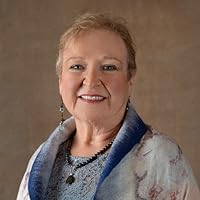
Among her healing arts are Native symbolism and history, the memories of her childhood on the reserve, and her own dark brand of humour. Like Tomson HIghway and Thomas King, Halfe is actively involved in reclaiming the long overlooked Native comedic tradition. Her poems about the erosion of old ways, the terrors of residential school and hth pain inflicted by alcoholism abound with satiric portraits and shared jokes, yet pierce the heart with their truthfulness. Her angriest poems, infused with dark humour, are written in a Cree-inflected English she calls her "grassroots tongue." It is with this voice that she comes to terms with the legacy of Catholicism in the moving poems "ten hail mary's" and "dear poop."
Louise Halfe is known in Cree as Sky Dancer. She was born on the Saddle Lake First Nation reserve in Alberta in 1953. At the age of seven, she was sent away to Blue Quills Residential School in St. Paul, Alberta. She left home of her own accord when she was sixteen, breaking ties with her family and completing her studies at St. Paul's regional high school. It was at this time that she began writing a journal about her experiences.
Halfe's first book of poetry, Bear Bones and Feathers, won the Milton Acorn People's Poet award, and was a finalist for the Spirit of Saskatchewan Award, the Pat Lowther Award and the Gerald Lampert Award.
Her second book, Blue Marrow was short-listed for the Governor General Award as well as the Book of the Year Award, Saskatoon Book Award, and Poetry Award.
Her work has appeared in various anthologies and magazines, and she has been on Peter Gzowski's Morningside, CBC's The Arts Tonight and Ambience. Halfe has travelled extensively across Canada and abroad doing readings and presentations of her work and conducting writing workshops.
She has a Bachelor or Social Work from the University of Regina and certificates in addictions counseling from the Neechi Institute. Halfe lives in Saskatoon.
Bear Bones & Feathers was the debut book of poetry by First Nations Cree author Louise Halfe. First released in 1994, she uses Indigenous spiritual beliefs, memory, her childhood, family, and the devastating effect of the residential school system to show the resilience and strength of First Nations and, in doing so, she provides a powerful look at the conditions Indigenous have been forced to live under Canada's colonial rule. It was not always an easy read but it is an important one, one that should be available in every library and taught in every school and university in Canada.
Thanks to Edelweiss+ and Brick Books for the opportunity to read this book in exchange for an honest review
I met Louise as a shaky self-conscious sixteen-year-old at an Indigenous health conference. I admired her intensity and passion greatly, but never expected that her poetry would be so precious to me. I bought my mom a copy of her book and got it signed, and have been stealing it from her ever since to use in my Indigenous Studies classes. At long last, I've gotten my own! Her words will be precious to every Aboriginal woman, and I am very thankful to her. And if you ever have the chance to see her read, DO IT.
Another stunning book of deeply affecting poetry. It makes you deeply understand and relate to the pain suffered by the indigenous people due to residential schools, and the terrible legacy that has come down through the generations. Halfe shone a light on all of this long before the Truth and Reconciliation process. Her work should be lauded throughout Canada for its truth and powerful beauty.
I am grateful that Brick Books rereleased Halfe’s first book, first published in 1994. This work is full of powerful and memorable poetry that, at least from a settler’s point of view, is an effective evocation of the pain of residential schools and the memories of a survivor. The poems are full of humour and wit, visceral and vivid. I have dog-eared many pages and will revisit the work.
Finally my first appreciation to Louise Bernice Halfe's poetry is sought out with the ever learning desire of a new tongue to speak with. This is part of the beginning of my search in Indigenous literature and I feel ever so inclined to read it over and over. Thankfully this copy I borrowed is from the library so more eyes can read her truths and life. Thank you.
poems about her ancestors, her family, the land, residential school. i liked the use of language, both english and cree - how the poetry dictates the words.
I have always loved Louise Bernice Halfe's poetry - there's so much in there I don't want to see, because the world it prettier without it. I feel like she confront's reality, and reading her work has helped me to change my views on many contemporary issues in Canada - things I have since found to be important to me. Reading this book was a treat and a challenge, and I do not believe there is a higher compliment.
Powerful and poignant poetry collection that beautifully explores the trauma of the Residential School experience, the meaning of traditions, the love of elders, memory and much more!