

What do you think?
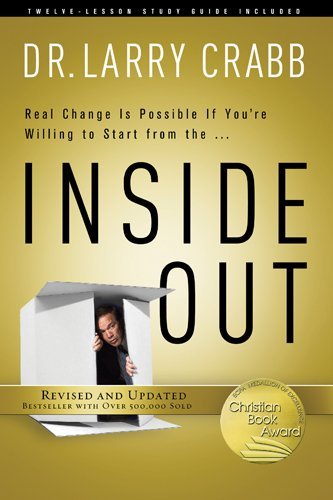
Inside Out
If you want a more vital union with God, a richer relationship with others, and a deeper sense of personal wholeness, learn how to look inside yourself and discover how God works real, liberating change when you live from the inside out. Packed with new and compelling insights, this 25th-anniversary edition of Inside Out is an essential tool for personal discipleship, counseling, and encouragement. Includes a 12-week study guide.
353 pages, Kindle Edition
First published January 1, 1973
About the author
Larry Crabb
115 books244 followersLawrence J. Crabb Jr.
Larry Crabb is a well-known Christian psychologist, conference and seminar speaker, Bible teacher, and author of more than 25 books—including his most recent, When God’s Ways Make No Sense and two Gold Medallion award-winners Inside Out and Understanding People. He is also the founder/director of NewWay Ministries & most recently his "legacy ministry", LargerStory.com. In addition to various other speaking and teaching opportunities, Crabb offers a week-long School of Spiritual Direction held each year here at The Cove and the Glen Eyrie in CO. He currently is scholar-in-residence at Colorado Christian University. Larry and his wife of 50 years, Rachael, reside near Charlotte, N.C.
Larry Crabb is a well-known Christian psychologist, conference and seminar speaker, Bible teacher, and author of more than 25 books—including his most recent, When God’s Ways Make No Sense and two Gold Medallion award-winners Inside Out and Understanding People. He is also the founder/director of NewWay Ministries & most recently his "legacy ministry", LargerStory.com. In addition to various other speaking and teaching opportunities, Crabb offers a week-long School of Spiritual Direction held each year here at The Cove and the Glen Eyrie in CO. He currently is scholar-in-residence at Colorado Christian University. Larry and his wife of 50 years, Rachael, reside near Charlotte, N.C.
Ratings & Reviews
Friends & Following
Create a free account to discover what your friends think of this book!
Community Reviews
Displaying 1 - 30 of 131 reviews

April 22, 2011
This book has been sitting on my shelf far too long. Friends I respect consider it one of their top reads. While I don't know the whole story of the parting, Dr. Crabb and Dr. Dan Allender were once close associates, with as I understand it, Crabb wanting to teach lay members of the church and Dr. Allender professional counselors. I see similarities in their philosophies regardless of their different training focuses...that our stories do not go away when pushed under a rug and ignored. That all of who we are is meant to be brought before God in the context of safety in order for the deep healing we need to connect again to self, God, and others. My personal work through Dr. Allender and Mars Hill Graduate School's (now Seattle School of Theology and Psychology) conferences have been some of my most trans-formative work to date. Reading this book, as well, provided perspective on change that is not simply band-aided through cliched Christian sayings (often over-used Bible verses)or one-time fix-all prayers. Change also does not come from right theology or just trying harder. It comes, according to Crabb, through honest internal assessments, acknowledging the grief it brings, a turning away from our methods of self-protection that result from this grief we've tried to keep at bay, and a turning toward God to take care of the ache some of us, if we're honest, may never shake completely in this life.
Some favorite quotes:
"The hard-to-handle issues in our soul that keep us from relating to others deeply and constructively are ignored (in the church); and easier to handle matters, such as social courtesies and appropriate language, become widely accepted barometers of spiritual health."(35)
"When available comfort (that we can come up with on our own, like food,) is exceeded by inescapable suffering, then bitterness, depression, and a commitment to escape develop."(62)
"A core sadness that will not go away is evidence not of spiritual immaturity, but of honest living in a sad world." (74)
"We tend to relate to one another with the hidden purpose of maintaining our comfort and avoiding whatever sort of interaction we find threatening." (122)
"When things do not go well, especially for an extended time, when our heart is filled with more pain than joy, the temptation to let our desire for relief become a demand is strongest." (138)
"It is only when we face the horror of desperately longing for what no one has or ever will provide that we give up our demands to others to satisfy our thirst and we turn in humble, broken dependence on God." (176)
"The more deeply we sense our thirst, the more passionately we'll pursue water." (202)
Reading this book over vacation transformed me in one key area, at least. As he wrote of the kind of pain we can't ignore, that shakes us, that even yesterday made my voice break during a phone conversation, I was comforted, again, that God sees. That even though its been two years since the inciting incident, I am not "spiritually immature" because I still ache.
But more than that, I was reminded that no one...not the perpetrator of the pain, nor my husband, friends, or the church can REALLY take care of the ache. While I still believe in the power of transforming relationships, that they are often God's way of us healing, connecting, and knowing Jesus with skin on in this life, I saw the pressure I was putting on my relationships to provide it. So, while Dr. Crabb affirmed my ache and insistence it will not be eased by well-intentioned advice or better Christian living, I also do not have to expect others to take care of it. Remembering some things aren't fixable releases the pressure of making things happen and allows me to relax in the midst of staying committed to connecting with others and living transparently.
This doesn't mean I'm giving up on others who would commit with me to live a honest human life. "Change from the inside out is rare. Very few people are willing to deeply embrace their disappointment. And even fewer, when they've faced their disappointment are willing to firmly say, 'My pain is not the problem. The problem is my determination to relieve my pain any way I can." (184)
Join me?
Some favorite quotes:
"The hard-to-handle issues in our soul that keep us from relating to others deeply and constructively are ignored (in the church); and easier to handle matters, such as social courtesies and appropriate language, become widely accepted barometers of spiritual health."(35)
"When available comfort (that we can come up with on our own, like food,) is exceeded by inescapable suffering, then bitterness, depression, and a commitment to escape develop."(62)
"A core sadness that will not go away is evidence not of spiritual immaturity, but of honest living in a sad world." (74)
"We tend to relate to one another with the hidden purpose of maintaining our comfort and avoiding whatever sort of interaction we find threatening." (122)
"When things do not go well, especially for an extended time, when our heart is filled with more pain than joy, the temptation to let our desire for relief become a demand is strongest." (138)
"It is only when we face the horror of desperately longing for what no one has or ever will provide that we give up our demands to others to satisfy our thirst and we turn in humble, broken dependence on God." (176)
"The more deeply we sense our thirst, the more passionately we'll pursue water." (202)
Reading this book over vacation transformed me in one key area, at least. As he wrote of the kind of pain we can't ignore, that shakes us, that even yesterday made my voice break during a phone conversation, I was comforted, again, that God sees. That even though its been two years since the inciting incident, I am not "spiritually immature" because I still ache.
But more than that, I was reminded that no one...not the perpetrator of the pain, nor my husband, friends, or the church can REALLY take care of the ache. While I still believe in the power of transforming relationships, that they are often God's way of us healing, connecting, and knowing Jesus with skin on in this life, I saw the pressure I was putting on my relationships to provide it. So, while Dr. Crabb affirmed my ache and insistence it will not be eased by well-intentioned advice or better Christian living, I also do not have to expect others to take care of it. Remembering some things aren't fixable releases the pressure of making things happen and allows me to relax in the midst of staying committed to connecting with others and living transparently.
This doesn't mean I'm giving up on others who would commit with me to live a honest human life. "Change from the inside out is rare. Very few people are willing to deeply embrace their disappointment. And even fewer, when they've faced their disappointment are willing to firmly say, 'My pain is not the problem. The problem is my determination to relieve my pain any way I can." (184)
Join me?

July 19, 2012
Perhaps one of the best books I've ever read. At first (upon the initial reading), I had to put the book down because I did not mesh with its content. At least that's what I thought! A year later I was floored by the substance in the book; the breath and depth of what inside change looks like from the perspective that emphasizes depravity and our natural longing to make life work.. I think crab has a perfect framework based on what on Jeremiah's "broken cisterns". It is a challenge to read this book, as many of the individuals I've offered the book to have admitted; either by dismissing it entirely or glossing over some really powerful concepts that no one could if you understand the significance. Real change is possible, just as Larry crab presents, but you must be willing to change from the inside out. And the inside out approach is not what we may commonly think: Routine Bible studies, ministry, and even fellowship. All these things are important and essential, but there is more to change than that that. I think crab addresses this from a biblical perspective. Some have argued Crabb is disingenuous when it comes to effective "biblica"l counseling, because he touts the secular psychologist as a resource. I think that such individuals are sadly mistaken as to his diagnosis of any human problem as well as the solution. Anyone familiar with Crabb's work, namely his first books that lays his counseling the theoretical framework knows Crabb is first and foremost a student of Scripture and proper hermeneutics involved in understanding the Scriptures. This is a must-read for all Christians. It still takes time, once you have grasped the key concepts to practice changing from the inside out.

December 14, 2025
4.5; Honestly, probably one of my more favorite “self-help” books. I found it to be quite “meaty” (hearty? I kind of hate the word meaty) with rich content on most pages. In many ways, this book outlines basic Christianity and the sanctification process that we should all be aware of. However, in reading it, I found myself enlightened to new ideas and a better understanding of what true, gut-wrenching, sin- exposing, and joy-seeking sanctification looks like. Sometimes in books like these, I struggle to not feel condemnation, but I felt the well-experienced author wielded his pen with a nearly perfect balance of grace and truth. This is a book I hope to reread after I’ve processed some of its ideas and the questions it has left me with.
A running theme of this book is that real inside change happens by:
1. recognizing and admitting our disappointments and longings (grieving living in a broken world)
2. recognizing and repenting of sins of the heart and our harmful relational patterns founded on self- protection and self-sufficiency ( not just outward-focused sins)
3. Surrendering to God and recognizing true hope and joy rests only in Him and His coming kingdom. From this understanding, we can love others unconditionally despite the circumstances or their response.
There were also other themes discussing the heart problem of demandingness, discipleship, rest vs complacency, and some other compelling ideas.
A running theme of this book is that real inside change happens by:
1. recognizing and admitting our disappointments and longings (grieving living in a broken world)
2. recognizing and repenting of sins of the heart and our harmful relational patterns founded on self- protection and self-sufficiency ( not just outward-focused sins)
3. Surrendering to God and recognizing true hope and joy rests only in Him and His coming kingdom. From this understanding, we can love others unconditionally despite the circumstances or their response.
There were also other themes discussing the heart problem of demandingness, discipleship, rest vs complacency, and some other compelling ideas.
January 4, 2013
You can't win with this book. Even if your being honest you're not honest enough. If you admit you're broken you're not broken enough. If you're happy you're lying. It is not a feel good read with no practical application. Larry spends too much time talking about himself and his most extreme example patients. No references about real people in the middle. Blah.

December 30, 2018
Crabb's insight makes this book a must read. Are we more sensitive to health and wealth matters than we are to relational matters? Many times we are, but it should be the other way around. Do we realize the difference between the veneer of false confidence and trusting faith? God has a way of sorting this out by trials and tribulations. Are we demanding when we should be broken in terms of expectations? Crabb's view is that we need to work on cleaning out the inner vessel.
As to how this is best accomplished is another story, though, and I was less convinced that most of our wrongful behaviors are primarily self-protective actions. Is the way to recovery through a good long facing of past hurts until reaching an exhaustive sorrow and acceptance? I say sometimes, at least for the cases he cites. Does his emphasis equate with the generality he shares? I found this harder to embrace. However, that Christlike Character is not the same as Christlike behavior - this is an insightful gem along with those mentioned above.
As to how this is best accomplished is another story, though, and I was less convinced that most of our wrongful behaviors are primarily self-protective actions. Is the way to recovery through a good long facing of past hurts until reaching an exhaustive sorrow and acceptance? I say sometimes, at least for the cases he cites. Does his emphasis equate with the generality he shares? I found this harder to embrace. However, that Christlike Character is not the same as Christlike behavior - this is an insightful gem along with those mentioned above.

July 14, 2020
A book that keeps telling you to face your pain and disappointment can be a bit hard to get through, but it was worth it. Trying to numb the longings, pain, and disappointment in your heart is not the way of sanctification.
Now pardon me while I take some time to honestly explore my pain and repent from deep-seeded self-protective mechanisms. Yippee.
Now pardon me while I take some time to honestly explore my pain and repent from deep-seeded self-protective mechanisms. Yippee.

January 1, 2013
Though Inside Out contains great wisdom and insight into the depth of authenticity lacking in the lives of most Believers, I struggle with some of Crabb's theology. He claims that spiritual depth will intensify the pains of life because of the true realization of the fallen world in which we live. He states that "Until then [Heaven], a disturbing sense of incompleteness will continue to blemish the most responsible and most blessed life. We can deny it, we can cover it over with busyness and pleasures, but we cannot get rid of it." What about experiencing the Kingdom here and now? We, as Believers, have the indwelling of the Holy Spirit living in us. Love dwells IN us. Joy dwells IN us. Not tastes of love, not tastes of joy, not just emotions, but Love, Himself. Yes, I agree, we must acknowledge the reality of pain that we experience in the world, working with the Holy Spirit and fellow believers to truly heal our pains and not gloss over them. But to say that we will never experience relief from pain on this side of Heaven is pretty close to blasphemy, in my opinion. Christ came so that we would have life, and have it more abundantly. Not just in Heaven, but here on earth. And perhaps, if only treating our pain on a soul level, this never-ending pain may be true. We are triune beings: body, soul, & spirit. To neglect the spirit realm by trying to muscle our way through the soul realm will continue to result in frustration. I don't intend for this to become a theological debate, and so I'll end here. If you choose to read Inside Out, just please read it (as you should any book) with the filter of the Word & the Holy Spirit. Don't ever simply take any authors theology as your own because of their credentials.

March 3, 2009
This is one of the first (maybe the very first) Christian-based book I read. It ticked-me-off tremendously. I got so angry reading it at one point that I physically threw the book across the room (great visual memory of its trajectory as it bounced off the wall).
This book spoke truth to me at a time I didn't want to hear it. I later came to appreciate the message and am grateful for its writing.
Larry Crabb's writing has evolved over the years as his own journey with Christ continues to mature. It's worthwhile to read some of his later titles as well. I find it interesting and encouraging to see growth in an author over time. Perhaps you will too.
This book spoke truth to me at a time I didn't want to hear it. I later came to appreciate the message and am grateful for its writing.
Larry Crabb's writing has evolved over the years as his own journey with Christ continues to mature. It's worthwhile to read some of his later titles as well. I find it interesting and encouraging to see growth in an author over time. Perhaps you will too.

February 22, 2013
This has to be one of the most difficult, discomforting books I've ever read; I'm still wrestling (and suspect I will continue to wrestle for a long time) with a good number of insights and principles that it outlines. Christians who are comfortable where they are would not be pleased with this work, which forces one to challenge him/herself and confront some very hard questions that can shake up his/her life.

Read
January 23, 2023Nothing matters more than knowing God.
“Yes, we are impossibly foolish, obsessively self-preoccupied, arrogantly self-sufficient, and badly hurting. To deny it ruins the wonder of what Christ did for us when He died. Be we are more. By the grace of God, we are more. There is good stuff beneath the bad. And yet we often fail to find it because we lack the courage to face the bad stuff that hides it from view.”
“Yes, we are impossibly foolish, obsessively self-preoccupied, arrogantly self-sufficient, and badly hurting. To deny it ruins the wonder of what Christ did for us when He died. Be we are more. By the grace of God, we are more. There is good stuff beneath the bad. And yet we often fail to find it because we lack the courage to face the bad stuff that hides it from view.”

September 14, 2024
BINGBONG IS NOT A CHARACTER IN THE ORIGINAL BOOK!!! 😡🤬😡😤😡
Disney took a lot of liberties in adapting this Christian Counselling book.
Disney took a lot of liberties in adapting this Christian Counselling book.

March 21, 2018
PEOPLE NEED DEADLINES TO FUNCTION!
Do you believe an aching soul is an example of realism?
Do "you feel more pressure than joy" (23)?
Is it important to look good?
Do you believe "shallow copers" ignore, whereas "troubled reflecters" have no real answers?
Well congrats, because you picked the right book!
"He said that within each of us there is a bad dog and a good dog. The bad dog, we were told, could never be tamed into a loveable pet. The good dog however , was placed in our heart by God when we became a Christian and it was already tame. It always wanted to do the right thing." (39)
Actions, thoughts, and feelings are at the point of the rock, whereas the core enables "grace." Waves hit this rock while events and feelings are cyclical.
Dave Wallace uses a similar motif of waves in Infinite Jest and this book was in his personal library.
What quenches your thirst?
"Every illustration I use throughout this book is drawn from my personal contact with clients and friends, but everyone is disguised. When I refer to a young man age twenty-seven I might be thinking of a teenage girl or middle aged house wife. IN OTHER WORDS, I AM NOT REFERRING TO THE PERSON WHO COMES TO MIND AS YOU READ THIS STORY." (76)
PART I: LOOKING BENEATH THE SURFACE OF LIFE
PART II: WE'RE THIRSTY PEOPLE
PART III: DIGGING BROKEN WELLS
PART IV: CHANGING FROM THE INSIDE OUT
"Confusion breeds faith; disappointment drives us to hope; conviction leads to love. The path to maturity requires a commitment to replace false certainty, pretend satisfaction, and smug spirituality with disturbing levels of confusion, disappointment, and conviction, which in turn create the opportunity to develop faith, hope, and love." (222)
(Paraphrasing) Eat your vitamins, say your prayers, drink your milk, and become one with Christ. Accept the Bible as your whole truth.
Someone typed this book for Dr. Larry Crabb.
If I were a "God-loving" Christian man, I'd draft it with a pink marker and fucking type it myself.
Do you believe an aching soul is an example of realism?
Do "you feel more pressure than joy" (23)?
Is it important to look good?
Do you believe "shallow copers" ignore, whereas "troubled reflecters" have no real answers?
Well congrats, because you picked the right book!
"He said that within each of us there is a bad dog and a good dog. The bad dog, we were told, could never be tamed into a loveable pet. The good dog however , was placed in our heart by God when we became a Christian and it was already tame. It always wanted to do the right thing." (39)
Actions, thoughts, and feelings are at the point of the rock, whereas the core enables "grace." Waves hit this rock while events and feelings are cyclical.
Dave Wallace uses a similar motif of waves in Infinite Jest and this book was in his personal library.
What quenches your thirst?
"Every illustration I use throughout this book is drawn from my personal contact with clients and friends, but everyone is disguised. When I refer to a young man age twenty-seven I might be thinking of a teenage girl or middle aged house wife. IN OTHER WORDS, I AM NOT REFERRING TO THE PERSON WHO COMES TO MIND AS YOU READ THIS STORY." (76)
PART I: LOOKING BENEATH THE SURFACE OF LIFE
PART II: WE'RE THIRSTY PEOPLE
PART III: DIGGING BROKEN WELLS
PART IV: CHANGING FROM THE INSIDE OUT
"Confusion breeds faith; disappointment drives us to hope; conviction leads to love. The path to maturity requires a commitment to replace false certainty, pretend satisfaction, and smug spirituality with disturbing levels of confusion, disappointment, and conviction, which in turn create the opportunity to develop faith, hope, and love." (222)
(Paraphrasing) Eat your vitamins, say your prayers, drink your milk, and become one with Christ. Accept the Bible as your whole truth.
Someone typed this book for Dr. Larry Crabb.
If I were a "God-loving" Christian man, I'd draft it with a pink marker and fucking type it myself.

September 10, 2012
This book was very difficult for me to read; I often felt intensely threatened and unnerved by its message. I also felt a deep appreciation for an author who could articulate questions and predicaments I have encountered, but which seem too intense to be acknowledged in other social forums or by other people in positions of authority. Good behavior, kindness, self-discipline, and personal responsibility seem virtuous and desirable, but Crabb deftly demonstrates how misleading and injurious they can be. I was impressed by his refusal to sugar-coat the problems and suffering people experience. Rather than offering rose-tinted glasses to his readers or attempting to inculcate them with a positive mentality that demands that they refuse to look at insoluble or irredeemable situations, he allows his readers their pain and confusion. Despair, horror and prolonged uncertainty are often received socially as gauche and are consequently hidden beneath a veneer of affability and competence. Crabb shows how this veneer is reenforced by desires to be productive, selfless and strong for others but how, in fact, it precludes deep connection.

December 29, 2013
كتاب رائع جدا كعادة د .لارى كراب
تجد فيه التبصر والنظرة العميقة جدا لداخل الانسان
الكتاب ممتع جدا فى عرضه وامثاله وتطبيقاته
يتكلم عن مشكلتان فى كل انسان تقريبا
الحماية الذاتية وكثرة المطالب التان تمنعان الانسان عن المحبة لله والاخرين من القلب ومن عمق القلب
التواصل الذى نفعله هو انعكاس لمحاولاتنا الدائمة لحماية انفسنا من الالم
ولكن عندما نقبل الالم وخصوصا عدم كمال الانسان وحياته فى عالم ساقط غير كامل فاننا نجد وجه المسيح ونشعر باشتياق حقيقى للقاء المسيح على السحاب
لن تجد الله دون ان تتألم فقط استمع لالمك كى تجد همسات الله قوية ومؤثرة فى حياتك
الكتاب اثر فى بشكل خاص وجذرى على غير المعتاد ويحتاج الى اعادة قراءة وتطبيق
ويحتوى على قسم من التدريبات والخلوة الشخصية مفيد جدا جدا
كتاب انصح الجميع بقراءته فى اقرب وقت
تجد فيه التبصر والنظرة العميقة جدا لداخل الانسان
الكتاب ممتع جدا فى عرضه وامثاله وتطبيقاته
يتكلم عن مشكلتان فى كل انسان تقريبا
الحماية الذاتية وكثرة المطالب التان تمنعان الانسان عن المحبة لله والاخرين من القلب ومن عمق القلب
التواصل الذى نفعله هو انعكاس لمحاولاتنا الدائمة لحماية انفسنا من الالم
ولكن عندما نقبل الالم وخصوصا عدم كمال الانسان وحياته فى عالم ساقط غير كامل فاننا نجد وجه المسيح ونشعر باشتياق حقيقى للقاء المسيح على السحاب
لن تجد الله دون ان تتألم فقط استمع لالمك كى تجد همسات الله قوية ومؤثرة فى حياتك
الكتاب اثر فى بشكل خاص وجذرى على غير المعتاد ويحتاج الى اعادة قراءة وتطبيق
ويحتوى على قسم من التدريبات والخلوة الشخصية مفيد جدا جدا
كتاب انصح الجميع بقراءته فى اقرب وقت

January 28, 2008
Dr. Crabb does a great job explaining why things are still wrong in the world and why Christians still experience trials and struggles.
And he does a good job explaining how to seek resolution that may not imitate resolving the problem but understanding and putting it on the shelf.
Great read for those who ask the question, "Why do bad things happen?"
And he does a good job explaining how to seek resolution that may not imitate resolving the problem but understanding and putting it on the shelf.
Great read for those who ask the question, "Why do bad things happen?"
June 25, 2008
Crabb writes a modern, more plaintive version of Owen's Mortification of Sin. If you read this book, be prepared to feel burdened, torn to shreds by the weight of sin...restored only through petitioning for a clearer focus on Christ and our relation to what He did for us on the cross. Read it, but be ready for it to rock you at your core.

February 4, 2009
This was another life-transforming, paradigm-shifting book for me! I saw myself and my family of origin far more clearly after reading this book. The theme is that if we are ever to change, it must be real change--from the inside out. If you are wanting to truly change and grow, this is a terrific book!

September 4, 2012
Actually started reading it on August 1st while in San Diego with my children. Awesome book! Well worth the time and reading this book is time well spent! Suggest reading it thru rather quickly at first and then going back and rereading it ever so slowly, taking a week per chapter to really get it to sink in and stick!
July 23, 2026
I really appreciated the way that Crabb addresses the real sources of disappointment in life. He entertains them long enough to understand the way that they impact us and the way that we develop sinful, self-protective responses. This view of sin (and its connection to anxiety, depression, etc) feels a lot more grounded in reality than charismatic clichés like “let go and let God” or “name it and claim it.”
I’ve spent much of my life jaded by the disconnect between the joy that some Christians profess, which God seems to promise, and the heaviness of depression, regardless of the state of my spiritual disciplines. I think Christians that don’t struggle with depression fail to connect with people like me who because they don’t allow room to address the true disappointments in life.
There was a lot here for me that was challenging, convicting, and encouraging. It was effectively grounded in truth and hope, but also reality. It is dense though and took a while for me to read. I could see myself coming back and reading this again sometime.
I’ve spent much of my life jaded by the disconnect between the joy that some Christians profess, which God seems to promise, and the heaviness of depression, regardless of the state of my spiritual disciplines. I think Christians that don’t struggle with depression fail to connect with people like me who because they don’t allow room to address the true disappointments in life.
There was a lot here for me that was challenging, convicting, and encouraging. It was effectively grounded in truth and hope, but also reality. It is dense though and took a while for me to read. I could see myself coming back and reading this again sometime.
February 6, 2024
GR crashed on me writing my original review, so I’m not doing it again…
Basically we are more sinful than we think and often run away from our disappointments. But for inside out change to be possible (on this side of heaven), we must feel the weight of our disappointments and give them to the Lord.
Lots of helpful diagrams in here, I just wish 85% of it wasn’t just diagnosing the problem and only like 15% on the solution. But I think Crabb would say that’s the point; we need to understand the depth of our sinfulness before transformation is possible. Great, necessary book, but could have been half the length.
Basically we are more sinful than we think and often run away from our disappointments. But for inside out change to be possible (on this side of heaven), we must feel the weight of our disappointments and give them to the Lord.
Lots of helpful diagrams in here, I just wish 85% of it wasn’t just diagnosing the problem and only like 15% on the solution. But I think Crabb would say that’s the point; we need to understand the depth of our sinfulness before transformation is possible. Great, necessary book, but could have been half the length.

April 28, 2024
For the person who wants to grapple honestly with the experience of life- you will finish this book with a mission to look at the way you relate to Christ and others & a preparedness to admit confusion, disappointment, and conviction.

September 14, 2023
I’ve read this book twice, and should probably read it five more times to fully grasp what Crabb is saying. So good, but very deep.

November 8, 2013
Dr. Crabb teaches Biblical Counseling at Grace Theological Seminary in Indiana. This book combines the Biblical teachings of sin and grace with an understanding of human nature from a psychological point of view. He moves deeper than the "victim" approach that dominates current thinking to get to the deeper problem of sin in the heart. Crabb contends that real change is possible, but the change will not be the kind most people hope for, which is to change in such a way that we no longer have problems or pain. Crabb says we must come to realize that we have longings that will not be met until heaven. We have a thirst that only God can meet and he will not meet that thirst completely until heaven. We try to quench our thirst in other ways that God does not want us to use to satisfy that thirst. Crabb says we shouldn't deny that we have unsatisfied longings or minimize them. It is healthy for us to grieve that these longings have not been met. Admitting our disappointment helps us accept our loved ones as they are, not as we long for them to be. Crabb points out that the problem is the deceitful heart, which demands its way from God, instead of trusting God to provide. Dr. Crabb defined personal integrity as "a commitment to never pretend about anything" and asserted that integrity is "prerequisite for change from the inside out." Dr. Crabb evaluates models of change based on whether they produce Christ-like character or Christ-like behavior.
April 1, 2007
A phenomenal book on what it might look like to be more alive to Christ than to whatever current struggle you might be going through. Larry Crabb is a Christian psychologist who has studied carefully what Scripture has said about certain topics, and is someone who tailors and fashions his treatment of and insights into his patients' lives according to the life and words of Jesus. He is a psychologist who first follows Christ, is completely in touch with his own need for Jesus and his depravity that is symptomatic of that need, and who carries with him stories of people who will blow you away.
After sharing stories of incredible, literally unbelievable pain, he asks, "What would it look like to be alive to Christ if you were so-and-so?"
In struggling and wrestling with this question, the reader is challenged to look inward with purpose: to pray for the desire for change from the inside out.
After sharing stories of incredible, literally unbelievable pain, he asks, "What would it look like to be alive to Christ if you were so-and-so?"
In struggling and wrestling with this question, the reader is challenged to look inward with purpose: to pray for the desire for change from the inside out.

March 16, 2010
This book caught my eye at the library recently. I want to mark it up, so I've ordered my own copy. The last paragraph or so of the book really sums it up - - - -"Confusion breeds faith; disappointment drives us to hope. conviction leads to love. The path to maturity requires a commitment to replace false certainty, pretended satisfaction, and smug spirituality with disturbing levels of confusion, disappointment, and conviction, which in turn create the opportunity to develop faith, hope,and love. And joy." This book is counter-intuitive to what "feel good" Christianity espouses. Life IS difficult. And it won't get better until heaven. I'm still trying to wrap my mind around what it looks like to live this in real life. Like I mentioned, I'm getting my own copy. I'd welcome the opportunity to dialogue more about this. This 2007 updated version of the 1987 book comes with an additional chapter AND includes a study guide.

February 26, 2021
I’ve known of Larry Crabb for a while, but it was only last year that I finally read my first book by Crabb. And I was impressed. Shattered Dreams is biblical counseling writing at its finest. I was excited then to dig into Crabb’s most well-known book, Inside-Out.
In Inside-Out Crabb urges us that the solution to our unhappiness and frustration is not found outside of us, but inside of us. Until we can understand our disordered hearts, we will not make any progress. The inside is not to be confused with the psychologized self, but the spiritual self. Crabb says, “We are not psychologically disordered; we are sinful people who believe lies about what must be ours in order to experience fulfillment.”
What Crabb promises isn’t to relieve us from difficulty, instead, he says that will we find that the inward journey is a painful one. “Modern Christianity,” Crabb says, “in a dramatical reversal of its biblical form, promises to relieve the pain of living in a fallen world.” Christ does not exist to rescue us from our discomfort, but to transform us. The path of Christ is the path of transformation. This path “frees us to groan without complaint, to love others in spite of our emptiness, and to wait for the complete satisfaction we so desperately desire.”
Crabb tell us that, “Christ wants us to face reality as it is, including all the fears, hurts, resentments, and self-protective motes we work hard to keep out of sight, and to emerge as changed people.” Christ invites us below the water line in our hearts. Perhaps the most important chapter in Inside-Out is chapter two, where Crabb walks through four options that Christians typically offer for getting to the inside. First, is to dig into and transform our motives and attitudes, not merely our actions and feelings. Second, is to depend on the grace of the Holy Spirit to transform our actions. Third, we are invited to walk through healing internal wounds to experience change. And fourth, and finally, is resolving deep psychological problems to transform ourselves. Crabb suggests that each of these is only a partial solution.
Utilizing Jeremiah 2:13 as his launching point, Crabb suggests that we have dug our own cisterns instead of drinking from God’s spring of living water. Jeremiah 2:13 reads, “My people have committed two sins: they have forsaken me, the spring of living water, and have dug their own cisterns, broken cisterns that cannot hold water.” We are, at the same time, both thirsty and foolish. We have to understand that we are made to desire, but that our desires are made to be fulfilled by God himself.
Crabb tells it to us straight: the cisterns we are drawn to offer better immediate relief that Christ does. “If you really want to feel right away and get rid of any unpleasant emotion, then I don’t recommend following Christ. Drunkenness, immoral pleasures, and vacations will work far better. Not for long, of course, but in the short run they’ll give you what you want.” Crabb differentiates between casual longings, critical longings, and crucial longings. Often we try to fulfil the deepest crucial longings with casual longings or even critical longings. But neither will satisfy our crucial need for God himself.
Crabb is clear: the problem isn’t our desire. “We long for what we were designed to enjoy: It’s okay to desire. And we want what we cannot have until heaven: It’s okay to hurt. ‘If anyone thirsty, let him come to me.’” Our desire and our hurt point us to the depth of our need for God.
Crabb tells us that we have to enter into problems, not numb them. “There is no place for sugarcoating in the life of a serious Christian. Life is unspeakably sad.”
Crabb explores three layers of change. Change in conscious direction, change in approach to relationships, and change in direction of being. It isn’t until we change the direction of our being that we will experience who God made us to be. The solution, then, is bound up in our identity. Here is where Crabb had me scratching my head, though. He deals with our direction of being primarily through the lens of our masculine and feminine identity. The language in this chapter is disappointing at times, both because of Crabb’s overly reductionistic view of gender and, more importantly, that Crabb roots our identity in our gender. I am unconvinced this is a primary identity for a Christian. It is an important and secondary identity, but it is not primary. Instead, it would have been helpful for Crabb to dig into our identity as children (sons) of God or as the bride of Christ.
Crabb concludes with a call to the true living waters. He is spot on as he calls us to a surrender, community, and the Spirit. “If you long to discover the energy of Christ within you, to change from the inside out by releasing the new life in your soul, then you must do three things: (1) surrender to God, (2) take an inside look in the safety of loving community, and (3) develop the spiritual sensitivity necessary to recognize the promptings of God’s Spirit as He stimulates the godly desires of your new heart.”
The importance of the simple but profound truth that we are desiring beings with misplaced desires cannot be understated. The book is well worth reading for that insight alone. Most of the book Crabb leans into the question: how do we become aware of the broken cisterns we have constructed for our desires? However, I wish that Crabb expended more time in the book engaging the positive question: how do we replace our broken cisterns with Christ’s deep waters? In addition, I found Crabb’s conflation of our identity with our gender in chapter 12 to be problematic.
I commend Inside-Out to you. You will benefit from the book. However, if you haven’t read Crabb before, I would encourage you to pick up Shattered Dreams first.
For more reviews see www.thebeehive.live.
In Inside-Out Crabb urges us that the solution to our unhappiness and frustration is not found outside of us, but inside of us. Until we can understand our disordered hearts, we will not make any progress. The inside is not to be confused with the psychologized self, but the spiritual self. Crabb says, “We are not psychologically disordered; we are sinful people who believe lies about what must be ours in order to experience fulfillment.”
What Crabb promises isn’t to relieve us from difficulty, instead, he says that will we find that the inward journey is a painful one. “Modern Christianity,” Crabb says, “in a dramatical reversal of its biblical form, promises to relieve the pain of living in a fallen world.” Christ does not exist to rescue us from our discomfort, but to transform us. The path of Christ is the path of transformation. This path “frees us to groan without complaint, to love others in spite of our emptiness, and to wait for the complete satisfaction we so desperately desire.”
Crabb tell us that, “Christ wants us to face reality as it is, including all the fears, hurts, resentments, and self-protective motes we work hard to keep out of sight, and to emerge as changed people.” Christ invites us below the water line in our hearts. Perhaps the most important chapter in Inside-Out is chapter two, where Crabb walks through four options that Christians typically offer for getting to the inside. First, is to dig into and transform our motives and attitudes, not merely our actions and feelings. Second, is to depend on the grace of the Holy Spirit to transform our actions. Third, we are invited to walk through healing internal wounds to experience change. And fourth, and finally, is resolving deep psychological problems to transform ourselves. Crabb suggests that each of these is only a partial solution.
Utilizing Jeremiah 2:13 as his launching point, Crabb suggests that we have dug our own cisterns instead of drinking from God’s spring of living water. Jeremiah 2:13 reads, “My people have committed two sins: they have forsaken me, the spring of living water, and have dug their own cisterns, broken cisterns that cannot hold water.” We are, at the same time, both thirsty and foolish. We have to understand that we are made to desire, but that our desires are made to be fulfilled by God himself.
Crabb tells it to us straight: the cisterns we are drawn to offer better immediate relief that Christ does. “If you really want to feel right away and get rid of any unpleasant emotion, then I don’t recommend following Christ. Drunkenness, immoral pleasures, and vacations will work far better. Not for long, of course, but in the short run they’ll give you what you want.” Crabb differentiates between casual longings, critical longings, and crucial longings. Often we try to fulfil the deepest crucial longings with casual longings or even critical longings. But neither will satisfy our crucial need for God himself.
Crabb is clear: the problem isn’t our desire. “We long for what we were designed to enjoy: It’s okay to desire. And we want what we cannot have until heaven: It’s okay to hurt. ‘If anyone thirsty, let him come to me.’” Our desire and our hurt point us to the depth of our need for God.
Crabb tells us that we have to enter into problems, not numb them. “There is no place for sugarcoating in the life of a serious Christian. Life is unspeakably sad.”
Crabb explores three layers of change. Change in conscious direction, change in approach to relationships, and change in direction of being. It isn’t until we change the direction of our being that we will experience who God made us to be. The solution, then, is bound up in our identity. Here is where Crabb had me scratching my head, though. He deals with our direction of being primarily through the lens of our masculine and feminine identity. The language in this chapter is disappointing at times, both because of Crabb’s overly reductionistic view of gender and, more importantly, that Crabb roots our identity in our gender. I am unconvinced this is a primary identity for a Christian. It is an important and secondary identity, but it is not primary. Instead, it would have been helpful for Crabb to dig into our identity as children (sons) of God or as the bride of Christ.
Crabb concludes with a call to the true living waters. He is spot on as he calls us to a surrender, community, and the Spirit. “If you long to discover the energy of Christ within you, to change from the inside out by releasing the new life in your soul, then you must do three things: (1) surrender to God, (2) take an inside look in the safety of loving community, and (3) develop the spiritual sensitivity necessary to recognize the promptings of God’s Spirit as He stimulates the godly desires of your new heart.”
The importance of the simple but profound truth that we are desiring beings with misplaced desires cannot be understated. The book is well worth reading for that insight alone. Most of the book Crabb leans into the question: how do we become aware of the broken cisterns we have constructed for our desires? However, I wish that Crabb expended more time in the book engaging the positive question: how do we replace our broken cisterns with Christ’s deep waters? In addition, I found Crabb’s conflation of our identity with our gender in chapter 12 to be problematic.
I commend Inside-Out to you. You will benefit from the book. However, if you haven’t read Crabb before, I would encourage you to pick up Shattered Dreams first.
For more reviews see www.thebeehive.live.

August 30, 2011
This book says the same thing about 3 million ways but it literally gets to the heart of the matter. Embrace the pain. Acknowledge you suffer. Strive for Christ's fulfillment. You can't get it by praying, bible studying, being good, or anything else but by feeling the pain and allowing Christ to be what you seek. It was a tough read for me. A bit lofty, hard to grasp the concept totally but makes some sense anyway. We long to be made perfect. Very long read to really make one point. Diagrams are interesting but confuse me. The author uses tons of sarcasm at first and I can't tell when it is being applied which makes it difficult to know when to take him literally without hearing inflection. Challenging and thoughtful though.

February 6, 2015
It's not often I read a book that reads my mail AND confirms the cry of my heart. This one did. Dr. Crabb has put into words what I have been feeling for a long time. The understanding of how we relationally keep ourselves safe is probably the biggest hinderance to inner healing, our relationships and the finishing work of the cross in our lives. I have been through a lot of healing, but there are still places in my heart that are untouched. Places that people, just like me, never talk about but we can all see evidence of all around us. But Dr Crabb hit on those places with clarity and boldness. This is very well thought out and very lovingly written. Why did I not know about this book sooner!!!

August 31, 2014
I felt like this book was a little depressing; I don't want to forget the joy that is ours in Christ, nor the understanding that He works everything out for our good. It was convicting, however, especially as a person who does consider other people's views of her. It was a great reminder to open up and be real about struggles. I also truly enjoyed the concept of God being sovereign. We can't "demand," we can only ask with the knowledge that He can do what He wants when He wants, which often doesn't look like what we thought. It helped me to reconcile the injustices of poverty and suffering. God does have it under his control and is working things out for good.

August 28, 2007
old school l.crabb
i read this when i first became a christian. it makes the list of favorites not b/c i have read it recently but b/c of how deeply it impacted me at the time.
it was the first book i read that showed me i was not alone in my fear of 'being known' by God and by people. i also realized i didn't have to lie *all the time*... just some of the time. God has been so merciful! i get teary thinking about this book.
i read this when i first became a christian. it makes the list of favorites not b/c i have read it recently but b/c of how deeply it impacted me at the time.
it was the first book i read that showed me i was not alone in my fear of 'being known' by God and by people. i also realized i didn't have to lie *all the time*... just some of the time. God has been so merciful! i get teary thinking about this book.
Displaying 1 - 30 of 131 reviews