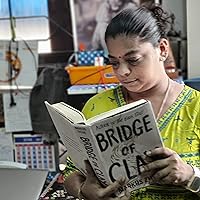
For ten-year-old Ori, his mother’s life as a theatre actor holds as much fascination as it does fear.
Approaching adolescence in an unstable home, he is haunted by her nightly stage appearances, and the suspicion and resentment her profession evokes in people around her, at home and among their neighbours. Increasingly consumed by an obsessive hatred of the stage, Ori is irrevocably drawn into a pattern of behaviour that can only have catastrophic consequences.
Political bullies, actor, hairdressers, set boys and backstage crew make up the world of The Firebird, a visceral exploration of a young boy stumbling into adulthood, far ahead of his years.
Saikat Majumdar is the author of four novels, two books of nonfiction, and the co-editor of a volume of essays. His most recent book is The Middle Finger, a campus novel that examines the intricacy of the teacher-student relation through the lens of ancient myths. Previous novels include The Scent of God (2019), a story of romantic love between two boys in a Hindu monastic boarding school, and The Firebird (2015), which narrates a young boy’s destructive relation with the art form of theatre through his mother’s life as an actress. The Scent of God was one of Times of India’s Most Talked About Books of 2019 and a finalist for the inaugural Mathrubhumi Book of the Year Award, and The Firebird was finalist at the Bangalore Literature Festival Fiction Prize and the Mumbai Film Festival Word-to-Screen Market. The Middle Finger was longlisted at the Atta Galata-Bangalore Literature Festival Book Prize 2022. Saikat's other works include a work of general nonfiction, College: Pathways of Possibility (2018), of literary criticism, Prose of the World (2013), and a co-edited collection of essays, The Critic as Amateur (2019).
Saikat is Professor of English & Creative Writing at Ashoka University. He has taught previously at Stanford University, was a Newhouse Fellow at Wellesley College, and a Fellow at the Stellenbosch Institute of Advanced Study. He writes regularly on higher education and literature in different venues, including the Hindu, Hindustan Times, Los Angeles Review of Books, and the Times Higher Education.
Theme of the Book- The Depths of a Neglected Childhood, an Eye-opener for Parents Who Are Lost in their Jobs and Never Look into the Needs of their Children
This book exactly places you into the empty world of hostility that Ori lived through each and every day of his childhood years. You are made to walk his life of grimness, see how a little one is stoned right through his nerves as the words of hatred easily spilled against his mother are made to lick through his skin every single day. You are made to witness Ori’s horror as he watches scandals in his mother’s profession when he is only about five. How the hurt of people’s cold hard criticism flung against his mother, stings him, repeatedly muting him as he is pushed into years far beyond his chronological age.
This is my additional take from the book—— that it brings to light the irresponsibility of some parents who keep themselves removed from the lives of their children even in their tender growing years. The fact that these parents aren’t available around to protect, nurture and look into the needs of their children is sad. A happy home environment is a child’s birthright and a lot of parents have no clue about that and don’t even care to see that their children are being entangled into cruelty from sources everywhere.
I firmly believe there is no point in reading a book if it doesn’t stir you to be any better.
This book rouses in the reader the importance of kindness beyond everything. Many societies in the world, one of them being Ori’s small, little society in North Kolkata harbour people that have no idea of kindness amongst family members. It has become such commonplace in some Bengali communities to naturally harbour hate amongst their own tribe and blood, that the added neglect of the parents of any child growing in such a family removes all sanity of love and peace that is a requirement for a child’s happy, protected growth.
It is understandable that it is bold to make a statement of kindness. Perhaps, what most of us do not know that it is only natural for a human to be kind and considerate, instead of resorting to hate and criticism.
Think about it:— You will die someday! In this short span of time on earth, why wouldn’t you want to spread love? Why?
It isn’t commonplace, it is high time that people show love and kindness to one and all and reverse the tables.
In little ways, everyone can bring in kindness into their lives. Start by giving up on criticising people and looking into the what’s good in them.
Thank you for writing such an amazing book, Saikat. One of the finest English literature I have come by in this book. This book is an eye-opener to anyone who reads it.
PS---I am very grateful to this author for the effort he lent in granting me a testimonial for my novel!
This is an intelligently written book, highlighting multiple aspects of a kid's psychology. It has its symbolism, an aura of Kolkata, putting into frame the world of stage plays, and their slow death.
The protagonist Ori, has a troubled childhood. His mother being a stage play actress, had to take the blunt of family and society - as stage play actresses were looked down upon (80s era). He also had to live through the struggles of divorced parents. And an almost non existent father figure.
In spite of a good plot, and an intelligently written prose, with some good dialogues and situations created, I somehow did not enjoy it as much as I wanted to. Because of my own limitation of not being able to grasp it completely (because it is intelligent :P)
I finished reading Saikat Majumdar's 'The Firebird' last night. There are books you finish in one go, and then there are stories you wish did not end. You are in no rush to reach the destination, as you have fallen in love with the journey. This story is like that chocolate bar in your refrigerator, which an uncle coming home for the holidays from abroad, gifted you in your childhood. You would take bite-sized chunks every day, wrap the rest of it carefully, and keep it back inside the refrigerator, your heart content with the assurance that, there was more to savour tomorrow. This book plucked me off my everyday routine – familiar and often mundane – and took me on a journey to a world that lives now only in my moist memories. To lanes and bylanes of a Kolkata that I knew like the back of my hand, and my footprints on them have now been swept away by winds of change. To houses abuzz with warm voices, many of which have been silenced by time. To headlines in yellowed pages of newspapers breaking news that have now become chapters in history books. To old playhouses and movie halls, to walls on which the sickle-hammer-star battled with the palm, to lilting melodies on the radio, to meandering lanes which the dada-s of the para ruled over, to innocence ruefully lost. What makes the reading more personal is the fact that, Saikat delicately adds smell, taste and texture to moments, to situations and to emotions, which make them leap straight out of the pages and suddenly, they are your own memories, your own feelings and experiences, and this is your story. It is you who feels guilty and scared over Ori's little lies, it is you who is shocked by the antics of the two beggar girls, it is your heart that skips a beat or two at Ahin's maniacal desire to bring his written words to life, it is you who has a sad foreboding when Shruti leaves Ori's Dhakuria house to meet his mother at the Pantheon later that night, it is you who cries with Ori in the empty classroom seeking comfort in the motherly hug of his teacher, and it is you who is shattered by the tragic and ironic denouement of the story. As I went to bed last night after finishing the book and putting the beautifully designed jacket back on it, the images haunted me, robbing hours off my quota of sleep, and a book hasn’t done that to me in a while. Saikat, thanks for giving me back a slice of my childhood through your story. This, for me, is a masterpiece. I cannot now wait to dig into your other literary savouries.
The Firebird is a brutal example about the working woman, how a man's day to day ethics education crumbles,shambles violently when placed against a woman’s evening and night shifts.Day by day it beocmes worse- husband growls in silence, in-laws conspire and collaborate with “The Party” (1980-1984 a party moved fast into private life and death acted as a metaphor to cleansing of society)to exterminate what is made to look like an adulterous lover, the stage, the theatre, and a son who wants to kill, first with arson(abrupt and sudden), a firebird, and then with the slow poison of pain. Amidst this familiar psychosocial territory of the middle-class Bengali family, the author places a pale child, a boy who misses his evening-worker mother, who looks for all motherly affection in his beautiful mother but misses it everyday-every night, whose inherited and borrowed morals clash with her insect-like affection for the amorality of the artistic space, in her case the stage. He silently demands of her something more like all his friends and the crave remains unattended somewhere deep in this heart etched as a wound.
The novel begins with the mention of a death and ends with one, the first a performance, the last as real as death can be-silence.The play is over.
This is the story of Oritro, aka Ori, told from his perspective, and set in Calcutta, in the 1970s/1980s. His mother, Garima Basu, is a theatre actress – something which is not looked upon favourably by the family or neighbours. The plot brings to life the typical atmosphere of theatres of the yesteryears; with a middle-class Bengali family at its core.
It is set at a time when the Communist Party was emerging to be in power and they were keeping no stones upturned to keep the “loose morals” associated with theatres and plays at bay.
Ori is a complex and unpredictable child who seeks refuge in his grandmother’s stories and companionship in his cousin Shruti, and her friends. He is mesmerised by his mother’s on-stage performance, yet doesn’t enjoy all of what he sees.
The Pantheon (the theatre with the revolving stage), where most of the plays are set, is described vividly, along with it’s dysfunctional owner, Ahin Mullick. And death remains one of the dark themes covered in this tale.
This is a gloomy story – yet powerful in its portrayal of subversion, with an undercurrent of darkness. The author brings to life the sights and sounds of north Calcutta where most of these theatre halls stood. The book also laments the loss of the theatre and its culture due to indifference and intrusion of political powers.
A dark tale, which doesn’t make for easy reading – yet it is engaging and captivating.
I am a lay reader who reads close and with a lot of heart. I tend to forget many of the details of the story and its characters once I have kept the book aside. What struck me as different when I first chanced upon Saikat Majumdar’s The Firebird was the way he painted pictures for his readers that refuse to leave. With his prose of spare elegance, (as a renowned writer rightly nailed his style) pitched against the magic of his psychedelic imagination he created a world that haunts you even months after having completed reading the book. Each of the characters in the novel go through their own journeys of discovery and survival, stumbling and rising again or maybe not. But for me the character who stood out was Ori, the emotionally abandoned young boy whose soft and almost noiseless entry into the story, full of fears and insecurities, makes you skip many a heartbeat because you are rooting for him, wanting him to make it in this world, no matter how much he stumbles. At the end of it, when he walks into his smoke-filled blurry future, he continues to stay with you long after you have turned the last page of the book.
The Firebird by Saikat is a brilliant book on art, performance and parental love. As with any Saikar’s novels, there is more to the book than what meets the eye. Hidden underneath layers and layers of makeup is an artist’s real face – the one that he carefully hides from the rest of the world, giving the audience an illusion of perfection and envy. What happens when these layers are stripped down and the curtains are drawn? Just how bad can an art be for the artist? How far is too far in art that you blur the lines between fact fiction? The answers to these questions are hidden in the green rooms and dark alleys. The question remains are you ready to seek them
The crumbling, dissolving into disrepair and ruin theatre world of Calcutta and against that backdrop a young boy's conflicted feelings towards his actor mother are brought vividly and dramatically alive. A dark, disturbing and intense read.
The Firebird brings out the travails and tribulation of a son of a stage show actress, whom he adores but the world around him condemns. The story tracks Oritra from an age of 9 to 13. He loves his mother like any other child, longs for her company , wants to share his day, his life – but she is never around for that. At times he fears her for he is unable to determine (at that age) as to what is forbidden and what is not. He adores her for her star power, but is scared to bring it out in the open. He caresses her name in silent and keeps all his tears inside him, lest someone uses it to further damage his mother. He wants to fight for her, but is frustrated that he is not able to do much
He finds support from very few – silent from his Mummum and active from his cousin – who alas falls prey to the same world, leaving him with a bitterness which turns into abject hatred to the world of theaters. Saikat weaves this story into the very fabric of Kolkata and artfully brings to the reader a picture of the society there in the mid 80s . With an impeccable choice of language and with a miserly use of words, the writing is very crisp and narrative is very engaging. One cannot help but empathise with the young Ori, shedding the very tears which Ori is holding back. The story of the queen of the plot – Ori’s mother Garima remains an enigma. I was left wanting to knowmore about her version – how she brought about the strength to face it all. There are a few glimpses of her struggle which is evident, but her story remains untold. Tortured by the world , she fights on only to surrender to the hatred of her son – whom she loves deeply like any mother but is unable to express the same.
Overall a deeply touching story and a very powerful narration. Wish there were more of such kind.
The Firebird is a deliciously dark, hauntingly heart-breaking story told from a little boy's point of view.
Saiket Majumdar successfully portrays the age at which children can be terribly judgmental of people around them and the little things they can do that can affect and alter lives. However at many points in the book, the author moves on to show grown-up characters judging others based on the way they themselves have been conditioned, which makes me ask myself, "Do we ever really grow up?” Or “Are we all just children of different age groups?"
I liked the style, the flow and the intensity of the story. Ori is an endearing chap. Saikat shows another side of Calcutta. A city I hope to visit ASAP.
The Firebird is the story of a theatre actress, who works through nights in times and a society where that could only bring shame, neglect and dishonour to a family living with its aristocratic past. Life for her little boy Ori, is in the midst of all the rich but dark colours of the theatre, causing Ori to grow up much ahead of his years. The book is about how Ori comes to terms with this life.
A rich and colourful book, with a gripping and unbelievable ending. The author has beautifully captured the essence of theatre. The book brings alive the soul of Calcutta for readers who have never visited the city.
The nuances of a young boy's thoughts and growing up years are remarkable and subtle beyond words. Ori is a character I will think about for days to come, cause I am still trying to understand the boy, beyond the authors discriptions but within the boys acts. A fabulous book. Indian literature.
Finished firebird last night. I'm left deeply intrigued! To be able to change the worldview through your protagonist is not an easy task. I had glimpses of halls like sujata sadan, star theatre before renovation, etc... is ahin inspired from ahindra mancho, i wonder? I wish though that there was a character sketch of the director... often for female actresses the play director, often the playwright himself, has a towering influence I think. Overall, an awesome journey to have read this.