In a small town in Tennessee, the young girl stood with her father and gazed at the Russian Sputnik in the night sky. She knew that she was witnessing the beginning of a new era for the human race. Would she play a part? Rhea Seddon was ten years old.
As years went by, humans ventured off the planet and walked on the moon. The astronauts were men but she felt that would change. At Berkeley in the tumultuous late 1960s, in medical school and a surgery residency she learned that the world no longer belonged solely to males. When NASA announced a selection of new astronauts for the space shuttle program in 1977, she knew: this was her chance.
As one of the first female astronauts in 1978 her quest for space began. But she would do this job her own way, blazing a new path for others to follow.
Venturing into space on three spectacular missions, working on important projects for NASA, weathering the storm of Challenger, marrying a fellow astronaut, and bearing Astrotots, that child who looked skyward long ago is an inspiration to all who aim high to find their own orbit.
Born in Murfreesboro, Tennessee, Rhea Seddon was raised as a southern lady, complete with ballet and piano lessons. Like many children growing up during the Apollo era, she was fascinated with space. When she set herself the goal of becoming a surgeon, she had no idea that she would make history as one of the first women to fly into space.
She was in the last year of her residency in 1977, single, exhausted, covered in blood from yet another gunshot victim at a hospital emergency room dubbed “the pit” in Nashville, when she found out that NASA was recruiting women to be Space Shuttle astronauts. She applied, but didn’t tell anyone for fear of being laughed at.
Seddon writes about answering the surprise “call” asking her to come for an interview, agonizing over what to say in the required essay, the sexist questions she was asked, and the awkward handling of her first contact with the news media.
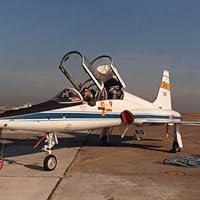
After selection in 1978, she and the other five women were dunked and dropped and scrutinized for any weaknesses compared with the military pilots whose motto was “Better dead than look bad.” She endured it all. But she writes, “I soon learned that my biggest problem as an astronaut was not being female: it was being small.” The step to get into a T-38 was at her waist level and the smallest parachute available was so wide at the shoulders that she risked sliding out in an emergency. During training, she nearly suffocated because of a too-large space suit.
Physical strength and endurance presented challenges as well, especially requirements for SCUBA certification which she had to meet despite being too small to be considered for an EVA. She practiced with dogged determination at a community pool until she could tread water for 20 minutes, swim underwater two lengths of the pool, and retrieve a brick from the deep end.
Hundreds of color photos and overviews of shuttle systems make it easy to follow Seddon’s experiences.
After the success of STS-1 in 1981, Seddon and fellow astronaut Robert “Hoot” Gibson became the first American astronaut married couple. About a year later, when she told NASA she was pregnant, they grounded her from flying T-38s despite no evidence that it would cause any harm. She recalls worrying, “If they thought I was too ‘disabled’ to fly the jets, what other things were in store?... Would they write me off when it came to flight assignments because I had a young baby at home?” She was determined to prove that women could have children and still do their jobs.
Thus Seddon felt compelled to rush back to work six weeks after giving birth via C-section. “I learned a lot from that experience, mostly that young moms need more than six weeks to bond with their babies. Other stuff, even the important things like the space program, can wait a while.” She describes her first year as a new mom while supporting her husband’s first flight and training for her own, plus working in the ER every weekend, as “insane.”
Seddon’s first flight was supposed to be STS-41F in the summer of 1984. But schedule changes led to it being cancelled, and as a result she lost the chance to be the first mother and third American woman in space. Those honors went to Anna Fisher instead. She was assigned to STS-51E which flew in April 1985. The flight deployed Syncom which failed to activate. Showcasing the value of humans in space, Mission Control authorized an unplanned spacewalk to mount a makeshift “flyswatter” to the arm (controlled by Seddon) in a valiant though unsuccessful attempt to recover the satellite.
The Challenger accident in 1986 had an enormous impact on everyone involved with the space program, and most especially on the astronauts. Seddon’s very personal account of washing her friend Mike Smith’s flight suit by hand (so he could be buried in it) should become required reading for anyone involved with launch go/no-go decisions.
The accident postponed the Space Life Sciences (SLS) Spacelab flight that Seddon had been training for. Her choice between an earlier flight assignment in 1988 and a chance to have another baby while she still could (at age 40), will resonate with many professional women today. Some people may be surprised to learn that she opted for the baby (born in 1989).
Seddon flew on two Spacelab flights: SLS-1/STS-40 in June of 1991, and SLS-2/STS-58 in October 1993. Her description of the medical experiments conducted on her flights, including the political issues involving the animal experiments and details about the effects of re-adaptation, are refreshingly frank and not something readers are likely to find in any other space books.
The final chapter recounts the effects on the Astronaut Corps of the decision to partner with Russia on Mir and the International Space Station. Though she’d faced and overcome many challenges to become one of the first female astronauts, she didn’t relish learning Russian and spending months away from her children in another country to fly on assembly missions. So she left NASA in 1996 and returned to medicine and Tennessee. “No one could take away from me the experiences I’d had.... No one could any longer say that women couldn’t be astronauts. It seems strange looking back that it was ever doubted.”
I recommend this inspiring book to everyone. This is not just a woman’s story or a space story. It is the story of a remarkable human being who faced down the naysayers, stood up to physical and emotional challenges, sacrificed personal gain for the good of others, and went on to live happily ever after. It just doesn’t get any better than this!
Interesting book by a very accomplished woman. I could have used less detail on her husbands flights though. I realize this was a part of her life but I didn't need to know as much detail about them. Also, she didn't talk about life after Nasa until the last 4 pages. The book was published 20 years after she left Nasa so I would really liked to have heard how she made this transition and what she's doing now.
I read about Rhea Seddon's book in the Daily News Journal in Feb 2016. She is a Murfreesboro, TN native. I enjoyed reading this book because it personalized the space shuttle flights. She went into detail about her first space shuttle flight and about the explosion of the Challenger. It put a face on that tragedy, since she knew each of the astronauts and was a part of the recovery team afterwards. She talked about space travel details that I had never heard about or even considered. Fascinating. / No Index in this book. She attended St. Rose of Lima Catholic (Murfreesboro) in Jr high and Mboro Central HS, where she was a cheerleader. Attended Berkley in CA. Trained as a surgeon. Practiced in Memphis and Nashville?
A great addition to the astronaut biography/autobiography coming from one of the original 6 female astronauts selected in 1978. However as Seddon is also married to an astronaut the book does include a lot of his missions and I feel that as he is a pilot/commander she feels people will be more interested in his missions than hers which is untrue. I would like to have known more about being female in the corps apart from the height problems as from reading some of the male accounts of this time I don't think it was always as nice as Seeddon writes. I hope that there are more female accounts soon and I'm pleased to have read this.
I liked this book. Dr. Rhea Seddon, one of the first American women astronauts, tells her story. While she saw her main obstacle as her height (at 5'2") rather than her gender, there were one or two instances when she was underestimated, when people forgot she was a medical doctor.
Dr. Seddon wanted a career and a family, and it appears she was able to have both. She went crazy occasionally, having so much to do, but she did it.
The book ends when she and her husband, astronaut Robert "Hoot" Gibson, left NASA at the dawn of the Shuttle-Mir era. Recommended if you are interested in the space program and/or the struggle for gender equality.
This entire review has been hidden because of spoilers.
This was really interesting, outlining Rhea's life from the time of her medical residency all the way through her career as an astronaut. Along the way she went up in space three times, married, had three babies, worked part time in Houston's ER and served in various NASA positions. The book is full of pictures too, some in space, some on earth. I got to hear Rhea speak at the Sigma Kappa National Convention, and it was then that I decided that I had to buy her book. I learned a lot about the space program by reading this, and a lot about an amazing woman.
Dr. Seddon gives a detailed but relatable and readable account of her journey as one of the first female astronauts. Her perspective is much different than mine despite us both being women working in human spaceflight, which helped me better understand generational and individual differences. This is a HEAVY hard cover book because it is printed to allow a large number of full-color photos, making it more vibrant than a typical biography with just a few inserts of photos. Overall, this is a very good read.
I am honored to say that I bought this book at the U.S. Space and Rocket Center gift shop and then met the author during her trip to Huntsville this month. Although the astronaut memoir is a very crowded field by now, Rhea Seddon was the first woman to write such a book. This meant that she could deliver insight into the astronaut experience that is missing from the numerous books the men have written. For instance, she gave birth to three children during her years at NASA and benefited from maternity leave as well as a nanny who looked after the children while she worked as an astronaut. This helped her prove that mothers could fulfill jobs successfully, an idea which was not popular at the time of her birth (1947) in Murfreesboro, Tennessee, but which she demonstrated brilliantly during three shuttle missions. Not only did she spend almost twenty years as an astronaut, she also worked as a part time physician, mother, and husband to astronaut Hoot Gibson. This might appear too ambitious, yet her energy in the midst of all this allowed her to train for and make critical contributions to missions STS-51D, STS-41, and STS-58. The book is well written and my respect for Dr. Seddon is definitely greater knowing that she accomplished this.
This book is well worth your time especially if you are interested in the history of space flight, what went on behind "the scenes", and what it was like to be an astronaut. I am fortunate to have worked very closely with Rhea Seddon on two Shuttle flights - STS-40 (Spacelab Life Sciences-1) and STS-58 (Spacelab Life Sciences-2).
That said, the book is sort of odd since it doesn't have a glossary or footnotes - which many similar books have. The part about the NASA/Russian cooperation seems a little like it was stuck on later, I worked the entire Shuttle/Mir program and can certainly agree that the Russians are very difficult to work with. I wish that she had put in more about how Payload Specialists were (or were not!) selected for missions (this has normally been a very opaque process) and why NASA wanted to work with the Russians.
It was interesting to hear her write about all of the many activities that competed for her time, the astronauts that I have worked with definitely have goals and sacrifice a lot to accomplish them. Rhea is a person that you do NOT get in the way of, you support her. But she succeeded in a very male, fighter pilot environment. She did a lot of amazing life sciences research.