Jump to ratings and reviews
Rate this book

Ghost of Chance

Rate this book
Ghost of Chance is an adventure novella set in the jungle of Madagascar and filled with the obsessions that mark the work of the man whom Norman Mailer once called, "the only American writer possessed by genius." While tripping through the author's trademark concerns—drugs, paranoia, and lemurs, this short novel tells an important story about environmental devastation in a way that only Burroughs can tell it.

Illustrations by the author.

64 pages, Hardcover

First published January 1, 1991

13 people are currently reading
1256 people want to read

About the author

William S. Burroughs

449 books7,011 followers
William Seward Burroughs II, (also known by his pen name William Lee) was an American novelist, short story writer, essayist, painter, and spoken word performer.
A primary figure of the Beat Generation and a major postmodernist author, he is considered to be "one of the most politically trenchant, culturally influential, and innovative artists of the 20th century".
His influence is considered to have affected a range of popular culture as well as literature. Burroughs wrote 18 novels and novellas, six collections of short stories and four collections of essays.
Five books have been published of his interviews and correspondences. He also collaborated on projects and recordings with numerous performers and musicians, and made many appearances in films.
He was born to a wealthy family in St. Louis, Missouri, grandson of the inventor and founder of the Burroughs Corporation, William Seward Burroughs I, and nephew of public relations manager Ivy Lee. Burroughs began writing essays and journals in early adolescence. He left home in 1932 to attend Harvard University, studied English, and anthropology as a postgraduate, and later attended medical school in Vienna. After being turned down by the Office of Strategic Services and U.S. Navy in 1942 to serve in World War II, he dropped out and became afflicted with the drug addiction that affected him for the rest of his life, while working a variety of jobs. In 1943 while living in New York City, he befriended Allen Ginsberg and Jack Kerouac, the mutually influential foundation of what became the countercultural movement of the Beat Generation.
Much of Burroughs's work is semi-autobiographical, primarily drawn from his experiences as a heroin addict, as he lived throughout Mexico City, London, Paris, Berlin, the South American Amazon and Tangier in Morocco. Finding success with his confessional first novel, Junkie (1953), Burroughs is perhaps best known for his third novel Naked Lunch (1959), a controversy-fraught work that underwent a court case under the U.S. sodomy laws. With Brion Gysin, he also popularized the literary cut-up technique in works such as The Nova Trilogy (1961–64). In 1983, Burroughs was elected to the American Academy and Institute of Arts and Letters, and in 1984 was awarded the Ordre des Arts et des Lettres by France. Jack Kerouac called Burroughs the "greatest satirical writer since Jonathan Swift", a reputation he owes to his "lifelong subversion" of the moral, political and economic systems of modern American society, articulated in often darkly humorous sardonicism. J. G. Ballard considered Burroughs to be "the most important writer to emerge since the Second World War", while Norman Mailer declared him "the only American writer who may be conceivably possessed by genius".
Burroughs had one child, William Seward Burroughs III (1947-1981), with his second wife Joan Vollmer. Vollmer died in 1951 in Mexico City. Burroughs was convicted of manslaughter in Vollmer's death, an event that deeply permeated all of his writings. Burroughs died at his home in Lawrence, Kansas, after suffering a heart attack in 1997.

Ratings & Reviews

What do you think?
Rate this book

Friends & Following

Create a free account to discover what your friends think of this book!

Community Reviews

5 stars
278 (22%)
4 stars
382 (31%)
3 stars
385 (31%)
2 stars
126 (10%)
1 star
41 (3%)
Displaying 1 - 30 of 105 reviews
Profile Image for Glenn Russell.
1,511 reviews13.3k followers
October 29, 2021

“Panic is the sudden realization that everything around you is alive.” William S. Burroughs, Ghost of Chance

Last summer at a street fair in Portland, Oregon, one of the booths displayed a banner: “Stop Breeding.” I picked up one of their postcards, which read: “Not having kids may be the best thing you can do for the environment.”

Reading Ghost of Chance, author William S. Burroughs is undoubtedly of similar mind. He alerts readers that on the island of Madagascar the human population is growing out of control (as of today, nearly thirty years after the author’s warning, the human population is twenty-five million strong). Meanwhile deforestation on the island continues apace - mining, logging, wood for fuel, along with the major culprit, slash-and-burn for agricultural, has reduced a once spacious jungle overflowing with life down to next to nothing.

Ghost of Chance, a novella of less than sixty pages published in 1991 as part of the High Risk Books/Serpent’s Tail series, is a tale of adventure set in the Madagascar jungle. If you look hard you might detect the bare outline of plot. But don’t look too hard, for the author’s artistry isn't so much in linear narrative as in well-tuned observations on the plight of modern homo no so sapiens expressed in tough, hardline Burroughs-ese.

This being the case, here are six direct quotes, six Benzedrine Bill tabs, along with my comments in the hope that you get hooked enough to read this short work from the master of Naked Lunch and The Soft Machine:

“The Lemur People are older than Homo Sap, much older. They date back one hundred sixty million years, to the time when Madagascar split off from the mainland of Africa. Their way of thinking and feeling is basically different from ours, not oriented toward time and sequence and causality. They find these concepts repugnant and difficult to understand.”

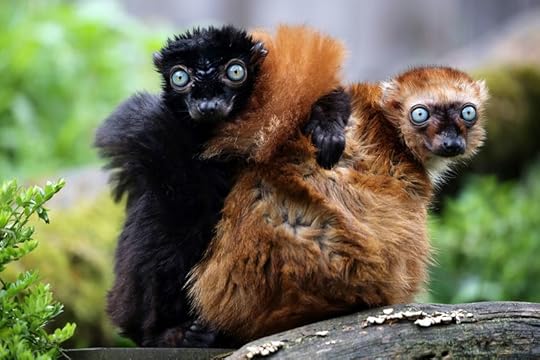
The word lemur derives from the word lemures (ghosts or spirits) from Roman mythology. Thus the strong connection between lemurs and the book's title. Captain Mission, the tale’s protagonist, possesses a strong affinity with the lemurs of Madagascar. For millions of years prior to the arrival of humans on the island, some lemurs grew to the size of gorillas. Lemurs have always enjoyed a great diversity. Even today, after the destruction by humans of vast tracts of jungle, there remains over one hundred species of lemurs.


“Mission set out walking rapidly. Half an hour later, he took a small amount of the crystals with a sip of water from his goatskin water-bag. In a few minutes he experienced a shift of vision, as if his eyes were moving on separate pivots, and for the first time he saw Lizard-Who-Changed-Color.”

As readers we have come to expect any work of Burroughs to be chock-full of drugs of some variety. Here Captain Mission takes a specialty of Madagascar producing in him visions akin to a shaman on a vision question. Indeed, many the time reading Ghost of Chance I linked the insights of Burroughs with the world of Shamanism.

“Time is a human affliction; not a human invention but a prison. . . . And what does time mean to foraging lemurs? No predators here, not much to fear. They have opposing thumbs but do not fashion tools; they have no need for tools. They are untouched by the evil that flows in and fills Homo Sap as he picks up a weapon – now he has the advantage. A terrible gloating feeling comes from knowing you’ve got it!"

The author detects Homo Sap’s rage and resentment at having being cast out of the present by the sickness of time. Not a happy combination – a species on the planet with seething, bitter anger combined with all those powerful weapons. Watch out animals and plants, here comes Homo Saps, an instrument of mass destruction and extermination!

Beauty is always doomed. Homo Sap with his weapons, his time, his insatiable greed, and ignorance so hideous it can never see its own face. Man is born in time. He lives and dies in time. Wherever he goes, he takes time with him and imposes time.”

In a footnote William Burroughs asks if Homo Sap thinks other animals were there just for him to eat. I hear echoes of poet Gary Snyder observing when the Protestants came to America they judged the natural world as the stage for man working out his relationship to God. (Women and children being inferior versions of man). The animals and trees and lakes and rivers were but stage props. So, to answer your question, William S. Burroughs – yes, many peoples and cultures hold that animals exist for one sole purpose – food for the table!

"To distract their charges from the problems of overpopulation, resource depletion, deforestation, pandemic pollution of water, land, and sky, they inaugurated a war against drugs. This provides a pretext to set up an international police apparatus designed to suppress dissidence on an international level."

I can just imagine what this statement sounds like when read in William S. Burroughs' gritty, gravelly voice. Can come off as a bit preachy but it does ring of truth. In another footnote, it is stated that a high ranking U.S. official said anyone who suggests a tolerant attitude toward drug use should be considered a traitor. Of course he wasn't thinking of those large corporations distributing millions of pills to get people hooked so their profits skyrocket. OxyContin flooding small towns in the US is but one example.

“Whoever needed a majority? Ten percent plus the police and military is all it ever took. Besides, we’ve got the media, hook, line, and blinkers.”

Wise words, Bill! Nowadays in 2018 the powers that be can even chortle, cackle and yodel as they make this pronouncement. After all, they have a long standing track record of success going for them.


William S. Burroughs, age 76, reading Ghost of Chance
Profile Image for George Ilsley.
Author 12 books314 followers
October 5, 2022
Recently reading a book about pirates, and researching Captain Mission's utopian/libertarian pirate colony on Madagascar, I saw a reference to this book by William Burroughs. Despite my minor WSB obsession, the existence of this short work had previously escaped my attention.

Like many of Burroughs's books, this one reflects his major themes — plagues, contagion, the search for freedom, and the repressions of so-called civilization. Extermination and extinction are highlighted as a manifestation of the impulse to control and destroy.

The plague and virus routines were extra creepy right now, what with a currently festering global pandemic, although the text also makes the point that plagues and epidemics have always been with us, and always seek opportunities to strike and flourish.

This volume contains black and white reproductions of Burroughs's artworks (the book was first produced as a limited edition by the Whitney Museum of American Art.)

An essential book for Burroughs completists. A good introduction to those just encountering this bizarre, startlingly relevant and prescient writer. A redundant work for WSB dabblers who have read a couple of his other novels and are familiar with his routines.
Profile Image for Mat.
603 reviews67 followers
January 11, 2013
Ghost of Chance is a scathing lambastic indictment of the madness of mankind and a dire warning that we are all heading towards our own destruction.

With this in mind, i want you all to know that I'm giving this 5 stars because of the importance of Burroughs' message in this book. If I were to rate it purely on narrative structure, I would probably only give it 3 stars but it's really really important for people to read this.

Everyone is familiar with Burroughs' acidic sardonic sense of humour and hard-boiled prose. While there are elements of that in Ghost of Chance as well, this is more of an 'essay' on ecological destruction at the hands of mankind which Burroughs (and Brian Gyson) call an 'ugly animal'. After reading this book, I agree with them completely. Man IS an ugly animal seen through the eyes of other creatures on this planet, Mankind is 'threat number one' and the blame for the destruction of the planet and the near-extinction of species like the lemur in Madagascar, where this 'story' is set, can be placed at our door. I had this image in my head while I was reading this book - Mother Nature was going around pinning up wanted signs of us.

The story of Ghost of Chance is loosely based around Captain Mission or Mison (nobody knows his first name) - a Provencal pirate who ended up founding a society called Libertatia on the island of Madagascar, a settlement which laid down certain practical, tolerant and non-interfering articles in its 'constitution' such as the freedom of religion, sexuality, no capital punishment etc. Sounds utopian? You bet it is, and like all 'utopian' ideals, they never last very long in the harsh day-to-day reality of Planet Earth. Immediately plans are put into motion to destroy the society. Incidentally, these articles have already resurfaced in another Burroughs' book - Cities of the Red Night which is an absolutely fantastic piece of work.

Then Burroughs took me by surprise. He winds in another 'thread' into the story, and this is where it gets confusing. Enter Jesus Christ. Burroughs argues, and quite convincingly, that Christ was a first-class magician who cornered (or monopolized) the miracle market. I thought 'where is Burroughs going with this?' but over the next few pages follows a brilliant stream of verse on how 'loving your enemy' and 'turning the other cheek' can be used with lethal effect like a mafia don having someone 'whacked'. He categorizes this problem as the 'Christ sickness'. But what is the link? A tenuous one but one which recurs throughout Burroughs' extensive oeuvre - the theme of the virus. First we had the 'word virus' which Burroughs set out to destroy or at the very least put off balance through the cut-up method (in The Soft Machine, The Ticket that Exploded and Nova Express). Now in this book we see mankind as a kind of 'virus' or certain ideas that he espouses (like the Christ sickness) as viruses which can threaten the well-being of the planet. Therefore, this short novella is also a moralistic essay which not only condemns the evils of mankind but also encourages us to think about these pressing issues of the modern world and challenge them. And let's not forget that Burroughs has a Masters degree in anthropology. And in this book he definitely comes across as a misanthropic anthropologist.

What I found most interesting and moving about this book was the closing lines of the book (a footnote) in which he encourages readers to check out a society in the US which is devoted to the preservation of lemurs and other endangered species. Towards the end of his life, William really became an animal lover and environmentalist and the last decade of his life when he wrote this book and The Cat Inside were indeed golden ones. Everybody who is serious about saving mankind owes it to themself to read this book.
Profile Image for a.g.e. montagner.
244 reviews42 followers
July 11, 2024
Nel suo Critica della democrazia occidentale, l’antropologo anarchico David Graeber ricorda che le comunità dei pirati atlantici nel XVIII secolo furono una formulazione precoce di quelle che oggi ci piace definire, a volte solo formalmente, come democrazie occidentali: “Era lo spazio perfetto per un esperimento interculturale. Di fatto, non c’era a quel tempo in tutto l’Atlantico un terreno più adatto per impiantare nuove istituzioni democratiche”. Non sorprende quindi che un libertario come William Burroughs si sia ispirato alla vicenda, peraltro storica e accuratamente ricostruita nella nota biografica conclusiva, del “pirata filosofo” Mission, fondatore in Madagascar della libera colonia di Libertatia. Burroughs preferisce l’Oceano Indiano all’Atlantico, il Madagascar ai Caraibi. Ci sono brani bellissimi sulla “grande isola rossa”:

Quando era attaccato al continente africano, il Madagascar sporgeva come un tumore disordinato, percorso da una spaccatura, il contorno dell’isola futura, […] simile a una grande incisione, alla fessura che divide il corpo umano. La spaccatura era larga un miglio in alcuni punti, in altri si restringeva a un centinaio di metri. Era una zona di cambiamento e di contrasto esplosivo, percorsa da violente tempeste elettriche, incredibilmente fertile in alcuni punti, completamente sterile in altri.


L’esperimento di Libertatia “minacciava di dimostrare che era possibile per trecento anime coesistere in relativa armonia tra di loro, con i vicini e con l’ecosfera di flora e fauna”. Tra gli Articoli stabiliti da Mission, uno vieta l’uccisione dei lemuri, pena l’espulsione dalla colonia. E, fatalmente, il romanzo si apre con la morte violenta di un lemure, un atto che è anche un’insurrezione politica.
Ma invece di curarsi della minaccia più o meno imminente, o forse proprio per comprenderla a fondo, Mission decide di cercare una droga. Il suo ragionamento è impeccabile e perfettamente burroughsiano: in un’isola piena di specie endemiche, deve esistere una droga tipica del luogo. Scopre che esiste e che si chiama indri, ovvero “guarda bene”. Mission la prende ed inizia a vedere. Capisce che il tempio di pietra abbandonato nel cuore della foresta, verso il quale prova una profonda fascinazione, è in verità “l’entrata al biologico Giardino delle Occasioni Perdute”.

In The Cat Inside (ovvero Il gatto in noi, pubblicato sempre da Adelphi) Burroughs descrive il gatto, creatura delicata, misteriosa e magica, come suo compagno psichico, di cui si considera Guardiano: creatore e custode di un’ibridazione tra umano, animale e un che di «ancora inimmaginabile». E dal punto di vista letterario il passo è breve dai gatti ai lemuri, che figurativamente sembrano l’anello di congiunzione tra i primati, uomo incluso, e altri animali più ferini e primitivi.
Mission ne tiene in casa uno, che chiama Fantasma. E subito Burroughs si premura di spiegare che nella lingua locale il termine stesso lemure significa “fantasma”. È forse il caso di ricordare a questo punto che il titolo originale Ghost of Chance, nella sua indeterminatezza, potrebbe significare “spettro della sorte” ma anche “(l’) ombra di (un’) opportunità”; mentre la febbre del ragno rosso del titolo italiano nel libro c’è ma è secondaria, e credo sia stata scelta principalmente perché ad Adelphi torna comodo avere un colore nel titolo.

Il libro è un’elegia alle occasioni perdute; non solo biologiche ma anche politiche, verrebbe da dire. Perché, come mostra la prosa onirica di Burroughs, le due questioni sono connesse. Staccandosi dal continente, centosessanta milioni di anni fa, il Madagascar ha creato delle condizioni uniche, un ambiente privo di predatori e adatto al Popolo dei Lemuri, il cui “modo di pensare è fondamentalmente diverso dal nostro, non orientato verso il tempo, la sequenza e la causalità”.

“Hanno il pollice opponibile ma non fabbricano strumenti; non hanno bisogno di strumenti. Sono indenni dal male che riempie l’Homo Sapiens quando afferra un’arma—ora è lui ad avere il sopravvento. Una terribile sensazione di trionfo viene dalla consapevolezza di essere il più forte. La bellezza è sempre destinata alla sconfitta”.


Fino alla metafora, la sintesi poetica:

“C’è una spaccatura dentro l’organismo umano, la spaccatura o fessura tra i due emisferi, quindi ogni tentativo di sintesi resta irrealizzabile in termini umani. Faccio un parallelo tra questa fessura che divide le due parti del corpo umano e la spaccatura che ha separato il Madagascar dal continente africano. Una parte è scivolata dentro un’incantata innocenza senza tempo. L’altra si è avviata inesorabilmente verso il linguaggio, il tempo, l’uso di strumenti, la guerra, lo sfruttamento e la schiavitù”.


La prosa di Burroughs è costellata di simili illuminazioni. A volte apparentemente sconnesse, e in realtà portatrici di una verità più profonda. E d’altro canto non c’è, semplicemente, un altro scrittore che sappia illustrare con altrettanta efficacia gli effetti delle droghe, lo spostamento di prospettiva (“come se i suoi occhi si muovessero su cardini diversi”) e il turbine di immagini dotate di una propria logica. Probabilmente non c’è, semplicemente, un altro scrittore che abbia sperimentato con altrettanta metodicità tutte le droghe mai create. E sia sopravvissuto per scriverne.
La narrazione a volte sembra prendere direzioni del tutto inattese, come nelle pagine bellissime, esilaranti e profondamente vere, sull’ipocrisia di Gesù; il punto è che, come credo di aver dimostrato, questo è un libro che va citato più che recensito, perché le mie parole non saranno mai efficaci quanto le immagini evocate dall’autore. E anche solo quella dei lemuri, delicati, dolci e indifesi, varrebbe il costo del biglietto — del trip. I lemuri, destinati alla sconfitta...

Non era sicuro di voler vedere quello che gli avrebbe mostrato l’indri; sapeva già che sarebbe stato insopportabilmente triste”.

Prenderete anche voi l’indri?
Profile Image for 7jane.
825 reviews367 followers
May 3, 2019
(Thank you Joseph for getting me this; it was hard to get otherwise)
Though I need a reread to fully write a review of this I can already say I loved it when I read it. This book is from Burroughs' less sex-and-drugs end; a comment on environmental devastations, lemurs, and some trademark concerns of drugs and paranoia. It's a short read, but so very him, with black and white paintings here and there among the text. And am I happy I finally have it :)
Profile Image for Anna.
649 reviews130 followers
February 1, 2016
last book of burroughs, at first it was a bit too much for me but in the end it was challenging enough and brought food for thought
Profile Image for Ezgi.
319 reviews38 followers
December 21, 2023
Burroughs’un hemen her kitabı halüsinatif etkilerle dolu sert bir taşlama biçiminde oluyor. Şans Hayaleti bu konuda daha ayrıksı bir kitap. Yine karakteristik üslubunu görsek de insanlığın yıkıma uğrattığı dünya için dikkat çekmeye çalışıyor. Önlenemez şekilde yıkıma gittiğimizi Burroughs gibi yıkıma aşık birinden okumak beni çok şaşırttı. Ama ufak bir araştırma yapınca Burroughs’un bu kitabı yazdığı, hayatının son dönemlerinde çevreci ve hayvansever olduğunu öğrendim. Kitabın tüm ekolojist tavrı da anlaşılır oldu.
Roman Madagaskar’da bir ülke kurmaya çalışan kaptanın etrafında şekilleniyor. Bu ütopyada müdahaleci ve sınırlayıcı yasalar yok. Dini ve cinsel özgürlükler teşvik ediliyor. Fakat hayatın gerçekleriyle çarpışıyor. Burroughs hikayeyi böyle bırakmıyor. Cut up tekniğinin daha light bir versiyonunu uyguluyor ve ütopik hikayesine bir İsa denemesi ekliyor. Dünyayı yıkıma uğratan insanları anlatırken bir anda İsa’nın da ahlakı yıkıma uğrattığını anlatmaya başladı. Hayranlık uyandıran çok parlak örneklerle anlattı bunu. Roman tam olarak mizantrop bir antropologun dünyayı kurtarma isteği üzerinde yükseliyor. Değerleri sorgulatan cüretkar tavrından ziyade uyarıları ön plandaydı. Kitabı kesinlikle sevdim ama sevmenin çok da zor olduğu bir kitap olduğunun da farkındayım.
Profile Image for George K..
2,759 reviews371 followers
February 5, 2016
Βαθμολογία: 7/10

Τελευταία φορά που διάβασα Γουίλιαμ Μπάροουζ ήταν τον περσινό Φεβρουάριο, τότε που διάβασα σε μια μέρα το "Αδερφή". Έτσι, λέω από μέσα μου, καιρός ήταν να διαβάσω ξανά κάτι δικό του, οπότε και έπιασα το "Μιας στις χίλιες", μια πολύ μικρή νουβέλα που διαβάστηκε σε περίπου μιάμιση ώρα.

Πολύ περίεργη νουβέλα, σε σημεία ίσως λιγάκι ακαταλαβίστικη, αν και μικρή σε μέγεθος απαιτεί αρκετή προσοχή για να πιάσει κανείς τα μηνύματα που κρύβονται πίσω από την (όποια) πλοκή και τις προτάσεις. Προσωπικά δεν έπιασα και τα πάντα, όμως κάτι κατάλαβα. Γι'αυτό δεν ευθύνεται τόσο η γραφή, που είναι μια χαρά κατανοητή και σχετικά ευκολοδιάβαστη, όσο η εναλλαγή των θεμάτων και οι αλλαγές στον τρόπο εξιστόρησης. Με λίγα λόγια ο Μπάροουζ πετάγεται από το ένα περίεργο θέμα στο άλλο. Έχουμε τον Κάπτεν Μίσιον, την Μαδαγασκάρη και τους Λεμούριους, έχουμε κάτι... τριχωτούς ιούς (μεταξύ άλλων), έχουμε την καταστροφή του περιβάλλοντος με επίκεντρο τον άνθρωπο, έχουμε και ένα μικρό χώσιμο στον Χριστιανισμό... και άλλα πολλά. Και όλα αυτά μέσα σε πολύ λίγες σελίδες.

Πάντως οφείλω να ομολογήσω ότι η γραφή είναι πολύ ωραία -για άλλη μια φορά-, με μπόλικο φιλοσοφικό βάθος. Για πρώτη επαφή με τον συγγραφέα δεν προτείνεται σε καμία περίπτωση, όμως όσοι έχετε ήδη "εισβάλλει" στον παρανοϊκό και ψυχεδελικό κόσμο του, όλο και κάτι καλό θα βρείτε σ'αυτές τις σελίδες.
Profile Image for Tentatively, Convenience.
Author 16 books246 followers
October 1, 2015
I was somewhat reluctant to read yet-another Burroughs bk given that I've already read so many & that there're so many other writers out there to read.. BUT, it was worth it! Burroughs' incisive, acerbic imagination held my attn once more. The bk's plentifully interspersed w/ black & white repros of paintings wch I reckon must be by Burroughs - since they're not credited otherwise. These are mostly busy energy patterns, semi-abstract-expressionist, probably more than a little influenced by Burroughs' pal Brion Gysin - they lurk w/ spirits needing the right frame-of-mind (or drug-induced expanded consciousness) to see dancing about.

One of the freshest parts for me (insofar as I don't recall any of Burroughs' other bks putting forth this idea) is where Christ is lambasted as someone who tried to corner the miracle market, tried to monopolize a capability held latently by all. Footnotes placed at the bottom of the pages (as opposed to the back of the bk) add further scholarly spice to the whole vision - grounding the fiction in 'factual' reference - that, in turn, often takes off in extrapolative fantasy. Take this, eg:

"11. Consider the history of disease: it is as old as life. Soon as something gets alive, there is something there waiting to disease it. Put yourself in the virus's shoes, and wouldn't you do the same? [..]

"And the fearsome SEPs. Some organ of the body sets up shop and grows on its own: huge brains in fifty-five gallon oil drums, a monster kidney that can be used for dialysis,

"It's an ill fart that farts nobody any good.

"The most dreaded SEP is the Pricks. Not a tumor, mind you, just a big prick and it keeps getting bigger."

Once again, I'm stimulated to return to Burroughs & to read everything I can by him.
Profile Image for dely.
492 reviews278 followers
January 13, 2020
Non so esattamente cosa pensare di questo libriccino. Non mi è dispiaciuto ma nemmeno mi ha convinto. Inizia parlando del capitano Mission che arriva sulla costa occidentale del Madagascar e crea una colonia chiamata Libertatia. In questa colonia di circa 300 persone vigeva un grande rispetto per la natura e gli animali dell'isola. Ovviamente questo idillio non era destinato a durare perché c'è sempre chi vuole trarre profitto da una terra incontaminata. Leggendo questo breve libro ho capito che Borroughs è un ecologista convinto che ce l'ha a morte con chi distrugge la natura per profitto, stupidità o presunzione.
Purtroppo a un certo punto Mission, che è anche il narratore, assume una droga datagli dagli indigeni e ho iniziato ad avere qualche problema a seguire le sue visioni e ciò che diceva. Inizia a parlare di vari virus che colpiscono e uccidono in breve tempo, accenna al Museo delle Specie Perdute, il Giardino delle Occasioni Perdute (il titolo inglese Ghost of Chance rende molto meglio l'idea del contenuto del libro); poi c'è un'invettiva contro Gesù perché secondo l'autore era inutile guarire lebbrosi, ciechi e storpi.

"Non posso guarire gli animali, non hanno anima." "Hanno grazia, bellezza e innocenza. Cosa sono le persone che guarisci se non animali? Animali privi di grazia, brutti animali deformi e contaminati dall'odio che ha provocato la malattia. [...] Vai a guarire i Tuoi lebbrosi. E i Tuoi mendicanti puzzolenti. Guarisci fino a quando non avrai più capacità di guarire.".

Se la prende con i credenti, però se la prende anche con i non credenti.
Sicuramente è un'accusa al genere umano che distrugge la natura per arricchirsi; parla della prepotenza dell'uomo sugli altri esseri viventi e sulla natura; della deforestazione, dell'uccidere animali per nutrirsene o per divertimento. Accenna anche alla corruzione dei politici, agli eserciti che proteggono il traffico di droga.

La bellezza è sempre destinata alla sconfitta. L'Homo Sapiens con le sue armi, il suo tempo, il suo appetito insaziabile, e quell'ignoranza così totale che non riesce nemmeno a vedere la propria faccia.

Burroughs dice molte cose vere che condivido, peccato che le abbia messe in bocca a un narratore sotto effetto di droghe allucinogene. Metto quindi alcune citazioni, che considero perle sempre attuali, estrapolate dal resto del racconto che assomiglia leggermente a un delirio:

Per distrarre i loro protetti dai problemi della sovrappopolazione, del saccheggio delle risorse, della deforestazione, dell'inquinamento pandemico dell'acqua, della terra, dell'aria, inaugurarono una guerra contro la droga.

E chi ha mai avuto bisogno di una maggioranza? Il dieci per cento più la polizia e l'esercito sono sempre bastati. E poi abbiamo i media, amo, lenza e paraocchi.

Molto spesso il dissenso politico si trasforma in quello a cui si oppone. L'America si sta trasformando nella Russia stalinista, sta diventando uno stato assolutamente autoritario incapace di tollerare il dissenso a qualunque livello.

Ho capito che Burroughs vorrebbe l'estinzione di tutto il genere umano, nessuno escluso.

I popoli del mondo stanno finalmente tornando alla loro origine in spirito, ai piccoli lemuri degli alberi e delle foglie, dei fiumi, delle rocce e del cielo. Presto, ogni segno, ogni ricordo delle guerre delle Piaghe della Follia svanirà come quello che resta di un sogno.

È sicuramente un libro molto sostanzioso e interessante. Quello che mi ha creato qualche difficoltà nella lettura sono le allucinazioni che si incrociano e si mescolano; poi si interrompono per proseguire in un secondo tempo. Questo modo di narrare, però, aiuta a capire tutto l'odio di Borroughs per l'essere umano che uccide e distrugge; aiuta a capire che ormai non c'è più tempo per tornare indietro e salvare il salvabile. L'autore, infatti, è molto pessimista e non vede vie di uscita tranne l'estinzione dell'essere umano.
Profile Image for Lilirose.
581 reviews77 followers
October 29, 2025
Ma cosa ho letto?
Il libro parte da un vaghissimo spunto, la colonia Libertatia fondata in Madagascar dal capitano pirata Mission, per poi lanciarsi in un flusso di coscienza dai toni sempre più apocalittici; la confusione è totale, sembra di assistere ad un trip allucinogeno. Probabilmente lo scopo di Burroughs era proprio questo, ma il risultato è un racconto senza capo né coda che lascia solo disorientati. Peccato perchè certe immagini che tratteggia sono molto potenti, si vede che ha una bella penna. Forse in futuro potrei dargli una seconda possibilità con qualche opera meno sperimentale, ma per ora la voglia di rileggerlo è poca o nulla.
Profile Image for Roberta.
2,006 reviews336 followers
June 24, 2024
Ok, secondo tentativo con William S. Burroughs. Ottima la prima parte, mi sono già dimenticata la seconda metà.
Niente, è un autore schemi confonde e basta.
Profile Image for Aaron.
621 reviews4 followers
August 11, 2022
So I know I just talked an amount of shit about Burroughs with Steph but this was kind of a fun little novella in which humans suffer a violent Christ complex after being exposed to a long-dormant virus and the only way to combat this is through the combined magical powers of Libertarianism and lemurs?
Profile Image for Suhaib.
294 reviews110 followers
October 7, 2022
I didn’t enjoy this short novel. I expected a linear adventure: Captain Mission going through a remarkable journey of overcoming obstacles and defeating dragons, on the symbolic level at least. Here instead we have a broken haphazard narrative. I got tricked into thinking that Mission is going to do something heroic to defend the settlement. What happens, however, is very anticlimactic. He drinks a hallucinogen made from some local herb and drifts into chaotic sensory perceptions. And that is it. Unless we count the narrator’s antichristian and naturalistic discursions. Anything as long as it reveres and respects the existence of lemurs. I found the book tiring to be honest.

The plot is supposed to be about the adventures of Captain Mission in his established settlement in Madagascar. We get the sense that something unexpected is going to happen. A treason. Some rat named Martin entices the natives to attack the settlement. Mission decides to indulge in some local hallucinogen. He becomes foggy. We become foggy. And the narrative gets lost, drifting between bombarding Jesus Christ, environmental concerns, and naturalistic explanations. What did I get myself into?

I would only recommend this book to someone who really likes postmodern literature, or someone who specifically likes the writings of William S. Burroughs.

****

“The teachings of Christ make sense on a virus level. What does your virus do with enemies? It makes enemies into itself. If he hasn’t caught it from the first cheek, turn the other cheek. There are few things more difficult than loving your enemies. So, anyone who can do it will gain heavy power. Loving an enemy is an inhuman practice, placing the practitioner far above—or far below—the human level.”
Profile Image for Matt.
22 reviews2 followers
September 28, 2025
Ok. Since I’ve deleted instagram I might just start writing on here and letterboxd. I just finished reading this in the Wetherspoon at Edinburgh airport waiting for my flight back. Some concoction of sleep deprivation and this rly lovely yet fleeting encounter I had yesterday + this book has made me feel sad, and reminded me of a recurring dream I used to have. Loved reading naked lunch the other day, this wasn’t as large in scope and much less frenetic but had a lot of his stylistic touchstones still, especially some of the more tender ones. Wouldn’t have expected him to write an ecological novella. The images inside were a nice touch although the color in the paintings is quite important imo and this book was printed in black and white. Some interesting structuring w the afterword and extensive footnotes #metaking. Also loving a bit o critical fabulation / utopian fiction - peace out.
Profile Image for Bev.
3,269 reviews347 followers
November 4, 2017
The husband and wife team of William Roos and Audrey Kelley, writing as Kelley Roos, gave the mystery world one of several husband and wife teams. Jeff and Haila Troy join the ranks that include Nick & Nora Charles, Pam & Jerry North, Tommy & Tuppence Beresford, Pat & Jean Abbot, among others. The Troy stories are told from Haila's point of view--which offers the reader her hilarious inner monologues and running commentary on everything from her husband and married life to her thoughts on detective work in general. As with the previous two novels I've read by Roos, I enjoy the Troys' wit and interactions much more than that of the Abbots. Jean Abbot is much more insecure and her comments come across as jealous rather than playful when she notices Pat noticing other women. But the Troys are not quite the sophisticated New York couple that Pam & Jerry North are.

Ghost of a Chance (1947) is the sixth novel in the Troy series. Jeff and Haila have made a bit of a name for themselves in the amateur detecting business. Not that they're trying to...but they just keep getting mixed up in these things. They're spending a nice "quiet" evening at home listening to Haila's Aunt Ellie talk about everything and anything nonstop during her first ever visit to the big city when Jeff gets a phone call from Frank Lorimer, a perfect stranger, who wants to meet up with Jeff in a bar to tell him all about the lady he (Frank) knows who's about to get herself killed.

Of course, Haila wouldn't miss another mystery for anything and soon she and Jeff are traipsing all over New York City in the middle of a snow storm trying to meet up with Frank who keeps leaving messages that he's being watched and needs them to meet him at a different bar. Well, naturally, Frank gets himself bumped off and the rest of the story focuses on Jeff and Haila picking up the meager threads he left behind to piece together who the lady is and why someone wants to kill her.

Good banter for entertainment and the couple do make a nice detecting team. Roos generally sprinkles clues liberally throughout their books, thought this particular outing ranges a little more on the thriller side with all the chasing about town. It also stretches one's belief a bit that just about everyone they meet seems to be in this giant conspiracy to murder one woman. Still, it is great fun and the book is worth price of admission for the section where Haila devises a disguise in order to confuse the baddie who is trailing her and then turns the tables and follows him in her new persona. And then when she goes to meet Jeff in the lobby of a ritzy hotel the house detective tries to hustle her out for toning down the place:

I gasped. If I hadn't gathered what the man meant, the mirror on the wall across the lobby would have told me. I still had on my snazzy Harlequins. The two spots of red stood out on my check like two red lamps. My painted mouth seemed to be saying, "C'mon up, big boy." And my high, high heels and sable coat were exactly what one of the girls would save for a week to buy....I didn't look cute and pixie as I had thought. I looked like the newest apprentice in the oldest profession in the world.

Even Jeff doesn't recognize her right away.

First posted on my blog My Reader's Block. Please request permission before reposting. Thanks.
Profile Image for Megan.
158 reviews45 followers
November 14, 2012
This is a story about a man named Mission who loves his little lemur and will go great lengths to protect him from the big bad world with big bad evil people who will destroy Cap's lemur and everything else by mass consumption and .., I get it, Billy, I do. I love me some pirates and little furry friends and hate when people are unnecessarily cruel. I don't know whether he should've been told to stop the drug use or get into even heavier stuff..?
Profile Image for Joey Dye.
75 reviews7 followers
October 26, 2020
This is a quick, but moving, read. I'd recommend this for new and established readers of WSB's work. It is perhaps his most profound and moving work. If this is your intro to Burroughs, be aware that this is pretty tame as far as his imagination and humor typically goes.

This was actually my second time reading the book and it feels incredibly relevant to our present time of worsening climate change and political and social upheaval.
Profile Image for John Defrog: global citizen, local gadfly.
714 reviews19 followers
January 2, 2020
I'm a major Burroughs fan, but I'd always hesitated to buy this one – one of his late works – simply because I could only find it in hardback and $24.95 seemed steep for a novel just 54 pages long. But eventually I found it in paperback at an affordable price, and while it’s not his best work ever, Burroughs is one of those writers who, for my money, even his lesser-quality work is worth the effort to read. Here he writes an environmentalist fable, and it’s worth it just for the list of weird diseases that rise from extinction to kill us off. Wonderful.
Profile Image for Bjorn.
988 reviews188 followers
May 31, 2020
Late work, written after AIDS epidemic, ecological disasters and fall of the wall. Burroughs isn't optimistic about the state of the world ruled by the emboldened fascist viruses known as Homo Sap and has an 18th century pirate captain call down plagues upon them. Certainly no less readable and quotable right now, but also often hard to distinguish from a loose collection of rants by an angry old man.
Profile Image for Nelson Rogers.
Author 1 book12 followers
March 12, 2024
Disgusting, honestly, in the best way—but at the same time so, so refreshing to read something as unabashedly original as this. Couldn’t really tell you what’s it’s about except human failure… religion, plague… Lemurs?! It’s got it all, for sure.
Profile Image for Ira Rat.
Author 26 books82 followers
July 30, 2019
Good, but inessential Burroughs.
Profile Image for Perry Whitford.
1,956 reviews77 followers
October 7, 2015
Interesting but undeveloped morality tale of Swiftian nastiness from literary outlaw Burroughs, like a tasty but thin slice of his regular (naked) lunch.

Inspired by a French frigate captain turned pirate who founded a utopian society named Libertatia in Madagascar,around 1700, many of the writer's typical obsessions get a brief airing, supplemented with some odd and largely didactic footnotes.

A curse leads to diseases both destructive and darkly comic, humanity suffers the vengeance it deserves for abusing animals and the ecology, and because it won't readily allow you to ingest the exotic drugs that Burroughs loves so much.

More a hardback chapbook than the short novel as advertised, Ghost of Chance is above all a good introduction to what Burroughs is all about.

Pity the abstract art prints interspersing the story, also by Burroughs, weren't reproduced in colour.
Profile Image for Alexandra.
73 reviews6 followers
June 8, 2014
A really short read and a strange one… It’s actually a little bit of everything. A little bit of environmental and ecology issues, a little bit of history with the story of Captain Mission and then the spread of disease by the dead Captain Mission… I enjoyed the new diseases that he mentioned especially the Christ Sickness and the «essay» about Homo Sap that «with his weapons, his insatiable greed, and ignorance so hideous it can never see its own face».
It’s more of a poem in which Burroughs addresses a lot of serious issues.
Profile Image for Jeffrey Marks.
Author 39 books116 followers
December 17, 2014
Something of a different book for the Roos, which is more thriller than mystery whodunit. Definitely keeps the case moving and the pages turning
Profile Image for Simona Stefani.
433 reviews17 followers
July 10, 2024
Allucinante o allucinogeno? La prima impressione è stata "ma che cazzo ho letto? Non ci ho capito una mazza. Cioè mi è arrivata la sensazione generale del libro, ma a livello di trama, davvero zero come la farina. Eppure è un libro piccino picciò, tipo 70 pagine di cui 20 sono illustrazioni... Cosa faccio quindi quando non capisco un libro? Cerco lumi proprio qui su GR, nella speranza qualcuno sia più colto e perspicace di me. E infatti ho trovato l'utente a. g. e. montagner che ha scritto un'analisi davvero precisa ed illuminante e che mi ha fatto comprendere ciò che avevo solo intuito.

Partiamo dai fatti: il pirata Mission fonda una colonia libera di 300 uomini, che Burroughs sceglie di piazzare in Madagascar. L'obiettivo di Mission è quello di dimostrare che persone "pittoresche" quali schiavi liberati, pirati e disertori possono vivere in pace ed armonia tra di loro, con la natura e con i vicini.

Il Madagascar non è scelto a caso dall'autore perché è un'isola che quando era attaccata all'Africa, sporgeva percorso da una spaccatura, con già il contorno dell’isola futura. Un'isola dalle condizioni uniche, adatta al Popolo dei Lemuri, il cui “modo di pensare è fondamentalmente diverso dal nostro, non orientato verso il tempo”. E proprio questa frattura dall'Africa, viene accostata alla spaccatura dentro l’uomo in cui
una parte è scivolata dentro un’incantata innocenza, mentre l’altra si è avviata verso il linguaggio, il tempo, l’uso di strumenti, la guerra, lo sfruttamento e la schiavitù
.

Tra le leggi stabilite da Mission (gli Articoli), uno vieta l’uccisione dei lemuri, che gli autoctoni chiamano fantasmi. MA il romanzo si apre proprio con l'uccisione di uno di essi, assassinio che potrebbe scatenare la furia degli indigeni. Mission allora cosa fa? Si rinchiude costruzione misteriosa, ed assume l'indri, una pianta locale che dal gli effetti dell'LSD o del peyote. Mission comprende quindi di trovarsi all’entrata del Giardino delle Occasioni Perdute.

Ecco qui vorrei rubare una parte della recensione di a. g. e. montagner in cui parla propriamente dei lemuri:
Mission ne tiene in casa uno, che chiama Fantasma. E già nella prima pagina del libro Burroughs si premura di spiegare che nella lingua locale è il termine stesso lemure a significare “fantasma”. Ed è forse il caso di ricordare a questo punto che il titolo originale è Ghost of Chance, che nella sua indeterminatezza potrebbe significare “spettro della sorte” ma anche “(l’) ombra di (un’) opportunità” (la febbre del ragno rosso nel libro c’è ma è secondaria, e credo sia stata scelta principalmente perché ad Adelphi torna comodo avere un colore nel titolo).


Riprendo ancora una parte della splendida recensione di a. g. e. montagner perché è riuscito proprio a centrare l'analisi:
La prosa di Burroughs è costellata di simili illuminazioni. A volte apparentemente sconnesse, e in realtà portatrici di una verità più profonda. E d’altro canto non c’è, semplicemente, un altro scrittore che sappia illustrare con altrettanta efficacia gli effetti delle droghe, lo spostamento di prospettiva (“come se i suoi occhi si muovessero su cardini diversi”) e il turbine di immagini dotate di una propria logica. Probabilmente non c’è, semplicemente, un altro scrittore che abbia sperimentato con altrettanta metodicità tutte le droghe mai create. E sia sopravvissuto per scriverne.

La narrazione a volte sembra prendere direzioni del tutto inattese, come nelle pagine bellissime, esilaranti e profondamente vere, sull’ipocrisia di Gesù; il punto è che, come credo di aver dimostrato, questo è un libro che va citato più che recensito, perché le mie parole non saranno mai efficaci quanto le immagini evocate dall’autore. E anche solo quella dei lemuri, delicati, dolci e indifesi, varrebbe il costo del biglietto — del trip. I lemuri, destinati alla sconfitta...



Incredibile che 70 pagine contengano tutto questo mondo, vero?
Profile Image for slutty slutson.
12 reviews
November 16, 2022
i don’t think i’m even going to pretend i fully comprehend the things swirling in burrough’s mind when he put this to paper, but yet again he does not disappoint. the haunting sketches of humanity at its blackest and darkest— the descent from simple historical recounting to frenzied existential nightmare mode is a perfect representation of why i love burroughs. the mundane, almost clinical musings on history invert completely and in the midst of that paralysis— the whiplash of the story’s changing form— burroughs viciously attacks the reader with his harrowing prose, the book’s tornado of words that reach some sense of comprehension while also nesting in incoherence. i think that i’ve become jaded to simple “humanity is sick and evil” narratives, although i realize that this is a very exaggerated reduction of the nuanced ideas he’s trying to communicate here. the ways in which burroughs discusses the sicknesses of the human condition in such a comical yet terrifying manner really drives home his talents as a satirist. yet again, i cannot say i completely grasped what was written— and i do think that on an enjoyment level, this hindered my experience a bit. however, as i’ve built a close relationship to his works over the year, i’ve developed a taste for his psychedelic style of writing. i can’t say much more, but please read it! a perfect introduction into burroughs as a writer
Profile Image for Giulia Covino.
21 reviews
November 16, 2025
Novella psichedelica a due livelli.
Il primo livello é la storia del capitano (pirata e filosofo) Mission che in Madagascar fonda la colonia pirata di libertatia un esperimentobper provare che "300 anime possano coesistere in armonia tra loro, con i vicini e l'ecosfera di flora e fauna" mentre porta avanti la sua passione per i lemuri (fantasmi dagli occhi sgranati endemici in Madagascar e quasi ridotti all'estinzione).

Il secondo livello é un trip nel giardino delle occasioni (biologiche e politiche) perdute tra racconti di piaghe disgustose ed elucubrazioni filosofiche sulla religione (adorate le pagine sull'ipocrisia e il narcisismo di Gesù e i suoi presupposti miracoli) e la devastazione ambientale perpetrata dall'Homo cd Sapiens che, unica tra le specie non uccide solo per trarre nutrimento, ma anche per il puro piacere di farlo.

In puro stile lisergico beat generation emerge tutto il Borroughs libertario ed ecologista, che riflette sul suo tempo sempre attraverso il filtro di droga e catastrofismo paranoico.
Profile Image for João Teixeira.
2,306 reviews43 followers
March 26, 2020
Não gostei de ler este livro, mas suponho que isso se deveu ao facto de não ter percebido nada do que li.

A história começa com um homem chamado Mission responsável pelo estabelecimento de um colonato na ilha de Madagáscar. De repente, começa a falar-se de lémures. A partir desse momento, creio que perdi completamente o fio à meada. E a história deixou de fazer sentido quando começou a ser descrito um mundo à beira do apocalipse devido a doenças inimagináveis. Sinceramente... não consegui encontrar ponta por onde se lhe pegasse.

Se calhar não consegui perceber este livro... Mas agora paciência. Não pretendo relê-lo no futuro.
Displaying 1 - 30 of 105 reviews

Can't find what you're looking for?

Get help and learn more about the design.