What do you think?
Rate this book


134 pages, Paperback
First published January 1, 1945


 come to my blog!
"Todo lo inunda el agua del amor: de todo lo que ve el ojo, no hay nada que el agua del amor no cubra. No existe un solo ángulo en el mundo que el amor en mis ojos no pueda convertir en símbolo de amor. Incluso la precisa geometría de su mano, cuando la contemplo, me disuelve en agua, y la corriente del amor me arrastra… El amor me posee, y no tengo alternativa. Cuando el Ford traquetea hasta la puerta, con cinco minutos (cinco años) de retraso, y él cruza el césped bajo los pimenteros, permanezco de pie detrás de las cortinas de gasa, incapaz de moverme para ir a su encuentro, o de hablar: estoy convirtiéndome en líquido para invadir cada uno de sus orificios en cuanto abra la puerta. Tenaz como un pájaro recién nacido, todo boca con su único deseo, cierro los ojos y tiemblo, esperando el paraíso: va a tocarme.”
“Hiéreme, traicióname, pero dame una sola cosa, la certeza del amor.”
I am shot with wounds which have eyes that see a world of sorrow, always to be, panoramic and unhealable, and mouths that hang unspeakable in the sky of blood.See a woman who is part of an unending love triangle, feel the music of her "love language" through this prose poem, follow the staccato of her thoughts, know that this is about love and its melancholy. Unrequited love? No. Unappreciated love, I would say. Love that is not true. But who I am to judge the confounding love the author shares with her married, unavailable, and narcissistic lover?
My beloved is mine and I am his: he feedeth among the lilies.
The king hath brought me to the banqueting house and his banner over me was love.I will discuss how the deliberate secrecy of this piece perhaps adds to its stylistic mastery, and this could be why most poetry students or readers are encouraged to read it. (Although, it is important to note that secrecy was most likely a necessary choice, given the times, especially since there is a scene in the book, when the author is stopped at the Arizona state border and interrogated, because she is an unmarried woman attempting to cross state lines with a married man).
Injure me, betray me, but only make me sure of the love, for all day and night, away from him and with him, everywhere and always, that is my gravity, and the apples (which ben ripe in my gardayne) fall only towards that.
The knife stuck in my flesh leaves only the hole that proves I am dead.
But my eyes, like the bloody setting sun, peer through the veils and mists which rise from sorrow, towards that meeting which I must have or die.
O the water of love that floods everything over, so that there is nothing the eye sees that is not covered in. There is no angle the world can assume which the love in my eye cannot make into a symbol of love. Even the precise geometry of his hand, when I gaze at it, dissolves into water and I flow away in a flood of love.
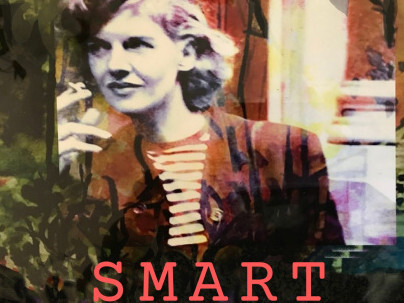
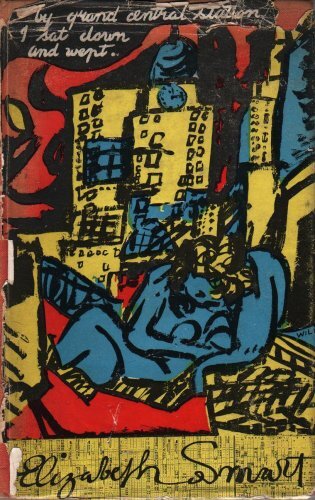
In 1937, Elizabeth Smart opened a book of poetry and fell in love with its author, George Barker. What followed was a passionate, unconventional love affair that inspired one of the greatest poetic novels of the 20th century, By Grand Central Station I Sat Down And Wept.I read this many years ago but wanted to re-read it in advance of an upcoming theatrical adaptation here in Toronto at the VideoCabaret Theatre. By Grand Central Station I Sat Down and Wept is Canadian 🍁 poet and author Elizabeth Smart's (1913-1986) often very abstract, stream of consciousness, prose poem about her relationship with English poet George Barker (1913-1991). Although never married, she had 4 children with him though he himself remained married to his own wife throughout. At times she was even supporting his family while working as a copy editor.
"I wanted someone dangerous, someone I could not manipulate. I was stalking the muse. I was 23 and terrified of missing my life." - Elizabeth Smart. - promo for the theatrical production "Smart" (2025).