A South African national serviceman recounts becoming a soldier and an ensuing David-and-Goliath face-off against Angolan armed forces in 1987.The climactic death-throes of Soviet Communism during the 1980s included a last-gasp attempt at strategic franchise expansion in southern Africa. Channeled through Castro’s Cuba, oil-rich Angolan armed forces (FAPLA) received billions of dollars of advanced weaponry and thousands of armored vehicles. Their to eradicate the US-backed Angolan opposition (UNITA), then push southwards into South Africa’s protectorate SWA/Namibia, ostensibly as liberators.1985 saw the first large-scale mechanized offensive in southern African history. Russian Generals planned and oversaw the offensive but didn’t account for the tenacity of UNITA (supported by the South African Defense Forces, SADF) or the rainy season. The ‘85 offensive floundered in the mud, and FAPLA returned to their capital Luanda. The South Africans stood down, confident their “covert” support for UNITA had demonstrated the folly of prosecuting war so far from home against Africa’s military Superpower. However, they were mistaken. Fidel and FAPLA immediately redoubled their efforts, strengthening fifteen battalions with even more Soviet hardware while Russian and Cuban specialists oversaw troop training.As Cuban and Angolan fighter pilots honed their skills over the skies of Northern Angola, David Mannall, a normal seventeen-year-old kid completing high school, was preparing for two years of compulsory military service before beginning Tertiary education. Through a series of fateful twists, he found himself leading soldiers in several full-scale armored clashes, including the largest and most decisive battle on African soil since World War II.This is a David and Goliath story that has never been truthfully told. The author reveals how Charlie Squadron, comprising just twelve 90mm AFVs crewed by thirty-six national servicemen, as part of the elite sixty-one Mechanized Battalion, engaged and effectively annihilated the giant FAPLA 47th Armored Brigade in one day—3 October 1987. Their 90mm cannons were never designed as tank-killers, but any assurances that it would never be used against heavy armor were left in the classroom during the three-month operation and never more starkly than the decisive “Battle on The Lomba River.” The Communist-backed offensive died that day along with hundreds of opposition fighters.47th Brigade survivors abandoned their remaining equipment, eventually joining the 59th Brigade in what became a full-scale retreat of over ten thousand soldiers to Cuito Cuanevale. The myth perpetuated by post-apartheid politicians goes something like “The SADF force that destroyed 47th Brigade on 3 October numbered 6,000 men and that all the hard yards were run by the long-suffering UNITA!” The inconvenient truth is that there were just 36 South African boys on the frontline that day, but it is also true to say they would never have achieved such a stunning victory without the support of many more. This is their story.
Triggered by a recent visit to South Africa/Botswana, I decided to learn more about the "shadowy" wars fought in Angola after the Portuguese pulled out in 1974. Somewhere or another, this book was recommended.
I was aware that South African forces fought against the Angolan revolutionary government, and that the fighting included Cubans, Russian advisers, the CIA, and of course the American-backed opposition, UNITA. But I knew nothing about this battle which, after you read this book, was pivotal and in fact should go down in the annals of armored warfare as a singular achievement.
That I (and the military history public in general) does not know about this can be attributed to several reasons - (1) the South African government, knowing they were an international pariah, did not want too much publicity, (2) the Cubans suppressed news of their loss, and (3) the Angolans did not publish any histories (or at least any in English).
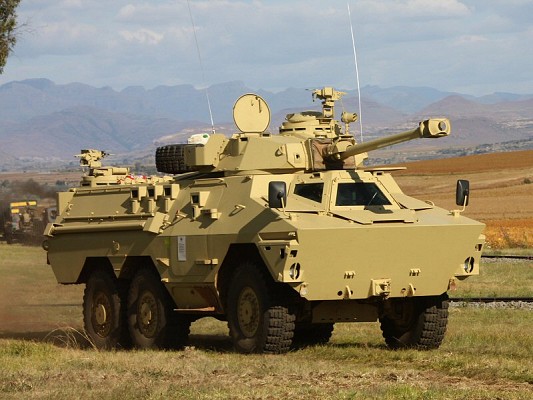
Now, as for the book. This is a memoir, not a military history. Don't expect a James Holland or Anthony Beevor treatment here. Mannall was conscripted after high school for a two year national service. He ends up as a troop commander (troop = 3 Ratel armored cars) that, after much training, ends up as part of a mechanized battalion deployed to the southern border of Angola.
The memoir is remarkably one of the most unvarnished accounts I've read. Mannall is inwardly dying of embarrassment that he's still a virgin and there's an entertaining account of how this is resolved. You get a quite detailed account of defecating in the bush. As a primarily English speaker from Durban, he's thrown into an army where Afrikaans is the lingua franca. The book is peppered with Afrikaan epithets thrown by the sergeants towards the trainees (fortunately, English translations are inserted in parentheses). The usual cast of personalities are present in the unit but all of these petty relationships vaporize once the order to move into Angola is given, 20 months into their two year commitment (September 1987).
Mannall has occasional asides about the geopolitics, South Africa's system of apartheid (something he took for granted as a 17 year old, but reflects differently thirty years later), and the course of the war. But again, this is not a history so you don't get any scenes from inside either Angolan/Cuban or South African headquarters. South African senior leadership in the battalion, brigade, and army or simply referred to as the "big cheeses".
It all comes down to October 3, 1987 when the South African 61st Mechanized Battalion, of which Mannall led his Charlie troop of 31st squadron, are ordered to attack the Angolan/Cuban bridgehead that was across the Lomba river, threatening the defender's flanks and ultimately, UNITA's base of operations.
Now here is where it all gets amazing. The 31st Squadron is equipped with Ratel 90s, 6 wheeled armored cars with a 90 mm cannon mounted on a turret and they are going up against a force 4-5 times their size that included T-55 main battle tanks as well as an assortment of armored personnel carriers like the BRDM-2
The Ratel 90 can't fire while moving as the turret wasn't stabilized. There was no South African air cover. No drones. Nevertheless, in intense action, the South African unit destroyed or captured 100 vehicles and drove the Angolan/Cubans back across the river in disarray. Only one Ratel was destroyed. One dead, two wounded.
There are places in the narrative when Mannall breaks down the action into units of time measured in seconds, showing just how vivid the battle was to him across 30 years.
This battle is the climax of the memoir although Mannall continued to serve in a later advance towards the Angolan/Cuban forward operating base.
Plenty of photos and excellent maps.
I ultimately gave this three stars because what I really wanted was a history of the campaign, told from sources on both sides. I'm spoiled from all those WW II and Civil War histories. I think if I had existing deep knowledge of the campaign, I'd have rated the memoir 4+ stars like I have for WW II memoirs. It is well-written, frank and humorous in places. There is no doubt it would make good movie material if it weren't for the justifiably negative shadow over the South African apartheid regime. But, put politics aside and you get an unvarnished portrait of a kid, who starts as a 17 year old, unwise in the ways of the world but ends up as an ace armored fighting vehicle commander in the empty reaches of Angola.
A great eye-witness read, the author strikes a good balance between historical detail and a candid, heart wrenchingly authentic glimpse into the hearts and minds of the young men who fought in this now largely forgotten part of the Cold War.
Spellbinding. Humorous, Raw, and hard to set down.
A friend originally from South Africa who fought in Angola against the Cuban Army told me about this book. The author takes you back in time and shares his two years of National Service with you, including 90 days at war in Angola. His unit played a major role in what would later be seen as the most decisive battle of the war. His account from his own recollection and the recollections of his mates gives you a sense of their life, the danger they faced, and the horrors they saw. Little is known in this country of the battle to stop the spread of Communism in Africa. This book will give you an insight into that war, not from a geopolitical point of view, but the view of those unacknowledged fighters putting their lives on the line in that war. Do take the time to read this.
This is an excellent and rare account of a soldier's account of the Angolan war at grassroots level. It is a compelling read, and is highly recommended to anyone who wants some insight into the horrors of combat. Unfortunately the text is full of spelling mistakes which should have been corrected by a proofreader.
This book gives a snapshot of a unique and somewhat fraught period of time through the eyes of a 17-18 year old South African national serviceman. The Cold War was nearing its end, though it wasn't obvious since the Soviet Union and its satellite Cuba were pouring advisers and weapons into Angola to fight the Western backed UNITA guerrillas and supporting the Southwest Africa (Namibia) anti-South African guerrillas. With a White population of only about 2 million the South African Defense Force relied on conscripts, like the author, drafted for a two year tour of National Service. It was interesting comparing his experience of basic training with my own in 1970. The SADF was very much the bailiwick of the Afrikaans speaking Boers, a seriously hard-assed bunch with a no nonsense attitude towards training. I think I'm glad I went through US Army training rather than SADF. SADF does seem to have been very effective in forming cohesive, efficient small units and vehicles crews. It was interesting that out of every draft of conscripts some were selected for training as junior officers and junior NCO's, who then commanded the same troops they'd done basic with. The "permanent" soldiers, or as we'd say Regular Army, were relatively few. One advantage is that the South Africans had known likely adversaries and likely threats to plan for. The author admits that the apartheid system was bad, but, and it's hard to argue against, the Russian / Cuban backed regimes in neighboring ex-colonies were proving to be worse, so there was general buy in by at least the white population of the necessity to serve. Still, it seems fortunate that the Soviet Union collapsed when it did. The SADF excelled during the Bush War, but one wonders how it would have coped with an extended higher intensity conflict. The Battle on the Lomba was the opening phase of the larger battle of Cuito Cuanavale, the last big confrontation between South Africa and the Angolans and their Cuban and Russian advisers. From a military history point of view this book is valuable in depicting small unit operations in the SADF at perhaps the height of their efficiency, just before political shifts changed everything.
Excellent book (with the exception of a few typos on the Kindle edition) about a battle/war little know outside of Southern Africa. Definitely recommend.
Book may have some factual flaws, and author warns about it. It's entertaining and interesting to read. Men who went through national service may encounter some familiar moments.
Straightforward account of a young South African's experience as a member of the SADF (South African Defense Force) during the Angolan civil war when the USSR and it's proxy Cuba were pouring thousands of men and materiel into Angola as part of the then still ongoing Cold War.
Mannall's undermanned and out-gunned mechanized unit met and soundly defeated a much larger soviet equipped force of tanks with minimal casualties. Along the way he lost his cherry, got demoted for going AWOL and ended up playing a big role in a major battle that most people don't even know about.
A little too much exposition and attention to basic training makes it seem like this book would be better off as a long magazine article than a full fledged book.
But as so little has been written about these forgotten African conflicts it remains one of the few first hand accounts available. In that respect it is required reading for those interested in the Cold War, Africa, Angola and their deadly intersection.
It took a little while to get to the battle although his early days in National Service were interesting. His description of the battle was generally exciting and well done and should prove to be of value to historians.