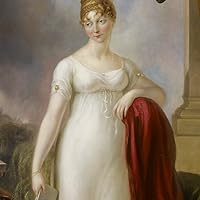
Orphaned and trapped in an abusive marriage, Henrietta Howard has little left to lose. She stakes everything on a new life in Hanover with its royal family, the heirs to the British throne. Henrietta’s beauty and intelligence soon win her the friendship of clever Princess Caroline and her mercurial husband, Prince George. But, as time passes, it becomes clear that friendship is the last thing on the hot-blooded young prince’s mind. Dare Henrietta give into his advances and anger her violent husband? Dare she refuse?
Whatever George’s shortcomings, Princess Caroline is determined to make the family a success. Yet the feud between her husband and his obstinate father threatens all she has worked for. As England erupts in Jacobite riots, her family falls apart. She vows to save the country for her children to inherit – even if it costs her pride and her marriage. Set in the turbulent years of the Hanoverian accession, Mistress of the Court tells the story of two remarkable women at the center of George II’s reign.
Laura Purcell is a writer of gothic horror and historical fiction living in Colchester.
Her novels have won various awards including the WH Smith Thumping Good Read (2018), Fingerprint Historical Crime Book of the Year (2022) and the Dracula Society's Children of the Night Award (2023). They have also been selected for Radio 2 and Zoe Ball's ITV book clubs.
Laura's short stories have been published in a number of best-selling collections. She worked as lead writer on Roanoke Falls, a Realm horror podcast executive produced by John Carpenter and Sandy King Carpenter.
This absorbing novel revolves around the lives of two early 18th-century women – Princess of Wales, later Queen, Caroline and her devoted servant Henrietta Howard.
At age 16, Henrietta, orphaned and responsible for her young siblings, sought the help of distant relatives the Earl and Countess of Suffolk. Ultimately she married their younger son, who turned out to be “wrong-headed, ill-tempered, obstinate, drunken, extravagant and brutal.” Henrietta’s small fortune was tied up in trust for her children, and Charles’s drinking and gambling forced them to move into increasingly squalid accommodations. Henrietta came up with a clever plan: they would travel to the German state of Hanover and ingratiate themselves with the Elector, George Ludwig, heir apparent to Great Britain’s Queen Anne. To do so, however, they had to leave their six-year-old son Henry Howard behind with Henrietta’s brother. Charles agreed to go, primarily as a way of escaping his creditors.
Henrietta’s gambit worked, and soon she was one of the Women of the Bedchamber to Caroline of Ansbach, wife of the future George II, while Charles joined George’s staff. Henrietta was pretty, but not beautiful, witty, charming and intelligent, and she and Caroline formed a friendship of sorts.
Although he loved his wife, George believed that a mistress was a necessary accessory for a prince, so eventually, Henrietta became his mistress, with the full approval of Caroline, who wanted a lady of sense and discretion in that role. It might also be said that the prince wanted to demonstrate that he was not fully under his wife’s control, even though everyone at court knew that she was the power behind the throne.
George was not any woman’s idea of an appealing lover. He was short and stocky, with the bulging Hanover eyes, and moreover, he was moody, bombastic, controlling, and prone to sputtering fits of rage. He considered himself something of an accomplished lover, however, and liked to regale his wife with minute descriptions of his conquests. There is nothing in this book to suggest that Henrietta was especially fond of him, but she knew that he offered her some protection from her brutal husband.
After the death of Queen Anne in 1714, the entire court packed up and moved to London, where they lived under the tyranny of King George I, who began the Hanoverian tradition of treating one’s children abominably. Those abominations are far too many to discuss here, but Henrietta stayed loyal to George and Caroline throughout. Unlike other royal mistresses in history, Henrietta did not exert political influence or get rich from her position. She did receive a stipend from George, but she had to give most of that to her blackmailing husband to keep him quiet. George did give her some gifts, making sure that Charles couldn’t touch them.
It is a sobering reminder of the status of women in the 18th century that when Henrietta left Charles for good, she had to persuade him to sign a “deed of separation,” relinquishing dominion over his wife as though she were a piece of property. In retaliation for her revolt, Charles turned their son Henry against her, with the result that Henrietta and her beloved son never were reconciled. Charles was so awful that even his own brother couldn’t stand him, and he left his unentailed estate to his sister-in-law, with Charles getting only the title and not much more.
After more than 15 years as mistress to the man who was now King George II, Henrietta was tired and ailing. She suffered from hearing loss and severe headaches, possibly the result of Charles’s beatings. Her relationship with the Queen was strained as political factions tried to bring Henrietta into their camps. Her status as countess after Charles became Earl of Suffolk entitled her to a promotion to the position of Mistress of the Wardrobe, which actually meant that Henrietta had fewer duties and could spend more time away from court. Finally, she was able to negotiate her departure from court duties, including the role of mistress, although despite her decades of loyal service the King and Queen were not gracious about it.
With the inheritance from her brother-in-law and a generous gift from the King, Henrietta bought land on the Thames near Twickenham and commissioned the construction of Marble Hill House, a little gem of a Palladian villa. Henrietta lived there for several years before falling in love with and marrying the Hon. George Berkeley, son of the 2nd Earl Berkeley in 1735. By all accounts he was kind, loving, and honest, and they had 11 happy, but too short, years together. After his death Henrietta retired to Marble Hill House, where she died at the age of 78.
Henrietta’s remarkable life is vividly portrayed in Laura Purcell’s historical novel, and she takes no great liberties with the historical facts. Had I not previously read Lucy Worsley’s The Courtiers: Splendor and Intrigue in the Georgian Court at Kensington Palace, however, I would have hard a difficult time believing how wretched court life could be. Henrietta and other high-born ladies were nothing more than personal servants, performing the hard and sometimes demeaning work of taking the Queen through her daily dressing routine. Court life was stultifyingly formal and largely boring and miserable for everyone involved. Kensington Palace was cramped and drafty and far from splendid, although the periods spent at Hampton Court sound lovely. Granted the ladies and gentlemen of the court were better fed and clothed than the masses, but their lives at court do not sound the least bit glamorous or romantic.
Henrietta Howard, however, was able ultimately to emerge from this life in triumph and distinction. She counted among her friends Alexander Pope (she is generally supposed to be the model for Chloe in Pope’s The Rape of the Lock), Jonathan Swift, and playwright John Gay (best remembered for The Beggar’s Opera). Her Marble Hill House was widely acclaimed and became the model for English Georgian villas and even American plantation houses. It still stands today under the ownership of English Heritage, where visitors can experience some of the finer aspects of Georgian life.
Laura Purcell is a superb storyteller, and this book is an excellent way to learn more about this period in history. I plan to go back and read her well-received first book Queen of Bedlam, the story of George III’s Queen Charlotte, and I look forward to more volumes in her Georgian Queens series.
Marble Hill House (photo courtesy of English Heritage)
I've given this an A- at AAR, so I'm calling it 4.5 stars.
With Mistress of the Court, Laura Purcell continues her fictional exploration of the lives of some of the less frequently written about historical figures of the Georgian era – namely, its women. In Queen of Bedlam, she tells the by now familiar story of the madness of King George III from the point of view of his wife and daughters, and now, she has turned her attention to an earlier era, to the first days of the Hanoverian monarchy and the court of King George I.
Focusing on the lives of two very different women, Ms Purcell brilliantly exposes the hypocrisy, the intrigue and power-struggles of the early Georgian era and describes, in vivid detail, the opulence and the squalor, from the gorgeous silk coats and ridiculously wide pannier hoops worn by the courtiers to the lack of cleanliness or medical understanding and the rat-infested, dank corners of the outwardly magnificent residences occupied by the royal family, their retinue and multitude of servants.
Well-born and married into an influential family, Henrietta Howard is living in poverty, subject to the whims of the drunken husband who regularly beats and abuses her. She has just one hope of improving her lot, which is to somehow make her way to Hanover, where the name of Howard is sure to open doors at court. Queen Anne’s health is failing and the Hanoverian succession has been assured; if she can find a place at the Elector’s court at Herrenhausen, then she believes her troubles will be over.
Little does she realise that she will be exchanging one set of troubles for another.
When her husband Charles discovers her plan to travel overseas, he is furious. But his own circumstances are such that he needs to get out of England, so he agrees to the scheme. Leaving their young son behind with her brother, the couple arrives in Hanover where Charles insists that it’s up to Henrietta to carry out her plan to secure their futures.
Henrietta is fortunate to attract the attention of Caroline of Ansbach, wife of the Elector’s son (who will eventually become King George II). Caroline is a lovely, intelligent and politically astute woman, already adept at managing her mercurial, ineffectual husband; and Henrietta’s demure manner and generosity of spirit very quickly see her rise to a position of favour in the Princess’ retinue. When Queen Anne dies and George I ascends the throne, the court moves back to England, enabling Henrietta to return to her homeland in relative comfort. But even then, she is not to be allowed to live her life in contentment or security; Charles continually threatens to force her to return to him and cruelly prevents her from seeing their son Henry, something which causes her constant pain.
This is a fascinating period of history and one about which I didn’t know a great deal before. One thing I did know was the fact that George I and his son never saw eye-to-eye (a situation which repeated itself with each successive George!) and that the younger man felt as though he was being continually snubbed and overlooked by his father. This was mostly because of his resentment of his son’s popularity; the king’s British subjects did not take kindly to their new, German monarch and the clever Caroline had quickly realised that his peoples’ disapproval provided the perfect opportunity for her husband to ingratiate himself with them. The king went to extraordinary lengths to humiliate his son, and Ms Purcell weaves such instances into her story with skill and relish, painting a superb picture of the rivalry between the men and shining a clear light upon the political machinations and manouevrings of the two opposing camps.
But the real meat of the story lies in the relationship between Henrietta and Caroline, and in the way the author highlights the differences and similarities between them. On the outside, they would seem to have little in common; Caroline lives in luxury, surrounded by servants, married to a man who dotes on her (even though, as was common at the time, he kept a mistress), whereas Henrietta is a brutalised young woman, struggling to feed her child while wondering all the time if her husband’s next blow would kill her. Yet as the story progresses, it becomes clear that in spite of their differing circumstances, both are nonetheless bound by the restrictions imposed upon them simply because they are women, and both have been cruelly deprived of the company of their children by men who wish to control them. When, to serve her own purposes, Caroline forces Henrietta to make an impossible choice, their relationship is irrevocably changed – but even then, Henrietta continues to serve her mistress faithfully, maintaining her dignity and serene demeanour in the face of insult and derision. Yet the reasons behind Caroline’s actions are completely understandable and easy to sympathise with, making it impossible to see her in a bad light. In the end, these are women living in difficult and sometimes dangerous circumstances doing what they have to do to survive, and it makes for a thoroughly gripping story.
Ms Purcell’s writing style is straightforward and easy to read, and the amount of research that has gone into the creation of this story is impressive. Mistress of the Court is one of those books that combines the best of both worlds, being both entertaining and informative as it tells a sometimes difficult story in an unsentimental and engaging manner. I was hooked from the very first page and, even as I recognised the difficulties of Caroline’s situation and felt for her, I was rooting for Henrietta to get what she wanted; namely to be able to live an independent life on her own terms with, hopefully, a man she could love. This is a terrific piece of historical fiction and I’m looking forward to reading more from this talented author.
This is a delightful fast-moving story that will keep the reader turning pages. I thoroughly enjoyed the characters, the flow of the story, and the setting and I look forward to more books from Laura Purcell.
Mistress of the Court by Laura Purcell is a historical fiction novel about the Hanoverian monarchy. The protagonist, Henrietta Howard, is trapped in an abusive marriage, and sees entering court as a way to escape her tyrannical husband. She sells her few possessions for a ticket to Hanover, where she is accepted into princess Caroline’s household. She and Caroline become confidantes, and as Caroline and her husband George aspire to the English throne, Henrietta begins to help George with his English. But George wants more than that, and Henrietta becomes his reluctant mistress.
In many cases, royal mistresses in fiction are treated as gold-diggers. Henrietta is a much more sympathetic character who is portrayed as making the decisions she does because they’re her best options in light of terrible circumstances. Her husband is clearly dangerous, and as a woman in the 18th century, Henrietta has zero legal recourse and must seek whatever protection she can. The theme of Henrietta’s desperate struggle to escape domestic violence permeates the entire novel, and makes me realize how very glad I am to be alive in the 21st century. Her husband Charles was a terrible person, and I kept wishing that Henrietta and Caroline would go all Goodbye Earl on him. But alas, we can’t change history.
On a similar note, the oppression of women throughout Mistress of the Court extended to the fact that they had no legal right to their own children. When Henrietta first escapes Charles’ grasp, she is forced to leave her son behind, never to truly return to her. When they are finally reunited, Charles has already influenced him to the point that they no longer have a relationship. Meanwhile, when Caroline and George go to England, the king forces them to leave their son Fred at Hanover. The royal family isn’t reunited for many years, at which point Fred is not the sweet young son that Caroline had left behind, and instead has political aspirations of his own. The women in the story were robbed of being able to see their children’s childhood and to be able to build relationships with them.
Caroline, Henrietta, and George formed a rather awkward love triangle. Caroline initially wanted Henrietta to sleep with George as a distraction as part of her own political machinations. But she quickly becomes jealous of their relationship, and starts going all Mean Girls on Henrietta. Henrietta gets to experience somewhat of a normal relationship for the first time in her life, but at the expense of one of her closest friendships. Meanwhile, it never really was her choice, as Caroline used protection against Charles in order to leverage her into the position. Once Henrietta was there, she realized just how unstable her own position was, and how little actual power a royal mistress had.
While I enjoyed being able to learn more about history through Mistress of the Court, I found the story itself to be extremely depressing. And although the novel ended on a positive note and with Henrietta’s eventual empowerment, I couldn’t help but feel sad for all of the opportunities that had been lost.
In her latest novel, young British novelist Laura Purcell has turned her talents to the tale of two remarkable women of the Georgian era, forced together in a relationship that swings from liking to dependence to loathing. Princess Caroline of Ansbach is intelligent, powerful and married to George, the future King, when the novel opens. In contrast, Henrietta Howard is a poverty-stricken young mother and victim of an abusive husband, the ghastly sponger Charles Howard. Casting all her resources on one throw in the game, Henrietta travels out to the Hanoverian court in Germany and in spite of being partially deaf from a blow from her husband, psychologically alone and inappropriately dressed, she succeeds in ingratiating herself to the royal pair. Henrietta’s star rises because of the convention that George needs a mistress and it seems that Caroline prefers that her submissive servant takes the dubious honour. As in the excellent Queen of Bedlam, it is surprising to learn what dreadful conditions the royal family endured at that time and how circumscribed their lives were. If asked whether anyone in the royal family is made happy by their rank and wealth, one would have to say, no. Particularly unfortunate is what we would now call the dysfunctional curse of Hanoverian fathers and sons, seemingly trapped in mutual aversion. Purcell cleverly contrasts Caroline and Henrietta’s lives, as we follow their attempts to gain love, power, and the regard of children. Being a great aficionado of the eighteenth century, it is salutary to be reminded just how difficult life could be for women in the past, and just how imprisoning a bad marriage could be. The other theme that stays with me is the lack of reliable medical care, as both women suffer terribly from conditions untreatable at the time that modern medicine might at least relieve. As the pages rapidly turned, my sympathies swung between Queen and mistress; both women essentially trapped in the court’s uneasy power games. As for George himself, he is well rendered as fundamentally weak, bad tempered and difficult. Some of the best moments in the novel are those when we understand Caroline’s complicity with the arrangement, as a means to fob her irritating husband off on a weaker woman. I also found myself cheering Henrietta on in her journey from utter desperation to a more independent life. After the book had ended, I had to eagerly search out images of the main characters and also a certain building that becomes a positive symbol more valuable than any royal palace.
Laura Purcell has joined the ranks of my favorite authors. She provided two memorable women whose lives collide in a rocky quasi partnership.
Purcell illustrates how challenging the era was towards women especially when trapped within the bonds of a horrid marriage. The disparity between Caroline and Henrietta is obvious however, their similarities are evident through love, power, and their unfaltering love of their children.
Quite a page turner and you will find yourself at odds with each woman, each tugging at pulling at you. You feel tremendous empathy for these two women as they are pawns of the court, mere instruments of power. You vacillate from the Queen's pains to the uncomfortable predicament of mistress, a true emotional rollercoaster ride. George possesses zero backbone, simply a weakling, he disguises his weakness by his temper tantrums and intimidating demeanor. Caroline sacrifices and the reader understands her reason for agreeing to the arrangement as opposing along with her choice in involving Henrietta. Henrietta really grabs your heart, you enter the story rooting for her, you feel for the choices she makes but her hand forced she has no other options in order to survive, to gain her independence, she's a casualty of the times and sadly by her overall predicament.
A wonderful story, well written. A story of what lengths women will do for the love of their children when dealt a challenging and unfair hand. I look forward to more from Laura Purcell, one talented authoress.
Not since Jean Plaidy’s Georgian series has historical fiction about the Hanoverian monarchy been so captivating in all its glorious and gritty intrigue. Henrietta Howard, wife of a brutish husband and mistress of a king, is portrayed with sympathetic realism, a woman of her time and place, who through circumstance and determination makes the best of a bad lot. Queen Caroline, intelligent and manipulative; George the Second, moody and managed; the Georgian setting in all its filth and splendor, are brought vividly to life. Laura Purcell is a wonderful storyteller, and Mistress of the Court a fabulous Georgian read! Highly Recommended.
The British Monarchy - with this historical novel we get a look behind the closed palace doors! The Royal Family always seems to be filled with back-biting, scandalous sex and titillating gossip. It was the same in 1712-1735 just as it is in 2021. There was even a Lady Diana Spencer involved!
Fifty plus years ago I read all of Nora Lofts historical novels and this reminded me of those wonderful books. A great way to tackle English history!
The characters were all well fleshed out and of course it was very well written. It seems the sequel to this book was written first. I’m off to read Queen of Bedlam, which was written first, but starts in 1812, 100 years later.
Mistress Of The Court is a wonderfully written novel about the first Hanover King and his family. The focus is on Prince George and Princess Caroline and Henrietta Howard.
Henrietta is a woman that you can totally sympathize with. Her husband is very abusive. There's absolutely no way that you can feel anything but hatred for Charles Howard. And when he pits her son against her, you will hate him even more, especially as she did everything to keep her child safe when he was a little boy.
On the more royal side you have Caroline and George. They have their own family problems, when George I ascends the throne their family is torn apart in much the same way as Henrietta's life was when she came to court.
Through Caroline, Henrietta became mistress, but Henrietta isn't the typical royal mistress. Her relationship with George isn't one based on power or even greed. Their relationship seems to be more a matter of need.
All throughout the book I found myself feeling sympathetic more towards Hetty than Caroline, though both women inspire a certain amount of pity from their readers.
When George and Hetty's relationship starts to crumble you'd expect to feel elated for Caroline, who would then have her husband back, but really you feel elated for Hetty because she is finally free to live her life.
This book was a wonderful read for anyone that loves stories involving the the British monarchy. Its always nice to get away from the Tudors and Stuarts, who seem to dominate most of the books in this genre.
I look forward to reading the other books in the Hanover series.
It's rare when I venture past the reign of Queen Elizabeth I in my reading. I know the names of the various kings and queens but that's about it. I started Mistress of the Court with both excitement and a little trepidation (would I be lost in an unfamiliar time?).
I am happy to report that I thoroughly enjoyed this book. The author created characters that I really got to know, not just on the surface but she got inside of them which had me feeling much empathy for their plight.
The story weaves the POV which I liked, it gives the reader both sides of certain plot lines. Again not being familiar with issues of the day, I learned much as I was also entertained. The outline of this book above does a great job with what this book is about, no need for me to add to it. The authors writing was smooth and her knowledge of this time period is evident. Reading it wasn't hard to feel the life style of that era. Upon closing the book I googled what I could about both Henrietta and Caroline, even King George (was he really that nasty?). I think I have myself a new time period to study and read about. The conflicts, family drama seem as typical as any other British royalty and the author has done a great job with Mistress of the Court.
There is a nice couple pages with Author's notes which just completed this book perfectly. I eagerly away the sequel and reading more of her books.
"Mistress of the Court" is the second book in Laura Purcell's Georgian Queens series. This book is a standalone but I do suggest that you go back and read the first books in the series "Queen of Bedlam," because it is good historical fiction. This second book in the series takes on Henrietta Howard, a woman who becomes the unwilling (at least at first!) mistress to King George II. She and King George's wife, Caroline, are at the center of this story. This story brought to life two woman at the center of a very volatile time in British history.
I have not read a lot about the Georgian period of British royalty, particularly not in fiction. After enjoying "Queen of Bedlam," I was anxious to read this book. What I found was some interesting characters and a great story line. Princess Caroline understands that there are many things that she can control secondarily if she cannot control them primarily.Henrietta becoming her husband's mistress is one of those things. The way that the author writes about the dynamic between these two women is so interesting and makes for a really interesting power play that kept me entertained.
I really enjoyed visiting a new setting in this book. I love reading about British royalty and I liked the way that the author added detail to make the story really pop. I will be interested to see what the author comes out with next!
A page-turner of a book about a little known episode in our history. Hanoverian Court life is so vividly recreated, you'll think you were there.The extraordinary friendship between Henrietta Howard and Princess Caroline drives this fabulous novel, which details the Hanoverians' political machinations to retain the English throne.
Henrietta has some difficult choices to make - she has to choose between her friendship with Princess Caroline and embarking upon an affair with the Prince which could give her access to her exiled children. Laura Purcell uses the emotional impact of the plot to craft a gripping read which not only gives a great insight into a little known Royal household, but also gives us two strong female characters whom the reader cannot help but admire. Highly Recommended.
Weak three stars. I want to like historical fiction more than I do. When it's good, it's really really good. It makes me want to read more non fiction about whatever era the book was in and gives me a deeper understanding of history. A brilliant work of historical fiction makes history come alive.
Unfortunately, most historical fiction I pick up is 'meh'. They read as a mediocre romance or YA with some historical trimmings added to dress up the story. Don't even get me started on the anachronistic emotions and behaviors of the characters. I understand what the author is doing; they want their book to reach the widest audience so they feel compelled to modernize the characters so the reader will like them and identify with them. For me, it takes me out of the story and instead I start mentally arguing with the author, complaining the scene makes no sense.
Purcell does this with Henrietta Howard, turning her into a contemporary fiction rom-com type of heroine (minus the comedy but that whole vibe). Purcell gave Henrietta Howard motivations and reactions I don't think the real Howard would have had. I had recently read a non fiction book about the Hanoverian dynasty and when I read about Howard's life, I thought, oh her life would make for an excellent historical fiction novel! It's amazing! Her life reads like fiction! I searched and found this book. Maybe my hopes were too high because I was disappointed.
More 2 1/2 stars. I am a sucker for historical fiction about British royals and also about famous maîtresse-en-titres and this book was about both. Purcell did a good job summarizing the history of the era and incorporating it into the storyline. Her descriptions of the clothes, decor, houses etc was also well done. Where is failed, to me, was in the interior monologues of Henrietta and Queen Caroline, especially Henrietta. Stop ascribing modern reactions to historical figures. Just stop it.
Mistress of the Court is the story of Henrietta, an abused wife who becomes the mistress to Prince George. It's also about the rise of Prince George & Princess Caroline's rise to the throne, with all the political intrigue that entails.
Henrietta was married at 17 to a man she was enamoured with, but soon learned his true nature. He was cruel, abusive, and wasted all their money on gambling and drinking. She was desperate to get her young son Henry away from him and find a better life for herself. So she goes to Hanover to try and get a place in the court with Dowager Electress Sophia. Her plan succeeds, but everything comes with a price.
I am a huge fan of historical fiction and this book was especially interesting to me because it was the opposite side of the Jacobites, which I have read a little bit about. I didn't know much at all about King George so this book was quite fascinating to me.
Laura Purcell's descriptions of the places and events of the times are wonderful. I've been looking for another historical fiction author and I think I've found my girl! Mistress of the Court is the 2nd in a series. I did not read the first book, but this works as a stand alone because I didn't even know there was a first book in the series until I was working on this review. I plan to go back and read that one as well. I highly recommend this book for those who are fans of historical fiction!
Excellent book. I am learning a lot about the Hanoverian kings & queens. At least, more than I knew before. I have also learned much about Henrietta Howard.
Henrietta was an abused wife with a young son. Her husband, Charles, is a drunk & a gambler. She saves her money in order to go to Hanover to see if she can find a place in the court of the Dowager Electress Sophia. She does find a place, but often finds court life to be precarious. After Sophia & Queen Anne dies, Georg Ludwig become King of England & the court moves to England. Henrietta is often tossed between Prince of Wales George & Princess of Wales Caroline and the politics of the day. Add her husband to the mix & it often becomes hard for her at times.
I enjoyed this book. The plot went smoothly & believable. It kept my interest. I would stop reading it at times to check out the lives of the characters. Near the end of the book, Queen Caroline is talking to her oldest son, Frederick. She mentions that he tried to elope with Lady Diana Spencer. What??? It was late, so I checked it out the next morning. Yes, there was an earlier Lady Diana Spencer (https://en.wikipedia.org/wiki/Diana_R...). I went crazy reading about the Spencer family (https://en.wikipedia.org/wiki/Spencer...). Add in Churchills & Vanderbilts & I was in seventh heaven.
The earlier reigns of the Georgian period are admittedly not something I’ve really found an interest in previously. Not because I tried and didn’t enjoy them, just because I’ve never chosen to read about them before. Having loved all of Laura Purcell’s previous novels, including The Queen of Bedlam, which is about George III and his bouts of madness, there really wasn’t a question whether I’d read this book or not. I absolutely was going to read it. And, I’m not disappointed that I did. Mistress of the Court focuses on King George II, his wife Queen Caroline, and his mistress Henrietta Howard. The story begins in the reign of Queen Anne. George Ludwig (the future George I) is her heir, but he and his family remain in Hannover where his is Elector. Henrietta Howard is married to Charles Howard, disgraced brother of Edward Howard, Earl of Sussex. He’s an abusive alcoholic with a gambling addiction, who doesn’t think twice about beating his wife black and blue in front of their young son Henry. Henrietta is forced to live in poverty whilst her husband gambles every last penny they own. She knows she cannot continue to live her life like this, so she sells what little furniture the couple own in exchange for passage over to Hannover. If she can ingratiate herself with the soon to be British royal family, she knows she can secure herself a job within their household, which will provide her some protection from Charles. Once they arrive in Hannover, she is employed by Sophia, George Ludwig’s mother, and next in line to the throne of Britain. Sophia thinks that by welcoming Henrietta into her household, she will learn valuable information about the court in England, the customs, the language etc. In a tragic twist of fate, Sophia dies just weeks before Queen Anne dies, leaving George Ludwig to inherit the throne and become George I. The new royal family travel over to England, Henrietta has now found herself employed by Princess Caroline, wife of the new prince of Wales, George. Caroline is a kind mistress. She secures Charles a job within the new king’s household, providing even more security for Henrietta. Henrietta envies Caroline, as her husband George is loving, caring, devoted. She’s attracted to him, and it’s not long before he notices her own beauty. As time passes, she finds herself in his company more and more, and begins to be recognised as his mistress. Although she is a lady of Caroline’s bedchamber, Caroline seems to be at peace with the role in which Henrietta is playing for her husband. With the eventual death of George I comes the reign of George II. Henrietta is now mistress to the king of Great Britain. He lavishes her with gifts and attention. Soon Caroline finds herself feeling jealous of Henrietta. This is where politics become involved. Henrietta is friends with a lot of the members of the Tory party, and Caroline is friends with the members of the Whig party. This becomes the focus of both women, trying to use their influence with the king to further the cause of their friends/political leanings. King George doesn’t like either woman meddling in affairs of state, but Henrietta finds herself on the losing side, and soon falls out of favour. She uses a (parting) gift of money from the king to build her own London residence. From here on, things change drastically. Firstly her husband inherits the earldom of Sussex from his brother, making her a countess, despite the fact they are legally separated. This changes her position within Caroline’s household, and she is promoted to Mistress of the Robes. Then, she finds herself falling for a Tory party member, and brother of her friend, Mr Berkeley. She decides that now she is free from both her husband, and the king, she will pursue her own happiness, and marries Mr Berkeley. The story has a bit of a sickly sweet happy ending, but that’s really what happened. This actually was a story with a happy ending. I love the way Purcell’s writing flows. She really does tell a wonderful story. Her characterisations are always well thought out and fully realised. I find myself impatiently waiting for the next instalment of this Georgian series, which according to the author’s note at the end of this book, is to be about Augusta, wife of Frederick, Prince of Wales, estranged son of George II and Caroline.
As lightweight as a Jean Plaidy novel, Mistress of the Court disappointed me slightly; I expected more grit after having read and adored the author's The Poison Thread. Still, a nice portrait of Caroline of Ansbach, who I love from Neil Stephenson's Baroque Cycle, and a nice fleshing out of the story of her servant Henrietta Howard, Countess of Salisbury and mistress of George II. Lots of period detail, some of it graphic, but I kept feeling like this was skimming across the surface of things even so. I guess I want more murderesses from Laura Purcell.
3.25 stars The start starting very well and ended very poorly. The promise of this novel sounds interesting but the monotony of the characters killed the excitement, especially when we talk about Mrs Howard how she changed very little during the years and how she was stupid in her chooses but fortune was on her side. The writing style was smooth and engaging, I mean I felt that I was there in the 18 century.
This is a fascinating story of George II's mistress. Henrietta Howard goes to court to try and escape her abusive husband. Henrietta is extremely poor and only owns one dress. Caroline, wife of George II, takes her under her wing. Before George becomes king, Caroline wants some political things done, so she asks Henrietta to become his mistress. Her life is spent trying to be free of her husband, the court, etc.
This book was a "light" read. Many times, throughout the book, I thought a factual biography would have been more interesting. Non-fiction is probably a better story than this fictionalized version of the life of Henrietta Howard. So I'll look to Tracy Borman's "Henrietta Howard: King's Mistress, Queen's Servant".
I truly enjoyed this book - a really poignant tale of Henrietta Howard's time as a mistress at court. I fell in love with the entire cast, even the volatile King George.
A very good, if somewhat summarised telling of the intertwining lives of Henrietta Howard and Caroline of Ansbach. Lots of interactions were taken from direct historical records. Good if you want to familiarise yourself a bit with the early Hanoverian kings through literature
I've enjoyed everything I've read by this author so far and that includes this well researched, historical novel. Although the main character did not have things easy I really felt for Queen Caroline who tried to do the best for everyone and suffered such poor health as she aged.
I'm not up-to-speed on the lives of royalty so I have no idea how true this book is. That being said, I really enjoyed learning about the woman who would be queen and her loyal servant.
Another enjoyable read from Laura Purcell, I’m quickly moving my way through all she’s written. Lovely, easy reads with engaging characters and an interesting story, what more could you want.
Laura Purcell's two books about the Georgian Queens are true masterpieces. Simple as that. Thank you from the bottom of my heart, Mrs. Purcell, for giving these amazing women their voices. I truly believe that you have done their stories justice and I cannot wait for the next book in the series to blow me away :)