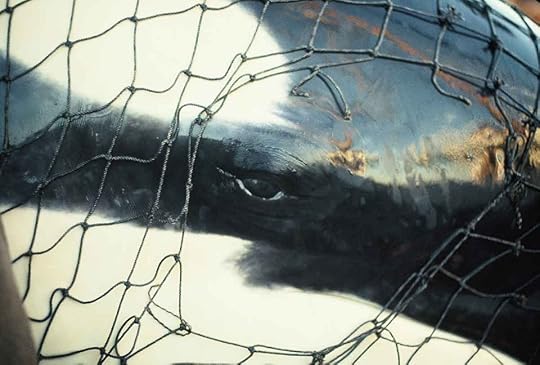
A look at the history of the commercial capturing of orcas in Washington’s Puget Sound, the whales taken, and the efforts to save them. In November, 2005, Washington’s iconic killer whales, known as Southern Resident orcas, were placed on the endangered species list. It was a victory long overdue for a fragile population of fewer than one hundred whales. Author and certified marine naturalist Sandra Pollard traces the story and destinies of the many Southern Resident orcas captured for commercial purposes in or near the Puget Sound between 1964 and 1976. During this time, these highly intelligent members of the dolphin family lost nearly one-third of their population. Drawing on original archive material, this important volume outlines the history of orca captivity while also recounting the harrowing struggle—and ultimate triumph—for the Puget Sound orcas’ freedom.“Making liberal use of interviews, correspondence and newspaper accounts, as well as less intensive use of legislative, governmental, and nonprofit records, Pollard constructs an easily digestible narrative for lay individuals curious about the hunting of Puget Sound’s Northern and Southern Resident killer whale groups between 1965 and 1976. Puget Sound Whales for Sale significantly succeeds the former (Blackfish) in breadth and depth.” —Pacific Northwest Quarterly
Puget Sound Whales for Sale is the heartbreaking story of the Southern Residents. Meet the legends of the Pacific Northwest - Moby Doll, Shamu, Lolita, Hugo, Skana, and others.
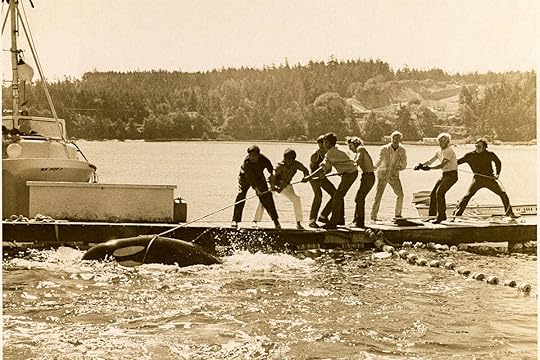
Moby Doll, or the killer whale who changed the world as he is often referred to, was a male juvenile from J pod of the Southern Resident orca population. He was captured near Saturna Island in 1964 and died at the Vancouver Aquarium a few months later. The original plan was to kill a wild orca to use as a model for a sculpture ordered by the Vancouver Aquarium. The young orca was harpooned and dragged behind the boat for sixteen hours. Realizing the immorality of their actions, the hunters tried to ease his journey.
Against all odds, Moby Doll survived the torturous voyage. It seemed the higher-ups had decided he was worth more alive than dead. People flocked to see him. This was a once-in-a-lifetime opportunity for people in Vancouver to get up close and personal with a real-life monster. To the surprise of many, Moby Doll was neither dangerous nor monstrous. He captured the hearts of many with his docile and friendly nature.
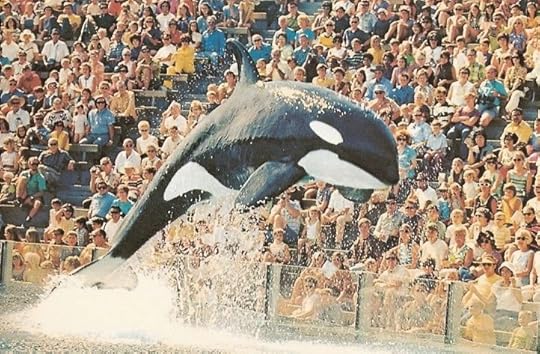
Shamu, the first superstar of Seaworld, was born into J pod. Ted Griffin wanted a companion for Namu, a juvenile male captured from the Northern Resident orca population in 1965. Ted, a former aquarium owner, captured dozens of orcas during the 60s and 70s (he wrote a book about Namu that I wouldn’t touch with a 10-foot pole). Shamu was captured in Puget Sound, Washington, on October 31, 1965. Her mother was harpooned and killed in front of her. Good ol' Ted underestimated the little orca's ability to hold a grudge. According to reports, she had conflicts with both Namu and Ted. Less than two months later, Shamu was sold to Seaworld San Diego. She died six years later of a uterus infection.
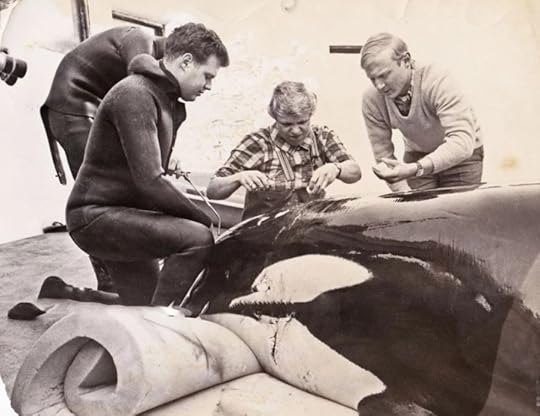
Skana was a member of K pod. She was captured on February 15, 1967, and sold to the Vancouver Aquarium. Dr. Paul Spong started researching Skana's visual perception and other cognitive functions. He was impressed by her intelligence and defiance. The more time Paul spent with Skana, the more saddened he became by her predicament. He spent hours trying to ease her loneliness by playing his flute and letting her carry him around her tank. By publicly sharing his views on Skana's miserable life, Paul drew the ire of the Vancouver Aquarium. They forbade him from visiting her again. One time, Skana broke the observation window and fell through it. She never accepted her fate. She shared her tank with a Northern Resident named Hyak II. His story is as tragic as Skana's. Hyak loved looking at books containing pictures of wild orcas. He loved it when researchers held up photo books of wild orcas. That's one of the saddest things I've ever read.
Skana is treated after she breaks the observation window
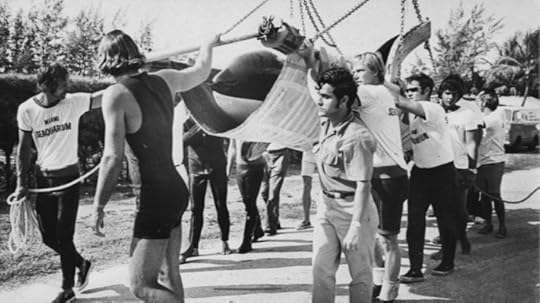
Lolita, also known as Tokitae and Sk'aliCh'elh-tenaut, still elicits strong emotions 53 years after her violent capture in the waters of Penn Cove; near Puget Sound, Washington State. Dr. White named her Tokitae, which in the Chinook language means 'Bright day, pretty colors.' The Miami Seaquarium renamed her Lolita after the heroine of Vladimir Nabokov's novel. Lummi Nation, who consider the Southern Resident orcas their relatives, named her Sk'aliCh'elh-tenaut, which means 'daughter of Sk'aliCh'elh.' Sk'aliCh'elh is the name of a village on Penn Cove where she last saw her family.
Lolita's tank mate Hugo died from a brain aneurysm in 1980 after repeatedly slamming his head against the wall of their tank. Lolita is the only surviving Southern Resident in captivity. She will never be reunited with her 95-year-old mother, L25 Ocean Sun. Despite protests by activists, experts, and the Lummi Tribe calling for Lolita's release, she remains imprisoned. Pacific Northwest's favorite celebrities – the J, L, and K pods, return to Puget Sound each summer and fall. Lolita should be among them.
List of Southern Residents taken into captivity :
Moby Doll (Vancouver Aquarium, Canada) Shamu (Seaworld San Diego, California) Kandu (Seaworld San Diego, California) Katy (Seattle Marine Aquarium, Washington State) Kilroy (SeaWorld San Diego, California) Ramu (SeaWorld Orlando, Florida) Skana (Vancouver Aquarium, Canada) Lupa (New York Aquarium, New York State) Hugo (Miami Seaquarium, Florida) Ahab (US Navy, Hawaii) Ishmael (US Navy, Hawaii) escaped, fate unknown Cuddles (Dudley Zoo, England) Haida (Sealand of the Pacific, Canada) Mamuk (Sea-Arama Marineworld, Texas) Ramu II (Marineland, Queensland, Australia) Chappy (Kamogawa Sea World, Japan) Jumbo (Kamogawa Sea World, Japan) Clovis (Marineland Antibes, France) Lil’ Nooka (Sea-Arama Marineworld, Texas) Ramu IV (Marineland, Queensland, Australia) Wally (Munich Aquarium, Germany) Winston (SeaWorld San Diego, California) Kandu II (Marineland Ontario, Canada) Kandu III (SeaWorld Orlando, Florida) Kona (SeaWorld San Diego, California) Canuck (SeaWorld Orlando, Florida) Canuck was the grandson of the legendary matriarch J2 Granny Frankie (SeaWorld San Diego, California) Kandy (Marineland Ontario, Canada) Nootka II (Sealand of the Pacific, Canada) Nameless female (Seattle Marine Aquarium, Washington) Lolita/Tokitae (Miami Seaquarium, Florida)
None of them lasted long, except for Lolita/Tokitae.
Southern Residents, or qwe ‘lhol mechen (our relatives under the waves), as The Lummi Nation refers to them, are the most iconic and studied orca ecotype in the Northern Hemisphere. They are heavily protected and forbidden to approach by any distance less than 1,000 yards. All of the US and Europe's wild-caught orcas have died, except for Corky (Northern Resident, lives in Seaworld San Diego), Katina (Icelandic, lives in Seaworld Orlando), and Ulises (Icelandic, lives in Seaworld San Diego). Orca captures are a thing of the past. Unfortunately, there is one country that still does it - Russia. Russian orcas are captured and sold to marine parks in Russia, China, and Japan.
EDIT: Lolita, or Toki, as she is affectionately called, passed away on August 18th. She was the last surviving Southern Resident in captivity. She was a member of the L pod and the presumed daughter of L25 Ocean Sun, who is still alive and over 90 years old. This beautiful whale touched the hearts of many with her gentle nature and unbreakable spirit.
Children. Adults. Scientists. Environmentalists. Philanthropists. Activists. Orca enthusiasts. Lummi Nation. People from all over the world. They were all united in one goal: to relocate Lolita to a sea sanctuary in her home waters of the Salish Sea. Sadly, she died before the plans were finalized. Lolita's remains were cremated and flown to Bellingham, Washington, where they were delivered to the Lummi Nation tribe. In a way, Lolita DID come home. It was not in the way we wanted, but she came home. Several ceremonies were held in her honor. I am incredibly touched by the love people had for her. Her memory lives on.
Southern Residents are very family-oriented. Both males and females stay with their mothers their whole lives. Lolita/Tokitae never forgot her family's calls. For decades and decades, while being imprisoned in the world's smallest orca tank, she continued to make L pod's unique vocalizations. Songs her mother taught her.
Puget Sound Whales for Sale chronicles a decade of orca captures in the Pacific Northwest and the fate of individual whales - those taken into captivity, killed, injured, captured multiple times, chased, mistreated, those who died, and also the ones who escaped or were set free.
I've read parts of the story in other books about killer whales (inevitable for someone who's read 10 of these), but some of it was also new to me.
The only real problem I have with Sandra Pollard's book is that she is not even trying to remain objective, and uses way too many impassioned words where they're just not necessary. I agree that the captures were terrible; yet even I rolled my eyes at some parts where the author verged on (or even crossed into) anthropomorphization.
Still, as my recommendations go, this is a solid book.
heartbreaking but super informative on the history of orcas in the puget sound — how the things described in this book were ever legal or celebrated by (some) scientists absolutely blows my mind :(
This book is heartbreaking but the ending, for at least the Southern Resident Orcas, is somewhat good. I have several other Orca books in my library but I think I might have to actually take a break from them because of the horrible things that have happened in the books. I was doing a little research on my own when I found articles from January 2017 (barely two months ago) that listed Granny (J2), one of the oldest known Orcas alive, as missing and presumed deceased. Sad times for such an already depleted population of whales.
This was a wonderful, but heartbreaking story about our local whale pods and the terrible things that happened to them in the 1970's when they were allowed to be captured and put into aquariums. Orcas are such social animals and many people recount the terrible cries going back and forth between trapped oracs and those still swimming around them. So sad. After reading this book and watching the movie Blackfish, I feel that there is no way that orcas should be held in captivity. Great read.
Told with scientific accuracy and heart, Sandra Pollard documents the story of the whale trade in Washington. It's unusual for a non-fiction book to bring me to tears, but this one certainly did. Keep the tissues close while reading.
This is a great book if you are new to the subject of British Columbia captures and captivity, it gives a detailed overview of what went on and who was involved and gives you information on the fates of the different whales that were captured. But... I was hoping for a bit more in depth information, there were some good tidbits but I was hoping for more information that I had not already read elsewhere.
A disturbing yet very educational recount of the capturing of Southern Resident orcas in the 60s and 70s. I picked this up at the end of a trip to Seattle I had heard stories of the Penn Cove and Puget Sound captures as well as the current status of the lack of Southern Resident orcas in the area, and was itching to learn more. It was certainly hard to get through this short book but I was very glad to have read it.
Lolita was taken from her family and now lives in captivity, however she is young enough to be released back to where she belongs. Most important, she is still of reproductive age and capable of dating to her family and thus the overall population of this tribe. Help her to help us,
While a bit dry and techniques in spots, this small book is absolutely packed with valuable information on the history and culture of whale capture in Washington state.
Would have gotten 5 stars if my adopted whale, Lulu, was mentioned. But a great read for anyone who wants the story behind the orca capture trade of the 70's.
This isn't an easy read. It aims to create an emotional reaction, describing the sights and sounds of the capture of the Southern Residents in graphic detail. Even though the period of time in which the Southern Residents were being captured was relatively short, the population has never recovered.
I loved Sea World as a child. When my eyes were first opened to the treatment of the orcas, I felt sad that there could come a time, soon, when people wouldn't be able to experience that same awe I felt as a child. When I expressed that to my husband he reminded me that people don't have to have easy access to every animal. He was right. I've seen orcas since then, in the waters off Vancouver Island. It was infinitely more magical.
To know that these animals are intelligent apex predators, forced to perform and then shuffled off to a fishbowl is maddening. For me, the most heartbreaking moment of this book is its ending. It ends up with such hope for Tokitae (Lolita), the orca, at the time, with the distinction of living the most years in captivity. When the book was written, there existed the possibility that Tokitae might be released from the Miami Seaquarium, able to live the remainder of her life in a much larger pen in the Salish Sea.
It didn't happen. She died alone in a tank that never met the regulations for her size, only twenty feet deep. She was 22 feet long.
I believe that humans were meant to be stewards of the earth. Caregivers. Protectors where needed. Living alongside creation in balance. Instead, we ravaged a population of beautiful and intelligent creatures for our own entertainment.
I don't feel sorry that I loved seeing "Shamu". I was a little girl and had no idea what it meant for the whales. And it inspired in me a lifelong love for them that eventually meant a better understanding. I am sorry, though, that these places still exist. I've seen how fast and how far these creatures can travel in a matter of minutes. I've seen half a dozen dorsal fins appear and disappear, massive and beautiful. Seeing them was a privilege, not a right. On their terms. In their home. As a better steward.
I read this shortly after the death of Ken Balcomb, and the final chapters really got to me. The man is truly a legend. Having worked in whale watching I've told the story of T46 many, many times and it's wonderful to see it laid out as part of a greater history of the live capture era. I have some quibbles with some of the tone about the perception around killer whales in the past, but the descriptions of individuals (human and cetacean) did make this an enjoyable read. After "blackfish" came out, I think we all know some of the details of Tilikum's life, but it's good to see some mention of the OG killer whales, the story of Skana and Paul Spong being very dear to my heart.
Overall a fast little read about the live capture aquarium era. It's not the end all be all, but a nice little text. Very accessible.
This is my favorite book. It give so much detail about some sad history that is not from so long ago. Very interesting to learn the stories of all of these special orcas.
A good concise history, but the author is so pushy about their own viewpoint that it becomes a distraction. Instead of letting the evidence speak for itself, she makes melodramatic statements that detract from the point. If you want a good, straightforward history without feeling like you're walking into a sales pitch, there's better options out there.