

What do you think?

Circling the Square: Stories from the Egyptian Revolution – Reportage and Memoir on Democracy in Tahrir Square
A writer for the New Yorker describes the Egyptian Revolution in a series of vignettes as told by citizens of Cairo from differing backgrounds who each took in the violence and elections from a different points of view.
384 pages, Paperback
First published June 23, 2015
About the author
Wendell Steavenson
13 books65 followersWendell Steavenson is an Anglo-American journalist and author, having reported mostly from the Middle East and the Caucasus as a regular contributor for publications such as Guardian, Prospect magazine, Slate, Granta and others. After publishing three non-fiction books, "Paris Metro" is her first novel.
Ratings & Reviews
Friends & Following
Create a free account to discover what your friends think of this book!
Community Reviews
Displaying 1 - 13 of 13 reviews

February 1, 2016
"Democracy cannot be muddled through," Tarek said. "It is a single indivisible principle. All the people of Egypt say: we want to topple the regime. We went to the Square for that right. I knew what was right because I saw what was wrong."
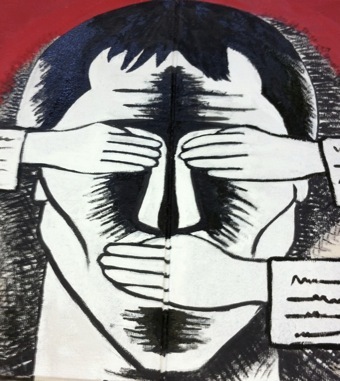
Image from The New Yorker - Tahrir Square: A Year in Graffiti
Steavenson interviews dozens of people - some pre-Tahrir in her first assignment in 2008, and many more over the year of revolution that began in 2011 at Tahrir Square. Some stories are short and focus on the everyday life of people in Cairo: family, law, religion. There are stories of restaurant owners, photographers, "thugs", city planners... and Steavenson is accompanied by Hassan, her translator, who also plays a role in translating cultural norms and customs.
The stories are rich and layered, painting a full contextual picture of Cairo, and Egypt at that point in time. While the stories were compelling - and the accompanying street art and graffiti from around Cairo was fabulous - I felt the book was missing a narrative that could tie the stories together cohesively.
Read for Book Riot's 2016 Read Harder Challenge - Politics in your country or another country
Image from The New Yorker - Tahrir Square: A Year in Graffiti
Steavenson interviews dozens of people - some pre-Tahrir in her first assignment in 2008, and many more over the year of revolution that began in 2011 at Tahrir Square. Some stories are short and focus on the everyday life of people in Cairo: family, law, religion. There are stories of restaurant owners, photographers, "thugs", city planners... and Steavenson is accompanied by Hassan, her translator, who also plays a role in translating cultural norms and customs.
The stories are rich and layered, painting a full contextual picture of Cairo, and Egypt at that point in time. While the stories were compelling - and the accompanying street art and graffiti from around Cairo was fabulous - I felt the book was missing a narrative that could tie the stories together cohesively.
Read for Book Riot's 2016 Read Harder Challenge - Politics in your country or another country

August 14, 2015
This book makes it very clear from the outset that there is no clear headed logic to the events in Egypt from the protests to the many coups and counter coups since, and this is why it's so good. Steavenson's notes on the revolution are as much about the people who weren't there as those who were, and through her own struggles to understand the whos, whats and whys, we get to see a constantly shifting view of events, told through characters who are changing as time progresses. Steavenson's observations are almost poetic, the sidebar to the frenzy of real life events as she constantly tries to step back and see things more clearly and then gets reeled back in.

Read
July 22, 2015New Yorker writer Steavenson chronicles the Egyptian Revolution of 2011, as experienced by Egypt's citizens, and told with precise detail, because she herself was there for the fall of Mubarak's rule. Using Tahrir Square as the focal point, she documents the stories of people, from the poor on up to politicians and military personnel. A gritty look at what lengths people will go for their beliefs, and an examination of the goals and end results of revolution.
Tune in to our weekly podcast dedicated to all things new books, All The Books: http://bookriot.com/category/all-the-...
Tune in to our weekly podcast dedicated to all things new books, All The Books: http://bookriot.com/category/all-the-...

August 14, 2015
My review in the Aug. 6, 2015, Minneapolis StarTribune: http://www.startribune.com/review-cir...

June 29, 2016
Steavenson's book, like the Egyptian Revolution itself, starts off strong, with riveting reportage from Tahrir Square, and then loses steam somewhat as time passes and the pages start to chart the dimming hopes of the post-Mubarak era. In its second half it becomes a quieter book, a mixed-bag character study that focuses on a wide range of Egyptian citizens from bloggers to bakers, and while some of her interviews and observations are fascinating, others generated in me a certain ennui. Still: a great read for anyone interested in what was actually happening on the streets of Cairo in January 2011 and beyond. Bonus points for the eerie/beautiful graffiti marking almost every other page.
Read
September 28, 2016Perceptive reportage in Cairo by a New Yorker reporter from the fall of Mubarak until the ousting of Morsi. Author develops a wide circle of friends/contacts who try to analyse the fast developing political situation. Steavenson comes to realize no political theories will adequately explain what is going on. Two things are obvious- the army remains the strongest and most inviolable institution and the democratic forces who gathered in Tahrir Square never had any idea what came after getting rid of a dictator. The book ends with Sisi in control and democracy in disarray. Cairo graffiti is displayed throughout.
January 22, 2016
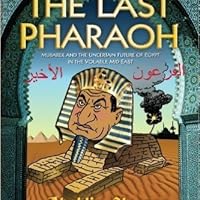
“Few books are better than this one at conveying the confusion and excitement of those days on the square.”great. I also suggest The Last Pharaoh: Mubarak and the Uncertain Future of Egypt in the Obama Age
http://www.amazon.com/Last-Pharaoh-Mu...
http://www.amazon.com/Last-Pharaoh-Mu...
August 24, 2016
Memoirs from the period of protests at Tahir Square in Egypt. Steavenson looks around in amazement, from protesters making fun of Mubarak to whom to vote for now a democratic election has been achieved. "The problem with Egypt was Egyptians": keep everybody down, but the military will always have a privileged position.
February 6, 2017
Was ok - gave some atmosphere ... but not engrossing somehow

April 2, 2017
I did really like this book, but there was something about the author's writing style that I really struggled with...

August 31, 2020
3.5 stars.
Interesting. Some of the stories felt too disjointed for me to follow. But I liked the insight into the Egyptian people. To read through their ups and downs. Their determination and disappointments. I think really brought that period to life; beyond just the facts. I enjoy reading about so many different lives and how they intersected and diverged from each other.
Overall, a good book. A times a little disjointed but the stories were very humanizing.
Interesting. Some of the stories felt too disjointed for me to follow. But I liked the insight into the Egyptian people. To read through their ups and downs. Their determination and disappointments. I think really brought that period to life; beyond just the facts. I enjoy reading about so many different lives and how they intersected and diverged from each other.
Overall, a good book. A times a little disjointed but the stories were very humanizing.

November 13, 2018
A very intense account of the Egyptian uprising/revolution.

January 14, 2019
Beautiful personal portraits of people on all sides of this yet-to-be-concluded revolution. Often meandering, but always thought-provoking and honest.
Displaying 1 - 13 of 13 reviews