

What do you think?

Bajo el monte
El mayor dibujante del decadentismo inglés fue también un sutil escritor, un lujurioso erotismo dentro de un barroquismo imaginario, refinadisimo, alimenta estos amores de Venus y Tannhauser que admirara Darío y que por primera vez ingresan al español.
92 pages, Paperback
First published January 1, 1896
About the author
Aubrey Beardsley
228 books56 followersHighly individual black and white, often erotic drawings of British illustrator Aubrey Vincent Beardsley typified the art nouveau style.
Aubrey Vincent Beardsley identifies an English author. Japanese woodcuts influenced his executions in ink; he emphasized the grotesque, the decadent. This figure led in the aesthetic movement, which also included Oscar Wilde and James McNeill Whistler. Beardsley significantly contributed to the development of the poster movement despite the brevity of his career before tuberculosis caused his early death.
https://en.wikipedia.org/wiki/Aubrey_...
Aubrey Vincent Beardsley identifies an English author. Japanese woodcuts influenced his executions in ink; he emphasized the grotesque, the decadent. This figure led in the aesthetic movement, which also included Oscar Wilde and James McNeill Whistler. Beardsley significantly contributed to the development of the poster movement despite the brevity of his career before tuberculosis caused his early death.
https://en.wikipedia.org/wiki/Aubrey_...
Ratings & Reviews
Friends & Following
Create a free account to discover what your friends think of this book!
Community Reviews
Displaying 1 - 30 of 35 reviews

July 7, 2009
In case one was ever curious what the literary equivalent to one of Aubrey Beardsley's iconic Art Nouveau illustrations would be, Beardsley himself provided the answer with the manuscript fragment The Story of Venus and Tannhäuser, first published in heavily censored form as Under the Hill. Left unfinished when Beardsley succumbed to tuberculosis at the age of 25, this naughty erotic romp contains most of the elements that made his work in the visual arts so celebrated and controversial in the first place: an unparalleled elegance, a bizarre sense of humor, and an obvious fascination with the forbidden and grotesque. That said, even in its uncompleted state it's obviously not some lost masterpiece, which I don't mean as a slight—I get no sense Beardsley intended it to be. In overheated rococo prose that sometimes feels like a impenetrable labyrinth of sensory details, he attempts to visualize the hedonistic Eden presided over by the Roman goddess of Love that the fey knight Tannhäuser stumbles into, where he takes full advantage of the many pleasures if offers, ranging from the purely aesthetic to unashamedly sexual. One of the most enjoyable parts of reading this novella is deciphering through the endless cavalcade of details what exactly is unfolding before us—often a paragraph will pass by before what is being described actually comes into focus, which usually provokes an "umm, wait, errrr... s/he is doing WHAT?!?"
In the particular edition that I read, Beardsley's original manuscript breaks off unceremoniously on page 80, continued for another forty pages by John Glassco. Glassco's contribution can charitably described as an honorable effort: quite frankly, it feels like mere imitation, and not always the finest imitation at that. It more or less follows the Tannhäuser legend (from what I know of it), and more than anything, it just emphasizes the "what might have been" element of everything that proceeds it.
A trivial little bauble, but a wildly pleasurable one for sure. [Original three star review was for this edition.]
2ND READING: I really don't have much to add to my original review, other than I enjoyed it even more because I knew exactly what type of ravishingly rarefied experience I was signing up for, & just luxuriated in the inane sumptuousness of Beardsley's lightly naughty reverie. This edition is particularly wonderful because every page includes a Beardsley illustration; the images & text bouncing off each other synthesize into a delightfully decadent reading experience.
While I admire John Glassco's work elsewhere it's far preferable to skip his attempt at a conclusion for this incomplete text; better to just allow the curtain to drop & leave this fantasy in a state of perpetual suspension.
"Venus allowed most of the dishes to pass untasted, she was so engaged with the beauty of Tannhäuser. She laid her head many times on his robe, kissing him passionately; and his skin at once firm and yielding, seemed to those exquisite little teeth of her, the most incomparable pasture. Her upper lip curled and trembled with excitement, showing the gums. Tannhäuser, on his side, was no less devoted. He adored her all over and all the things she had on, and buried his face in the folds and flounces of her linen, and ravished away a score of frills in his excess."
In the particular edition that I read, Beardsley's original manuscript breaks off unceremoniously on page 80, continued for another forty pages by John Glassco. Glassco's contribution can charitably described as an honorable effort: quite frankly, it feels like mere imitation, and not always the finest imitation at that. It more or less follows the Tannhäuser legend (from what I know of it), and more than anything, it just emphasizes the "what might have been" element of everything that proceeds it.
A trivial little bauble, but a wildly pleasurable one for sure. [Original three star review was for this edition.]
2ND READING: I really don't have much to add to my original review, other than I enjoyed it even more because I knew exactly what type of ravishingly rarefied experience I was signing up for, & just luxuriated in the inane sumptuousness of Beardsley's lightly naughty reverie. This edition is particularly wonderful because every page includes a Beardsley illustration; the images & text bouncing off each other synthesize into a delightfully decadent reading experience.
While I admire John Glassco's work elsewhere it's far preferable to skip his attempt at a conclusion for this incomplete text; better to just allow the curtain to drop & leave this fantasy in a state of perpetual suspension.
"Venus allowed most of the dishes to pass untasted, she was so engaged with the beauty of Tannhäuser. She laid her head many times on his robe, kissing him passionately; and his skin at once firm and yielding, seemed to those exquisite little teeth of her, the most incomparable pasture. Her upper lip curled and trembled with excitement, showing the gums. Tannhäuser, on his side, was no less devoted. He adored her all over and all the things she had on, and buried his face in the folds and flounces of her linen, and ravished away a score of frills in his excess."

October 19, 2021
"Hey guys I'd love some advice on this new manuscript I'm working on. See, so in chapter eight, Venus masturbates her horny pet unicorn so she can drink his unicorn cum, right, but then I said to myself "Is just ONE scene involving the consumption of bodily fluids for sexual gratification enough?" and you know what, I don't think it IS enough, so then in chapter nine - hey where are you going?"

Read
October 25, 2015While participating in a group read of The Magic Mountain, I learned that in the book there are many references to the Wagner opera Tannhauser, so I thought I would do some research on the opera. I truly thought this book was going to be Beardsley illustrations of the opera. Not. This particular edition does have many illustrations, only a couple of which were specifically for this text. The text and many of the illustrations are unabashedly erotic---not something I peruse much these days. The text never gets any further in the Tannhauser story than his first 36 h in Venusberg. Perhaps that is all Beardsley was interested in, or perhaps he died (of TB at the 26 years) before he could complete it.
I am reluctant to give a numerical rating. I certainly found this edition intriguing--the phrase that comes to mind is "decorator porn"--lots of truly titillating descriptions of table settings, wall hangings, furniture, dress (and undress), as well as witty descriptions of various activities. The illustrations are, I think, a good sampling of Beardsley's work. Some of the other reviews are worth checking out.
I am reluctant to give a numerical rating. I certainly found this edition intriguing--the phrase that comes to mind is "decorator porn"--lots of truly titillating descriptions of table settings, wall hangings, furniture, dress (and undress), as well as witty descriptions of various activities. The illustrations are, I think, a good sampling of Beardsley's work. Some of the other reviews are worth checking out.

March 23, 2017
Durante mucho tiempo pensé que este libro era tan solo una leyenda, pero me lo encontré en una feria del libro y compré llena de curiosidad. La novela en sí me parece justamente eso, una curiosidad, un producto de la época, una pieza de parafernalia risqué, a juego con todo lo Wilde-Shaw-Gide y otros provocadores de la época. Una época que debió ser fantástica y nos dejó cosas como esta.

February 7, 2014
A Puerile Prostitution of Rococo Prose.
The art-prodigy and dilettante author here chanced upon is a young and bawdy prose-bard whose unfinished fable is carefully wrought with artful sentences not wanting in mellifluous finishes.
Rounding off a lush and dainty hairdo a stylist with tiny silver tongs, warm from the caresses of the flame, made delicious intelligent curls that fell as lightly as a breath about her forehead and over her eyebrows, and clustered like tendrils round her neck.
To gorgeous goddess Venus belongs that scented head of hair, she in grandiose room sitting elegantly before a sinuous mirror, surrounded by an adoring entourage who waited immediately upon her with perfume and powder in delicate flacons and frail cassolettes, and held in porcelain jars the ravishing paints prepared … for those cheeks and lips that had grown a little pale with anguish of exile.
Elated to hear himself praised for his exquisite work the stylist exclaims ’Gad, Madam; sometimes I believe I have no talent in the world, but tonight I must confess to the touch of the vain mood.
Someplace else a stately knight with ennui treads, his amblings spied by an airy dame who later recalls his curious wandering in the gardens, and calm satisfaction with all he saw there, his impromptu affection for a slender girl upon the first terrace, of the crowd of frocks that gathered round and pelted him with roses, and of the graceful way he defended himself with his mask.
Meanwhile inside an adjacent palace spangled with gems and jewels, walls of huge floriferous rooms brag of rich arrases and robust frames sumptuous and gilt, one flaunting a fantastical scene of unearthly fops and huge birdlike women mingling in some rococo room lighted mysteriously by the flicker of a dying fire that throws great shadows upon wall and ceiling.
Notwithstanding, ‘tis neither ‘stonishing nor mazing that this fustian extravaganza is little known by lovers of florid prose, and hardly is our opinion hazarded by imputing this to the rancid rubbish of erotica that rounds the tale and mounds it. Indeed, we have here a riotous exhibition of unmitigated prurience in unnatural fetishes, an underlying moral decrepitude boldly and brazenly unleashed by a sexually cankered and cankering mind, disregardful of any deleterious or offensive effects its unhinged expression is apt to give, and motivated likely by a wanton pleasure in provocation and the giving of offenses, or perhaps by the sole intention to prove that the rapine and prostitution of the freedom of expression can be executed beautifully. Though a curious genius to be sure, our young author most assuredly was a lustful lunatic, a regular Caligula of Lust, panting after and giving vent to some of the most unwholesome sexual yearnings ever recorded in the annals of juvenilia.
Admittedly it is dulcet, a prose-coxcomb composition; but if a song, it’s the discant on debauchery, the strains of sultry sirens subservient to satyriasis. For one who reads it with pious mind and sensitive conscience is apt not only to be discomfited and offended, but to be unsurprised if its mischievous scribbler should ever be discovered to have laboured under an incessantly raging erection, roused only by the utterly unnatural and morbidly sordid, ever demanding the purgation of its venom wherever and whenever there be an idle fist to clutch and regale it. But avast. In vituperating thus I give way to the vulgar and should check myself, yield a little if it’s not too late and give the stage to priggish critics contemporary to Beardsley who did contemn and cavil more politely than do I.
This fantastic drivel is but a laboured literary indecency, harangues Haldane Macfall, whose sensitive nostrils we may wager were not a little offended by such a gallimaufry of dross. Passionately on he inveighs, finding it without cohesion, without sense, devoid of art as of meaning—a sheer laboured stupidity, revealing nothing—a posset, a poultice of affectations. The real book, of which this is only the bowdlerised inanity, is another matter: but it is so obscene, it revealed the young fellow revelling in an orgy of eroticism so unbridled, that it was impossible to publish it except in the privately printed ventures of Smithers’s underground press. … The book is a betrayal of the soul of the real Beardsley—of a hard unlovely egoism even in his love-throes, without a noble or generous passion, incapable of postulating a sacrifice, far less of making one, bent only on satisfying every lust in a dandified way that casts but a handsome garment over the basest and most filthy license. It contains gloatings over acts so bestial that it staggers one to think of so refined a taste as Beardsley’s, judged by the exquisiteness of his line, not being nauseated by his own impulses.
What? Aubrey Beardsley awfully beastly? But beg pardon, pray: Ought not the lovers of luscious prose to ignore the thorns of the roses? Is Beardsley’s base and ‘filthy license,’ Sir, not wrapped in ‘garments’ cut from the finest taffeties and silks?—Like those with which he dressed his majestic hero, who, having lighted off his horse, stood doubtfully for a moment … troubled with an exquisite fear lest a day’s travel should have too cruelly undone the laboured niceness of his dress.
And mark how his hand, slim and gracious … played nervously about the gold hair that fell upon his shoulders like a finely curled peruke, and from point to point of a precise toilette the fingers wandered, quelling the little mutinies of cravat and ruffle.
Mere fopperies, mere toys? Sir, more moments, I implore: Recall the place where he stood waved drowsily with strange flowers, heavy with perfume, dripping with odours, where huge moths, so richly winged they must have banqueted upon tapestries and royal stuffs, slept on the pillars that flanked either side of the gateway.
And we’ve yet to sample the finest section of the work, which, though included in jest, surely has to be one of the finest written dedications ever to grace the prodigious leaves of English letters. Deprive readers of these riches, Sir? How now?
Then let this suffice: we’ve had with one hand to pinch our nose, and carefully with the other to pick out and separate what’s best from the mess of unseen spillikins spilled in this putrid literary latrine. The perverted will relish the rest, but let the innocent make like birds of paradise and into it never alight.
The art-prodigy and dilettante author here chanced upon is a young and bawdy prose-bard whose unfinished fable is carefully wrought with artful sentences not wanting in mellifluous finishes.
Rounding off a lush and dainty hairdo a stylist with tiny silver tongs, warm from the caresses of the flame, made delicious intelligent curls that fell as lightly as a breath about her forehead and over her eyebrows, and clustered like tendrils round her neck.
To gorgeous goddess Venus belongs that scented head of hair, she in grandiose room sitting elegantly before a sinuous mirror, surrounded by an adoring entourage who waited immediately upon her with perfume and powder in delicate flacons and frail cassolettes, and held in porcelain jars the ravishing paints prepared … for those cheeks and lips that had grown a little pale with anguish of exile.
Elated to hear himself praised for his exquisite work the stylist exclaims ’Gad, Madam; sometimes I believe I have no talent in the world, but tonight I must confess to the touch of the vain mood.
Someplace else a stately knight with ennui treads, his amblings spied by an airy dame who later recalls his curious wandering in the gardens, and calm satisfaction with all he saw there, his impromptu affection for a slender girl upon the first terrace, of the crowd of frocks that gathered round and pelted him with roses, and of the graceful way he defended himself with his mask.
Meanwhile inside an adjacent palace spangled with gems and jewels, walls of huge floriferous rooms brag of rich arrases and robust frames sumptuous and gilt, one flaunting a fantastical scene of unearthly fops and huge birdlike women mingling in some rococo room lighted mysteriously by the flicker of a dying fire that throws great shadows upon wall and ceiling.
Notwithstanding, ‘tis neither ‘stonishing nor mazing that this fustian extravaganza is little known by lovers of florid prose, and hardly is our opinion hazarded by imputing this to the rancid rubbish of erotica that rounds the tale and mounds it. Indeed, we have here a riotous exhibition of unmitigated prurience in unnatural fetishes, an underlying moral decrepitude boldly and brazenly unleashed by a sexually cankered and cankering mind, disregardful of any deleterious or offensive effects its unhinged expression is apt to give, and motivated likely by a wanton pleasure in provocation and the giving of offenses, or perhaps by the sole intention to prove that the rapine and prostitution of the freedom of expression can be executed beautifully. Though a curious genius to be sure, our young author most assuredly was a lustful lunatic, a regular Caligula of Lust, panting after and giving vent to some of the most unwholesome sexual yearnings ever recorded in the annals of juvenilia.
Admittedly it is dulcet, a prose-coxcomb composition; but if a song, it’s the discant on debauchery, the strains of sultry sirens subservient to satyriasis. For one who reads it with pious mind and sensitive conscience is apt not only to be discomfited and offended, but to be unsurprised if its mischievous scribbler should ever be discovered to have laboured under an incessantly raging erection, roused only by the utterly unnatural and morbidly sordid, ever demanding the purgation of its venom wherever and whenever there be an idle fist to clutch and regale it. But avast. In vituperating thus I give way to the vulgar and should check myself, yield a little if it’s not too late and give the stage to priggish critics contemporary to Beardsley who did contemn and cavil more politely than do I.
This fantastic drivel is but a laboured literary indecency, harangues Haldane Macfall, whose sensitive nostrils we may wager were not a little offended by such a gallimaufry of dross. Passionately on he inveighs, finding it without cohesion, without sense, devoid of art as of meaning—a sheer laboured stupidity, revealing nothing—a posset, a poultice of affectations. The real book, of which this is only the bowdlerised inanity, is another matter: but it is so obscene, it revealed the young fellow revelling in an orgy of eroticism so unbridled, that it was impossible to publish it except in the privately printed ventures of Smithers’s underground press. … The book is a betrayal of the soul of the real Beardsley—of a hard unlovely egoism even in his love-throes, without a noble or generous passion, incapable of postulating a sacrifice, far less of making one, bent only on satisfying every lust in a dandified way that casts but a handsome garment over the basest and most filthy license. It contains gloatings over acts so bestial that it staggers one to think of so refined a taste as Beardsley’s, judged by the exquisiteness of his line, not being nauseated by his own impulses.
What? Aubrey Beardsley awfully beastly? But beg pardon, pray: Ought not the lovers of luscious prose to ignore the thorns of the roses? Is Beardsley’s base and ‘filthy license,’ Sir, not wrapped in ‘garments’ cut from the finest taffeties and silks?—Like those with which he dressed his majestic hero, who, having lighted off his horse, stood doubtfully for a moment … troubled with an exquisite fear lest a day’s travel should have too cruelly undone the laboured niceness of his dress.
And mark how his hand, slim and gracious … played nervously about the gold hair that fell upon his shoulders like a finely curled peruke, and from point to point of a precise toilette the fingers wandered, quelling the little mutinies of cravat and ruffle.
Mere fopperies, mere toys? Sir, more moments, I implore: Recall the place where he stood waved drowsily with strange flowers, heavy with perfume, dripping with odours, where huge moths, so richly winged they must have banqueted upon tapestries and royal stuffs, slept on the pillars that flanked either side of the gateway.
And we’ve yet to sample the finest section of the work, which, though included in jest, surely has to be one of the finest written dedications ever to grace the prodigious leaves of English letters. Deprive readers of these riches, Sir? How now?
Then let this suffice: we’ve had with one hand to pinch our nose, and carefully with the other to pick out and separate what’s best from the mess of unseen spillikins spilled in this putrid literary latrine. The perverted will relish the rest, but let the innocent make like birds of paradise and into it never alight.
March 29, 2019
“Ho giocato a piquet con la Regina dell’Amore”
«La storia di Venere e Tannhäuser, dove si dà fedele resoconto del modo come è retto lo Stato di madame Venere, dea e meretrice, sotto il famoso Hörselberg, altresì contenente le avventure di Tannhäuser in detto luogo, il suo pentimento, il suo pellegrinaggio a Roma e ritorno alla Montagna d'Amore.».
Unica opera di Beardsley, grande disegnatore liberty, nato nel 1872 e morto giovanissimo nel 1898. Il racconto uscì a puntate sul “The Savoy” nel 1896, pesantemente censurato. Dopo due puntate la pubblicazione fu interrotta per la morte di Beardsley a causa della tisi. L’opera fu poi pubblicata nella sua forma originale nel 1907.
L'operetta e le illustrazioni sono deliziose. Le quattordici ‘cartoline’ del cofanetto, disegnate a china in un rigorosissimo bianco e nero, sono straordinarie.
«La storia di Venere e Tannhäuser, dove si dà fedele resoconto del modo come è retto lo Stato di madame Venere, dea e meretrice, sotto il famoso Hörselberg, altresì contenente le avventure di Tannhäuser in detto luogo, il suo pentimento, il suo pellegrinaggio a Roma e ritorno alla Montagna d'Amore.».
Unica opera di Beardsley, grande disegnatore liberty, nato nel 1872 e morto giovanissimo nel 1898. Il racconto uscì a puntate sul “The Savoy” nel 1896, pesantemente censurato. Dopo due puntate la pubblicazione fu interrotta per la morte di Beardsley a causa della tisi. L’opera fu poi pubblicata nella sua forma originale nel 1907.
L'operetta e le illustrazioni sono deliziose. Le quattordici ‘cartoline’ del cofanetto, disegnate a china in un rigorosissimo bianco e nero, sono straordinarie.
February 11, 2020
It's ... certainly an experience to read, I'll give it that.
There's a lot of interesting things to be said about this as a self-reflexive satire of decadence (and I'm about to do a presentation over it so I'll probably read it again) but the reading experience in itself (which is what's hovering around 2.5 stars) becomes a bit empty for me. This may have been different if Beardsley had a chance to finish it, but as it stands, the wordy and witty descriptions of the scenes can only do so much - though the excitement of wondering "how far is this going to go" is fun in itself!
There's a lot of interesting things to be said about this as a self-reflexive satire of decadence (and I'm about to do a presentation over it so I'll probably read it again) but the reading experience in itself (which is what's hovering around 2.5 stars) becomes a bit empty for me. This may have been different if Beardsley had a chance to finish it, but as it stands, the wordy and witty descriptions of the scenes can only do so much - though the excitement of wondering "how far is this going to go" is fun in itself!
October 14, 2024
Characters: Tannhäuser. Our lead knight, and most prominent character. A life of sexually based sinfulness led him to Venus, but it appears even debauched true love can get a bit repetitive.
Venus. The goddess of Love who's up for anything. Yes, even that. Maybe especially that.
The Court of Venus. Venus' court is packed full of courtiers who each represent their own rarified kink. None of them have much character beyond that, but what they lack in depth, they make up for in volume.
Is it good?: Well, let's get one thing out of the way. This is not a horror book. I bought it at a horror convention, but that's apparently not a genre-indicative element. I decided to include it anyway, because the only real rule of this endeavour is you read it where it lays, whatever mistakes might be made beforehand. What it is is erotica, and the question of what makes good erotica is a very different question than what makes good horror, at least under most circumstances. Victorian artist and generally admirable weirdo Aubrey Beardsley wrote the first half of this in chunks; John Glassco finished the second half. It was virtually unpublishable in Beardsley's own times, and the chunks that were published were often censored, or banned. It's also questionable that Beardsley would have finished the story by choice, given his late in life conversion to Catholicism. At any rate, I bring up the dual nature of the story's composition because there is a break in style between Beardsley and Glassco; Beardsley's half is definitely the half with the more inventive sexcapades. Glassco does pretty well in reaching Beardsley's style, and doing so in a way that goes through the paces of the myth in full (more on that later) but the sexual part gets a little more rote in terms of scenarios. It may be a deliberate choice, given that's the point where the Chevalier is becoming disillusioned with the court, but it does mark a downshift. And frankly, the first half has some stand out moments, but it's not exactly high level either. Thanks to the 18th c and modern reproductive technologies graduate seminar I audited in Master's program, I know a little more on the subject of pre 20th c prose erotica than most, and, well, this is no Fanny Hill. Still, it's amusing in kind of an outrageous way, which is what I think its authors were going for.
Is it Spooky? Oh gosh, no. As I said, it's not a horror story. It'd be possible to get to something spooky or disturbing from the premise, and a lot of books exploring the “place of debauchery” concept go that route, starting from more innocent acts to descend into more questionable ones. But this story keeps more or less the same tone throughout. And in general, I think I'm grateful for that; light and breezy is fine. Even Tannhäuser's decision to put himself out of his misery is presented as farcical—but not darkly farcical—as a result of the pageantry Venus' people make out of the event.
Is it Halloween? Basically, this category is asking, is it spooky and also fun? Well, as a I said, it's not spooky. But is it fun? As a roundabout way of answering, our copy of the book came thoughtfully with a clipped newspaper review of it from the 1966 Montreal Star. And in the review, they defend the book against accusations that it's not funny, or rather, “not witful”: “Still, whether a person reading this kind of book is looking for wit is debateable, but it is certain that lust has no sense of humour. In fact, it seems to me that this kind of criticism is dishonest; it implies that one must be able to provide literary justifications for reading erotica. Who is he kidding?” I'm with them on the point that erotica doesn't need literary justification, or at least that its erotic aims is literary justification enough. But the idea that lust has no sense of humour is fundamentally off to me. Sex is funny, in all of its incongruous indignity and weirdness, the mix of earnest desire and artifice, the elaborate social conventions and posturing. It doesn't have to humourous, and lust doesn't have to be humorous, but to say that it just straight out has no humour at all feels like cutting off a major part of human experience. Of course, “sex can be funny” is a long way from the question at hand, “Is Under the Hill funny?”. But ultimately, I think the answer to the latter is still yes. It's not outrageously funny any more than it's outrageous by modern standards, but it's lightly amusing, in the extremities of its sexual acts, in Tannhäuser getting gradually bored of extreme sex, and in his wrongheaded attempts to overdramatically set things right. It even ends on a punchline that I think Glassco lands. So yes, it is partially Halloween, while still lacking a pretty big part.
Quote: (From ch 8, in which Venus “cares for” her pet unicorn: “'You mustn't come in with me, Adolphe is so jealous,' she said, turning to the Chevalier, who was following her, 'but you can stand outside and look on; Adolphe likes an audience.'”
Random Thoughts: I appreciate that the falling out between Chevalier and Venus isn't that he sees the light so much that he gets tired of 24-7 kink fests. Cake is great, but you don't want to eat it all the time.
--I think some of the contemporary charm of the book would be the way that it combines 19th century elevated language with pornographic imagery; it adds to the sense of quaintness behind the story. I'm not sure whether Beardsley intended that, but Glassco definitely did.
--Of Venus' entourage, my favourite is Mrs. Marsuple, an older woman who acts as Venus' aide, maid, and whatever else might be needed, always there to give a thrust or a tug to help with the overall experience. She's not the star, but she's there for the team.
--Somewhere in the second day, the Chevallier dresses up as a woman, in a dress as elegant as Venus's. This isn't frequently referenced for the rest of the day, but it never states that he gets out of the dress, so I assume he's wearing it throughout the festivities.
--There's a scene where Tannhäuser spends some time writing out all of his sins, then hands it over to a Catholic priest to be absolved. First, I appreciate a lot that the story makes clear he's not just some innocent corrupted by Venus (and, in fact, if there's any message behind the story, it's that innocence/corruption is entirely the wrong binary; in defiance of the Church, joy/self-deprivation would be closer)—he had his own history that started a long time before he came across her. And second, I love that the priest takes a look at this list and goes, actually, this is above my paygrade. You better go to the Pope.
Verdict: 3 courtiers discreetly rogering each other behind the throne out of 5
Venus. The goddess of Love who's up for anything. Yes, even that. Maybe especially that.
The Court of Venus. Venus' court is packed full of courtiers who each represent their own rarified kink. None of them have much character beyond that, but what they lack in depth, they make up for in volume.
Is it good?: Well, let's get one thing out of the way. This is not a horror book. I bought it at a horror convention, but that's apparently not a genre-indicative element. I decided to include it anyway, because the only real rule of this endeavour is you read it where it lays, whatever mistakes might be made beforehand. What it is is erotica, and the question of what makes good erotica is a very different question than what makes good horror, at least under most circumstances. Victorian artist and generally admirable weirdo Aubrey Beardsley wrote the first half of this in chunks; John Glassco finished the second half. It was virtually unpublishable in Beardsley's own times, and the chunks that were published were often censored, or banned. It's also questionable that Beardsley would have finished the story by choice, given his late in life conversion to Catholicism. At any rate, I bring up the dual nature of the story's composition because there is a break in style between Beardsley and Glassco; Beardsley's half is definitely the half with the more inventive sexcapades. Glassco does pretty well in reaching Beardsley's style, and doing so in a way that goes through the paces of the myth in full (more on that later) but the sexual part gets a little more rote in terms of scenarios. It may be a deliberate choice, given that's the point where the Chevalier is becoming disillusioned with the court, but it does mark a downshift. And frankly, the first half has some stand out moments, but it's not exactly high level either. Thanks to the 18th c and modern reproductive technologies graduate seminar I audited in Master's program, I know a little more on the subject of pre 20th c prose erotica than most, and, well, this is no Fanny Hill. Still, it's amusing in kind of an outrageous way, which is what I think its authors were going for.
Is it Spooky? Oh gosh, no. As I said, it's not a horror story. It'd be possible to get to something spooky or disturbing from the premise, and a lot of books exploring the “place of debauchery” concept go that route, starting from more innocent acts to descend into more questionable ones. But this story keeps more or less the same tone throughout. And in general, I think I'm grateful for that; light and breezy is fine. Even Tannhäuser's decision to put himself out of his misery is presented as farcical—but not darkly farcical—as a result of the pageantry Venus' people make out of the event.
Is it Halloween? Basically, this category is asking, is it spooky and also fun? Well, as a I said, it's not spooky. But is it fun? As a roundabout way of answering, our copy of the book came thoughtfully with a clipped newspaper review of it from the 1966 Montreal Star. And in the review, they defend the book against accusations that it's not funny, or rather, “not witful”: “Still, whether a person reading this kind of book is looking for wit is debateable, but it is certain that lust has no sense of humour. In fact, it seems to me that this kind of criticism is dishonest; it implies that one must be able to provide literary justifications for reading erotica. Who is he kidding?” I'm with them on the point that erotica doesn't need literary justification, or at least that its erotic aims is literary justification enough. But the idea that lust has no sense of humour is fundamentally off to me. Sex is funny, in all of its incongruous indignity and weirdness, the mix of earnest desire and artifice, the elaborate social conventions and posturing. It doesn't have to humourous, and lust doesn't have to be humorous, but to say that it just straight out has no humour at all feels like cutting off a major part of human experience. Of course, “sex can be funny” is a long way from the question at hand, “Is Under the Hill funny?”. But ultimately, I think the answer to the latter is still yes. It's not outrageously funny any more than it's outrageous by modern standards, but it's lightly amusing, in the extremities of its sexual acts, in Tannhäuser getting gradually bored of extreme sex, and in his wrongheaded attempts to overdramatically set things right. It even ends on a punchline that I think Glassco lands. So yes, it is partially Halloween, while still lacking a pretty big part.
Quote: (From ch 8, in which Venus “cares for” her pet unicorn: “'You mustn't come in with me, Adolphe is so jealous,' she said, turning to the Chevalier, who was following her, 'but you can stand outside and look on; Adolphe likes an audience.'”
Random Thoughts: I appreciate that the falling out between Chevalier and Venus isn't that he sees the light so much that he gets tired of 24-7 kink fests. Cake is great, but you don't want to eat it all the time.
--I think some of the contemporary charm of the book would be the way that it combines 19th century elevated language with pornographic imagery; it adds to the sense of quaintness behind the story. I'm not sure whether Beardsley intended that, but Glassco definitely did.
--Of Venus' entourage, my favourite is Mrs. Marsuple, an older woman who acts as Venus' aide, maid, and whatever else might be needed, always there to give a thrust or a tug to help with the overall experience. She's not the star, but she's there for the team.
--Somewhere in the second day, the Chevallier dresses up as a woman, in a dress as elegant as Venus's. This isn't frequently referenced for the rest of the day, but it never states that he gets out of the dress, so I assume he's wearing it throughout the festivities.
--There's a scene where Tannhäuser spends some time writing out all of his sins, then hands it over to a Catholic priest to be absolved. First, I appreciate a lot that the story makes clear he's not just some innocent corrupted by Venus (and, in fact, if there's any message behind the story, it's that innocence/corruption is entirely the wrong binary; in defiance of the Church, joy/self-deprivation would be closer)—he had his own history that started a long time before he came across her. And second, I love that the priest takes a look at this list and goes, actually, this is above my paygrade. You better go to the Pope.
Verdict: 3 courtiers discreetly rogering each other behind the throne out of 5

April 5, 2008
Aubrey Beardsley’s novel Under the Hill (also known as The Story of Venus And Tannhauser) remained unfinished at his death, and certainly had not the slightest chance of being published at that time even had he completed it. It’s reminiscent of Huysman’s A Rebours in its heady mingling of many and various sensory delights, although the tone of Beardsley’s work is entirely different. Under the Hill is written in an extremely ornate and yet somewhat whimsical style. The effect is overwhelming, like overdosing on way too many sweet and forbidden things, but at the same time it’s amusing and it’s delightful. The subject matter is outrageously sexual and covers just about every sexual practice that can be imagined, and some that I personally had not imagined. It tells the story of the Chevalier Tannhäuser’s visit to the court of the goddess of love, and his partaking of the rich and splendid variety of sensual joys available there – some sexual, some musical, some culinary, and most a mixture of all of these. Meanwhile Venus indulges herself with a variety of helpers, including a very amorous unicorn. It’s all related with a surprising innocence and a total lack of any sense of sin whatsoever, which makes it a little unusual among decadent works. If you’re going to buy it make sure you’re getting the unexpurgated version – some versions have been savagely censored.

Read
November 25, 2023well

June 26, 2026
Laureata con una tesi su Oscar Wilde e Aubrey Beardsley, considero Beardsley un idolo (subito dopo Oscar, ovviamente).
L’edizione WoM è strepitosa: sono riusciti a risaltare al massimo le qualità della sua arte, sia sulla copertina che all’interno. Anche il lavoro di ricerca filologica minuzioso è apprezzabile e ha restituito una versione integrale imperdibile per gli estimatori di Beardsley e del Decadentismo.
Chiaramente bisogna approcciarsi al testo con consapevolezza: si tratta di un ironico pastiche letterario, che prende una leggenda medievale germanica e la stravolge ambientandola in un Settecento libertino.
Le descrizioni dei paesaggi e dell’abbigliamento, sono chiaramente in stile rococò, super artificiose, e accompagnano le avventure 3rotich3 del protagonista alla corte di Venere.
Il tono di queste avventure, raccontate e descritte come una cronaca quotidiana, è ironico… richiamando molto il poemetto di Pope (Il ricciolo rapito). Come Pope, Beardsley prende un argomento solenne e lo dissolve in un mare di futilità: profumi, ciprie, rituali cortesi ed 3rotic1. Anche lo stile, nonostante sia narrativo, richiama quello del poemetto settecentesco.
E’ chiaramente una provocazione alla rigidità vittoriana… chissà da chi avrà preso? Ricordo che la collaborazione con Wilde era del 1894, mentre questo lavoro fu iniziato nel 1895.
Anche lo stile risente di quello di Wilde… ad esempio, la tecnica del ‘catalogo estetico’ cioè l’inserimento di dettagliate descrizioni di tessuti, opere d’arte, profumi, ecc. Tra i personaggi compare, ahimè, anche una parodia di Wilde stesso, nella figura di Priapulo.
Quello che non prende da Wilde è l’3r0t1smo esplicito con sfumature grottesche: il Venusberg è popolato da creature androgine, ermafroditi, satiri, nani e fanciulli.
In alcuni passaggi mi ha ricordato il libro Il tutù… anche se non si arriva ai livelli di perv3rsione di Genonceaux, si infrangono diversi tabù.
L’edizione WoM è strepitosa: sono riusciti a risaltare al massimo le qualità della sua arte, sia sulla copertina che all’interno. Anche il lavoro di ricerca filologica minuzioso è apprezzabile e ha restituito una versione integrale imperdibile per gli estimatori di Beardsley e del Decadentismo.
Chiaramente bisogna approcciarsi al testo con consapevolezza: si tratta di un ironico pastiche letterario, che prende una leggenda medievale germanica e la stravolge ambientandola in un Settecento libertino.
Le descrizioni dei paesaggi e dell’abbigliamento, sono chiaramente in stile rococò, super artificiose, e accompagnano le avventure 3rotich3 del protagonista alla corte di Venere.
Il tono di queste avventure, raccontate e descritte come una cronaca quotidiana, è ironico… richiamando molto il poemetto di Pope (Il ricciolo rapito). Come Pope, Beardsley prende un argomento solenne e lo dissolve in un mare di futilità: profumi, ciprie, rituali cortesi ed 3rotic1. Anche lo stile, nonostante sia narrativo, richiama quello del poemetto settecentesco.
E’ chiaramente una provocazione alla rigidità vittoriana… chissà da chi avrà preso? Ricordo che la collaborazione con Wilde era del 1894, mentre questo lavoro fu iniziato nel 1895.
Anche lo stile risente di quello di Wilde… ad esempio, la tecnica del ‘catalogo estetico’ cioè l’inserimento di dettagliate descrizioni di tessuti, opere d’arte, profumi, ecc. Tra i personaggi compare, ahimè, anche una parodia di Wilde stesso, nella figura di Priapulo.
Quello che non prende da Wilde è l’3r0t1smo esplicito con sfumature grottesche: il Venusberg è popolato da creature androgine, ermafroditi, satiri, nani e fanciulli.
In alcuni passaggi mi ha ricordato il libro Il tutù… anche se non si arriva ai livelli di perv3rsione di Genonceaux, si infrangono diversi tabù.

May 8, 2025
"[...] nel giudizio dei più la passione amorosa è considerata vergognosa e ridicola; e in effetti, bisogna riconoscere che sono arrossiti più volti per Amore che per qualsiasi altra ragione, e che gli amanti sono eterna cagione del riso."
Il mio primo interesse verso questo libro nasce da Aubrey Beardsley, di cui sono affascinato da molto tempo. E cercando un testo su di lui, mi sono imbattuto nella novella "La storia di Venere e Tannhäuser", da lui scritta e lasciata incompiuta a causa della morte, nel 1896.
Si tratta di una novella che riprende il mito arcinoto (almeno nell'Europa settentrionale e centrale) di Tannhäuser, poeta e trovatore medievale, che si reca nel regno sotterraneo di Venere, esiliata lì dopo l'arrivo del cristianesimo.
La storia è raccontata in puro stile decadente. Beardsley, amico di Wilde, ne subisce l'influenza e quindi, oltre ai brevi passaggi narrativi, la novella si riempie di descrizioni lussureggianti e particolareggiate di tutti i piaceri di cui Venere è portatrice: cibi, bevande, natura incontaminata, tessuti preziosi e ovviamente piaceri della carne. Il lessico di conseguenza è curatissimo, le parole vengono scelte attingendo al vocabolario dei migliori esempi del Decadentismo inglese e francese e non mancano riferimenti ad altre opere letterarie.
Il pezzo forte del libro però è rappresentato dai disegni originali che Beardsley ha allegato per illustrare le avventure narrate. Si tratta ovviamente di disegni in puro stile dell'artista inglese: in bianco e nero, sinuosi, ricchi, evocativi, sognanti. Niente di meglio per accompagnare la lettura e immaginare di stare anche noi nel regno di Venere.
Il mio primo interesse verso questo libro nasce da Aubrey Beardsley, di cui sono affascinato da molto tempo. E cercando un testo su di lui, mi sono imbattuto nella novella "La storia di Venere e Tannhäuser", da lui scritta e lasciata incompiuta a causa della morte, nel 1896.
Si tratta di una novella che riprende il mito arcinoto (almeno nell'Europa settentrionale e centrale) di Tannhäuser, poeta e trovatore medievale, che si reca nel regno sotterraneo di Venere, esiliata lì dopo l'arrivo del cristianesimo.
La storia è raccontata in puro stile decadente. Beardsley, amico di Wilde, ne subisce l'influenza e quindi, oltre ai brevi passaggi narrativi, la novella si riempie di descrizioni lussureggianti e particolareggiate di tutti i piaceri di cui Venere è portatrice: cibi, bevande, natura incontaminata, tessuti preziosi e ovviamente piaceri della carne. Il lessico di conseguenza è curatissimo, le parole vengono scelte attingendo al vocabolario dei migliori esempi del Decadentismo inglese e francese e non mancano riferimenti ad altre opere letterarie.
Il pezzo forte del libro però è rappresentato dai disegni originali che Beardsley ha allegato per illustrare le avventure narrate. Si tratta ovviamente di disegni in puro stile dell'artista inglese: in bianco e nero, sinuosi, ricchi, evocativi, sognanti. Niente di meglio per accompagnare la lettura e immaginare di stare anche noi nel regno di Venere.

November 8, 2025
”Under kullen” från sent 1800-tal är en dekadensens klassiker och Beardsleys egen tolkning av berättelsen om mötet mellan Tannhäuser och gudinnan Venus. Att den inte funnits översatt sedan tidigare är lite underligt; med sina både implicita och explicita skildringar av sex (som på ett ställe inkluderar en enhörning!) känns det som att den skulle kunna ha passat väl in i till exempel Vertigos utgivning under det tidiga 00-talet, men nu är det istället Alastor Press som står för gärningen.
En anledning till att det händer först nu kan vara det faktum att det är en oavslutad berättelse, bara ett par inledande kapitel som främst sätter platsen och stämningen men där någon verklig handling inte hinner ta fart. Det är på sätt och vis lite frustrerande, men gör att man får läsa boken mer som en skriftlig version av Beardsleys kanske mer kända illustrationer (för bland annat Oscar Wilde).
En annan utmaning är att det är mycket som ligger dolt under ytan här, särskilt för den samtida läsaren. Inledningsvis är jag lite skeptisk till alla fotnoter och det bläddrande fram och tillbaka de innebär, men inser ganska snabbt att de är nödvändiga för att förstå en hel del av innehållet. Både dessa samt förordet av översättaren Sandra Wiklund blir därför en viktig del för att förstå och fullt ut uppskatta denna ganska bisarra men också rätt roliga bok.
En anledning till att det händer först nu kan vara det faktum att det är en oavslutad berättelse, bara ett par inledande kapitel som främst sätter platsen och stämningen men där någon verklig handling inte hinner ta fart. Det är på sätt och vis lite frustrerande, men gör att man får läsa boken mer som en skriftlig version av Beardsleys kanske mer kända illustrationer (för bland annat Oscar Wilde).
En annan utmaning är att det är mycket som ligger dolt under ytan här, särskilt för den samtida läsaren. Inledningsvis är jag lite skeptisk till alla fotnoter och det bläddrande fram och tillbaka de innebär, men inser ganska snabbt att de är nödvändiga för att förstå en hel del av innehållet. Både dessa samt förordet av översättaren Sandra Wiklund blir därför en viktig del för att förstå och fullt ut uppskatta denna ganska bisarra men också rätt roliga bok.

January 30, 2023
I was browsing the bookshelves in an Antique shop when I came across this gem. The cover intrigued me, and I am usually the type of person to walk away from erotica novels, but this one stuck out to me. When I got home I sat down and started to read the book, and I couldn't put it back down. I haven't had that much fun reading a book in a long, long time. Honestly a work of literary art. The language used to describe sexual scenes was immaculate. It was funny and witty and overall entertaining. It was sadly a short read and upon reaching the end I found myself craving more.
December 19, 2022
I think there's a reason Aubrey Beardsley is known for his artwork and not his skills as a writer, cuz man this book sucks. The illustrations in my copy (not listed on goodreads) are amazing tho, which is why this gets an extra star.

April 5, 2025
Well.
Highly recommend to not do what I did and read this in public. This is by far the wildest thing I’ve ever read academically.
Beardsley would have loved Ao3.
Beautiful illustrations as per.
Aubrey Beardsley you icon.
Highly recommend to not do what I did and read this in public. This is by far the wildest thing I’ve ever read academically.
Beardsley would have loved Ao3.
Beautiful illustrations as per.
Aubrey Beardsley you icon.
October 5, 2026
Inspiré à 200% de l'Odyssée d'Homère (aka la partie soit quand il est sur l'île de Calypso, soit avec Circé). Super dramatique. On comprend après comment Shakespeare a eût de l'inspiration pour Roméo et Juliette.

April 26, 2024
8.18am i don't know what just happened

July 21, 2024
Take a shot every time Aubrey describes something as delicious.
October 8, 2024
Unicorn cum?

December 23, 2024
This is just smutty fanfiction

March 3, 2025
She jerks off a unicorn...
December 16, 2025
Back in the day Im sure this was extremely provocative but it was just kinda freaky. I was drawn in by a picture of a trans demon on the inside panel. Fun pictures throughout!

March 1, 2026
Bisarr på så många sätt.

April 23, 2026
i found this at a thrift store. marvelous and all that. complete smut. 10/10
May 17, 2025
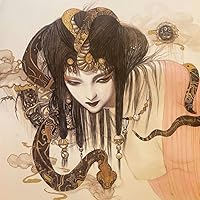
There certainly is a reason why Beardsley is known for his art rather than his writing… the edition I read (not on goodreads) contained many of his illustrations which definitely elevated the experience

November 2, 2007
Notes: 80 pages written by Aubrey Beardsley before his death in 1898 developed a cult following. Story expanded and finished by John Glassco, published as "Under the Hill" with dual byline in 1959.
Oh, the fun to be had in the library if one knows where to look.
Beardsley writes with an ecstatic delirium that reminds me vaguely of Coledridge, except the object of his literary fever is the Tannhauser legend, sort of an erotic Holy Grail story where a lost German knight stumbles into the court of the goddess of love. Everything in Venus' realm is pure sensuality, from the nymphs rapturously impaling themselves on wine bottles to the goddess' servants joyously plotting to obtain scraps of her toilet paper with traces of the divine essence. Imagine if Neil Gaiman had made Desire and Delirium/Delight one character. Beardsley captures the manic overload of it in jumping, hyper-stimulated prose. Even when Venus masturbates her pet unicorn Adolph and licks the semen, the wording is exquisite. Go on, try it to write that scene yourself. It's harder than you think.
As Glassco found out. He did an admirable homage, but could not sustain Beardsley's exhilaration, the text becoming more pedestrian, and more sadomasochistic in its pleasures (this is Glassco we're talking about) the further into the story he gets. The end result reads exactly like it is -- a composite job started by one man and finished by another with no communication between the two.
Oh, the fun to be had in the library if one knows where to look.
Beardsley writes with an ecstatic delirium that reminds me vaguely of Coledridge, except the object of his literary fever is the Tannhauser legend, sort of an erotic Holy Grail story where a lost German knight stumbles into the court of the goddess of love. Everything in Venus' realm is pure sensuality, from the nymphs rapturously impaling themselves on wine bottles to the goddess' servants joyously plotting to obtain scraps of her toilet paper with traces of the divine essence. Imagine if Neil Gaiman had made Desire and Delirium/Delight one character. Beardsley captures the manic overload of it in jumping, hyper-stimulated prose. Even when Venus masturbates her pet unicorn Adolph and licks the semen, the wording is exquisite. Go on, try it to write that scene yourself. It's harder than you think.
As Glassco found out. He did an admirable homage, but could not sustain Beardsley's exhilaration, the text becoming more pedestrian, and more sadomasochistic in its pleasures (this is Glassco we're talking about) the further into the story he gets. The end result reads exactly like it is -- a composite job started by one man and finished by another with no communication between the two.

May 29, 2010
[These notes were made in 1983:]. 1974 edition of 1896/1907 texts. The story is unfinished, but this book presents amusement and interest on several levels. First, there is the textual problem presented in the Introduction - a classic example of the strange things that happen when prudery enters the picture! Then there are the illustrations - by Beardsley, of course, and nicely reproduced -possessing that peculiarly compelling quality (anything but purity) of deep black against white - sometimes clean and bold, sometimes almost impossibly ornamental. The prose, which is the last of the delights, is similarly baroque: gorgeously sensuous descriptions, whether it be of flowers or sex (the whole thing is squirmingly titillating, but not ultimately satisfying!)
October 21, 2014
Beardsley is more of an artist than a writer apparently, the drawings in this are quite odd looking. Its about a man who goes to a party under the hill much like the opera above, except Venus is referred to as Helen in this instance.
After the party the protagonist does a sort of list of his favorite erotic pictures and novels and then its pretty much over.
I don't really get it, its supposed to be filth and i got the occasional hint of that with women wearing false-mustaches and certain suggestive elements at the end between Helen and her pet unicorn Adolphe... but it felt pointless.
After the party the protagonist does a sort of list of his favorite erotic pictures and novels and then its pretty much over.
I don't really get it, its supposed to be filth and i got the occasional hint of that with women wearing false-mustaches and certain suggestive elements at the end between Helen and her pet unicorn Adolphe... but it felt pointless.

September 30, 2015
This is what you get when you cross a piece of Victorian erotica with a Decadent's imagination and a rather better quality of writing.
I have a pretty big vocabulary, but I had to look up dozens of words to get through this. My favorite new word: susurrus. I love the way Beardsley plays with language.
I have a pretty big vocabulary, but I had to look up dozens of words to get through this. My favorite new word: susurrus. I love the way Beardsley plays with language.
Displaying 1 - 30 of 35 reviews