Peter O'Toole was supremely talented, a unique leading man and one of the most charismatic and unpredictable actors of his generation. Described by Richard Burton as "the most original actor to come out of Britain since the war", O'Toole regularly seemed to veer towards self-destruction.
With the help of exclusive interviews with colleagues and close friends, Peter O'Toole: The Definitive Biography paints the first complete picture of this much loved man and reveals what drove him to extremes, why he drank to excess and hated authority. But it also describes a man who was fiercely intelligent, with a great sense of humour and huge energy. Always insightful, at times funny, at times deeply moving, this is a fitting tribute to an iconic actor who made a monumental contribution to theatre and cinema.
If this is the definitive biography, the others must be really ropey - but whilst it's lacking in some ways, it's still a great source for comments from those who knew and worked with Peter O'Toole, and at its best, it can be evocative.
It's more or less a string of anecdotes. Many of these, individually, could have been space-filling paragraphs of trivia in issues of Loaded circa 1995: 'great benders in history no. 23', and the like.
But they do hang together chronologically (most of the time), and, cumulatively, they do tell a life-story, one which at least manages to relate O'Toole's film projects to what was going on in his life - something very basic to an actor biography which, as this review indicates, the even trashier treatments don't manage.
This book was an impulse read when I was frustrated to find that O'Toole's memoirs still aren't available in ebook form, five years after I first wanted to read them. As a substitute I first read a handful of articles, then looked at this, ended up reading half of it in one evening, and figured I may as well continue.
But it seems a poor substitute for O'Toole's own writing which, by most accounts, is excellent. Sellers' biography never really stops feeling like average entertainment reporting. (And reading it felt much like binging on The Hollywood Reporter and Perez Hilton.) The register is a bit off, and one that is more often found in, and is better suited to, blogs (and indeed GR reviews) than a supposedly major biography: workmanlike non-fiction prose occasionally breaking into sweary slang. It's probably supposed to mimic the tone of a raconteur, but it lacks the smoothness. Whilst I've never met Sellers - and so for all I know he might be a magnetic presence in person - on the page he is a mediocre, blokey journalist. The book is at least useful for getting timely quotes and interviews from a lot of people who knew O'Toole - shortly after his death and whilst as many as possible of those who knew him were still alive - but the presence among them of many other strong characters can't help but be a reminder how much more fun the book could have been in the hands of a wittier author, whose tone would do justice to the subject. As the actor's archive was made available at an American university in 2017 (two years after this book was published) perhaps another biographer will one day write about O'Toole using that material.
Analysis of the cultural context is minimal in Sellers' writing. On the films, there's one interesting paragraph about Man Friday, which implies a more progressive 1970s cinema audience than would now be popularly assumed ("Gold thinks the poor response was due to the fact that audiences expected another traditional Crusoe/Friday story, not this critique of imperialist attitudes"). And analysis of O'Toole's portrayal in the media, when it happens at all, is diffuse and almost accidental, happening through quotes from others and as part of event-by-event narratives. Beyond discussing his looks, charisma and talent, a good bio ought to look at what he meant to, or was set up to mean to, audiences at various times, and how he fitted into various waves of British culture, or didn't.
It looks as if Sellers had just written about O'Toole's generation of actors of the late 1950s to 1960s in Don't Let the Bastards Grind You Down (2011) but plenty of people won't read that book as well as the O'Toole bio, so it would be fair enough to give a bit more space to the whole business of social changes of the 60s here, even if it might repeat ideas.
And later in his life, whilst the success of Jeffrey Bernard Is Unwell, first performed 1989, is thoroughly documented, O'Toole in the 1990s was also one of the national treasures of Britpop, New Lad, "Cool Britannia" and the 1960s-70s revival along with other ageing drunken wits of his generation like Peter Cook. Just for starters, here's plenty to expand on there about what was seen as glamorous, popular, admirable, masculine etc at various times, what O'Toole thought about any of this, if it's on record.
Sellers attempts to strike a balance between showing the fun of O'Toole's hedonistic lifestyle and the problems it caused him and others, but the effect is more often one of lurching between opposing viewpoints than of a coherent synthesis. There's either a very New Lad vibe of 'wa-hey', or it's 'what a tragedy, he was destroying himself, and also being an arsehole'. Though perhaps a coherent synthesis - based around the idea that someone knows what they are doing, and that it's important people have the freedom to make such choices regardless of others tutting about its not being good for them, because that idea of 'good for' is certainly not the only possible meaning of life - is easier for me to think of because of having known a few charismatic heavy drinkers who had ridiculous escapades in their youth but who were rarely mean to others with it.
But they did not have fame inflating their egos. It's a decent insight from Sellers to, implicitly at least, reference research that fame can increase narcissistic traits; it's indicated over and over again that whilst O'Toole was always a tearaway, the indulgences associated with becoming a star in his twenties probably changed him for the worse. Disappointingly - and this sort of thing often comes up in biographies of famous old drunken stars - was oppressive to his wife Siân Phillips, occasionally capriciously nasty to people he didn't like (even if he was charming to most acquaintances, and positively supportive to some), and he started more than a few fights with various people on nights out.
However, unlike some of his comrades, O'Toole seems to have realised after his one marriage that he could not be a good husband - even if he said so by implying that any woman who wanted to marry him must be mad. There is something to be said for that insight when so many towering 20th century figures of the arts had strings of bitter divorces. The book has a lot more to say about the drink-and-drugs side of O'Toole's hellraiser image than the Casanova: is this the author's preference, or some odd sense of propriety? It's by no means absent, but given what a major part of the actor's life it was, if he did sleep with the rumoured thousand women, or even half that, it is simply logical to give sex a bit more space and to say who said what, and what rumours appear to be unsourced. (I confess to some interest in the trashy biography by Darwin Porter, even whilst knowing I'd probably be disappointed by the referencing and tone.)
The assertions by Sellers, and one or two of O'Toole's male friends, that the actor lost his looks young due to drink are bizarre, and seem to reflect the oddly narrow view that many straight men have of what constitutes male attractiveness, and perhaps the extent to which modern Hollywood stars are expected to have characterless unlined faces even in late middle age. I think he still looked good until his mid-60s, e.g. in Phantoms (1998). Someone older than I am might think that range extended even further. However, the slurring in his interviews from the same era - which seem a plausible inspiration for Fast Show comedy character Rowley Birkin - kind of saddens me now, after hearing in the book how his intellectual brilliance had struck those who worked with him. But it's not like he didn't know for a long time that sort of thing would be a likely outcome, and it was, merely appearances: "However frail and failing his body might have been, the mind was still alert and capable. ‘His memory was like a computer,’ confirms Redwood"[director of his very last film]. "‘He was always ten paces ahead of the crew.’"
But the most frustrating thing of all - especially when set alongside descriptions from multiple acquaintances of how uniquely brilliant and charismatic O'Toole was - is how few great film roles he got from the late 1970s onwards (after he'd recovered from the surgery which Sellers doesn't define, instead quoting tabloid rumours and O'Toole's own oblique words ‘My plumbing is nobody’s business but my own.’ Do I read a private sense of shame about digestive problems for being the antithesis of cool and sexy, or simply someone who wanted less media intrusion, and found it outrageous that even the inside of the body was subject to it? Wikipedia says these ops were for stomach cancer.) Sellers chronological, anecdotal approach doesn't explore this dearth of quality properly: the effect is 'can't see the wood for the trees'. Some problems for his reputation were evidently caused by a an absurdly bad theatre production of Macbeth in the early 1980s: O'Toole was too big a star for anyone to be able to rein in his excesses, and the show became a 'so bad it's good' attraction. But even when his reputation as a theatre actor was rejuvenated by Jeffrey Bernard Is Unwell at the end of the decade, the mediocre films continued. What was filmmakers' problem with him exactly? It's not as if a lot of other major actors weren't primadonnas and substance users, and one can't but see this neglect by filmmakers as an appalling waste of one of the best and most exciting actors of the 20th century. (There are excerpts from the diary of director Roger Michell during the making of Venus, O'Toole's last great film role, showing the actor to be a tiringly cantankerous and demanding old bastard, but he was in his seventies by then, and it doesn't seem so very different from what one reads about other notoriously difficult celebrities - and unlike many of them, O'Toole also made constructive, creative suggestions and had phases where the team found him hugely likeable.)
Though I'm assuming this shortage of great roles was mostly down to studios and directors anyway - and one shouldn't have to assume a thing like that after reading a biography, a biographer should have researched it. If it was O'Toole's choice, that's a different matter. These days online, one often hears things like 'authors don't owe you books' and 'women don't owe you pretty'. If an actor doesn't want to take the sort of big, hard-work roles fans would have loved, and would rather have fun on his own terms - and "As O’Toole explained to Tom Stoppard once, having fun for him was ‘a deep philosophical attitude’." - then whilst one might wish he'd made more great films, not doing so was a choice he had every right to make. And it would be understandable: by the 1980s he'd already made good money and established a reputation, and appeared to have fulfilled his youthful ambitions: in his RADA days, it's surmised, "he wanted simply to become the best actor he could be", whilst his old friend Richard Harris said, "‘We didn’t want to be the best actors in the world … We didn’t want to be the best King Lear. What a boring ambition.’ Instead they wanted to experience everything that life had to offer and have as good a time as they could. "
And for the middle-aged O'Toole, having a good time often seems to have meant simply hanging out at his house on the west coast of rural Ireland and being mates with the locals, or bringing up his son, who lived with him in London in term-time. The custody settlement was one factor that may have limited the roles he took, but you'd still think he'd have got some better quality films with great supporting roles, and that a few more directors should have been willing to work around that for an actor of his calibre. This quieter, somewhat more responsible side of O'Toole is what you actually *learn* from a biography, and which perhaps deserved more space and depth. Even the most casual fan will have heard lots of drinking stories already. Perhaps less so about his few years off the drink - though this period led to drug habits that, because of what I've witnessed with RL people, I can't help see as more rapidly destructive, especially behaviourally, than the booze. (Sellers and/or those who knew the actor seem to implicitly agree - it sounds as if coke made him more out of it than he was as the young chap who would get sloshed in the pub at lunchtime and return one minute late to continue a bravura performance.) But it's the much less obvious sides that seem like part of the point of a biography: Peter O'Toole the introvert who hated tabloid publicity and loved a lot of time to himself ('ambivert' is probably too much of a neologism for Sellers, but would seem to suit his subject excellently), and reading and talking about politics; his lifelong love for the desert, acquired from filming Lawrence; and the single dad who sorted himself out just enough to get that custody (albeit with some expensive lawyers).
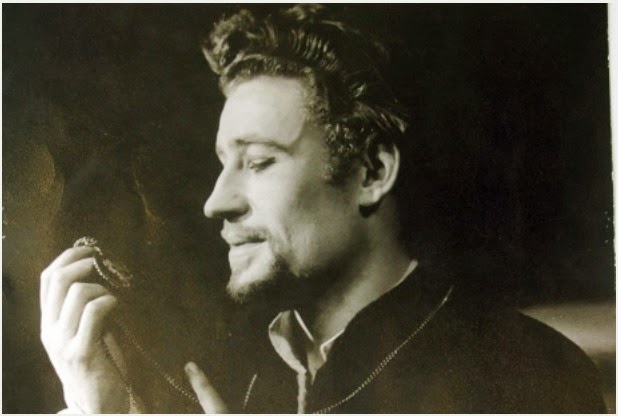
I'd had no idea that he had a nose job, on the advice of his agent, before his film career took off. His nose looked fine before, said everyone who commented on it in the book, as this picture and this one show - but apparently it would have cast a shadow at certain angles during filming. I have never been a fan of smaller noses (including the small nose shape I share with nearly all of my male relatives, which I think lacks character generally and looks even worse on men) - yet the remodelling O'Toole had done I actually think works, which is almost unprecedented. With the original nose he looks like an actor who'd have played different parts, especially villains; the 'after' is now so integrated with the roles he did play, and has a sense of mischief which matches the positive side of his public image.
Or that - as is implied repeatedly by anecdote but not by overt synthesis - one of the reasons for O'Toole's substance abuse seems to have been chronic stomach pain (like Kurt Cobain, another addict star of post-war pop culture, but one associated with very different moods). Aside from the effects of booze and drugs, he's not someone you'd have assumed had poor health, but he had numerous operations as a kid, and when movie filming wrapped or took a break, even at the start of his career, he would often check himself into hospital because of the toll that the drink and the work took on him physically. In some ways he had a very strong constitution, because he survived all his old drinking partners and was working until a few years before his death - but he needed to be patched up periodically all his life and would not have lived long if he'd been born with the same health before the 20th century.
A well written bio as far as reporting incidents go, I was captured by the relentless artist spirit of one of my favorite actors. O'Tool was surely a taker in his life but I am now confident he left us with a great, great deal more than he ever could have robbed. A beautiful man.
Is this really "the definitive biography"? It's certainly the best in a very disappointing field since O'Toole's death. Notably absent amongst the people interviewed as original sources: any of O'Toole's surviving family, including ex-wife Sian Phillilps (mother of his two daughters) or ex-partner Karen Brown (mother of his late-life son). So this is definitely not the "authorized" biography, which can be a good or a bad thing. In this case, I think it has been detrimental to any real understanding of O'Toole's family life (Sian Phillips' autobiography is a useful corrective for the years when they were married).
I was dubious when I saw Robert Sellers to be the author, because he has also written books with such unpromising titles as "Hellraisers: The Life and Inebriated Times of Richard Burton, Richard Harris, Peter O'Toole, and Oliver Reed" and "Don't Let the Bastards Grind You Down: How One Generation of British Actors Changed the World". In other words, he gives every appearance of being one of those bloke-ish biographers who delight in chronicling promiscuity and drunkenness, as if they were something necessarily associated with great talent and in some way admirable. Mind you, to be fair, if you're going to write about Peter O'Toole, you're going to have to address both of those major factors in his life and career. But I was pleasantly surprised at the relative absence of celebratory adjectives about the alcoholism that most certainly contributed to O'Toole's dreadful health in the second part of the career (not to mention his very poor reputation amongst landlords and other property owners).
The sources for this book are chiefly gossipy minor players in the entertainment world, most of whom doubtless have dined out on their O'Toole stories for some time, so we must take into account the natural human tendencies to embellish and generalize. The other people involved in the best anecdotes are by and large gone from us, and can't issue any refutations (if indeed they would wish to). But in addition to O'Toole's mischief, drinking, and occasional completely thoughtless cruelty, I found that there was also a ring of truth - through repetition from different sources - in the accounts of his deep thoughtfulness about his craft, his extensive and intelligent reading, and a generosity that could be as extravagant as his narcissism. As I think I remarked in my review of "Hellraisers", O'Toole still comes off, like Burton, as someone you could see wanting to associate with, as opposed to some of the nastier drunks in his circle of contemporaries. (And lest anyone wonder, it does seem that he dabbled in drugs as well).
Sellers puts to rest the old controversy of where O'Toole was born, Ireland or England, by digging up the actual birth certificate from Leeds. But he does also acknowledge throughout that O'Toole became Irish, almost by dint of wishing so very much to be Irish (he always claimed himself that he did not actually know one way or the other).
The book has a decent apparatus (index, bibliography, list of film and theatre credits), and there are citations at the end for most paragraphs, though since most of said citations are to "author's interview with X", there's really not much verification that can be done. Sellers also took the time to view the historical record in the form of TV talk show utterances (now much more available to us through youtube), and he relies relatively little on previous biographical work as far as I can see, although Sian Phillips is of course fairly heavily cited.
"Better than expected" doesn't seem like particularly high praise, but in fact I'm quite pleased to give this book a place on my shelves. Since O'Toole will unfortunately never continue his slim, whimsical, fascinating autobiographical efforts into the most riveting years of his career, we must rely on the more prosaic expressions (and perhaps more reliable memories?) of the people around him who may not have been his nearest and dearest, but for that very reason may have been reliable observers.
Recommended to fans of O'Toole and people who enjoy anecdotal biography about London and Hollywood in the mid to late 20th century.
It's hard to tell whether Peter O'Toole had a life. Readers would be familiar with the screen performances, most of them, and likely not know much about his stage work. Both those areas the book covers. O'Toole was nothing if not a thespian.
Not exactly nothing. He was also a prodigious drinker, and later in life, when alcohol was verboten, seems to have dabbled in other substance. The book covers this, too.
Outside performance anecdotes and tales of roistering, the 'life' part comes across as transition material, integument between sprees and gags.
There's a suggestion that O'Toole honestly cared about people, and that he assumed their loyalty and broke with them if felt betrayed, but, mostly, that's hid.
Mostly, we share a Guinness with him, on the way to the whiskey. When we wake up two mornings later in another part of town, we're over 80 years old, as he was.
Peter O'Toole remains a shimmering star of stage and screen. Sellers superb biography peels the many layers of myth from the actor's life to reveal a supremely-talented man, a brilliant actor, raconteur and writer who, quite simply, drank himself into a long old-age far too soon. Ultimately, this is a sobering read.
A complex man of great acting talent with an amazing (yet frightening) capacity to consume so so so much alcohol. There are stories galore in this bio on O'Toole about his skills as a thespian and his mercurial personality with his co-workers, family, and taverns. This work looking into his interesting self-imposed doomed life goes down like a 7 times distilled, 5 times filtered vodka made with natural glacial water from Burgundy grapes. Cheers!
Loved reading this biography of the one and only Peter O'Toole, one of (if not THE) most original actors of his generation, his hell-raising antics, his crazy drinking, and his continous 'joie de vivre' is wonderful to read in this up to date biography of his life. One of the most overlooked actors, here is an actor who gave his commitment and dedication to the craft of performing, and came up with such wonderful and memorable performances on stage and screen.
I love biographies, but some of them are a little dry. This wasn't. It reads like a novel, but it's true. Peter O'Toole was a wonderful character of the type they don't seem to make anymore. This was really fascinating and well-written.
I had previously read Robert Seller’s exciting and most enjoyable book HELLRAISERS: THE LIFE AND INEBRATED TIMES OF RICHARD BURTON, RICHARD HARRIS, PETER O’TOOLE, AND OLIVER REED. And if you have not yet read this earlier volume I highly recommend it. As to this latest book marketed as the definitive biography of Peter O’Toole we are left with a more somber narrative which I read as a life full of promise and full of lost opportunities. You see Peter O’Toole was and has been my favorite actor since my first viewing of LAWRENCE OF ARABIA in 1962. I have seen the film to many times to count… maybe as many as 50 times. Although O’Toole looked nothing like the real life T E Lawrence his performance was mesmerizing and full of charisma. And no doubt O’Toole gave us the wonderful films Becket, Lion in Winter, The Stunt Man and the tremendous comedy My Favorite Year where he declares “I am not an actor… I am a movie star” and nevertheless his stage work was his primary love and I found his stage work the most interesting information in Sellers’ book. The single issue that hangs over the books narrative is the self-destructive behavior of O’Toole (and many of his then fellow British actors). Even though O’Toole lived to be 80 his body began to fail him and his handsome good looks disappeared before he was 50. Audiences that went to see Lawrence were shocked of see a man looking 10 years older than his actual age. Unable to drink for fear it would kill him O’Toole commented that he had little left inside him after so many lifesaving operations. O’Toole was nominated for Best Actor 7 time over 4 decades and lost every time eventually to receive an honorary lifetime achievement award. Despite pain and a love of his quite privacy O’Toole worked almost constantly appearing in many highly forgettable films and a couple of awful stage productions such as Macbeth where he insisted in part being covered in fake blood. O’Toole hated method acting and considered himself a story teller and an actor in the classic theater tradition. A style of acting that has disappeared. Yet for me he will always be LAWRENCE OF ARABIA… and the mad director in the Stunt Man and a movie star in My Favorite Year.
I don't know what it is about the late great Peter O'Toole that I adore so much, but I continue to stalk him long after his passing. I watch his films and I periodically watch YouTube videos of his interviews and those fantastic stories. I was given this Biography for Christmas and I swallowed it whole. I had heard many of these stories before, and I'm not not sure I always liked him, but in the end I loved the man, the legend, the character that was O'Toole. It was amazing how many people in his life could not always stand him, but in the end they adored him too. Cheers to Mr. Sellers for writing what seems to me to be the Definitive Biography indeed.
It purports to be a definitive biography of the unique, self-destructive Peter O'Toole but offers little psychology as to what made him so determinedly undermine his great gift. In addition, the filmography misses a credit, albeit a minor one: O'Toole lending his voice to the early 90's Canadian cartoon "The Nutcracker Prince." For author Sellers, a devoted hell-raiser hag, it's more than enough to simply be in the complicated company of such a larger-than-life talent. The more discriminating, however, like O'Toole at the pubs that were his true home, may well cry voluminously for more.
tore through it. only wish it were longer. the expression "warts and all" springs to mind but i think many of the warts were glossed over here. essential reading if you've any interest.
A legend in the acting (and drinking) world, an absolute genius of the stage. This is the reason for the 5 stars. "The definitive biography"? I am not so sure. This is a collection of anecdotes and drinking tales of his life (mainly drinking). However, the tales are both hilarious and outrageous, also by the end strangely moving. Well worth a read if you are a fan.
Peter O’Toole was a complicated man, a movie star with his heart in the theatre. He lived his life to excess and remains an enigma to those who loved and worked with him. This book tells the story of his life but cannot get into his mind - I wonder if he could. The stories about Richard Burton and Elizabeth Taylor are the best!
At first I thought it might just be endless drinking stories and if course there were more than a few but as the story unfolds it captured the man, the artist, the consummate actor . . . the only Peter O'Toole there will ever be!
This is a fantastic read. No agendas powering it, no luvey-duvey-ness, no experimentalism...just a straightforward, well-told tale of an extraordinary, flawed, fascinating man, that allows Peter O'Toole's history and personality to carry it all...just as it should be.
I didn’t find it engrossing enough but did stick with it to the end. Funnily enough, I got my Peters’ confused. I thought I was getting Peter Cook’s biography and it wasn’t until a few chapters in that I realized I wasn’t reading about who I thought I was. I give it 2.5 stars.
No one's quite as good as Robert Sellers at celebrating the romance of the 'refreshed' lifestyle chosen by some creative types while pointing out the appalling cost that comes with it.
With roles in films like Laurence of Arabia, The Lion In Winter, Night Of The Generals, My Favorite Year, Stunt Man, The Last Emperor, and Venus, as well as classic stage work, Peter O'Toole was one of the premier actors of his generation. He was also a notorious hell-raiser. With the likes of Richard Burton, Albert Finney, Richard Harris, Omar Sharif and others, his exploits were legendary. But he also had a complex side in his marriage to equally acclaimed actress Sian Phillips (even though that ended in divorce). He was a man of many facets. This highly readable biography by Robert Sellers (author of eleven other books, including studies of Oliver Reed and "Hellraisers") covers all aspects of O'Toole's long and varied life with all of its highs and lows. Any fan of theatre or film will find it a fascinating read. - BH.