With the power of Educated and the emotional sweep of When Breath Becomes Air, Great and Unfortunate Things is the inspiring, underdog story of how an autistic, non-verbal boy who society had all but given up on found his voice, literally and figuratively, became one of the youngest professors in the University of Cambridge’s history and put himself in a position to give back.
Jason Arday was born the second youngest of three boys and grew up in a colorful and lively section of South London. At three years old, he was diagnosed with autism and development delays. Experts told his parents that he would never be able to speak, write, or live independently. An institution would best serve his needs, it was suggested.
His parents would have none of it. Instead, thinking outside the box and drawing on her faith, his extraordinary mother Giff embraced his neurodivergence and fiercely dedicated herself to helping her son realize a potential few others believed was possible. Giff drew on proverbs from her West African culture, popular music by the likes of Enya, and comedic television shows and movies to help Jason make sense of the world.
In Great and Unfortunate Things, we see how Arday went from being nonverbal until he was eleven and illiterate until eighteen to becoming a professor at Cambridge. Without romanticizing the struggle, it’s a story of a son’s determination against insurmountable odds and how his family and a band of ordinary people with extraordinary compassion joined forces to encourage Jason to believe in himself and maximize his capabilities.
This is the story we need right now, and Arday, who believes in paying it forward, is the kind of figure the world can use more of now more than ever.
I requested this memoir from Netgalley because I was intrigued by Jason Arday's story, which goes like this: Jason was a severely impaired, autistic, nonverbal child who didn't speak until age 12, and didn't learn to read and write until age 18. Jason then went on to earn a PhD and in 2023, he was awarded the Professorship in the Sociology of Education at Cambridge University. Arday was widely touted as being the youngest Black professor ever hired by the university.
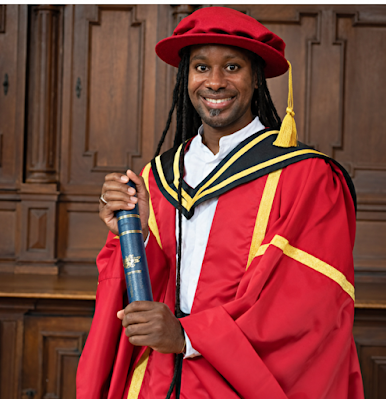
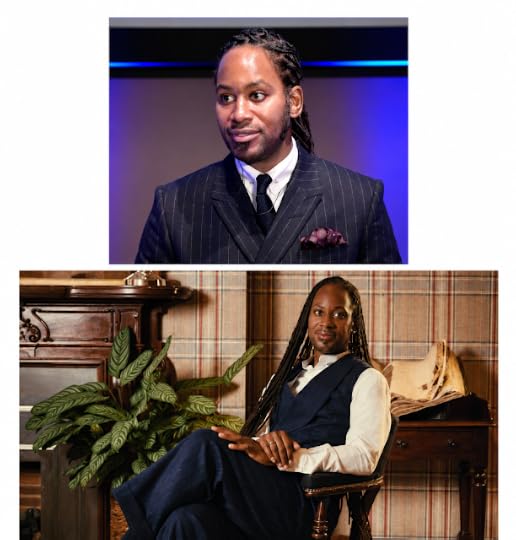
Jason Arday
When I got the book, I was unaware of the controversy surrounding Arday's Cambridge appointment, which can be summed up as follows: Jason's critics call him a plagiarist, fantasist, and DEI choice who should never have been hired by Cambridge University. Arday's defenders say the critics are racists who've unfairly targeted Jason, and harassed him mercilessly.
Jason Arday resigned from Cambridge on August 5, 2026, writing in part: "It is with profound sadness that I write to resign, with immediate effect, from my position at the University of Cambridge and Jesus College. Sadly, the years since my appointment have...been marked by an unrelenting level of public scrutiny and personal attack [that] have taken a profound toll on me and on those I love...I have concluded that the only way to bring this chapter to an end is to step away."
Arday was found dead thirteen days later, on August 14, 2026, a victim of suicide.
I became aware of the imbroglio surrounding Arday, and his tragic death, shortly before I read Jason's memoir, which I'll review now. Afterwards, I'll make a few further comments.
*****
Review of 'Great and Unfortunate Things' by Jason Arday and Eve Claxton
Jason Arday was born in London in 1985, to Ghanian parents Gifty and Joseph Arday. Jason's development was slow, and he writes, "When I started speech therapy around the age of four, I had yet to talk, had only just learned to walk, and still needed someone to spoon-feed me." Like many autistic children, Jason engaged in self-soothing behavior called stimming, which in Jason's case included rocking, humming, and banging his head against the wall.
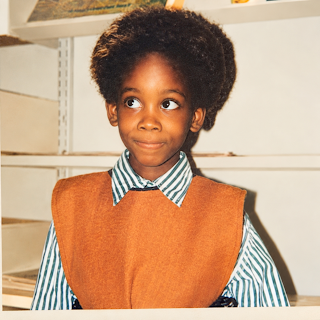
Young Jason Arday
Doctors diagnosed Jason with autism and developmental delays, and told his parents Jason would never be able to speak, write, or live independently, and that an institution would best fit his needs. Jason's mother, whom he calls Giff, disagreed. Arday writes, "Before the word neurodiversity had even been coined, Giff understood the concept: that every human is an individual...and that the world needs all kinds of people. God had made me, and so God...had given her not a burden, but a gift."
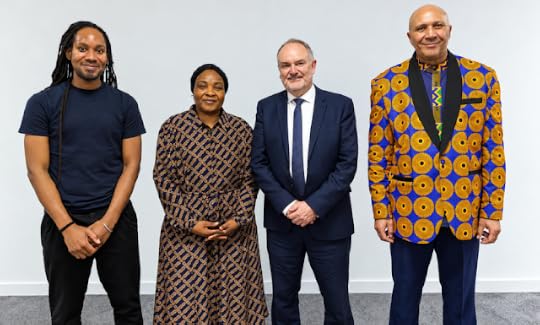
Jason Arday (far left) with his mother Gifty, father Joseph (far right), and Professor Mark Power, Vice-Chancellor and Chief Executive of Liverpool John Moores University
When Jason started school at age four, an incident of head banging drew blood, and Jason got put into a classroom of his own and also attended a hospital clinic. The methods used to instruct Jason - shapes, sounds, and eye contact - didn't work, so Giff developed her own strategies. Among other things, Giff learned Makaton, a method of communication that relies on a combination of spoken words, hand gestures, and visual aids like pictures and symbols - a technique that worked well for Jason.
Examples of Makaton, used to teach autistic and impaired individuals
Arday notes he was very lucky to grow up with a strong Black African woman who averred, "With every ounce of strength I have...and as long as I'm alive, whatever Jason can be, he will be." Some things Giff used were television shows, like Nellie the Elephant, Trans World Sport, and soap operas such as 'Home and Away and Neighbors.' Arday observes, "Thanks to these soaps, and TV in general, my understanding of the human experience expanded. I learned about emotions - fear, sadness, joy - and about relationships."
A scene from the soap opera 'Home and Away and Neighbors'
Giff also used movies to instruct Jason, and films like 'Rocky' and 'Forrest Gump' were inspirational. Arday watched his favorite movies so many times he knew the dialog by heart, and years later, when Arday started to read, closed captioning helped him hone his reading skills.
Jason also loved music and movement, and his dad Joe had a wide-ranging selection of records to which Jason would move his body in rhythm, rocking, humming, clapping his hands, and tapping objects. Arday writes, "Music was my WD-40, lubricating my hinges and joints so that I would have access to my feelings." One of Jason's favorite albums of all time was 'Graceland' by Paul Simon
During Jason's primary school years, Giff lobbied his teachers to innovate their approach to his education, but he didn't speak. Finally, at age 12, when Jason's therapist Katrina said, 'Hello, Jason", he said hello back to her. Giff was thrilled, and over time, other words came to Jason.
Arday mentions instructors and assistants who worked with him in school. However, Jason couldn't seem to develop linguistic fluency, and he had dyslexia and dyscalculia. To put it succinctly, school was a harrowing experience for Jason, and once he got old enough, he played hooky.
One thing Arday was good at was sports, like football and snooker. At Southfields Secondary School, teenage Jason would skive off classes in the afternoons, pick up a box of chicken and chips, and go to Rileys snooker hall - where he played for money. Arday recalls, "I started playing in the junior leagues, competing in snooker tournaments all over London, wearing my waistcoat with a Rileys logo on it." Arday was a generous soul, who put some of his cash winnings under his brothers' pillows or in their drawers.
Rileys snooker hall
In the meantime, Arday picked up another skill. After watching Giff make clothing for the family for years, Arday developed an interest in sewing. The symmetry of the craft, as well as the juddering of the machine, soothed Jason. Since he was also obsessed with tailored clothes - like those worn by old movie stars such as Cary Grant and Gregory Peck - Jason learned to sew.
Jason Arday liked sharp clothes
By the time Arday was eighteen, his poor performance in classes at Southfields Secondary School, and his low achievement on the GCSE exams left Jason few options. Still, with the help of a caring PE teacher called Mr. Trace, Jason went on to get a vocational qualification in sports. Afterwards, Giff's persistent efforts and fervent petitioning got Jason admitted to Merton College, where a Brazilian sports lecturer named Sandro took Jason under his wing.
At the same time, Jason was working part-time at Sports World. At the store, Jason was paired with a teenage teacher trainee named Debbie-Ann McKenzie (Debs), who was on the tills. Debs realized Jason couldn't read, and used phonics exercises and worksheets to tutor him. After a time, working with Sandro and Debs day after day after day, Jason finally learned to read.
Jason Arday and Debs McKenzie
While Arday had admirable accomplishments, he also experienced severe setbacks. Jason was badly beaten by four thugs at a bus stop, which resulted in physical injuries as well as ongoing epilepsy; Jason developed a recurring benign brain tumor near his pituitary gland, and needed surgery; Jason suffered a debilitating bout of depression that left him unable to get out of bed; Jason became suicidal and almost jumped off a bridge; and more. None of this stopped Arday permanently, and he carried on.
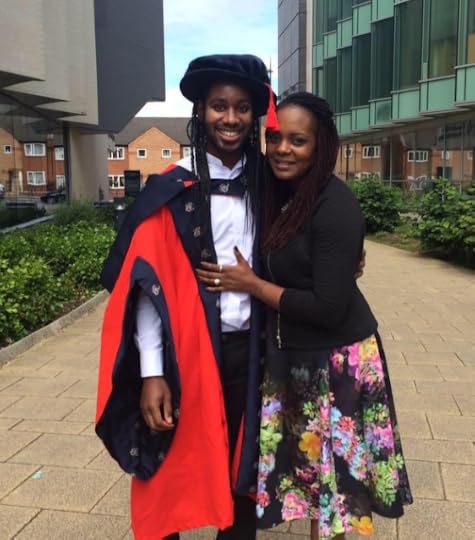
After completing his studies at Merton College, and with continuing encouragement from Giff, Sandro, and Debs, Jason went on to graduate from St. Mary's University; obtain a postgraduate certificate in education; and earn various degrees, including a PhD from Liverpool John Moores University in 2015. To accomplish all this, Arday learned to suppress his stims and impulses to act out, which he describes as taking a huge effort.
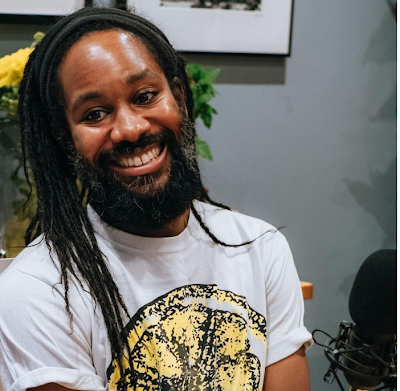
Jason Arday grew a beard while he was working on his PhD thesis
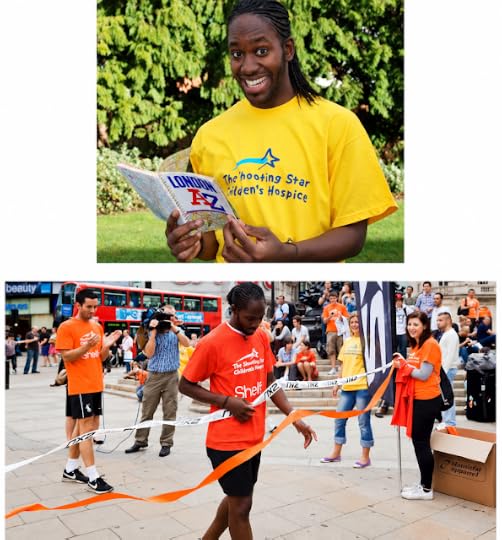
During all this time, Arday was busy with other things as well. He writes, "Tailoring and academia weren't my only preoccupations...Thanks to Giff's moral instruction, that you should always help those in need...it was ingrained in me to devote myself to charity work whenever I could." So in summer 2010, while Arday was working as a sports lecturer at Richmond upon Thames College, he set himself the goal of running thirty marathons in thirty-five days. Jason's aim was to raise money for 'Shelter' (a homelessness charity) and 'The Shooting Star Children’s Hospice.' Arday completed the feat, but - before the finished - suffered a hairline fracture in his leg that caused intense pain.
Jason Arday ran marathons for charity
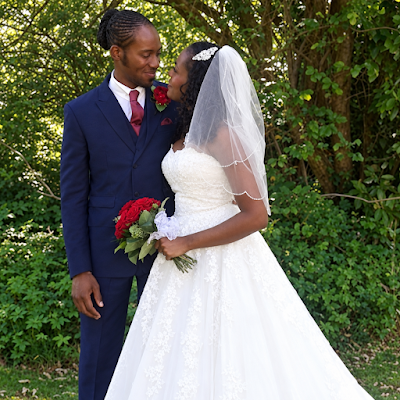
In time, Debs became Arday's girlfriend, and they married in 2014. The couple had two children, a girl Taylah and a boy Noah. Jason and Debs separated in 2019, but continued to co-parent.
Jason Arday and Debs McKenzie wed in 2014
Having a family to support, Arday went on to other jobs. He lectured at university in the daytime, and at night, he stocked shelves at Sainsbury's and worked for a private cleaning service.
Arday makes sure to express appreciation for the friends and fellow workers that helped him when he was a college student, and then at his places of employment. This is important, I think, for the topic Jason later chose for his PhD thesis. Jason did his doctoral studies at Liverpool John Moores University, where his 2015 thesis was entitled, "An exploration of peer-mentoring among student teachers to inform reflective practice within the context of action research.” In a nutshell, the topic covers how student teachers can assist each other to examine and analyze their work, so they can learn from it and improve.
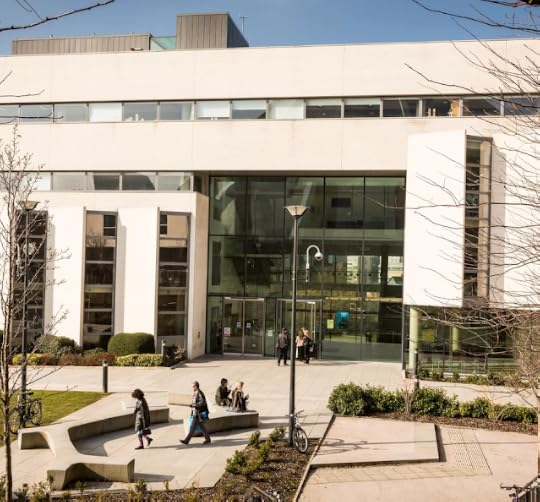
Liverpool John Moores University
[Note: Arday was later accused of plagiarizing parts of his PhD thesis, and Cambridge University was investigating the charges at the time of Jason's death. I can't speak to Arday's innocence or guilt, but the thesis topic seems to have been in his wheelhouse.]
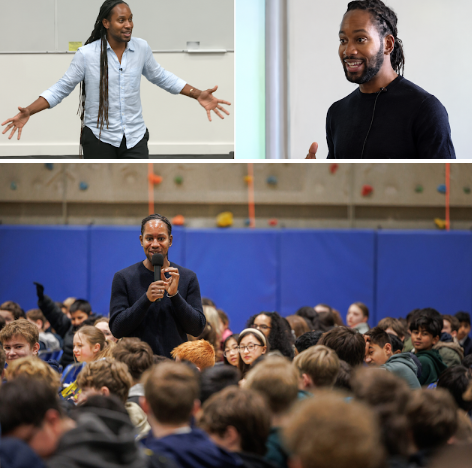
After Arday earned his PhD, a colleague warned him, "The PhD gets you to the door of academia, but it doesn't give you the key." Jason writes, "He was exactly right. I still had to publish, bring in grants, get my work out there, and have a public impact so that I could get invited to conferences and deliver keynotes, making a name for myself and my work."
Jason Arday gave talks and lectures
All this was exceedingly difficult for Arday, whose reading and writing remained slow. Nevertheless, Arday advanced step by step, and - as is well known by now - was eventually given a position at Cambridge University. And the rest is history.
In my view, the memoir is well-written and inspirational, with interesting personal anecdotes sprinkled throughout. The narrative provides insight into neurodivergence, and might encourage affected individuals and their families. Not every autistic person will get a PhD, but neither will most other people.
*****
At this time I've read much of the criticism aimed at Arday for his PhD thesis, his professorship at Cambridge, and this memoir. I don't know whether the memoir is 100% unalloyed truth or not. And I don't know if Arday deserved the professorship at Cambridge or not. That's for other people to determine.
That said, most of the criticism aimed at Arday is vicious and mean-spirited, and some comes from people like Nathan Cofnas, an American philosopher who does research at Ghent University in Belgium. Cofnas describes himself as a “race realist”, and is widely criticized as racist.
In addition, when faultfinders' criticisms are proven to be unjustified, they tend to move the goalposts. For instance, many people insisted Arday couldn't have completed 30 marathons in 35 days. When outside sources confirmed the feat, critics said he couldn't have had a broken leg. But a hairline fracture IS NOT a broken leg. I could go on, but plenty of people - pro and con - are jumping on the bandwagon, so nuff said by me.
It's terribly sad that Arday, whose problems made him a fragile person, was driven to suicide. My sincere condolences to Jason Arday's loved ones.
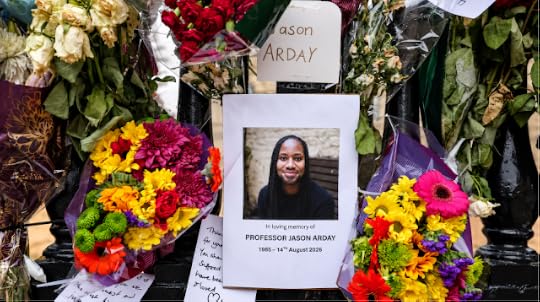
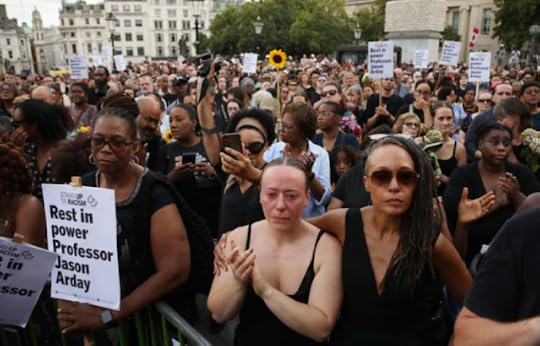
Thousands mourn the late Cambridge professor Jason Arday in Trafalgar Square
Thanks to Netgalley and Simon and Schuster for an ARC of the book.
The Publisher Says: With the power of Educated and the emotional sweep of When Breath Becomes Air, Great and Unfortunate Things is the inspiring, underdog story of how an autistic, non-verbal boy who society had all but given up on found his voice, literally and figuratively, became one of the youngest professors in the University of Cambridge’s history and put himself in a position to give back.
Jason Arday was born the second youngest of three boys and grew up in a colorful and lively section of South London. At three years old, he was diagnosed with autism and development delays. Experts told his parents that he would never be able to speak, write, or live independently. An institution would best serve his needs, it was suggested.
His parents would have none of it. Instead, thinking outside the box and drawing on her faith, his extraordinary mother Giff embraced his neurodivergence and fiercely dedicated herself to helping her son realize a potential few others believed was possible. Giff drew on proverbs from her West African culture, popular music by the likes of Enya, and comedic television shows and movies to help Jason make sense of the world.
In Great and Unfortunate Things, we see how Arday went from being nonverbal until he was eleven and illiterate until eighteen to becoming a professor at Cambridge. Without romanticizing the struggle, it’s a story of a son’s determination against insurmountable odds and how his family and a band of ordinary people with extraordinary compassion joined forces to encourage Jason to believe in himself and maximize his capabilities.
This is the story we need right now, and Arday, who believes in paying it forward, is the kind of figure the world can use more of now more than ever.
I RECEIVED A DRC FROM THE PUBLISHER VIA NETGALLEY. THANK YOU.
My Review: I avoided talking about this read after the tragic ending of the online attacks against Author Arday. It needs saying that this horrifying event should ever have happened, that it truly ought to reinforce in we-the-readers' mind that literally every accusation is a confession.
On to the read.
Someone needs to be enormously lucky to find people who offer this much support, this level of kind and sustained attention. Of course it didn't hurt that Author Arday was an attractive young man, and clearly quite charismatic. It was a case of luck coinciding with fertile ground for the luck to take effective root in. A tutor who committed his time and effort to help his fellow student pursue a huge goal, college graduation, after only very recently learning to read and write because a co-worker (later girlfriend, then wife) taught him to do so using readily available phonics courses? Support pouring in for a publicly documented goal of running 30 marathons in 35 days...a goal he achieved as the public record shows? It was an extraordiary life lived in a very public and vocal way. t is aways sad when allegations are assumed to be enough proof to, from the outside, judge a person guilty of misconduct. There is nothing like overachieving to attract scrutiny, but it's not always as dire as sensational headlines make it sound.
Its tragic ending ought to be the impetus for this inspiring, if somewhat gee-whiz in tone, story to climb bestseller lists. It is a sin and a shame the reason it is now likely to be the bestseller it's always, on its merits, deserved to be. A tarnished reputation is not a reason to think less of the real and difficult achievements of an imperfect, ambitious man.
I was so curious about this book, given the media circus that accompanied it. But it reads more like a flight of fancy that becomes increasingly desperate as it tries to maintain internal consistency. In places you can see the hand of the ghost-writer (Eve Claxton) trying to keep it on track.
It isn't very interesting material in the end, as insight into the subject's mind; the stories soon stop being believable, and tropes drawn from other media & deus ex machinas get repetitive. Personal anecdotes from early life that might be interesting on their own are less so once it seems clear they were constructed later in life to make a good story.
Taken as a work of fiction, the writing and pacing are poor. Most of the surprises are absurd and unrealistic, there is no believable character development, and the reader is left believing things about psychology and physiology that are false. I stopped reading half way through and skimmed the later half.
What an incredible journey for one person to take. I had not heard of Jason Arday before seeing this book on NetGalley and was drawn in by the chance to learn more about the challenges facing a neurodivergent person in today’s world.
This is a memoir that provides a clear chronological outline of Jason’s life and challenges from his birth to his appointment as a the youngest black professor at Cambridge. He provides a detailed description of all the significant events in his life that shaped him and lead to his ultimate success.
This is very much a testament to maternal love. Jason’s mother, Giff, is the center of his world for so much of his life and the force that pushed past all of those who challenged Jason’s potential and denied him opportunity and fair treatment in his early years.
This book was very educational about the different aspects of autism. The information and the details of Jason’s life are presented clearly and logically but not in a particularly emotionally engaging way. This doesn’t make the story any less important, valuable or informative. It just sets the tone for the delivery and is the main reason my 3 star rating.
Jason is an endearing and triumphant character who has had an amazing and eventful life so far!
Thank you to NetGalley, Simon & Schuster and Jason Arday for the opportunity to read this ARC and share my thoughts!
Great and Unfortunate Things by Jason Arday is a memoir that chronicles Arday’s experience growing up with autism spectrum disorder and developmental challenges in the United Kingdom. Through personal stories, he reflects on his struggles with communication, his experiences within the British educational and medical systems, and the obstacles he faced on his path to adulthood. The memoir explores disability, social mobility, and the people who shaped his development.
What stood out to me most is the central role of his mother, who remains a grounding presence throughout the narrative. While doctors, therapists, and educators often focused on limitations, she consistently emphasized possibility and adaptation. The book highlights the tension between professional expectations and individual potential, showing how diagnoses and predictions do not necessarily define a person’s future.
At the same time, Arday’s development is shown as the result of a wider support network. Alongside his mother, he was encouraged by family members, his wife, friends, mentors, and educators who believed in him, even when they were not specialists in disability education. This support, along with activities such as sports, snooker, sewing, and community involvement, helped foster confidence, connection, and independence.
I found this to be an engaging and thoughtful memoir that balances difficult experiences with hope, resilience, and the importance of community. More than a story of personal achievement, it is a reflection on the value of support systems, the dangers of defining people solely by diagnoses, and the impact that belief and opportunity can have on a person’s life.
Thanks to NetGalley and Simon & Schuster for providing an advance copy.
Listened to the audiobook. Narration was excellent. This story is quite fantastical. Sounds unbelievable and extremely embellished and fabricated. After reading all the controversy about plagiarism and contradictory information about him being nonverbal, and the fact that he ran all these marathons with no training and picked up reading so easily and was neurodivergent and dyslexic and epileptic, and yet so easily without special training or years of therapist magically learn to read and write and run super marathons And after reading the Salt Path book and listening to the podcast called The Walkers and learning how the author lied about everything she wrote, it’s difficult to believe 75% of what’s in this book.
How did a publishing company publish this? And as a memoir?! Did they do any research to make sure it wasn’t all BS? It’s so unbelievable, it had to have raised a few eyebrows. I rolled my eyes so much I gave myself a headache! Maybe as a work of fiction, it could work? Not sure though. Would still be a tough read.
Memoirs are always difficult for me to review. They are a retrospective account of someone's recalled experiences which are always subject to polishing, embellishing, and boxing up of skeletons in the closet along the way. They author presents themselves as they wish to be seen which may be in fact their own truth but not exactly THE truth. Recalling childhood experiences adds a fuzziness of details and a recollection of experiences see through a child's lens that may be supplemented by parental and familial recollections dimmed by tincture of time.
About midway through reading this memoir, I became aware of the academic allegations surrounding Dr. Arday. I am not in a position, nor do I have access to the necessary information, to validate them, refute them, or modify them. That is the responsibility his academic institutions he attended and was employed by to investigate and work out. It is not the press's or politicians' or social media influencers' responsibility or entitlement either.
What I can say after having read this book is that this man had lived with neurodivergence his entire life and many people discounted him along the way. This book is a love story to his mother who advocated for him at a time when kids with moderate to severe autism were locked away and not even given a chance to work on their abilities. Even if only half the content reaches verifiable "truth", his life is still an inspiration to other kids and adults living with autism. It is not the most eloquently written, though that may be expected based on his dyslexia. A lot of memoirs out there would receive similar critique. What makes me angry is that this an individual with self-disclosed recent mental health concerns, including suicidality, was bullied and hounded by the press and social media keyboard warriors in the months, weeks, days, and hours leading up to his death. No one deserves that level of intrusion into their personal lives, and not for the allegations swirling about. Even if true, did they warrant media staking out his home? To purposefully harass someone who clearly has a degree of emotional fragility is at the least inhumane and potentially criminal ... anyone with reasonable sense could intuit that after reading this book. I feel for Dr. Arday's family who lost someone they so loved. This is a tragedy that never should have been allowed to happen.
3.5 stars
Thank you to Simon & Schuster | 37 Ink and NetGalley for the opportunity to read and review this ARC.
Dr. Jason Arday was diagnosed with autism and global developmental delays at age three. Naturally, his parents were devastated, especially since his older brother, Joseph also had the disorder. Not only that, but doctors immediately told them that Jason would never live a meaningful life, and suggested that they institutionalize him.
Fortunately for him, Jason's parents flatly ignored their advice, especially his mother, Giff. She worked tirelessly to raise him as normally as possible, while at the same time, ensuring that he got the help he needed,
Jason didn't speak until he was eleven, and he didn't read or write until he was eighteen. Not only did he go to college, he earned a Ph.D in sociology, and went on to become the youngest professor ever at Cambridge University.
Great and Unfortunate Things is Jason Arday's personal account of his extraordinary journey, and the people who helped him along the way.
I love the fact that Jason was willing to be so open, even though I'm sure it was emotionally challenging for him to relive a great deal of it. I'm so glad that he was, though, because I know that the book will help a lot of people - I don't have Jason's disabilities, but I have others, and reading the book has helped me see that Jason and I still have a lot in common, and the fact that he was so open made me feel less alone. There is very little I don't like about the book, except perhaps for the fact that it ended!
The book made me laugh, cry, smile, and feel angry. Some of the same things that happened to Jason also happened to me as well, so sometimes it was hard for me to read, and I would have to stop for a while and come back to it a little later. That wasn't Jason's fault, it just shows how powerful the story is.
I would recommend Great and Unfortunate Things to anyone who needs to read a real story about the triumphs of someone who society considers an underdog.
I"d like to thank NetGalley and 37 Ink/Simon & Schuster for giving me the opportunity to review this book.All of the opinions expressed in the review are mine, and I'm leaving it of my own volition.
I am separating the author from the book as the author has lots of things people are digging every passing day. But the book is misleading. It's fiction, not a 'memoir' as many details are so absurd and inaccurate.
3.5⭐️ Thank you to NetGalley for the advanced ARC.
Before reading this memoir, I had never heard of Arday, but was excited for his memoir. While it was promoted to the likes of Westover’s Educated, the writing was less extraordinary, but remained consistently interesting throughout.
Arday presents the defining events of his life in a matter-of-fact manner, often prioritizing chronology over emotional excavation. The memoir clearly maps out the people who shaped him — especially his mother, mentor, and wife — but spends less time unpacking the inner shifts that allowed those influences to take hold. Major turning points arrive with little sense of his internal world in those moments, leaving the reader aware of what changed without fully understanding how those changes felt to him.
All and all I enjoyed this book and would recommend to other readers.
I don’t really want to leave a review as all I knew was an autistic man becomes a professor. There is so much more to this book. I just want to say read this book - know nothing and take the amazing journey with Jason.
Jason Arday (1985-2026) was a British academic from a British-Ghanan family. Arday was found deceased on August 14, 2026, after a public fall from grace and widespread and founded criticism of academic plagiarism that undermined his professorship at the University of Cambridge. His memoir, Great and Unfortunate Things, written with British writer Eve Claxton, was published in the US on August 11, 2026, and is due to be released in the UK on August 27.
I came into this book (specifically, the audiobook version, narrated by the author) not knowing any of Arday's history and not realizing he had just died. I picked it up because I enjoy memoirs of all stripes. I had gotten to around the 60% mark, after being tempted to DNF the book several times and skipping ahead at least once, and after one too many stories Arday told about being unfairly persecuted, decided to Google him, and that's when all the pieces clicked into place for me.
Narratively, this book isn't particularly well-written (despite having a professional writer as a cowriter); it's repetitive, self-aggrandizing, and portrays the author as a beyond-belief prodigy with a simultaneous savior complex and persecution complex. My issues started early on with hours of narration on the author's childhood. I generally think 40ish is on the youngish side to write one's own memoir because one generally doesn't have the decades of life experiences to effectively contextualize and sublimate one's own lived experiences to a more universal narrative. I don't think Arday lived long enough to contextualize his own, unfortunately. He writes of growing up nonverbal and illiterate and on the autism spectrum, but being destined for greatness anyway because he was born with long fingers, had a random woman on one of his volunteering jobs tell him he was special, and had a very determined mother who spent hundreds of hours expertly coaching him whilst not being trained as a special education teacher or therapist. Despite struggling academically and allegedly being unable to read or write at 18, he writes about how unfair it was that dozens of colleges wouldn't admit him. He writes about how despite being nonverbal for years, he had extraordinary ability to listen, emotionally relate, and have people open up to him about their darkest secrets. He brags about raising substantial amounts of money for charity through methods that sound quite implausible, like running 30 marathons in 35 days, finishing this already superhuman task after breaking his leg on day 21 (see this substack piece from a fellow academic analyzing the plausibility of this claim here). He writes about being mugged and beaten to the point where he was hospitalized and developed a seizure disorder by three young people, only to have several of those young people later take one of his college level classes and ask him to be the godfather of one of their children.
Jason Arday died at age 41 on August 14, 2026, just 9 days after resigning from his professorship at the University of Cambridge.
He resigned because of allegations of plagiarism in late July 2026.
In his resignation statement on August 5, 2026, he said the intense scrutiny had affected both him and his family, “The relentless accusations, speculation and public commentary have taken a profound toll on me and on those I love.”
He stressed that his resignation was not an admission that the allegations against him were true. He specifically said his decision should not be “mistaken for an acceptance of the narratives that have surrounded me.”
The controversy led to investigations by the University of Cambridge and widespread media coverage. From July to August 2026 one media census initially reported 249 articles across 15 British outlets during that period. Some have characterized what happened as a “modern-day lynching” or “digital lynching”
In just 22 calendar days, Jason Arday went from being the subject of plagiarism allegations to having virtually every aspect of his academic career and personal history publicly dissected across hundreds of news stories and social-media posts. The speed, volume, and intensely personal nature of the scrutiny was astounding.
The American academic and former Cambridge researcher (I refuse to name him) that brought the plagiarism allegations against Arday has an interesting biography. In 2024 he was let go from his fellowship following controversy over writings about race and intelligence and a blog post concerning Black academics. He describes himself as a “race realist” and denies that his views are racist arguing that researchers should be open to the possibility that genetic differences among geographic populations could partly explain measured group differences in intelligence.
Jason Arday was a British sociologist, educator, and author. He was diagnosed with autism as a child. He was nonverbal and couldn’t read and write until he was 18yrs old. He overcame significant communication and educational challenges before pursuing higher education and earning a PhD in education. At 37, he became the youngest Black person appointed to a professorship in Cambridge’s history, an achievement that brought him international attention.
I first heard about him when his memoir, Great and Unfortunate Things, was being promoted. It was released August 11, 2026. It was one of my most anticipated memoirs of the year.
I was sad to know of his death and of the details leading to his death. His memoir is an account of the amazing people in his life that believed in him, mainly his mother, and that helped him believe in himself. This memoir is an amazing account that there may be obstacles but people can overcome them when they have a support system and are allowed the chance.
If you’re a teacher of anyone at any age I highly recommend this read.
Great and Unfortunate Things by Jason Arday should be a must-read for all people. The challenges that Arday went through and the expectations that he shattered throughout his life so far are so inspiring and communicate the main message of: no matter your circumstances in life (socio-economic, race, disability, health, etc) you can still achieve great things and live life striving to be your best self. As an Autism specialist for a school district, I very much enjoy hearing testimonies like Arday's. More people need to hear these and see that everyone is valuable to society and early intervention should not have a "cookie-cutter" way. His mother is his champion throughout this, providing evidenced based practices for autism before that term was even coined. Thank you for writing this book. Thank you for sharing your story. Now let's get this into hands to read it and hopefully change perspectives for the better. Review for Netgalley and Simon and Shuster.
The inspiring story of Jason Arday, who was diagnosed as autistic, didn't speak until the age of 11, didn't learn to read or write until the age of 18, and went on to become a professor at Cambridge University. I'm not rating it higher because I find some of his story a little bit difficult to believe - specifically two things - his mother is a perfect saint, and many, many people Jason met in his life told him they knew he was destined to do great, world-changing things. I'm also a little cautious about books like this because I wonder if they cause mothers of autistic children who remain non-verbal and non-literate feel like they just didn't tell their child "You can do anything!" often enough. And that would be a shame. Thanks to Netgalley for the advance review copy.
Update: After writing this review I heard that the author had been accused of lying about his past and plagiarizing some of his academic work. He took his own life yesterday. Reading his memoir made me feel like I knew him, to some extent. The news of his death has made me so sad.
3.5 stars. I had the audiobook on hold before the release date as the topic sounded very interesting. Knowing everything that has happened since, it was hard not to think about the author and the circumstances that made him feel that suicide was the only solution. His story is quite amazing, even if some of the instances may or may not be true, as a nonverbal person of color whose mother was told he would never amount to anything. There of course was a sadness as I listened to his hope and feeling proud/happy that he had realized a dream, knowing that this accomplishment would lead to accusations and creating a dark cloud over his reputation. His story is interesting as it shines a light but it didn’t have a story arc or a perspective for the storytelling. It felt like a list of what happened in his life. I realized that’s probably what differentiates a good memoir from a great one.
‘To this day, everything I do is scrutinised and challenged in a way that almost never happens to my white colleagues. For every new position I’ve attained, there has always been someone doubting that I’ve arrived there on merit. This constant questioning of our abilities is a phenomenon that I and many other Black people seem to have to learn to live with.’
Yes this is an autobiography and needs to be read with the bias that brings in mind, yet this is also an account of what it was like growing up in the UK black and autistic, and how hard it is for Black people to break into the elitism of academia. It also shows how powerful it is having people in your life who demonstrate unconditional love and belief in you…and the difference teachers can make to individuals. So many parts in this book hold extra poignancy following Professor Arday’s tragic death. A sad but important read.
This entire review has been hidden because of spoilers.
I had no idea he just died when I started listening to his book. I find his early years truly remarkable, especially the tenacity of his mom in figuring out what helped him. I have no doubt he’s helped others with his pursuit of higher learning.
I hope he rests in peace, and his family do well from the book, which no matter how successful I'm sure they would trade it all for more time with their loved one.
Unfortunately this is not worth reading for anything other than morbid curiosity. It is terribly written and almost every sentence feels padded with unnecessary descriptive words, and what exactly was the ghost writer doing with him?
So many of the things that are in this see him as the put upon, infinitely merciful main character of the world. Most of the time it feels more like parables teaching tiktok level self-help with fairy tale logics, rather than something anyone could take anything practical from. It feels tongue in cheek when the mother uses Forrest Gump to teach that learning challenged people can succeed.
While almost all of the speaking/writing claims are amazing, as someone with minor learning difficulties the idea of a recently-verbal illiterate child having to do Spanish (which is just plopped down as something he was doing in class, with no details of tutoring or other arrangements) feels like the point when whoever was fact checking and editing this just didn't care. Also on the same point, the speech therapist's relationship with him starting to speak is very much underplayed and tainted with the shaking allegation, the whole thing is just very dark, angry, and confused.
Maybe everything here is factual, maybe this is an expression of his particular experience of the world, but it really didn't work for me as a book. One wonders what this would have looked like if he didn't have the media witch hunt, I believe due to the combination of silly season and racists. Would the book have brought critical attention in itself, or just been something just for the fans?
Not sure this is a helpful review, so might delete, but yeah couldn't recommend this.
This entire review has been hidden because of spoilers.
A truly wild and interesting story! It really highlights the power of a support system and the impact of a mother’s unwavering love and belief in her child. I will say, I did find myself struggling to want to pick up the book and felt like it was missing a bit of emotional depth and connection. But I always appreciate learning about a life and perspective so different from mine.
How sad that the very weekend that I started reading this book (unaware of the controversy swirling around it), the author was found dead by his own hand. A link to this article in the Atlantic was in my email today. [https://www.theatlantic.com/culture/2...] I'm choosing not to continue with it.
Jason Arday grew up during a time when autism was still widely misunderstood. Despite what doctors and therapists told his mother, Giff, he defied every expectation placed before him. Raising Jason largely on instinct, Giff understood her nonverbal son in a way no one else could. Jason’s brother is also neurodivergent, and Giff instinctively recognized not only their differences but also their unique gifts. When it came to Jason in particular, she believed in him with a conviction that no one else seemed to share.
It took Jason eleven years to become verbal and another seven years to learn to read and write. Yet this remarkable young man would go on to become the youngest-ever Black academic to hold a professorship at the University of Cambridge, as well as one of the youngest professors to hold a professorial chair at Oxbridge. His achievements are nothing short of extraordinary.
This memoir beautifully illustrates the profound influence Giff had on Jason’s life. It also shines a light on Sandro, a kind Brazilian man who took a chance on Jason and ultimately became both his mentor and his friend. Along the way, others also stepped into Jason’s corner, seeing his potential long before the rest of the world did.
That is not to say Jason’s journey was ever easy. Far from it. Time and again, he faced adversity that could have discouraged even the strongest person. Yet he continued to persevere, overcoming one obstacle after another. This memoir is much more than a recounting of the milestones that brought him to where he is today. It is a story of resilience, determination, and the extraordinary impact of those who believed in him when he needed it most. It is also a testament to how Jason has dedicated his own life to paying that belief forward.
Great and Unfortunate Things has drawn comparisons to Educated by Tara Westover and When Breath Becomes Air by Paul Kalanithi. Although I have yet to read either of those memoirs, I can certainly understand why the comparisons have been made. Jason Arday’s story of finding his voice, overcoming impossible odds, and becoming the inspiring man he is today is one that will stay with me for a long time.
Many thanks to Ink and to NetGalley for this ARC for review. This is my honest opinion.
Edit to my review: It has come to my attention that there is a lot of controversy on this book. For that I am editing my review.
In all the controversy I still will say this Giff man if I could spend 10 minutes with her I would. The strengthen and complete embodiment of fighting and advocating for your children. As a mom of three boys the 1 thing that sticks with me is that she never ever gave up. Not even after being told so many times to basically stop. She showed up for her children she pushed the boundaries and kept asking the questions but never ever threw in the towel. She is who I hope to be as a parent. I think no matter what I will take that from this book how important it is as parents we stand up for our children, they see us standing up and fighting for them.
I think there are many lessons in the book and learnings surrounding autism, advocacy, treatments etc. Are there better books that do that I am sure there are I haven’t had the pleasure of finding them. However I do not want to negate that there are some really important themes whether fact or fiction about his life that are still important to discuss. Maybe they need to market this as more of an adaptation of how he viewed his life or fantasized it was rather than 100% truth. However since this is currently marketed as a memoir I can’t in good conscience keep the high rating as it is deceiving (it’s like another book we all have to remember from years ago doing the same thing 😬🤷🏼♀️).