What do you think?
Rate this book


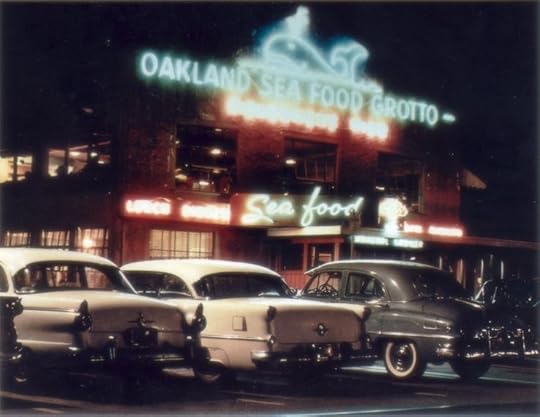
Set in the San Francisco Bay area in the late 1950s, Humpty Dumpty in Oakland is a tragicomedy of misunderstandings among used car dealers and real-estate salesmen: the small-time, struggling individuals for whom Philip K. Dick always reserved his greatest sympathy.
Jim Fergesson, an elderly garage owner with a heart condition, is about to sell up and retire; Al Miller is a somewhat feckless mechanic who sublets part of Jim's lot and finds his livelihood threatened by the decision to sell; Chris Harman is a record company owner who for years has relied on Fergesson to maintain his cars. When Harman hears of Fergesson's impending retirement he tips him off to what he says is a cast-iron business proposition: a development in nearby Marin County with an opening for a garage. Al Miller, though, is convinced that Harman is a crook, out to fleece Fergesson of his life's savings. As much as he resents Fergesson he can't bear to see that happen and - denying to himself all the time what he is doing - he sets out to thwart Harman.
260 pages, Kindle Edition
First published January 1, 1986
…as a sequel to John Steinbeck’s The Grapes of Wrath (1939), recounting what happened after the “Okies” got to California: They settled down, lost their way, ran used-car lots, and became “humpty dumpties”—passive spectators of the American Dream.Dick himself described the work as “a novel about the proletarian world from the inside” as opposed to one written, say, by a middle-class writer. It’s a fair description because the book’s central character is a one lot used car salesman who will probably die a one lot used car salesman. He’s jealous of those who’re more successful than he is and yet when luck shines on him and he gets offered a leg up he does everything in his power to scupper his chances of success.
The vacillation of the characters and the uncertainties around the purpose of their movements resulted in novel forms and narrative structures that seemed to wander rather than proceed with any sense of purpose towards a conclusion.He then basically gives Dick the opportunity to respond by quoting from a letter he wrote in 1970:
I set up my characters; I set up his worlds; then I have him begin to lose his world as he knows it […] I am writing about a man or men who have lost control or are losing control of their worlds. By making this my subject I am denying that this world really is as we see it…That is a fair description of what happens to Al Miller in this novel. His is a mundane life and he’s well-suited to it even if he’s not always happy with it; ruts are not always bad things; there is comfort in the staticity (the status quo-ness, if you like) of the quotidian. The news he’s going to lose his livelihood is jarring and then when faced with the possibility that he could be something else he panics. We get to watch the proverbial car crash in slow motion.