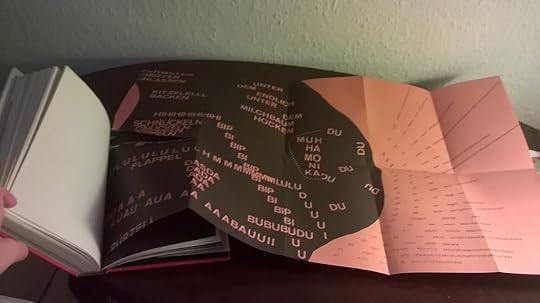
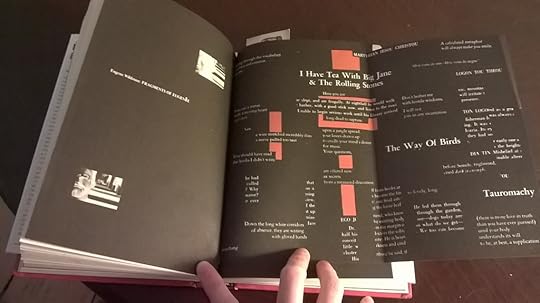
Eugene Wildman is professor emeritus of English at the University of Illinois at Chicago and a former editor of the Chicago Review and a winner of several Illinois Arts Council awards for fiction. His main interest is in the short story, though most of his early work was experimental. He was the editor/"composer" of the Chicago Review Anthology Of Concretism, the first collection of visual poetry to appear in this country; that was followed by Experiments In Prose, an assemblage of nonlinear and mixed media texts. These had an international impact and brought French, German and Latin American experimentalism into sharp focus here. These print-objects are still found at book fairs and mixed media exhibits in Eastern Europe, South America, and even Canada, where a radical aesthetic remains more current. Wildman is also the author of two experimental novels, Montezuma's Ball and Nuclear Love, but in time his work became more realistic as he grew disillusioned by the lack of interest in character and the overemphasis on form in experimental writing. His main interest is contemporary fiction, and his short story collection, The World Of Glass, was published in 2003 by the University of Notre Dame Press.
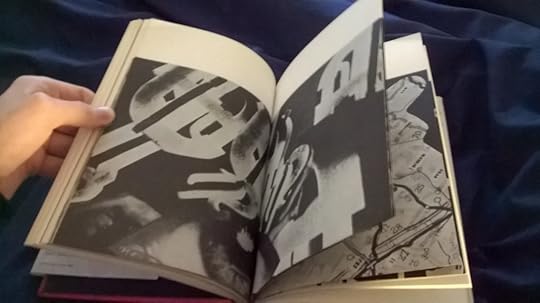
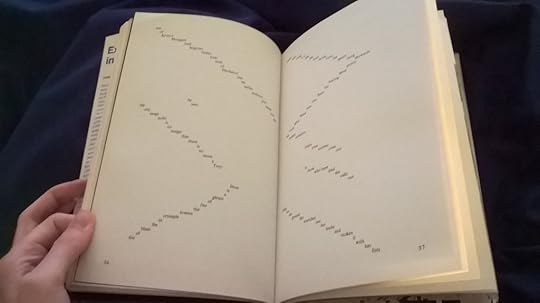
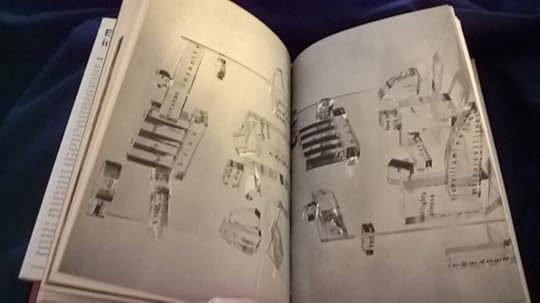
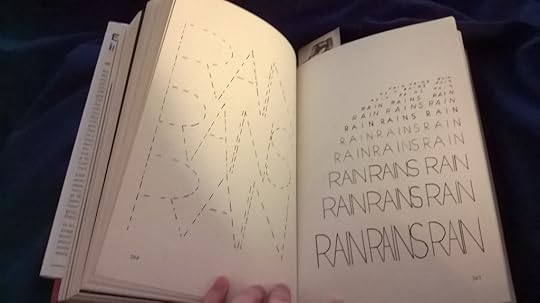
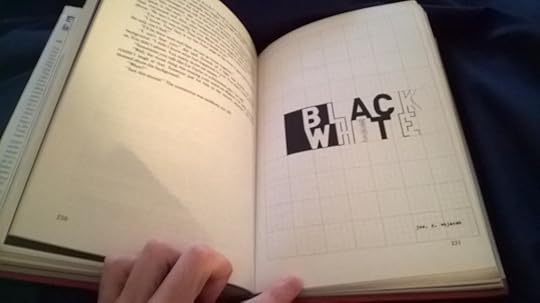
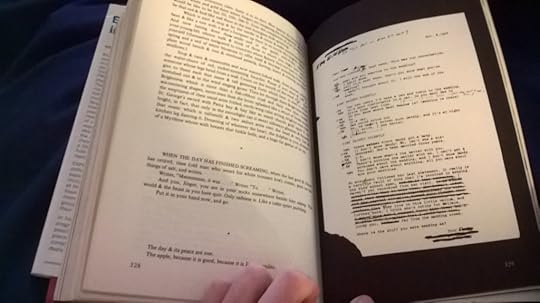
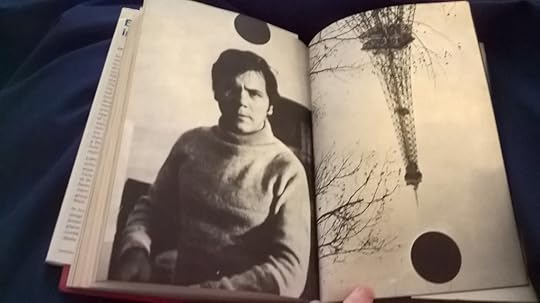
In a Greenwich Village loft one summer in 1968, a hotshot editor named Eugene Wildman sat puffing on his pot to the music of the Mothers [of Invention], while numerous far-out artists limned their visions for the Future of Text in All Media. Among the hepcats present, Bruce Kaplan posited that transcripts of protests in the name of peace were the future, that the docu-novel must flourish; John Mattingly said that prose descriptions of stageplays formatted with creative tabulations were the hippest beat; Jochen Gerz said that words in large fonts printed on paper, or even random letters splattered across paper, was the revolution daddio; Charles Doria said concrete poems snaking up and down the page were the come shot; An Pei said repeated baby babble made for a bright new babel; Herb Dupree said writing shit down without even reading over what had been was written was bound to bloom; Jean Francois Bory said collages of Egyptian imagery and naked women with huge embossed letters were the bankers; John E. Matthias said stories with Ancient Greek characters about Anglo-Saxon grammar were what the common man craved; Shouri Ramanujan said faux-lyrical blather in an elevated style was the prize-bagger (how right she was!); Alain Arias-Mission said that four characters in an Oedipal drama speaking simultaneously was the ticket; Ronald Tavel said a 70-page absurdist farce riddled with terrible puns and sexist humour is the route to riches; William Hunt said boring prose with no notable innovations at all is the secret to enshrinement (how right he was!); Odessa Burns said a stageplay featuring the protracted killing of Kafka is what rocks; Richard Kostelanetz said the word ‘rains’ printed in various fonts and positions on paper is something someone somewhere might believe constitutes art; Steven Katz said three of his least inspired fictions showcasing no notable talents powers the skidoo; Richard Astle said a failed attempt at a computer-program-inspired hypertext in the (pre-)manner of Brooke-Rose and Roubaud prickled the interest; Tristres Delarue said a clunking issuetastic play about race (one of several in this collection) was the whizzer; Robin Magowan said slavish adherence to sub-Joycean wordplay was the one path to pleasure; and Julien Blaine said pictures of tall buildings with a dot atop each was something to do with literature. Some time around 3am, Wildman commissioned a book to be printed and in the morning the book arrived. To much shakings of heads and regrets.