The detailed private diary Pepys kept from 1660 until 1669 was first published in the 19th century and is one of the most important primary sources for the English Restoration period. It provides a combination of personal revelation and eyewitness accounts of great events, such as the Great Plague of London, the Second Dutch War, and the Great Fire of London.
The sixth edition was published in eight volumes between 1893 and 1896 with Henry Benjamin Wheatley, “an accomplished London antiquary and bibliophile” as editor. This time almost the entire text was printed, and most (but not all) omissions were indicated by a series of dots. While it was a substantial improvement on previous editions there was some Victorian censorship (eg, “‘pissed’ gave way to ‘dirtied’”) and some almost unexplainable changes. Wheatley added many footnotes on a wide range of topics from London topography to theatre and in 1899 published two extra volumes; an index and Pepysiana, a collection of further information about Pepys and the diary.
Samuel Pepys was an English naval administrator and Member of Parliament, who is now most famous for his diary. Although Pepys had no maritime experience, he rose by patronage, hard work and his talent for administration, to be the Chief Secretary to the Admiralty under King James II. His influence and reforms at the Admiralty were important in the early professionalization of the Royal Navy.
The detailed private diary he kept during 1660–1669 was first published in the nineteenth century, and is one of the most important primary sources for the English Restoration period. It provides a combination of personal revelation and eyewitness accounts of great events, such as the Great Plague of London, the Second Dutch War and the Great Fire of London.
His surname is usually pronounced /'pi:ps/ ('peeps').
"I have been troubled this day about a difference between my wife and her maid Nell, who is a simple slut and I am afeard we shall find her a cross-grained wench." - Diary of Samuel Pepys, Vol II 1961
Volume 2 in Pepys' diary is the second shortest year (and shortest published volume) coming in at 84,000 words. 1669, the last year, has less words (69,000) because it is only a partial year, but typically this volume is published together with 1668.
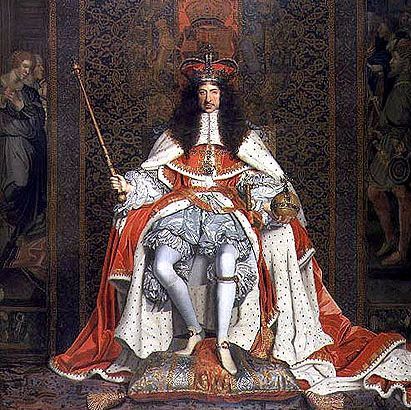
1661 is an interesting year for Samuel. King Charles II was crowned at Westminster Abbey on 23 April 1661. Admiral Sir Edward Montagu (aka Lord Sandwich) is gone shortly after on a mission for the King as Ambassador to Portugal and to retrieve Catherine of Braganza, from Lisbon to England, to be the new Queen. Pepys keeps busy with work and family. He sees his personal fortune grow, but worries that his eating, drinking, and time at the theatre is reducing his money. He also worries that due to some complication with his uncles will, their family will not inherit as much as they should. His mother is starting to mentally become more simple and argumentative (dementia) causing troubles for Sam's father. More and more people are getting sick and some good friends and family of Samuel have died. I keep on having to remind myself that he is only 28.
The year of our lord 1661. King Charles II dissolves an ever so factious Parliament December 29th last. Samuel Pepys is worth £300, no debts.
London is in an uproar from early January as Thomas Venner and his small following of fifty men terrorise the City: the shops are closed, people up in arms protecting their households. They are the Fanatiques, a religious sect intent on taking the throne in the name of ‘King Jesus’; a serious enterprise as Samuel tells of their killing twenty men and breaking through the City gates twice in one day. All ever more serious as the Coronation is days away, Samuel noting on the multitudes of scaffoldings and embellishments across the city.
Fun times though for Samuel and another year of firsts: first time he ever sees a woman on stage, first time he sees a baboon, first time he eats a mellon, tastes chocolate and has his first portrait done (unfortunately it did not survive).
Tis a year of drinking and debauchery, as Samuel himself admits. His Lord, the Earl of Sandwich spends most of the year at sea, tasked by the King to bring his bride and new Queen, Katherine of Braganza to London and Samuel spends it taking care of his Lord’s businesses, vowing to stop drinking and breaking it, renovating his house and meeting well placed people, he even attends one of the first meetings of the Royal Society, before it had even been founded and gets acquainted with Sir William Penn’s son, the man who will have founded the state of Pennsylvania.
Onwards to 1662, but I leave you with my favourite entry of this year.
Sunday, 19 May 1661:
“Then to my Lord’s, where we went and sat talking and laughing in the drawing-room a great while. All our talk about their going to sea this voyage, which Capt. Ferrers is in some doubt whether he shall go or no, but swears that he would go, if he were sure never to come back again; and I, giving him some hopes, he grew so mad with joy that he fell a-dancing and leaping like a madman. Now it fell out so that the balcone windows were open, and he went to the rayle and made an offer to leap over, and asked what if he should leap over there. I told him I would give him £40 if he did not go to sea. With that thought I shut the doors, and W. Howe hindered him all we could; yet he opened them again, and, with a vault, leaps down into the garden:— the greatest and most desperate frolic that ever I saw in my life.”
From BBC Radio 4: 15 Minute Drama Kris Marshall returns as the famous diarist. As many of us do, Pepys begins the year - 1661 - with a resolution: to restrain himself in the expensive pleasures of theatre-going and drinking. He fails spectacularly on both counts. Free, for once, from builders, Samuel and Elizabeth are living happily in Seething Lane with their servants Jane and Will. All is well, until Sam's sister, Paulina, moves in with them - not as a family member and equal but as a third servant. Preparations are in hand for the Coronation of King Charles but the city is on alert for the nonconformist Fifth Monarchists who believe that Jesus is about to return as 'King of Kings'. Their leader, Thomas Venner, is caught, hanged, drawn and quartered. In the unseasonably warm winter weather, the bodies of Cromwell, Ireton and Bradshaw are exhumed and hanged. Elizabeth goes to see the spectacle but Samuel stays home.
The King has settled in and executed more people than I realised, arranged his marriage and a mistress; Samuel Pepys' wealth increases but that brings him servant problems, and also legal ones to do with an inheritance. The little details about life in Restoration London are fascinating - both the lavatorial and the more aesthetically pleasing. (lots of plays, music, and some fancy attire are described). SP does seem to have what one might call anger management issues at times, though most of the time he comes across as quite genial.
1662 starts with Pepys explaining that he is settled in one of the houses belonging to the Navy office ‘after much trouble with workmen’ (some things never change). 3rd January brings a momentous occasion, a trip to the Theatre ‘where was acted Beggar’s bush - it being very well done, and here the first time that I ever saw Women come upon the stage’. Many more trips to the there are follow, Pepys was a passionate playgoer. There’s lots of fun on Twelfth Day (6th January) with cakes and dressing uo, and on Valentine’s Day Pepys is obliged to take Martha Batten for his Valentine (he is not very enthusiastic but wants to keep in with Sir William Batten). There are accounts of important events, the major one for this year being the King’s coronation, but just as important re the little things, like Lady Batton being given a parrot ‘for talking and singing I never heard the like.’ Music and singing were very important to Pepys ‘I took my flagilette and played upon the leads in the garden’. There’s plenty of eating and drinking, and lots of oysters are consumed, and on 27th September Pepys is excited to be given some grapes and ‘Millons - the first that ever I saw any.’ Whether Pepys is attending a coronation or just dropping his hat in the river, he is always entertaining.
If I live long enough I would really like to read all 9 volumes of Pepys' Diary, but it is quite an undertaking. 1661 was a relatively mundane year in Pepys' life, in which he inherited property from his uncle (not without a lawsuit), continued to work at the Navy Office and for the Privy Seal, went often to the theatre and became enamoured of plays, drank too much at a boatload of taverns, swore off both plays and wine several times, tried repeatedly to settle his lawsuit (without success), visited with Lady Sandwich and her brood of children nearly every day while both waited for Lord Sandwich to return from Tangier with the new Queen (who I believe was a native of Portugal). But, after each eventful day, he returned home to his wife and "so to bed".
The thing about Pepys is that he was a man of his time, totally invested in life in London and in a unique position to provide commentary on both royal and everyday matters. Most days he reports some portion of his time spent with family and/or friends "and we were very merry".
Not a riveting read, but to scholars of the period, this must be a key resource - replete with names of do many people and his to and fro to various meetings throughout London and beyond. Almost every entry talks about vast amounts of food and wine that he got through, and not infrequently, arguments with his staff or his wife. Some things are timeless. His most frequent expression? "And so to bed".
A fascinating insight into history and a glimpse into the personal life of Samuel Pepys, the immediacy of his writing is wonderful and its like reading history as it unfolds. In this year we have the unsuccessful attempt of the Fifth monarchists to seize control of London,the crowning of Charles II, the marriage of Charles and Catharina of Portugal and also Portugal gives Tanger and Bombay to Charles. Political turmoil seems to be at end in comparison to the Interregnum and rump parliament of 1660 and a more formal rule is established with a new monarch as head. Its interesting to see the style of the diary is changing too and we are seeing a new side to Pepys as a person, diary entries are quite erratic in terms of length ranging from a line or two for one entry to at least around 2 or 3 pages for the longest. The writing style is slightly different and often his "and so to bed" ending to an entry is missing. Pepys is showing more of his personality in the respect you are getting more of his thoughts and feelings towards himself and others, he criticises or sometimes praises people depending on his mood and you see a rise in his spending and an obsession with theatre going, even to the point he is making pacts with himself he must stop as he is worried himself as to the amounts of money he is accruing in intellectual pursuits and eating out with friends. A licentious, lusty side is also introduced where he describes how he kisses ladies and admires them for their beauty but is also prone to fits of jealousy over his wife associating with gentlemen who call to their home. All in all a total change in theme, style and manner but very fascinating as you see the man behind the diaries develop and emerge.
The second of nine volumes of diaries written during the 1660s by English public servant Samuel Pepys while he was in his late 20's and early 30's. As Pepys becomes a little more established as a naval bureaucrat under the re-established monarchy of King Charles II, he learns of troubling financial obligations incumbant upon his rising position, and his weaknesses for wine and the theater. He is excited at being the heir of his deceased Uncle Thomas, but finds that the estate contained much less money than expected and business troubles that pre-occupied him much of the year. I learned of this diary through a tribute to Pepys's birthday (23 February 1633) on Garrison Keillor's Writer's Almanac.
Nowhere nearly as interesting as the first volume, this one suffers a bit from the legalese of the settling of his uncle's estate. I didn't really have the patience to sit down and figure out the intricacies of English estate planning. This is one of those years where the abridged volume would help speed things along, but I'm still very much looking forward to 1662 as 2014 approaches.
This cover doesn't look remotely like my Latham & Matthews edition, but I suppose some of the content will be the same. I have become quite addicted to this diary, and although I have so far only purchased the first three volumes, I can see me buying all eleven eventually. A fascinating insight into one person's personal life as well as into important historical events.
Interesting to hear how contemporaries viewed the English Civil War, the Bubonic Plague, and the Fire of London. Not one I would recommend widely, and I will probably not read it again, but it's a classic because the style is unselfconscious and readable.
These are fine, a bit mundane with a few interesting tidbits thrown in here and there. I learned that melons were pretty new in England at this time. Also Pepys enjoyed a good drink and entertainment, I guess not much different from today.
Pepys had an interesting life close to royalty. He was also the neighbor of William Penn's father, a man he did not trust nor like much, but had to work with.
the Pepys diaries are a wonderful time machine that take you back to Restoration London, hilarious, touching and candid in equal measure. like all good books, they make you feel less alone.