Song publishing is the one constant in the carousel of recorded music now spanning the past century, and has been the way that song-credits and publishing revenue have caused ructions and recriminations, and inspired writers by making them poor and lawyers rich.
Whether it be Procol Harum going to court to decide who really wrote 'Whiter Shade of Pale' or the Moody Blues wanting their fair share of 'Nights of White Satin', when the song-credits get divvied up, a parting of the ways citing 'musical differences' is almost inevitable.
So here are some choice examples of poplore held up to the light,some familiar to music fans others not, designed to prove that Dylan knew of what he wrote when he suggested, 'Money doesn't talk, it swears'.
Between them, they provide the unvarnished story of popular song from the days jukeboxes and radio replaced wax cylinders and piano rolls to the era of digital downloads, legal and illegal...
I think this book needed writing, the subject of originality and copyright and who stole from who is crucial in the history of popular music, and Clinton Heylin surely has the spare time and obsessive inclinations to chase down all the leads. But it’s not a pleasant read. It’s a grubby dispiriting story, and it’s not a good sign if you find your particular heroes in the index.
Everyone knows the George Harrison ripped off The Chiffons’ He’s So Fine in My Sweet Lord. I like both records, myself. But 90% of this book is about much less clear-cut plagiarisms. When the recording biz got going in the 1920s there was a vast weltering mulch of traditional song in existence. Who wrote songs was not something most musicians were particular about. They copped from here, borrowed from there, remembered this, adapted that. They swapped stuff with each other. It was fun! Then came records and after that not so much fun. Because with records came copyrights and with copyrights came lawyers and with lawyers came the gaping open mouth of hell itself.
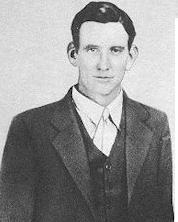
Let Alvin Pleasant Carter of The Carter Family be our poster boy.
A more God-fearing individdle you couldn’t meet in a month of Sundays. When the Carter Family were a hit they needed more songs for the recording sessions. The boss Ralph Peer explained that the money came from the songs twice, once when the people bought them and once when they were played on the electric radio. So everything by the Carter Family was copyrighted as by A P Carter. And they recorded dozens of songs. What a great songwriter AP was, hey. Only he wasn’t; what he did was, he tramped the hills of West Virginia finding old people with good memories (not so easy) and making notes of all the old songs they remembered. Then he pored through many songbooks from the previous 50 years and picked out the ones he liked. After a bit of tweaking they became original carter Family songs just like that, and Maybelle and Sara got going on them.
Since then everyone has followed suit. Which is not to say that songwriters can’t be original – of course they can. Take Paul Simon – he gets caned for two plagiarisms – Scarborough Fair was taken 100% from English folkie Martin Carthy, guitar arrangement and all, and copyrighted to P Simon; and Bridge over Troubled Water was adapted from Mary Don’t you Weep by the Swan Silvertones. Oh and American Tune was a hymn with secular words added. But everything else he wrote – no problem.
Likewise, Dylan – in the beginning he was all unoriginal tunes (Blowing in the Wind = No More Auction Block, etc) but then he learned to write melody and became 100% original (Mr Tambourine Man, Sad Eyed Lady of the Lowlands, Tangled up in Blue, etc). Then later he lost the knack so for the last 10 years has been (brilliantly) pillaging the R&B of the 1950s, so that there are no more original songs on Dylan albums any more.
Does any of this matter in the age of sampling and mashups and whatall? No. If it’s a good record it can do what it likes. Take Dub be Good to Me by Beats International, which on some days is my favourite single ever. This track started out as an instrumental which stole the bassline from The Clash's Guns of Brixton then added the harmonica theme from the movie Once Upon a Time in the West, written by Ennio Morricone. On the top of that Norman Cook added the melody from The SOS Band's single Just Be Good to Me as re-recorded by Lindy Layton. So out of these bits of jigsaw came a fab new creation. A Frankensong, you might ay.
Most of this book is the story of trad folk & blues guys getting stolen from and claiming vainly to have written what was already 50 years old by the time they recorded it in 1931. It’s all a bit tiresome and unseemly. I’m quite a pop music geek myself, but this book out-geeked me by a very considerable distance.
Not as much fun as I thought it would be. 2.5 stars.
An overview of the development of song copyrights and how it has ultimately led to the strangling of creativity in modern popular song.
The tale is told with the authors barbed comments - not always to everyone's taste but they make Heylin's books emininently enjoyable from my perspective.
You will almost certainly find a few myths busted if they had not been already. For example, the saintly Pete Seeger is put to the sword rather effectively.
And whilst Led Zeppelin are renowned for the old blues tunes they based some songs around, it's almost shocking to realise that the supposed authors were just as much plaigarisers as Page & co.
All in all, a good read for those who want to find out about the murkier side of the music business.
Thiis is a long book of stories about people stealing credit for popular songs that they didn't write. Heylin starts with the first pop records in 1914 and takes the story up to 2015, when the book was published.
Heylin documents three varieties of song misattribution. First, artist copyright and claim songs that someone else wrote or that are folk songs with no known writer. Second managers take whole or partial composing credits from unsuspecting artists. Third, music groups fight among the members about who should get composing credit for the songs they record.
Heylin has a boat load of great stories which he tells in a snarky wiseass tone which I enjoy. For example, Led Zeppelin's "Whole Lotta Love", "had more debts than your average Florida homeowner".
It was common is the early years of recorded music for performers to record old songs they learned growing up and copyright them as their songs. W. C. Handy, who claimed to be "The Father of the Blues" recorded scores of old blues songs which he claimed to have written. He did very well financially from the royalties.
The early country stars like Jimmy Rodgers and A. P. Carter, the patriarch of the Carter Family, all copyrighted old time mountain tunes as their own compositions. Of course, in the 40s and 50s, their songs frequently got stolen by the next generation of performers.
The Blues stars of the 1950s and early 60s plundered earlier recorded blues songs Muddy Waters, B. B. King and Howling Wolf all "borrowed" older recorded songs.
The original folk revivalist also liked to copyright songs that they found rather than wrote. Heylin gives examples of Woody Guthrie, John Lomax and Pete Seegar doing it. The theft seems a bit worse because all three of them had a bit of self-righteousness about themselves.
As the Led Zeppelin quote suggests, the stealing old blues songs continues to this day. The British 1960s pop groups were self-consciously stealing American blues songs. The Rolling Stones had to change the credits on a few records when they got caught.
The second type of theft is non-composers taking credit for songs. Music producers and managers over the last 120 years have been almost universally crooked. Since 1900 managers or producers have told or suggested to performers that if they wanted to be successful, they had to play the game, which meant giving the business people a cut of the royalty and or performance rights. Young eager musicians were usually willing to sign over anything to get a record made.
The Beatles, The Rolling Stones, Bob Dylan, pretty much all of the blues and country artists and most pop artists lost large chunks of the money earned from their songs to sharp business guys. The successful artist spent years fighting to get out of onerous contracts and get an honest accounting of what was taken.
Some of the managers were so dishonest that they became as well-known as big-time criminals. Morris Levy and Allen Klein were notorious. Van Morrison, who had one of the worst deals and managers ever, wrote a wonderful song, "The Standard Contract" about his deals. Creedence Clearwater Revival cut a terrible deal. John Fogerty wrote a bitter song, "Vanz Can't Dance", about their manager. The first line was "Vanz can't dance, but he'll steal your money."
Heylin tells a great story of a country artist, Perry Bradford. Bradford was sent paperwork which had him waiving rights to his songs. He wrote back, "Please be advised that the only thing Perry Bradford waves in the American flag."
The last type of song fights is between band members. It is common for groups to start out sharing songwriting credits. If the band is successful and then breaks up, disputes arise. Paul McCartney can't let go to this day that some of "his" songs are Lennon-McCartney songs. Genesis and Pink Floyd fought over this issue for years.
I would have liked a better explanation of what exactly the legal rules are on borrowing songs, melodies, chord progressions etc. In the end these issues end up in court. Heylin quotes the old saying, "Have a hit, expect a writ."
Heylin writes with an attitude. He basically thinks they are all crooks, which lets him tell these stories with the appropriate mix of humor and outrage. He did a huge amount of research for the book, and he has filled it with great stories.
In ten years, I suspect someone will update this book to deal with current pop song written by teams of people with the help of autotuning, AI and synthetic music. Allot of lawyers are going to make allot of money.
Every time I read something about John Lennon he becomes a bigger arsehole but here it's been pointed out that at the end of his days Yoko had the talent. Who knew? Well, obviously Heylin. I worry now that Dave Grohl got a credit for his Covid collaboration with Jagger. And what about Roger Waters? I never particularly liked him but I didn't know he was a megalomaniac, now added to my list of arseholes. My wife and I do that thing where a song comes up and we think 'isn't that?' the thing being that we've listened to a lot of music since the fifties. I salute you, Clinton Heylin.
Subtitle could have been "there's no such thing as an original idea" or "everyone steals from everyone else" but at least I learned a few things I didn't know before.
A worthwhile excursion into the world of plagiarism, artistic debts, copyright, and publishing in the context of the popular music business. Some readers might find Heylin’s acerbic tone and habit of making cute wordplay incorporating titles and lyrics from particular artists’ work irritiating, but if you have read any of this prolific author’s other books, you know that it comes with the territory.