Henri René Albert Guy de Maupassant was a popular 19th-century French writer. He is one of the fathers of the modern short story. A protege of Flaubert, Maupassant's short stories are characterized by their economy of style and their efficient effortless dénouement. He also wrote six short novels. A number of his stories often denote the futility of war and the innocent civilians who get crushed in it - many are set during the Franco-Prussian War of the 1870s.
Guy de Maupassant es un escritor notable. En pocas ocasiones sobresaliente, pero tampoco pierden calidad sus relatos. Se suele mantener en una misma línea.
Se esforzaba mucho por conseguir notoriedad, no se conformaba con cualquier cosa y eso se nota cuando lo estás leyendo. Los temas de los relatos me han resultado muy atractivos, como la locura por la perdida, venganzas crueles, obsesiones incriminatorias, torturas sin sentido, etc. El relato que más me ha hecho pensar ha sido "el burro". Me ha dejado sentimientos encontrados, pues es un relato brutal y despiadado en el que el dinero mueve a la sociedad y gracias a él se puede jugar con la muerte. Cada vez que sale un animal en alguno de estos relatos me apeno de su inocente alma. Uno de los aspectos que más me ha llamado la atención del libro es que, en muchos casos, se nos da la visión de la mujer vengativa. Una mujer que enloquece y no puede sanar su mente hasta haber terminado su cruel cometido, como vemos en "Confesiones de una mujer" y "La madre Sauvage".
Ya había leído otra antología editada por Valdemar con el nombre del relato más conocido, El horla, de este peculiar autor. Como persona me parecía un hombre que dejaba bastante que desear y cuyos valores difícilmente podría compartir, pero, como escritor, su estilo tan directo y conciso definitivamente me atrapa. El prólogo que antecede a las historias recogidas en este libro, que fue realizado por el traductor, es fantástico y permite conocer la trayectoria y orígenes de Maupassant como autor. Una labor a la que dedico apenas diez años, dada su prematura muerte y su relativo retraso en incorporarse al mundo de las letras.
Los cuentos de este escritor francés de la Belle Époque son despiadados, angustiosos y crueles. Gran parte de ellos se ambientan en la guerra franco-prusiana o en los momentos posteriores. En la mayoría, los personajes tienen algún rasgo de parentesco entre sí, lo que convierte a las historias es más bestiales todavía, si cabe. Rara vez acaban bien, o relatan un acontecimiento que así lo haga. La muerte está siempre presente, y al contrario que en algunos de sus coetáneos los elementos fantásticos están rara vez presentes, pues se trata principalmente de un realismo descarnado.
Aunque a pocos de los relatos que el libro incluye les daría una calificación de cuatro estrellas, la sensación final tras leerlo es muy complaciente. Mis favoritos fueron Un parricida, Una vendetta y La madre Sauvage. De todas formas, casi todos ellos merecen ser leídos. Yo, por mi parte, al menos, os invito a conocer a este autor con una pluma muy notable, pero que tristemente se vio destruida por su lujuria.
an old peasant woman lies dying, so her son hires the avaricious town midwife to watch over her while he harvests the wheat. he pays a flat rate of six francs to keep the nurse until his mother dies. the nurse, deciding that the old woman is taking too long and determined to make a profit, dresses as the devil and literally scares her the rest of the way to death. torn between thinking what horrible people fill this book and the realization that this is how death was viewed back when it wasn't as avoidable as it is today.
There would be one woman less in the world, and no one would miss her.
Justo la historia que da título al libro no me gustó mucho pero tiene otras que cumplen con lo de angustiar, hablan de relaciones patológicas, abandonos recomendable. Hay que aclarar que no hay nada sobrenatural en las narraciones.
Guy de Maupassant's "The Devil" is a terrifying not in a sense of supernatural but in a sense of moral bankruptcy that is truly saddening.
Short story in short- A farmer's 90 year old mother is dying but not fast enough for especially one person.
➖➖➖➖➖➖➖➖➖➖➖➖➖➖➖➖➖➖➖➖➖➖➖➖➖➖➖➖➖➖➖➖➖➖➖ Highlight (Yellow) | Location 19843 The peasant and the doctor stood on opposite sides of the bed, beside the old, dying woman. She was calm and resigned and her mind quite clear as she looked at them and listened to their conversation. She was going to die, and she did not rebel at it, for her time was come, as she was ninety-two. The July sun streamed in at the window and the open door and cast its hot flames on the uneven brown clay floor, which had been stamped down by four generations of clodhoppers. The smell of the fields came in also, driven by the sharp wind and parched by the noontide heat. The grass-hoppers chirped themselves hoarse, and filled the country with their shrill noise, which was like that of the wooden toys which are sold to children at fair time. The doctor raised his voice and said: “Honore, you cannot leave your mother in this state; she may die at any moment.” And the peasant, in great distress, replied: “But I must get in my wheat, for it has been lying on the ground a long time, and the weather is just right for it; what do you say about it, mother?” And the dying old woman, still tormented by her Norman avariciousness, replied yes with her eyes and her forehead, and thus urged her son to get in his wheat, and to leave her to die alone. But the doctor got angry, and, stamping his foot, he said: “You are no better than a brute, do you hear, and I will not allow you to do Highlight (Yellow) | Location 19853 it, do you understand? And if you must get in your wheat today, go and fetch Rapet’s wife and make her look after your mother; I will have it, do you understand me? And if you do not obey me, I will let you die like a dog, when you are ill in your turn; do you hear?” The peasant, a tall, thin fellow with slow movements, who was tormented by indecision, by his fear of the doctor and his fierce love of saving, hesitated, calculated, and stammered out: “How much does La Rapet charge for attending sick Highlight (Yellow) | Location 19857 people?” “How should I know?” the doctor cried. “That depends upon how long she is needed. Settle it with her, by Heaven! But I want her to be here within an hour, do you hear?” So the man decided. “I will go for her,” he replied; “don’t get angry, doctor.” And the latter left, calling out as he went: “Be careful, be very careful, you know, for I do not joke when I am angry!” As soon as they were alone the peasant turned to his mother and said in a resigned voice: “I will go and fetch La Rapet, as the Highlight (Yellow) | Location 19861 man will have it. Don’t worry till I get back.” And he went out in his turn. La Rapet, old was an old washerwoman, watched the dead and the dying of the neighborhood, and then, as soon as she had sewn her customers into that linen cloth from which they would emerge no more, she went and took up her iron to smooth out the linen of the living. Wrinkled like a last year’s apple, spiteful, envious, avaricious with a phenomenal avarice, bent double, as if she had been broken
The peasant needs to gather his crop before it is ruined but his mother is dying and the doctor insists that she has a nurse watching her and demands the poor peasant make this expense. La Rapet, the old nurse that has seen many deaths and who does this bywatching the ill that are approaching death being well paid indeed. The peasant strikes up a deal wagering to pay a higher flat rate that if the mother who is to die soon but if it drags out La Rapet pockets less money, so La Rapet pretends to be the devil to not lose out in money. So the poor old dying woman for money's sake last minutes are in misery of fear not a certain comfort in peace of mind. The son is cruel but this La Rapet is indeed the devil.
Highlight (Yellow) | Location 19865 in half across the loins by the constant motion of passing the iron over the linen, one might have said that she had a kind of abnormal and cynical love of a death struggle. She never spoke of anything but of the people she had seen die, of the various kinds of deaths at which she had been present, and she related with the greatest minuteness details which were always similar, just as a sportsman recounts his luck. When Honore Bontemps entered her cottage, he found her preparing the starch for the collars Highlight (Yellow) | Location 19868 of the women villagers, and he said: “Good-evening; I hope you are pretty well, Mother Rapet?” She turned her head round to look at him, and said: “As usual, as usual, and you?” “Oh! as for me, I am as well as I could wish, but my mother is not well.” “Your mother?” “Yes, my mother!” “What is the matter with her?” “She is going to turn up her toes, that’s what’s the matter with her!” The old woman took her hands out of the water and asked with sudden sympathy: “Is she as bad as Highlight (Yellow) | Location 19872 all that?” “The doctor says she will not last till morning.” “Then she certainly is very bad!” Honore hesitated, for he wanted to make a few preparatory remarks before coming to his proposition; but as he could hit upon nothing, he made up his mind suddenly. “How much will you ask to stay with her till the end? You know that I am not rich, and I can not even afford to keep a servant girl. It is just that which has brought my poor mother to this state — too much worry and fatigue! She did the work Highlight (Yellow) | Location 19876 of ten, in spite of her ninety-two years. You don’t find any made of that stuff nowadays!” La Rapet answered gravely: “There are two prices: Forty sous by day and three francs by night for the rich, and twenty sous by day and forty by night for the others. You shall pay me the twenty and forty.” But the, peasant reflected, for he knew his mother well. He knew how tenacious of life, how vigorous and unyielding she was, and she might last another week, in spite of the doctor’s opinion; and so he
Highlight (Yellow) | Location 19880 said resolutely: “No, I would rather you would fix a price for the whole time until the end. I will take my chance, one way or the other. The doctor says she will die very soon. If that happens, so much the better for you, and so much the worse for her, but if she holds out till to-morrow or longer, so much the better for her and so much the worse for you!” The nurse looked at the man in astonishment, for she had never treated a death as a speculation, and she hesitated, tempted by the idea of the possible gain, but she suspected that he wanted to play her a trick. “I can say nothing until I have seen your mother,” she replied. “Then come with me and see her.” She washed her hands, and went with him immediately. They did not speak on the road; she walked with short, hasty steps, while he strode on with his long legs, as if he were crossing a brook at every step. The cows lying down in the fields, overcome by the heat, raised their heads heavily and lowed feebly at Highlight (Yellow) | Location 19888 the two passers-by, as if to ask them for some green grass. When they got near the house, Honore Bontemps murmured: “Suppose it is all over?” And his unconscious wish that it might be so showed itself in the sound of his voice. But the old woman was not dead. She was lying on her back, on her wretched bed, her hands covered with a purple cotton counterpane, horribly thin, knotty hands, like the claws of strange animals, like crabs, half closed by rheumatism, fatigue Highlight (Yellow) | Location 19892 and the work of nearly a century which she had accomplished. La Rapet went up to the bed and looked at the dying woman, felt her pulse, tapped her on the chest, listened to her breathing, and asked her questions, so as to hear her speak; and then, having looked at her for some time, she went out of the room, followed by Honore. Her decided opinion was that the old woman would not last till night. He asked: “Well?” And the sick-nurse replied: “Well, she may last two days, perhaps three. You will have Highlight (Yellow) | Location 19896 to give me six francs, everything included.” “Six francs! six francs!” he shouted. “Are you out of your mind? I tell you she cannot last more than five or six hours!” And they disputed angrily for some time, but as the nurse said she must go home, as the time was going by, and as his wheat would not come to the farmyard of its own accord, he finally agreed to her terms. “Very well, then, that is settled; six francs, including everything, until the corpse is taken out.” Highlight (Yellow) | Location 19900 And he went away, with long strides, to his wheat which was lying on the ground under the hot sun which ripens the grain, while the sick-nurse went in again to the house. She had brought some work with her, for she worked without ceasing by the side of the dead and dying, sometimes for herself, sometimes for the family which employed her as seamstress and paid her rather more in that capacity. Suddenly, she asked: “Have you received the last sacraments, Mother Bontemps?”
Highlight (Yellow) | Location 19904 The old peasant woman shook her head, and La Rapet, who was very devout, got up quickly: “Good heavens, is it possible? I will go and fetch the cure”; and she rushed off to the parsonage so quickly that the urchins in the street thought some accident had happened, when they saw her running. The priest came immediately in his surplice, preceded by a choir boy who rang a bell to announce the passage of the Host through the parched and quiet country. Some Highlight (Yellow) | Location 19907 men who were working at a distance took off their large hats and remained motionless until the white vestment had disappeared behind some farm buildings; the women who were making up the sheaves stood up to make the sign of the cross; the frightened black hens ran away along the ditch until they reached a well-known hole, through which they suddenly disappeared, while a foal which was tied in a meadow took fright at the sight of the surplice and began to gallop round and round, kicking cut every Highlight (Yellow) | Location 19911 now and then. The acolyte, in his red cassock, walked quickly, and the priest, with his head inclined toward one shoulder and his square biretta on his head, followed him, muttering some prayers; while last of all came La Rapet, bent almost double as if she wished to prostrate herself, as she walked with folded hands as they do in church. Honore saw them pass in the distance, and he asked: “Where is our priest going?” His man, who was more intelligent, replied: “He is taking the sacrament to your mother, of course!” The peasant was not surprised, and said: “That may be,” and went on with his work. Mother Bontemps confessed, received absolution and communion, and the priest took his departure, leaving the two women alone in the suffocating room, while La Rapet began to look at the dying woman, and to ask herself whether it could last much longer. The day was on the wane, and gusts of cooler air began to blow, Highlight (Yellow) | Location 19918 causing a view of Epinal, which was fastened to the wall by two pins, to flap up and down; the scanty window curtains, which had formerly been white, but were now yellow and covered with fly-specks, looked as if they were going to fly off, as if they were struggling to get away, like the old woman’s soul. Lying motionless, with her eyes open, she seemed to await with indifference that death which was so near and which yet delayed its coming. Her short breathing whistled in her constricted throat. It would Highlight (Yellow) | Location 19922 stop altogether soon, and there would be one woman less in the world; no one would regret her. At nightfall Honore returned, and when he went up to the bed and saw that his mother was still alive, he asked: “How is she?” just as he had done formerly when she had been ailing, and then he sent La Rapet away, saying to her: “To- morrow morning at five o’clock, without fail.” And she replied: “To-morrow, at five o’clock.” She came at daybreak, and found Honore eating his soup, which he
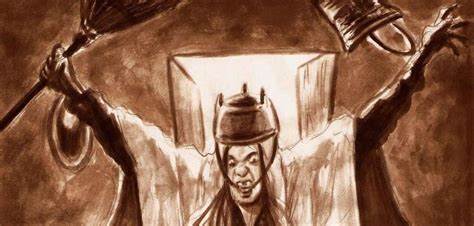
Highlight (Yellow) | Location 19926 had made himself before going to work, and the sick-nurse asked him: “Well, is your mother dead?” “She is rather better, on the contrary,” he replied, with a sly look out of the corner of his eyes. And he went out. La Rapet, seized with anxiety, went up to the dying woman, who remained in the same state, lethargic and impassive, with her eyes open and her hands clutching the counterpane. The nurse perceived that this might go on thus for two days, four days, eight days, and her avaricious mind was seized with Highlight (Yellow) | Location 19930 fear, while she was furious at the sly fellow who had tricked her, and at the woman who would not die. Nevertheless, she began to work, and waited, looking intently at the wrinkled face of Mother Bontemps. When Honore returned to breakfast he seemed quite satisfied and even in a bantering humor. He was decidedly getting in his wheat under very favorable circumstances. La Rapet was becoming exasperated; every minute now seemed to her so much time and money stolen from her. She felt a mad inclination to take this old woman, this, headstrong old fool, this obstinate old wretch, and to stop that short, rapid breath, which was robbing her of her time and money, by squeezing her throat a little. But then she reflected on the danger of doing so, and other thoughts came into her head; so she went up to the bed and said: “Have you ever seen the Devil?” Mother Bontemps murmured: “No.” Then the sick-nurse began to talk and to tell her tales which were likely to terrify the weak mind of the dying woman. Some minutes Highlight (Yellow) | Location 19937 before one dies the Devil appears, she said, to all who are in the death throes. He has a broom in his hand, a saucepan on his head, and he utters loud cries. When anybody sees him, all is over, and that person has only a few moments longer to live. She then enumerated all those to whom the Devil had appeared that year: Josephine Loisel, Eulalie Ratier, Sophie Padaknau, Seraphine Grospied. Mother Bontemps, who had at last become disturbed in mind, moved about, wrung her hands, and tried Highlight (Yellow) | Location 19941 to turn her head to look toward the end of the room. Suddenly La Rapet disappeared at the foot of the bed. She took a sheet out of the cupboard and wrapped herself up in it; she put the iron saucepan on her head, so that its three short bent feet rose up like horns, and she took a broom in her right hand and a tin pail in her left, which she threw up suddenly, so that it might fall to the ground noisily. When it came down, it certainly made a terrible noise. Then, climbing upon a chair, the nurse lifted up Highlight (Yellow) | Location 19945 the curtain which hung at the bottom of the bed, and showed herself, gesticulating and uttering shrill cries into the iron saucepan which covered her face, while she menaced the old peasant woman, who was nearly dead, with her broom. Terrified, with an insane expression on her face, the dying woman made a superhuman effort to get up and escape; she even got her shoulders and chest out of bed; then she fell back with a deep sigh. All was over, and La Rapet calmly put everything back into its place; the broom
Highlight (Yellow) | Location 19948 into the corner by the cupboard the sheet inside it, the saucepan on the hearth, the pail on the floor, and the chair against the wall. Then, with professional movements, she closed the dead woman’s large eyes, put a plate on the bed and poured some holy water into it, placing in it the twig of boxwood that had been nailed to the chest of drawers, and kneeling down, she fervently repeated the prayers for the dead, which she knew by heart, as a matter of business. Highlight (Yellow) | Location 19952 And when Honore returned in the evening he found her praying, and he calculated immediately that she had made twenty sows out of him, for she had only spent three days and one night there, which made five francs altogether, instead of the six which he owed her.
Guy de Maupassant fue un hombre al que le llegó tarde la fama y el reconocimiento, si bien fue apadrinado por dos personajes de la talla de Flaubert y Zola, sin embargo se negó a abrazar el realismo y el naturalismo enarbolado por estos.
Diez años vivió —¡y bien!— Maupassant de su pluma. En este periodo publicó más de 300 cuentos y siete novelas, orientando su talento narrativo más hacia la psicología de sus personajes, estudiando las motivaciones del abandono, el odio de una burguesía hipócrita hacia las mujeres y los bastardos, la locura de las pasiones pasajeras, y el impulso criminal atroz, antes de morir a causa de la sífilis en 1893.
En esta nutrida antología nos asomamos a cómo Maupassant entendía el género “fantástico”: esa narración perturbadora donde un elemento permanece oculto por el velo de lo desconocido. Hay cuentos terribles, que siguen siendo completamente vigentes, botón de muestra de la bajeza humana (‘El burro’, ‘Confesión’, ‘El borracho’), otros que se decantan por una reflexión en torno a la justicia (‘Un parricida’, ‘El campo de olivos’, ‘Confesiones de una mujer’) y aun aquellos que recogen la frivolidad de la IIIa República (‘Las tumbales’, ‘Un hijo’, ‘Misti’). Naturalmente estos rasgos, como muchos otros al interior de su obra, no son ajenos y se entremezclan de manera fiel a lo que se esperaba de una narración en la época.
Hay, sin embargo, algunas cosas que podrían señalarse hoy en día como “deplorables” en la narrativa de Maupassant —su machismo que, a veces, es abierta misoginia—. Como Mauro Armiño señala en su prólogo —a cargo de él corrieron la selección, la traducción y las notas—, Maupassant, como cualquier autor, es reflejo fiel del espíritu de su época, y si bien esto no justifica dichos patrones de conducta en la actualidad, tampoco es un motivo para que lo cancelemos acríticamente. Hay que leerlo, criticarlo, asimilarlo en todo lo que tenía de genial en su habilidad como prosista, y superarlo, crítica y creativamente, en la posición que ocupa en el canon occidental.
Un volumen de bolsillo, editado por Valdemar dentro de El Club Diógenes, que incluye 20 narraciones que reflejan fielmente lo mejor de Maupassant.
The local doctor is explaining to the peasant farmer Honoré that his elderly 92-year-old mother is on the point of dying and is unlikely to last the night and warns him not to leave her alone. However, the wheat is ripe and has to be brought in while the weather is just right for it, but the doctor will not stand for Honoré to leave his mother alone. The doctor insists that he find someone to sit with his mother or else the doctor would not take care of him when it was his time to go. So, Honoré has to hire the services of the village nurse, La Rapet to care for his mother. This puts Honoré in a bind since the cost to hire someone risks ruining Honoré as La Rapet charges by the day and the old lady is so tough that she might last out longer than the night. A fixed sum is negotiated and La Rapet is faced with a problem as the old mother does indeed last longer than the doctor expected. The shrewdly conniving nurse does find a diabolical solution to aid her avaricious ends since she could lose money if the old lady outlasts the agreed upon fixed rate.
Comunmente conocido como el "Señor Mazapán" en las librerías de México, Guy de Maupassant es un verdadero maestro en el difícil arte del Relato corto.
Misterio y terror con toques macabros de verdad se destilan en la mayoría de estos relatos. En su momento no había sabido apreciar la virtúd en relatos como "el burro" el cual de verdad me provoca un desprecio singular en tan pocas cuartillas, o bien una terrible y angustiosa nostalgia por algo que no conocía y que logra demostrarme en "Minué" con el que instó por quedarse como una astilla en sentimiento que no pude quitarme en varios días que pasaron.
Concuerdo que algunos relatos son un tanto secos y podrían parecer insulsos para la mayoría de las personas en nuestros días. Los tiempos eran otros pero el escrito poético de Maupassant hacen eco en aquellos que desean escucharlos en no más de 10 minutos de tu vida, a dosis bajas.
If I were to rate this short story, I would give it a 3.7 out of 5. By the way, I read this as a part of a collection of short stories by Guy de Maupassant and Franz Kafka in Libby. I couldn't find the collection in GoodReads, so I'm writing my reviews like this.
I didn't like any of the characters in this. The son was absolutely unbelievable in his utter unconcern for his mother's death. And the old nurse practically murdered the old mother! Just because she didn't want to lose some money! That just isn't humane. I feel intensely sorry for the mother and all the mistreatment she has suffered through on her deathbed.
Guy de Maupassant part IV. Devil at the door! Oh no wait, it’s just you.
This one disappoints only in respect to the previous stories. It still has a chilling effect once you get to the end. Guy begins slowly, plants a seed of “ok, what next?” which continues until the end. The end came so quickly, and abruptly I thought I missed something. Titled The Devil, it’s an all too human tale.
This is a short story involving some vey unpleasant people. As his mother lays dying a farmer hires a woman to sit with her until the end so that he may finish his harvest. Audible edition narrated by Ian Gordon.
Un excelente cuentista el cual conocí gracias a este libro, el cual cuenta con un prólogo que indaga en la cosa del autor dándole más sentido al estilo de escritura. Me gusto mucho.
de Maupassant’s "The Devil" presents a world of people who are cruel, selfish, and small, without depth or moral complexity. The story is bluntly depressing, brave in its refusal to soften its cynicism. The wandering of a local priest offers a brief, diverting passage but it cannot lift the overwhelming bleakness. The story feels almost documentary in its contempt for human motives.