

What do you think?
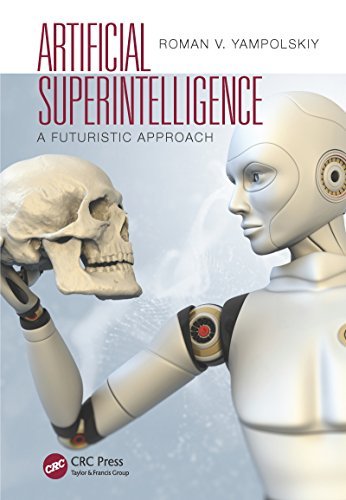
Artificial Superintelligence: A Futuristic Approach
A day does not go by without a news article reporting some amazing breakthrough in artificial intelligence (AI). Many philosophers, futurists, and AI researchers have conjectured that human-level AI will be developed in the next 20 to 200 years. If these predictions are correct, it raises new and sinister issues related to our future in the age of intelligent machines. Artificial A Futuristic Approach directly addresses these issues and consolidates research aimed at making sure that emerging superintelligence is beneficial to humanity.While specific predictions regarding the consequences of superintelligent AI vary from potential economic hardship to the complete extinction of humankind, many researchers agree that the issue is of utmost importance and needs to be seriously addressed. Artificial A Futuristic Approach discusses key topics such theory and how it can be used to see if an artificial intelligent agent has attained human level intelligenceMethods for safeguarding the invention of a superintelligent system that could theoretically be worth trillions of dollarsSelf-improving AI definition, types, and limitsThe science of AI safety engineering, including machine ethics and robot rightsSolutions for ensuring safe and secure confinement of superintelligent systemsThe future of superintelligence and why long-term prospects for humanity to remain as the dominant species on Earth are not greatArtificial A Futuristic Approach is designed to become a foundational text for the new science of AI safety engineering. AI researchers and students, computer security researchers, futurists, and philosophers should find this an invaluable resource.
205 pages, Kindle Edition
First published June 17, 2015
Ratings & Reviews
Friends & Following
Create a free account to discover what your friends think of this book!
Community Reviews
Displaying 1 - 3 of 3 reviews

September 18, 2026
The book is essentially an early, technical exploration of AI alignment and AI safety: what happens if we create an intelligence that can outperform humans and potentially improve itself? Yampolskiy argues that preventing catastrophic outcomes requires serious attention to confinement, incentives, self-improvement, and security before superintelligence arrives.
Yampolskiy argues that conventional approaches such as simply giving an AI ethical rules may not be sufficient; AI safety needs to be treated more like an engineering and security problem.
There are a few moments where the book can be quite technical and academic for me compared with the books I've been reading on AI. This being said, I would only recommend it to someone with a fair amount of IT knowledge.
If we eventually create an intelligence substantially smarter than humans, the central problem may not be creating it—it may be keeping it safe and ensuring that humans remain in control of it, something which is currently up for an endless worldwide debate.
Yampolskiy argues that conventional approaches such as simply giving an AI ethical rules may not be sufficient; AI safety needs to be treated more like an engineering and security problem.
There are a few moments where the book can be quite technical and academic for me compared with the books I've been reading on AI. This being said, I would only recommend it to someone with a fair amount of IT knowledge.
If we eventually create an intelligence substantially smarter than humans, the central problem may not be creating it—it may be keeping it safe and ensuring that humans remain in control of it, something which is currently up for an endless worldwide debate.
September 19, 2019
Great review of the literature, up-to-date and in-depth.

April 14, 2016
This book reviews the difficulties of securing safe AGI. Overall, I think the greatest service it provides is to show future generations where others have already looked, and failed. And in this regard this book was tremendous.
I also appreciated the comprehensive references on every page, which really lets someone new to the field get caught up rather quickly. I also loved how this books tries to bring more computer scientists into the conversation.
My only critique is how the author's personal fears sometimes leak into the main text. While editorial views are common place in most books, I thought it felt out of place in this otherwise scholarly work.
I also appreciated the comprehensive references on every page, which really lets someone new to the field get caught up rather quickly. I also loved how this books tries to bring more computer scientists into the conversation.
My only critique is how the author's personal fears sometimes leak into the main text. While editorial views are common place in most books, I thought it felt out of place in this otherwise scholarly work.
Displaying 1 - 3 of 3 reviews