Jump to ratings and reviews
Rate this book

Un espíritu prisionero

Rate this book
Proza poeta o poetah... Dvojnaya sub'ektivnost', dayuschaya tem ne menee maksimal'noe priblizhenie k istinnomu polozheniyu veschej. Andrej Belyj - glazami Mariny Tsvetaevoj.

256 pages, Hardcover

First published January 1, 1980

5 people are currently reading
276 people want to read

About the author

Marina Tsvetaeva

571 books578 followers
Марина Цветаева
Marina Ivanovna Tsvetaeva was born in Moscow. Her father, Ivan Tsvetaev, was a professor of art history and the founder of the Museum of Fine Arts. Her mother Mariya, née Meyn, was a talented concert pianist. The family travelled a great deal and Tsvetaeva attended schools in Switzerland, Germany, and at the Sorbonne, Paris. Tsvetaeva started to write verse in her early childhood. She made her debut as a poet at the age of 18 with the collection Evening Album, a tribute to her childhood.

In 1912 Tsvetaeva married Sergei Efron, they had two daughters and one son. Magic Lantern showed her technical mastery and was followed in 1913 by a selection of poems from her first collections. Tsvetaeva's affair with the poet and opera librettist Sofiia Parnok inspired her cycle of poems called Girlfriend. Parnok's career stopped in the late 1920s when she was no longer allowed to publish. The poems composed between 1917 and 1921 appeared in 1957 under the title The Demesne of the Swans. Inspired by her relationship with Konstantin Rodzevich, an ex-Red Army officer she wrote Poem of the Mountain and Poem of the End.

After 1917 Revolution Tsvetaeva was trapped in Moscow for five years. During the famine one of her own daughters died of starvation. Tsvetaeva's poetry reveals her growing interest in folk song and the techniques of the major symbolist and poets, such as Aleksander Blok and Anna Akhmatova. In 1922 Tsvetaeva emigrated with her family to Berlin, where she rejoined her husband, and then to Prague. This was a highly productive period in her life - she published five collections of verse and a number of narrative poems, plays, and essays.

During her years in Paris Tsvetaeva wrote two parts of the planned dramatic trilogy. The last collection published during her lifetime, After Russia, appeared in 1928. Its print, 100 numbered copies, were sold by special subscription. In Paris the family lived in poverty, the income came almost entirely from Tsvetaeva's writings. When her husband started to work for the Soviet security service, the Russian community of Paris turned against Tsvetaeva. Her limited publishing ways for poetry were blocked and she turned to prose. In 1937 appeared MOY PUSHKIN, one of Tsvetaeva's best prose works. To earn extra income, she also produced short stories, memoirs and critical articles.

In exile Tsvetaeva felt more and more isolated. Friendless and almost destitute she returned to the Soviet Union in 1938, where her son and husband already lived. Next year her husband was executed and her daughter was sent to a labor camp. Tsvetaeva was officially ostracized and unable to publish. After the USSR was invaded by German Army in 1941, Tsvetaeva was evacuated to the small provincial town of Elabuga with her son. In despair, she hanged herself ten days later on August 31, 1941.

source: http://www.poemhunter.com/marina-ivan...

Ratings & Reviews

What do you think?
Rate this book

Friends & Following

Create a free account to discover what your friends think of this book!

Community Reviews

5 stars
43 (48%)
4 stars
20 (22%)
3 stars
21 (23%)
2 stars
4 (4%)
1 star
0 (0%)
Displaying 1 - 17 of 17 reviews
Profile Image for E. G..
1,175 reviews796 followers
February 22, 2018
Acknowledgments
Translator's Note
Introduction, by Susan Sontag


--A Living Word about a Living Man (Voloshin, Koktebel, Max and the Folk Tale)
--A Captive Spirit
--An Otherworldly Evening

Autobiography

--My Father and His Museum
--Charlottenburg
--The Uniform
--The Laurel Wreath
--The Opening of the Museum
--The Intended
--The Tower of Ivy
--The House at Old Pimen
--Mother and Music
--The Devil
--My Pushkin

Literary Criticism

--Two Forest Kings
--Pushkin and Pugachev

Tsvetaeva: A Biographical Note
Notes
Index
Profile Image for julieta.
1,333 reviews42.6k followers
June 22, 2018
Marina Tsvitáieva es una de las poetas más importantes de Rusia, y voy conociendo poco a poco su obra, y conociendo más sobre la vida de esta mujer increíble. Nunca dejó de escribir, a través de todas las cosas que le pasaron, a ella y a su familia. Este libro es de algunas de sus prosas autobiográficas que me fascinan, porque no son exactamente diarios, y no son tampoco memorias como tal. Estuvo exiliada durante muchos años, y aquí hay algunas de su época en Paris, y otras de su época en Berlin. También tiene algo de su poesía. Creo que así es como se puede leer su obra, en ediciones que abarcan un poco de todos lados. Y así ir conociendo más de su biografía. Las vidas trágicas de los rusos en el siglo XX tienen de alguna forma una vuelta a la vida, en el hecho de que tantos dejaron cosas tan hermosas, sus poemas, sus historias, y quizás nos ayuden a entender algo de todo lo que pasaron en vida. Y lo digo por tantos que no fueron publicados en vida, y que la colección de Galaxia Gutenberg está sacando.
223 reviews189 followers
April 23, 2012
Fact: Tsvetayeva is considered one of the most prominent Russian writers (poetry and prose) of the 20th century.

Fact: I am not considered a prominent writer of any nationality, creed or race.

Logical conclusion: Ergo anything I say about Tsvetayeva is poppycock and balderdash.

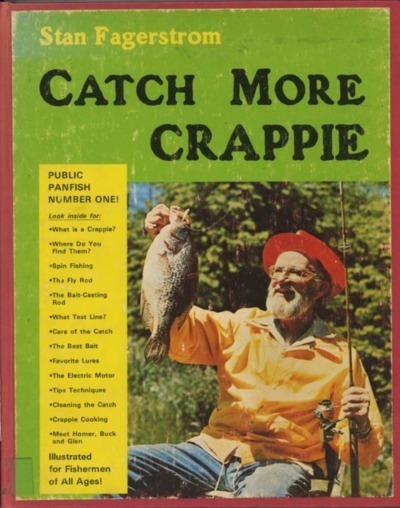
Poppydashing along, this is a book crafted with an explicit audience in mind (not me). It precedes the’ how to genre:’ you know, books aimed at target audiences for specific purposes, as in, for example:


description

Now, its not beyond the realms of reason to presuppose that if I don’t have a predilection for fishing, fish, or anything fishy then I would not buy the crappie book above. The same principle applies to the Captive Spirit.

Lets me backtrack a wee bit. Tsvetayeva is born with a silver spoon in her mouth in 1892: at a time when serfs were still laden with redemption payments (despite partial abolition in 1867, serf overall indebtedness didn’t wind down until 1907). Her father was a prominent professor, and as such Tsvetayeva was born to the Manor. Which means direct, unequivocal and unobstructed and immediate baptism in all and any intellectual circle one wishes to immerse in. Ofcourse, she is prodigiously talented (as a poetess first) and ambitious, and so it doesn’t take long for her ‘meet and greet’ the notables of the day.

Now, this is what she does in Captive Spirit: with spectacular flourish and possibly the MOST uninhibited egomaniacalism I have ever, ever, encountered, Tsvetayeva composes a series of essays which read like a ‘Whos who’ of turn of the century Russia. I find out how she is great friends with all the greats, and how they all adored her: there are snippets of gossip on Blok, Bely, Voloshin,Turgenev, ...........(insert writer of choice. You’d be right). The long conversations she had with them, the letters they wrote her, the parties they attended, oh be still my beating heart.

We finally get to ‘My Pushkin’. Now, Tsvetayeva’s greatest peeve is that Pushkin had the indecency to predecease her , and so wasn’t around to share Stoly no ice at the soirees with. So ,she has to make some other claim on him, personalise the ‘MY’ in the title. Hmmm. How would you do it? (not a trick question. Go on.). First, she has one on us contemporaries because she can legitimately claim that PuskinMonuments’ son visited their house when she was four. Ok, grant her that one. Second, she read Evgeny Onegin when she was five. (Ok, thats fighting talk. I am compelled to respond. I read Einstein’s Theory of Relativity when I was in my mother womb. So there). Finally, the peice d’resistance.

I choked on this.

1924. Prague. Tsvetayeva hears the students around her assert that Delibash is a banner. She, recollecting from her reading of it at age seven (god, positively haggish) thought Delibash was the devil. Back and forth the ‘spor’ goes. But there are so many of them , and only one of her. No matter, this is all good, because in 1936 she rereads the poem and it clearly says:

Hey Cossack, don’t rush to battle!
The Delibash galloping headlong
Will sever with his slanting saber
Your brave head from your shoulders!

Clearly, a banner can’t slice the head of a Cossack. Here is Tsvetayeva:

‘So the poor seven year old barbarian more rightly understood the smartest man in Russia than the products, four times older than she was, of Prague University’

Well, knock me over with a feather. If I live to be a hundred years old I haven’t got it in me to match this woman ego for ego. Can you imagine the gall.

So, in conclusion. Recommended for niche players in the Russian market cum 1900-1930 who want to know the personal habits of the Russian greats.


Profile Image for Pilar.
179 reviews103 followers
April 14, 2025
Una prueba más del tormento de esta magnífica escritora, maldita e incomprendida a la vez que madre y esposa amantísima, una poeta profundamente apasionada, una drogodependiente del amor, que persigue constantemente el estado de enamoramiento como estímulo para la escritura, con una concepción eminentemente irracional de la vida y la literatura.

En este volumen exagera a todas luces lo cotidiano sin entender sus leyes y mantiene fortísimas relaciones de amor epistolar con ilustres poetas a los que no conocerá en vida. Está hecho de retazos, contiene extractos de su diario, relatos, pequeños ensayos autobiográficos, poesías, fotografías, aunque personalmente para empezar con ella recomendaría antes el "El poeta y el tiempo".

Todo en ella es tan desmesurado —la existencia, el exilio, la muerte— que me cuesta creerla.
Profile Image for Eric Byrd.
624 reviews1,170 followers
October 17, 2025
First, three memoirs of contemporaries - Voloshin, Bely, Kuzmin - occasioned by their deaths; then 11 pieces of an unfused, untitled family chronicle - and of them “The House at Old Pimen” has the most magic. I read the memoir of Bely, “My Pushkin” and “Pushkin and Pugachev” in this volume years ago - and strolled right past, as it were, the haunted classic that is “The House at Old Pimen.” As the translator-editor King writes, it is the story “of a House ruled by Fate itself, a House which imprisoned and killed its women. The final title of the work reflects that mystic vision…for the emphasis was on the structure itself, a stone, tomblike, enclosing set of walls.”


———From the evening of acquisition in 2010———

Really interested in the recollections of her art historian father and childhood among what she called the "museum people" of the imperial academies:

Old men, old men, old men. Medals, medals, medals. Not a brow without a furrow, not a breast without a star. My brother and husband are uniquely-young here. The grouping of young Grand Dukes doesn't count because a grouping is just what they are: a marble bas-relief. Today the whole old-age of Russia seems to have flowed into this place in homage to the eternal youth of Greece. A living lesson of history and philosophy: this is what time does with people, this is what it does--with gods. This is what time does with a man, this is what (a glance at the statues) art does. And, the last lesson: this is what time does with a man; this is what a man does with time. But because of my youth I don't think about that, I feel only a cold shudder. ("The Opening of the Museum")

That's awesome.
557 reviews46 followers
March 1, 2018
Marina Tsvetaeva was one of the great Russian poets of the last century--it is common to rank her with Boris Pasternak, Anna Akhmatova and Osip Mandelstam as the four who created strong and enduring bodies of work spanning from Tsarism to Stalinism. Tsvetaeva's life in particular might be seen as bookended by two plagues: the first, tuberculosis, cost her a mother, two cousins, and other family members. The second, the Soviet plague, executed her husband (who for some reason thought it a good idea to return to Russia from abroad), starved one daughter to death and sent another and a beloved sister to the camps. She was eventually left so without emotional and financial resources that she hanged herself. Her suffers more in translation than Akhmatova's and even Pasternak's, and makes a decent supporting brief for Frost's adage that poetry is what is lost in translation. The essays in "A Captive Spirit" are also sometimes hard to make one's way through, allusive and often full of great pronouncements, particularly with a mystical devotion to poetry. Still, there are delightful portraits of a number of writers, such as Andrei Bely, at loose ends and near insane after the Revolution. The most immediate pieces are those about her family, her father's museum of fine arts, inaugurated just before World War I, or the house of her grandfather, with all the relatives who died of tuberculosis. The old man himself killed in a robbery. There is also a piece on Pushkin, that seminal tragic figure of Russian literature; the vividness of the prose is a stark reminder that barely more than a century separates the tragic deaths of the two great poets. Tsvetaeva's reputation has grown through the years, but her place of burial remains a mystery, a fact that is a melancholy reminder of how many unmarked graves there are from that era; the premature loss of so many great writers--Esenin, Mayakovsky, Mandelstam, Babel, Blok, Pilnyak--just a fraction of the unfathomable loss.
Profile Image for Francisca.
570 reviews152 followers
January 10, 2020
De la mano de Galaxia Gutemberg -anteriormente publicado en Círculo de lectores-, aparece una nueva edición de Un espíritu prisionero, una compilación de poemas y ensayos biográficos, catorce y cinco respectivamente, de Marina Tsvietáieva. Estos textos y versos pertenecen a la autobiografía personal de la autora, en esta ocasión acompañada de varios fragmentos y anotaciones de sus Confesiones, también publicadas por la misma editorial.

A pesar de la falta de libertad que había en Rusia en la época que a Marina Tsvietáieva le tocó vivir, su espíritu, como contradicción del título de esta obra, sí que era libre y ella hacía poesía como las abejas acuden a las flores para coger todo su jugo, de manera concisa y nada distraída. La autora tenía un don para la palabra escrita, un don nada mundano que se puede ver reflejado en todo lo que escribió. Sabía y solía ver el mundo como una declaración de amor constante hacia la belleza, la poesía y lo que la vida le podía dar de sí, aunque esta fuera mísera y pobre. Desde edades tempranas, principalmente en su adolescencia, su don se vería nombrado en poetas como Valeri Briúsov o Nikolái Gumiliov, quienes verían en Marina una voz única y especial.

A cada circunstancia maléfica que acontecería en la vida de Marina, el instinto artístico de la autora se multiplicaba, y cuanta más dura era su existencia, más creaba. A Tsvietáieva no le gustaba el tiempo que le tocó vivir, pues este despreciaba el mundo espiritual y emocional del individuo, pero ella lo manifestaría plenamente con sus palabras y su manera de sentir la vida, la cuál era también poética y lírica. Sus diarios son así, líricos y poéticos, más cerca de la evocación que de la propia autobiografía per se. El lirismo de Marina se ve envuelto en una enorme esfera donde los sentimientos y emociones ruedan sobre sí mismos.

En el libro se nos ofrece una breve biografía, gracias al prólogo de Irma Kúdrova, de todo lo que Marina tuvo en vida. Es de clara importancia la cercanía que tenía con su hija Alia, la cual es fundamental y clave para entender y dar con ciertas partes de estos fragmentos de su diario.

Tsvietáieva narra su vida como si no pudiera hacer otra cosa, como si la escritura fuera un arma con la que luchar en ese campo de batalla que era Rusia. Así, Marina viajaría a lo largo de su vida a Italia y Francia, en busca de una existencia más sosegada y donde su espíritu pudiese tener más hueco.

Marina escribe y no calla, pese a todo. Deja constancia de lo que le sucede tanto a ella como de lo que les sucede a sus seres más próximos, de una manera lírica. Su escritura no es superficial, sino honda, profunda, llena de ligeras descripciones y anotaciones que expresa de manera rítmica y musical; como explica la traductora Selma Ancira al inicio del libro «en la prosa y en la poesía de Marina Tsvietáieva sucede lo que en las partituras de música vocal en donde las sílabas se separan mediante guiones para acoplarse a la cadencia de la melodía»; es irremediable no ponerse de acuerdo con esto.

La carta a sí misma que escribe sobre la muerte de Rainer Maria Rilke, de quien sería amiga epistolar, es una carta universal sobre la muerte y lo que ella conlleva. Es también una carta sobre los sentimientos que se profesaban. Y es, también, una carta sobre el amor no sólo fraternal, sino también sobre el amor por la poesía, la escritura y la lectura. Su encuentro con Andre Biely es casi onírico, como si las dos almas se encontrasen sin cuerpo presente. Es un encuentro desnudo, extraño que Tsvietáieva muestra como un milagro. Sin duda para la autora, es el encontrarse con poetas con los que siente afinidad lo que le da fuerza para seguir con su escritura y su forma de sentir y ver la vida.

La poesía de Tsvietáieva es ágil y esbelta, como ella, es elegante y vislumbra destellos de luz al leerla. Son poemas que hablan de la amistad y del interior del ser humano, hablan de la espiritualidad subyacente a todo y de la naturaleza. Son poemas delicados, con los cuales sentirnos esperanzados pese al sufrimiento. Pese a todo. Marina piensa, piensa y piensa. Marina habla, habla y habla. Marina es desde luego un ser humano que acepta su condición; acepta que no todo en la vida sale bien y acepta que la escritura y el amor que tiene por sus seres queridos es lo único que siente que es capaz de salvarla. Pese a todo, Marina se suicidará pero su vida no se irá en vano, pues nos deja todo un gran legado y testamento literario que leer y en el que reconfortarnos, por muy irónico que parezca.

Un espíritu prisionero es, sin duda, un libro esencial de la autora que nos hace ver sus ideas y pensamientos y que resulta clave para entenderla y entender la época en la que vivió. A mí, desde luego, me ha conquistado.
Profile Image for Deni.
380 reviews61 followers
July 6, 2018
Creo que Marina es mi escritora preferida. No hay ninguna como ella.
Profile Image for Josh.
89 reviews88 followers
February 5, 2008
Another interesting book of essays from an early 20th century Russian poet. Not as dense as Mandelstam, but still worth a look. With her, the aforementioned M, Pasternak, Mayakovsky, etc., I see a new type of prose being written - a way of organization that brings their essays strangely close to poems. Incredible density, compression, yet everything feels very loose and expansive.

(too much autobiography in this edition. Tsvetaeva's diaries, literary criticism and aphorisms are all great - where do I find these in english?)
Profile Image for Ana Flores.
Author 5 books32 followers
June 6, 2019
¡Sé que moriré en el crepúsculo! En cuál de los dos,
con cuál de los dos - ¡no seré yo quien lo decida!
¡Ah, si mi antorcha pudiera apagarse dos veces!
En el crepúsculo de la tarde y del alba - a un tiempo.

¡Con paso de danza pasé por la tierra! - ¡Hija del cielo!
¡El delantal lleno de rosas! - ¡Sin lastimar un solo brote!
¡Sé que moriré con luz crepuscular! - Dios no enviará
una noche de azores a mi alma.

Apartando con mano suave la cruz sin besos,
al cielo generoso iré por un saludo postrero.
Albores del alba - y de una sonrisa en respuesta…
¡También en el espasmo de la muerte seré - poeta!


Debe ser muy difícil mantener, o más bien transmitir el ritmo propio y el estilo de un texto en prosa escrito en otra lengua, y seguro que es en esto donde los traductores más batallan, pues, a final de cuentas, la idea o la esencia del discurso, lo que se quiere decir, se puede reescribir de una u otra forma, sin alterar demasiado (en incluso a veces nada) el original.

Pero la poesía es otra cosa, todo poema está esencialmente formado por unas únicas palabras, justo esas palabras y no otras, no quedando alternativa que escribir un poema nuevo imitando al original.

Aun así, la poesía de Tsvietáieva en esta corta antología transmite siempre fuerza viva y propio encanto, una entrega y devoción sin ataduras, que ríe y que se queja, que grita y luego llora o sólo canta el latir del corazón.

Sin embargo, su estilo tan concreto y en ocasiones fragmentario (aunado a las limitaciones propias de la traducción) exige cierto oído o quizá sólo paciencia que no todos estarán dispuestos a otorgar, y de ahí que esta poesía no sea tal vez para todo mundo... aunque, sea como sea, creo que ninguna lo es.

Lo que más me sorprendió en todo caso, y en serio me encantó, fueron las selecciones de su prosa, esa especie de autobiografía medio inventada que al igual que la poesía nos muestra la gran entrega de la autora, curiosa mezcla de recuerdos e inmediatas sensaciones, reflexiones y largas digresiones a veces desprolija, a veces enredada, pero que consigue en su conjunto un efecto seductor, capaz de un tan honesto patetismo que hace imposible no adorarla.

El retrato que hace de Andriéi Biély, en particular, es sencillamente hermoso, tenga lo que tenga de inventado o fantasioso, y con él definitivamente me ganó.

Habrá que seguir leyendo más de ella.

Y - otra cosa. Si la gente hoy en día no dice «te amo», es por miedo; en primer lugar - de atarse; en segundo - de dar en exceso: de rebajar el propio precio. Por el más puro egoísmo. Los de entonces —nosotros— no decíamos «te amo» por un terror místico de matar el amor al nombrarlo, y también por la profunda certeza de que existe algo más sublime que el amor, por miedo de depreciar eso más sublime, por miedo de que una vez dicho «te amo», no se diera suficiente.
Por eso nos amaron tan poco.
Profile Image for J.S.A. Lowe.
Author 4 books46 followers
Want to read
November 5, 2010
You can't give life—nor can the emigration, not the Vishniaks, nor the
"Bridges," nor the all and sundry so-ons—this triumph: forcing the
poet to get along without poetry, making of the poet—the prose writer,
and of the prose writer—the dead person.

You (we!) have had something given into our hands that we have no
right either to drop, or to pass over into other hands (which—don't
exist).

After all: the less you write, the less you want to write, between you
and the writing desk there rises up an already complete impossibility
(just as between you and a love, from which you have already
departed).

Of course, there is saturation.

But there is also exhaustion—from getting out of practice.

Don't give it up, don't renounce it, remember Akhmatova:

And if I die, then
Who will write my poetry for you?

Not for you and even not for everyone, but simply: who—my poetry.

No one. Never. That's irrevocable. You are robbing
lyricism...wordless, like each and every until, helpless, non-existent
without us, the poets.

And just because there are too few of us, we don't have the right....
Profile Image for Janet.
Author 25 books88.9k followers
June 30, 2013
Marina Tsvetaeva wrote prose as she wrote her poetry--headlong, with that same heady temper, that same reach, that same dynamism, the same die-hard originality and even deliberate contrariness. 'My Pushkin,' for instance, isn't really about Pushkin at all, it's about her association to the name 'Pushkin'... A collection of essays written largely in the '30s, when the politics in emigre circles in Paris, where she was living, made it impossible for her to publish her poetry, she turned to prose. Many of these essays are about Russian literary figures who deserve to be better known, and her take on them will long accompany my vision of them--Voloshin, Kuzmin, Pasternak. Khodasevich. To enter the world of her prose is to enter a world very like a David Markson book--you can't really question the text, you just examine the fragments and wait to see how the pieces come together.
Profile Image for Maria.
42 reviews2 followers
January 4, 2024
Это сборник её эссе о поэтах-современниках: о брюсове, мандельштаме, бальмонте, волошине, андрее белом. Серебряный век, мучительный и гениальный, в этих строчках оглушающее реален.

(и что может быть точнее этого названия, пленный дух, дух, который было ничем не остановить – из какого сора, все мы знаем, через какой сор, дух, на долю которого выпало испытаний, как никакому другому поколению, пленённый временем, условиями, подлостью; что может быть точнее врубелевского демона на обложке).


Цветаева пишет, как дышит, как живёт – остро, ритмично, отрывисто, точно – ни с чем не перепутаешь. Но как же нежно, как трепетно и деликатно говорит она обо всех своих героях! Даже о брюсове, которого она вовсе не хвалит, а совсем наоборот – уважительно, величаво, отвечая за каждое своё слово, каждому своему слову предъявляя доказательства.

И все они как живые – и особенно мандельштам и волошин. Живые, реальные, измученные, живые настолько, что этой жизни хватило ещё на их окружение, живые, как горная река или солнце, не приукрашенные, хотя цветаева ими восторгается до благоговения.

Последнее эссе – искусство при свете совести – про искусство вообще, про право художника в искусстве, о том, откуда оно, о предназначении и ценности.
Displaying 1 - 17 of 17 reviews

Can't find what you're looking for?

Get help and learn more about the design.