

What do you think?
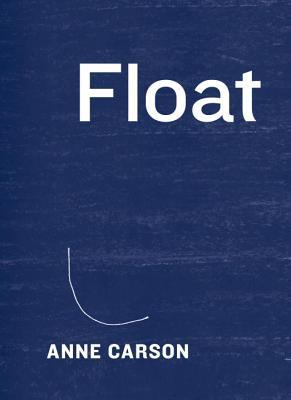
Float
From the renowned classicist and MacArthur Prize winner: a new collection that explores myth and memory, beauty and loss, all the while playing with—and pushing—the limits of language and form.
Anne Carson consistently dazzles with her inventive, shape-shifting work and the vividness of her imagination. Float reaches an even greater level of brilliance and surprise. Presented in an arrestingly original format--individual chapbooks that can be read in any order, and that float inside a transparent case--this collection conjures a mix of voices, time periods, and structures to explore what makes people, memories, and stories "maddeningly attractive" when observed in spaces that are suggestively in-between.
One can begin with Carson contemplating Proust on a frozen Icelandic plain, or on the art-saturated streets of downtown New York City. Or journey to the peak of Mount Olympus, where Zeus ponders his own afterlife. Or find a chorus of Gertrude Steins performing an essay about falling--a piece that also unearths poignant memories of Carson's own father and great-uncle in rural Canada. And a poem called "Wildly Constant" piercingly explores the highs and lows of marriage and monogamy, distilled in a wife's waking up her husband from the darkness of night, and asking him to make them eggs for breakfast.
Exquisite, heartbreaking, disarmingly funny, Float kaleidoscopically illuminates the uncanny magic that comes with letting go of expectations and boundaries. It is Carson's most intellectually electrifying, emotionally engaging book to date.
Anne Carson consistently dazzles with her inventive, shape-shifting work and the vividness of her imagination. Float reaches an even greater level of brilliance and surprise. Presented in an arrestingly original format--individual chapbooks that can be read in any order, and that float inside a transparent case--this collection conjures a mix of voices, time periods, and structures to explore what makes people, memories, and stories "maddeningly attractive" when observed in spaces that are suggestively in-between.
One can begin with Carson contemplating Proust on a frozen Icelandic plain, or on the art-saturated streets of downtown New York City. Or journey to the peak of Mount Olympus, where Zeus ponders his own afterlife. Or find a chorus of Gertrude Steins performing an essay about falling--a piece that also unearths poignant memories of Carson's own father and great-uncle in rural Canada. And a poem called "Wildly Constant" piercingly explores the highs and lows of marriage and monogamy, distilled in a wife's waking up her husband from the darkness of night, and asking him to make them eggs for breakfast.
Exquisite, heartbreaking, disarmingly funny, Float kaleidoscopically illuminates the uncanny magic that comes with letting go of expectations and boundaries. It is Carson's most intellectually electrifying, emotionally engaging book to date.
272 pages, Hardcover
First published March 15, 2016
About the author
Anne Carson
94 books5,856 followersAnne Carson is a Canadian poet, essayist, translator, classicist, and one of the most distinctive contemporary writers in English. Born in Toronto in 1950, she studied Classics at the University of Toronto and has taught Ancient Greek and Classics at universities including McGill University, the University of Michigan, and Princeton University.
Carson’s work crosses conventional boundaries between poetry, fiction, essay, literary criticism, translation, drama, and visual art. Drawing extensively on Ancient Greek literature and philosophy, she frequently translates, reimagines, and places classical texts and figures in dialogue with modern life. Her writing combines scholarly erudition with formal experimentation and recurring concerns with love, desire, loss, beauty, grief, memory, and language. Her fusion of classical scholarship and literary invention has made her one of the most influential genre-defying writers of her generation.
Her major works include Eros the Bittersweet (1986), Glass, Irony and God (1992), Plainwater (1995), Autobiography of Red (1998), Economy of the Unlost (1999), Men in the Off Hours (2000), The Beauty of the Husband: A Fictional Essay in 29 Tangos (2001), Decreation (2005), Nox (2010), Antigonick (2012), Red Doc> (2013), Float (2016), Norma Jeane Baker of Troy (2019), and Wrong Norma (2024). She is also renowned for her translations and adaptations of Greek literature, including If Not, Winter: Fragments of Sappho and works by Sophocles and Euripides.
The Beauty of the Husband won the T. S. Eliot Prize, and Carson has also received the Griffin Poetry Prize, the Lannan Literary Award, a Guggenheim Fellowship, and a MacArthur Fellowship. Her 2024 collection Wrong Norma was a finalist for the National Book Award for Poetry and won the National Book Critics Circle Award for Poetry.
In 2026, Carson was awarded the Nobel Prize in Literature “for her bold and inventive oeuvre that, in playful dialogue with the classical tradition, has created new forms for contemporary literature.”
Carson’s work crosses conventional boundaries between poetry, fiction, essay, literary criticism, translation, drama, and visual art. Drawing extensively on Ancient Greek literature and philosophy, she frequently translates, reimagines, and places classical texts and figures in dialogue with modern life. Her writing combines scholarly erudition with formal experimentation and recurring concerns with love, desire, loss, beauty, grief, memory, and language. Her fusion of classical scholarship and literary invention has made her one of the most influential genre-defying writers of her generation.
Her major works include Eros the Bittersweet (1986), Glass, Irony and God (1992), Plainwater (1995), Autobiography of Red (1998), Economy of the Unlost (1999), Men in the Off Hours (2000), The Beauty of the Husband: A Fictional Essay in 29 Tangos (2001), Decreation (2005), Nox (2010), Antigonick (2012), Red Doc> (2013), Float (2016), Norma Jeane Baker of Troy (2019), and Wrong Norma (2024). She is also renowned for her translations and adaptations of Greek literature, including If Not, Winter: Fragments of Sappho and works by Sophocles and Euripides.
The Beauty of the Husband won the T. S. Eliot Prize, and Carson has also received the Griffin Poetry Prize, the Lannan Literary Award, a Guggenheim Fellowship, and a MacArthur Fellowship. Her 2024 collection Wrong Norma was a finalist for the National Book Award for Poetry and won the National Book Critics Circle Award for Poetry.
In 2026, Carson was awarded the Nobel Prize in Literature “for her bold and inventive oeuvre that, in playful dialogue with the classical tradition, has created new forms for contemporary literature.”
Ratings & Reviews
Friends & Following
Create a free account to discover what your friends think of this book!
Community Reviews
Displaying 1 - 30 of 139 reviews
![Profile Image for s.penkevich [hiatus-will return-miss you all].](https://i.gr-assets.com/images/S/compressed.photo.goodreads.com/users/1735525095i/6431467._UX200_CR0,11,200,200_.jpg)
July 28, 2025
Everyone knows Anne Carson is cool as fuck.
Horrible opening.
Let’s try again, perchance.
Pull a sentence at random and a universe unravels into existence. A cosmos in each comma, a period like a sun setting on the page. Anne Carson is an alchemist who can craft language into gold for the soul, infusing elements of time and space into the physical text to push boundaries of poetry and even the physical book itself. Float is one of the more ingenious creations from the great Canadian classicist as it keeps physical space in the forefront of the mind with the physical “book” being more a clear box in which a collection of 22 brief chapbook-sized pamphlets jumble together like flotsam. Intended to be read in any order, Carson delivers her signature blend of nearly-indefinable writings that straddles poetry, essay, and performance pieces. Sometimes all three at once. ‘One must still have chaos in oneself to be able to give birth to a dancing star,’ German philosopher Friedrich Nietzsche once wrote, and Carson’s career-long exploration of fragmentation, disorder, and chaos as integral to creation. Myth and memory become the focus through many of these pieces, be it poetry or theatrical notes and translations, with the unreliability and disintegration of memory further enhanced and examined through Carson’s unique format. Channeling the charm through both the cerebral and sentimental by turns heartwrenching and deeply humorous, Float is post-moderninst experimentality at its finest and further demonstrates the absolute genius of creativity and insight from Anne Carson.
‘If you are not the free person you want to be, you must find a place to tell the truth about that.’
While much of her work is often classified as poetry, Carson prefers instead to term herself as a craftsman. Her hybrid works are less words on a page and more a tactile art object itself. As she writes in Reticent Sonnet ‘I used to think I would grow up to be a person whose reasoning was deep, / instead I became a kind of brush,’ emphasizing the craft of writing that extends beyond two dimensional words, adding ‘I brush words against words.’ Carson elaborates in a 2016 interview:
By placing each packet together with no order, the reader is forced to consider notions of physical space as part of the understanding of the work, coupled with a delivery to be experienced in a random order that highlights the disarray of life and the mind. The tactile aspect is such a central part of the art and so I was dismayed when I requested this from the library only to receive a copy that had all the pamphlets bound together. Sure, the text was there, sure I could appreciate the idea behind it, but without the element of physical space something was lost. Unfortunately for me this had a pretty limited print run (for obvious reasons but publishers–take note!- please give more experimental opportunities to poets and creatives, books like this are SO worth the higher sticker price) and used ones can get really pricey, but I eventually tracked down a reasonable copy and wow its become a new prized possession. It fits nicely alongside Nox as art objects crafted by Carson that are as much about the art of packaging and space as they are the probing philosophical poetry within.
‘I am interested in people who cut through things,’ Carson tells us in Float and the project becomes an ideal opportunity to cut straight into the busy array of Carson’s intellectual adventures and musings. Theatrical performance notes, descriptions of physical art, and even translation notes and further experimental art pieces either commissioned or for art programs are threaded along with her more traditional work (traditional for Carson being something widely experimental for practically anyone else). Carson plays with a lot of themes here but there is a gravitational pull around ideas of space, memory, disorder, and fluidity. Gender norms are challenged in an embrace of non-binary or trans identities in ways that become an expression on art itself, poems dive into memory to find it as fragmented as the physical objects you hold in your hands, and page after page Carson simply dazzles and delights. She is a genius, no questions asked, and continuously surprises with innovation.
‘We resort to cliché because it’s easier than trying to make
up something new.
Implicit in it is the question, “Don’t we already know what
we think about this?”’
The process of creation is also right at home in Float’s thematic undertakings. Carson frequently refers to ‘catastrophizing’ but, as is often with Carson, the standard connotative ideas grow wings and fluidy transfer into wider realms of meaning and purpose. Nothing in Carson is every static and is always in some form of flux, often resisting easy categorization or comprehension. Such is the theme in her trial piece on Joan of Arc:
Nothing can be pigeonholed and the straining of intellect through the realm of abstraction to fumble with such slippery symbolism becomes part of the process itself. The act of flinging paint onto paper–’free marks’--also takes on a thematic undertone transcending the mere use to the term within the text to show how Carson, as if channelling the artistic endeavours of Jackson Pollock, effectually flings words onto the page to create her images. It is as if she has killed language and resurrected it like a phoenix of prose from its ashes, an alchemic achievement that would fall into gimmickry or garishness in lesser hands.
‘What’s important isn’t falling, it’s how you take the hit.’
In the push and pull of falling and floating, Carson collects the heaviness of mind and heart and transcends them into prose that floats to the heavens. This is a must-own for art collectors, poets, or anyone who loves a good thought piece or literature that pushes traditional boundaries to become an effectual performance art even in stasis. Anne Carson blows my mind every time to look at her work and I hope she will do the same for you, too.
5/5
‘For what was unexpected
the gods found a way.
Human wisdom (as usual)
showed itself liable to exponential decay.
And that’s all you get
from this chorus,
Doris.
So ends the play.’
Horrible opening.
Let’s try again, perchance.
Pull a sentence at random and a universe unravels into existence. A cosmos in each comma, a period like a sun setting on the page. Anne Carson is an alchemist who can craft language into gold for the soul, infusing elements of time and space into the physical text to push boundaries of poetry and even the physical book itself. Float is one of the more ingenious creations from the great Canadian classicist as it keeps physical space in the forefront of the mind with the physical “book” being more a clear box in which a collection of 22 brief chapbook-sized pamphlets jumble together like flotsam. Intended to be read in any order, Carson delivers her signature blend of nearly-indefinable writings that straddles poetry, essay, and performance pieces. Sometimes all three at once. ‘One must still have chaos in oneself to be able to give birth to a dancing star,’ German philosopher Friedrich Nietzsche once wrote, and Carson’s career-long exploration of fragmentation, disorder, and chaos as integral to creation. Myth and memory become the focus through many of these pieces, be it poetry or theatrical notes and translations, with the unreliability and disintegration of memory further enhanced and examined through Carson’s unique format. Channeling the charm through both the cerebral and sentimental by turns heartwrenching and deeply humorous, Float is post-moderninst experimentality at its finest and further demonstrates the absolute genius of creativity and insight from Anne Carson.
‘If you are not the free person you want to be, you must find a place to tell the truth about that.’
While much of her work is often classified as poetry, Carson prefers instead to term herself as a craftsman. Her hybrid works are less words on a page and more a tactile art object itself. As she writes in Reticent Sonnet ‘I used to think I would grow up to be a person whose reasoning was deep, / instead I became a kind of brush,’ emphasizing the craft of writing that extends beyond two dimensional words, adding ‘I brush words against words.’ Carson elaborates in a 2016 interview:
‘Making a poem is making an object. I always thought of them more as drawings than as texts, but drawings that are also physically enterable through the fact of language. It was another way to think of a book, an object that is as visually real as it is textually real.’
By placing each packet together with no order, the reader is forced to consider notions of physical space as part of the understanding of the work, coupled with a delivery to be experienced in a random order that highlights the disarray of life and the mind. The tactile aspect is such a central part of the art and so I was dismayed when I requested this from the library only to receive a copy that had all the pamphlets bound together. Sure, the text was there, sure I could appreciate the idea behind it, but without the element of physical space something was lost. Unfortunately for me this had a pretty limited print run (for obvious reasons but publishers–take note!- please give more experimental opportunities to poets and creatives, books like this are SO worth the higher sticker price) and used ones can get really pricey, but I eventually tracked down a reasonable copy and wow its become a new prized possession. It fits nicely alongside Nox as art objects crafted by Carson that are as much about the art of packaging and space as they are the probing philosophical poetry within.
‘I am interested in people who cut through things,’ Carson tells us in Float and the project becomes an ideal opportunity to cut straight into the busy array of Carson’s intellectual adventures and musings. Theatrical performance notes, descriptions of physical art, and even translation notes and further experimental art pieces either commissioned or for art programs are threaded along with her more traditional work (traditional for Carson being something widely experimental for practically anyone else). Carson plays with a lot of themes here but there is a gravitational pull around ideas of space, memory, disorder, and fluidity. Gender norms are challenged in an embrace of non-binary or trans identities in ways that become an expression on art itself, poems dive into memory to find it as fragmented as the physical objects you hold in your hands, and page after page Carson simply dazzles and delights. She is a genius, no questions asked, and continuously surprises with innovation.
‘We resort to cliché because it’s easier than trying to make
up something new.
Implicit in it is the question, “Don’t we already know what
we think about this?”’
The process of creation is also right at home in Float’s thematic undertakings. Carson frequently refers to ‘catastrophizing’ but, as is often with Carson, the standard connotative ideas grow wings and fluidy transfer into wider realms of meaning and purpose. Nothing in Carson is every static and is always in some form of flux, often resisting easy categorization or comprehension. Such is the theme in her trial piece on Joan of Arc:
‘They wanted her to name, embody, and describe them in ways they could understand, with recognizable religious imagery and emotions, in a conventional narrative that would be susceptible to conventional disproof." She won't. She can't. Instead she says: "Light your fires!"’
Nothing can be pigeonholed and the straining of intellect through the realm of abstraction to fumble with such slippery symbolism becomes part of the process itself. The act of flinging paint onto paper–’free marks’--also takes on a thematic undertone transcending the mere use to the term within the text to show how Carson, as if channelling the artistic endeavours of Jackson Pollock, effectually flings words onto the page to create her images. It is as if she has killed language and resurrected it like a phoenix of prose from its ashes, an alchemic achievement that would fall into gimmickry or garishness in lesser hands.
‘What’s important isn’t falling, it’s how you take the hit.’
In the push and pull of falling and floating, Carson collects the heaviness of mind and heart and transcends them into prose that floats to the heavens. This is a must-own for art collectors, poets, or anyone who loves a good thought piece or literature that pushes traditional boundaries to become an effectual performance art even in stasis. Anne Carson blows my mind every time to look at her work and I hope she will do the same for you, too.
5/5
‘For what was unexpected
the gods found a way.
Human wisdom (as usual)
showed itself liable to exponential decay.
And that’s all you get
from this chorus,
Doris.
So ends the play.’

October 23, 2016
Her essays are enlightening. Her poems are mind boggling. Can we give Anne Carson the Nobel Prize (in physics perhaps) next?

January 27, 2018
more poets should be able to publish projects like this
more poets should be able to publish projects like this
more poets should be able to publish projects like this
more poets should be able to publish projects like this
more poets should be able to publish projects like this
more poets should be able to publish projects like this
more poets should be able to publish projects like this
more poets should be able to publish projects like this
more poets should be able to publish projects like this
more poets should be able to publish projects like this
more poets should be able to publish projects like this
you shouldn't have to be anne carson to get something like this published. (presses should be able to get funding to do things like this!)
that said, it's GREAT.
more poets should be able to publish projects like this
more poets should be able to publish projects like this
more poets should be able to publish projects like this
more poets should be able to publish projects like this
more poets should be able to publish projects like this
more poets should be able to publish projects like this
more poets should be able to publish projects like this
more poets should be able to publish projects like this
more poets should be able to publish projects like this
more poets should be able to publish projects like this
you shouldn't have to be anne carson to get something like this published. (presses should be able to get funding to do things like this!)
that said, it's GREAT.

October 29, 2016
I can't believe how intensely beautiful and considered this is?????
"For comparative purposes here is the text of a curse tablet on lead, measuring 8 x 3 cm, written on both sides, rolled and pierced by a nail, found buried in Boiotia, original date unknown, possibly fourth century BC:
[side A]
I bind down Zois of Eretria, wife of Kabeiras,
before Earth and Hermes, her eating her drinking her sleep
her laughter her sex her playing the lyre her way of going into rooms
her pleasure her little buttocks her thinking her eyes
[side B]
and before Hermes I bind down her walk her words her hands her feet
her evil talk her entire soul
"
I will be reading this for the rest of my life.
"For comparative purposes here is the text of a curse tablet on lead, measuring 8 x 3 cm, written on both sides, rolled and pierced by a nail, found buried in Boiotia, original date unknown, possibly fourth century BC:
[side A]
I bind down Zois of Eretria, wife of Kabeiras,
before Earth and Hermes, her eating her drinking her sleep
her laughter her sex her playing the lyre her way of going into rooms
her pleasure her little buttocks her thinking her eyes
[side B]
and before Hermes I bind down her walk her words her hands her feet
her evil talk her entire soul
"
I will be reading this for the rest of my life.

December 11, 2016
Listen: I want to be Anne Carson. You can parse my life into three eras now: the first was Sylvia Plath, as it was for so many other young American women. When I finally graduated from that around the embarrassingly late age of 20 I passed into a long and awful void in which I and everything I could think to say or write or do was meaningless. The third, current, and hopefully final or at least penultimate era, which has snapped me firmly back into a place where I experience regular space-time and also definable wants and needs again, is Anne Carson.

December 13, 2016
Absolutely breathtaking. I especially loved 'Variations on the right to remain silent', 'Cassandra float can', 'Uncle Falling' and 'Wildly Constant', I loved the reflections on language and thought and translation, I loved how everything felt poetic and critical at once. Carson's writing style is so playful and fluid, emotional and analytical and so many other things, I need to read everything else she's ever written immediately.

October 8, 2021
loved this & found it incomprehensible in equal measure. my favourites were 'variations on the right to remain silent', 'merry christmas from hegel', 'cassandra float can', 'wildly constant', 'uncle falling', and 'good dog, i, ii, and iii'.

May 29, 2017
An odd, strange, disjointed book. I loved every page. Carson drifts from narrative to history to poetry to literary theory, and she drifts (floats, if you would rather) perfectly.
A few examples:
"what a terrifically perilous activity it is, this activity of linking together all the threads of human sin that go into making what we all sense, what we call reasoning, an argument, a conversation. How light, how loose, how unprepared and unpreparable is the web of connections between any thought and any thought."
or
"If we were Romantics, and possibly some of us are Romantics, we might imagine that there is in our minds, one or two beats before a thought forms itself into anything like mental speech, into phrase or sentence, into an order of communication, something earlier, rougher, more gripped, more frail, more saturated, something that will dry away like the dew or crumble like prehistoric paint as soon as it's exposed to air, something that--compared to a sentence--is still wild."
or
"It is her [Joan of Arc's] rage against cliche that draws me to her. A genius in her rage. We all feel this rage at some level, at some time. The genius answer to it is catastrophe.
I say catastrophe is an answer because I believe cliche is a question. We resort to cliche because it's easier than trying to make up something new. Implicit in it is the question, Don't we already know what we think about this? Don't we have a formula we use for this?"
But of course the quotations mask the most important thing, which is that while this is a very serious project, it is also a very not-serious project. It has a sense of humor about its own mission that gives the reader a space to be delighted.
A few examples:
"what a terrifically perilous activity it is, this activity of linking together all the threads of human sin that go into making what we all sense, what we call reasoning, an argument, a conversation. How light, how loose, how unprepared and unpreparable is the web of connections between any thought and any thought."
or
"If we were Romantics, and possibly some of us are Romantics, we might imagine that there is in our minds, one or two beats before a thought forms itself into anything like mental speech, into phrase or sentence, into an order of communication, something earlier, rougher, more gripped, more frail, more saturated, something that will dry away like the dew or crumble like prehistoric paint as soon as it's exposed to air, something that--compared to a sentence--is still wild."
or
"It is her [Joan of Arc's] rage against cliche that draws me to her. A genius in her rage. We all feel this rage at some level, at some time. The genius answer to it is catastrophe.
I say catastrophe is an answer because I believe cliche is a question. We resort to cliche because it's easier than trying to make up something new. Implicit in it is the question, Don't we already know what we think about this? Don't we have a formula we use for this?"
But of course the quotations mask the most important thing, which is that while this is a very serious project, it is also a very not-serious project. It has a sense of humor about its own mission that gives the reader a space to be delighted.

May 27, 2020
I pounced on this years ago when I worked at [REDACTED] bookstore--it was expensive, and so so worth it. Carson is a master poet and author, and this compilation of chapbooks only proves it. These chapbooks can be read in any order, and range from 2 pages to 40 or so, some are mini-plays, some are lists, some are translations, and they are all beautiful. Carson's experience as a classicist shines through, and her hard work intermingled with her talent makes for something effervescent and absolutely grabbing.
It's hard to gather one solid opinion, as the chapbooks were so incredibly different. But overall, it would be truthful to say that every piece of writing offers a new way of looking at the world, of interpreting media, of breathing. Her poems are like air to me--I need them to survive.
Review cross-listed here!
It's hard to gather one solid opinion, as the chapbooks were so incredibly different. But overall, it would be truthful to say that every piece of writing offers a new way of looking at the world, of interpreting media, of breathing. Her poems are like air to me--I need them to survive.
Review cross-listed here!

November 18, 2016
This collection is a marvel. The essays and poetry dance (float?) around each other and inform each other in such mind bending ways. Language, poetry, translation, myth, what are these things? What do they communicate with us, or fail to? These are some of Carson's subjects as she pursues answers or something resembling them through each of these chapbooks. I'm happy that I own a copy of Float because it's a collection that will need to be revisited in the future and explored many times over. Because of the experimental nature of this collection, it can be experienced in many different ways but I have a feeling they'll all lead you to the same wonderful, curious place.

July 25, 2018
Just wow. Poetry, mythology, Joan of Arc, Gertrude Stein, Canada, translations, essays, Francis Bacon, Uncle Harry, stacks, and a lil dose of Virginia Woolf—all bundled up in 22 chapbooks. I loved it all.

December 4, 2016
Highlights: Pinplay, Possessive Used as Drink (Me), Cassandra Float Can, Variations on the Right to Remain Silent

Read
January 19, 2017Did a review of this book here: https://youtu.be/DDmab6obCCw
March 5, 2021
... her MIND!!!

March 20, 2020
quarantine read #4: i think i'll revisit this book when i'm willing to actually research and figure out what the heck she's talking about. references to lots of people/events that i've never heard of and some forms/styles that i just wasn't vibing with. however, stunning prose and ideas, as always:
"i never had a conversation with my father in my life. he was an articulate man, we liked each other fine and exchanged a lifetime of occasional remarks or random jokey observations. yet the idea of sitting down to look each other in the face and talk about something real was as scary for both of us as walking out on a thread over a chasm. we had silence instead of sound in us. big precarious silence. i don't know why." - uncle falling
"to fall after all is our earliest motion. a human is born by falling, as homer says, from between the knees of its mother. to the ground. we fall again at the end" - uncle falling
"he liked the way light passed alive across the floor. he wondered how it would be to sit and watch this passage of light over the span of, say, a year. he wanted to make volume visible. he wanted to see the hudson river sparkle inside. he spoke of 'liberating' the compressed force of a building simply by making a hole. he hoped to 'retranslate' the space into something he could 'taste'." - cassandra float can
"the prophet must prove to you that she is a prophet by telling you unbelievable news, which you will only believe if you already regard her as a prophet. if the news is not unbelievable, then she is just a news source. if the news subsequently comes true, then she was a prophet but it doesn't matter now that the news is widely available. cassandra's is a conundrum of the veil. where is the edge of the new? where is the edge of belief? is it possible to believe something truly unbelievable? how does that begin? is there a crack of light under the door? how do you know to see it as light? is there an edge of light all around the dark mass of your life up to this moment? can you see the dark mass as a veil? can you want it gone?" - cassandra float can
"they asked her, 'in what language do your voices speak to you?' and [joan of arc] answered: better language than yours." - variations on the right to remain silent
"[francis bacon] wants to defeat narrative wherever it seeks to arise, which is pretty much everywhere, since humans are creatures who crave a story. there is a tendency for story to slip into the space between any two figures or any two marks on a canvas. bacon uses color to silence this tendency. he pulls color right up to the edge of his figures-a color so hard, flat, bright, motionless, it is impossible to enter into it or wonder about it. there is a desolation of curiosity into it." - variations on the right to remain silent
"there are two kinds of silence that trouble a translator: physical, metaphysical. physical silence happens when you are looking at, say, a poem of sappho's inscribed on a papyrus from two thousand years ago that has been torn in half. half the poem is empty space. a translator can signify or even rectify this lack of text in various ways-with blankness or brackets or textual conjecture-and she is justified in doing so because sappho did not intend that part of the poem to fall silent. metpahysical silence happens inside words themselves. and its intentions are harder to define. every translator knows the point where one language cannot be rendered into another." - variations on the right to remain silent
"she got
in the ambulance went to the hospital there insisted on washing the body
who else should do it she said" - powerless structures fig ii
"odysseus' answer is, 'i know you're a goddess and bigger and better-looking than my wife, for you are deathless and ageless while she is a mere mortal. and yet i prefer penelope. and what i long for is the day of my return.' odysseus' answer sets up a calculus. he measures the infinite days and infinite pleasures of kalypso against the single day of his homecoming and the mortal attractions of his wife. the infinite comes up lacking." - contempts
"proust says memory is of two kinds.
there's the daily struggle to recall where we put our reading glasses
and there is a deeper gust of longing
that comes up from the bottom
of the heart
involuntarily.
at sudden times.
for surprise reasons.
here is an excerpt from a letter proust wrote
in 1913:
we think we no longer love our dead
but that is because we do not remember them;
suddenly
we catch sight of an old glove
and burst into tears. - wildly constant
"maybe some people are born into the evening of their life and, although they remember a morning and an afternoon, they do not live it, they are already far gone in the shadows." - nelligan
"if you are not the free person you want to be, you must find a place to tell the truth about that. to tell how things go for you. candor is like a skein being produced inside the belly day after day, it has to get itself woven out somewhere. you could whisper down a well. you could write a letter and keep it in a drawer. you could inscribe a curse on a ribbon of lead and bury it in the ground to lie unread for thousands of years. the point is not to find a reader, the point is the telling itself. consider a person standing alone in a room. the house is silent. she is looking down at a piece of paper. nothing else exists. all her veins go down into this paper. she takes her pen and writes on it some marks no one will ever see, she bestows on it a kind of surplus, she tops it off with a gesture as private and accurate as her own name." - candor
"a sonnet is a rectangle upon the page.
your eye enjoys it in a ratio of eight to five.
let's say you're an urgent man in an urgent language
construing the millions of shadows that keep you alive.
if only it were water or innocent or a hawk from a handsaw,
if only you were adonis or marcel duchamp
settling in to your half hour of sex or chess, not this raw
block cut out of the fog of meaning, still damp. but no,
you are alone. whatever idea here rises from its knees
to turn and face you quicker than a kiss
or a hyphen or the very first moment you felt the breeze
of being a creature who will die-one day, not this-
will ask of you most of your cunning and a deep blue release like a sigh
while using only two pronouns, i and not i." - possessive used as drink (me)
"i never had a conversation with my father in my life. he was an articulate man, we liked each other fine and exchanged a lifetime of occasional remarks or random jokey observations. yet the idea of sitting down to look each other in the face and talk about something real was as scary for both of us as walking out on a thread over a chasm. we had silence instead of sound in us. big precarious silence. i don't know why." - uncle falling
"to fall after all is our earliest motion. a human is born by falling, as homer says, from between the knees of its mother. to the ground. we fall again at the end" - uncle falling
"he liked the way light passed alive across the floor. he wondered how it would be to sit and watch this passage of light over the span of, say, a year. he wanted to make volume visible. he wanted to see the hudson river sparkle inside. he spoke of 'liberating' the compressed force of a building simply by making a hole. he hoped to 'retranslate' the space into something he could 'taste'." - cassandra float can
"the prophet must prove to you that she is a prophet by telling you unbelievable news, which you will only believe if you already regard her as a prophet. if the news is not unbelievable, then she is just a news source. if the news subsequently comes true, then she was a prophet but it doesn't matter now that the news is widely available. cassandra's is a conundrum of the veil. where is the edge of the new? where is the edge of belief? is it possible to believe something truly unbelievable? how does that begin? is there a crack of light under the door? how do you know to see it as light? is there an edge of light all around the dark mass of your life up to this moment? can you see the dark mass as a veil? can you want it gone?" - cassandra float can
"they asked her, 'in what language do your voices speak to you?' and [joan of arc] answered: better language than yours." - variations on the right to remain silent
"[francis bacon] wants to defeat narrative wherever it seeks to arise, which is pretty much everywhere, since humans are creatures who crave a story. there is a tendency for story to slip into the space between any two figures or any two marks on a canvas. bacon uses color to silence this tendency. he pulls color right up to the edge of his figures-a color so hard, flat, bright, motionless, it is impossible to enter into it or wonder about it. there is a desolation of curiosity into it." - variations on the right to remain silent
"there are two kinds of silence that trouble a translator: physical, metaphysical. physical silence happens when you are looking at, say, a poem of sappho's inscribed on a papyrus from two thousand years ago that has been torn in half. half the poem is empty space. a translator can signify or even rectify this lack of text in various ways-with blankness or brackets or textual conjecture-and she is justified in doing so because sappho did not intend that part of the poem to fall silent. metpahysical silence happens inside words themselves. and its intentions are harder to define. every translator knows the point where one language cannot be rendered into another." - variations on the right to remain silent
"she got
in the ambulance went to the hospital there insisted on washing the body
who else should do it she said" - powerless structures fig ii
"odysseus' answer is, 'i know you're a goddess and bigger and better-looking than my wife, for you are deathless and ageless while she is a mere mortal. and yet i prefer penelope. and what i long for is the day of my return.' odysseus' answer sets up a calculus. he measures the infinite days and infinite pleasures of kalypso against the single day of his homecoming and the mortal attractions of his wife. the infinite comes up lacking." - contempts
"proust says memory is of two kinds.
there's the daily struggle to recall where we put our reading glasses
and there is a deeper gust of longing
that comes up from the bottom
of the heart
involuntarily.
at sudden times.
for surprise reasons.
here is an excerpt from a letter proust wrote
in 1913:
we think we no longer love our dead
but that is because we do not remember them;
suddenly
we catch sight of an old glove
and burst into tears. - wildly constant
"maybe some people are born into the evening of their life and, although they remember a morning and an afternoon, they do not live it, they are already far gone in the shadows." - nelligan
"if you are not the free person you want to be, you must find a place to tell the truth about that. to tell how things go for you. candor is like a skein being produced inside the belly day after day, it has to get itself woven out somewhere. you could whisper down a well. you could write a letter and keep it in a drawer. you could inscribe a curse on a ribbon of lead and bury it in the ground to lie unread for thousands of years. the point is not to find a reader, the point is the telling itself. consider a person standing alone in a room. the house is silent. she is looking down at a piece of paper. nothing else exists. all her veins go down into this paper. she takes her pen and writes on it some marks no one will ever see, she bestows on it a kind of surplus, she tops it off with a gesture as private and accurate as her own name." - candor
"a sonnet is a rectangle upon the page.
your eye enjoys it in a ratio of eight to five.
let's say you're an urgent man in an urgent language
construing the millions of shadows that keep you alive.
if only it were water or innocent or a hawk from a handsaw,
if only you were adonis or marcel duchamp
settling in to your half hour of sex or chess, not this raw
block cut out of the fog of meaning, still damp. but no,
you are alone. whatever idea here rises from its knees
to turn and face you quicker than a kiss
or a hyphen or the very first moment you felt the breeze
of being a creature who will die-one day, not this-
will ask of you most of your cunning and a deep blue release like a sigh
while using only two pronouns, i and not i." - possessive used as drink (me)

Read
September 8, 2023all these pamphlets flopped onto the library floor as I took it. off the shelf but that's okay
I run out of superlatives but this is anne absolutely hitting it. what a moment to witness she's! all over. lovely PAMPHlets which means she does exactly whatever she likes, verse essays, looks into gertrude stein's bangers , she makes a few appearances. excellent prose poem about hegel & her brother. stacks. fresh translations & the undoing of them with donne, microwaves
my opinion is that. very good
I run out of superlatives but this is anne absolutely hitting it. what a moment to witness she's! all over. lovely PAMPHlets which means she does exactly whatever she likes, verse essays, looks into gertrude stein's bangers , she makes a few appearances. excellent prose poem about hegel & her brother. stacks. fresh translations & the undoing of them with donne, microwaves
my opinion is that. very good

June 1, 2024
five stars alone for the anne carson brigitte bardot crossover (the very week i’m obsessed with brigitte bardot … she’s inside my MIND) can’t wait to reread this it’s giving desert island book there is so Much!!!! as always love her stuff on translation especially she is a genius xx MWAH
July 28, 2022
“If you are not the free person you want to be, you must find a place to tell the truth about that.”

October 25, 2020
I can’t get over the beauty of Carson and her prose. This collection was perhaps one of the strangest formats I’ve had the pleasure of reading and even the poems/stories/essays i wasn’t too keen on I still enjoyed quite thoroughly.

December 30, 2016
Just another masterpiece in a body of work consisting solely of masterpieces. Standout chapbooks in here include: "Merry Christmas From Hegel," "Stacks," "Pronoun Envy," "Eras of Yves Klein," "Possessive Used as Drink (Me): A Lecture on Pronouns in the Form of 15 Sonnets," "Candor," "Cassandra Float Can," "Contempts: A Study of Profit and Nonprofit in Homer, Moravia and Godard." But my two favorites were the gorgeous and moving "Uncle Falling: A Pair of Lyric Lectures with Shared Chorus," and what I think is Carson at her most brilliant and incisive, the essay "Variations on the Right to Remain Silent."
“I like to write lectures. My favorite part is connecting the ideas. The best connections are the ones that draw attention to their own frailty so that at first you think: what a poor lecture this is—the ideas go all over the place and then later you think: but still, what a terrifically perilous activity it is, this activity of linking together all the threads of human sin that go into making what we call sense, what we call reasoning, an argument, a conversation. How light, how loose, how unprepared and unpreparable is the web of connections between any thought and any thought.”- Anne Carson, “Falling”
“…something without a name is commonly thought not to exist. And here is where we may be able to discern the benevolence of the untranslatable. Translation is a practice, a strategy, or what Hölderlin calls ‘a salutary gymnastics of the mind,’ that does seem to give us a third place to be. In the presence of a word that stops itself, in that silence, one has the feeling that something has passed us and kept going, that some possibility has got free.”- Anne Carson, “Variations on the Right to Remain Silent”
“I like to write lectures. My favorite part is connecting the ideas. The best connections are the ones that draw attention to their own frailty so that at first you think: what a poor lecture this is—the ideas go all over the place and then later you think: but still, what a terrifically perilous activity it is, this activity of linking together all the threads of human sin that go into making what we call sense, what we call reasoning, an argument, a conversation. How light, how loose, how unprepared and unpreparable is the web of connections between any thought and any thought.”- Anne Carson, “Falling”
“…something without a name is commonly thought not to exist. And here is where we may be able to discern the benevolence of the untranslatable. Translation is a practice, a strategy, or what Hölderlin calls ‘a salutary gymnastics of the mind,’ that does seem to give us a third place to be. In the presence of a word that stops itself, in that silence, one has the feeling that something has passed us and kept going, that some possibility has got free.”- Anne Carson, “Variations on the Right to Remain Silent”

June 22, 2019
First, I love the idea of this -- 22 chapbooks collected in one box, varying in length from a couple of pages to as many as 20. At first I thought they were simply random, jumping around through the many things that flitter across the floor of Carson's ample consideration. From Gertrude Stein to Cassandra. Lots of Homer, of course, to translations of an obscure French Canadian poet, a madman from the early part of the 20th century. There are some poems that deal with her marriage and many that deal with her complicated reading.
But by the end of this it became clear that there is a kind of unity here, something different than the fact that these are the issues that occupied Anne Carson's mind at a particular time. It's difficult to articulate, but it is something about the simultaneity of experience and imagination. Nothing that is old is only old. It does more than resonate in the contemporary moment. It is present as the present is present, somehow, in the past. All the texts are happening now, when I read them or perform them. The personal -- her story or the fragments of it that come in from time to time -- is as much a part of the understanding as the fragments from Homer or Euripides.
But by the end of this it became clear that there is a kind of unity here, something different than the fact that these are the issues that occupied Anne Carson's mind at a particular time. It's difficult to articulate, but it is something about the simultaneity of experience and imagination. Nothing that is old is only old. It does more than resonate in the contemporary moment. It is present as the present is present, somehow, in the past. All the texts are happening now, when I read them or perform them. The personal -- her story or the fragments of it that come in from time to time -- is as much a part of the understanding as the fragments from Homer or Euripides.

January 9, 2020
Moment of honesty here: I have never been able to really find a way into Anne Carson's work. I'm sure many of us have *that* writer, the one you feel like you should like a lot, yet you just...don't, for some reason. Carson's poetry has always seemed very up my alley, and while I can always appreciate what it is doing on intellectual and experimental levels, it's never blown me away as it does for most readers. All that said, Float is a brilliant, breathtaking work of art, a flotsam of chapbooks collected in a clear plastic case to be read in any order. If more publishers would open their minds to this kind of work (in poetry, fiction, and beyond), we would all be better off.
September 5, 2021
Anne Carson ist die beste, spannendste und interessanteste (lebende) Autorin.

April 10, 2023
Anka wyjdź za mnie

June 28, 2020
10/5 (zoek de hardcover met de 22 losse delen. het is zo, zo, zo mooi)

August 31, 2024
another of her landmark achievements. float was the final book by her i hadn't read and now I finished all her work!

December 8, 2016
Really awesome. Part poetry, part translation, part essay, parts in between, Float is a wonderful collection of Anne Carson's works.
I don't really need to gush about this one, it speaks for itself. If you like Anne Carson and Carson-like stuff, pick it up; you won't be disappointed. It's a pretty short read altogether.
I think I liked the essays the best (Variations on the Right to Remain Silent, Contempts: A Study of Profit and Non-profit in Homer, Moravia, and Goddard), but her translations of Emile Nelligan were excellent, and her "lyric lecture" on Cassandra is great as well (Cassandra Float Can). Although, the poetry is truly creative but sometimes hard to describe: Possessive Used as Drink (Me): A Lecture on Pronouns in the Form of 15 Sonnets is a lecture on pronouns...in the form of 15 sonnets. Another is a translation of the Bacchae but in terms of an artist's paintings who had commissioned the translation. And yet another concerns the Cycladic people in a list of numbered decimals interspersed with other archaeological or generally academic pseudo-narratives (You know like Wittgenstein's Tractatus, except mixed up in order and mixed up in topic). And yet even still more.
Here are a few quotes:
“I like to write lectures. My favorite part is connecting the ideas. The best connections are the ones that draw attention to their own frailty so that at first you think: what a poor lecture this is–the ideas go all over the place and then later you think: but still, what a terrifically perilous activity it is, this activity of linking together all the threads of human sin that go into making what we call sense, what we call reasoning, an argument, a conversation. How light, how loose, how unprepared and unpreparable is the web of connection between any thought and any thought.”
from Uncle Falling
“I strike softly the fingers of my neuroses,
heavy with black rings of wordcrust
on the somber keyboard of life and things.”
Émile Nelligan (trans. Anne Carson)
“Ash is astounding. Made out of death yet sort of offhand.”
from The Designated Mourner by Wally Shawn
“As a classicist I was trained to strive for exactness and to believe that rigorous knowledge of the world without any residue is possible for us.”
From Variations on the Right to Remain Silent
A note on it's physicality: Mine came in a clear plastic case with two cover panels and all the individual chapbooks snuggled in between. Pretty cool aesthetically but maybe not the most durable.
I don't really need to gush about this one, it speaks for itself. If you like Anne Carson and Carson-like stuff, pick it up; you won't be disappointed. It's a pretty short read altogether.
I think I liked the essays the best (Variations on the Right to Remain Silent, Contempts: A Study of Profit and Non-profit in Homer, Moravia, and Goddard), but her translations of Emile Nelligan were excellent, and her "lyric lecture" on Cassandra is great as well (Cassandra Float Can). Although, the poetry is truly creative but sometimes hard to describe: Possessive Used as Drink (Me): A Lecture on Pronouns in the Form of 15 Sonnets is a lecture on pronouns...in the form of 15 sonnets. Another is a translation of the Bacchae but in terms of an artist's paintings who had commissioned the translation. And yet another concerns the Cycladic people in a list of numbered decimals interspersed with other archaeological or generally academic pseudo-narratives (You know like Wittgenstein's Tractatus, except mixed up in order and mixed up in topic). And yet even still more.
Here are a few quotes:
“I like to write lectures. My favorite part is connecting the ideas. The best connections are the ones that draw attention to their own frailty so that at first you think: what a poor lecture this is–the ideas go all over the place and then later you think: but still, what a terrifically perilous activity it is, this activity of linking together all the threads of human sin that go into making what we call sense, what we call reasoning, an argument, a conversation. How light, how loose, how unprepared and unpreparable is the web of connection between any thought and any thought.”
from Uncle Falling
“I strike softly the fingers of my neuroses,
heavy with black rings of wordcrust
on the somber keyboard of life and things.”
Émile Nelligan (trans. Anne Carson)
“Ash is astounding. Made out of death yet sort of offhand.”
from The Designated Mourner by Wally Shawn
“As a classicist I was trained to strive for exactness and to believe that rigorous knowledge of the world without any residue is possible for us.”
From Variations on the Right to Remain Silent
A note on it's physicality: Mine came in a clear plastic case with two cover panels and all the individual chapbooks snuggled in between. Pretty cool aesthetically but maybe not the most durable.

December 29, 2025
de mega cabrones

December 6, 2016
I remain unconvinced. I've read several of Carson's works and often find pleasure in much of what I read, but--but-- I often have the uneasy feeling that what I am reading is not really avant-garde writing, but a clever approximation. Reading Float, I sometimes thought of Laurie Anderson and imagined reading Anderson would be more enjoyable. Because Carson is a scholar, there is a lot of information in her "creative" writing, and that is much of the pleasure. But is this "art"? I'm not willing to say it is. A more experimental, and more worthwhile, writer, in my opinion, is Susan Howe.

July 18, 2017
Float is an odd little collection of chapbooks containing poetry, scripts, and essays. I expected a bit more poetry, but it was not the majority of what I got, alas. Some of the entries were brilliant, but a lot went right over my head because classics is not an area I know much about. I liked the idea of Float more than I liked what I received, but that's more on my personal interests and knowledge.
Displaying 1 - 30 of 139 reviews