“Marvin Bell has the largest heart since Walt Whitman.”—Harvard Review
In a recent interview Marvin Bell said, “I've been trying for thirty years to figure out how best to put the news into poems—what other people would call politics. But there are some hairy aesthetic questions connected to overtly political poems.”
Mars Being Red is the most political book of Bell's storied career—and one of his most beautiful. Infuriated by our country's military aggression and destructive politics, Bell asks, What shall we do, we who are at war but are asked / to pretend we are not? What Bell has done is craft a book of urgency and insight, anger and
. . . I am, like you, a witness to the coffins that were Viet Nam and Iraq, to a political machine that came up three lemons . . . I am the big ears and the wide eyes to whom time happened. I lived in stormy weather writing songs of love because, tell me if you know, who can help it?
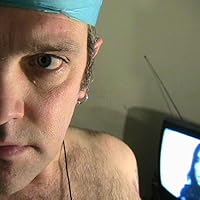
Marvin Bell served on the faculty at the Iowa Writers' Workshop for over thirty years. He is the first and current poet laureate of Iowa.
Marvin Bell was born in New York City on August 3, 1937, and grew up in Center Moriches, on the south shore of eastern Long Island. He holds a Bachelor of Arts from Alfred University, a Master of Arts from the University of Chicago, and a Master of Fine Arts from the University of Iowa.
Bell’s debut collection of poems, Things We Dreamt We Died For, was published in 1966 by the Stone Wall Press, following two years of service in the U.S. Army. His following two collections were A Probable Volume of Dreams (Atheneum, 1969), a Lamont Poetry Selection of the Academy of American Poets, and Stars Which See, Stars Which Do Not See (1977), which was a finalist for the National Book Award.
Since then, Bell has published numerous books of prose and poetry, most recently 7 Poets, 4 Days, 1 Book (Trinity University Press, 2009), a collaboration with six other poets, including Tomaz Salamun, Dean Young, and Christopher Merrill, and Mars Being Red (Copper Canyon Press, 2007) , which was a finalist for the Los Angeles Times Book Award.
Bell’s other collections include Rampant (2004); Nightworks: Poems, 1962-2000 (2000); Ardor: The Book of the Dead Man, Volume 2 (1997); A Marvin Bell Reader: Selected Poetry and Prose (Middlebury College Press, 1994); The Book of the Dead Man (Copper Canyon Press, 1994); Iris of Creation (1990); New and Selected Poems ( Atheneum, 1987);
He has also published Old Snow Just Melting: Essays and Interviews ( University of Michigan Press, 1983) , as well as Segues: A Correspondence in Poetry with William Stafford (Godine, 1983).
About his early work, the poet Anthony Hecht said, “Marvin Bell is wonderfully versatile, with a strange, dislocating inventiveness. Capable of an unflinching regard of the painful, the poignant and the tragic; but also given to hilarity, high-spirits and comic delight; and often enough wedding and blending these spiritual antipodes into a new world. It must be the sort of bifocal vision Socrates recommended to his drunken friends if they were to become true poets.”
Later in his career, Bell created the poetic form known as the “Dead Man poem," about which the critic Judith Kitchen has written: “Bell has redefined poetry as it is being practiced today.”
Beginning in 2000, he served two terms as Iowa’s first Poet Laureate. His other honors include awards from the American Academy of Arts and Letters, The American Poetry Review , fellowships from the Guggenheim and National Endowment for the Arts, and Senior Fulbright appointments to Yugoslavia and Australia.
Bell taught for forty years for the Iowa Writers’ Workshop, retiring in 2005 as Flannery O’Connor Professor of Letters. For five years, he designed and led an annual Urban Teachers Workshop for America SCORES. Currently he serves on the faculty of Pacific University’s low-residency MFA program. He has also taught at Goddard College, the University of Hawaii, the University of Washington and Portland State University.
Bell has influenced generations of poets, many of which were his students, including Michael Burkard, Marilyn Chin, Rita Dove, Norman Dubie, Albert Goldbarth. Robert Grenier, Joy Harjo, Juan Felipe Herrera, Mark Jarman, Denis Johnson, Larry Levis, David St. John, and James Tate.
Marvin Bell also frequently performs with the bassist, Glen Moore, of the jazz group, Oregon. He and his wife, Dorothy, live in Iowa City and Port Townsend, Washington.
I wanted to find out a little something about Mr Marvin Bell so I trucked my hushpuppies down to the SFPL through all the alleyways & chasms of mutantologies and analgonous subtle tortures, and there he is, Mister Marvin Bell. A real East Coast poet without all the powdered sugar or whipped air slushing out of the genetically altered hallways of Academia. This is a poet poets should listen to.
This is Bell’s nineteenth collection of poems, and yet the voice is as innovative as ever, the thinking rigorous and rife with unexpected turns. The narrator allows every level of consciousness to be deeply inundated by the present war in Iraq as he struggles to wake us up to what he and we would like to pretend is not, once again, happening. Alongside these immediate issues of mortality run the broader, over-arching existential ones of a master poet engaged in the “privilege of myth-making” for over forty years. The poems have word-perfect fluidity, the lines a simple, yet syntactically challenging elasticity that keeps the reader moving along from the first word to the last.
Loved "Didn't Sleep" and "Coffee". Some other interesting pieces:
An Apology to the Vietnamese and Iraqis
Fog and lamplight and a sleepless night suggest a past to sit up with, in an armchair with a book and a snack. A small boat putt-putts somewhere under the cliff, passing the fennel and ferns at waterside. I have screened out, like you, the far away. For me, there's a khaki sheen over Vietnam, and a sandstorm will erase Iraq before the owl lifts its dinner by the heel. That's the way we sleep now, screening out the gunboats in the fog, listening to the owl hunt farther and farther to find his kill. Our nights are lampblack.
Bus Stop Essay on Rampant Capitalism
Property means money will own our dust, the rinds of squeezed lemons, soap film, and the reeds whistling in the swamp, and they want the swans for themselves, and the leftover thread from the tailor, and the hair from the barbershop. They want fees for dancing and a royalty for a quip. The rights to Armageddon are still up for grabs. I was sitting by a man who owned a coat in a storm and was off his rocker, growling like an engine uphill. He had a thrown-away half-hamburger and a bag of wine. He was showing off his best Fred Astaire, and he planned to visit Hollywood and Cooperstown. he told me this corner was his. He gave the breeze a cold shoulder and his smell. he said he liked to find things.
I think we sometimes have to be reminded of death to know how to live. Here are some of my favorite lines from the collection:
“He believes the tar pits hold bones but preserve no emotions, and he believes space is matter. He still thinks a kiss with full lips transformative, the hope of a country boy with an uncultivated heart, from the era of doo-wop and secret sex, when the music was corny, clichéd and desperate like teenage love. Who now will admit that poetry got its start there, in the loneliness that made love from a song on red wax, from falsetto nonsense. Who does not know that time passing passes on sadness? A splinter of a song lyric triggers shards of memory and knots in his gut. He regrets he was lashed to the mast when the sirens called. He believes the sea is not what sank or what washes up. There are nights the moon scares him.”
“Try to tell me the paycheck is bigger than the hole in your gut where peace used to be.”
“You take a window, a seat at the window, and you look through the slats of the half-open blinds because it’s a slice of life to be sitting without waiting. I’ll be walking on the shore when the tide claps a little, breaking a wave into sea-shot that swarms over the driftwood, and I’ll turn my head to catch some of it, and press the sand as I walk, looking for the washed-up pieces of sea life and boat life, and it will be a kind of end-of-days experience, what with the source of life rolling in and out, while you at your window watch for my return.”
“He thinks he may already have seen too much. He doesn’t know how to smile, but he laughs.”
“They say you can grow up to be anything. I wanted to do more than survive.”
“I love you today. I’m not waiting for the weekend or the right time.”
This 2007 collection has been called his most political work to date. Good work-the poet's imagination at full throttle. Even in his bio it mentions that he's the "creator of the dead man poems," so I wonder about the dead-man poems of Jack Driscoll. Anyhow, the poem, "I Didn't Sleep" is especially remarkable-repetition, subtly, politics.
I was one of the lucky students at the low-residency MFA Program at Pacific University and Marvin Bell, was one of the faculty. I bought several of his books, of course, as I agree with him that the first job of a writer is to read, read, read. The second job is to be precise. Then write, write, write, as you get better the more you do, and revise seriously. Although I read and loved reading this book in 2007, I did not write a review. On Sunday, Nov. 1, 2020, I was fortunate to attend a "Marvin Bell Celebration" where many of the poems in this book were shared by the 25 panelists of fellow poets and former students. In this book, there are five "Dead Man" poems, what has become a signature "form" where each line must be a sentence... no matter long or short... e and the perspective follows the Zen advice of "Life as if you are already dead". In this book, each "Dead Man" poem has two parts with the section simply called "More About the Dead Man and whatever subject is addressed (in this book: Memory, and Time, and Recent Dreams, and Ghosts) Published in 2007, the poems are as timely now, in 2020. In the "Book of the Dead Man (Memory) he starts out with "If there had only been a window to the past." The series of "ifs" that follow are also followed by periods, with no "then" of a conclusion. "If there had been a magic pill, a fire-walking epiphany, a panacea under the photographer's cloth." Nevermind, he starts the next sentence. The dead man has made his get-away. The imaginative leaps and playfulness in the Book of the Dead Man (Time) lead up to the statement, "under the veneer of time, life and death pair up to iron out their differences.//The dead man knows he alone cannot stop the stopwatch." However, this dead man, in the earlier poems, (recent dreams) also "dreams of living forever a few minutes at a time" and in (ghosts) haunts us in existential spirit "until we do right by the unseen". These are not poems to breeze through, but rather to spend time savoring philosophically...
Just a list of titles will entice you such as "Stubby Sag Harbor Sonnet" or "Astronomers May Have Reason for the Milky Way's Lumpiness". I love titles such as "Why" (p. 77) which includes broken wings and twitching to spot peace -- or "It" or "Yes" . A favorite at readings is "Coffee", (which wafts into dream) p. 13.
What keeps us up at night? What are dreams made of? Is "The Poems I want to hear" demonstrating the kind of poem you want hear? How do you keep a poem as a poem as it engages with politics that lead us to war? A stunning book filled with poems rife with fresh images.
MARS BEING RED Being red is the color of a white sun where it lingers on an arm. Color of time lost in sparks, of space lost inside dance. Red of walks by the railroad in the flush of youth, while our steps released the squeaks of shoots reaching for the light. Scarlet of sin, crimson of fresh blood, ruby and garnet of the jewel bed, early sunshine, vestiges of the late sun as it turns green and disappears. Be calm. Do not give in to the rabid red throat of age. In a red world, imprint the valentine and blush of romance for the dark. It has come. You will not be this quick-to-redden forever. You will be green again, again and again.
YES We need to think of what might grow in the field from our ashes, from the rot of our remains, from tillage and spoilage, from the watery corn plowed under. We need to picture lilies of the valley and the hard weeds on the mountain haloed by cloud and the minutest beads of water as they roll up into raindrops to replenish what we relinquished through expiration. We have been breathing-in the wild rosebuds and the spoor left by those who avoid us, we have been to the sea and the forest to learn who we are, and it is time to say yes to the intangible reach of our being, the stirring that sifts, pans and rearranges the billion parts of us, who once thought we were goners.