Jump to ratings and reviews
Rate this book

The Devil's Pleasure Palace: The Cult of Critical Theory and the Subversion of the West

Rate this book
In the aftermath of World War II, America stood alone as the world’s premier military power. Yet its martial confidence contrasted vividly with its sense of cultural inferiority. Still looking to a defeated and dispirited Europe for intellectual and artistic guidance, the burgeoning transnational elite in New York and Washington embraced not only the war’s refugees, but many of their ideas as well, and nothing has proven more pernicious than those of the Frankfurt School and its reactionary philosophy of “critical theory.”In The Devil's Pleasure Palace, Michael Walsh describes how Critical Theory released a horde of demons into the American psyche. When everything could be questioned, nothing could be real, and the muscular, confident empiricism that had just won the war gave way, in less than a generation, to a central-European nihilism celebrated on college campuses across the United States. Seizing the high ground of academe and the arts, the New Nihilists set about dissolving the bedrock of the country, from patriotism to marriage to the family to military service. They have sown, as Cardinal Bergoglio-now Pope Francis-once wrote of the Devil, “destruction, division, hatred, and calumny,” and all disguised as the search for truth.The Devil's Pleasure Palace exposes the overlooked movement that is Critical Theory and explains how it took root in America and, once established and gestated, how it has affected nearly every aspect of American life and society.

238 pages, Kindle Edition

First published June 9, 2015

115 people are currently reading
762 people want to read

About the author

Michael Walsh

20 books81 followers
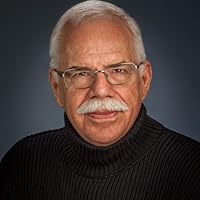
Michael Walsh was for 16 years the classical music critic for Time Magazine and has also worked for the San Francisco Examiner and the Rochester Democrat & Chronicle. He is the author of eleven books, including five works of non-fiction as well as the novels Exchange Alley, As Time Goes By (the authorized sequel to the movie Casablanca), and And All the Saints, a winner of the 2004 American Book Awards for fiction. His novel, Hostile Intent, was published in September by Pinnacle Books and hit the New York Times bestseller lists and shot to No. 1 on Kindle. The sequel, Early Warning, was published in Sept., 2010. With Gail Parent, he is the co-writer of the hit Disney Channel 2002 Original Movie, Cadet Kelly, at the time the highest-rated show in the history of the network.

Ratings & Reviews

What do you think?
Rate this book

Friends & Following

Create a free account to discover what your friends think of this book!

Community Reviews

5 stars
155 (35%)
4 stars
126 (29%)
3 stars
69 (15%)
2 stars
36 (8%)
1 star
48 (11%)
Displaying 1 - 29 of 81 reviews
Profile Image for Vagabond of Letters, DLitt.
593 reviews409 followers
January 23, 2018
Pick up some MacDonald ('The Culture of Critique') and Roger Scruton ('Fools, Frauds, and Firebrands') instead, and pick up some primary sources like Adorno and Horkheimer ('Authoritarian Personality', devastatingly critiqued by MacDonald), Marcuse ('The One-dimensional Man', which actually has some good insights), and Gramsci to go with it.

This book is a work of art criticism with no relevance to the discussion of the philosophy of the Frankfurt School of Social Research or cultural Marxism whatsoever. This book is about Faust, music, and the biblical book of Genesis, and rambles forever without making a non-art related point.

The author is okay when he talks about the sexual revolt if you can get past the excurses in to art criticism, but there are far better books on that: the two Devlins (F Roger and Lord), Levin, Benatar, Domestic Tranquility, and even Gabrielle Kuby (to be read with discernment because she's a dysgenist).

I don't know art criticism and thoroughly despise nonliterary art in general (and can't stand to read even literary criticism), so I can't speak to that, but, as a trained theologian (who never uses the knowledge, alas) the author is dead wrong on theology many times over, and is invariably off the mark when he attempts to interpret the Bible.

The author believes that 'art is God's only medium of truth' and is an ardent proponent of libertarian free will, stating 'there is only free will, no predestination'.

One star for effort and for the author's view of cultural Marxism as satanic.
Profile Image for Friend to God .
46 reviews20 followers
August 6, 2017
To summarize this book, basically a crazy combination of European philosophers and cultural critics infiltrated American academia and are aligning themselves with racial and religious radicals (not Christian evangelicals, only islamists apparently) all in an effort to destroy the average American and their Ford Focus. So yeah that's it's lol. That's the big conspiracy to undermine America and causing us to fail. It's not our history of imperialism or the rise of the religious right or decentralization or neoliberalism...its Adorno and Benjamin and their ilk, men and women who had to run from the nazis and would probably be running from this author and Trump today lol.
1 review1 follower
September 5, 2015
Please read it. Then encourage your children and grand
children to read it--that's the challenge. I'm lucky because I'm old.
Profile Image for Charles Haywood.
549 reviews1,137 followers
March 14, 2016
I read this book because it seemed like it would be an interesting companion to James Burnham’s “Suicide of the West.” Burnham’s book explains and analyzes the ideology of American liberalism, circa 1960. “The Devil’s Pleasure Palace” in a sense continues that story; it explains how that liberalism discovered the Critical Theory leftism of the Frankfurt School, and like Gollum discovering the One Ring, did not benefit from the discovery. “The Devil’s Pleasure Palace” is, indeed, somewhat interesting. But it generally fails at explanation and analysis, instead being mostly a rambling diatribe preaching to the converted.

The core of Walsh’s book is an attack upon the Frankfurt School and its “Critical Theory.” The Frankfurt School was a group of Marxist German scholars, many from Goethe University’s Institute For Social Research in Frankfurt, who fled to the US before and after World War II, and then proceeded to repay this country’s generosity by deliberately destroying its culture. These men included Theodor Adorno, Erich Fromm, Max Horkheimer, and Herbert Marcuse. They also include, in Walsh’s telling, indirectly, men like the Communist Antonio Gramsci (famous for calling for a “long march through the institutions,” though he did not use those exact words, to combat bourgeois “cultural hegemony”) and Georg Lukács, the Hungarian Communist (not to be confused with the writer John Lukács). The key principal of the Frankfurt School was that the existing culture of the West must be destroyed and replaced, because it is irrational and oppressive, originating in and containing nothing good.

Walsh’s premise is that the philosophy collectively promulgated by these men, Critical Theory, was a departure from earlier American liberalism, and a pernicious departure, that has since infected all America with its poison. This infection was accomplished through the adoption and application of the Frankfurt School’s social theories by legions of American-born radicals embedded throughout the key institutions of the West. To Walsh, Critical Theory is merely “cultural Marxism.” And, like economic Marxism, its goal is the destruction of the current society and its replacement by something new, better, and totally different. But instead of the workers being the driving engine, the educated classes would be. “They had been let down by the grubby, unwashed workers of the world, who largely rejected the great gift they had been offered; now they would approach their equals in the intelligentsia, a far more receptive and persuadable audience.”

Among other core ideas of the Frankfurt School much in evidence today, for example in the frenzied demands for political correctness on campus and in the workplace, and in reactions to Donald Trump, is Marcuse’s “repressive tolerance”—the idea that real tolerance consists of intolerance of incorrect views. Or, as Wikipedia summarizes the idea, “Revolutionary minorities hold the truth and the majority has to be liberated from error by being re-educated in the truth by this minority. The revolutionary minority are entitled to suppress rival and harmful opinions.” But Marcuse’s idea is only one of many dubious gifts bestowed on modern America by the Frankfurt School—nearly any organized modern attack on American traditions is at least in part a result of the machinations of the Frankfurt School and its acolytes.

While the degree and emphasis of Critical Theory was new in America, and its impact heightened by other cultural changes, the idea that the existing culture must continuously justify itself to reason and be replaced if rationally determined to be deficient, is as old as America, as seen in the debates between Thomas Paine and Edmund Burke. Attempts to undermine and destroy a society’s culture are nothing new in the post-Enlightenment world, though the Frankfurt School has been uniquely successful in having their corrosive ideas adopted through internal corruption rather than imposed by external force or actual revolution. True, what distinguishes adherents of the Frankfurt School is their nihilism, in that they are less interested in what the new society will be than in destroying the old. This is well covered by Walsh, but he does not tie his discussion to longer-term currents of American political thought, which would have made his analysis stronger.

But linear discussion about the Frankfurt School is actually a small part of the book, and not particularly well developed. My summary above is pieced together. The rest of the book is a rambling series of asides relating political points to classical music, H.P. Lovecraft, Milton, movies from Chinatown to “The Wild One,” and numerous operas (the name of the book is from a Schubert opera). Many of these asides are mildly interesting, and what Walsh is trying to do is, through an artistic lens, tie the evils of Critical Theory to its opposition to the traditional “heroic narrative” of the West. However, the net result feels like a fairly confused mishmash—neither political analysis nor clear social commentary. There is certainly no clear exposition and refutation of the Frankfurt School, which is why I read the book to begin with. And, while most of the book is heavily pessimistic, oddly, Walsh concludes his book on an optimistic note. “No political victory is ever permanent,” and Walsh apparently believes that by returning to the heroic narrative and the explication of virtues, American conservatives can ultimately defeat the poison of Critical Theory. He doesn’t really say how, or develop this throwaway optimism, though. It’s just a jarring conclusion to an ambitious, but ultimately largely incoherent, book.
Profile Image for Steve.
1,451 reviews103 followers
February 4, 2017
If you want to understand where the Left is coming from, in other words, if you want to understand the rise of "Cultural Marxism", this book will be an indispensable introduction. Where economic Marxism was shown to fail, cultural Marxism has stepped into the void, and is at the base of the current trend towards intolerance and a host of anti-Western sentiments.
Profile Image for Douglas Sims.
4 reviews
April 10, 2016
It's certainly erudite; Walsh's knowledge of Western literature is vast and encyclopedic. When he writes about literature, his words flow quickly through the pages. But when he attempts to use them support to his ill-defined political views, the comparisons become awkward and nonsensical and his criticism of Critical Theory fails for a lack of critical thinking.

Perhaps part of the problem with his analysis is in the odd and changing bag of beliefs that comprise the two political extremes of "liberal" and "conservative" (e.g., the way that gun rights and fundamental Christianity currently coexist in many minds.) He never defines in any comprehensible way exactly what he means by liberalism and conservatism. He certainly doesn't like whatever the thing is that he calls liberalism ("Lying is the centerpiece of both the satanic and the leftist projects...", p. 40) He hints that liberalism is totalitarianism, and then spends a hundred pages fighting that straw man, but he never addresses the disturbing trend to authoritarianism which has become, in the last few decades, much more a component of so-called "conservative" thought. In fact, his pulsing hatred for "Critical Theory" seems more typical for a world-view of authoritarianism and totalitarianism. On page 90 he asks "Why not question authority? Why not overturn your moral code? Why not do it if it feels good?" and then immediately relies on a page-long exposition on Goethe's Faust to answer this. I don't get the connection.

He says "Critical Theory, applied to the law, is little more than mob rule and anarchy; like everything else it touches, it is the negation of what it purports to examine," and then then in the next paragraph, cites that as the reason that "Byron chose to perish, quixotically, fighting the Ottoman Turks in Greece" (which ignores both the real cause of Byron's death, inept medical care while recovering from a fever as well as the absurdity of that comparison)

He enumerates Wagner's heroines and invokes a Beethoven opera in a single paragraph (p.87) and then uses that (it's not clear how) as a weapon to attack feminism in any form. If he were only condemning the excesses of modern "social justice warriors," perhaps we could take him more seriously, but when he talks about anything short of Leave It to Beaver, with the mom who stays at home and wears pearls as "if women could be convinced to fear and hate men, to see them as unnecessary for their happiness or survival..." then his lack of nuance becomes apparent.

I would be more kindly disposed to this book if I didn't have a sinking suspicion that his copious references to literature and film were calculated more to impress the reader into submission than to win him over with reasoned arguments. After reading a little over half-way through, I reasoned that it didn't matter and I put the book down, without argument.
Profile Image for Jacob Aitken.
1,687 reviews420 followers
January 19, 2018
What is the Christian Response to Cultural marxism? While everyone is morally obligated to fight a war to the death against the Frankfurt School, that doesn’t mean every effort is equally good. Most, in fact, are not. Walsh’s book is a mixed bag. He is a professional music critic and when he sticks to that topic, his analyses are always erudite and occasionally insightful. When he gets into biblical and philosophical issues, he is in trouble. I will say it another way: he has no clue what he is talking about.

Thesis: the West faces a war against the morality of the epic of Genesis vs. the neo-Marxist cult of critical theory.

Throughout the narrative Walsh will interweave Genesis (which he doesn’t necessarily think is real; he might, but his language is ambiguous), Goethe’s Faust, and Milton to illustrate the satanic seduction. I guess there is a way that can work, but the reader often loses sight of the thesis in the minute discussions of Faust. Further, Goethe’s own private embodied the very sexual dissolution that Walsh rejects.

Overly Strong claims:

“Art is the gift from God, the sole true medium of truth” (12). God’s only medium of truth? Really?

Simply Erroneous Claims

~“And yet, paradoxically, it is her transgression…that makes her, and us, fully human” (19). I thought it was because God created us human. Further, Jesus didn’t have any transgressions, yet he is fully (though not merely) human. Even more, we won’t have transgressions in heaven, yet presumably we will be human.

~Misreads Hegel as a simple thesis/antithesis/synthesis (23, 25).

~”There is no predestination, only free will” (162). But even Arminians know the word is in the Bible, so there is at least one form of predestination.

Boomercon Rhetoric

Says Bush failed to stand up to Vladimir Putin. I think this is factually false, as the US engineered the anti-Putin elections in Ukraine in 2004, which resulted in the ousting of Yanukovych. Further, Bush recognized the heroin/Mafia-state of Kosovo to allow the pipelining of cocaine, heroin, and prostitutes into the West. I think Bush opposed Putin quite often.

Pros

Occasionally neat observations, like where Parcival observes “time become space.” He has a decent analysis of The Eternal Feminine in Faust–none of which actually adds to his argument.

*Good section on Wilhem Reich and the sexual revolution.

* He anticipates meme warfare by noting the Left cannot tolerate being scorned.

Faults

The style is just….bad. And that’s strange given the plethora of literary references. It reads like a “good ole boy conservative blog” without any of the Southern charm.

If this book were a focus on the musical decadence of the Frankfurt School, it would have been a welcome contribution. It should have been 100 pages shorter. As it is, the disconnected analyses on biblical literature, philosophy, and music detract from the scope of the book.

The book also was heavy on loaded language. True, Critical Theory and Cultural Marxism are demonic and satanic. True, Herbert Marcuse was a demon in human flesh, but using the epithet “satanic” in every paragraph burdens the reader.
190 reviews
Currently reading
June 12, 2017
Never heard of this guy until a couple days ago, suddenly I almost half done with this ridiculous book.

Firstly, all I ever learned from Critical Theory was how to analyze ideology, to understand why ideology matters within a totality of base and superstructure. Like my earlier forays into cultural anthropology, Theory made the foreign feel more common and made my boring history seem more interesting. In other words, Theory celebrates-by-studying We Humans and encourages us to take agency for ourselves. Never did I associate this with "political correctness," and I still don't get the association.

Now, I'm glad Walsh found a way to combine his degree in music from the 1970s with the suddenly popular anti-PC movement in its recent manifestations: Pat Buchanan, Anders Breivik, Kevin MacDonald's campaign against "white genocide," InfoWars, Breitbart and Donald Trump. But The_Devil's_Pleasure_Palace routinely straddles the line between synthesis and bullshit, making bizarre and baseless connections from one text and context to another. Walsh is a generalist, and the context of any given work that he analyzes means nothing to him. Everything seems to remind him of a movie he's seen, and then suddenly you're reading a few paragraph's from an old college paper that he copied/pasted into this new book, then you're learning more about Milton and Faust and Wagner than you ever wanted, and then suddenly he sneaks in a random jab at Barack Obama or the Democratic Party. Walsh covers so many different fields, turning all the world into a text, turning all history into etymology and logomachy, it's like The Fall just happened yesterday. I have no doubt that, with any given field that Walsh delves into, there are numerous scholars on said subject (secular or theological) who would seriously beg to differ with his interpretation of the issue.

The most obvious component of Walsh's bullshitting is in the text's form, not it's content. Through all of his intellectual stunts and maneuvers (or, again, bullshitting), Walsh is attempting to demonize and discredit the Frankfurt School and Critical Theory all the while deploying the very analytical tools granted us by the Frankfurt School and Critical Theory. His whole argument and mode of analysis hinges on hegemony, semiotics, form-and-content stuff. He might dispute a thing or two that the Theorists say on the surface, but his approach to literature and music (and his view of world history as a singular epic) is right out of the Theorists' playbook. (The one exception is his preference for Jung, a mystic Lamarckian, over Freud.) In that regard, I find the book entertaining, despite the fear and disgust I feel knowing the audience that he's targeting.

Nor can Walsh make up his mind about his stance on science/reason vs. beliefs/romanticism. When it suits him, he eschews science's presumptuous epistemic claims in preference for his own convictions. But then suddenly the Frankfurt School is a bunch of Romantic monster-makers out to destroy his precious Greco-Roman West.

Also, Walsh pretends to be Catholic. But he's clearly an atheist, or perhaps agnostic. I personally don't care one way or the other. But he's openly trying to side with the angels here as Catholic, while his entire analysis of the "ur-Narrative" is not from the position of a believer at all. I'm sure Walsh believes in good vs evil, but I have little doubt that he also sees this as an essentially earthly and man-made struggle with no actual supernatural qualities or ramifications. In other words, Walsh clearly identifies these as social constructs, and he clearly is trying to convince less educated and more devout readers of evils that don't actually exist. Essentially, this book provides a rational structure through which a lot of today's fake news would make sense. Like, if I read this book and then heard that Hillary was running a sex trafficking ring out of a pizza joint, I might actually believe that shit.

But mind you, it is all, in fact, shit. The only reason I'm continuing with the book is because I truly want to understand why nearly 50% of Americans were scared enough to vote for Trump.

The only thing missing from Walsh's Metanalysis of The World at this point is Star Wars references. But I'm only half done with the book. I've got a couple hundred pages of digitally reproduced intellectual bricolage, melange, pastiche on my hands! Like it or not, Walsh, you're wearing postmodernism on your sleeve!
Profile Image for Alan.
960 reviews46 followers
May 26, 2016
Blather. Faust, Paradise Lost, Wagner, all peppered with adjectives, Biblical pronouncements, innuendo. In sum, an erudite rant, but a rant nonetheless.
Profile Image for Jack Durish.
Author 10 books30 followers
November 19, 2015
Do you enjoy living in The Devil's Pleasure Palace?
Is there any question that we're living in The Devil's Pleasure Palace? Political correctness runs amok on American campuses as students demand freedom from offense and free everything else. Sex loses all its pleasure as it becomes easier to obtain. The practice of abortion destroys human life in numbers that would make a Nazi blush. Pseudo-science is used to control behavior. Atheists have gained the legal right to demand tolerance of their belief system only. The purveyors of progressive leftism, like Rousseau, Marx, Brecht, Sartre, and Lillian Hellman, beasts in their private lives who profess to love humanity most but despise people, have come to dominate American philosophical and political thought. So, what else would you call this place other than The Devil's Pleasure Palace?
Explaining this phenomenon is the goal of The Devil's Pleasure Palace by Michael Walsh.
“In the aftermath of World War II, America stood alone as the world’s premier military power. Yet its martial confidence contrasted vividly with its sense of cultural inferiority. Still looking to a defeated and dispirited Europe for intellectual and artistic guidance, burgeoning trans-national elite in New York and Washington embraced not only the war’s refugees, but many of their ideas as well, and nothing has proven more pernicious than those of the Frankfurt School and its reactionary philosophy of “critical theory.” At once overly intellectualized and emotionally juvenile, Critical Theory – like Pandora’s Box – released a horde of demons into the American psyche. When everything could be questioned, nothing could be real, and the muscular, confident empiricism that had just won the war gave way, in less than a generation, to a central-European nihilism celebrated on college campuses across the United States. Seizing the high ground of academe and the arts, the New Nihilists set about dissolving the bedrock of the country, from patriotism to marriage to the family to military service; they have sown (as Cardinal Bergoglio – now Pope Francis – once wrote of the Devil) “destruction, division, hatred, and calumny” – and all disguised as the search for truth.”
– Amazon product description
We needn't despair. There is a way to combat this insidious movement. We can laugh at it. As the author explains...
“Scorn drives the Unholy Left insane. They cannot bear to have their theories questioned, or the failed results of those theories laughed at. Dignity is one of the imaginary virtues – one of the last virtues, period – they possess, and to have that attacked along with their 'entire' belief system' (the jeering term they use for organized religion) is too much to bear. Mockery is the thing that brings them quickest to frothing, garment-rending rage, so wedded are they to the notion of their own goodness and infallibility when it comes to matters of impiety and immorals.”
Reading this last has once again reminded me of my own shortcoming, my oft bemoaned failure as a humorist. Why can't I write more like Twain who reminded us that “None can stand in a gale of laughter.” Sadly, ranting against the Left only provides them succor. They suckle on our self-righteous anger as though it were mother's own milk to them.
We all need to take a deep breath.
Count to ten.
Then laugh at their nonsense.
Reading The Devil's Pleasure Palace won't make it any better but, at least, after reading it you may be able to get the punch line.
Profile Image for Manuel Alfonseca.
Author 80 books213 followers
November 24, 2019
ENGLISH: An expert in the history of music and literature, Michael Walsh discusses in this book the current dominant ideology of political correctness or (as he calls it) Critical Theory.

I agree with most of what is said in this book, but not so much with the way it is said, which seems to me disordered and somewhat chaotic. The lack of order is shown by the fact (which I have tested) that chapters can be read in any order without losing anything.

I was specially struck by this quotation in the last chapter:

Innovation... has slowed dramatically except in the areas of medicine and consumer electronics... At the same time, though, infectious diseases thought wiped out generations ago have made a comeback, in part owing to a newly primitive fear of vaccines... America put a man on the moon in 1969; it cannot do so today... The supersonic jetliner has come and gone, and air travel is noticeably meaner. The first seventy years of the twentieth century took the country from the horse and buggy to the Apollo project. What has been achieved comparably since then?... For much of the upper middle class... children are simply ornaments, a "choice," not a necessity.. By killing their unborn, they become like gods."

ESPAÑOL: Michael Walsh, que es experto en la historia de la música y la literatura, analiza en este libro la ideología dominante actual de la corrección política o (como él la llama) Teoría crítica.

Estoy de acuerdo con casi todo lo que dice este libro, pero no tanto con la forma en que se dice, que me parece desordenada y algo caótica. La falta de orden se demuestra por el hecho comprobado de que los capítulos se pueden leer en cualquier orden sin perderse nada.

Me llamó especialmente la atención esta cita del último capítulo:

La innovación... se ha decelerado dramáticamente, excepto en las áreas de la medicina y la electrónica de consumo... Al mismo tiempo, sin embargo, las enfermedades infecciosas que se creyeron aniquiladas hace generaciones han regresado, en parte debido a un temor primitivo que ha surgido frente a las vacunas... Estados Unidos puso a un hombre en la luna en 1969; hoy no podría hacerlo... El avión supersónico vino y se fue, y el viaje aéreo es notablemente más desagradable que antes. Los primeros setenta años del siglo XX llevaron a [los Estados Unidos] desde el caballo y el carricoche al proyecto Apolo. ¿Qué se ha logrado desde entonces que pueda compararse?... Para gran parte de la clase media alta... los niños son simplemente adornos, algo que se "elige", no una necesidad... Al matar a los no nacidos, se sienten como dioses".
Profile Image for Steve.
50 reviews1 follower
June 7, 2016
Great summary of the philosophy behind much of progressivism.
2 reviews1 follower
November 10, 2015
I could tell I wasn't going to like this book 30 pages into it. I was expecting an analysis from an academic point of view rather than a religious one. Others may like it because of this fact but I just wanted to warn people what they were getting into.
Profile Image for Travis Timmons.
187 reviews11 followers
January 8, 2016
The most bizarre and shoddiest book I've read in a long time. A strangely-selected target by the author to boot.
Profile Image for Maxwell Foley.
55 reviews
January 17, 2017
I picked up this book because I wanted to understand the details and the history of critical theory better. I have tried reading the original writings of Debord, Foucault, etc. and I've decided that it's probably not worth it. Their writing is impossibly tedious and convoluted. I would like to find somewhere an outsider's history or analysis of the field. Often I find that criticism of a philosophy sheds more light on what it is than endorsement of it, so I thought this book was worth a shot.

Anyway, this book wasn't that at all. The Frankfurt School that Walsh criticizes is barely directly engaged with in the text, other than to occasionally set up a crude strawman. I came away from this book with no more knowledge of the Frankfurt School or associated intellectuals than the tiny amount I had coming in.

Despite that, I kind of enjoyed this book in some ways, though it was an entirely guilty pleasure. Ironic given the title, huh?

I enjoyed it in a similar way to how I enjoy watching the YouTube conspiracy theorist Alex Jones. If you haven't heard of him, he's sort of like a Rush Limbaugh on DMT. Everything he says is a gross ideological distortion of the truth, but there's something very narratively satisfying about it to me. He has an unparalleled zeal in fighting a crusade against an enemy that he calls "the globalists", who he characterizes as a rotten elite who have hijacked our culture and are firmly against truth, beauty, and life. They don't want you to go to church, they don't want you to love your family, they don't want you to hunt and fish and appreciate nature, etc. Alex is almost always in top form as a performer. He rants and he roars as he manages to tie the daily political news into a narrative of biblical proportion, going off on free-associative dreamlike sermons filled with lurid sci-fi and fantasy imagery.

Recently Alex Jones got some media attention after a segment in which he declared that Hillary Clinton is literally a demon. Obama gave a speech referring to this video denouncing how polarized our media has become - we are literally demonizing our political opponents.

This is basically the thesis of the Devil's Pleasure Palace: "the left is satanic". Michael Walsh is something worse than an ideologue - he's a complete partisan. All of our contemporary political battles - war, feminism, gun rights, global warming, universal health care, etc. - are mentioned in the text somewhere, and on all of them the leftist stance is not only a spiteful, wicked act of cowardly cultural subversion, it is something that defies the order of nature and reason itself. Walsh doesn't even try to see where the left is coming from. On abortion, for example, he rants about how the satanic leftists "glorify death" or something along those lines, without pausing to consider why some might not see it that way.

In the simplistic narrative of the book, blame for everything the Democratic party has done in the last fifty years is laid at the feet of the subversive, wicked Frankfurt School, who if Walsh can be believed were perhaps the most successful set of intellectuals in all of history in propagating their ideas (despite one strange part where he talks about how Adorno was a loser because no one reads him anymore, or something like that).

Throughout all of this, Walsh is constantly making references and allusions to classical works like Paradise Lost, or the operas of Goethe and Wagner. He brings in films in his discussions as well. To be honest I found some of this stuff somewhat interesting - the book is well-paced so that he never lingers on one subject for too long.

Part of the reason this book kind of pissed me off is that in some ways I'm predisposed to agree with the sort of critique he makes and think it could have been much better. I liked his defense of heroism, and belief in awareness of good and evil. He has a sort of interesting view of the universe - though he claims to be a Christian, the writing makes it seem like he's really a Jungian, or perhaps a combination of the two. His career is as a music critic - I can totally understand why perhaps just being a Republican-leaning person in that field would over time transform someone into the most rabid enemy of the "totalitarian amoral left".

But the way he ends up doing all this is horrendous and sheds almost no light on the subject, instead going for pure rage. This book is the last thing we need in the world right now.


Author 1 book
January 24, 2016
Walsh's expose of the New Left's corrosive impact on the West is just astounding. Speaking from his areas of expertise, music, literature and art, Walsh frames the story in a way that is compelling and practically irrefutable. The problem with the new Left, or modern liberals, is they offer nothing in place of what they're destroying, and when you see how their march through the institutions destroys not only political debate, family and faith, but art - beautiful expressions of our common understanding - understanding their impact becomes essential. For anyone who loves western civilization, this book is a must read. In fact, read it twice.
Profile Image for Christopher Blosser.
164 reviews24 followers
February 4, 2018
Most interesting where the author actually follows through with the stated intent of evaluating the Frankfurt School and its deleterious effects on society and the campuses today. However the approach and tone is reminiscent of a snarky, trolling rant that would be entirely at home on a blog and made the reading rather plodding at times. While I admit it’s hard to reign in the snark when addressing the topic, I’d say Roger Scruton covered much of the same ground and was far more cogently in Fools, Frauds and Firebrands: Thinkers of the New Left.
Profile Image for Kbullock.
110 reviews4 followers
October 7, 2016
Walsh is an excellent columnist and obviously a well-read individual, but like some of his colleagues (*cough*MarkSteyn*cough*), he has not made a successful transition to full-length books. The book is readable, and there is much interesting content, but it does not hold together very well. Most importantly, it does not deliver much on what is purportedly the principal subject matter: the Frankfurt School and how it introduced critical theory into our culture. I learned much about Wagner, Mozart, Goethe, and Milton, but not much about the Frankfurt School.
23 reviews1 follower
April 12, 2018
Rambling, incoherent book that features very little discussion of the Frankfurt school and is packed full of political digressions. I would recommend avoiding this confused mish mash. The author is basically seeking to resurrect the Nazi conspiracy theory of Cultural Bolshevism.
Profile Image for Brian Skinner.
327 reviews8 followers
January 18, 2024
Philosophically I agree with the author. I think he is far too strident in the way he expresses himself though. He treats people on the "left" as if they were one monolithic group with no individuals who might not fit his description of left. I hate it when people talk about groups rather than individuals or ideas. This is not to say that he doesnt talk about ideas but in this book every idea that can be thought of as being from the left is a bad idea. You have to leave some room for Nuance. I would have agreed with this book a lot more if I was still in the year it was written. (2015) We have all seen the compromises supposedly conservative people made during the Trump years. Trump was very effective in fighting for what he wanted but now neither side has a clear monopoly on virtue. Having said that the left in general has gone way overboard in recent years and I think the Zeitgeist is now against them. So in a way I am saying the author is exactly right in what he said but the delivery was terrible. (Much like Trump)
13 reviews2 followers
July 12, 2020
An intriguing comparison between the Fall as portrayed by Milton and playwrights after the poet and as lived in modern society. Some of the jargon is difficult, but the concepts clear.
Profile Image for John Graham.
Author 4 books11 followers
November 2, 2018
I bought this book, along with its sequel Fiery Angel, wondering what music, art, and culture could tell us about the predicament faced by Western Civilisation and in particular about critical theory and the Frankfurt School (two terms I had never come across before).

Having just finished the book, I am still wondering.

The degree to which you enjoy this book (indeed, whether you buy it at all) will depend at least in part on your political leanings. The book may nominally take aim at the Frankfurt School, but a portion of every page is devoted to railing against Leftism in general, and American Leftism in particular. I share the author's scathing contempt for 'political correctness', a concept weaponised by the Left to censor views of which its wielders disapprove, but I burst out laughing at page 136 where (having just quoted historian Paul Johnson talking at length about Rousseau) the author spends the rest of the page attacking the 'Church of Atheism'. And then there's this incredibly bizarre passage on page 206:
"...the entry of women into the workforce has resulted in, practically, the halving of men's income, since it now takes two incomes to provide a standard of living equivalent to what the middle class enjoyed in the scorned 1950s and '60s - and which generally supported far larger families.

What did that last paragraph have to do with the Frankfurt School, music, art, and culture? That's the problem: every page of every chapter of this book weaves music, art, and literary criticism in with political criticism of various positions of the political Left, and flows back and forth between the two without ever constituting a substantive argument or point. The writing is clear enough to follow, but even if you share the author's politics (and much of this book reads like a sermon to the converted) the rambling nature of the prose will definitely get on many readers' nerves.

Indeed, apart from their titles, I don't recall anything that distinguishes one chapter from another. In a way, that's because this book is really just a collection of brief essays (ranging from 5-20 pages in length) with each one designated as a chapter. Each chapter/essay consists of a similar melange of musical, artistic, literary, and political criticism with the same themes rehashed with slightly different details - Karl Marx and Goethe's Mephistopheles in chapter 3, Rousseau and the aforementioned 'Church of Atheism' in chapter 10, etc.

To be fair to the author, he is arguing from his field of expertise rather than pretending to be an expert in fields in which he is not. Michael Walsh is a music theorist by training and has spent much of his professional life as a music critic. Furthermore, his knowledge of Western classical music, art, and literature is genuinely impressive. But I was hoping for (though not necessarily expecting) an in-depth look at the history and personal backgrounds of those who constituted the Frankfurt School (Gramsci, Lukacs, Adorno, etc.) and a more detailed explanation of how their ideas came to be so influential.

But this book taught me almost nothing about the Frankfurt School or its proponents or the development of critical theory, and having finished the final chapter/essay I'm in even more doubt than before about the relevance of cultural criticism to the threat posed by 'Cultural Marxism'.

I bought the Devil's Pleasure Palace along with the Fiery Angel together, so I'll be reading and reviewing the Fiery Angel as well to get my money's worth, but I already have the feeling that it won't be any better than the Devil's Pleasure Palace.
Profile Image for Allen Bagby.
Author 2 books31 followers
May 5, 2016
I have often referenced "Critical Theory" in my comments, replies and statuses. It is the genesis of "Political Correctness," another term I've used to describe the Left and even that little still small critical voice in your head that edits to the point of making our language as bland as tofu. It's that thing that makes Obama unable to utter "Islamic Terrorism." Political Correctness is ubiquitous. It has invaded every facet of our lives. It is in the air we breathe.

In "The Devil's Pleasure Palace" Michael Walsh explores the insidious influence and corruption of Political Correctness caused by "Critical Theory." The Theory was put forth by The Frankfurt School. It was started by a group of communist from Germany. These men invaded intelligentsia and their ideas eventually captured the high ground of academia, Hollywood and media. If you just open your eyes you can see the influence everywhere.

Walsh has crafted truly great book. A lot of history and exploration of classical books and music. It shows how these classics have, embedded within them illustrations of the battle that raged then and rages today between darkness and light, between Political Correctness and Liberty.
Many conservative books that dissect and analyze modern times are downright depressing, Theodore Dalrymple's "Life at the Bottom" for example or Allan Bloom's classic "The Closing of the American Mind." But this book ends on a high note. And, cannot disagree with the conclusion.
If you are a Liberal considering an ideological change, read this book. If you are a Conservative trying to understand the roots our nations decline, read this book. If you don't know what the heck you are ideologically? READ THIS BOOK!

A note of caution - about 1/3 into the book Walsh goes really deep into classical music. Honestly, I got a little bored, not because it was not well-written, but because I'm nowhere near an expert on classical music. Thus, I was kinda lost. But the rest of the book was incredible. Makes me wish someone (me maybe) would right a conservative book on contemporary music's influence on the modern mind.
Profile Image for Marcas.
409 reviews
November 30, 2025
Erudite and encyclopaedic, but not clearly and systematically argued. Walsh is an interesting man with some intriguing notions and fun to bounce ideas off. I like his use of Aristotle and Campbell to remind us of the central role that storytelling plays in how we live and order the polis. Paul Vander Klay calls this the 'story verse'. This is an area where we must meet the challenges posed by the Frankfurt school and their followers.
He understands a simplistic reading of Hegel that has taken on life and trickled down to the common man conditions us to think in terms of 'synthesis' to solve problems between thesis and antithesis, often arbitrarily defined. This may be a part of the reason why there is always such a clamour to be 'the centre'- as if that must be the true position and condition for the common good.
Unlike many Christians, he wants to sublimate sex and violence in a life of difference, friction and conflict rather than a squishy 'peace', described as the absence of conflict. This is a plus and refreshing in the light of mushy academic 'Christian' humanitarianism that proffers no more than universalism, pacifism and appeasement. How dull that is and I welcome the corrective from Walsh.
I like some elements of his use of Genesis, reminding us that we are to be greater than the angels in Christ and to go beyond the garden. I think, in line with what he says about sex, etc that this can be recalibrated within Christian marriage and is one of those gifts that make life better for mankind than the life of angels. This is an area we must out-narrate the likes of Reich and sexual liberationists. Dr Scott Yenor's book goes deep into this.
Profile Image for Jason Carter.
320 reviews14 followers
February 15, 2016
This was really an excellent book. Walsh uses several literary themes (the Bible, Faust, Paradise Lost, Wagner) to critique the German Critical Theory proponents and their idiotic, destructive leftist ideology.

I would have given it five stars, except it was a little academic in parts and somewhat slow in the middle section. It is very much worth reading, though, especially for its optimistic outlook for humanity. Liberalism is self-destructive and worthy of ridicule. "Scorn drives the Unholy Left insane. They cannot bear to have their theories questioned, or the failed results of those theories laughed at... Mockery is the thing that brings them quickest to frothing, garment-rending rage, so wedded are they to the notion of their own goodness and infallibility when it comes to matters of impiety and immorals."
Profile Image for BLESK.
40 reviews11 followers
June 9, 2016
One of those rarities that every reader is in constant search of: a life-altering book. The Devil's Pleasure Palace is the most succinct, concise and devastating history of and rebuttal to The Frankfurt School that I have had the pleasure of reading. Walsh lays out why "we have, intellectually, come to the dead end of Critical Theory," political correctness, moral cowardice masquerading as morality and the other attendant dogmas of the Left that were unleashed to hollow out, corrode, corrupt and muzzle Western Civilization after the Second World War. An incredibly timely book in the Age of Obama and in the face of Islamic terror, it is beautifully and floridly written and contains so many quotes that I will be referring to for years to come. Cannot recommend highly enough and I will be giving it as a gift.
Profile Image for Daniel Jalbuena.
8 reviews
May 9, 2019
When I first happened upon the title of this book, I assumed the author was referring to a resentful, malicious and nihilistically critical approach found in academic departments and university "cultural studies" programs. Alas, no, he really means it when he says "devil." It seems to me that the cultural accomplishments of the West can be more convincingly defended on positivistic grounds. If religious argument interests you, then this may be your cup of tea. However, I found it quite strange and cannot help thinking that the author could have said so much more, and said it without metaphysics.
Profile Image for Don Incognito.
315 reviews9 followers
December 22, 2017
The most disappointing book I've read in years. The problrm was that I misunderstood what to expect from the title. I thought it would explain specific critical theories of literature (and other art forms) and explain how each has contributed to the degradation of Western culture.

It is actually only an unfocused rumination and polemic on the political and social damage wrought by the critical theories, emphasizing much more their political effects.

Not recommended.
Displaying 1 - 29 of 81 reviews

Can't find what you're looking for?

Get help and learn more about the design.