In a nameless city torn apart by civil war, a teenage sniper has only one goal: to fire the perfect shot. He sublimates himself into his weapon, learns to maintain impassivity, controls his breath, listens to his body and the beat of his heart. Lying in wait on rooftops, he takes aim at people below while his traumatized mother cowers in their flat. The violence eats away at any sense of morality as he kills civilians and combatants indiscriminately, for the sake of killing itself. His routine is disrupted by the arrival of Myrna, a fifteen-year-old girl hired to care for his mother, and his increasingly disturbing obsession with her soon threatens to push them all into the abyss. Now appearing in English more than twenty years after its original publication, Mathias Enard’s debut novel is a timeless study of how extreme violence corrodes the soul, tracking the convulsions of a brutalized mind in spare, unflinching prose.
Mathias Énard studied Persian and Arabic and spent long periods in the Middle East. A professor of Arabic at the University of Barcelona, he won the Prix des Cinq Continents de la Francophonie and the Prix Edmée-de-La-Rochefoucauld for his first novel, La perfection du tir. He has been awarded many prizes for Zone, including the Prix du Livre Inter and the Prix Décembre.
Compass, which garnered Énard the renowned Prix Goncourt in 2015, traces the intimate connection between Western humanities and art history, and Islamic philosophy and culture. In one sentence that's over 500 pages long, Zone tells of the recent European past as a cascade of consequences of wars and conflicts.
Énard lives and works in Barcelona, where he teaches Arabic at the Universitat Autònoma. His latest publications include a poetry collection titled Dernière communication à la société proustienne de Barcelone (Final message to the Proust Society of Barcelona) and Le Banquet annuel de la confrérie des fossoyeurs, a long novel published in 2020.
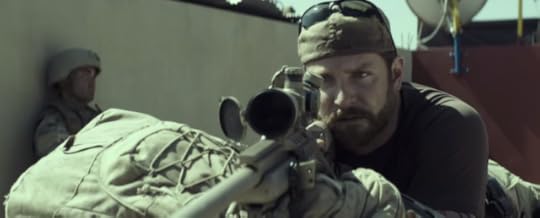
”American Sniper” di Clint Eastwood, 2014, con una notevole Sienna Miller.
Enard ha vissuto anni in Medio Oriente. Questo romanzo, che rispetto alla mole di “Bussola” o “Zona” viene da definire breve, è probabilmente ambientato in Libano: ma adesso la mente corre soprattutto alla Siria. Corre a un paese, e una parte, del Medio Oriente dove la guerra è di casa, è diventata realtà quotidiana, consolidata, fatta di abitudine. Anche la morte, in una situazione così, diventa pratica quotidiana, non più evento, abitudine.
Un giovane combattente senza nome, un cecchino da medaglia d’oro, che nella guerra trova tutto il dolore e il piacere che conosce, nell’incipit ci spiega subito che: La cosa più importante è il respiro. Il suo ritmo lento e regolare, la pazienza del respiro; per prima cosa devi ascoltare il tuo corpo, ascoltare i battiti del cuore, la calma del braccio, della mano. Il fucile deve diventare una parte di te, un tuo prolungamento. La cosa più importante non è il bersaglio, sei tu.
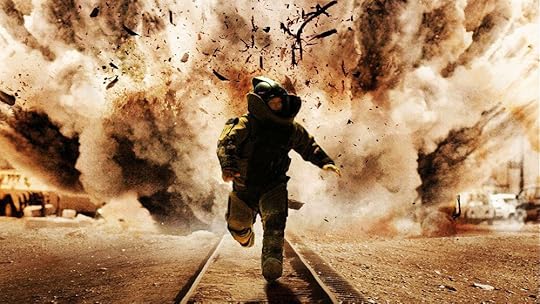
”The Hurt Locker” di Kathryn Bigelow, 2008, sei premi Oscar: film dell’anno, regia, sceneggiatura originale, montaggio, montaggio del sonoro, missaggio.
Questo diciottenne sa uccidere anche col coltello o con la pistola, ma col fucile di precisione dà il suo meglio, quell'arma lo trasforma in teorico, in filosofo, esprime saggezza: Sparare è prima di tutto una disciplina. Devi controllarti, comprimerti, raccoglierti, concentrarti nel bersaglio fino a sparire nel mirino per poi liberarti, aprirti e lasciarti scorrere come una goccia d’acqua. Devi creare una relazione fra te e le cose, un legame diretto che chiamiamo traiettoria; devi immaginarlo, seguirlo come un tragitto. Devi astrarti dal mondo, ritirarti piano piano nell’angolino irreale della mira fino a perderti nei riflessi infiniti delle lenti. Devi dimenticare la realtà del bersaglio, immaginarla come il punto di approdo, il traguardo di una corsa da vincere.
Certo, poi se si pensa che il bersaglio è sempre una vita, più spesso umana, ma per allenamento spara anche a uccelli, cani e gatti...
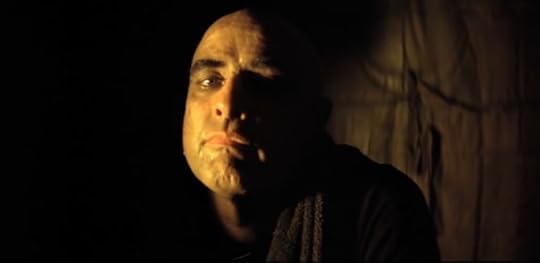
Marlon Brando/Kurtz in “Apocalypse Now” di Francis Ford Coppola, 1979.
Ha perso il padre, la madre ancora giovane è diventata pazza e ormai vive di psicofarmaci, il fratello maggiore è emigrato. Lui prende in casa una ragazza di quindici anni per badare alla madre: la giovane ha un nome, si chiama Myrna, ha perso il padre nell’esplosione di una granata, la solo famiglia che le rimane è una zia e un cugino. Accetta il lavoro, i soldi le serviranno per tornare a scuola, legge libri e vuole leggerne ancora, vuole studiare, imparare, e vuole che la guerra finisca.
Anche lui legge libri, il suo preferito è “Taras Bul’ba” di Gogol, che non per niente parla di guerra, cosacchi, condottieri, devastazioni. Lui non vuole che la guerra finisca. O forse, neppure lui sa cosa vuole: ma nella guerra ha trovato una sua realtà nella quale riesce a riconoscersi, a non sentirsi alieno.
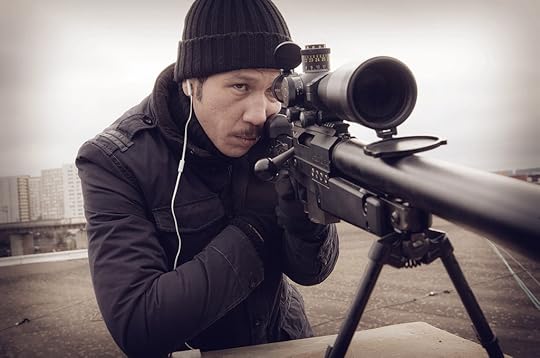
Reda Kateb in ”La resistance de l’air” di Fred Grivois, 2015.
Solo che la guerra è una roba brutta ed è difficile trasformarla in abitudine. Solo che guardare per ore dentro una lente, attraverso un mirino, aspettare il momento, sparare, e uccidere, piano piano qualcosa incrina. E prima o poi si spezza. Penso al cecchino del film di Clint Eastwood, penso all’artificiere protagonista del film premio Oscar “The Hurt Locker”, penso al sussurro di Brando/Kurtz L’orrore… l’orrore…, penso a…
Per le prime cento pagine Myrna è centrale nei pensieri e nelle giornate del protagonista, che per lei sente crescere un sentimento, o magari un’emozione, o forse piuttosto un desiderio. Myrna è bella, un’adolescente che in parte è già donna, lui ne è attratto. Ma né il sentimento, o l’emozione, o il semplice desiderio intaccano il Male che gli vive dentro ogni giorno.
Poi per una sessantina di pagine il romanzo diventa azione militare: la descrizione minuziosa e magistrale di qualche giorno di guerra al fronte.
Nelle ultime venti tutto si ricuce: il nemico, quello vero, non è dall’altra parte della linea di tiro, ma è dentro di noi. Ed è uno strazio, un colpo al cuore e allo stomaco, senza possibilità di fuga, senza riscatto, men che meno redenzione.
English: Perfecting the Shot Prix Edmée-de-La-Rochefoucauld for debut novels 2004 This was the start of Énard's spectacular international career: The 20-year-old protagonist and narrator of his debut novel "The perfect shot" is a murderer, torturer, and rapist. As a highly effective sniper, he is also a respected and feared combatant in his besieged city (the war is never specified, it could be the civil war in Lebanon or the one in Algeria though). Brutalized and psychologically destroyed by war, his emotional landscape proves that humans are not animal: No animal would ever indulge is such a fest of pointless cruelty. With his best friend Zak, the protagonist goes on torture sprees in which sexual lust and a frenzy of violence culminate in disturbing images - and make no mistake, Énard describes the physicality in all its gore and explicit detail.
This novel contains images that would fit right into the New French Extremity movement in cinema. In juxtaposition to this, we follow the protagonist as he falls in love with the 15-year-old caretaker of his single mother, who suffers from grief- and war-induced PTSD so extreme that she has lost her mind. The protagonist is fully unable to express any feelings connected to vulnerability, he only knows to conquer and defend with fear and power - which is exactly what he tries to do. As a sniper, he only finds peace in the flow of concentration he experiences when shooting from roofs - and he chooses objects for various reasons, often only to mentally destabilize and demoralize the opposing side. Killing and torture become coping mechanisms.
Énard ponders the effects of desensitization and brutalization that come with war: The protagonist is both fully human and de-humanized, as he has lost the ability to show emotions. He is exactly what Klaus Theweleit had in mind when he wrote about fascist soldier ideals: A shell of a man, an effective killing machine unable to do anything else. What makes this book so challenging and great is that Énard writes from the killer's perspective and thus does not grant the reader any relief: The depiction of emotional deformation combined with gore and rape is relentless and terrifying. While we get some hints at how the narrator became like this, Énard ultimately doesn't explain the extremity, which is brilliant, because it is of course ultimately inexplicable. In this regard, it's a book about subconsciousness, about suppression - but the protagonist is never excused. At one point, he protects a woman in during a civil terror operation in the countryside he partakes in - why? He and we couldn't possibly pin down the moral impulse.
I love this text for its daring approach to the portrayal of human violence. Énard is such a n intelligent and captivating author, I will aim to become a completist (and I will start a riot when Frank Wynne's translation of The Annual Banquet of the Gravedigger's Guild will not be nominated for the International Booker 2024).
Potrebbe essere quello della martoriata Siria oppure quello del sempre fragile Libano lo scenario bellico che fa da sfondo alla vicenda narrata ne “La perfezione del tiro”, romanzo con cui Mathias Énard ritorna ora nelle librerie italiane dopo il successo di “Bussola” di un paio d’anni fa. Anche se non all’altezza di quest’ultimo, vincitore a suo tempo del prestigioso Premio Goncourt, il libro conferma anzitutto la profondità e la piacevolezza della prosa di questo scrittore francese; in esso, oltretutto, si ritrova presumibilmente un frammento di quel Vicino Oriente a lui così caro, seppure spoglio dei suoi caratteri ormai distintivi (dalle moschee al velo islamico) che sembra addirittura strano non incontrare. È infatti fra gli orrori di un’ordinaria guerra civile di quell’area (ma non sarebbe poi tanto improbabile, in verità, nemmeno se si trattasse dell’odierna Libia allo sbando) che si muove il protagonista di queste pagine, un giovane uomo cresciuto troppo in fretta proprio a causa dello scoppio del conflitto. Un anonimo io narrante che fin dall’incipit trascina il lettore nell’oscuro vortice della sua storia: “La cosa più importante è il respiro. Il suo ritmo lento e regolare, la pazienza del respiro; per prima cosa devi ascoltare il tuo corpo, ascoltare i battiti del cuore, la calma del braccio, della mano. Il fucile deve diventare una parte di te, un tuo prolungamento. La cosa più importante non è il bersaglio, sei tu.” Un combattente rispettato, si definisce lui stesso più di una volta; un assassino, a detta di altri che, pur rispettandolo, lo temono e, a seconda dei casi, lo disprezzano. Un cecchino freddo, razionale, paziente che spara poco, ma a colpo sicuro, e al quale non importa, quando lo fa, se nel mirino del suo fucile compaiano uomini o donne, vecchi o bambini. Un ragazzo, tuttavia, che non trova il coraggio di uccidere la madre ormai in preda alla follia più tremenda e che si turba ed emoziona pensando a Myrna, l’orfana che lui prende in casa per occuparsi proprio della madre. Sarà la passione per questa quindicenne dal “corpo quasi da donna e un sorriso da ragazzina”, trasformatasi infine in ossessione, a mettere in luce la profonda contraddizione tra le sue due anime: quella del combattente spietato e quella del giovane di diciotto anni che non può non sentire disgusto per ciò che vede intorno a sé, e che compie in prima persona, né trattenere le lacrime. “Forse la stanchezza e la tensione si accumulano come una polvere invisibile che un bel giorno bisogna spazzar via con le lacrime.” Il libro, mentre mostra il volto nudo e crudo di una guerra senza nome, offre nel complesso una lettura molto scorrevole e ricca di spunti di riflessione non di poco conto; ben riuscita, inoltre, la scelta di non appesantire lo scenario del conflitto descritto con alcun riferimento geografico né di tipo politico-culturale, prediligendo in tal senso una sorta di vaghezza di tempi e luoghi a tutto vantaggio dell’approfondimento della complessa psiche del protagonista e di quella imperfezione di sentimenti cui sembra essere condannata l’umanità in generale. Drammaticamente realistica e priva di speranza di conclusione, la guerra stessa sgorga dalla penna dell’autore quasi come una entità a sé stante, protagonista a pieno titolo al pari di chi la vive e la racconta: “[…] andava e veniva senza una logica, come da sé; si concentrava in un punto per una settimana e poi si allargava, si estendeva per qualche tempo a tutto il paese prima di ripiegarsi per poi allargarsi di nuovo, come un cane che dorme.” Le sue nefandezze la rendono una spettrale terra di nessuno, dove il confine tra bene e male è sempre più labile e si confonde pericolosamente, scandito dall’eco degli spari improvvisi che arrivano dall’alto degli edifici sventrati. Alcune parti della narrazione, però, non risultano del tutto convincenti, come quella in cui, verso la fine, si organizza e si esegue la spedizione militare in montagna, pagine che, a mio avviso, catturano molto meno l’attenzione di chi legge facendo svanire la sottile magia delle parole di cui il romanzo, in particolare all’inizio, è intriso. Del resto, la guerra, quando la si vede da vicino, imbruttisce tutto e tutti; cos’altro dovremmo aspettarci? Speranza? Giustizia? Umanità? Di certo, non un epilogo felice.
I’d like my life to leave behind it no other murmur than that of a sniper’s song, a song to while away the time spent waiting. Regardless of what happens or doesn’t happen, it’s the wait that’s magnificent. —André Breton, Mad Love
/////////////
I really didn't want to give this five stars, nor say I recommend it.
but here we are, & I do.
the Breton epigraph is the right way in, since so much of this book is waiting: the scope, the stillness, the three seconds…
be aware, if you read this, that you're entering the mind of a character who isn't likable… he isn't even redeemable. it's dark. this inhabits a space even more uncomfortable than Lolita… maybe because both have the self-justifying narrator, & a child at the center of a perspective the reader is forced to occupy…
when I first started this, I got excited to remember a San Francisco based film noir I had completely forgotten about, The Sniper (1952), & planned on finding a way to rewatch it… but as I got deeper into it, & especially after finishing, I just can't for at least a while. (it's re: a man, a rifle, a city, & a psychology the film is more interested in than most noirs of its time.)
oh, but the prose here is as disciplined as the shooting. the sentences are controlled, the rhythm carries you into the sniper's mind, & whether you want to be there or not, you are… breath becomes a real subject: "the most important thing is the breath," & later, "the greatest pleasure is the breath."
the water scene with Zak is the one place the novel offers tenderness, & it's the most disturbing passage, because the tenderness sits in the same register as the violence… or maybe not the most disturbing, but it’s hard to talk about Myrna… without giving anything away but also just because you just know from the start it’s not going to go nor end well for her…
still processing it all… these are just initial thoughts… as Énard offers no respite & the soldier's depravity doesn't let up through the final page…
/////////////
The most important thing is the breath. (first sentence)
Deep down I think I wanted to give him a chance—and that is cowardice. Either you shoot, or you don’t shoot. You have to choose, or else you’re a coward. But I didn’t understand that until later. (3)
In silence, I watch the city. You have to go all the way. Few can do this. (3)
She said she’d heard people shoot at children in the school playgrounds. “Not me,” I lied. I don’t know why I lied. But it was the beginning and no one had realized that everything had changed for good. (5)
It was then, right in the middle of summer, that my mother became truly crazy. (6)
How can I find out? I want her, I have to go to the end, find in the flesh the pleasure of death, the spark of the shot. When it comes down to it, no one will ever understand you. You wisely keep up the illusion, the lie, but everyone knows that the truth is elsewhere, in this half-open hill, in the speed of the bullet and of desire. The impact, the reality of blood, the few seconds of death, of life when everything is intermingled, that’s the main thing. It doesn’t matter how you obtain it. Most of the people I’ve killed lived for only the three seconds when I was looking at them. They are ghosts, characters, masks who don’t know how to see anything. I make them live by looking at them, I bring them to life by killing them. It’s a contradiction, something I myself haven’t really grasped. But I’ll go to the end. (17)
It’s like being born, if I think about it. Sleep and the unconscious, the confused jumble of images, the outside that disappears little by little—you feel safe despite the danger, it’s the end of violence, the wave moves away. Sounds are more distant, stifled; you enter the safe carapace of dream or death, it’s the same thing, pain leaves you alone with your memories, with images, I saw her, I think, in those moments when the body evacuates tensions all of a sudden, as it falls asleep. (24)
Probably I was thinking of you, now that I’m watching you sleep, you too are in touch with something of the animal, I can tell from your eyes, I can see them beyond your eyelids, nothing escapes me. You are there and you are not there, the way in the middle of combat you act without really knowing, a stranger in your body. (25)
I’d never liked reading much, aside from Russian novels. I’ve read dozens of them, all the Russians I could find—Tolstoy, Leskov, Chekhov, Gogol, Dostoyevsky, one after the other. My favorite was Taras Bulba. Maybe I could get Myrna to read it, I thought. (30)
We started to play, to wrestle in the water—we were drunk, we played like children, Zak was stronger than me, he could dunk me at will, he caught me by my shoulders and suddenly there was no more violence, he became gentle and caressing. The rumble of artillery echoed on the sea, regular thunder; the explosions and some lights from the bay, over there in the distance, were reflected in the darkness. We didn’t say anything to each other, I just felt his breath against the back of my neck; it was a new tenderness, pleasant, amplified a thousand times by the noises of war that still reached us; nothing could be said, the slightest word would destroy everything. He passed one hand through my wet hair, the mountain caught fire in front of me, I felt the sand giving way beneath my outstretched feet. Then, as if nothing had happened, he plunged my head under the water, for a long time, I could feel myself gasping with pleasure; we started wrestling again, almost without any force, before we emerged from the water and lay down on a flat rock, in the dark, invisible in the shadow of the cliff, it was the immense silence that follows explosions: over there the shelling had fallen silent, there was nothing else, no stars, no moon, nothing. (32)
One night, I think she saw me, in her room; as usual I was silent, motionless as a guardian angel. She had turned towards me and I could see her half-open lips, her teeth, the swell of her breasts, her almost black arm on the big white wave of the sheet, and all of a sudden I saw her eyes open, blink and remain wide open. She stared at me in the dark. Then her arm moved, she lifted the sheet up and turned over. I stayed a long time without moving a muscle, fearing she’d really wake up; there was a cold sweat running down my back. I thought of my rooftop, my rifle; I said to myself that if she woke up and started screaming I’d have to kill her, and this thought made me both sad and joyful. But she fell back asleep, the sheet lifting regularly. My heart went back to beating normally too. No doubt she’d been dreaming, at worst she’d remember dreaming about me. Or having a nightmare, if she hadn’t recognized my face in the dark. (38)
I sensed I spread a diffuse fear, an anxiety that would have affected me too if I hadn’t been convinced that war had to be waged. Everyone realized this, deep down. Maybe it was evil, but someone had to do it, because the enemy didn’t hesitate to do it either. (40)
Without any real reason, I saw red. (45)
“They’re dead, it’s fine, let’s stop.” “No they’re not, they’re pretending, those scumbags, I’ll wake them up for you, you’ll see.” (50)
and all these images gave me an irresistible desire to shoot, to take down that nightmare creature with well-placed bullets, elegant, precise, which fly with the ease of a liberating bird, I placed my forehead in the center of the reticle, I imagined the projectile breaking the cranium and letting a red flood escape, rising up like a phoenix, and burning the birds and transforming the noon sky into an apocalyptic sunset, I saw the last gurgle emerge from my useless throat and leave me cold in the hands of Zak who was trying to make me suffer without succeeding, I finished myself off too soon, spat in his face my red hanged man’s semen, my brain, my bones that wounded him, my clicking jaws that laughed their last derisory song with parted lips open to the ears. Then Myrna took my place in the reticle, she became the trembling target in the hands of the enemy who played with her like a naked insect, without carapace, her brown skin striped with blood and burns, her chest cried out, her dark sex opened up, pink and palpating like a monstrous flower from which red and white sobs dripped—it was me torturing her, trying to drag pain from her that I wanted to see on her face, that I waited for, expectant, from afar, in the objective calm of the scope, on the face of Myrna who said nothing, and I killed her, not out of pity but out of anger, because she didn’t know who I was, because she wouldn’t show me her real face in the sights, her real child’s face that was suffering and that I made suffer. (52)
cold, liquid stars streamed down my back, (53)
I thought of my mother’s staring eyes, of the bodies torn to shreds, of shells, of Zak, I felt tired and cowardly, wiped out, like a prisoner who knows he’s going to die, that nothing can save him anymore. (57)
Shooting is above all a discipline. You have to restrain yourself, compress yourself, enclose yourself, focus yourself into the target until your very self disappears in the scope so that you can then free yourself, open yourself up and let yourself fall like a drop of water. You have to create a relationship between yourself and things, a direct link called a trajectory; you have to imagine it, follow it like a path. You must abstract yourself from the world, withdraw little by little into the unreal recess of the sights until you become lost in the infinite reflections of the lenses. You must forget the reality of the target, think of it as a goal, the finish line of a race that must be won. Your breath jammed the way the weapon is jammed against your shoulder, neither too loose, nor too tight, you have to fold your finger over the trigger in a gesture that is not a gesture, very gentle, without any force whatsoever, merely transmit the energy necessary for the trigger to move back without shifting the weapon, without causing a collapse of the fragile castle you’ve just built. (57)
I had Myrna and shooting, I wanted nothing else, or almost nothing. I reigned over the end of night and the dawn, from rooftops ever farther into enemy territory. I was unassailable, unattackable. (58)
because she too respected me; maybe at the same time she was afraid of me and I liked that feeling. (59)
I had to check and find a way to recover her. My brain was so wired that I took apart and put together my gun twenty times, feverishly, before I was able to calm down again; three cartridges for the aunt, the same for the cousin, very close, right in the face, I wanted to see them cry from fear and piss on themselves, shrink and stiffen before their heads exploded and disappeared, and I wanted Myrna to be there, I wanted her to see what I could do for her, how I’d punish anyone who hurt her and wanted to separate us. (66)
My heart was pounding, my fists clenched despite myself, I found myself on the floor again, I couldn’t see anything and all of a sudden, as if in a dream, I heard my mother’s shouts, her screams, which woke me up, set me upright, filled me with rage and violence—I no longer felt pain, I no longer felt anything, I was nothing but boundless anger and I knew I had to make her shut up, that she was shouting so I’d make her shut up, because it was her fault that Myrna had run away with her shouts and her madness, she was the one who had made her flee because she couldn’t bear seeing her anymore and hearing her all day long, she’d had enough of putting up with this crazy lady day after day, so I ran to her room, she was on her bed, her eyes wide open, she was screaming with her arms stretched out, fists closed, at the top of her lungs, her mouth wide open, I ran over to her, shouted, Are you going to shut up or not, are you going to shut up for good, and I hit her, hit her, hit her shouting for her to shut up until her shouts changed into the little mewls of a wounded cat, then I saw her, she stared at me unblinking, like a judge, an owl, her lips wide open in a smile full of blood, a silent, painful cry. I pushed her to the wall, left her room, the unbearable sun beaming down through the balcony, I went to sit outside, half-naked, and I stared straight at it until my eyes burned and the tears streamed down. (69)
Her screams at night are atrocious knives stuck into sleep, she is facing something terrifying, deep within herself, maybe deep within her own childhood, who knows, a moment, a mark, a wound that festered and grew deep within her consciousness until it conquered her, that sort of memory exists, that kind of crack, and me, I might add, and me, who will explain my own memories to me now that she’s fallen silent? They’re both there, silent, the weapons, too. They always end up falling silent, eventually. I knew nothing about that, then, time passed, I can’t really remember when, but soon after Myrna’s flight, the war resumed its normal course. (72)
I wasn’t thinking specifically of Myrna when I shot, but I’d have given a lot for it to be her in the sights, so I could observe her from top to bottom before deciding where I’d hit her, in the stomach, at the base of the shoulder, or right in the face, like a final photograph. (73)
“Yes, yes, (79)
Time loses its shape when I’m behind a rifle, so it felt like I’d been waiting a long time. Suddenly the valley was silent, or maybe it had been silent all along, I have no idea. The sun seemed to be dissolving the scent of thyme and spreading it through the dense air, the perfume of hot rock and dry grass was becoming intoxicating. I was breathing deeply and calmly, in a weird mixture of pleasure and tension. (83)
The leader’s voice reached me, deformed, through a lot of static. It was like talking with the other world, in the midst of this night and these sinister trees. (96)
in the silence: as if, without realizing it, I had toggled the switch of hell. The night opened up, illumined, streaked suddenly with lights, the thickets all around were shining with stars and flames all directed at me, the valley was now echoing with the shots of ten rifles all aiming at the dark shape of the cabin, from above, and one of them, I was sure of it, was aiming precisely at us—the young guy shouted, he fell onto me. I curled up as well as I could, hidden under the wounded boy, the whistles of a hundred thousand metal ghosts grating on my ears, for a minute maybe, or more, or less, until the tension diminished, until someone found the presence of mind to shout “cease fire,” “cease fire.” The silence seemed even deeper after the din. (100)
it observed, it was looking at us maybe, so I said to myself, what’s the use, what’s the use, Zak, we’ve already died many times, I fired, the head exploded and the bird fell in a spray of blood. (103)
The greatest pleasure is the breath. (103)
The memory of Myrna was fading a little too. Sometimes, when I had a young woman in the scope who might have looked like her, or who was about the same age, I’d start picturing her again in her bed and imagining her naked, and often shooting would elude me, because of the emotion and desire. I hadn’t forgotten the humiliation of her leaving, but my rage had abated somewhat. I suppose I thought she would never come back, that she was dead, maybe. From time to time at night I’d imagine erotic situations with her, that I was kissing her, undressing her, but my memories were less and less vivid, less and less real, as if worn out. Fortunately, I was shooting better than ever. (104)
“And me what?” “Are you afraid?” She hesitated for a minute. “I . . . I don’t know. Before, yes. Today, I don’t know.” I wondered which of us had changed. Maybe I was trying to reassure her. Maybe I was less frightening than before. Maybe she’d gotten used to the war. Maybe she’d grown up. Maybe all of that. (116) Rain, rain, you give pearls to death, I thought. On the sleeping child the echo of breath, I thought. (126)
It’s me she mourns; it’s me she mourns and me who leaves. (134)
Para leer este libro hay que tener estómago. Es una lectura muy dura, no por como está escrita, sino por lo que cuenta. Es la historia, narrada en primera persona, de un francotirador, del que no se dice el nombre en ningún momento, que lucha en una guerra civil, no se dice tampoco cuál. "Lo más importante es el aliento", dice. Sólo busca el tiro certero, a mujeres, niños,..., no importa. El francotirador se pasa mucho tiempo vigilando al bando contrario, al otro lado de la ciudad, a través de su mira; o de escaramuzas con su grupo por la montaña para recuperar pueblos invadidos. Sólo tiene dos amigos, su fusil y Zak. De noche vuelve a su casa, donde le espera sólo su madre, que no puede valerse por sí misma. Se ha vuelto loca. Es entonces cuando contrata a una joven, una niña de 15 años para que la cuide mientras está defendiendo el territorio. El tiro y esta niña, serás sus obsesiones.
No sé qué opinar de este libro. Está muy bien escrito, con frases certeras. Pero lo que cuenta es tan horrible... Te cala hasta los huesos y te deja una sensación de asco, no sólo por el tirador sino por la humanidad en general, que tardas en olvidar. Son cosas que querríamos no saber, para tener a salvo nuestra cordura, pero que están a la orden del día. Y eso es lo más espantoso.
The desire for a body, a face, a mouth is just the tangible part of the night that inhabits us, it's a volcano that from the ocean thrusts its lava and ashes around its crater. I could see orange fissures appearing in my mind, contradictory seethings that provoked tidal waves of emotion and anger, and I could sense clearly that Myrna was making everything shatter to pieces, in an obscene to-and-fro of life towards death. The city was an empty stage set, calmly deserted by the war. I kept walking, I wanted to find the front, more than once I was tempted to hide in ambush at a streetcorner and start shooting at the rain,
Perfecting the Shot is Charlotte Mandell's 2026 translation of Mathias Énard's 2003 debut, La Perfection du tir, published when the author was 31.
The translation is the latest novel from Fitzcarraldo Editions, Enard's Zone (2008), also in Mandell's translation (2010 in the US, but 2014 in the UK) was the very first of their novels in their distinctive blue colours, this the 93rd by my account. And they have also published 5 other novels by the author in translation, mainly alongside New Directions in the US.
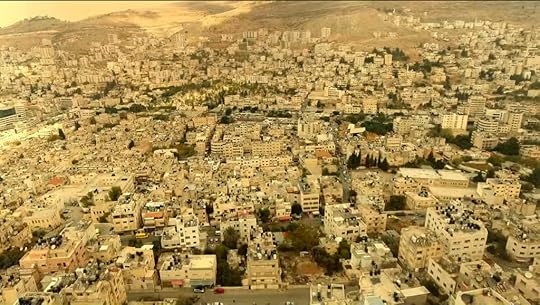
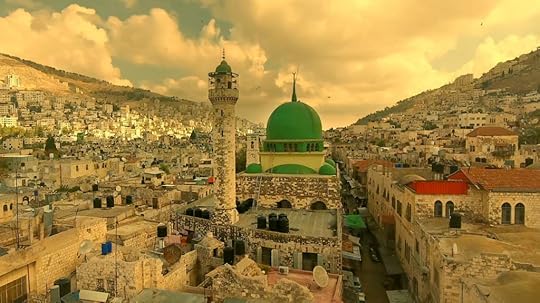
The novel is narrated by (I believe) a teenager, who serves a sniper in an urban civil war zone, deliberately unnamed although based on Beirut. He opens his account:
The most important thing is the breath.
Calm, slow breath, the patience of breath; first you have to listen to your own body, listen to your heart beating, to the stillness of your arm, of your hand. The rifle must become a part of you, an extension of yourself. Even before the target, the important thing is yourself. You have to organize the space, whether you’re on a roof, behind a window, anywhere, you have to control it, make the space your own. Nothing more annoying than a cat passing behind you, or a bird flying off. You have to be yourself and nothing else, eye on the scope, the metal arm stretched towards the target, to join it. From my roof I survey the sidewalks, explore the windows, watch people living. I can join them by pressing the trigger. It’s not simple, quite the contrary, it’s a difficult job that demands precision and concentration. People think only of the gunshot and the result of the shot. They don’t know that I listened to their heart beating through mine, that I held back all emotion, that I stopped breathing, just before pulling the trigger, as they say, but I don’t pull anything, on the contrary, I set loose a metal hammer that strikes a point of percussion that sets fire to powder that propels a projectile up to 1,200 metres and kills you. Or not.
As this paragraph indicates he takes a detached, amoral pride in his deadly craft - his victims typically civilians rather than combatants - working solo and attempting only difficult shots.
Although this acts as something of a displacement from the day-to-day combat with which he is also involved, working closely with his comrade and friend Zak, who favours hand-to-hand fighting over distant rifle shots, and enjoys harrassing, and at times abusing, civilians who attempt to pass through their checkpoint.
The narrator's mother is less than 50yo, but her mental health has deteriorated after the loss of her husband in an accident just before the combat started and then from the bloody battles and bombardments she witnesses, and she now needs full-time care. The narrator employs a 15 year old girl, Myrna, herself orphaned in the conflict as a live-in carer, and, although initially only observing her through her door or while she sleeps, immediately entertains sexual fantasies involving her. He also remembers a brief erotic moment shared with Zak once when they swam together
She is there a few feet from me now and it's like on the balcony again, I can't hear her breath any more than before, behind her shutters. The sea is haunting, I think of Zak's hands, of Myrna's hands. I don't regret anything. Only cowards regret, it's a kind of retrospective fear, what's done is done. Sometimes you want to squeeze and hold tight, sometimes you open your arms, sometimes (with the help of night, summer torpor or a secret gap in the sky) you are truly yourself. Sometimes you are yourself in full daylight, blinded by the calm of a rocky beach, and even if I'm ashamed before you I can't keep from having this memory of Zak, he's a magnificent barbarian in the moonlight, his hard, brotherly body against mine, the strange death pact sealed in the water.
He and Zak go their separate ways, in part as Myrna's presence drives a wedge between them, and the narrator later encounters Zak on a mission, in the process of raping a civilian prisoner, and comes close to murdering him. And as he is involved in increasingly visceral battles, and concerned that if he doesn't kill Zak then Zak will kill him, his own fantasies become increasingly disturbing:
I pictured myself tortured by Zak, cut into pieces, humiliated, crying like a baby, without any more control over myself, and all these images gave me an irresistible desire to shoot, to take down that nightmare creature with well-placed bullets, elegant, precise, which fly with the ease of a liberating bird, I placed my forehead in the centre of the reticle, I imagined the projectile breaking the cranium and letting a red flood escape, rising up like a phoenix, and burning the birds and transforming the noon sky into an apocalyptic sunset, I saw the last gurgle emerge from my useless throat and leave me cold in the hands of Zak who was trying to make me suffer without succeeding, I finished myself off too soon, spat in his face my red hanged man's semen, my brain, my bones that wounded him, my clicking jaws that laughed their last derisory song with parted lips open to the ears. Then Myrna took my place in the reticle, she became the trembling target in the hands of the enemy who played with her like a naked insect, without carapace, her brown skin striped with blood and burns, her chest cried out, her dark sex opened up, pink and palpating like a monstrous flower from which red and white sobs dripped - it was me torturing her, trying to drag pain from her.
The novel is highly effective at portraying the moral degredation of war - at one point the Myrna says the war is caused by people like the narrator, which he misunderstands as her taking sides, whereas she means it is fuelled by those for whom slaughter and abuse increasingly becomes addictive (the narrator admits to being relieved when a brief ceasefire is broken).
Perhaps less effective for me were the protracted action scenes as the narrator and his colleagues battle against the enemy, and against the fog of battle.
Overall - not where I would start with Énard - Zone and Compass are his masterworks, and Tell Them of Battles, Kings, and Elephants an accessible starting point, but a welcome additon to his works in translation. 3.5 stars rounded to 3 relative to the aforementioned works.
2003 La Perfection du tir (tr. Perfecting the Shot, 2026 by Charlotte Mandell) 2005 Remonter l'Orénoque 2007 Bréviaire des artificiers 2008 Zone (tr. Zone, 2010 by Charlotte Mandell) 2010 Parle-leur de batailles, de rois et d'éléphants (tr. Tell Them of Battles, Kings, and Elephants, 2018 by Charlotte Mandell) 2011 L'alcool et la nostalgie 2012 Rue des voleurs (tr. Street of Thieves, 2014 by Charlotte Mandell) 2015 Boussole (tr. Compass, 2017 by Charlotte Mandell) 2018 Désir pour désir 2020 Le Banquet annuel de la Confrérie des fossoyeurs (tr. The Annual Banquet of the Gravediggers’ Guild, 2023 by Frank Wynne) 2023 Déserter (The Deserters, 2025 by Charlotte Mandell)
Since his 2023 novel, Énard has published two volumes of a planned four-book non-fiction work, Mélancolie des confins.
con un tono muy frío y deshumanizado el relato de éste francotirador, que asesina tanto a soldados como a mujeres y niños se torna en una lectura a veces farragosa y que por lo menos a mí,me sacaba a menudo de la historia, es destacable la valentía del autor en dar voz a la crueldad de la guerra sin medias tintas, a veces muy duro de leer porque no tiene reparos en narrar violaciones y muertes de civiles, su protagonista un psicópata tan frío como la narración, no tiene empatía por nada, pero los personajes que lo secundan o son tan despiados como él o tienen la locura como única válvula de escape a ese mundo de muerte y desesperanza, una lectura que no es fácil por lo cruel que es todo y por ese tono ( predeterminado o no ), de alejamiento hacía el lector
A brutal but compelling read about an unnamed teenage sniper, fighting in an unspecified war in an unnamed country. The young soldier sees himself more as an artist than a blood-thirsty fighter. The precision of his violence makes it a craft: he doesn't simply kill, he kills beautifully.
This is a harrowing exploration into what happens to the human psyche when continuously exposed to extreme violence. In its initial pages the power of Enard’s writing left a sense of unease, and although that lessens, it never really goes.
Despite being set during a civil war, we are never told the duration of this war, or the reason for it; because that isn’t the point. There are wars like this being fought around the world in several places, so it is very timely.
The book itself focuses more on the main character’s corrosion of their own morality and the blurred lines between what’s a target and what isn’t.
Énard writes with remarkable control. There is lyricism here, but it is cold, observed from a distance. It is a short but quite memorable book, that doesn’t attempt to explain war, rather in what happens when war becomes commonplace, and killing becomes just a job.
Horrible, je crois que mon cerveau s’est déconnecté une phrase sur deux, voire un mot sur deux sinon je vomissais Bon après il écrit bien c’est vrai mais j’étais trop dégoûtée pour apprécier. Ce qui est d’autant plus horrible parce que je pense que c’est assez proche de la réalité d’un bon nombre de personnes
Che scrittura! secca, luminosa, inesorabile. Non risparmia niente. Scrive quello che lui vede dal mirino, la prospettiva è schiacciata, claustrofobica, non c'è altro che la sua inquadratura, non ci sono alternative, possibilità. C'è un gelido susseguirsi di eventi che generano reazioni, emozioni?, incasellate anch'esse nel racconto di eventi. Lo schifo della guerra, l'orrore e il trauma di essere assassino a 18 anni diventano febbre, vomito e crampi, poi ti abitui. Il pensiero, forse il rimorso, diventa un fischio all'orecchio, basta sparare un'altra volta per farlo smettere. E a questa assurda, strettissima, inquadratura fa da contraltare l'universalità della guerra. Questa guerra non ha un luogo, perciò è ovunque, non ha un nome, è qualunque guerra, non ha fazioni, solo combattenti che sparano, che uccidono, che muoiono, che montano e smontano i turni, che non pensano, non criticano: eseguono, uccidono, torturano, violentano. E' tutte le guerre. Non ci dice mai per quale causa combattano, da che parte stiano. E questo allarga tutto, come se non ci fosse il soffitto nella stanza in cui leggi ma solo il cielo. Dice che è difficile immaginare come si ragiona in tempo di guerra quando c'è la pace e viceversa. Non c'è comunicazione tra i due stati di cose, tra i due mondi. dice che la guerra inizia per ciascuno in un momento diverso, per qualcuno è quando una granata uccide tuo padre nel suo negozio, per un altro quando il padre cade da un ponteggio e muore, per un altro quando arrivano i combattenti al villaggio e distruggono la tua casa. E come non c'è la data di inizio non c'è nemmeno quella di fine, non si sa se finirà mai questa guerra. Ci sono gli occhi di una madre, pazza, impazzita per la guerra e quelli di una ragazza di 15 anni a guardare questo combattente, loro sono testimoni di questa guerra, di questa violenza cieca, senza scopo e senza fine. La ragazza dice che sono loro, i combattenti, a creare la guerra. Lui le risponde che loro la guerra la fanno ma sono stati altri ad averla iniziata. Lei tace. E in questo scambio c'è tutto il libro, tutta l'insensatezza della guerra.
“Childhood calls us, at times, takes us by surprise. Fear of the storm, I thought, I must have been afraid of the storm when I was little, and she would say rain, rain, rain, and she’d talk to me about the jewellery of the prince’s daughter, those glass charms that clinked when they danced in the puddles, you don’t forget anything, deep down it’s all been there always, ready to serve, monsters too.”
This book has moved me so much. The ending made me weep and some of the paragraphs in this book are astonishingly sad and human and beautiful. Incredibly heavy and definitely not one for all types of readers but it really impacted me
A dark and haunting dive into the psyche of a teenage soldier fighting a civil war in an unnamed country.
The soldier, a sniper, is well respected among his comrades for the calm and precise manner in which annihilates the enemy from improbable distances while hardly breaking a sweat. Emotionally stunted, the time he spends on rooftops hunting for targets, often just civilians he kills at random, seems to restore his equilibrium rather than causing any sort of guilt or inner turmoil. He approaches the task methodically, meditatively, noticing his breath work, the presence of the wind, and the calm of his mind in these moments.
Despite the genuine enjoyment he feels at taking down the unsuspecting from his perch, the tensions of more direct combat take their toll and destabilize what appears as cool, calm, and collected from the outside. An obsession soon begins with the 15 year old girl hired to help his mentally ill mother. The reader squirms in their seat as they observe this poor girl from the violent gaze of the soldier, certain that this can only end in disaster.
It’s an uncomfortable perspective to inhabit and readers who insist on likeable or at least redeemable characters should stay far away. Énard offers no respite, the soldier’s depravity is unrelenting through the final page and highlights the way war strips all humanity from those who dare to play its games. We hear the justifications and thought processes of someone we would deem a sociopath and a predator, forced to understand the consequences of what happens when violence becomes a routine, everyday occurrence.
In perfect tandem with the mind of the sniper, the writing is controlled and disciplined. Given the mind we occupy, there’s a distance and lack of emotional depth, but as to be expected with any Énard work, the intention behind each sentence, the rhythm and cadence, all shine through. Mandell’s work here is commendable, immersing the English reader, ready or not, into the intensely claustrophobic mind of a monster.
Nueva novela de Mathias Énard que leo, esta vez su debut literario. La traducción del francés al inglés corre a cargo de Charlotte Mandell. Y es uno de los libros elegibles para los International Booker Prize 2027. Esta novela gira en torno a un hombre, que desde muy joven se ve involucrado en la guerra. Es una historia dura, que refleja lo difícil que es para la persona que durante años ha estado vinculada al servicio militar desvincularse de él. además, reflexiona sobre la crueldad de la guerra: matar a otros semejantes, aprender a disparar para matar a otras personas. Uno de los aspectos que me ha gustado mucho es cómo Énard nos traslada a un tiempo oscuro, opresivo, en el que este hombre, este militar, goza del respecto de sus camaradas ya que es bueno en su trabajo. Pero al mismo tiempo cuando este hombre está en casa, con su familia, con su pareja, sentimos que es un inadaptado. Él no es capaz de imaginarse un futuro en el que no tenga que trabajar como oficial del ejército. Esa conversación con su pareja es realmente dura. Otro aspecto que refleja su inadaptación a la sociedad es cuando piensa en casarse con su novia, que es joven, él piensa que tendrá que matar al padre de la joven ya que no cree que él le vaya a dar la mano de su hija. A pesar de que finalmente descarta la idea de matarlo, no lo descarta porque le parezca mal, sino porque su novia no perdonaría lo que había hecho. Énard nos retrata a un hombre con mucha sangre fría, perfecto para destruir a los enemigos, pero un hombre que carece de empatía y de aptitudes para socializar. Énard en ningún momento trata de dulcificar o blanquear el trabajo tan terrible de este soldado, al cual es adicto. Cuando no está trabajando, él extraña estar inmerso en actividad, estar en peligro. Él está obsesionado con perfeccionar su tiro y ser mejor en su trabajo. Sze trata de algo duro de leer, pero que creo que retrata muy bien lo ocurrido durante la Primera y Segunda Guerra Mundial, y luego tras la de Vietnam. Los soldados que estuvieron tanto tiempo luchando y matando a sus semejantes, tuvieron verdaderos problemas para volver a una vida normal, y eso es lo que Énard refleja en este libro. El lector es consciente de que este soldado no va a tener un buen final y no va a poder redimirse ya que en cierta medida: su trabajo como soldado es su personalidad, es lo que ha dado al soldado su razón de ser. Una novela recomendable, oscura, y que engancha por la forma tan real, cruda de la narración de Énard.
Mientras seguía las conversaciones de Andrei (de The Untranslated), Max Lawton y otros clavados de la literatura, descubrí un nombre que hasta entonces me era completamente desconocido: Mathias Enard. Mencionaban que una de sus novelas estaba entre las "más esperadas" para 2025, especialmente por su traducción al inglés. Esto me llevó a interesarme por este autor, así que me di a la tarea de buscar qué obras suyas estaban traducidas al español. Me asombraba no recordar haber visto sus libros en las librerías de México. La excepción fue el Péndulo de la Juárez, donde encontré La perfección del tiro.
Tras investigar más sobre Enard, descubrí que sus obras más celebradas son Zona y Brújula. Ambas estaban disponibles en Buscalibre, aunque a precios algo elevados. Aprovechando mi cumpleaños, decidí regalarme La perfección del tiro, una novela que, además de estar a un precio accesible, prometía una lectura distinta a lo que había explorado antes.
La guerra como metáfora de la vida
Mathias Enard se reveló como un escritor excepcional. Aunque inicialmente pensé que la trama de La perfección del tiro podría parecerse a películas como Enemy at the Gates (Annaud, 2001) o Jarhead (Mendes, 2005), la novela me ofreció una perspectiva única y profundamente humana sobre la guerra. Enard no se limita a narrar batallas o estrategias militares; en cambio, explora la experiencia íntima de un francotirador, un hombre cuya vida está marcada por la tensión constante de apretar un gatillo y la carga emocional que eso conlleva.
***Mi comentario completo próximamente disponible en mi blog: ninjavolador.
Der Anfang: «Das Wichtigste ist der Atem. Das ruhige und langsame Ein- und Ausatmen, die Geduld des Atems. Zuerst muss man auf seinen Körper hören, auf seinen Herzschlag, Arm und Hand ruhig halten. Das Gewehr muss zu einem Teil des eigenen Körpers werden, seine Verlängerung. Selbst das Ziel ist untergeordnet, wichtig ist die eigene Person. Man muss sich um den Platz kümmern, ob man sich auf einem Dach oder hinter einem Fenster befindet, ist egal, man muss die Stellung beherrschen, sie ganz vereinnahmen. Nichts stört mehr als eine Katze, die plötzlich hinter einem vorbeistreicht, oder ein Vogel, der auffliegt. Man muss ganz bei sich sein, nirgendwo sonst, das Auge am Fernrohr, den stählernen Arm aufs Ziel gerichtet, bereit zu treffen.»
Intensiv und gnadenlos erzählt Mathias Enard aus der Perspektive eines 20-jährigen Scharfschützen, wie er den Krieg erlebt. Reale Kriegsgewalt, die etwas mit den Kämpfenden macht, etwas in ihnen auslöst, sie verändert, verrohen lässt. Auf Konzentration kommt es an, auf Geduld und Atemkontrolle. An einem guten Tag reicht ihm ein einziger perfekter Schuss. Der Namenlose wohnt in einer Stadt, die belagert wird; und fast erscheint uns sein Job wie jeder andere. Morgens verlässt er seine demente Mutter, abends kehrt er heim oder er muss ein paar Überstunden schieben. Wenn er von seinem Posten auf dem Dach heruntersteigt, genießt er die Angst, die er verbreitet, wenn er durch die Straßen geht. Dies ist ein Kriegsroman, aus der Perspektive eines Soldaten, eines Snipers, der sein Selbstwertgefühl aus der Eleganz seiner Treffer zieht. Kalt berichtet der Erzähler von seinem Handwerk, dem Töten, und offenbart eine Wahrnehmung, in der die Verbindung zwischen gelungenem Schuss und ausgelöschtem Leben gekappt ist. Ein Kopfschuss aus 1500 m. Wo ist der Unterschied zwischen einem Auftragsmörder und einem Soldaten? Bezahlt werden sie beide für Töten.
«Der frühe Morgen ist die beste Zeit. Das Licht ist perfekt, es blendet kaum, nichts spiegelt. (…) Im Morgengrauen hatte ich einige meiner besten Abschüsse. Die Frau zum Beispiel, die sich in ihrem schönen Kleid, den Korb in der Hand, zu freuen schien, aus dem Haus zu gehen. Ich habe sie im Nacken getroffen.»
Präzise formuliert – Volltreffer – wie die Schüsse des Protagonisten. Der Ort der Handlung und die Gründe, die zum Krieg führen, sind völlig ausgelassen. Hier geht es nur um den Todesschützen, um seine eiskalte Beschreibung, teilweise wie aus dem Berichtsheft für die Berufsschule: «Man muss den Atem anhalten, den Finger am Abzug in einer unmerklichen Bewegung leicht krümmen, sehr sanft, ohne jeden Druck.» Und wir erfahren, was er denkt. Was er denkt, wenn er tötet. Er liegt auf einem Dach, auf einem Hügel, sitzt in einem Hochhaus und visiert sein Ziel an. Sein Gewehr nennt der Einzelgänger «kalten Kameraden». Es ist Krieg – er muss seine Kameraden schützen, die angegriffen werden oder sich im Angriffsmodus befinden. So weit so gut. Aber es lässt einem das Blut in den Adern gefrieren, wenn er zwei Gegner ins Visier nimmt, den einen tötet, den anderen in den Oberschenkel schießt. Der wird schreien und jemand wird kommen, ihn zu holen. Auf den wartet er. Er geht nach der Schlacht über das Feld, erledigt Feinde mit einem Kopfschuss, die verletzt sind. Und er tötet den angeschossenen Kameraden in einer prekären Situation, weil er ohne ihn bessere Chance hat, herauszukommen.
«Das Schießen ist wie eine sanfte Droge, man will immer mehr davon, immer schönere Treffer, immer schwierigere.» Aber Mathias Enard schildert nicht nur das äußere Grauen, koordinierte Abläufe, volle Konzentration auf das Ziel, das Abschlachten. Der Soldat geht parellel in sich hinein, beschreibt seine innere Veränderung: «Von einem Tag auf den anderen veränderten wir uns, ohne zu verstehen, was uns verändert hatte.» Aber nie stellt er den Krieg oder sein Handeln in Frage. Seit drei Jahren ist er Scharfschütze. Er greift in eine Vergewaltigung von Kameraden ein, doch gleichzeitig begehrt er die 15-jährige Myrna, die er engagiert hat, seine demente Mutter zu versorgen. Zunächst gibt es zarte Annäherungen zwischen den beiden, Kinobesuche. Doch dann kippt die Beziehung, und sie lebt in Angst vor ihm, spürt seine Gefühle, seine Unberechenbarkeit. Sie weiß um seine kaltblütige Gefährlichkeit, auch außerhalb des Kampfes. Er will Myrna beschützen – zugleich treibt es ihn an, sich auf sie zu stürzen, sie eifersüchtig auf jeden einzusperren. Emotionen zwischen Sehnsucht, Traurigkeit, Begierde und Wut; der Hunger nach Zärtlichkeit; Brutalität, die aufsteigt, weil sie sich ihm widersetzt. Stellenweise ist der Text kaum zu ertragen, skrupellos und berechnend. Doch dann zeigt der junge Mann Brüche in seiner Seele, wird menschlicher; immer, wenn er sich selbst reflektiert. «Man weint allein in seinem Bett. Doch das geht vorüber.» Ein Soldat, ein Getriebener; denn was er nie erwähnt, ist seine Einstellung. Warum steht er hier? Hatte er sich freiwillig gemeldet oder wurde er eingezogen? Andererseits wird durch diesen Schachzug jede Ideologie ausgeklammert, was den Roman umso präziser macht.
Das Buch ist schon zwanzig Jahre alt, es war Mathias Énards Debüt. Das Setting ist irgendwo. Die einzigen Hinweise, den der Lesende erhält: Hitze, abgelegene Bergdörfer und Lavendelbüsche – ein Ort des Südens. Ein zeitloses, eindringliches Antikriegsbuch! Krieg, bei dem Moral und Menschlichkeit abhandenkommt, Menschen verrohen – eben Krieg. Ein Roman, der durch den Ukraine-Krieg wieder hochaktuell wird. Posttraumatische Belastungsstörung (PTBS) durch Kriegserlebnisse, erlebte Gewalt, sind heute bekannt. Soldaten wie auch die Zivilbevölkerung sind betroffen. Krieg macht kaputt! Ein Roman zur Psychologie des Krieges, der Menschen verrohen lässt, der trotz aller Härte und Brutalität begeistert in seiner Intensität und Sprachgewalt. Eine literarische Perle, Empfehlung!
Mathias Enard, geboren 1972 in Niort (Westfrankreich), studierte Kunstgeschichte, Arabisch und Persisch, und lebt heute, nach längeren Aufenthalten im Nahen Osten, in Barcelona, wo er an der Autonomen Universität Barcelona Arabisch lehrt. Seine Romane «Zone» (2008) und «Erzähl ihnen von Schlachten, Königen und Elefanten» (2010) wurden mit zahlreichen Preisen ausgezeichnet.
Une guerre civile qui se déroule quelque part dans un pays de chaleur et de sable. Le personnage principal est tireur d’élite. Ce soldat se poste régulièrement sur les toits en se donnant le défi de perfectionner quotidiennement son tir en tuant des civils ennemis. Calme, appliqué, froid, il tue sans remord. C’est son travail et le travail bien fait le satisfait.
Devant s’absenter quotidiennement pour « son travail », il s’inquiète de laisser derrière lui une mère qui a perdu le contact avec la réalité et qui se fait de plus en plus incontrôlable. Il se résout à engager quelqu’un pour s’en occuper. Voilà qu’arrive Myrna, une adolescente de 15 ans. Autant, cette dernière fera naitre en lui une lueur d’humanité, autant leur relation sera complexe et teintée par la destruction civile et sociale environnantes.
Malgré le lourd contexte et la cruauté de la guerre, l’écriture est tristement vraie, vibrante et touchante.
es una locura de libro. El personaje principal es un francotirador de 18 años, su trabajo es “defender” la ciudad en la que vive, ya que se encuentra en guerra. Pero más que su trabajo, es su vida. Este hombre ama ser francotirador, ama -ahora si que- la perfección que requiere disparar y matar, le encanta que la gente le tenga miedo.
Al mismo tiempo, el personaje nos cuenta que vive con su madre, quien esta empezando a sufrir demencia, por lo que contrata a una niña de quince años llamada Myrna para que lo ayude a cuidar a su mamá.
Es muy fácil dejarse llevar por esta historia y, cuando menos te das cuenta, encontrarte totalmente sumergido en ella. El protagonista es un psicopatía que nos deja entrar en su retorcida mente y nos contagia de toda la ansiedad, horror, enojo y locura que tiene dentro de él.
ужасающая история о непонятной войне от лица ее солдата талантливого снайпера и безжалостного убийцы который видит мир только через прицел и рушит жизни всех вокруг. Настолько отталкивающий и омерзительный главный герой что местами приходилось откладывать книжку
i refuse to use this 1/4 star thing. this made me so uncomfortable and disgusted and also sad but not in a “now i can’t do work” type of way. absolutely everything i expected after the LRB talk
Más allá de la insoportable violencia gratuita y de la banalidad absoluta de la guerra que aquí se retrata, no pude encontrar interés en los elementos narrativos. Lo que al principio atrapa -las descripciones detalladas de la estrategia del tiro, la búsqueda de belleza en el horror, la tensión moral del personaje (que al final resulta vacía)- más adelante agota. Encuentro contradicciones en la narración, demasiado frecuentes para pasar desapercibidas.
Para rescatar, el uso de algunos pincelazos poéticos y buenas metáforas en medio de lo grotesco.
"La carne si apre per lasciar passare la lama, fra due costole, un attimo ed è la vittoria su colui che senti ansimare contro di te. Nessuno dei due pensa, in realtà nessuno dei due è presente, siamo solo panico e strano coraggio brutale, nessuno attacca, tutti si difendono, quello che vogliamo, quello che desideriamo fin nel più profondo di noi stessi è il riposo magico dell'oblio e del sonno".
Finalmente ho avuto modo di approcciarmi alla scrittura di Mathias Enard, un autore che mi aveva sempre incuriosito e intimorito. Dopo aver letto queste pagine così dure e spietate posso dire di essermi completamente persa nelle sue parole, nel suo stile che ha la straordinaria capacità di farsi allo stesso tempo poetico e brutale, di raggiungere picchi di rara bellezza senza aver bisogno di artifici retorici, ma ricorrendo solo all'immenso potere evocativo delle parole, anche delle più semplici. Questo libro ti rapisce già dalla prima pagina con un incipit mozzafiato che lascia ben intendere quale sarà il tono di tutta la storia. Enard ci porta nella mente di un cecchino, un assassino asservito a una guerra senza tempo e senza nome perchè rappresenta qualsiasi guerra, qualsiasi fabbrica di morte che affligge il mondo e che oggi mi porta soprattutto a pensare a ciò che sta accadendo in Siria. Il conflitto, le bombe, la paura sono ovunque in queste pagine, eppure per quest'uomo la guerra è paradossalmente vita, è ciò che lo fa sentire forte, è l'adrenalina che lo fa svegliare la mattino, è il suo pane quotidiano, l'unica certezza in una vita sregolata che ha fatto emigrare suo fratello, sparire suo padre e letteralmente impazzire sua madre ormai dipendente da psicofarmaci. E poi c'è Myrna, una ragazzina di quindici anni che sembra portare luce nella sua buia esistenza, Myrna che diventa un'ossessione, che porta a galla la sua parte più torbida e disperata, Myrna che è l'ennesima vittima di un conflitto insensato. Enard ci fa vivere tutto con il fiato sospeso fino a un finale così struggente da far venire le lacrime agli occhi. Unica pecca per me la parte centrale dedicata alle azioni di guerra che ho trovato troppo lenta e un po' prolissa e che mi ha fatto un po' distrarre durante la lettura. Per il resto, assolutamente consigliato!
"Avevo la febbre, mi bruciava la fronte, stelle fredde e liquide mi scorrevano lungo la schiena, tra le coperte stringevo a me l'arma e lei mi riscaldava e mi raggelava, innescavo le sue viscere di molle che facevano soltanto un clac sordo e inutile e ascoltavo con l'orecchio incollato alla pancia di metallo il vuoto infinito di quel serbatoio di morte, la molla in fondo al caricatore inutilmente tesa verso l'alto, vuota, senza niente da dire a nessuno se non la propria nerezza sudicia di grasso."