Jump to ratings and reviews
Rate this book

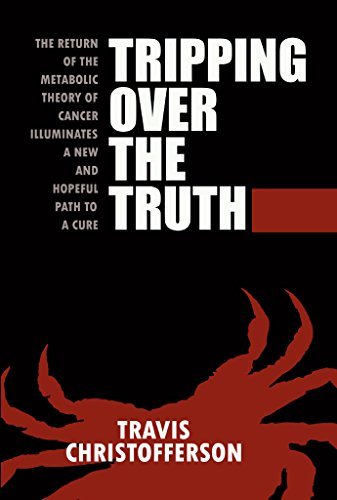
Tripping Over the Truth: The Return of the Metabolic Theory of Cancer Illuminates a New and Hopeful Path to a Cure

Rate this book
A masterful synchronization of history and cutting-edge science shines new light on humanities darkest diagnosis.

In the wake of the Cancer Genome Atlas project’s failure to provide a legible roadmap to a cure for cancer, science writer Travis Christofferson illuminates a promising blend of old and new perspectives on the disease. Tripping over the Truth follows the story of cancers proposed metabolic origin from the vaunted halls of the German scientific golden age, to modern laboratories around the world. The reader is taken on a journey through time and science that results in an unlikely connecting of the dots with profound therapeutic implications.

Transporting us on a rich narrative of humanities struggle to understand the cellular events that conspire to form malignancy, it reads like a detective novel, full of twists and cover-ups, blind-alleys and striking moments of discovery by men and women with uncommon vision, grit and fortitude. Ultimately we arrive at a conclusion that challenges everything we thought we knew about the disease, suggesting the reason for the failed war against cancer stems from a flawed paradigm that categorizes cancer as an exclusively genetic disease.

For anyone affected by this terrifying disease, and the physicians who struggle to treat it, Tripping Over the Truth provides a fresh and hopeful perspective. It explores the new and exciting non-toxic therapies born from the emerging metabolic theory of cancer. Therapies that may one day prove to be a turning point in the struggle against our ancient enemy. We are shown how the metabolic theory redraws the battle-map, directing researchers to approach cancer treatment from a different angle, framing it more like a gentle rehabilitation rather than all-out combat. In a sharp departure from the current "targeted" revolution occurring in cancer pharmaceuticals, the metabolic therapies highlighted have one striking feature that sets them apart –the potential to treat all types of cancer because they exploit the one weakness that is common to every cancer cell: dysfunctional metabolism.

298 pages, Kindle Edition

First published October 10, 2014

402 people are currently reading
2628 people want to read

About the author

Travis Christofferson

11 books27 followers

Ratings & Reviews

What do you think?
Rate this book

Friends & Following

Create a free account to discover what your friends think of this book!

Community Reviews

5 stars
627 (66%)
4 stars
224 (23%)
3 stars
65 (6%)
2 stars
16 (1%)
1 star
9 (<1%)
Displaying 1 - 30 of 111 reviews
Profile Image for Gydle.
129 reviews
November 6, 2015
I gave this book four stars because I'm impressed by the amount of research and sleuthing done by the author. I have read the Emperor of All Maladies, By Muhkerjee, a doctor, which recounts the history of our relationship with cancer. This book takes it a step deeper, exploring the research avenues that were all but choked off when everyone jumped on the genetic mutation bandwagon. It's a "scientific paradigm" story: right now, the prevailing wisdom is that cancer is caused by a series of genetic mutations that then send the cells off on a wild spree of proliferation, angiogenesis (making their own blood supply) and eventually metastasis.
This book is an attempt to explain to the layperson current scientific attempts to resuscitate an alternate theory, first posited in the early 1900s by Nobel-winning scientist Otto Warburg, that the root cause of cancer isn't in fact genetic mutation, but a faulty energy manufacturing process stemming from damage to the mitochondria. All cancer cells share one thing: damaged mitochondria. Taking this approach to understanding and ultimately treating cancer would involve a massive paradigm shift, and those are notoriously hard to bring about in science.

So what causes what? Does the cell's compromised energy system trigger genetic damage? Or does the genetic damage cause the mitochondrial damage? The science is still evolving, and it's a very interesting read, with lots of academic backstabbing, scientists who refuse to let go of a theory they've spent their lives and enormous amounts of money exploring, and most of all, hope that the story is not over yet and that progress can still be made in our understanding of this horrible disease.
If you're not versed in biology/chemistry lingo this might be a tough read. I also think the book could stand an extensive editing session. It's self-published, and shows it, which normally makes me abandon a book in frustration, but not this one. THe information is too interesting. Hopefully the errors will be corrected in future kindle versions.
Profile Image for Rosemary Heller.
73 reviews1 follower
January 31, 2015
This is a "must read" book for anyone who is fighting cancer, or for anyone who knows someone fighting cancer ( which is just about everyone, these days)
It explores the many theories of cancer that have been offered and researched over the years, all of which have proven to be ineffective to fight this disease. It also offers the "other " explanation for cancer that was offered 70 years ago, but that was discarded in favor of newer research . This "other" explanation, that cancer is a metabolic disease, is beginning to regain favor in light of the fact that costly chemotherapy treatments have proven to be minimal at best. The author make a compelling case for this theory which is a non invasive, no chemical treatment of cancer by starving the cancer of it's main source of fuel which is glucose.
The author writes a very readable account of the history of cancer treatment theory over the years, and although somewhat technical it is quite understandable.
In addition, he offers real ways to combat cancel cells by diet and other non invasive techniques. I hope that this will be a wave of the future for the treatment of cancer.
1 review
May 18, 2016
I lost my son

Evan was taken by Ewings Sarcoma. At the beginning we believed oncologist new what was going to be the route to take to over come this death sentence. And what we learned is that the path was singular,tried,thoughtless,and uncreative. This book is about the stale and pathetic state this country and its researchers and doctors are in. There are possibilities out there with strong evidence but the system continues to fail because it's mediocre at best. Consider what this book is saying. Let's move forward and simply try new options in cancer therapy that have nothing to do with mustard gas. We can do better.
Profile Image for Pedro Almeida Jorge.
Author 3 books65 followers
June 16, 2019
This a book that may well save your life in the future. It reads like pop history, but unveils some of the most groundbreaking truths that, unfortunately, we've been tripping over for the last one hundred years.

In 2009, a teenager with terminal liver cancer went through a last resort treatment based on 3BP, a substance that is supposedly found without much effort in chemical stores. Some short months went by, and he was cured. My beloved grandfather did not have the same luck, in 2010. After going through the hell of chemotherapy, he died without any of us ever suspecting that in the previous year, someone with liver cancer was cured almost effortlessly.

Hopefully, after many decades on the wrong path, the scientific and medical community is now seeing the truth that cancer is not about evil super-cells but rather about normal cells that end up sick because their metabolic framework is under stress.

This is not an indictment of science, though. Science is made by humans; it can never achieve perfection. There are many things that influence the way science is carried out, and I'm sure that most if not all scientist really try to do their best and follow the paradigm that, in their view, best fits the evidence. So I'm not pissed off that science could not spread the news fast enough to save my grandfather. But I will be really pissed off if most people continue to ignore this alternative theory and keep submitting themselves to the pointless suffering of chemo.

Read this book. It may save your life.
Profile Image for Helena.
131 reviews10 followers
June 20, 2017
The most important book I've read all year, maybe ever. Audiobook A +
84 reviews74 followers
April 15, 2019
This book is mostly a history of cancer research, focusing on competing grand theories, and the treatments suggested by the author's preferred theory. That's a simple theory where the prime cause of cancer is a switch to fermentation (known as the metabolic theory, or the Warburg hypothesis).

He describes in detail two promising treatments that were inspired by this theory: a drug based on 3-bromopyruvate (3BP), and a ketogenic diet.

Most of the book implies that the Warburg effect is a universal rule. Yet close reading shows two places that seem to admit that only 95% of cancers work that way. It's not hard to find different estimates elsewhere. E.g. this NewsWeek article says "Up to 80 percent of cancers display the Warburg effect."

Or David Gorski, who sounds like he's optimizing for low risk of malpractice suits, and not someone I'd turn to if I was dying of cancer, in this diatribe against the book's ideas:
Indeed, only approximately 60-90% of cancers demonstrate the Warburg effect.

I don't know whether that's enough to discredit the Warburg hypothesis, but it's at least a big red flag, which Christofferson doesn't adequately address.

Christofferson points out some real problems with mainstream approaches to cancer. Everyone seems to agree that the Warburg effect is real. But Christofferson's stronger claims look suspicious. I'm still confused about whether cancer has a "prime cause".

1.

Christofferson repeatedly characterizes researchers who focus on the metabolic theory as heroes, who are fighting a medical establishment that has been tranquilized by the somatic mutation theory of cancer. Once again, reality is much messier than this story.

E.g. Wikipedia:
A large number of researchers have dedicated and are dedicating their efforts to the study of the Warburg effect that is intimately associated with the Warburg hypothesis.


Here's Gorski's reaction to one of Christofferson's heroes:
If you do a Pubmed search on “targeting cancer metabolism,” which is what Dr. Seyfried is talking about, you’ll find over 22,000 articles, with over 3,000 in 2013 alone, with a sharply increasing curve since 2000 that only now appears to be leveling off. ... From my perspective, Dr. Seyfried is exaggerating how hostile the cancer research community is towards metabolism as an important, possibly critical, driver of cancer


Christofferson touts 3BP as a general-purpose cancer cure, and complains about the delays in developing into an FDA-approved drug. Christofferson doesn't provide a particularly clear explanation of the obstacles to progress with 3BP. I'm inclined to guess that they're all too typical of the molasses that pervades attempts to commercialize drugs that were patented by academics.

Christofferson's second general-purpose cancer cure is a ketogenic diet. This time there's somewhat more reason to suspect that the medical establishment is reluctant to adopt a promising treatment that doesn't fit their worldview.

Christofferson complains [quoting someone else about obstacles to treating epilepsy]:
The biggest problem today is trying to figure out how hospitals can reimburse trained ketogenic diet dietitians for their time.


I expect that's half right.

It's hard to patent effective advice to eat little sugar and lots of fat, and that's a serious obstacle to building support for it within the medical establishment.

It takes special skill and/or training to tell patients to consume less sugar, at least if you want to do it effectively (do dietitians have that skill and/or training? your guess is likely as good as mine).

Most doctors probably want to avoid thinking about what would happen if they tried to persuade their patients to follow a ketogenic diet. Many patients would falsely imagine that they're following the diet. Many others would get upset at the doctor for making them depressed (Christofferson is a bit cryptic when referring to the psychological costs of the transition to ketosis; I've tried to adopt a ketogenic diet, and decided it wasn't worth the effort, given that I haven't had a specific problem that it's expected to fix). The doctors would likely be reluctant to admit that they don't have the skill to convince people to eat less sugar.

2.

A treatment doesn't have to be especially safe or effective to be better than standard cancer treatments. If I'm dying of cancer, I expect I'll try at least one of the treatments that Christofferson advocates.

Christofferson presents plenty of reasons to think there are problems with most cancer research. They seem broader than just a reluctance to pursue one theory or to pursue treatments that are hard to charge for.

Christofferson tells one story in which research on one drug was canceled because its anti-cancer effect in mice seemed to come from calorie restriction. Christofferson seems only interested in that in so far as it's relevant to which grand theory is true. He ignores an obvious question: why wasn't the drug company interested in charging money for the equivalent of eating less? That seems weird, in a way that doesn't fit Christofferson's good versus evil-or-confused-or-something narrative.

3.

The obstacles to human use of ketogenic diets don't seem to explain why it hasn't caught on for pets. Cancer is a big problem for dogs, so why doesn't Christofferson point to success there?

A quick search turned up many claims that a ketogenic diet is good for dogs (even a book on the subject), with occasional reports of results that sound promising. But if it were a miracle cure, I'd expect enthusiasm to spread more rapidly among dog owners than what I see.

4.

Christofferson seems to have gotten nutritional advice from a good source, and only garbled it a little. E.g. he says walnuts have "fewer omega-6's than most nuts", when they have nearly twice as much per ounce, or per calorie, as the second highest nut of those that he lists. I'm guessing he means fewer omega-6's per omega-3, and it might be wise to focus on that. But the omega-6 per calorie likely matters, and readers are likely to be misled by his wording.

Much of the book is written for a rather unsophisticated audience, yet parts of it are heavy with biochemistry. It takes some effort to remember what all the acronyms mean. He used the acronym CMT in three places while discussing CML patients, and I was only able to figure out that those were typos by using Amazon's search inside the book function to determine that they'd been fixed since my copy was printed (I tried looking in the book's index ... and found the book has no index).

What does the book's title mean? I'm tempted to interpret it as saying that the author keeps wanting a simple answer to cancer, but occasionally trips over facts which don't fit that dream. Yet he still ends the book by directing readers to SingleCauseSingleCure.org (which appears to have been taken over by someone touting miracle cures that are unrelated to cancer. The site Christofferson intended seems to now be at foundationformetaboliccancertherapies.com).

5.

I'm currently reading a book by Valter Longo that overlaps somewhat with this book (Christofferson has a favorable summary of Longo's work; I had not been aware of this overlap when I made plans to read them back-to-back). Longo is clearly a more trustworthy source of information.

Cancer still looks much messier than Christofferson wants us to believe. Yet his solutions seem at least as promising as the alternatives.

I'm dissatisfied with the progress being made against cancer, but my main advice is to focus a bit more on the more radical ideas proposed by Aubrey de Grey.
Profile Image for Guilherme Zeitounlian.
314 reviews9 followers
September 21, 2018
Very thorough and well-researched.

This books tells the story of cancer, explains some of the science behind it (and some paradigms), and even brings emotion when it recounts some cases - like the the one of Yvar Verhoeven.

It is an exciting read (although dense at times), and I recommend it to pretty much everyone.

Or, at least, to people who:
- are interested in the history of science,
- are interested in health and longevity,
- are interested (or concerned) about cancer in themselves or their loved ones.

Which sums up to be... pretty much everyone.

Profile Image for Stefani.
241 reviews18 followers
January 27, 2015
Great primer on the history of cancer research and treatment. Seems obvious to me that cancer is best when treated as a metabolic disease (missing/damaged mitochondria), not just a disease of damaged DNA (because it appears that the mitochondria damage comes first). The sad part is that people still want some "miracle pill" rather than adopting a ketogenic lifestyle and other metabolic solutions.
Profile Image for Daniel Russell.
6 reviews
April 4, 2018
Mr. Christofferson has taken a complicated subject and made it understandable to a lay person like myself, thank you
Profile Image for Carol Bakker.
1,536 reviews136 followers
May 14, 2023
Consider this as Cancer as a Metabolic Disease, Thomas Seyfried's trailblazing tome, for dummies. Still tons of science, but less technical, with engaging social history.

Because cancer continues to mystify our greatest minds, it is time to see it through new eyes.

I concur with Christofferson's description of chemotherapy: toxic, indiscriminate, and blunt.
In the end there is no proof that chemotherapy in the vast majority of cases actually extends life, and this is the GREAT LIE about chemotherapy, that somehow there is a correlation between shrinking a tumor and extending the life of the patient. — Ralph Moss
Fascinating is the switcheroo made by James Watson of double-helix fame. After investing much time and effort into cataloguing genome sequences, Watson abandoned that line of thinking and no longer supports The Cancer Genome Atlas Project.

A promising idea is to combine treatments: epigenetic therapy, metabolic therapies, mitochondria enhancement therapy, and using repurposed (off-label) drugs which are much less expensive and often efficacious. James Watson takes metformin for cancer prevention. (!)
Profile Image for Nikolas Larum.
Author 9 books16 followers
August 13, 2018
As a cancer—and a cancer treatment—survivor, this book was a revelation. Had I been told in my original consultations that chemotherapy came from an accidental exposure of sailors to mustard gas and what they wanted to put through my veins was mustard gas’s cousin, I may have investigated alternative therapies more thoroughly. But by then, I was hurting and scared.

Early in the 20th century, Otto Warburg developed a workable metabolic theory of cancer that has recently gained momentum as the chasers of singular, or even manageable, DNA mutation causers have run into dead end after dead end at the death of millions, the misery of millions more, and the cost of billions. Warburg’s succinct thesis is below. This book is the history of that insight and its promise and implications nearly one hundred years later. If you have cancer or have a loved one battling it, read this book before the mustard gas beings dripping into the veins.

“Cancer, above all diseases, has countless secondary causes. But even for cancer, there is only one prime cause. Summarized in a few words, the cause of cancer is the replacement of the respiration of oxygen in normal body cells by a fermentation of sugars.” Otto H. Warburg
237 reviews2 followers
January 12, 2019
A fascinating look at the history of cancer treatment over the last century. The observation that cancer cells ferment glucose was made by Warburg back in the twenties and is still known as the Warburg effect. However, this was ignored over the ensuing decades as the emphasis shifted away from metabolism and toward genetics, mutations, and chemotherapy. The author tells the story of the evolution of cancer therapy in a compelling way, almost with a sense of urgency. Yes, mistakes have been made, can we get it right yet? He makes the case that cancer originates in the mitochondria, not the nucleus, the chromosomes, or the DNA. It is the faulty mitochondria that are unable to oxidize glucose and so must ferment it to get their energy. If the cancer cells are deprived of glucose, either by dietary changes, or by some promising new meds, they cannot survive. He also makes the case that many drugs that are marketed for other purposes, such as metformin, a drug used to treat type 2 diabetes, can be used to help treat cancer. I found the info in this book to be scientifically sound, as well as intriguing, hopeful, and thought provoking.
Profile Image for Gard.
468 reviews
February 19, 2019
Very interesting read, indeed. A lot of scientific evidence points to cancer being a metabolic (rather than genetic) disease, connected with deformed cell mitochondria in cancerous cells. These damaged mitochondria makes it impossible for the cancer cells to effectively process glucose oxidatively, and instead the cells must turn to fermentation (anaerobic) of glucose, a much less energy efficient process. The theory is that the deformed mitochondria initiates sequences that damages the cell's DNA, not the other way around.

Over the last couple of decades millions of cancer cells have been DNA sequenced with the hopes finding a common trait for which one could make a precise designer drug, but this has proven difficult. Even within a single tumor the different cells show different DNA mutations. Due to this complexity more and more researchers are giving up on the genetic pathway of cancer and looking to the metabolic pathway. The mitochondria deformation is seen in all cancer cells, so if one could target the cells in some way through the metabolic pathway one could in theory find a common "cure" for all cancer types.

Profile Image for Gwen Henson.
77 reviews2 followers
May 31, 2017
I think the book showcases some important work that should not be ignored. However, after reading the review of this theory by late Nicholas Gonzales, I think the long term prognosis for cancer and ketogenic diet is quite weak. Also it completely ignores the work of Colin Campbell is showing that tumor growth can be turned on and off in the presence of animal protein. Lastly, they appear to be onto something regarding the mitochondria rather than genes/DNA, but never consider the amino acid methionine and its effect in feeding the mitochondria (as opposed to sugar) as is shown in the NORI protocol. The book was kind of boring but glad I read it. In the end- I would go for a plant based diet hands down to fight cancer.
Profile Image for Kayleen.
198 reviews1 follower
April 20, 2015
A history of cancer research. He uses Cancer the Emperor of All Maladies as a source, so it follows the new Ken Burns documentary as to the history. Though he spends time paying special attention to the theory that cancer is a disease of metabolics.

Which does tie together every thing I have learned about cancer. It's an exciting idea, and one that is gaining traction. Change your diet, change your cancer risk. Very interesting.
Profile Image for Nan.
1,010 reviews7 followers
December 23, 2014
Fascinating story about cancer research and medicines. Great useful guides at the end.
Profile Image for Lisanne.
38 reviews2 followers
January 6, 2025
This book really does rank among the top books I have ever read! ⭐️⭐️⭐️⭐️⭐️

I am impressed by the amount of research done by the author! He describes the history of cancer and the research conducted, gives various explanations and ends the book with what he and other researchers believe to be the best proven therapies. He does not give a clear opinion on what is or is not right according to him. But leave this open and indicate that you should do what you feel comfortable with. And that every body is different. At the end, he concludes with tips for a ketogenic diet

A very impressive book with a lot of time put into it. I am really very impressed and would like to read it again. (tomorrow.) 🤣

They should make this literature compulsory for childeren in schools.

Profile Image for Mike Lisanke.
1,340 reviews30 followers
September 29, 2024
This book did a lot to P.M.O. And that said, it still recovered and got 3 stars. The final chapter which finally talks about the Metabolic Theory of Cancer is good... the remaining crap is a bunch of PR explaining how heroic (and crappy) the Slash Burn and Poison Standard of Cancer Care is... there is a bunch of PR for the Big Pharma companies best deadly and toxic drugs are And many stories of the heroic people promoting their development. OMG it was almost endless But like cancer treatment sometimes you must suffer through a bad book beginning before you get to a good part which can save the book. How so many gave this book 4 and 5 stars I still don't know.
Profile Image for Rachelle Ayala.
Author 241 books1,228 followers
May 16, 2022
A fascinating history of competing theories of cancer origin and the amounts of money wasted by researchers and government because of closed minds and group think. Scientists should consider all theories and possibilities instead of trying to fit the data and observations to their own inclinations.

Finally, Otto Warburg's theory of cancer as a metabolic syndrome, and the hard work of Pedersen, Ko, Seyfried, and D'Agostino are being pursued. What's important is to save lives and not to "be right."
149 reviews
March 1, 2019
Very interesting. The general approach that has guided cancer research for the past 50 years or so is now being called into question; cancer has been assumed to have a genetic cause since the mid 20th century. But, prior to that in 1931 Otto Warburg won the Nobel prize for a different theory, which is now being given a second look by leading cancer researchers. It's called the metabolic theory of cancer, and treatments being worked on are non toxic (including the keto diet).

I'm obviously not a cancer scientist. But it's plausible to me that a whole generation of bright people could have been thrown off by a prevailing paradigm. I suspect that's happened many times in the history of science and medicine.

Hopefully no one reading this has to decide about cancer therapies. With luck, in coming decades this theory will have matured into a selection of therapies that are non toxic, inexpensive, and much more effective than those available today.
Profile Image for Jill Bowman.
2,208 reviews19 followers
September 2, 2019
I picked this up because it was mentioned on a Keto podcast. I didn’t expect it to be 95% history of cancer drugs and biochemistry. I don’t know why - that’s pretty much what it says on the cover. 🤷🏻‍♀️
Anyway, I couldn’t put it down. It was so interesting and well researched. I liked that the author called some people out on their choices but was pretty even handed at the end.
I already eat a ketogenic diet and do somewhat extended fasts. Both of my parents died of cancer. I’m hoping epigenetics work in my favor.
I wish someone would go into this much detail about MS and it’s medications... my own particular problem.
Profile Image for Tomasz Urbaszek.
7 reviews3 followers
June 23, 2019
Well, history told in this book is highly appealing. However, it is very subjective and is closer to a sales pitch that to a research paper. During the reading I started to have a lot of doubts so I decided to consult my two friends, an experienced oncologist and a fresh medicine student. Both of them were highly skeptical. So, I would rather recommend to make your own research with google instead of reading this book.
Profile Image for Jan-Olof Stromberg.
37 reviews
February 15, 2021
En ögonöppnare som på ett detaljerat sätt går igenom forskningen om cancer sen 1700 tal till nutid, och beskriver de nya rön i behandling som till stor del handlar om vad vi äter och metabolism och begränsningar/svagheter i den traditionella behandlingen. Den här boken väckte mitt intresse därför jag äter LCHF och den gav mig mer bakgrund och underlag varför den dieten är en nyckel i god hälsa.
14 reviews
December 24, 2018
Not sure I buy the theory, but it is an interesting piece of work.
Profile Image for Pacific Lee.
74 reviews4 followers
April 22, 2019
The rubber meets the road for our current state of cancer research when you consider the facts. Cancer deaths have not been curtailed due to therapy since the war on cancer began (in fact rates are projected to increase).

Out of the 700 "targeted therapies" tested in patients in the early 2000s, "[zero] is the number of targeted therapies that have prolonged survival by one year, when compared to conventional treatment." (p.157). Even the greatly touted breast cancer drug Herceptin is only "able to extend the life of a metastatic breast cancer patient by four months..." (p.92)

This is to say nothing of the intra/intertumoral genetic heterogeneity that makes this genetic targeting approach near impossible: "the mutational targets are not only vastly different from person to person, but they can even vary spectacularly from cell to cell within the same tumor" (p.xx). The same tumor within the same patient can have dozens of different mutations, are you going to design drugs for them all?

The most reasonable place to pick up the pieces at this point, in my opinion, is to consider what all cancers have in common. If the Warburg effect is real, it's very, very seductive to believe that there might be a metabolic origin to cancer, but I am not sure there is enough evidence for that yet. A single cancer cell with normal mitochondria would be able to disprove the causal mechanism, for instance. I would like to have seen a more detailed discussion of some of the criticisms of the metabolic theory, which are briefly alluded to but otherwise absent from the book (hence 4 stars).

I am close to people working in the field, and they are extremely hopeful about the future of cancer medicine. The mitochondria and cancer metabolism in general are black boxes that we haven't fully peered into yet. At the end of the day, I believe that the disease is understandable and ultimately fixable. Many people have essentially given up on a cure, telling people that cancer is not one disease but many separate diseases. But, if that's the case, then how can cancers share the same metabolic phenotype? How can we characterize them with the "Hallmarks of Cancer" if they really do have an infinite complexity?

The citations made in the book have given me material for further reading, and I look forward to learning more. According to Dr. Ko's website, btw, 3bp seems to have gone into pre-clinical trials last year (2018). Cancer metabolism, along with immunotherapy, have been fringe sciences that have gained a huge resurgence in the past several years. If you're interested in an alternative perspective on cancer, I recommend reading this book or listening to any of his interviews.
Profile Image for Mary Karpel-Jergic.
410 reviews30 followers
August 18, 2017
A fascinating read and one which leaves you with a sense of hope that there might really be a cure for cancer. It has been so elusive. In 1986 John Bailer in a systematic review established that in 1985 a million people were diagnosed with cancer and the maths revealed that all efforts combined since the 'war on cancer' began, saved the lives of only 4%. Today we get regaled with headline news about treatments but basically it is about lengthening survival time (and sometimes this is just a matter of months) rather than curing.

Could it be that the billions spent on cancer research is funding too narrow a field? There is a story worth noting here: "A policeman sees a drunk man searching for something under a streetlight and asks what the drunk has lost. He says he lost his keys and they both look under the streetlight together. After a few minutes the policeman asks if he is sure he lost them here, and the drunk replies, no, and that he lost them in the park. The policeman asks why he is searching here, and the drunk replies, 'this is where the light is'."

It would seem that cancer research is only looking within a particular understanding or paradigm of cancer; that being SMT (somatic mutation theory). DNA is central to this theory, how information is transferred from one cell to another. Cancer is caused by faulty genetic apparatus.

But considering how long it's been since the 'war on cancer' was declared it seems bizarre to retain this single focus and this book by Christofferson clearly articulates why we have reached this position. He also suggests that the answer lies in the metabolic theory - the chemistry of the cells and provides a lot of detailed information as to how alternate views and research is practically side-lined because it doesn't fit with the dominant paradigm.

Cancer is a horrendous disease and its treatments remain barbaric. Radiation was discovered over a hundred years ago yet it is still being used to burn cancer and chemotherapy continues to carpet bomb the bodies of cancer patients. There are a lot of alternative therapies/treatments that claim cheap non-toxic cures (including cannabis for medicinal use) - it would be great if the way that cancer research is conducted could become more flexible in its approach.
Profile Image for Natalia Sainz.
2 reviews
November 26, 2025
Magnífico! Travis Christofferson hace un viaje por la historia y el confrontamiento de dos teorías sobre el origen y la evolución del Cáncer: la teoría genética y la teoría metabólica. Un libro en el que se pone de manifiesto como científicos expertos en una materia pueden tener visiones muy distintas sobre la naturaleza de aquello que llevan toda la vida investigando. Como las teorías van y vienen y como décadas más tarde se rescatan teorías y estudios científicos que habían caído en el olvido.

Travis, como muchos muchos otros científicos apuesta firmemente por el abordaje metabólico del cáncer. "Press and Pulse", conocemos algunas de las vulnerabilidades del cáncer y las fortalezas de las células sanas de nuestro organismo. En el libro se muestran evidencias de múltiples terapias farmacológicas y nutricionales que van a atacar las vulnerabilidades metabólicas del cáncer.

En la literatura científica hay evidencia suficiente, protocolos ya publicados, casos de remisiones y aumento en la supervivencia de cánceres con muy mal pronóstico... como para empezar a aplicar terapias metabólicas para reducir efectos secundarios y aumentar la eficacia de las terapias convencionales.Se busca la sinergia entre tratamientos para atacar al cáncer desde diferentes puntos.

No son pseudoterapias, es ciencia.

No hay certezas, pero para muchos pacientes los tratamientos convencionales aislados tampoco lo son. Las terapias metabólicas e integrales contra el cáncer no renuncian, son potenciadoras del tratamiento de elección y con todo un potencial de efectos positivos tienen efectos adversos muy limitados.

El libro me ha parecido excepcional, por el rigor científico (Citas bibliograficas al final y en todo momento haciendo referencia a científicos que han estudiado tanto la teoría metabólica como la genética en el cáncer), pero también me ha encantado algunas reflexiones personales y la forma de relatar las vidas o las historias de algunos de los grandes científicos citados.
224 reviews12 followers
July 30, 2025
I'm fully on board with the idea that cancer is a metabolic disease and that things that target cancer cell metabolism, such as keto diet, are extremely valuable treatments. The book provides a brief and interesting history of our medical understanding of cancer here in the West over the last century and a half or so.

Let me summarize what I really did not like about this book. The author is towing an establishmentarian line about "complementary" medicine. He promotes things like the ketogenic diet alongside standard slash, burn, and poison cancer treatments, even after documenting, to some extent, just how damaging and limited in efficacy these approaches are. Instead of admitting that the genetic theory of cancer is just wrong, he advocates a mixture of genetic and metabolic causes for cancer, even after documenting just how unsuccessful the genetic theory of cancer has been in explaining or curing the disease. It's just really wishy-washy, and maybe a little dishonest, although I do not know if he is being dishonest with himself, or with his audience.

The scientific literacy of this book is perhaps high school level, which is probably perfect for some, but not exactly what I was looking for. Cancer as a Metabolic Disease: On the Origin, Management, and Prevention of Cancer would have been a better choice for me. It's on my list.
Displaying 1 - 30 of 111 reviews

Can't find what you're looking for?

Get help and learn more about the design.