Jump to ratings and reviews
Rate this book

Tên Anh Chưa Có Trong Danh Sách

Rate this book
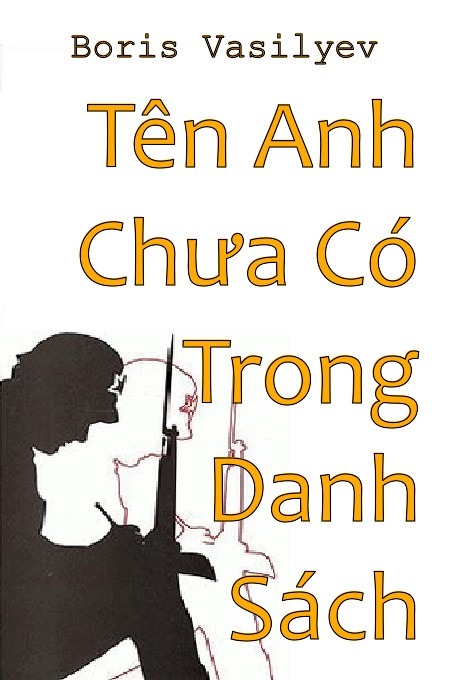
Tên anh chưa có trong danh sách (tiếng Nga: В списках не значился) là một tiểu thuyết Liên Xô của nhà văn Boris Vasilyev được xuất bản lần đầu năm 1974. Lấy bối cảnh Chiến tranh Vệ quốc của Liên Xô, tác phẩm nói về số phận của một người lính Hồng quân phải chiến đấu cô độc giữa pháo đài Brest nằm sâu trong hậu phương của Đức Quốc xã.

Đêm ngày 21, rạng sáng ngày 22 tháng 6 năm 1941, quân đội Đức Quốc xã bất ngờ nổ súng mở đầu cho Chiến dịch Barbarossa tấn công Liên Xô. Cùng ngày 21 tháng 6 định mệnh, anh lính trẻ Nikolai Pluzhnikov được điều tới Pháo đài Brest, tiền đồn của Hồng quân nằm ở biên giới Đức-Xô. Pluzhnikov chưa kịp tìm tới đơn vị của mình để đăng ký thì toàn pháo đài đã bị dội pháo phủ đầu ác liệt và sau đó bộ binh Đức Quốc xã bắt đầu tràn ngập Brest. Tuy cố gắng chống đỡ nhưng trong cảnh bị tấn công chớp nhoáng, Hồng quân không thể đáp trả lại một lực lượng đông đảo với hỏa lực vượt trội của quân Đức, đồng đội của Pluzhnikov lần lượt ngã xuống, còn bản thân anh lính trẻ phải ẩn nấp trong hệ thống hầm hào của pháo đài để tiếp tục duy trì cuộc kháng cự. Ngày tháng dần qua, những người Nga cuối cùng trong pháo đài lần lượt ngã xuống hoặc bị bắt, Pluzhnikov rơi vào trạng thái hoàn toàn cô độc, vừa cố gắng cầm cự để sống sót, vừa phải căng mọi giác quan để đối phó với quân Đức...

Cùng với Và nơi đây bình minh yên tĩnh, đây được coi là tiểu thuyết ngắn xuất sắc nhất của Boris Vasilyev nói về Chiến tranh Vệ quốc vĩ đại.

Năm 1995, Tên anh chưa có trong danh sách đã được đạo diễn Andrey Malyukov chuyển thể thành bộ phim điện ảnh có tựa đề "Tôi, người lính Nga" (Я — русский солдат).

ebook

First published January 1, 1974

5 people are currently reading
243 people want to read

About the author

Boris Vasilyev

74 books25 followers
Born into a family of Russian nobility. His father Lev Alexandrovich Vasilyev (1892—1968) came from a dynasty of military officers; he served in the Imperial Russian Army and took part in the First World War in the rank of Poruchik before joining the Red Army. Vasilyev's mother Elena Nikolaevna Alexeeva (1892—1978) belonged to a noble Alexeev family tree that traces its history back to the 15th century; her father was among the founders of the Circle of Tchaikovsky.

In 1941 Boris Vasilyev volunteered for the front line and joined a destruction battalion. He fought as part of the 3rd Guards Airborne Division up until 1943 when he was wounded in action and demobilized. After his World War II service, Vasiliev enrolled at the Malinovsky Tank Academy.

His short novel The Dawns Here Are Quiet was a Soviet bestseller, selling 1.8 million copies within a year after its publication in 1969. It was adapted for the stage and the screen; there is also an opera by Kirill Molchanov, and a Chinese TV series based on the story.

The Dawns Here Are Quiet was the first of Vasiliev's sentimental patriotic tales of female heroism in the Second World War ("Not on the Active List", 1974; "Tomorrow There Came War", 1984) which brought him renown in the Soviet Union, China, and other communist countries. Some of his books give a harsh picture of life in Stalin's Russia.

Vasiliev's short novel Don't Shoot the White Swans (1973), a milestone of Russian-language environmental fiction, is sharply critical of "the senseless destruction of beautiful creatures and the exploitation of nature for personal gain". It was made into a 1980 Soviet film.

Vasiliev was awarded the USSR State Prize for 1975 and was a member of the jury at the 39th Berlin International Film Festival. In 1989, he quit the USSR Communist Party but grew disillusioned with the Perestroika rather quickly. In October 1993, he signed the Letter of Forty-Two. Late in life, Vasiliev turned to historical fiction based on incidents from medieval Russian chronicles.

Ratings & Reviews

What do you think?
Rate this book

Friends & Following

Create a free account to discover what your friends think of this book!

Community Reviews

5 stars
306 (62%)
4 stars
129 (26%)
3 stars
37 (7%)
2 stars
5 (1%)
1 star
9 (1%)
Displaying 1 - 25 of 25 reviews
Profile Image for Lê Tuyền ICHI.
497 reviews156 followers
March 4, 2022
Một người lính Hồng Quân Liên Xô được điều đến miền Tây nước Nga, để được chiến đấu theo ý nguyện của anh. Trong khi anh chưa kịp báo danh, tên anh chưa kịp có trong danh sách biên chế thì chiến sự diễn ra.

Ngày 22 tháng 6 năm 1941, phát xít Đức bắn phát súng đầu tiên, phá vỡ Hiệp ước Xô Đức về cam kết bất tương xâm. Nơi đón nhận phát súng đầu tiên ấy, chính là pháo đài Brest. Và nội dung của câu chuyện chính là những diễn tiến xung quanh Trận pháo đài Brest lừng danh đó.

Đối với quân đội Đức Quốc xã thì đây là một trong những trận chiến đầu tiên của Chiến dịch Barbarossa. Trận pháo đài Brest, trận phòng thủ chỉ kéo dài 9 ngày từ ngày 22 đến ngày 30 tháng 6 năm 1941 khi quân Đức chiếm được khu trung tâm pháo đài. Tuy nhiên, một số trận đánh nhỏ vẫn tiếp tục nổ ra trong pháo đài đến ngày 20 tháng 7 năm 1941 bởi các nhóm sĩ quan và binh sĩ Liên Xô không đầu hàng, đã trốn dưới các hầm ngầm và tiếp tục chiến đấu.

Bối cảnh cuộc chiến tuy chỉ gói gọn tại một không gian hẹp, nhưng hình ảnh về những lính anh dũng chiến đấu dưới làn mưa bom lửa đạn vẫn hiện ra rất chân thật và sống động. Khi tất cả người thân quen và đồng đội lần lượt ngã xuống, vị trung úy ấy đã phải chiến đấu đơn độc trong gần một năm trời. Một năm chiến đấu không biết tin tức, không có đồng đội bên cạnh, không được giao mệnh lệnh, không có hậu phương, không được cung cấp, không được tiếp ứng và không nhận được lá thư nào của gia đình.

"Tôi là lính Nga". Đến cuối cùng, anh vẫn ngạo nghễ với quân thù. Sự vô danh của anh trở nên cao vọng đến không gì với tới được.

P.S: Cái tựa "Tên anh chưa có trong danh sách" gợi nhắc mình nhớ đến "Phía Tây không có gì lạ", ở cái sự nhẹ tênh của một danh tính, một sinh mạng, mà chiến tranh thổi đi như thổi một hạt bụi. Chiến tranh thì, có bao giờ không đau thương và tàn nhẫn?
Profile Image for Kate Borysenko.
191 reviews11 followers
December 1, 2021
Всё-таки, русская военная литература - больше, чем не мое.
Profile Image for Trounin.
1,897 reviews44 followers
October 29, 2015
Борис Васильев никого не обеляет и не очерняет. Он объективно оценивает произошедшее. Война началась 22 июня, первым пал Брест. Незадолго до этого с магазинных полок исчезли соль и спички. Все были готовы к началу конфронтации между Советским Союзом и Германией. Не подготовилось лишь руководство страны, уверовавшее в подписанный договор о ненападении. «В списках не значился» с первых страниц готовит читателя к началу боевых действий, чтобы потом погрузить в будни защитников крепости, решивших не сдаваться до той поры, пока они будут сохранять уверенность в возможность одолеть врага и даже дольше, когда надежда растает. Васильев довольно вольно восстановил события того времени, опираясь на свидетельства, доступные для всех желающих в музее Бреста. Надо понимать, он не ставил себе целью воспеть чью-то возможную храбрость. Скорее Васильев желал донести до читателя ощущение резкого сокрушительного перелома в жизни людей, который следовало бы избежать. А если избежать не удаётся, то верить до конца, не сдаваясь.

(c) Trounin
Profile Image for Andrey zz.
124 reviews4 followers
July 31, 2017
Советский боевик. Рэмбо в Брестской крепости. Холокост. Фашисты. Гитлер! Все есть в книге.
Profile Image for Polar Bare.
38 reviews7 followers
October 6, 2021
I don’t know whether this book is translated into English or not, I read it in Russian, and I’m delighted I could do so.
Because this is the most heartbreaking true WW2 story I’ve ever come across.
I cannot convey how much it made my skin crawl, my heart bleed. Sometimes words leave us. Sometimes all the words are murdered by feelings and emotions in tandem. This is it.
We must not forget. We must not let the horrors of human deeds be forgotten. We must remember how many lives, how many souls were slaughtered when some men in their hubris decided that they were supreme to everyone else.
This book is a monument to those who fought for the innocent until the final breath. This book is a true story of a simple soldier, a lone defender. In him every single man, and every woman, every soldier, every victim lives.
Profile Image for Gregory Morbid.
13 reviews
August 13, 2018
Страшно читать. Для меня это вторая из книг Бориса Васильева после "А зори здесь тихие". Читать о смерти молодых девчонок полных мечтаний, надежд и планов на будущее было тяжело, но это не идет ни в какое сравнение с ужасами первых дней и месяцев войны, так внезапно обрушившей всю свою тяжесть на мирно дремавший город.
Profile Image for Anna Sircova.
73 reviews1 follower
July 29, 2013
Прочитала за один день, на одном дыхании. Хочу поискать на английском, надеюсь, что перевод есть- хочу чтобы мой друг прочитал. Во Франции, война длилась пару недель, но на территории бывшего СССР - 4 года.
Profile Image for Erich C.
271 reviews18 followers
March 17, 2022
3.5 stars rounded down, this volume includes two novellas, applauded by the censors in the good old U of SSR:

***His Name Was Not Listed
Nikolai "Kolya" Petrovich Pluzhnikov, a 19-year-old who has never kissed a girl, learns about war for real when the Special Western Zone is attacked by duplicitous Nazis before he can even get his assignment. After leaving his post without permission during the initial attack, Kolya makes it up by learning to tear flesh:
In the murkiness and floating brick dust men fought hand to hand, rasping and cursing, breaking backs, strangling, tearing with their teeth, gouging out eyes, ripping mouths, stabbing with knives, slashing with spades, smashing with bricks and rifle butts.

He comes to understand that cowards and traitors to Mother Russia must be eliminated. Orders must not be questioned, especially in the Red Army, which is "cheerful, generous, and kind." Through determination and love of country, Kolya picks off a hell of a lot of faceless Nazi bastards in the ruins until he learns that his own life only has meaning to the extent it can serve his country:
He lay there, thinking very calmly that now there was nothing he feared - Germans, death or cold. He was no longer conscious of self, he felt something more - his personality. The personality that had become a link between the past and the future of his country, a fragment of which warmed him in the noble silk of the flag. And he quietly recognized that it would never be of any importance to anyone what name this personality bore, where and how it had lived, who it had loved and how it had perished. One thing only mattered: that the link which connected the past and the future in a single chain of time had been strong. And he knew with certainty that this link was strong and eternal.


****The Dawns are Quiet Here
Sergeant Major Fedot Vaskov is a station commander who is tired of having soldiers under his command who debauch and who requests a group of teetotalers. As a result, he is given a group of lady gunners, and farcical situations result, until... The platoon discovers a big group of Fritzes heading through the woods to blow up a railway. If Vaskov can overcome his preconceptions and his soldiers' giggles, they just might be able to save the day!

Farce gives way to suspense, acts of heroism, and gruesome death scenes. After one such scene, Vaskov gives a peptalk to Zhenya, the redheaded gunner with skin as smooth and white as marble:
"Now then," he said, "you've had your cry, that's enough. You must understand one thing. They're not human beings - not even animals, they're just fascists, Comrade Komelkova, and you must take this view of them."

Later, Vaskov continues this train of thought:
After all, a human being is distinguished from animals only by the realisation that he is a human being. When this realisation is gone, he becomes a beast. A two-legged, two-handed beast; a fierce beast, the horror of horrors. You could have no human feelings for such a creature, neither pity nor mercy. He must be beaten until he crawls back into his den; he must be beaten even there, until he remembers that he has once been a human being, until he understands that.

But even when the chips are down, when the situation looks most hopeless, Vaskov refuses to give up his homeland:
All that Vaskov knew in this fight was not to retreat. Not to surrender a handful of earth on his side. However, difficult, however hopeless it might be, he had to hold his position. He had to hold out, otherwise the enemy would crush him - and that would be the end. He had a feeling that behind his back was the whole of Russia. It was as if he, Fedot Vaskov, and no one else, was her last surviving son and defender. And there was no one else in the world but him, the enemy, and Russia.
Profile Image for Lavrushka.
28 reviews
November 4, 2025
А вот мне вообще не понравилось. Как в принципе и все военные книги, пытающиеся выставить происходящее героизмом. Васильеву спасибо, что он пытается показать не только это, но и весь ужас происходящего. Но меня просто физически передёргивает каждый раз, когда я вспоминаю конец. Нацистские почести главному герою? Зачем? Для чего? Показать, что нацисты тоже люди? Ещё раз напомнить о героизме Плужникова?

Убийство Мирры я перечитывала раз десять. После этой сцены мой первый вопрос о немецком генерале, отдающему честь советскому (ах да, "русскому") солдату, уже на максимальном ребре стоит, на который его вообще можно поставить.

И это всё не говоря о том, какую роль эта книжка сыграла в мифе о защитниках брестской крепости. Ну да. "Крепость не пала: она просто истекла кровью".
This entire review has been hidden because of spoilers.
Profile Image for commeilfaut.
48 reviews26 followers
May 11, 2017
Весь роман читала с мыслью, что все-таки сильно уступает история Плужникова "Зорям" и оценивала её на четвёрку, но последняя глава и эпилог так меня всколыхнули, что я просто не могла поднять руку, чтобы поставить книге оценку ниже 5+. И хоть "А зори здесь тихие" навсегда останутся, по моему скромному мнению, лучшим произведением Бориса Васильева (не зря же эта история пользуется такой славой), "В списках не значился" - это удивительная и сильная история, заслуживающая не меньшего внимания. Потрясающе. Восторг да и только.
Profile Image for Eva.
32 reviews2 followers
January 19, 2020
I like reading books about war. Not just the historical ones but the ones who take you there. WW1, WW2 are the greatest wars ever mostly because people writing about them have been there and do not spread romanticism.

But That was way beyond all of my expectations.
It was emotional, heartbreaking and real! It is Russian, purely Russian, but real.
I don’t think I’ll ever read it again, but it is certainly going to appear on the list of my favorites. It was one of those books who make you suffer as the character suffers.
Profile Image for M.
229 reviews14 followers
July 25, 2019
"Упал свободным и после жизни, смертию смерть поправ." Brest Fortress. Absolutely heartbreaking (even though I normally don't like books that go into such detail on the actual combat). The oath made me cry. This is also the best way I've ever seen the Jewish WWII story be told.
Profile Image for Elena Akgül.
15 reviews1 follower
July 13, 2021
Книга, которую должен прочитать каждый. Читать тяжело, героям сопереживаешь, знаешь, что счастливого конца не будет, но веришь и надеешься. История не одного человека, а всей Брестской крепости.

"Крепость не пала - крепость истекла кровью. Я - последняя её капля..."
Profile Image for Shirunede.
59 reviews
February 24, 2025
Absolutely gut-wrenching. I love reading and watching movies about wars, this one in particular might be one of the best I've ever read on this topic. I could barely not cry by the end of the book and the feeling I had after finishing it is just undescribable. A masterpiece.
Profile Image for Alexei.
48 reviews
July 8, 2019
Интересный сюжет, быстро захватывает и персоны во внём понравится так что отпускать и не охота. Иногда некоторые боевые битвы были утомительно описаны
Profile Image for Irina.
204 reviews2 followers
November 8, 2020
"...не так уж важно, где лежат наши сыновья. Важно только то, за что они погибли".
6 reviews
May 11, 2025
Весьма захватывающая книга, большая часть которой это активные действия и развитие сюжета
Profile Image for Minh Hoang Pham.
112 reviews10 followers
November 23, 2025
Đang đọc đến đoạn rất hạnh phúc thì phải xem spoil đoạn tiếp ngay. Y rằng buồn quá thế nên thôi, đọc thế đủ rồi.
Profile Image for Нестор.
591 reviews5 followers
March 16, 2017
"Мусор войны лежал перед ним."

"Смерти нет, ребята."

Из книги "В списках не значился" Бориса Васильева.

Очень сильная книга. Вытекает из души искры и слёзы. Заставляет думать и чувствовать. Сопереживать. Понимать. Ненавидеть. И смотреть вперёд.

Советская классика. Отчасти боевик. С элементами любовной истории. О росте над собой. О приказе самому себе. О верности. О настоящей жизни.

Рекомендую всем.
Profile Image for Anni Reeds.
30 reviews
September 22, 2021
Одна из лучших книг о Великой Отечественной Войне. Горькое напоминание о том, что пережили наши деды-прадеды и что не должно повториться.
Profile Image for Veronika Roth Spiegelman.
26 reviews
June 27, 2014
Это шикарная книга, именно шикарная! В ней очень реалистично описываются события минувшей Второй Мировой войны, чувства и долг героя.
Profile Image for Рамон Меркадер.
173 reviews3 followers
March 15, 2016
Средна работа, много пропаганда, много идеализиране, малко реалност.
Profile Image for Nathan Drake.
66 reviews
September 2, 2015
На самом деле - не дочитал, после зорь книга показалось очень скучной, не такой эмоциональной
Profile Image for Hải Lưu.
551 reviews85 followers
April 3, 2017
Những truyện như thế này thì không cần bút pháp tân kỳ hay Hậu hiện đại gì cả, không cần những khoảng trượt thời gian, không cần góc nhìn này nọ

Hay và cảm động là ở nội dung!
Displaying 1 - 25 of 25 reviews

Can't find what you're looking for?

Get help and learn more about the design.