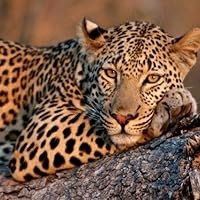
Visiting South African game reserves is, for most, all about ticking off the Big Five. Not for Justin Fox. He embarks on a humorous, quirky, frustrating journey in search of South Africa's most elusive mammals, the 'Impossible Five': Cape mountain leopard, aardvark, pangolin, riverine rabbit and naturally occurring white lion. Besides animals, the book is peopled with a lovable cast of eccentric characters and provides compelling insights into wild South Africa.
Fox is a novelist, travel writer and photographer based in Cape Town, South Africa, and is the former editor of Getaway travel magazine. He was a Rhodes Scholar and received a doctorate in English literature from Oxford University after which he was a research fellow at the University of Cape Town, where he taught part time for 20 years. His articles and photographs have appeared internationally in a number of publications and on a wide range of topics, while his short stories and poems have appeared in numerous anthologies. He has written scripts and directed award-winning documentaries and is a two-time Mondi journalism award winner (1999 and 2004). Recent books include The Marginal Safari (Umuzi), The Impossible Five (Tafelberg), Beat Routes (Karavan), Place (Umuzi) and, most recently, a World War II series of novels, starting with The Cape Raider (Penguin and Sapere) and The Wolf Hunt (Sapere). Justin was longlisted for the 2011 Alan Paton Award for non-fiction, the 2012 Olive Schreiner Prize for Literature, and his debut novel, Whoever Fears the Sea (Umuzi 2014), was longlisted for the Etisalat Prize for African literature.
If I had a Gerald Durrell award on hand to give to Justin Fox for his book The Impossible Five, I'd hand him one for every species he investigates during the course of his research. Justin is one of those rare beasts who can handle fairly serious subject matter (conservation) in a way that is not only highly engaging and sensitively handled, but also filled with touches of humour (I don't think I'll forget his Bugs Bunny asides related to the riverine rabbit in a hurry).
The premise of The Impossible Five is simple: Everyone who goes looking for wildlife sightings in southern Africa seems awfully hung up about the Big Five (lion, leopard, buffalo, rhino and elephant) that Justin felt driven to explore what he'd term his "Impossible Five" of species that are next to impossible to see in the wild. After some thought, he decided that these, for him, are the Cape mountain leopard, the pangolin, the aardvark, white lion and the riverine rabbit.
Not only are these critters elusive, but their continued existence remains in the balance thanks to our own species' continued activity on this planet.
Justin spent weeks in the field, getting to know folks whose passion it is to track and research these animals – from Quinton the leopard man, who walks the length and breadth of the Cederberg, to Linda, for whom the white lions of Timbavati represent something altogether spiritual and magical.
At the heart of this book lies one word: empathy – something that we as a species have collectively lost when it comes to how we interact with our environment. We forget that our ongoing survival is intimately tied into the ultimate fate of the wild things and remaining wilderness.
This is the kind of book that makes me want to pack my bag and go visit some of the locations that had such an impact on me as a child – and I'm sorely overdue a visit to the Cederberg, where my own brush with a leopard was limited to finding a massive paw print superimposed on my own tracks once I'd turned around along a track I'd been hiking.
Justin motivates us to become patrons and keepers of our wild places, to forge a deeper connection to the world around us and gain an intrinsic understanding of the interconnectedness of all things. This really is a wonderful book, and its author is a keen observer of people and animals, as well as being a gifted storyteller. If you enjoyed Douglas Adams and Mark Carwardine's Last Chance to See then most certainly add this one to your collection. Or, if you're like me, and you grew up on a steady diet of 50/50, Gerald Durrell and James Herriot ... then don't miss this one.
Most people have heard of the Big Five of safari hunting but it turns out that finding 4 out of 5 of them is as easy as coming across a red double decker bus in London. So what if you fancy a bit more of a challenge? How about trying to find five of the most elusive and rare animals in Africa? This is the task Justin sets himself to achieving. We have a Leopard and Lion on the list, so far so Africa, then an Aardvark, Pangolin and a rabbit. Yep, who would have known that the Riverine Rabbit is actually one of the most endangered critters on the continent? Before anyone fancies following in his footsteps be aware that you will have a LOT of fruitless driving around to do in the depth of night and it may take the best part of 3 years before you complete your quest. Frustrating no shows of animals aside, this is an entertaining account of just how tricky some of these beasts can be. Justin is passionate about his subject and the range of wildlife fanatics he enlists along the way even more so. If you fancy some virtual sifting of poo or meditation with lions this book will be right up your alley. In fact, anyone with a passing interest in nature will find it very entertaining. There were a couple of passages where Justin disappears into a slightly surreal dream world but otherwise this is a book that bounces along with a decent dollop of humour and fun. The message I took from it at the end though is that we all need to remember the balance of nature against "progress". Farming has destroyed a number of habitats and the ever present hunters are a continuing threat to many species (the more rare the more prized). It is a bit of a wake up call to the fact that things need to change if we are to retain some of these endangered species and that we need to consider the wider world sometimes. It's not preachy though and doesn't take itself too seriously. With a nice section of colour photos in the middle it made for a great opportunity to "see" some creatures I really knew little/nothing about.
I found this book entertaining and easy reading. There's so much talk and focus on The Big Five that I found this pursuit of different African animals both refreshing and interesting. Having been to the continent of Africa twice, I fell in love with the wildlife, creating so many wonderful memories. Apart from the author's dreams, which I found irrelevant, this is a great read!