Much more than just another field guide or a natural history of butterflies Rainbow Dust explores the ways in which butterflies delight and inspire us all, naturalists and non-naturalists alike. Beginning with the author's own experience of hunting and rearing butterflies as a boy, Peter Marren considers the special place of the butterfly in art, literature, advertising and science, and, latterly, our attempts to conserve them.Rainbow Dust takes in the controversy over collecting, the women who studied them and the curious details that lead to butterflies being feared as well as loved. This is a celebration of butterflies; one shot through with a sense of wonder but also of sorrow at what we are losing.
An enthusiastic, wide-ranging book about Britain’s butterflies, from the earliest collectors and entomological societies to today’s nature reserves and academic research. Marren is a wildlife writer based in Wiltshire. His fascination with butterflies began at age five: he still remembers catching a Painted Lady in his hands and it transferring some of its colors onto his palm. Rainbow dust, he dubbed it. “It was a Nabokov moment because only he could put into words what most of us can only feel: the frankly sensual moment in a child’s life when the full force of nature is felt for the first time.” I was especially interested in the sections in which Marren explores butterflies’ cultural representations, whether in art or in literature. Chapter 4, my favorite, focuses on the work of John Fowles and Nabokov.
A finely written nature book, though rather more than a nature book. Rainbow Dust is a collection of short essays. The real delights are "Butterflies and the Imagination" and "Painting Butterflies". Marren is a reformed character, collector turned conservationist, and he weaves the two threads together with passion. No hypocrisy here, unlike Prince Phillip (killing an endangered tiger then becoming President of the WWF shortly afterwards). And Marren, via a chapter on Fowles's The Collector, who was a hunter and collector too before he saw a green light on the road to Damascus, writes about literature and butterflies with great insight.
The highlights of the book are the fine word portraits that Marren devotes to forgotten women in the field of entomology, notably Lady Granville, Miriam Rothschild, and the C17 Maria Merian who was the first person to realise the connection between butterflies and their specialised plant diets.
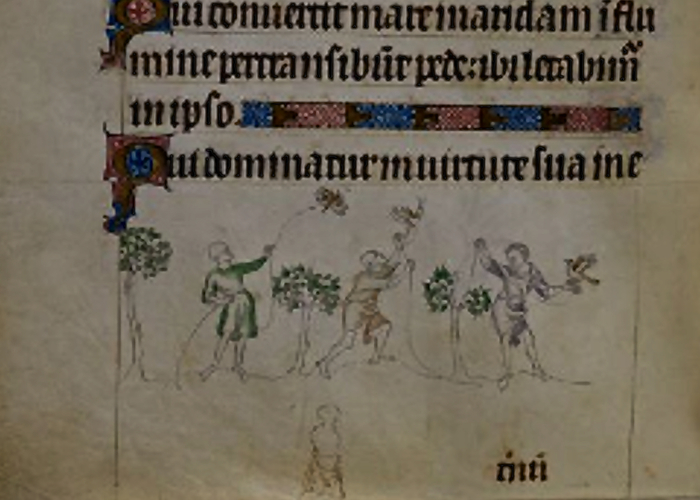
The only small flaw is that Marren does not always acknowledge his sources and great quotations go unreferenced. And manuscripts are not named. For example, a key early image of collecting shows boys with strings fastened around butterflies, which are being flown like kites. "Another manuscript" says Marren. Had he said A Psalter from 1310-1320 (Royal MS 2 B VII) then a useful context would have been given.
There is something about butterflies that captivates some people. They fulfil no ecological purpose, as they are not pollinators, they are not a source of food for a most animals as they are frequently full of poisons and unpalatable substances, they just seem to exist because nature can make it so. Regardless of their purpose, these brightly coloured little insects have enthralled people for years. From the time he first caught one at the age of five, Peter Marren was one of those captivated by these beguiling insects. So began a hobby that has lasted a lifetime, first hunting them for his collection, then rearing them when he realised that what he was doing was not sustainable.
However, this is not another guidebook about butterflies, rather a guidebook about butterfly lovers. Marren’s deep passion about his subject is evident as he brings us the stories and potted biographies and histories of those that have had a similar passion to him. We learn about the Rothschild family members who were equally besotted, what John Fowles and Vladimir Nabokov liked to collect and how butterflies have inspired countless artists and writers. He guides us through the extinctions of some and the reintroduction of the Large Blue and takes us through the life cycle right from the egg to the next generation.
His writing is authoritative without being tiresome and it flits along at a fair old pace. It is also a warning; we have been persecuting all sorts of wildlife in this country, and the relentless push to greater efficiency and cost savings has put butterflies and many of their habitats in peril. I liked the mix of solid science and research with a series of personal stories and it is a really good general book in the study of his favourite insect.
This book is written for people with whom this quote from the introduction resonates:
"For those bitten with the bug, butterflies feed the emotions in strangely intense ways, perhaps in similar ways to paintings or music or a good book."
It is also (there's a clue in the title) targeted at British people, or, at least, butterfly enthusiasts with an interest in British butterflies.
If you are one of those people like the person my wife was speaking to the other day who never notice butterflies and hadn’t realised there was more than one type, then this is probably not the book for you!
I can trace my interest in butterflies back to 2011. I can’t remember what triggered it, but I have been fascinated by them since then. There are 59 species that can be seen in Britain (maybe more if some rare migrants hop over) and I have seen 50 of them so far. I never get tired of seeing them, even the ones I have seen over and over again.
This book looks back over the last 300 years, occasionally dipping back even further into history, to chart our interaction with butterflies. As the book points out, it’s sometime hard to see what "use" butterflies have (although a lot of birds would disagree when it comes to their caterpillars) and it may be that part of the fascination with them is that they are like Oscar Wilde’s definition of art in that they are "quite useless" and exist (this is the book, not Wilde) "because they can".
In this book, we lean about butterfly collecting (a hobby that has fortunately died out but which has reaped some unexpected benefits - some of the old collections are now being used to study climate change which I am sure the collectors never envisaged happening), butterfly naming, butterfly painting and butterfly conservation. Along the way, we learn that butterfly lovers owe a lot to the Rothschilds, which might be a surprise to many.
It’s a fascinating book if you are interested in butterflies.
"Artists have long seen something spiritual in the butterfly. They are set apart from other winged life by their colors and graceful flight; they are the closest thing the natural world offers to our idea of the spirit. To a variety of cultures from ancient times to the near-present, butterflies have represented the visible part of the human soul."
I first became fascinated with butterflies when one landed next to me at the gym in New York City. It turned out to be a Skipper, a moth-type butterfly. I learned soon after that they are known to be a symbol of departed souls and great transformation. I will always be grateful to that little Skipper!
The Skipper is one of the butterflies Peter Marren chronicles and features, together with the Painted Lady, the Red Admiral and the Large Blue in his recent enchanting and splendid book Rainbow Dust. I would say "butterfly enthusiast" for Marren would be an understatement! He takes us not only through his private, personal passion for the butterfly and the natural world, but through the history of butterfly collecting, and the butterfly as a meaningful creature and symbol in our culture and literature. Many probably don't know that Vladimir Nabokov, author of Lolita, had a crazy passion for butterflies and was an avid collector.
Butterfly collecting was en vogue for several hundreds of years, reaching a maddening frenzy during the Victorian age, and then suddenly dropped as a respectable hobby (in some instances it is even illegal!). For instance, at the time I was reading this book, the rare Large Blue, one of the author's favorite butterflies, known for its beauty and expansive blue wings, was featured on the front page of The New York Times with the title "Justice for Large Blue." The subtitle was: "Police Net Butterfly Killer, And He May Face Prison." Wow, just not too long ago, these aficionados were Butterfly Collectors, and now they are Butterfly Killers!
On a separate note, yesterday was National Library Workers Day so I also wanted to acknowledge all of those amazing librarians and their staff that bring change through books every day!
Peter Marren’s “Rainbow Dust” is an historical account of British men and women’s fascination with butterflies, in the shape of among other things: collecting, study, and conservation of the species. While the book does talk of the butterfly on its own - the changes in butterfly colonies and living situations, the species dying out or returning - the main focus lies with the human’s of the stories. The first part of this book goes into the collecting of butterflies as an activity. Marren relates to his own experience as a boy and many others growing up during the same or earlier eras of butterfly collecting as a past-time, as a hobby, as any other collecting or for grander ideas such as the development of science through the study of butterflies. At least a third of the book is given over to butterfly collecting followed by a discussion on the study of butterflies which understandably goes hand in hand. A second part of the book goes into the meaning of butterflies, the symbols of butterflies in literature, art, and history. What purpose have they served for us humans, what significance do these flying creatures of color represent to us? One of the people mentioned within this part is Nabokov, also known as a butterfly collector, and some parallels are made to the way Nabokov writes especially in his novel 'Lolita', using butterfly metaphors. The idea of butterflies as representing the soul is another interesting discussion that for me gave light to many other works of art or media, in the way butterflies have been used as the soul or as the essence of life. The last part of the book focuses in on the conservation of butterflies, the ongoing battle in trying to save, protect, and in some cases re-introduce species of butterflies already or on the point of extinction. As a bonus, this part of the book raises questions of the way humans and butterflies have and can co-exist and co-habit the world, and what that really means in concrete terms.
I was a little skeptical about reading an entire book on an insect, my interest in predators I felt has been fairly well-established for most of my life but insects just hasn't grabbed my attention the same way. Butterflies have sort of been the exception, although after having read this book I'm on the look-out for more entomological nonfiction, I definitely haven't had enough! That said, there's a lot to find of interest in Rainbow Dust even if you're not necessarily an animal lover or a lover of butterflies in particular. As mentioned above, a great part of this book focuses on the scientific development of the study of nature, of animals, and how the study of butterflies lead to some interesting and important break-throughs in other parts of scientific research. One aspect of butterflies that has been of particular interest is the process of evolution, from larvae to a full blown butterfly. Another aspect of butterflies that is possibly a greater reason for butterflies' popularity is the colors and intricate patterns on their wings. Among my personal favorites are the Swallowtail, the Monarch, Black-veined White, Bath White, etc. How can one not feel in awe of these specimen?
One of the interesting parts I found in the butterfly collectors/study discussion was the many women who much earlier than convention would allow were active in the development of entomology and butterfly collecting. One of the main deciding factors it seems for such a role were first and foremost money and independence, second an profound admiration and interest for the species. One such person mentioned is Miriam Rothschild who Marren also writes, was part of his inspiration to write this book in the first place. I would gladly read an entire book on her alone.
I really enjoyed the discussion on the butterfly as a symbol for other things, like the soul, or even the mythology surrounding certain butterfly species or the animal on the whole. For example Marren mentions a few specific paintings where the butterfly is supposedly used as a symbol for temptation, others where it's used as a symbol for death.
While much of the discussion on butterfly collection, study, art and symbolism, even the conservation, was fascinating and rewarding, I would say the portrayal of butterfly collecting isn't exactly balanced. I felt like much of the reason this part got such a large section of the book wasn't completely because of its importance for the study but largely due to Marren's wish in justifying the practice, showing it's positive sides so that a lack of such positivity wouldn't lead the reader to lean towards the negative. While I wouldn't say butterfly collecting was a practice of evil or anything of the like, nor would I say the book falls because of this particular bias, but I would just like to bring it to light for future readers. If you're looking for a more balanced view of butterfly collecting, its role in the loss of butterfly species, extinction and the like, this isn't it.
Another thing I'd say as a complaint of the book is again not necessarily a deciding factor against it. As I've said, the book focuses heavily on the human's of the stories even though the butterflies are clearly acting their parts in the book. From the title "Three centuries of Delight in British Butterflies" you might get the impression, as I did, that there would be more discussion on the actual butterflies, and towards the latter third or so this is certainly true. I suppose I felt like the book had less of a strict intent throughout, so that instead the book would shift between points of subjects all circling around butterflies and human's relationship with them, but not quite getting to the butterfly nature until the last part. In fact the natural history in terms of butterfly behavior and eating habits, sleeping habits, etc. wasn't really dealt with until the appendix. But again, I wouldn't say it's necessarily a make-it-or-break it sort of situation, more that it wasn't quite what I was expecting although I ended up enjoying it all the same. The appendix made up for the lack of direct description of butterflies, and I'm sure there's many other books that go into butterflies nature and behavior in more depth, just that this book doesn't serve that purpose.
Lastly I'll say the main problem I had, which did in fact take away from enjoyment and appreciation for it but that wasn't so much Marren's fault: the lack of illustrations throughout the book. The chapter headings each had an illustration of a butterfly but the name of the butterfly included wasn't given so as a reader unfamiliar with different butterfly species it was hard to keep track of different species. If not possible for butterfly illustrations for each mention of a species (or the first mention of it in ongoing text) at least the appendix could've had an illustration for each species that is described as a sort of encyclopedia to flick back and forth while reading. It's possibly a small detail but it would've made such a difference for me. One design thing this book does have in its favor though is an extensive index, almost 20 pages long. Hooray for publishers realizing indexes are invaluable!
All in all, not the be-all-end-all of butterfly nonfiction but nevertheless an interesting exploration of human's relationship with butterflies both past and present, and where we'll go from here.
This is, for me, the very best natural history book I have read this year. Now perhaps I ought to mention that I am dining with its author later in the week but we’ll each be paying our own way so I haven’t been bought. It is a delight – and that is in a year of delightful books with Nick Davies’s Cuckoo running this a close second and two other books with quite an involvement of butterflies and moths (The Moth Snowstorm and In Pursuit of Butterflies) coming along in close order.
Peter Marren writes so well, and he knows so much, and he is generous with his knowledge – in person as well as in the pages of this book. When writing of Nabokov’s Lolita, Marren produces a fine analysis of the partly hidden butterfly references in the book and this wonderful sentence ‘These subtle references, lurking in the verbal undergrowth, act as a kind of authorial watermark’.
The book is about the place of butterflies in our culture and it is packed with information about butterflies, about those who collected and/or studied them over the last two centuries especially, but also the role of butterflies in our more distant culture. What might a Red Admiral signify in a medieval painting? And what might its pattern signify to an attacking bird? The answers to both questions are fascinating – and unexpected.
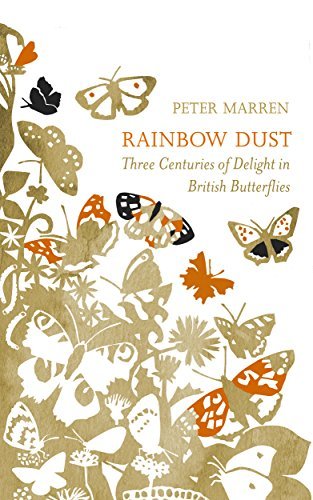
The lovely jacket is by Carry Akroyd – a slightly different style from her usual, but no less perfectly beautiful for that.
I could tell you more about things that are in the book but all I really need to say is that you will probably enjoy it immensely. To find out, open the book to the first page of any chapter and start reading. I wager that you will want to turn the page, every time. Marren writes with easy erudition – it’s not pretentious, it’s not forced and it’s not over-elaborate. It’s just lovely.
There is still time to see some Adonis Blues, Silver-spotted Skippers and Brown Hairstreaks in the weeks ahead, and much more, but you should secure a copy of this book to read through the winter months. If you ration yourself to a chapter a fortnight you will come out the other end, in spring, thirsting to see butterflies with renewed enthusiasm thanks to the tales that will be occupying your head. Or just read it from cover to cover in a very few sittings as I did.
This will be a strong contender for all the relevant ‘book of the year’ lists. It’s a true delight.
Rainbow Dust – three centuries of delight in British Butterflies by Peter Marren is published by Square Peg.
I thought this was a very interesting book. In case you're wondering, like I was, how an author would fill a whole book with facts about butterflies here's a chapter outline. I highly recommend it for people interested in butterflies and the history of nature study in general.
Preface: A new preface written by the author for the American edition.
Introduction: The author's story of discovering butterflies.
Meeting the Butterfly: Their living habits and biological processes.
Chasing the Clouded Yellow: About collecting them.
Graylings: About very early collectors and collections.
Gatekeepers: The growing controversy about collecting.
Lady Glanville's Fritillary: Some early women who were butterfly enthusiasts and naturalists. Inspiring!
At the Sign of the Chequered Skipper: About the Rothschilds. A wealthy family with some avid naturalists.
The Golden Hog or The Wonderful Names of Butterflies: The naming of butterflies; fascinating!
Seeing Red, the admiral: About the Red Admiral. There are some interesting stories associated with this butterfly.
Fire and Brimstone, butterflies and the imagination: What people have considered the butterfly to symbolize over the years.
Silver Washes and Pearl Borders, painting butterflies: About a few artists who painted butterflies.
Endgame, the Large Blue and other dropouts: Endangered and extinct butterflies. Perhaps it is because I share the author's concern for the diminishing butterfly population, but I didn't find this section too preachy as often happens at the end of nature study books.
The Wall or How to Protect a Butterfly: About butterfly conservation.
Envoi, Aurora or daughter of the dawn: Conclusion.
Appendix: a list of British butterflies with a small paragraph giving a few details about each one, notes, acknowledgements, bibliography, and an index.
Content Warning: Butterflies have a habit of extracting salts and minerals from dung. The author chose to use the s-word to describe this a couple times and also used the f-word once.
Peter Marren must be of my generation; he remembers when butterfly collecting was still an approved hobby for children and teenagers. He begins by pin-pointing the moment, aged 5, when he caught a Painted Lady and saw its beauty at first hand - literally, as his fingers became smeared with its ‘rainbow dust.’ The book is a tribute to British butterflies and their relationship with us, the human race; it describes how we have pursued them, collected them, named them, painted and drawn them, and sadly, how we may ultimately come to destroy them. I particularly enjoyed the chapter on women butterfly enthusiasts, a little explored area in a male dominated science. It was also very interesting to read about the Rothschild involvement in the study and conservation of butterflies. Definitely one for the keen Lepidoptera enthusiast; at just over 200 pages, and sadly no illustrations, the book has a good index, an excellent bibliography, notes, and an appendix which interestingly lists British butterfly species, not by family (the usual way) but starts with the most commonly occurring and ends with the rarest.
A man and his obsession: butterfly collecting. Controversial now, limited in the future, but with a long and storied history.
Quotes: Conservation thrives on hope just as a plant needs water.
The past, even the recent past, is a faraway country.
Butterflies conjure up images of sunshine, the warmth and colour of flowery meadows, and summer gardens teeming with life. They remind us of the essence of nature, or as representing freedom, beauty, and peace. -Butterfly Conservation UK
“There is a magnet in me, drawn to the subtle sense-aura of wild freedom, the porous exchange apparent in wild places… and the richness of variety and subtlety which I miss inside a building.” David Measures loved the moment when a butterfly became ‘reconciled to your presence, seems to allow a trust to exist, whereby both of you take part, each functioning in your own way, freely and co-existent.’
An excellent book for the lay reader on British butterflies and the history of human interaction with them. I have read many English books on natural history in the last couple of years and so far none of them have disappointed. I wish our American publishers would consider offering something other than professional science writing about the natural world (a bit dry and overly detailed for casual reading) or biographical memoirs of one individual’s relationship with a pet (or near-domesticated) single animal. There are a few exceptions of course, but I envy the cheery (and sometimes droll) narrative voice of so many of the British natural history authors.
Finally finished after what felt like forever. (Started in March) For some reason despite the book itself not feeling boring when reading it, I had to actively push myself to read more. But I enjoyed the stories, I enjoyed the facts, I enjoyed the book as a whole and am glad I have read it. I'm making a word file with the appendix of butterflies provided in there so I can try to remember more about particular butterflies. The book overall was a fine read.
I loved the first half although my mind started to wander as the book went on but not because the author doesn't write well. The focus is entirely on butterflies in Britain. One gem was learning of Maria Sibylla Merian (1647-1717). She was a Dutch artist and a fascinating character for her time. For anyone interested in natural history, I recommend Rainbow Dust
A fantastic book describing the rise of "Aurelians" and Lepidopterists or butterfly and yes moth enthusiasts in the British Isles. Written from a naturalist and enthusiast perspective the book provides a historical account and contemporary overview. An important read to all those interested in these magnificent animals.
Remarkable book .... absolutely loved it. Full disclosure: I'm potty about butterflies and spend a great deal of time surveying and photographing them. But I had no idea how little I knew about them! A very readable book but, as I say, I'm very biased.
this book made me a little nostalgic for when I was a kid and went hunting for grasshoppers. Really informative about the history of butterfly collecting!
Found whilst perusing the books section of the Telegraph whilst queuing outside the Grace Gates (let the reader understand: it was the 2015 Ashes day three, Saturday, and one had to get there early. Thus plenty of time to read ALL the sections of the Saturday paper.) Anyway. A book about butterflies, looking at how they have influenced medicine, art, conversation, women doing science, and thus setting up the entomological society which was called the Aurelians. This is a prettily covered book, one in which butterflies are the main characters, but interestingly the only colour is in the prose: the chapter headings are old black and white scans of old drawings. So unless you are a fan of butterflies already, and know your comma from your green hairstreak, then it would be difficult to visualise what you are reading about. I was fascinated by the influence of the Rothschild family (especially Miriam), John Ray, the sad story of Elinor Glanville; Vladimir Nabokov and John Fowles raise their heads too. I also liked the stories of how some of the butterflies got their current names, and what they were called in the past. In short, this is a good gift book for a butterfly fan. It might also be good for those who want to engage in the history of scientific women, who, ejected from the 'main stream' like Cynthia Longfield or Margaret Fountaine, got into serious hunting of the wee beasties taking it so seriously that, like Evelyn Cheeseman, they died with net in hand aged 80.
Whimsical, nostalgic, but with a final ecological message.