Coming Full Circle, a unique, multicollaborative project, provides a working constructive Native Christian theology. Drawing together leading scholars in the field, along with elders and practitioners, this volume seeks to fill a significant lacuna in the area and to encourage young Native American scholars and non-Native theologians to reconsider the rich possibilities present in the intersection between Native theory and practice and Christian theology and practice.
This innovative work begins with a Native American theory for doing constructive Christian theology and then illustrates the possibilities with chapters on specific Christian doctrines. With significant essays on key doctrinal loci such as sin, revelation and epistemology, prayer and worship, mission and ministry, reconciliation and restoration, and the new creation, this volume will make an important contribution representing the Native American voice in a constructive and contemporary vein.
Although not a full-scale systematic dogmatics, this "theology in outline" offers the theory and constructive initiative to encourage further explorations in Native American Christian theologies.
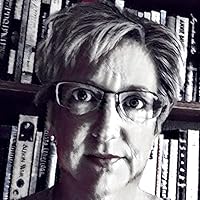
Steven Charleston is a citizen of the Choctaw Nation of Oklahoma, the first of the Five Tribes from the southeastern part of the United States to be removed on the "Trail of Tears". He is a bishop in the Episcopal Church with forty years of service in the ordained ministry. He has been the director of Native American ministries for his church, the first Native Bishop of Alaska, the President and Dean of a seminary in Cambridge, Massachusetts, and a seminary professor. Currently he teaches at the Saint Paul School of Theology.
Ten Native American Scholars Reflect on How Much Native American and Christian Traditions Share
Over my half century of journalism, focusing on religion and cultural diversity, one of the most misunderstood minorities in North America are Native peoples and their ongoing quest to preserve and celebrate a cohesive spiritual tradition. This is a huge challenge because government-sponsored efforts at both genocide and forced cultural re-education in boarding schools were aimed at wiping out those traditions. And, while Native American leaders and elders agree that community and consensus form a central pillar of their collective traditions, the fragmented stories, rituals and insights that continue to emerge across North America appear with a wide variety of regional flavors.
There is no singular approach to Native American faith or religion or spirituality. Some Native leaders insist that the only authentic tradition is one completely divorced from Christianity—or any other outside influence. However, the fact is that as many as two thirds of the millions of Native peoples living in the U.S. currently identify as Christian and prefer to find a way to blend these traditions. Given the huge diversity of Christian denominations from Catholic to the most independent Pentecostal branches, it's clear why there can be no single manifesto or creed or guidebook to Native American spirituality.
It's that tension—between a powerful tradition of communal concern among Native peoples and the spiritual independence of individuals and their families—that makes it difficult for non-Native people to understand Native stories that continue to surface in newspapers, magazines, books, TV series and movies.
And that's why this 2015 collection, organized by the highly respected Native American Christian scholar Steven Charleston is an essential book for anyone who hopes to understand the diversity of Native voices searching for common ground within Native American Christianity.
The opening essay by Charleston illustrates the revelations you will find in this collection. Charleston is 74 as I write this review, but he recalls, in that opening essay, starting his studies at the Episcopal Divinity School in Massachusetts in the early 1970s. In that era, little attention was paid by scholars to Native American traditions and Charleston found himself sitting through lectures telling him that the Judeo-Christian tradition was "unique" in understanding God as singular and closely bound to ancient tribes who had received promised lands. Even then, Charleston knew that this was not the "unique" province of Judeo-Christians. Native peoples across North America—and in many other regions of the world, he would learn—have these truths embedded in their origin stories, as well.
The great strength of this book as a resource for understanding a positive interweaving of Native and Christian theology and spirituality is that it was not written solely by Charleston. He remains a very popular author himself and I can also recommend his other solo books, but in this volume he understood that these truths could emerge only if he had a wide range of Native voices.
So, this book is a circle of 10 wise men and women, who raise lots of thought-provoking and spiritually energizing questions about how these traditions might live together and collectively might help to preserve our ailing planet.
A great read, with many voices and stories. I laughed, cried, was moved to anger, and found great joy while reading this book. It has quite possibly changed the focus of my graduate studies in theology, to focus more on a Master of Arts in Indigenous and Interfaith Studies.
Every page was important...the only reason I gave it a 4 instead of a 5 was because of the essay style, and I always wanted to read more from each author's mind and experience beyond what could be contained in a single essay. However, the biographies of the authors and the list of further readings will lead me to books to explore these invaluable perspectives.
I read this book as part of a class on Indigenous Theologies at Vancouver School of Theology.
The Editors of this book have collected a wonderful assortment of perspectives on theology and Christianity from indigenous perspectives. While it is always an error to assume that all indigenous peoples share a unified perspective, this collection of essays definitely lays out a foundation for developing Christian theology in an indigenous context.
Some reflections from the various essays Chapter 4- Bishop Carols Gallagher on Heaven and Hell: Gallagher’s theology of heaven and hell was really quite restorative to read. My own theology reflects a similar belief that the two do not exist in some mystical other place that we experience after death. I have long held the belief that they are part of our lived existence, and we participate in them through our own choices. Like many others I was raised with the idea that heaven was the end-goal, the final reward for trusting God and being a good Christian. It wasn’t until I was able to get rid of the idea of hell as a place of eternal suffering and punishment that I was able to untangle what I thought heaven was. The Bishop’s description towards the end of the chapter gave me the opportunity to recognize how we bring these states of being into the created world as well. While I have certainly developed a more creation centered perspective on much of theology, I had not yet brought creation into my image of heaven and hell.
Chapter 6 - Dr. Lisa A. Dellinger on Sin: I sat for a long time with Dellinger’s writing on sin. Several things come up for me. First is her outright assertion that there is no one correct way to be Christian(p 127). I know that at VST we are comfortable with a plurality of expressions of the Christian faith. I was struck by how clearly she seems to argue that not only is there not one correct way, but that even the idea that there is only one way is antithetical to authentic Christian faith. Second would be her framing of ultimate good in traditional indigenous communities as focused on relationship and community. This echoes for me Gallager’s writing from earlier about heaven and hell. If the ultimate good is right-relationship within the community, then heaven is when all members of the community are enabled and empowered to live into their greatest potential for the good of the whole. As I said then, this resonates deeply with my own theology of lived experience of heaven and hell. Finally, this writing brought to mind a story I was told by an elder. About how he never knew what sin was before he went to school. He knew how he was supposed to help others and respect his elders, and to think before he acted. Then when he went to school where he learned from white Catholics he learned what sin was, and how to do something “wrong.” They taught him to think about hurting others and being “bad” in ways he never had before. Everytime they told him he was sinning, he learned a new way to be bad, and he doesn’t remember them ever telling him how to be good. He told me that he had to learn again how to think about being good, and being helpful, because when he got home from school all he could think about was being bad, and so that’s all he could do. As someone raised in the holiness movement, deeply embedded in purity culture, his story opened my eyes to how the focus of our teaching and theology needs to be on what we want to grow. Because wherever we focus our attention is what flourishes.
Chapter 7- Dr. Martin Brokenleg on the Church: Martin Brokenleg’s description of how deeply his experience of faith was shaped by his early life in the church touched me. I found a lot of hope in it for my sense of calling to create an intentional community of faith that is grounded in the ceremonies of the church and the culture of the community. It is something I lack in my early story. I was raised in a church community that rejected ritual and failed to build relationships, so whenever I hear stories of people who had that and how it shaped them it calls to me.
this book was very informative about colonialism and native culture/traditions and their relation to christianity.
BUT my biggest gripe, and why i was tempted to give it two stars, is the absolute condescension this book had at times towards people who are more casual with religion.
yeah, some people put their religious practices in a 10-30 minute slot on sunday, is that so bad? i can’t spend 4 hours on god and religion because i have things to do and i’d be tired. when i was little (fyi my entire family is super religious and go to our place of prayer regularly), i would walk home from the bus stop, speaking out loud to god about my day. that was enough for me.
and the thing is, this was brought up constantly with almost every chapter. maybe it’s just that much of a big part of native religion but i still think some understanding should be offered to people who are more casual or reserve their faith to a time and place.