

What do you think?

Delhi: Unknown Tales of a City
Ronald Vivian Smith is an author of personal experiences – a rare breed to find in a time when even journalists hesitate to put pen to paper without scanning through the internet. A definitive voice when it comes to some known and unknown tales and an inspiration to a new generation of city-scribes, Smith is a master-chronicler of Delhi’s myriad realities. Among the capital’s most ardent lovers, Smith believes in the power of observation and interaction. His travels across Delhi, most often in a DTC bus, examine the big and small curiosities – seamlessly juxtaposing the past with the present. Be it the pride he encounters in the hutments of one of Chandni Chowk’s age-old beggar families, or his ambling walks around Delhi’s now-dilapidated cemeteries, Smith paints with his words a city full of magic and history. This anthology features short essays on the Indian sultanate, its fall after the British Raj, and its resurrection to become what it is today – the National Capital Territory of Delhi.
‘No amount of bookish knowledge can compete with the sort of insights and real, lived memories he [Smith] has.’ —Rakshanda Jalil, LiveMint
‘… When it comes to writing on monuments of Delhi – known, little known or unknown – no one does a better job than R.V. Smith.’ —Khushwant Singh, Hindustan Times
‘No amount of bookish knowledge can compete with the sort of insights and real, lived memories he [Smith] has.’ —Rakshanda Jalil, LiveMint
‘… When it comes to writing on monuments of Delhi – known, little known or unknown – no one does a better job than R.V. Smith.’ —Khushwant Singh, Hindustan Times
214 pages, Kindle Edition
First published January 1, 2015
Ratings & Reviews
Friends & Following
Create a free account to discover what your friends think of this book!
Community Reviews
Displaying 1 - 8 of 8 reviews

July 12, 2015
For the average Dilliwallah, ‘Chandni Chowk’ is synonymous with ‘Old Delhi’, no matter that Mehrauli—or the area around Tughlaqabad, Siri, Hauz Khas, etc—had been around for centuries before Shahjahan decided to move his capital from Agra to Delhi. Never mind, too, that referring to the entire stretch between the Red Fort and Fatehpuri Masjid as Chandni Chowk is incorrect, since Chandni Chowk, strictly speaking, is only part of that stretch: it is the small square in front of Town Hall, opposite which the clock tower once stood.
But say ‘Chandni Chowk’, and most Delhiites will wax eloquent about everything from saris and parathas to Karim’s and electrical appliances. Say ‘Kothewali ka Raasta’, ‘Rangeela Chowk’, ‘Khooni Chowk’, ‘Rohilla Chowk’ or ‘Murdon ka Chowk’, and very few will recognize these as names this famous street has borne over the years since it was laid out in the mid-17th century.
This interesting nugget of information—along with the fact that other names (Beresford Road, Victoria Square, Kranti Chowk, Azaadi Chowk, and Sachin Tendulkar Chowk) had been suggested, over the years, for this landmark road—are all part of RV Smith’s engrossing Delhi: Unknown Tales of A City. The history of this huge and interesting city, all the way from the time of the Mahabharat up to the present, comes alive in Smith’s book. And rarely in its political form; this is an anecdotal history, a history of society and culture, of everything from poets to graveyards, from swimming fairs to Easter picnic parties.
RV Smith, who used to work with The Statesman, continued to write articles for The Hindu and The Statesman even after his retirement, and an important theme of these articles has been the city of Delhi, about which he has been writing since 1958. 73 of these brief articles—each no more than 3 pages long, often less—have been collected and published as Delhi: Unknown Tales of A City. Each article is, in some way or the other, related to Delhi and its history (although, in some articles, like New Year’s Eve Reverie or Redeeming Sher Shah’s Legacy, the link is rather tenuous).
Here is a very eclectic mix of topics. There are articles on the mosques, the temples, the graveyards, the wells of Delhi. The Urdu poets of Delhi are discussed, Bahadur Shah Zafar is written about. There are writings on just about every aspect of Delhi, from the coming of spring and the celebrations associated with it; to the drummers, the courtesans, the pheriwallahs, the mystics, the white nabobs. Legends are recounted here, gossip shared, inside information imparted.
Unfortunately, in the telling, there tends to be the occasional blurring of the line between fact and myth, between tradition and history. Tees Hazaari, for example, is mentioned at one place as having derived its name from 30,000 plants Jahanara planted here—and, in another place (and this is believed by most historians to be the correct version) as being named after Sardar Baghel Singh, whose 30,000 soldiers encamped here, in preparation for an attack on Delhi.
What this book needed was a sharp-eyed editor to weed out the inconsistencies, repetitions, contradictions and many typographical errors that mar it. Despite those, though, this is a highly readable book. While each tale is not exactly ‘unknown’—there is much here that an ardent Delhi-lover would know about—there is plenty that will be new, too. And enjoyable, amusing, enlightening, nostalgia-inducing.
(From my review for The New Indian Express: http://www.newindianexpress.com/lifes...)
But say ‘Chandni Chowk’, and most Delhiites will wax eloquent about everything from saris and parathas to Karim’s and electrical appliances. Say ‘Kothewali ka Raasta’, ‘Rangeela Chowk’, ‘Khooni Chowk’, ‘Rohilla Chowk’ or ‘Murdon ka Chowk’, and very few will recognize these as names this famous street has borne over the years since it was laid out in the mid-17th century.
This interesting nugget of information—along with the fact that other names (Beresford Road, Victoria Square, Kranti Chowk, Azaadi Chowk, and Sachin Tendulkar Chowk) had been suggested, over the years, for this landmark road—are all part of RV Smith’s engrossing Delhi: Unknown Tales of A City. The history of this huge and interesting city, all the way from the time of the Mahabharat up to the present, comes alive in Smith’s book. And rarely in its political form; this is an anecdotal history, a history of society and culture, of everything from poets to graveyards, from swimming fairs to Easter picnic parties.
RV Smith, who used to work with The Statesman, continued to write articles for The Hindu and The Statesman even after his retirement, and an important theme of these articles has been the city of Delhi, about which he has been writing since 1958. 73 of these brief articles—each no more than 3 pages long, often less—have been collected and published as Delhi: Unknown Tales of A City. Each article is, in some way or the other, related to Delhi and its history (although, in some articles, like New Year’s Eve Reverie or Redeeming Sher Shah’s Legacy, the link is rather tenuous).
Here is a very eclectic mix of topics. There are articles on the mosques, the temples, the graveyards, the wells of Delhi. The Urdu poets of Delhi are discussed, Bahadur Shah Zafar is written about. There are writings on just about every aspect of Delhi, from the coming of spring and the celebrations associated with it; to the drummers, the courtesans, the pheriwallahs, the mystics, the white nabobs. Legends are recounted here, gossip shared, inside information imparted.
Unfortunately, in the telling, there tends to be the occasional blurring of the line between fact and myth, between tradition and history. Tees Hazaari, for example, is mentioned at one place as having derived its name from 30,000 plants Jahanara planted here—and, in another place (and this is believed by most historians to be the correct version) as being named after Sardar Baghel Singh, whose 30,000 soldiers encamped here, in preparation for an attack on Delhi.
What this book needed was a sharp-eyed editor to weed out the inconsistencies, repetitions, contradictions and many typographical errors that mar it. Despite those, though, this is a highly readable book. While each tale is not exactly ‘unknown’—there is much here that an ardent Delhi-lover would know about—there is plenty that will be new, too. And enjoyable, amusing, enlightening, nostalgia-inducing.
(From my review for The New Indian Express: http://www.newindianexpress.com/lifes...)

June 22, 2023
A charming book of very short essays (mostly taken from newspaper columns) by the Indian-Anglo journalist R.V. Smith. Smith brings to life the history of India told through the everyday occurrences in the gallis, kutchas, mandirs, havelis, shrines, and ruins of Delhi; both New and Old. We hear tales of beggars, scholars, begums, British Officers, Nawabs, halim vendors and many other people besides. I can't exactly say what it is about Delhi, India that has captured my imagination. I just know that I'd like to visit there someday and I would bring this book with me.

October 8, 2016
I had been reading R.V. Smith's columns/ pieces, and to have all those in one place is amazing! Smith tells us the stories about Delhi that we all had wanted to hear, and those we didn't even know we needed to hear. A truly fascinating collection, taking you back to the Delhi of ancient, the Delhi of Rajas, Sultaans and Baadshahs, and Firangis, and eventually the Delhi we now have today: an amalgamation of all these.
(Gifted to me by Divya John, bought at Jain Book Depot, Connought Place, on 24th August 2016)
(Gifted to me by Divya John, bought at Jain Book Depot, Connought Place, on 24th August 2016)

Read
July 18, 2016Dilli ke na the kuche Auraq-e-mussavir the. Jo shakl nazar aayi Tasveer nazar aayi.
(It wasn’t the lanes and streets of Delhi: It was the pages of an album. Each and every face that one saw was a painting)- Mir Taqi Mir. “Delhi unknown Tales of a City” by R V Smith is a collection of some lovely anecdotes on Delhi. For a lover of this old city, this book is a fabulous discovery because of all the amazing stories that the author has incorporated into it. There is so much to discover about the city that the book makes you feel like you are walking into all its dark labyrinths and folds one chapter at a time. I loved reading about the history behind the weird street names, the stories behind the forgotten old buildings which were once as majestic as the city itself and the people who called Delhi their own. A city that was loved by Ghalib and by Mir, a city that the Mughals filled with gardens and architecture, a city that the British tried to tame, Delhi has seen it all and Mr. Smith, who clearly knows the city, more intimately then some has tried to capture it all.
A wonderfully informative read that I am glad I added to my fast growing collection of books on Delhi.
(It wasn’t the lanes and streets of Delhi: It was the pages of an album. Each and every face that one saw was a painting)- Mir Taqi Mir. “Delhi unknown Tales of a City” by R V Smith is a collection of some lovely anecdotes on Delhi. For a lover of this old city, this book is a fabulous discovery because of all the amazing stories that the author has incorporated into it. There is so much to discover about the city that the book makes you feel like you are walking into all its dark labyrinths and folds one chapter at a time. I loved reading about the history behind the weird street names, the stories behind the forgotten old buildings which were once as majestic as the city itself and the people who called Delhi their own. A city that was loved by Ghalib and by Mir, a city that the Mughals filled with gardens and architecture, a city that the British tried to tame, Delhi has seen it all and Mr. Smith, who clearly knows the city, more intimately then some has tried to capture it all.
A wonderfully informative read that I am glad I added to my fast growing collection of books on Delhi.

August 13, 2018
From old money to
money that is now old*
From Old Delhi to
almost half-of-Delhi which is New
Synopsis:
A collection of 73 short stories, which span from spooky, to mystery, to the histrionics of an era gone by. The stories are steeped in the history of Delhi as much as they reflect today's reality.
Review:
Set in present-day Delhi, the characters are an assortment of Mughals, Britishers, invaders, and citizens alike. From a British resident from 1836-1853, Sir Thomas Metcalfe, who built the Metcalfe House (which is in ruins, at present); to the Urdu-speaking Tom Alter; to the High Court restrictions on burning of crackers; everyone and everything finds a mention here. I think it is a journalists' prerogative to be writing such detailed, and well-researched historical accounts of a city. From Halloween to Moharrum, to Diwali, all the festivals can be found in this book, which is true to the multi-cultural nature of Delhi since ages, where people of all region, and religion, have found a place to call their own. Delhi has always been a city for everyone. This book has something for everybody, be it lovers of history, bird-watchers, or grave diggers (literally).
The introduction to the book mentions it to be 'a collection of articles originally written for the Statesman and the Hindu (published between 1990 and 2011)'. But the articles read nothing less than fables, often with catchy titles, and amusing anecdotes. Many of us may call Delhi our home; but the author, Ronald Vivian Smith (which is his adopted home), truly made it his. He can rightfully be called a champion of Delhi's heritage.
All the stories are in the range of approximate 400-1000 words, making them a short, and crisp read.
It made me see Delhi in a new light, and I believe that on my outings now, some or the other tale – whether it happened in reality or is just some fable – will come to haunt me during my escapades.
All of the stories are so good that I couldn't even pick one as my favourite. You won't be able to stop yourself from getting nostalgic after reading this.
On a final note, Dilli Dilwalon Ki (meaning Delhi, which is the city of the large-hearted) is well and good; but one of the stories drove home a point – the rising population (a problem which not only Delhi but our entire country is facing). Moreover, already many architectural marvels have been lost to the turbulence of nature, and the avarice of people. I wonder how many more would really survive the ravages of both time and population.
P.S. I read this book as a part of the #discoveringindiareadathon (Discovering India Readathon), which started from August 1, 2018, and is on till the 15th. In its second year now, this challenge has been curated by three wonderful bookstagrammers:
Padmaja (https://www.instagram.com/thebookisht... )
Aritri (https://www.instagram.com/theliquidsu... ), and
Ankita (https://www.instagram.com/theblue_bal... ).
It is a great way of reading as well as discovering the gems of Indian Literature. Just follow the hashtag on Instagram, and the above three accounts, and you are good to go!
Blurb:
Ronald Vivian Smith is an author of personal experiences – a rare breed to find in a time when writers hesitate to put pen to paper without scanning through the internet. A definitive voice when it comes to some known and unknown tales and an inspiration to a new generation of city-scribes, Smith is a master-chronicler of Delhi’s myriad realities.
Among the capital’s most ardent lovers, Smith believes in the power of observation and interaction. His travels across Delhi, most often in a DTC bus, examine the big and small curiosities – seamlessly juxtaposing the past with the present. Be it the pride he encounters in the sheds of one of Chandni Chowk’s age-old beggar families, or his ambling walks around Delhi’s now-dilapidated cemeteries, Smith paints with his words a city full of magic and history. This anthology features short essays on the Delhi of the Mughal Empire and the British Raj, and its resurrection to become what it is today – the National Capital Territory of Delhi.
About the Author:
Ronald Vivian Smith is an alumnus of St. John's College, Agra and began writing as a teenager in 1954. He has authored a number of books, including four on Delhi, a romantic novel, Jasmine Nights and the Taj, three volumes of poetry, a collection of ghost yarns, and a profile of the eighteenth-century Smith family he is descended from. As a septuagenarian he does not spend time on an easy chair but in surveying out-of-the-way places for unusual stories that form the grist for weekly newspaper columns, 'Quaint Corner' and 'Down Memory Lane'. This publication of his completes the proverbial baker's dozen.
Excerpt from the Foreword by Dr. Rosie Llewellyn-Jones:
History runs in the Smith family, who are descended from Salvador Smith (1783-1871), the soldier who trained troops of Daulat Rao Scindia. He is the son of the late journalist Thomas Smith (1910-1995), whose articles in numerous newspapers were always full of interesting snippets about the bits of history that historians usually neglect. He came to Delhi over fifty-two years ago and grew to love the city. Born in January 1938, he tried to merge the old-world ambience of Delhi with his Anglo-Indian antecedents. For him Delhi is not a city but a timeless begum who excites love, devotion and nostalgia. She is truly the beloved of all Delhiwalahs (the people of Delhi) but mistress of none.
Did you pick a favourite?
*read: obsolete
Originally posted on:
https://sassyshaina.wordpress.com/201...
money that is now old*
From Old Delhi to
almost half-of-Delhi which is New
Synopsis:
A collection of 73 short stories, which span from spooky, to mystery, to the histrionics of an era gone by. The stories are steeped in the history of Delhi as much as they reflect today's reality.
Review:
Set in present-day Delhi, the characters are an assortment of Mughals, Britishers, invaders, and citizens alike. From a British resident from 1836-1853, Sir Thomas Metcalfe, who built the Metcalfe House (which is in ruins, at present); to the Urdu-speaking Tom Alter; to the High Court restrictions on burning of crackers; everyone and everything finds a mention here. I think it is a journalists' prerogative to be writing such detailed, and well-researched historical accounts of a city. From Halloween to Moharrum, to Diwali, all the festivals can be found in this book, which is true to the multi-cultural nature of Delhi since ages, where people of all region, and religion, have found a place to call their own. Delhi has always been a city for everyone. This book has something for everybody, be it lovers of history, bird-watchers, or grave diggers (literally).
The introduction to the book mentions it to be 'a collection of articles originally written for the Statesman and the Hindu (published between 1990 and 2011)'. But the articles read nothing less than fables, often with catchy titles, and amusing anecdotes. Many of us may call Delhi our home; but the author, Ronald Vivian Smith (which is his adopted home), truly made it his. He can rightfully be called a champion of Delhi's heritage.
All the stories are in the range of approximate 400-1000 words, making them a short, and crisp read.
It made me see Delhi in a new light, and I believe that on my outings now, some or the other tale – whether it happened in reality or is just some fable – will come to haunt me during my escapades.
All of the stories are so good that I couldn't even pick one as my favourite. You won't be able to stop yourself from getting nostalgic after reading this.
On a final note, Dilli Dilwalon Ki (meaning Delhi, which is the city of the large-hearted) is well and good; but one of the stories drove home a point – the rising population (a problem which not only Delhi but our entire country is facing). Moreover, already many architectural marvels have been lost to the turbulence of nature, and the avarice of people. I wonder how many more would really survive the ravages of both time and population.
P.S. I read this book as a part of the #discoveringindiareadathon (Discovering India Readathon), which started from August 1, 2018, and is on till the 15th. In its second year now, this challenge has been curated by three wonderful bookstagrammers:
Padmaja (https://www.instagram.com/thebookisht... )
Aritri (https://www.instagram.com/theliquidsu... ), and
Ankita (https://www.instagram.com/theblue_bal... ).
It is a great way of reading as well as discovering the gems of Indian Literature. Just follow the hashtag on Instagram, and the above three accounts, and you are good to go!
Blurb:
Ronald Vivian Smith is an author of personal experiences – a rare breed to find in a time when writers hesitate to put pen to paper without scanning through the internet. A definitive voice when it comes to some known and unknown tales and an inspiration to a new generation of city-scribes, Smith is a master-chronicler of Delhi’s myriad realities.
Among the capital’s most ardent lovers, Smith believes in the power of observation and interaction. His travels across Delhi, most often in a DTC bus, examine the big and small curiosities – seamlessly juxtaposing the past with the present. Be it the pride he encounters in the sheds of one of Chandni Chowk’s age-old beggar families, or his ambling walks around Delhi’s now-dilapidated cemeteries, Smith paints with his words a city full of magic and history. This anthology features short essays on the Delhi of the Mughal Empire and the British Raj, and its resurrection to become what it is today – the National Capital Territory of Delhi.
About the Author:
Ronald Vivian Smith is an alumnus of St. John's College, Agra and began writing as a teenager in 1954. He has authored a number of books, including four on Delhi, a romantic novel, Jasmine Nights and the Taj, three volumes of poetry, a collection of ghost yarns, and a profile of the eighteenth-century Smith family he is descended from. As a septuagenarian he does not spend time on an easy chair but in surveying out-of-the-way places for unusual stories that form the grist for weekly newspaper columns, 'Quaint Corner' and 'Down Memory Lane'. This publication of his completes the proverbial baker's dozen.
Excerpt from the Foreword by Dr. Rosie Llewellyn-Jones:
History runs in the Smith family, who are descended from Salvador Smith (1783-1871), the soldier who trained troops of Daulat Rao Scindia. He is the son of the late journalist Thomas Smith (1910-1995), whose articles in numerous newspapers were always full of interesting snippets about the bits of history that historians usually neglect. He came to Delhi over fifty-two years ago and grew to love the city. Born in January 1938, he tried to merge the old-world ambience of Delhi with his Anglo-Indian antecedents. For him Delhi is not a city but a timeless begum who excites love, devotion and nostalgia. She is truly the beloved of all Delhiwalahs (the people of Delhi) but mistress of none.
Did you pick a favourite?
*read: obsolete
Originally posted on:
https://sassyshaina.wordpress.com/201...
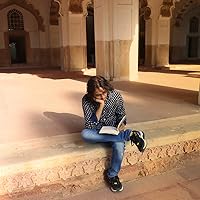
February 12, 2025
"Kaun Jaye Zauq par Dilli ki galliyan chord kar"
A city as intoxicating as Delhi, a city I chose to fall in love with. Lot has been read and yet still I discover more stories, lived memories and insights.
Ronald Vivian Smith brings out the Unknown Tales of a City as a master chronicler of Delhi.
A city as intoxicating as Delhi, a city I chose to fall in love with. Lot has been read and yet still I discover more stories, lived memories and insights.
Ronald Vivian Smith brings out the Unknown Tales of a City as a master chronicler of Delhi.

March 15, 2024
amazing stories dry writing style 3.5

Want to Read
October 20, 2018This entire review has been hidden because of spoilers.
Displaying 1 - 8 of 8 reviews