Jump to ratings and reviews
Rate this book

Ladivine

Rate this book
From the hugely acclaimed author of Three Strong Women—“a masterpiece of narrative ingenuity and emotional extremes” (The New York Times)—here is a harrowing and subtly crafted novel of a woman captive to a secret shame.

On the first Tuesday of every month, Clarisse Rivière leaves her husband and young daughter and secretly takes the train to Bordeaux to visit her mother, Ladivine. Just as Clarisse’s husband and daughter know nothing of Ladivine, Clarisse herself has hidden nearly every aspect of her adult life from this woman, whom she dreads and despises but also pities. Long ago abandoned by Clarisse’s father, Ladivine works as a housecleaner and has no one but her daughter, whom she knows as Malinka.

After more than twenty-five years of this deception, the idyllic middle-class existence Clarisse has built from scratch can no longer survive inside the walls she’s put up to protect it. Her untold anguish leaves her cold and guarded, her loved ones forever trapped outside, looking in. When her husband, Richard, finally leaves her, Clarisse finds comfort in the embrace of a volatile local man, Freddy Moliger. With Freddy, she finally feels reconciled to, or at least at ease with, her true self. But this peace comes at a terrible price. Clarisse will be brutally murdered, and it will be left to her now-grown daughter, who also bears the name Ladivine without knowing why, to work out who her mother was and what happened to her.

A mesmerizing and heart-stopping psychological tale of a trauma that ensnares three generations of women, Ladivine proves Marie NDiaye to be one of Europe’s great storytellers.

288 pages, Hardcover

First published February 14, 2013

65 people are currently reading
3224 people want to read

About the author

Marie NDiaye

56 books400 followers
Marie NDiaye was born in Pithiviers, France, in 1967; spent her childhood with her French mother (her father was Senegalese); and studied linguistics at the Sorbonne. She started writing when she was twelve or thirteen years old and was only eighteen when her first work was published. In 2001 she was awarded the prestigious Prix Femina literary prize for her novel Rosie Carpe, and in 2009, she won the Prix Goncourt for Three Strong Women.

Ratings & Reviews

What do you think?
Rate this book

Friends & Following

Create a free account to discover what your friends think of this book!

Community Reviews

5 stars
158 (17%)
4 stars
273 (30%)
3 stars
245 (27%)
2 stars
164 (18%)
1 star
58 (6%)
Displaying 1 - 30 of 171 reviews
Profile Image for Orsodimondo.
2,460 reviews2,433 followers
September 3, 2023
NAM MYŌHŌ RENGE KYŌ

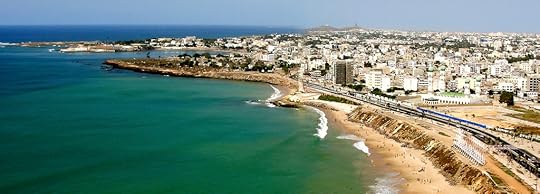
description
Dakar, Senegal.

L’inizio è bello, molto.
Quasi tutta la prima parte è bella. È potente.
Si tratta di un po’ meno di un terzo del libro.
La storia di una bambina che cresce, si vergogna della madre povera e nera, un’africana emigrata in Francia che si è lasciata mettere incinta da un bianco che sparisce quasi prima d’essere comparso.
La bambina diventa una donna, è nata più bianca che nera, ha la pelle chiara, ma se la schiarisce ulteriormente col trucco per nascondere qualsiasi traccia della sua origine.
E si allontana sempre più dalla madre: la figlia vuole integrarsi a ogni costo, rifiuta qualsiasi eredità biologica che non sia quella della razza bianca, quella del padre che non ha mai conosciuto.
E più si allontana e più cresce in lei il senso di colpa nei confronti della madre che abbandona.

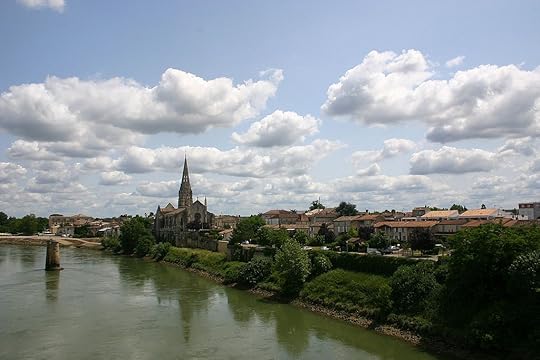
description
Langon, nella Gironda, Francia.

La giovane diventa donna, si cambia il nome da Malinka in Clarisse, si sposa e così acquista un cognome francese, Rivière, e lo tiene nascosto alla madre, che ha lasciato alle spalle in un’altra città.
Ma che non riesce a dimenticare: il primo martedì di ogni mese prende il treno e va a trovarla.
Non le dice nulla di chi è diventata, della vita che fa, del marito, della famiglia che si è allargata, è nata una bimba, ed è stata chiamata Ladivine, proprio come la nonna che non conoscerà mai.

E comunque gli sforzi di integrazione di Malinka-Clarisse, i tentativi di diventare francese a ogni costo, non vanno lontano, non la conducono dove vorrebbe. E forse l’eredità che respinge e rifiuta man mano diventa ambivalente, irretisce.

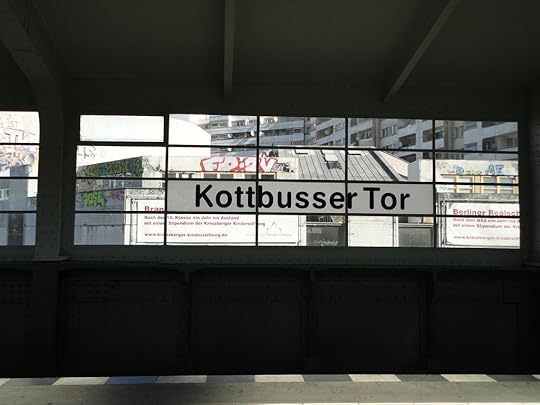
description
Berlino, Germania.

Ecco, tutto questo è bello, molto. Scritto con prosa ipnotica.

Che però man mano diventa ripetitiva, sfiancante nell’insistenza di nomi e concetti, ripetuti oltre la mia umana sopportazione.
Al punto da evocarmi la nota nenia buddista, nam myōhō renge kyō.

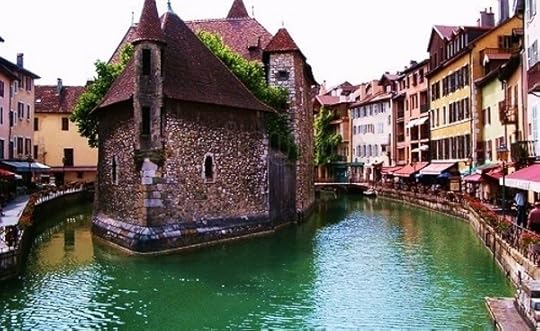
description
Annecy, Alta Savoia (Francia).

E non è l’unica cosa che si perde.
Da un registro realistico si scivola in uno irrazionale, dalla psicologia ben costruita si passa al trionfo dell’inconscio, da passaggi narrativi spiegati e ripetuti, come se fossero inquadrati da tutti i punti di vista possibili (e impossibili) si scivola in situazioni nebulose, identità incerte, cronologia frammentata, si cade nell’omissione: man mano diventano troppi, e troppo cruciali, gli snodi che NDiaye tralascia di spiegare, motivare, raccontare.
Pur volendo, però, costruire su questi elementi attesa e, addirittura, quasi suspense. A questo punto, l’ho percepita perfino omertosa.

description

Il simbolismo è forte per tutto il romanzo: la ciclicità - il cerchio che si chiude (con più di una forzatura) - le colpe dei padri che ricadono sui figli - la vergogna e il senso di colpa non assimilati crescono a dismisura e si moltiplicano, diventano come una metastasi - il percorso della nipote che si ricongiunge istintivamente a quello della nonna mai conosciuta, in un inconsapevole viaggio a ritroso.

La povertà che spinge all’emigrazione è un trauma che si ripercuote sulle generazioni a venire. L’esilio è un fantasma che torna a turbare. Il colore (scuro) della pelle è un marchio indelebile, una maledizione che neppure il make-up cancella, e neppure nasconde.

description
Profile Image for ♑︎♑︎♑︎ ♑︎♑︎♑︎.
Author 1 book3,809 followers
January 30, 2019
This novel gets to the heart of the human condition. I feel scoured out by it. I feel like my head was held tight until I was forced to look at the sadness of being alive. The meanings in this novel are not entirely rational and yet the bedrock truth of the story felt so familiar. It was like reading about some tragic, true event.

The characters are worthy of love, and yet they are each so alone and so unloved, and so confused in their isolation, and so unknowable even to themselves. They pity each other but they don't stop to pity themselves. They think the best of one another and yet they never manage to be entirely real to one another, or to make their inner selves known to those they love.

The writing is surprising-- it's flat and straightforward, and yet full of mystery. The novel entraps you in the most unlikely of stories, just when you're expecting the most typical of stories. It carries you along into unexpected journeys where it seems poised to unwind into nonsense at any moment, and then just at that moment it becomes deeply disciplined, anchored in repeating symbol and theme, on a path toward an inevitable, tragic conclusion. This combination of unexpectedness with discipline made the novel a very satisfying and a very unique read.

It's a terribly sad story. It upended my defenses.
Profile Image for Felice Laverne.
Author 1 book3,353 followers
Read
August 5, 2019
So sorry, I couldn't even finish this one before putting it down, which is extremely extremely rare for me!, because the word that kept popping into my head was overwrought, Overwrought, OVERWROUGHT! It seemed like NDiaye was trying way too hard to be deep or profound, and I just couldn't get into her writing style. It seemed...melodramatic, but not in a way that I could appreciate. Just couldn't do it, so, sadly, this will be the first novel EVER to make it onto my "Could Not Even Finish" shelf. But, to be fair, I'll refrain from rating this one since I couldn't even get halfway.

HOWEVER, I'd be interested to read this one without translation to see if it ends up being better, so perhaps I'll review that one instead and let you all know how it goes!


FOLLOW ME HERE:

Art + Deco Agency Book Blog | Twitter | Instagram | Art + Deco Publishing Agency
Profile Image for Constantine.
1,091 reviews365 followers
September 18, 2024
Rating: ⭐⭐⭐ ½
Genre: Literary Fiction

This is a thought-provoking generational story translated from French. It follows the story of three women and highlights the mother-daughter relationship in a big way. The story concentrates on one character, the mother, then shifts to the daughter and eventually to the granddaughter.

Ladivine is a black woman who works as a house cleaner. Her daughter Malinka, who later changes her name to Clarisse, is very ashamed of her mother’s work and ancestry roots, too! It was tough to read about this relationship. At times, I got furious at this ungrateful character towards her mother.

Clarisse then gets married and has a daughter named Ladivine. Then, the narrative shifts to Ladivine, who must find out about her grandmother and her ancestry. The strength of the novel lies in its exploration of one’s identity and race.

There is a lot of emotional depth in the first part of the book. I think the author has done a great job with the characters. However, despite a strong first half, the second half was not as engaging as the first one. The author’s prose and atmospheric writing made reading this book a pleasing experience. I liked it.
Profile Image for Hugh.
1,294 reviews49 followers
September 9, 2017
This is a haunting and somewhat, elusive, nightmarish and enigmatic story which explores the inner worlds of three generations of women in the same family and the secrets that prevent them communicating properly with one another. Like NDiaye's previous novel Three Strong Women it has extended sections that focus on different characters, but this time they are all more closely related.

The first section centres on Clarisse Riviere, who has chosen a new identity to distance herself from her past as Malinka, the son of an African servant/cleaner Ladivine Sylla. She visits her mother regularly but keeps her existence secret from her husband Richard, a car salesman and her daughter (who is also named Ladivine).

The extended middle section is centred on the daughter Ladivine Riviere, and is largely an account of a nightmarish holiday in an unnamed country which is probably African, with her German husband and two children.

The third longer section centres on her father Richard.

It is difficult to explain how the plot hangs together without spoilers, for example . There are many dogs in the book, all of which seem to have a mysterious ghostly and symbolic significance, and at several points the plot seems to follow nightmare logic.

The whole adds up to a bleak and sometimes gripping and memorable novel, but not an easy one to fully understand or assess.
Profile Image for Mary.
476 reviews944 followers
July 1, 2016
Wow. I wasn’t expecting this. What a stifling, devastating experience this was.

Ladivine is a highly emotional and intense novel where each page is weighed down with the unrelenting guilt of the characters. Early on it seemed like it might be about mother-daughter shame and guilt, class, race, unhealthy relationships and feeling lost in the world, and it is all that, but so much more. I’m afraid this review is rather futile because I don’t know how to classify this novel or even how to explain it. It’s depressed (not merely depressing) and surreal and very strange and panicked and lonely. The writing is blunt and painful. Psychological mystery, maybe? Bitter life portrait? I can’t really define this book, but it left me with so many feelings.

We’re doomed, Marie NDiaye is telling us. We will never escape our legacy, our consequences and our desires. We’re all in it alone.

Her love for her mother was a foul-tasting food, impossible to choke down. That food dissolved into bitter little crumbs in her mouth, then congealed, and this went on and on and had no end, the lump of fetid bread shifting from one cheek to the other, then the soft, stinking fragments that made of her mouth a deep pit of shame.
Profile Image for Roger Brunyate.
946 reviews742 followers
September 7, 2017
A Bitter Bread

"Had she not made of the servant's life a bitter bread?"

A more or less random line from the first part of Marie NDiaye's new novel. I quote it for two reasons. One is that the translation by Jordan Stump never quite settles into idiomatic English; one is always aware of a kind of ghost French behind it, as in the inverted word order and strange idiom here. He has informed me, however, in a comment on my Amazon review (see spoiler below) that this is an accurate representation of NDiaye's French. Having read her first novel, Trois femmes puissantes , in French I can well believe it, although this goes further in its deliberate cultivation of ambiguity. Reading in the original, one has only the author to blame; in translation, suspicion falls all too easily on the translator; I apologize to Mr. Stump for the unfairness. It remains a hard book to get into, however, though the style eventually becomes quite mesmerizing.

The second reason for choosing this quote is that "A Bitter Bread" is close to my original idea for a title, "A Nasty Taste." The protagonist of the first section, Clarisse Rivière, no longer uses her birth name, Malinka, and has established a separate life in the provinces with husband and daughter. Her mother, who still lives in Bordeaux, knows nothing of this, though Clarisse maintains a regular habit of visiting her on the first Tuesday of each month, becoming Malinka again for that one day only. Years before, when her mother picked her up at school and her friends asked who this woman was, she replied "our servant." [It is not until page 31 that NDiaye indicates why she behaved this way, though readers who know of the author's mixed-race heritage may well guess.] But what leaves the nastiest taste is that for the rest of her life, Clarisse continues to refer to her mother, even in her own mind, as "the servant." So by around page 100, when the thread of the story is handed over to her daughter, the title character Ladivine, we are desperately hoping to encounter someone with more generosity of spirit.

The manner changes, but I can't say it entirely loses the nasty taste. Ladivine and her German husband Marko go with their two children on holiday to some cheap destination. I imagine Africa, though we are not told. Ladivine keeps on seeing people who are strangely familiar, and people seem to recognize her. She is also haunted by a large dog, watchful and omnipresent. But by this time the book has taken on distinctly surreal overtones. Some aspects of the situation reminded me of Vendela Vida's recent novel, The Diver's Clothes Lie Empty, which I doubt NDiaye knows, and there was a distinct reference to the murder in L'étranger, which she surely must. The combination of surrealism and realism makes the novel hard to navigate, but increasingly fascinating. I found I was no longer criticizing the translation, bemused as I was by how the story would play out as the focus shifted yet again to another daughter, another generation.

This is an unhappy book about unhappy people, people who hide their emotions because they hide their identity, potentially good people living as losers content with their own mediocrity. It all goes back, I suppose, to the mixed-race parentage that Malinka/Clarisse tries so hard to conceal. Marie NDiaye comes from a similar background herself; I sincerely hope she has been spared such bleakness in her own life. But it makes the subject for a most unusual—if bitter—novel.

Profile Image for Bjorn.
990 reviews188 followers
January 15, 2016
Ladivine is centered around four women: There's Malinka and Clarisse, and then there's Malinka's mother and Clarisse's daughter, both of whom happen to be named Ladivine.

Clarisse doesn't remember much about Malinka's childhood. She remembers that she lived in a small (but always impeccably clean) flat in some Paris suburb; one room for her, and one for her mother. She remembers that Malinka's mother wasn't like other mothers; her skin colour, her job (cleaning other people's homes), her never-failing submissiveness and hope for her daughter. She remembers that when her mother picked her up from school, Malinka would tell her friends it was their maid. She remembers that Malinka, as a light-skinned child of an African woman and a Frenchman she's never met, could pass; left school sick of being pitied, left home at 16, changed her name to Clarisse and became French. Now once a month, Clarisse visits Malinka's mother for a few hours, and they make polite chit-chat that avoids all the unspoken things that lie between them; her mother knows nothing bout her life except that she's obviously doing well. This is what her mother wanted, wasn't it? For her daughter to not go through the same things she did? Well, here's the price.

This is often a stunning novel, even as the second half blurs the line between reality and nightmare a little too much at times; NDiaye gives us a handful of characters who, like the proverbial duck, spend their lives looking calm and harmless on the surface while paddling like mad (possibly literally) underneath to stay afloat. Apart from the few times when the surface breaks and violence erupts, NDiaye doesn't worry much about plot, just lets her characters stew in the juices of all the issues they can never talk about. It would be so much easier if they hated each other, if they didn't care; but love carries responsibility, the kind that eats you up.

There's a very welcome and necessary wave of, for lack of a better word, immigrant literature in both Europe and America these days. Some of it, unfortunately, reads like Post-colonialism For Dummies. Ladivine never does; while all the issues of gender, class, race, yada yada are in there, none of them can voice them, never put words to concepts - hell, past a certain amount of silence, they can't even know about them. They just know there's something there, something wrong that keeps festering, and which obviously must be their own fault. A lesser writer would have concluded this much earlier, with a heartwarming moment of realisation - say, in the bit where Ladivine the younger, unaware of her heritage, travels to her grandmother's country as a tourist. Here, confused at how everyone sees her and not knowing why, it just sends her into even more of a tailspin that can't be broken. And so she does the only thing she's learned; keeps quiet, internalizes, sacrifices. Eats the bitter bread that's been baking for generations, and passes it on without knowing.

Ich spreche kein Französisch.
Profile Image for Maxwell.
1,442 reviews12.4k followers
dnf
September 18, 2016
I really, really wanted to like this book. It has an interesting premise, and on top of that you realize pretty early on that there's a whole other layer to the story that's not mentioned in the blurb. And that extra layer of context really intrigued me and made me want to keep reading. But the writing was not accessible at all. It was the kind of writing that keeps you so far removed from the story, from simple actions or moments that ground you in the setting, that I could read whole pages and not realize what I'd just read. I'm not sure if that's a translation issue or just how NDiaye writes. After about 50 pages it was becoming too much work to read, and it lost me. I do wish it was more enjoyable of a read because the social commentary and plot were fascinating. Ultimately, I just couldn't power through the writing style.

If you're curious and want to *spoil* yourself for that 'extra layer' I'm talking about, you can click the spoiler button and see. It's not a major spoiler because you realize this pretty early on in the story, but still some people don't like to know anything before going into a book. However, if I had known about this, I might've been more intrigued to pick this book up sooner. Anyway,
Profile Image for Antonomasia.
986 reviews1,492 followers
Read
March 9, 2017
ARC review

Deserves 4 stars for artistic merit - but I no longer want to give 4 stars to these books that are very well done, with which I didn't have that much fun, or which didn't otherwise dazzle me.

I'd been putting off reading Ladivine for the best part of a year, my trepidation about this book - which, going by the initial blurb (I suspect composed by someone who had only read the beginning) as well as the opening pages, seemed to be about a difficult mother-daughter relationship, I expected to be painfully close to the bone - outweighing my sense of obligation towards it, as a Netgalley ARC and from being a mod in a group discussing the International Booker longlist.

The close focus on Ladivine Snr and her daughter Malinka / Clarisse in fact does not last long, and the novel as a whole is about four generations of their family. What never abates is the Bergmanesque meld of acute intensity of certain emotions with disconcerting absence of some others. (And likewise the setting of a bubble-world where concepts such as therapy, personal change or conversations with people other than the main characters appear nonexistent - one which feels far more plausible in a film taking place over hours or days than in a novel spanning decades.) With the exception of the slipstream / supernatural elements which appeared in the second half of the book, I often felt like I was reading a highly skilled and lengthy fictionalised case study supplementary to a psychotherapy textbook (such as Patricia Crittenden's Raising Parents) about the multi-generational pond-ripple impact of the unspoken. And at this length, and in this much detail, it was a bit much. I like to think I would have some time and empathy for these characters if they were real people, but as fiction, non-interactive, unalterable, this was bloody hard work, and I had to treat the reading of it as such. There is undoubtedly an audience for this sort of thing, as the two current top reviews, both 5*, show - but it didn't take long for me to understand why the average rating for Ladivine is as low as it is. It's a fantastically skilful piece of observation and writing - its chilly suffocating detachment and piercing emotion-turned-up-to-11 reproducing the feeling of the characters' lives - but not something all readers may want to be swamped in. The only time I had signficant doubts about the writing was during the close third-person narrative of Richard Riviere, a lifelong car salesman who doesn't notice cars any more than the average person, never mind think in any detail about them (though he occasionally does about bathroom and kitchen fittings).

For all its harrowing misery, its stone-cold-serious melodrama without a smidgen of irony or camp or playful exaggeration, there is momentum to Ladivine and I always wanted to know what was going to happen next. It dwells endlessly in the minutiae of characters' anguished thoughts, yet there's a hell of a plot going on too.

As one might expect from a novel about the unspoken which also has a fine awareness of narrative construction, Ladivine's ultimate theme is never overtly declared. There's very occasional mention of pale skin, straight hair; Ladivine Jnr on holiday in what's never named as, but evidently is, an African country (probably The Gambia), and there are lots of women around there who look like her. The former Malinka's shame is evidently to some extent about poverty and class, as she feels able to share her humble origins with the near-indigent (and evidently white) Freddy. But it is race which is the undercurrent. There is no racism by any character, even a minor one - only, arguably by Malinka/Clarisse in her shame, concealing her mother for decades. I'd estimate this was from the 1970s onwards (). Race relations in France, as everywhere, must have changed significantly over those 40 or so years, so I'm not sure that Clarisse's silence is a comment on early-2010s society; it is more of a character-based story about shame, internalised racism and dual identity. (I had wondered if 'Ladivine' was an African-sounding name in French - and only when I started reading did I twig to its resemblance to the better-known Ludivine, as in Sagnier - however, am still not clear on this point, as search rankings for the name Ladivine are utterly dominated by the novel.)

Marie NDiaye seems like a cult favourite, or perhaps a critical and acadmic darling whose work is less enjoyed by the general public. I've been used to seeing 5 star reviews of her work from friends /of friends on GR, but those are by no means the average. The arthouse emotional intensity, deep seriousness, and oblique writing about social issues has an obvious strong appeal for a certain subset of readers, of whom I'm not quite one; but I am glad to understand something of her work now.


Thank you to Netgalley and the publisher, Maclehose Press (Quercus Books, Hachette UK), for this free advance review copy.
Profile Image for AdiTurbo.
837 reviews99 followers
June 18, 2016
I can't stand the writing style in this book - so cold and alienated. The plot, not that much of it exists, is pretty unbelievable, and the characters are all cardboard - they are nothing like real people. It feels like the writer was trying too hard to come out as sophisticated and deep, while in reality she had a very thin story which she found difficult to breathe life into.
Profile Image for Judy.
1,965 reviews461 followers
August 10, 2016
Marie NDiaye's second translated novel is not as raw as Three Strong Women but is equally powerful and disturbing.

Malinka is the daughter of a Black African immigrant, Ladivine. Her mother is poor, she works as a cleaning woman and gives her entire life and self in service to her daughter. Malinka is so fair she can pass as white and she feels deeply ashamed of Ladivine. In fact she calls her "the servant."

After leaving home, she changes her name to Clarisse, falls in love with a white French man and marries him. Though she loves him and their daughter, she never assumes any identity as Clarisse except as wife and mother. She strives for perfection in those roles but it is impossible for her husband or daughter to really know her.

Once a month she sneaks away to visit her mother. The story opens during one of those visits and then circles back to the story of her life up to that point. Already as a reader you are disturbed and filled with anxiety.

Eventually the husband leaves her, frustrated with his inability to ever penetrate his wife's polished exterior, yet still completely in love with her. Clarisse is devastated with loss. Her daughter, whom she named Ladivine after her mother, goes away to school and then marries a German man.

After all this, the story gets weirder than weird. Strange inexplicable things happen, tragedy strikes Clarisse/Malinka while Ladivine, the daughter, has her own crisis of identity. As a reader, I was never prepared for what happened next and could not imagine how the story would end.

I was right. I never imagined any of it. I was putty in the hands of a master story teller, compelled to suspend my disbelief over and over. I loved every minute of it!
Profile Image for Neil.
1,007 reviews761 followers
April 7, 2016
A genuine 4.5 star review because I give 4 stars to the first half and 5 stars to the second half. In the first half, we get a "normal" book that tells the story of Ladivine and her daughter Malinka. And the story of Clarisse who has a daughter also called Ladivine. So far, so good. People struggle with deceptions they have chosen to live with and relationships are stretched.

But then the second half of the book happens. There's a revelation (no spoilers here) that is given to the reader in the most undramatic but dramatic fashion (someone reads a newspaper headline that tells them something they didn't know and changes the whole story). I found this second half completely unputdownable (and I've just discovered that my Mac believes that is actually a real word - who knew?). It has a hint of the magical about it and some weird coincidences/twists: for a while it starts to feel like one of those horror movies where people run away from something only to arrive somewhere else and find that something there waiting for them. I became completely engrossed in this second half, perhaps partly because it took me so much by surprise and, for a good portion of the book, kept delivering new surprises in rapid succession.

Plus the writing is really good all the way through. I thoroughly enjoyed this.
Profile Image for Claire.
811 reviews366 followers
July 13, 2017
Ladivine, written by the Senegalese-French writer Marie NDiaye, known for her 2009 Prix Goncourt award-winning Trois Femmes Puissantes (Three Strong Women) came to my attention when it was longlisted for the Man Booker International Prize in 2016.

The blurb describes it as a novel about a women named Clarisse Rivière, who travels by train once a month to visit her mother Ladivine, a woman neither her husband, daughter or grandchildren, or anyone connected to her present life is aware of. They believe Clarisse, whose real name is Malinka, is an orphan and due to mixed parentage, a father unknown, she bears little resemblance to the mother she is ashamed to acknowledge.

The novel demonstrates this artifice of a life, where Clarisse spends every day trying to remove from her very essence who she really is, and while the result could be seen by some as perhaps attaining some kind of perfection, as a character she is hollow, superficial, not there. What makes it hard to accept or believe, is that there appears to be no reason for this decision, no apparent childhood trauma, no cruelty to have turned her into such a narcissist, except perhaps her isolation from normal family and social norms, being the daughter of a single, working mother who was obviously a foreigner, most likely from an African country.
"She kissed her mother, who was short, thin, prettily built, who like her had slender bones, narrow shoulders, long, thin arms,  and compact, unobtrusive features, perfectly attractive but discreet, almost invisible.

Where Malinka's mother was born, a place Clarisse Rivière had never gone and would never go - though she had, furtive and uneasy, looked at pictures of it on the Internet -  everyone had those same delicate features, harmoniously placed on their faces as if with an eye for coherence, and those same long arms, nearly as slender at the shoulder, as at the wrist.

And the fact that her mother had therefore inherited those traits from a long, extensive ancestry and then passed them on to her daughter (the features, the arms, the slender frame and, thank God, nothing more) once made Clarisse Rivière dizzy with anger, because how could you escape when you were marked in this way, how could you claim not to be what you did not want to be, what you nevertheless had every right not to want to be?"

I admit, I found this novel strange, weird and inhuman. While I understand the author may have been trying to portray something about humanity, what results is the shadow of a human when an aspect of their humanity, their cultural and familial identity, is removed.
"And another realisation hit her at the same time, with the violence of a thing long known but never quite grasped, now abruptly revealed in all its simplicity: being that woman's daughter filled her with a horrible shame and fear."

As Clarisse, Malinka marries and has a child, who she names Ladivine, a daughter who drifts away from her family, when she moves to Berlin and who senses something missing in herself, but with no way to understand what it might be or how to resolve it. Clarisse's husband Richard leaves her, for perhaps the same reason, again something he can't quite communicate.

Slightly frustrated having finished the novel, which features a dog in various scenes, which may or may not be the incarnation of one of the characters, I decided to read a few interviews to discover what I was missing in understanding this weird novel by an award-winning and highly revered French novelist.

The details about Marie NDiaye's life are telling, as are the common themes in her fiction to date. I'll admit, I find I appreciate the novel more, for having been made aware of this background, to read it without this context, is to feel something this character, that something vital is missing!

Marie NDiaye is the daughter of a French mother and a Senegalese father she barely knows and is married herself to a white Frenchman. She, like the character Clarisse, was raised just south of Paris, and according to an interview in Le Monde, has spent only 3 weeks on the African continent, 2 of those weeks in Senegal, and was said to have felt "wholly foreign" to the continent. For me, this may explain why it feels as though Ladivine, the mother also has no heritage, it is clear she comes from elsewhere, but the author chooses not to provide the narrative any clue to that heritage or cultural reference and even when later in the book, it seems as though the daughter of Clarisse and her family visit that country, though it is never named, again the reader is kept from knowing the actual origins, except through the occasional physical description of the people, reminding us of those opening clues to her mother's physique.
"NDiaye’s novels frequently feature biracial couples, absent or distant fathers, and strained filial relationships. Her characters often feel ill at ease within their communities, and struggle with doubts that they are not who they believe or wish themselves to be." New Republic, The Metamorphoses of Marie NDiaye by Jeffrey Zuckerman

There is an emptiness at the core of the novel, a sad indictment of the policies of some countries in their attempt to assimilate the many cultures into one, a loss of a richness that even when unknown can be exhilarating to explore, which is why I have enjoyed so much the work of writer's like Maryse Condé's Victoire: My Mother's Motherand Yaa Gyasi 's Homegoing who through their stories seek to explore that which they were not exposed to during their childhoods, but which they come to understand more by visiting the places or exploring through storytelling.

The article in the New Republic (linked below) is worth a read for its discussion of comparisons with Gustave Flaubert's 'free indirect discourse' and how NDiaye submerges the reader into the speaker's mind and the role of the element of fantasy, or those aspects that cause the reader to wonder whether what they just read was real or a hallucination or the product of an unreliable narrator.

Overall, an interesting read and an interesting writer and novel to read about, but that lack of a cultural heritage or interest in going there to seek it out and confront it, make me less inclined to want to read more of her work. I would however be interested in what she might come up with, should she decide to research her African roots and risk taking that inner journey that would no doubt enrich her fiction and interest this reader.

Further Reading

The Metamorphoses of Marie NDiaye, New Republic by Jeffrey Zuckerman
3 Generations Of Trauma Haunt 'Ladivine', NPR review by Jean Zimmerman
Profile Image for Denisa Ballová.
429 reviews324 followers
July 2, 2021
Máme právo nenávidieť svojich rodičov? Robia z nás rodičia svojim nepokojom a tiesňou slabými a zraniteľnými? Sme vďaka nim odsúdení na pochybné spojenectvá? To všetko sa pýta francúzska autorka Marie NDiaye vo svojej knihe Ladivine. Nie je to jednoduché čítanie, skôr naopak – vety na polovicu strany, súvetia súvetí, minimum dialógov, nadbytok vnútorných monológov, takmer žiadna akcia. Ak k nejakej dôjde, je nedokončená, akoby len v náznakoch zašumí a potom zmizne. Všetko sa odohráva vo vnútri každej z postáv, ktoré teda žiadnu sympatiu nevyvolávajú. Napriek tomu sa s nimi jednoducho stotožníte, budete chcieť vedieť, ako to nakoniec s nimi dopadlo.

„Majte sa na pozore pred násilím, ktoré čaká ukryté vo vašom srdci (...), majte sa na pozore pred zaľúbením, ktoré môžete pocítiť voči vlastným výnimočne zlým skutkom, pred chuťou, ktorú môžete náhle objaviť, pustiť situáciu z rúk a prepadnúť sa do nerozvážnosti?“

Ladivine je zvláštna a náročná kniha, ktorá nie je pre každého. Text totiž plynie bez prerušovania (koľko s tým muselo byť roboty pri preklade!). Prelieva sa z jednej strany na druhú ako myšlienky autorky, miestami sú síce nesúrodé a chaotické, ale celistvé a o mnohom vypovedajúce, hlavne hľadajúce odpoveď na otázku, či nie je niekedy jednoduchšie zriecť sa rodiny a len tak ujsť.
Profile Image for gorecki.
266 reviews45 followers
August 28, 2019
I always feel guilty when sharing a negative view on a book - I'm aware of how much work goes into a book and how it's the fruit of someone's sweat, tears and dedication. But even so, there are books that unfortunately really drag me out of my skin and I can't rest until I get the frustration off my chest.

Ladivine starts as a very good read - uncomfortable and pretentious, but still good in its topic - Malinka is the daughter of a black woman who works as a cleaner. Growing up poor and without a father, being called a princess by her mother who tries to give her everything she needs, Malinka starts feeling ashamed of her mother which leads to her treating her as a slave, calling her her servant when one of her classmates sees her, and running away to another city, changing her name and only visiting her mother on the first Tuesday of every month without telling her anything about herself and her life - not even that she's married or has children. I believe this is the only part Ndiaye had figured out before she set out to write this novel. Probably not even the whole part. After this, it all goes downhill.

The language of the whole book is intolerably pretentious, trying hard to be deep but never achieving it. The whole novel reads like an endless character development exercise - what little traces we have of a storyline are only there to put the characters in situations where we can further read about how they feel about this thing or that or what they think of some thing or other, or read endless passages on unrelated memories. So much so, that on many occasions they would contradict themselves. In its pretentiousness and effort at being deep, the book didn't make sense in many scenes: a married couple talks about why they have a dog - the woman says its for protection, the man says its not, the woman says the man is right, it really isn't, so why then? Why do we have a dog? Indeed, Marie, why did you give them that dog? The man says he had no choice. We have no idea what that is supposed to mean, but it must be something deep. In another scene, they throw a young man from a balcony of a hotel and go to sleep. Then the perpetrator is under such intense pressure when he realises that the victim is still alive that we really should feel sorry for him she not for the poor unfortunate soul who was slammed against the pavement. Also do you think this scene was actually related to anything else that happenef in the book?

No.

The characters' behaviour makes no sense in 90% of the time, a huge part of the book is redundant, we learn what happens in the middle of the book and then in the remaining second half nothing else happens. Nothing. People go about thinking and feeling things, then the end comes without any sort of resolution or closure or fanfare.

I'm sorry for ranting, but this was frustrating. How it got nominated for the Booker International Prize is beyond me.
Profile Image for Erin.
514 reviews46 followers
August 4, 2016
NDiaye beautifully captures a young woman's desire to create a new identity for herself while not quite leaving her past behind, maintaining a secret relationship for decades with her mother of whom she is embarrassed. She even changes her name from Clarisse to Malinka. This story is about how secrets build impenetrable walls that cannot be torn down by even your closest family members. These walls carry on to the next generation, guaranteeing a distance among loved ones. Malika become undecipherable to those around her. Oddly, her daughter seems to adopt the same characteristics. NDiaye's use of a murder to effect a tremendous transformation of LaDivine, Malinka's daughter, incidentally the same name as Malinka's mother, and of Malinka's mother, is incredibly powerful and almost beautiful. Both find their voices and use them in stunning ways.

Throughout the novel, NDiaye uses mystical elements to push us closer into these three women's reality. Early on we learn that Malinka's mother believes people live in dogs. Also, Malinka's mother is from a town where people share the same physical attributes that Malinka has. Could LaDivine have ended up in that town at the end of the book?

The novel calls on us to use our imaginations. It calls on us to ask whether is is okay to have secrets. And it calls on us to ask whether we are simple-minded if we have no malice toward others.

This is a fascinating novel: part murder mystery, part family drama, part science fiction in a way. I hope to read more of her work.
Profile Image for Paul Fulcher.
Author 2 books1,961 followers
April 19, 2017
"She was Malinka again the moment she got on the train, and she found it neither a pleasure nor a burden, having long since stopped noticing.

But it happened, she could tell, for no more could she answer without a second thought to Clarisse when rarely, someone she knew took that same train and called to or greeted her as Clarisse, only to see her stare back in puzzled surprise, a hesitant smile on her lips, creating a mutual discomfort that the slightly flustered Clarisse never thought to dispel by simply echoing that hello, that how are you, offhandedly as she should.

It was this, her inability to answer to Clarisse, that told her she was Malinka the moment she got on the train to Bordeaux."

"Elle redevenait Malinka à peine montée dans le train et ce ne lui était ni un plaisir ni un désagrément puisqu’elle avait cessé depuis longtemps de s’en rendre compte.

Mais elle le savait car elle ne pouvait plus alors répondre spontanément au prénom de Clarisse lorsqu’il arrivait, c’était rare, qu’une personne de connaissance ait pris le même train, la hèle ou la salue par son prénom de Clarisse et la trouve déconcertée, stupide et vaguement souriante, créant une situation de gêne réciproque dont Clarisse, un peu hébétée, ne pensait pas à les sortir en rendant simplement, avec un semblant de naturel, le bonjour, le comment ça va.

C’est à cela, à sa propre incapacité de répondre au pré-nom de Clarisse, qu’elle avait compris qu’elle était Malinka dès qu’elle montait dans le train de Bordeaux."


Ladivine by Marie NDiaye was translated into English by Jordan Stump, who copes wonderfully with its complex multi-layered sentences.

It's the last of the 13 longlisted books for the Man Booker International Prize for 2016 that I've read, and one of the strongest.

[and now deservedly on the 2017 BTBA shortlist]

It centres on the story of three generations of women. Malinka's mother, Ladivine Sylla, a domestic servant and cleaner, was an immigrant to France, as a single mother, living in hope that one day she will somehow find Malinka's French father: "As a very young woman newly arrived her with the child in her belly, she founded her hope and her joy on the enchanted sense that every single day in this land worked miracles more unlikely than a longer-for face's sudden appearance in the midst of a crowd."

Indeed for 15+ years she refuses to move, despite opportunities to upgrade their run-down rooms, in case that would mean he can't find them. Irrationally given he can't know their address:

"The servant genuinely seemed to believe, with that part of her reason Malinka could not fathom, as elusive as it was maddening, that a change as major as moving would be a betrayal of the faith that sustained her in her nebulous, desperate, but confident quest for one particular face among so many others, and what did she have to help her go on imperturbably hoping but that faith, with its rituals and commandments, the very first of which was the prohibition against making any change to the life that had seen her certainty sprout and flourish, thought Malinka, to make her seem grander in her own eyes?"

Malinka is an overly conscientious but ultimately unsuccessful school girl:

"She turned in her homework on time, written in an inelegant and readable hand, always a little longer than required so no-one would suspect her of slacking off, although before so serious, so painfully intent a young face not even the sternest teacher would ever think such a thing, and those scrupulous pages, reeking of labour and terror, always drew a regretful, understanding comment and a below-average mark, inflated a little all the same, out of indulgence, in recognition of everything that was sad and unfair in all this."

Malinka spurns her mother ("being that woman's daughter filled her with a horrible shame and fear") and her lowly origins both in class and, although never explicitly stated as such, race. She is fairer skinned than her mother, and with straight chestnut hair:

"She understood her face would be like her father's.

Her mother, who was a servant, didn't look as if she should be her mother, she who was a princess. And so one day, when her mother came to pick her up at school, and one of the other girls, addressing her for the first time, asked with a frown of surprise and disgust who that woman might be, Malinka replied: 'My servant,' and felt she was speaking a very great truth. All trace of repulsion vanished from the girl's face, and she let out a satisfied and admiring little 'Oh!'"


Malinka disowns her origins to the extent that she abruptly moves to a new city, away from her mother, changes her name to Clarisse, and starts a new life as a waitress, eventually marrying one of her customers. She never reveals her origins to her husband Richard Rivière and their daughter, letting them believe her parents are dead. She still regularly, and secretly, visits her mother, via the Bordeaux train, but reveals to her nothing of her life as Clarisse Rivière, not even where she lives. The sole connection between her two lives is to name her daughter after her mother, Ladivine.

As Clarisse she has "deep, inexhaustible reserves of coldness within her", an anonymity and a determination not to offend taken to the extreme. Her husband eventually comes to believe "that he'd unwittingly loved, lived with, procreated with a simulacrum" and leaves her, in her daughter's view, "thinking he would never again have to endure Clarisse Rivière's excessive kindliness and that naïve, impalpable, shocking devotion he'd come to find so unbearable.

Clarisse Rivière had never complained, would never cause any trouble. Clarisse Rivière had never reproached her husband or anyone else for leaving her, for going away, had in fact helped Richard Rivière pack up his things, intent as always on sparing herself no labour, no fatigue, if her labour and fatigue could be of some use to someone.

She did all she could to make leaving easy for Richard Rivière, with the same discreet, tireless solicitude she drew on to help people out at the restaurant, far beyond what her duties required and on her own time, people who never even thought of expressing their gratitude, since she'd convinced them that for her nothing was ever a burden."


The same determination not to offend passes on to Ladivine herself. Her parents in law tell her husband "we have always sensed, in your wife as in yourself, a dread of displeasing us on the most trivial matters, a quickness to agree with us about anything, which aborted any hope of a fulfilling conversation, and left us feeling like ogres or bores. We sensed that you adamantly refused to open your heart, even a little, less we seize the occasion to upbraid you for something or other."

For the first half of the novel, we have a beautifully, if very densely, written but conventional account of the family. But at that point the novel takes a more violent and then rather supernatural turn.

Clarisse herself takes up with a good-for-nothing man, but one she is prepared to introduce to her mother and know as both Clarisse and Malinka. But the man himself also has demons in his past, which lead their relationship to a violent end.

Clarisse's husband fundamentally, although he comes only very gradually to realise this, is desperate to discover the real her, rather than the "simulacrum" he knows. He marries another lady called Clarisse, and finds himself strangely drawn to a foreign country: not named in the novel, and while never stated, and certainly not realised by Richard himself, one the reader suspects is where Clarisse's mother was born.

The granddaughter Ladivine and her husband decide to take their first foreign holiday, and Richard recommends the country to them. The holiday doesn't turn out as hoped and their travels carried an air, to me, of Ishiguro's Unconsoled.

For example, at the destination airport their suitcases are stolen from the carousel, and they later find their clothes on sale at a market stall - except Ladivine "then spotted a pair of white trousers and a long-sleeved navy-blue blouse that she knew she hadn't brought with her, but which were beyond all doubt hers...she knew she'd left those two garments in her chest of drawers in Berlin." Ladivine also finds herself "recognised" by lots of people from a wedding that she could never have attended, but ends up spinning her own elaborate tales of the ceremony. And a young boy who confronts her husband at their hotel, a meeting that ends fatally, then inexplicably reappears as the domestic help of one of their father's friends.

Most significantly Ladivine encounters a dog who follows her as a type of guardian around the country and then later reappears to her daughter back in Europe:

"Ladivine looked deep into the quietly doleful, quietly imploring gaze, and that docile animal's humanity and unconditional goodness filled her eyes with tears, she yearned to be it, and realised that this would come naturally and all in it's own time, not, as it had for Clarisse Rivière, adrift on a life that had lost all direction and coherence, at the detestable whim of a man bent on avenging who knows what wretched childhood."

And NDiaye brings the novel to a moving, but far from trite, conclusion.

A wonderful novel, with stunningly beautiful prose, subtle in that many of the themes are implicit, and yet powerful at the same time.
Profile Image for Raul.
371 reviews294 followers
Read
August 20, 2023
"What could be crueler than good things coming too late, when the worst possible thing had happened?"

By the time I was done reading this book I was confused and frustrated. So I decided to take a day, now turned two days, to let it sit and soak in. Certainly one of those books that confirms the redundancy of stars as a measure to convey reading experience and so I won’t be rating it in that way.

The story, though titled Ladivine, is centred on Clarice, née Malinka, and her family. Malinka was born to a Black woman who worked as a domestic labourer. Her father was a white man she has never known and who she never meets. Ashamed of her origin, and her mother, she disentangles herself from her, renounces her, going as far as telling a schoolmate that her mother is in fact her servant; a word she comes to use almost exclusively in her thoughts towards her. Her appearance allows her to pass as white. Soon she breaks free from her mother as a teenager and renames herself Clarice, and visits Ladivine–that is the name of her mother–periodically while her mother who suffers from this treatment laps happily at these small crumbs of acknowledgement. A tacit agreement between them emerges where neither acknowledges that one neglects the other. Even after she becomes married and has a child of her own, a daughter who she named after her mother (Ladivine), she keeps her mother's existence away from her new family.

"Sometimes she thought they’d finally burned through the many layers of silence and shame that did not so much separate as envelop them and so had arrived at a sort of sincerity, assuming that sincerity can wear the costume of an actor.
It was, she sometimes thought, as if they could see each other perfectly through their masks, all the while knowing they’d never lower them.
For the naked truth would not have allowed itself to be looked at."


The only time she ever recognizes her mother to another is in her middle-age, after she's been divorced and is alone, to her lover Freddy Moliger, and the tragedy central to the story ensues.

The most brilliant part of this story is how part of the information in the paragraph above is gleaned by the reader. The writer doesn't state explicitly the elder Ladivine's race, and the only time she does-it's slipped in so well that I had to bookmark it to confirm it actually did happen. But before this moment, by the way the town and the people treat Ladivine mostly, the reader understands that she's clearly an outsider treated repugnantly for being unlike the rest of the populace.

Clarice, while she treats her mother abominably, is weighed down by her love for her which she is constantly fleeing from:

"How she wished her mother could be happy far away, without her, how she wished that, wrapped up in her own happiness, she might lose all interest in her daughter Malinka, how she wished, even, that her mother’s love were monopolized by other children! How the weight of that unused love exhausted her, that vast but humble, mute love, irreproachable! How her own sympathy weighed on her!"


All this guilt and shame in turn affects the relationships Clarice has with those she loves. Rigid and unable to be her true self as she's lived her entire life reinventing herself, to be as far away from her mother as possible, in turn has fraught relations with her husband and daughter, who are never able to return the love she has for them, and tragically, although with less calculation and intended malice, abandon her in the same way she abandoned her mother. All in a rippling way that reminded me of that brilliant Fiona Apple lyric: “Evil is a relay sport when the one whose burnt turns to pass the torch”.

The second part of this story, which caused exasperated sighs on my end, comes after a tragedy (that’s foreshadowed in the earlier part of the book) marks this family and they are forced to contend with how they’ve treated each other. It involves murders and disappearance, and ,although more exciting in terms of plot, doesn’t live up to the brilliance of the inner worlds NDiaye creates in the first half.

Ultimately this book concerns human relationships, mostly domestic–meaning familial in the traditional sense. How love in its pure form, asking nothing of us and given to us unconditionally, even though we yearn for it and suffer from its lack, terrifies and turns away those who are given it. How fragile these connections we have with others through birth and marriage really are underneath, and how we’re constantly posturing and negotiating, and constantly making ourselves and those we love in the image we need ourselves and them to be. It’s incredible, and even though I didn’t think it lived up to the potential or the image I had of the book as I began reading it, it continues to stun me as I continue contemplating it. What NDiaye tells, and what she doesn’t tell; what she shows, and what she doesn’t show; the explicit and implicit merge so incredibly well that I can’t help but be impressed at such remarkable talent.
Profile Image for Doug.
2,556 reviews920 followers
May 18, 2016
My first attempt to read this lasted about 6 pages, before I decided I wasn't in the mood for it - but then I came back to it a week later. Wish I'd trusted my initial instincts, as this was one of those books that I hurried to get through as I wasn't really enjoying it at all. Am rather shocked it got nominated for the International Booker, since to my mind, a book in translation is only successful if you feel reading it that it WAS originally written in English. With this I was almost constantly aware - with its stilted, formal prose (although who knows, that may be how it reads in French also!) that it WAS translated. My main complaint is that it just wasn't very interesting, and was both repetitious and redundant.
Profile Image for Sotiris Karaiskos.
1,223 reviews125 followers
May 20, 2018
One of the books that after the end of it I have a particular difficulty in putting in order what I have read and writing a review. Usually this is done with books that I did not like, so I usually do not bother writing something about them, but I loved this book too much and that's why I feel compelled to write a few words. To be able to put things in a row, the book is as conventional as it is unconventional. It begins to tell a "normal" story, somewhere in the middle, however, this story is driven to strange paths, more vague, showing strange situations and leaving unanswered questions. In other words, in fact, for the most part, the reader is called upon to fill the gaps with his own interpretation, and so in the end to understand exactly what the meaning of this story is.

Conventionally, I can say that this is the story of three people who have tried each one in their own way to find happiness, leaving aside their past, betraying somewhat their parents and themselves, playing a role which they believed to be ideal. In the process, however, all of these efforts fell into the void, leaving them with a feeling of dissatisfaction, confronting their remorse and their thoughts about what they could do differently. With this we reach the greatest virtue of this book, which is the amazing way of writing. It's amazing way the writer infiltrates into the psychology of her heroes, how much she places us in their minds, despite writing in third person. Her writing flows like water, creating a real river of words that carry thoughts, dreams and hopes, disappointments, love and hate, reflections, and a wealth of emotions in general. This prose swept me away and I could finish the book without even leaving it for no reason if I was reading it in better circumstances. That is why it was enough to make me love this book, passing by the rather improbable story and the repeatability that exists in some places. A truly very beautiful book which certainly will make me explore more the author's work.

Ένα από τα βιβλία που μετά το τέλος του δυσκολεύομαι ιδιαίτερα να βάλω σε τάξη αυτά που διάβασα και να γράψω μία κριτική. Συνήθως αυτό γίνεται με βιβλία που δεν μου άρεσαν, οπότε συνήθως δεν μπαίνω στον κόπο να γράψω κάτι για αυτά, αυτό, όμως, μου άρεσε πάρα πολύ και για αυτό νιώθω υποχρεωμένος να γράψω δυο λόγια. Για να μπορέσω να βάλω κάπως τα πράγματα σε μία σειρά, το βιβλίο είναι τόσο συμβατικό, όσο είναι και αντισυμβατικό. Ξεκινάει αφηγούμενο μία "κανονική" ιστορία, κάπου στη μέση, όμως, αυτή η ιστορία οδηγείται σε περίεργα μονοπάτια, περισσότερο ασαφή, δείχνοντας παράξενες καταστάσεις και αφήνοντας αναπάντητα ερωτήματα. Με άλλα λόγια στην πραγματικότητα στο μεγαλύτερο μέρος ο αναγνώστης καλείται να καλύψει τα κενά με τη δική του ερμηνεία και έτσι στο τέλος να καταλάβει αυτός ποιο ακριβώς είναι το νόημα αυτής της ιστορίας.

Συμβατικά μπορώ να πω ότι πρόκειται για την ιστορία τριών ανθρώπων που προσπάθησαν ο καθένας με το δικό του τρόπο να βρούνε την ευτυχία, αφήνοντας στην άκρη το παρελθόν τους, προδίδοντας με κάποιον τρόπο τους γονείς τους αλλά και τους ίδιους τους τους εαυτούς, παίζοντας ένα ρόλο που πίστευαν ότι είναι ο ιδανικός. Στην πορεία, όμως, όλες αυτές τους οι προσπάθειες έπεσαν στο κενό, αφήνοντας τους με την αίσθηση του ανικανοποίητου, αντιμέτωπους με τις τύψεις τους και με τις σκέψεις τους για το τι μπορούσαν να κάνουν διαφορετικά. Με αυτά φτάνουμε στη σπουδαιότερη αρετή αυτού του βιβλίου, που είναι ο καταπληκτικός τρόπος γραφής του. Είναι ο εκπληκτικός ο τρόπος που η συγγραφέας διεισδύει στην ψυχολογία των ηρώων της, πόσο μέσα στο μυαλό τους μας βάζει, παρά το γεγονός ότι γράφει σε τρίτο πρόσωπο. Η γραφή της κυλάει σαν το νερό, δημιουργώντας έναν πραγματικό ποταμό από λέξεις που μεταφέρουν σκέψεις, όνειρα και ελπίδες, απογοητεύσεις, αγάπη και μίσος, συλλογισμούς και γενικότερα έναν πλούτο συναισθημάτων. Αυτή η γραφή με παρέσυρε και θα μπορούσα να τελειώσω το βιβλίο χωρίς καν να το αφήσω για κανέναν λόγο αν δεν υπήρχαν λόγοι ανωτέρας βίας. Για αυτό το λόγο ήταν αρκετή για να με κάνει να αγαπήσω αυτό το βιβλίο προσπερνώντας την μάλλον απίθανη ιστορία και την επαναληπτικότητα που υπάρχει σε κάποια σημεία. Ένα πραγματικά πάρα πολύ όμορφο βιβλίο μου σίγουρα θα με κάνει να ερευνήσω περισσότερο το έργο της συγγραφέως.
Profile Image for jeremy.
1,204 reviews310 followers
April 9, 2017
marie ndiaye's latest work to be translated into english, ladivine, is an enigmatic and singular work of fiction—at times both bewitching and mesmerizing. ndiaye, winner of the prestigious prix goncourt, offers a multi-generational tale of psychological insight and emotional legacy. though a wearying sorrow permeates throughout, ndiaye's well-woven plot and impressively crafted characters keep the story afloat. there is much to love about ladivine, but perhaps its most outstanding quality (amongst many), is the subtle way ndiaye's themes, language, characters, and authorial acumen endure well beyond the book's conclusion—like an enveloping, eerie fog that portends and lingers in its subtlety.
clarisse rivière felt herself floating back and forth on a warm, syrupy swell, whose thickness stilled any move she might try to make. she didn't want to move anyway, because it would hurt, it would hurt terribly, she knew, if she made any attempt to change her position. she couldn't remember if she was sitting or standing, lying or crouching, outside or at home, but it didn't much matter. she had to place her faith in the mindless but confident perseverance of the heavy, viscous tide now carrying her off, and when she spotted the edge of the dark, overgrown forest, its treetops towering and black against the black sky, her only thought was, i've never been in a deep forest, but she put up no resistance, certain that there she would be just where she was meant to be.

*translated from the french by jordan stump (ndiaye's self-portrait in green, modiano, redonnet, balzac, chevillard, toussaint, volodine, et al.)
Profile Image for Greg.
2,183 reviews17 followers
August 18, 2016
Update: I'm in a discussion about this novel with other goodread readers. No one seems to know what's happening at all. And during the discussion, I realized that's true: this is a senseless mess. It's as if the printer shuffled the pages. Either that, or the author just wrote any ol' thing that came to mind. I honestly did try to understand what was happening, I took lots of notes, reread certain sections, etc. But there is nothing here.
Profile Image for Jill.
201 reviews88 followers
May 11, 2016
This book was quite surprising. I almost didn't read it as it didn't make the short list for MBI, but I am so glad I did. Very engrossing read and I don't want to give anything away, but the magical realism took me by surprise and sucked me in completely.
Profile Image for Mandy.
3,623 reviews333 followers
April 8, 2016
A sometimes moving but ultimately too long story of three generations of women whose lives are constrained by feelings of alienation and shame, unhappy women who bring unhappiness to others and fail to connect with those close to them. I enjoyed this original and unusual family saga up to about the half way mark. The opening section of the child Malinka who rejects her mother out of shame is complex and touching. But later sections become almost surreal and the writing becomes repetitive and far less engaging. Sadly I had lost interest by the end and found the characters’ actions and thoughts far less convincing than in the early episodes.
Profile Image for Pali Jen.
240 reviews92 followers
June 19, 2023
Výborné narábanie s postavami žien troch generácií jednej rodiny. Premenlivo odhaľujúce sa zákutia ich myslí pôsobia veľmi pravdivo a zároveň rozrušujúco. (Ich) Zamlčané komplexy, či láska, sú ako (ich) tretie osoby minulého času, ktoré sa znepokojivo vynárajú v životoch ako emočné jazvy.
Profile Image for Kasa Cotugno.
2,757 reviews588 followers
May 7, 2016
This is a book that defies description, busts genres. I chose it from the Booker International Prize longlist, and am surprised it didn't make the short. Its premise is intriguing, its promise stems from the author's previous work, and its execution is masterful.

Four generations of related women feature prominently, all affected by the actions of one. Clarisse is daughter to one Ladivine, mother to another. As the book opens, she has been visiting her mother monthly for years, a fact she has kept secret from her husband and daughter, whose existence she keeps from her mother. Why she secretes one part of her life from the other does not become apparent immediately, and it does not make Clarisse a sympathetic character. Her secret weighs on her so heavily, her loving husband can no longer live with her, divorces her and establishes another life with yet another woman also named Clarisse. This juxtaposition of names is only one of the puzzling aspects of this thoroughly engrossing investigation into the power of a closely held secret and the effect such deception can inflict on entire families, rippling down through generations. It is also a novel about perception - as Clarisse and her choices provide the nexus of the plot, how she is perceived by those around her, including the reader. Initially, as said before, the reader is unsympathetic to her seemingly heartless treatment of her mother. To her mother, she is still a princess, a beloved daughter. To her grown daughter, she is remembered as kindness and innocence personified. To her ex-husband, she is an enigma he cannot unravel.

Written with both sharp-edged realistic detail combined with a whiff of magic realism, this is one I'll live with for a while.
Profile Image for Wiebke (1book1review).
1,152 reviews487 followers
January 27, 2018
What did I read there? I still couldn't tell you what actually happens in the book. Also the writing had an annoying circuitous, mysterious structure that didn't serve any other purpose than showing how unreliable the characters were in their perception of the world and keep you reading.
No I cannot recommend this at all.
Profile Image for June.
48 reviews27 followers
July 10, 2017
What a fascinating novel this was. So much of it is opaque -- the emotions and actions of the three generations of women it follows are often muted or inexplicable. But the author's taut style and the beauty of the writing was stunning.
Profile Image for Nadia.
150 reviews13 followers
March 18, 2016
Rising from the soul, which sways the heart of every single word. With deepest power in simple, yet driven ways. So exquisite; Drawing in the force of its viewer. What a well written piece!
Displaying 1 - 30 of 171 reviews

Can't find what you're looking for?

Get help and learn more about the design.