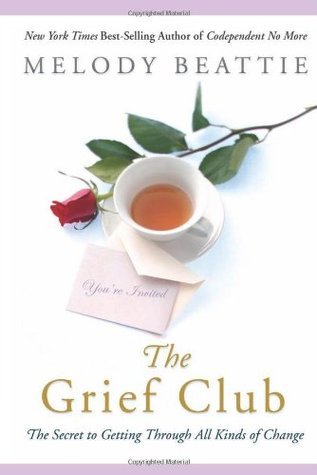
The Grief Club is Melody Beattie's profoundly personal, powerfully healing book to help readers through life's most difficult times.
Part memoir, part self-help book, part journalism, The Grief Club is a book of stories bound together by the human experience of loss in its many forms such as death, divorce, drug addiction, and the tumultuous yet tender process of recovery. It's a book you need to read and share.
Twenty years ago, Codependent No More established Melody Beattie as a pioneering voice in self-help literature and endeared her to readers who longed for healthier relationships. Over the years, Melody has invited readers into her life with several more best-selling books--each punctuated with her trademark candor and intuitive wisdom.
Melody Beattie was an American self-help author best known for her groundbreaking work on codependency. Born in 1948 in Minnesota, she endured a traumatic childhood marked by abuse and early substance addiction. After achieving sobriety, she became a licensed addiction counselor and began writing to help others navigate emotional recovery. Her 1986 book Codependent No More became a bestseller, selling eight million copies and helping to bring the concept of codependency into mainstream awareness. Over her career, she authored 18 books, including Beyond Codependency, The Language of Letting Go, and Make Miracles in Forty Days. Though her work is often associated with Co-Dependents Anonymous, her books were independent of the program. Beattie’s personal life reflected many of the struggles she addressed in her work, including four marriages and the loss of a son. Her writing often drew from her own experiences with grief, addiction, and healing. In early 2025, she was forced to evacuate her Malibu home due to wildfires and died shortly after at her daughter’s home in Los Angeles from heart failure.
Right away I trusted the author, Melody Beattie. She was totally human in her book and does not shy away from the darkest points of her life, from a neglected childhood, to decades of terrible addiction, to learning she has Hepatitis C, to losing her teenage son. Her book covers many different types of loss, but the one I most identify with is the loss of her son. Though many chapters are NOT about the loss of a child specifically, she instructs the reader to read each one because there are elements throughout that can pertain to any loss.
I agree with the book's main thread that there are others going through what you are, and you should not go through your grief alone. There are groups for just about any loss and hardship you can imagine. Another point Melody makes is that there are innumerable types of "losses" people can experience in life. She has a pages-long list at the end of her book that attempts to cover all possible loss. The point she makes with this list, to me, is that while you are in the middle of it, you think you are the only person in the world dealing with it. When you see it printed in black and white, it makes you realize there are others out there who "get it" and get you.
I appreciated Melody's honesty about topics that may have been stigmatized in the past.
A poignant book covering all aspects of grieving and loss. During this COVID-19 pandemic, I not only grieve the loss of loved ones, but grieve my old way of life and adjusting to the new abnormal. (Can’t call this lifestyle remotely normal.) I’m not a big self-help reader but this excellent collection of memoir and biographical essays is a sigh of relief.
One of the best books I've read on grief. This book encounters all forms of grief, not just through the loss of a loved one, yet all these types of grief circle back to the same emotive, change and self-discovery on every level. There are stories of reflection within each chapter that centers on that specific type of loss and shapes the tragedy into triumph, sometimes not...the point is, this book REALLY helped break through some of my own personal stigmas whether it's the way I was conditioned from childhood to what I struggle with now as an adult.
Beattie also shares her personal losses which includes the death of her own son, but she does it in such a way that delivers such a profound impact that goes beyond transparent poignancy. I delved into this book deeply and even started going through the Master List of Losses. She offers journaling activities after each chapter if that particular chapter pertains to your life circumstance and has the Master List of Losses in the back of the book to go through and list and just ponder and work through on your end. I liked the interactive approach here as I was encouraged by my grief counselor to keep a grief journal so this is just a nice little benchmark to touch on things I never thought of or realized until I read through this book.
This book touches on everything! Abuse of any kind; physical, emotional, psychological, drugs, alcohol. Loss of parents, children, spouse. Tragedies in every form; loss of a job, home, family. Health issues regarding life and death. I highly recommend it to anyone trying to filter through their own life tragedies at least this would provide some deep insight into what they may be feeling and going through.
I got this book when I was reading up on grief therapy a lot. And this was by far the least helpful book I read on the subject.
This book is interesting because it focuses on grief for various life events and stages and that's the part I appreciated. Grief can be about more than losing someone - and this book does an excellent job of acknowledging that.
However, this book wasn't very helpful as a resource for therapists. A lot of this book feels autobiographical -Beattie shares experiences she's had throughout her life (or the experiences of people she knows) and talks about how her experiences have made her a better person or how she got through difficult things. And in some settings and for some people, I can see this book being very helpful. However, for me, it was not.
And that's partly because a lot of the stories are kind of random and aren't the sort of things I'll be helping clients with on a regular basis. At the end of each chapter, Beattie includes statistics that relate to whatever the chapter is about. So one chapter was all about how difficult it is to be a first-time horse owner and the end of the chapter was a list of horse facts. It was random and not at all applicable to my clinical work.
I didn't become a better therapist by reading this book. And while some clients could probably benefit from Beattie's positive outlook on situations, her style is so different from mine that I don't feel this would be a book I'd recommend for clients.
page 305 "Some people need help managing depression. They want to feel normal, feel like themselves. Sometimes depression is caused by a chemical imbalance in the brain. Some people are depressed because they're stuck in jobs or relationships they hate. Other times, depression and anxiety are created by all the feelings we've buried, and those feelings create an imbalance in us. Those old feelings are trying to come out so our hearts can heal and we can feel peace. For many years I thought drugs would make me feel good or a relationship would make me happy. Feeling happy and normal aren't out there. They're inside, underneath all those emotions we try so hard not to feel.
When life is changing, we need to be willing not to feel like ourselves for a while.....
I trudged through the feelings - thick, heavy sludge. Finally they lifted. I found me underneath, and a new normal began."
I read this book after numerous major losses in my life in quick succession. Although every vignette/story did not resonate a theme of compassion and wisdom runs throughout. What do we do with intolerable loss, the kind that feels like it is our own death? Life changing loss is a forge of sorts that forever changes who we are. This book looks at such loss. The stories helped me hold my own pain in a larger context and to open myself to my own evolution. I recommend the read.
Wow wow wow. 5 stars isn’t enough. I really thought, by chapter names, I would skip half the book and only read the chapters pertinent to me. I changed my mind quickly. Every chapter offered depth of insight and very relatable and applicable truths. This will be a book I will keep on my bookshelf and reread.
Beattie discusses managing grief in a wide variety of areas...certainly loss of a loved one via death, but also grief resulting from broken relationships, empty nest situations, Alzheimer's, suicide, as well as our vulnerabilities and facing our own death.
Even if you don't think you've been through any major losses reading this book could help you. I cried buckets. But also found a new appreciation for what I have. Making the two lists suggested is a must. Your losses and what you have. Was sad to finish but will definitely re-read. Thanks to all who contributed.
What happened to my life? Where did all the time go? I have been lost is grief. Melody Beattie comes though one more time for me. She said all is not lost...you can move though this transition with an open mind. You can learn to forgive yourself & others. You can trust life.
The hands-down best grief book I have read. The introduction was the most relevant and helpful - the rest is pretty much just other peoples' stories. Which is fine, but I've read so many grief books with all of that already...the really good stuff is in he beginning.
Whew this was a hard one to read. Well written , anything by Melody Beattie is in my opinion, but emotional and thought provoking. It took some time to digest. Tears were shed.
I started this book a while ago, I was on a grief book marathon and then I just thought it was time to take a break. Picked this up again recently, intending to finish up some of my half read books. Wanted to like this book, but as a grief book survey - every chapter exploring a different grief through a life story - it didn't seem helpful since as soon as the grief was introduced you were on to another the situation. With each grief situation being unique. Also, sometimes Bettie's advice didn't ring true to me. For example, Beattie goes from being extremely poor to very well off, and offers some of the financial suggestions for this situation. It is not that Beattie meant to provide bad advice or that the advice was wrong in general, it is just that some of the advice would never be useful to a person who will ALWAY, even with every good intention, struggle to make ends meet. That said, her chapter on "Time Changes" and her words that "Everything has a beginning, middle and an end. Everything has a season. We can try to hang on, but when it is time to change, it's not the same. When things fulfill their purpose, it's better to let them go." spoke to me. Thus, the genesis for this book was not great, some of the advice is not amazing, but there are nuggets in the pages if you are willing to invest the time.
I read this book for a book club. If it wasn’t for that, I would have DNF’ed. It was random and chaotic. The author switched from first person view point to telling someone else’s story, then back again without a clear transition. It felt like listening to my 88 year old mother’s rambling stories that have no point and are clearly convoluted. And then a random chapter on finances that basically just says “trust God, it’ll be okay”. Honestly, someday you’ll get lucky and become an author in the boom of crappy self-help books and won’t need to worry about money. That doesn’t happen for most people, don’t peddle it as advice.
Try “The Wild Edge of Sorrow” if you are looking for companionship and acceptance in your grief.
I read this book after a close friend and my father died within three weeks of each other. It helped. The honesty is pretty brutal, and Beattie’s depictions of the death of her son as well interviews with others who have dealt with overwhelming loss can sting, but in the best possible way, like a big sister putting her arm around you and saying “you can get through this, even though its hell.” Those looking for a quick fix or sugarcoating reality should be warned off - and I feel that many who are in intense grief may want to consider whether they are in the right place for this. That said, if you are ready for it, this book is a great act of comradeship and empathy.
I appreciate the book but I’m not a religious person. No offense to those that are but it isn’t comforting to me. The activities at the end of each chapter were helpful. I also didn’t feel like the target audience for this book. I did take a lot from this book and it means well. Just not something I was looking for.
This was the first book I'd read by Melody Beattie, although I'd heard of her other books about codependency. Some parts of this book spoke to me more than others, but overall I felt a sense of comfort while reading it. I enjoyed the mix of advice/lessons, anecdotes, and memoir.
Not extremely helpful to me. Perhaps my losses in particular are too raw and recent for a general grief book. I did like the idea of grief clubs, though, because it seems if someone has been through a similar loss, they're a kindred spirit and "get it."
Reading definitely helped me feel less alone with the grief scenarios I'm currently working through -and hopeful and almost excited for the growth that I will recognize on the other side of "embracing and trusting the process"
i've really loved two of her other books but this one didn't resonate with me at all, and the "master list of losses you've experienced" just made me way more anxious.
The author is a strong Christian. But the data is sound and the stories are well-written. The exercises at the end of chapters can be very beneficial to many situations of loss.
Melody Beattie’s The Grief Club explores not just grief, but the loss that accompanies most life changes. It is a self-help book, and focuses on telling different people’s stories as a means to understanding the process by which one grieves.
I sought this book out from the local library after my beautiful pup, Boogie, died. I found myself unsure how to deal with the grief, as, fortunately, I have not yet had the experience of losing someone to whom I have been extremely close. My grandmother died nearly two years ago, but I was not terribly close to her. Boogie, however, had been my companion for six years, moving with me from Mississippi to Memphis to Princeton and on to Cherry Hill. We had been through a lot together—from finding him sick and wandering through the snow in Mississippi, to bringing him back to health, to cancer and multiple surgeries, I spent a lot of time caring for Boogie. In return, I had the sweetest dog ever. He never even barked. He loved to chase rabbits, tease the cats, and beg for food. Even though I watched him slowly grow older and become sick, his death was still a shock for me. It was still too soon, even though he was sixteen. I know that I will always miss him and I will always love him.
Did The Grief Club help me? Yes, it did. Several of Beattie’s messages were very important to hear. First, that we need to find meaning in our experiences. Boogie was a blessing to me. Finding him was a gift. I am sorry that I had to lose him, but I am so grateful that he shared his life with me. And while I am so sorry that such a good soul had to get old and die, it happens to all creatures.
The second message that I needed to hear was about the necessity of loss in life. No change can happen without loss. Several of Beattie’s chapters focus not on death, but other life changes, such as parents dealing with children leaving home and people having to give up or live in their dreams. When Boogie first died, all I wanted to do was get through the grief, so that I could be past it and on to the next thing. I thought of his death as something to simply get over. After reading The Grief Club, I feel as though I don’t just have to live through this, but that this is life. Sad, painful, and difficult, but nothing is going to stop. Everything around me continues. My heart beats, the fall is coming, the traffic speeds by, the cars full of people going and going. Everything has changed for me, but I am still in the world.
That being said, this is a self-help book. Some of it is cheesy. It acknowledges pain and suffering, and encourages feeling those emotions, but it looks to how we grow through these experiences. It addresses feelings head on. It does not tell you how to get up in the morning when all you want to do is drown in your bed sheets. It does, however, offer some commiseration.
In reality I'd give this book 1.5 stars. They're were parts that were ok, some that were actually good, but on a whole I didn't like this book much.
The author tries to cover a lot of territory in this book. It seems like she tries to include anything that might remotely have something to do with feeling a sense of loss or grief. I found, however, that this book had less to do with grief than it does about finding yourself in a "club" you don't want to be in...which, of course, can involve grief, but the focus seemed to be the opposite of what the title conveys. I also found few "secrets" and mostly just a lot of description and stories--not many insights or tips to aid healing.
The back cover of the book describes it as "part memoir, part self-help book, part journalism," which is (sort of) true. And I guess it's all of these. It's schizophrenic, at least. Sometimes Beattie talks about people she knows, sometimes it's about her personal connection to the topic, or someone who simply happens to have gone through the "club" she's trying to cover. There's little cohesiveness or consistency to the book, either in content, writing style, or approach--or quality. Some chapters seem slapdash and haphazard; others are actually pretty good...or at least pretty good in some parts. It's very uneven.
I picked this book because I'm a young widow and always searching for grief books that feel accurate, that resonate with me, that tell me something new. This wasn't one of them. Also, I found it rather offensive as a widow that the author didn't even give my situation any attention. She lumped it in with other types of club--noticeably under the club of Losing Someone You Deeply Love--but the focus of the chapter was really on the death of child; losing a spouse was barely even mentioned. Losing your way afer a divorce was given more attention than losing your spouse to death. But I'm inherently biased here, so take my opinion with a grain of salt.