Theorizes that Robert E. Lee had a lesser-known strategy for the battle at Gettysburg that would have enabled a Confederate victory, arguing that the battle-losing decisions attributed to Lee on the third day were in direct contrast with the warfare philosophies he was most likely to employ. 50,000 first printing.
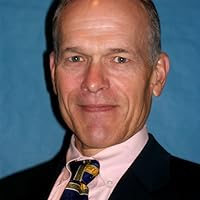
Military historian. West Point Military Academy, Class of 1966. Served in South Vietnam as a platoon leader with the 101st Airborne Division. Has also been a lawyer and a historian for the Department of the Army in Washington, D.C. Earned a Ph.D. in American and military history from Princeton University.
Tom Carhart makes the argument in this book that Robert E. Lee's decision to have some 13,000 troops attack the center of the Union line at Gettysburg was not an error, but a part of a three-pronged plan that--if successful--could have led to the destruction of the Army of the Potomac and a Confederate victory in the Civil War. In short, an example of Lee's military brilliance. While he makes a a good case for this, there are a series of problems that lead this to be less satisfying than otherwise.
The three prongs? The Pickett-Trimble-Pettigrew assault on Cemetery Ridge; a simultaneous attack on the fish hook at Culp's Hill by Richard Ewell's forces of the Second Corps; and a mass cavalry charge, to be led by JEB Stuart, against the Union rear on Cemetery Ridge. Indeed, it is pretty clear that Lee did want a coordinated attack, but that plan fell to pieces early on Day Three. Still, the book is modestly compromised by a number of factors.
For one thing, he argues that this idea that Stuart was intimately involved in the planned assault has been seldom recognized. However, two of the classic books on Gettysburg make the same point. Coddington notes on Page 521 of his remarkable work on the battle that Stuart and Lee had spoken about swooping down on the rear of the Union forces. Likewise, Sears in his recent account of the battle notes that Stuart was to attack the Union rear (although his description is somewhat vague). So, it is clear that other writers have viewed Stuart's presence on the 3rd day as a direct threat to the rear of the Union army and that this is not itself especially new information.
There are also some annoying errors here and there in the volume. On page 24, he says that Abraham Lincoln lost his seat due to his opposition to the Mexican War. In fact, as I understand it, his retirement from the House of Representatives was a part of Byzantine Whig politics in Illinois. I also think that he overestimates the amount of military strategy and tactics taught at West Point (Page 30 and Page 55). He describes Winfield Scott Hancock and his troops as paralyzed on the Peninsula (Page 73). As I recall, this was the fight when Hancock earned his nickname "Hancock the Superb," when he was let down by his superiors who refused to let him take the aggressive action that he had requested.
I think that it is quite a stretch to argue that Morgan was consciously using Hannibal's tactics from Cannae when he met Tarleton's forces at Cowpens in the Revolutionary War (Page 129). My reading of this battle was that Morgan was trying to figure out how to get some mileage from militia who did not stand up to British forces, and conjured up a plan to make a strength of a weakness. I had not understood that Buford's forces "sustained heavy casualties" on July 1 (Page 138; compare with Sears' discussion on page 249 of his "Gettysburg"). Indeed, some commentators think that it was a foolish decision to send Buford's cavalry division off the field after the first day. I sincerely doubt that (Page 155) "Lee probably asked Stuart [before Day Three:] if he remembered Napoleon's smashing victory over Wurmser at Castiglione in 1796."
Some of the language seems inappropriate. He notes on page 3 that Meade "cowered," "awed by the myth of Lee's invincibility." Carhart also says that "[Meade:] was no better than those who had preceded him." In fact, he was measurably better. He did not adhere to a foolish plan of action like Burnside at Fredericksburg; he was not timid, refusing to throw in what he had as McClellan; he did not flail around blindly as Pope had; he did not go into a shell like Hooker at Chancellorsville. He performed competently, and by doing that, he exceeded the performance of his predecessors. Further, Lee had a bad habit of bleeding his forces to death, as critics have pointed out. Gettysburg was another battle where he sent his troops off on frontal assaults and saw his rank-and-file and officer cadres both bled down further.
So, the author's thesis is pretty well constructed and supported. But the thesis is not an insight that had escaped others. And there are annoying questions about some of his contentions. So, this is an interesting take on Gettysburg, but I'm not convinced that there is a revolutionary interpretation here.
I would love to read a compelling defense of Pickett's Charge, but if the quality of Carhart's argument is any sign, that defense may not be possible.
A pattern among writers in the defenses of Pickett's Charge is that they fawn over Lee as a commander in a way that hurts their argument because they are compelled to say that his worst day as a commander was instead a near stroke of genius. He is portrayed as a singular military mind, foiled at every turn by incompetent subordinates. Carhart struggles with any clear theory of where a commanding general's responsibility ends. If an army has a command culture where the commanding general's commands are consistently treated as mere suggestions, doesn't the commander have some responsibility for that?
Most frustrating in Carhart's book is that he does well to put the attack in its context by discussing historical battles that echo it and the military tradition Lee knew well and leveraged in his decision-making, but fails to draw necessary lessons from those examples. Gettysburg would not be another Cannae because the cavalry would never play a major role in the infantry fight on Cemetary Ridge. Hannibal had to scatter the Roman cavalry before using his to encircle the Romans, something Stuart failed to do and would inevitably have spent most of his strength attempting even had he succeeded. Cavalry on the mid to late 19th-century battlefield could not effectively deploy shock tactics against even a thin line of bayoneted infantry, so such a thing rarely happened and would not have occurred to any effect on July 3rd, 1863.
The pleading tone of the arguments here is funny at times. Carhart asks if we are REALLY supposed to believe that the genius Lee REALLY planned a frontal assault on July 3rd? Carhart's approach is often like this: suggesting something doesn't seem right in the historical record because Lee could not have made such a bad plan. Early in the book, he refers to Pickett's Charge as Lee's "first mistake" in an attempt to pretend that failure was entirely out of character for Lee and so must be something less than a mistake in reality.
I am afraid I was not remotely impressed with Tom Carhart's Lost Triumph. He argues that Stuart's charge across East Cavalry Field on 3 July 1863 was the Main Effort in a 3 pronged attack devised by Robert E Lee to sever the Union line at Gettysburg. In thwarting that attack, he contends, newly promoted Brigadier General George Armstrong Custer was the saviour of the day and of the Union.
First, there is nothing new in Carhart's view that Stuart was intent on far more than flank protection that day - McPherson argued in Battle Cry of Freedom (1988) that Lee's plan was to combine 3 assaults - one of them an attack in to the rear of the Federal line by Stuart's massed cavalry. What is new is Carhart's unsubstantiated view that Stuart's assault was to comprise Lee's Main Effort.
In constructing this implausible argument, Carhart relies on little more than conjecture supported by his contention that Lee, having studied the great battles of history, sought to replicate them in detail on every occasion he gave battle.
The incident surrounding Stuart's tardy return to Lee's HQ on the evening of 2 July is illustrative of Carhart's willingness to dismiss what little primary source evidence there is as scurrilous rumour before offering his own view of events entirely unsupported by any evidence whatsoever. His statement that, "I believe, despite rumours to the contrary, that Stuart was pleasantly received by Lee" simply does not carry any weight of conviction given that every shred of contemporary evidence points to the contrary and understandable view that Lee, having been drawn in to a meeting engagement and the almost frontal assault of the 2nd day because of the abject failure to follow orders, was not at at well disposed to his young cavalry commander.
Carhart then goes on to suggest that Lee entrusted Stuart with the very future of his cause while at the same time withholding essential details of his plan from his most trusted lieutenant, Longstreet. This is not merely speculative - but utter fantasy. If, as Carhart suggests, Lee intended Longstreet to charge the front of Cemetery Ridge while Stuart attacked the rear, it would result in 2 friendly forces attacking directly towards each other. Any soldier (and I am one) will tell you that if disaster is to be avoided through friendly fire, such a plan demands detailed coordination between the assaulting forces. This simply cannot happen if one of the assault groups is launched while entirely unaware of the activities of the other.
Carhart argues that no credence can be attached to suggestions that Lee intended to use a mere 13,000 men to charge and break the centre of the Federal line on 3 July, (I am unaware of any credited authority who would argue that Lee intended to rely alone on 'Picket's Charge' to break the Union line). However having stated that a charge so lacking in combat power could not have been Lee's Main Effort, he goes on to argue that Stuart's charge with a mere 6,000 men supported by a hand full of cannon was. His argument is inconsistent and entirely unsupported by evidence in the after action reports. In a typical avoidance of the lack of evidence in support of his hypothesis, Carhart suggests that Lee might have purged the record to save the reputation of his subordinate. Lee may well have been guilty of such after action revisionism, but the absence of any evidence recording Stuart's attack as Lee's main effort cannot support such an argument.
Finally, in casting Custer as the hero of the piece, Carhart does great disservice to the countless men who stood firm on Seminary Ridge, the Round Tops, in the Wheatfield and Peach Orchard and who fought the bloody hand to hand fight under the clump of trees. Custer did a magnificent job in thwarting Stuart's assault, but if he had failed would Stuart have been able simply to trot up to the rear of the Federal line on Cemetery Ridge and link up with Pickett? I suspect the Federal VI Corps, albeit widely dispersed, would have had a part to play in stopping him as would much of the II Corps, which, like Wellington's infantry at Waterloo, was behind (East of) the ridge protected from Longstreet's cannon.
The cover of the paperback edition carries an endorsement by John Keegan who views Carhart's thesis as `a remarkable achievement'. In my opinion Carhart's most remarkable achievement was to have such highly respected historians as Keegan and McPherson endorse a work that most deservedly belongs in the What If genre.
A poorly executed and edited book with a relatively obvious thesis. Carhart argues that the third day of the battle of Gettysburg, best known for the failure of Pickett's Charge, was not actually Lee's biggest mistake... it was actually potentially Lee's greatest triumph, had Stuart's cavalry attack succeeded.
There are several big issues with this book.
First, the thesis is rather obvious. Anyone who has spent time learning about Gettysburg knows that Lee planned a cavalry flanking attack on the third day of the battle. The battlefield park has a driving tour that goes through the cavalry battlefield. Maybe your general population of readers wouldn't know this, but the book isn't really aimed at them.
Second, it's not really clear who Carhart's intended audience is. In some places, he is extremely simplistic in his descriptions of basic concepts about Civil War history... like the role that each branch of the military has and how many men are needed to fire a cannon (a number that he exaggerates). In other places, though, he provides way too much detail, jumping back and forth between leader names and locations, without clarifying which side the leader fought for or where the location is. Even for someone who has spent about 20 years reading about the battle of Gettysburg, I found his descriptions of the battle very hard to follow and visualize.
Third, there are numerous factual errors. When describing the battle of Cannae, he refers to the Roman troops several times as "hoplites," a term more appropriately associated with Greek citizen soldiers. Another example is where he states that Strong Vincent's brigade at Little Round Top was made up of five regiments, when in reality, it had four. He also frequently exaggerates the number of men in artillery units, initially saying that ten men were needed to fire the gun, but a standard gun crew had seven men. He also quotes some unit size statistics which are downright wrong. He says one unit had six guns and 120 men. That is 20 men per gun. Even if you take into consideration officers, staff, etc. that is far too large of a number of men.
Fourth, he mixes purposes within chapters, jumping back and forth between narrative and analytical portions several times within the same chapter. This makes for a rather confusing read. Just as he is developing some narrative speed, he gets bogged down in document analysis. On a related note, Carhart repeats himself a lot, often making the same argument multiple times in the same chapter, this also bogs down the read.
Fifth, the whole book has the feel of one whose page count is being padded. Most chapters start and end on a right page, which means there are a lot of blank pages. There are lengthy descriptions of basic concepts, probably 25 total pages of repeated information, a five page digression about the battle of Waterloo in his conclusion. I feel like this book could, and should, have been written as a journal article of about 30 pages. He could have covered the same points just as effectively.
Sixth, probably the most annoying issue for me, is the lack of maps... specifically in places where he is talking about certain aspects of the battles. There are a few maps in the section where he describes historical examples of battles from which Lee, Custer and Stuart learned, but when we get to the Civil War itself, there are no maps of the battles of Seven Days, Second Manassas or Chancelorsville, and the only map of Gettysburg and the cavalry action is located at THE END of the section where he talks about the battle. All of the chapters which discussed the planning and implementation of the attack need a map to go along with them. Also, the map that is included does not show the development of the attacks over time. There should have been at least 3-4 maps of the fighting.
The final issue, is that Carhart takes a rather pro-Southern, pro-Lee tone. It's not quite Lost Cause movement in its use of information, but there are a few significant issues. There are numerous places where he suggests that Lee is brilliant and can do no wrong. The author passes blame onto Lee's subordinates when something goes wrong (as in the failure of Longstreet's attacks on the second day) and gives the praise to Lee when things go right (it wasn't Jackson who won Chancelorsville, it was LEE'S plan).
Overall, this is a very disorganized and poorly edited work, with an obvious thesis.
I discovered this book 'hiding' among other Civil War books at Lowry's Used Book Store in Three Rivers, Michigan and finished reading the author's theory of Robert E. Lee's real plan of attack on the 3rd Day at Gettysburg 48 hours later. After a light review of Robert E Lee's dominance of Union Commanders in the East as well as Lee's knowledge of military history, Carhart makes his case that George Armstrong Custer and his 1st Michigan Cavalry Regiment were unsung saviors of the Union victory. The fact that premier Civil War Historian, James M. Mcpherson, supports the author's well researched theory certainly adds credence to it and is a book worth reading to anyone interested in that fateful battle in 1863.
Mr. Carhart makes a good case for his theory that there was more to the battle plan at Gettysburg that is commonly accepted. I agree that, if anyone has learned much about Robert E. Lee, it is hard to believe that he was simply having a bad day, or that his plan for this battle would have been simple. The "attack from all sides strategy" discussed in this book sounds exactly like something Lee would have done in light of his other battles such as Chancellorsville.
Was Custer the unsung hero of Gettysburg? Possibly. Did Custer single-handedly save the Union? I doubt it.
I would recommend this book to anyone interested in the Civil War, Gettysburg, or Robert E. Lee.
I couldn't finish this, it was taking too many liberties with how I understand the Civil War and other eras in military history.
Cavalry at that time generally did not have the shock power to overcome infantry resistance, and on July 3, Stuart's cavalry could not have been in shape to be Lee's main effort.
This book presents an interesting hypothesis: Lee's real plan at Gettysburg was an attack around the enemies' flank by the cavalry on the third day. The author presents damning evidence to support his claim; for anyone new to the study of Gettysburg, the claim is very believable. After reading the book, I'm still not convinced one way or the other. But it was an entertaining read nonetheless.
Some new and plausible ideas about what Lee really planned to have happen day 3. Great history speculation and solid research. A must for Gettysburg and Civil War readers!!
As an audio book, "Lost Triumph" had shortcomings as far as I was concerned. The author provides a lot of detail discussing different battles, including of course, Gettysburg, but when listening to descriptions of which General, which army, which regiment, which battalion, which company, which platoon, which brigadier, which major, which captain, which direction the troops came from and went to, which hill they took, etc., I really could have used a physical map and roster of players and teams they all played on to have it make sense. It's problematic to pause the audiobook to envision what the author is talking about, and then pick it up in the same place. So to me, I would have been better off picking this book up in its print edition. Then you can pause if / when needed, see any accompanying drawings or diagrams, get a clear vision in your mind, and pick up again. Carhart's premise is that General Robert E. Lee's loss at Gettysburg wasn't due to poor planning on the General's part, but due to failures of timing and execution of his three pronged attack. Part of the problem was normal battlefield miscues, but also the unexpected delay of of the third prong of the planned attack under J.E.B. Stuart and the cavalry troops he was leading. Opposing Stuart was Federal cavalry troops led by George Armstrong Custer (of subsequent Sioux Indian and the Battle of the Little Bighorn infamy). Carhart also spends some time early in the book describing how General Robert E. Lee, while at the Military Academy at West Point, studied the war tactics of Napolean Bonaparte and Hannibal, and used the lessons learned from those successful campaigns during his own planning in the Civil War. However, as I mentioned earlier, I found the descriptions of those early historical battles and the players involved somewhat difficult to follow in the audiobook format, causing me to put the book aside time and time again.
The "secret" plan is that J.E.B. Stuart, Lee's right-hand Calvary leader, was to go around the Union's right flank on the southeast corner of the battlefield, and come up behind the clump of trees that Pickett's charge was approaching from the other side. This surprise flanking move would split the Union ranks, silence the artillery that was hammering Pickett's futile charge, and enable the South to encircle the North and wipe out the only standing Union army between Lee and Washington.
Carhart draws from Lee's years of teaching at West Point, particularly the great battles from history, and from after-battle report that he claims show through oblique references what Lee intended and Stuart was unable to carry out--because George Custer, on a previous-to-last stand, stood in his way with 1,500 outnumbered Union troops in the face of Stuart's 6,000.
His evidence is plausible but less than compelling, and he spends too many pages padding out what feels like a detailed magazine treatment to book-length with capsules of some of these great historical battles. His intent is to show how Lee modelled his plan on these battles, but I just ended up confused and wading through long lists of foreign names.
One very interesting tidbit is that Lee read the standard history of Napoleon's battles in the original French, a feat that seems a demonstration of surplus intelligence on the part of this great leader and American nobility. One wonders what a man with Lee's intelligence and character could do in today's political and social climate.
Tom Carhart in Lost Triumph advances a striking claim regarding the Battle of Gettysburg: that Pickett's Charge on the third day of the battle was only part of Robert E. Lee's strategy for winning a decisive victory. In Carhart's interpretation, Pickett's Charge was to be complemented by an attack by Jeb Stuart's cavalry upon the Union rear -- an attack that never happened because of George Armstrong Custer's spirited defense in what is now called the East Cavalry Field, three miles from the main battlefield site. Carhart brings to this study his considerable knowledge of Napoleonic tactics. Yet much of his argument, absent direct written testimony from the relevant commanders, depends upon his understanding of Lee's and Stuart's personalities; he often writes something to the effect that "Lee wouldn't do that" or "That wasn't Stuart's way." Do people never act in a way that seems out of character -- for example, general officers experiencing the stress and exhaustion of a long campaign in hostile territory? Still, Lost Triumph is an interesting study of an often overlooked aspect of Gettysburg.
Carhart puzzles out the mystery of Gettysburg Day 3: was Pickett's Charge really the plan? or did General Lee have something bigger in mind that nearly succeeded? In answering this, he discusses at great length one of the most overlooked skirmishes in the Gettysburg campaign, reviews historic battles (mostly of Napoleon) that Lee would have studied at West Point as well as documents from the record, and ponders at great length what must have taken place a few miles east of Cemetery Ridge. It's a compelling argument. What troubles me is the concomitant rehabilitation of George Armstrong Custer. Carhart gives Custer much of the credit for stopping Jeb Stuart's backdoor attack, winning Gettysburg--and the war(!), doing so on the basis of a few tablescraps of documentation that can be argued any number of ways. Overall this is an interesting yet inconclusive submission in the historical canon. I'd recommend it to the Civil War scholar, but with the caveat that one ask many questions.
Carhart is a Lee fanboy. People criticize PTG Beauregard as a general because his plans were too complicated for 19th Century armies, but Carhart thinks Lee’s Rube Goldberg plan for the 3rd day of Gettysburg is Jim Dandy.
Attacks on Culp’s Hill, Pickett’s Charge and another assault on the right were supposed to work like clockwork while Stuart attacked from the rear and destroyed the AoP. Please.
Lee’s plan would never have worked and the outcome of the battle is proof it didn’t. Also, too much padding with coverage of the battles leading up to Gettysburg AND he’s also one of the all the important events were in the Eastern Theatre types.
An interesting book and argument. This adds to the books on how Lee "failed" at Gettysburg. It is now Stuart's fault (not Longstreet or Ewell) and Custer's triumph. This will be added to my list of books I want to talk to the author about over a beer.
I recently visited Gettysburg and the Licensed Battlefield Guide who led my tour basically shot down the premise of this book. Still, it was an interesting read and theory. Fun to learn about Lee’s love of Napoleon and his grasp of military history.
Very interesting read because of the subject matter, but a very, very dry way of explaining it. I felt more like I was reading a thesis paper of someone who felt he was smarter than me.
An interesting read, although somewhat repetitive as the author must not trust his readers to remember his primary arguments for his thesis or figure we can’t go back to review his salient points.
There are some redeeming features of this book. Mr. Carhart does a very good job of linking Lee’s tactics to his study of military history, namely Napoleon, Alexander the Great, and Hannibal. He reviews 3 battles and shows how the tactics of these great generals were used by Lee at different Civil War battles.
The thesis is made plausible by the author’s reasonable explanations as to what happened, but the lack of support from battle reports from any of the participants hurts his theory. And the explanation for Lee’s omission in his report defies rationality.
On the negative side, the ONE Gettysburg map in the entire book is missing some key topographical features that the author references throughout the book. As a specific example, he mentions Cress Ridge no fewer than 21 times (!) in his book, but the map doesn’t show it!! He talks about line of sight, important to understanding how Lee/Stuart planned on surprising the Federal right flank, but there are no topographical lines or woods on the map to help envision how Stuart planned his approach. Also, the scale is wrong when Mr. Carhart explained how far Stuart’s troopers would have to ride to gain the flank of the Union line.
As another reviewer (Mr. Hart) stated, it is beyond belief that Lee would not have told Longstreet of the planned cavalry flank attack, if for no other reason than to give Longstreet hope that his infantry charge would have a chance of success!
The other shaky ground that the author stands on is the timing of Stuart’s attack. Lee had planned the July 3rd attack to happen much earlier than it did: early morning, not mid-afternoon. But Stuart’s movements show that he would not have been ready if the charge had taken place when it should have.
3 stars [History] (W 2.7, U 3, T 3) Exact rating: 2.90
Carhart attempts to demonstrate with an uncommonly close inspection of the historical record that Robert E. Lee, student of Napoleon (as were most military men in those decades), attempted a manoeuvre de derrière at Gettysburg: that JEB Stuart was sent to ride around the rear of the Union line through Cress Hill, hit the Union artillery from behind, and then alongside a third Confederate infantry movement, destroy half the Union army on the field with a three-pronged pincer which almost certainly would have succeeded. I believe Carhart demonstrated his case. It is too hard to believe that 12,000 men were supposed to win a battle while 50,000 other soldiers sat and did nothing. Carhart's introduction made it sound like he would do more conjecturing than history, but in the end hearing the written reports of several eyewitnesses made his thesis less controversial than I was expecting.
The author presents sound reasoning to support his hypothesis by using written after action reports of the various unit commanders involved. I felt he also did a good job explaining inconsistencies in these reports written by different commanders within the same actions. Conjecture and speculation are necessary evils when dealing with historical events, and General Lee kept his own counsel regarding anything military related after the war. The author gives a very compelling glimpse into the likely thought processes of the general at Gettysburg, and his theory, I believe, stands up to argument or discussion.
I really enjoyed reading this book about Robert E. Lee. So many contrasts and interesting facts about the person and the war. I loved reading about his schooling and strategic planning during the war.
So glad there are people who like to do the research and write the books. I had no idea that there is so much information left to us from the past. Good reading.
I will definitely look for other books about the commanders and generals. All good people with different ideas about how the country should be run.
Carhart's work is a great addition to my collection of books on the Gettysburg Campaign. I have visited Gettysburg many times including the East Calvary Field and never considered that the fighting to the east of Gettysburg was even remotely related to a plan developed by General Lee. Initially I was skeptical regarding Carhart's approach, but once I finished the book his theory makes absolute sense to me. Anyone who is interested in the Gettysburg Campaign and serious students of the battle should read this book.
Honestly one of the most fascinating books I've read about the Civil War. Carhart delves into Lee's real strategy on July 3rd which would have crushed the Union Army and most likely ended the conflict in favor of the Confederates. However, due to the dashing bravery of George Armstrong Custer, an often stigmatized leader infamous for his defeat at the Little Bighorn, Lee's plans were thwarted, and the Union was saved.
This is way too opinionated to be taken seriously as a piece of military history. Any time an authors sentence starts off as If I am correct then you know it might not be good. I really don’t like the south and what they stood for at all and thought this would be an interesting book but they might as well called it Jeb vs custer with a dash of napoleonisms through out.
Exceptional detail of the many parts of the Gettysburg civil war battle. This is thoroughly researched and brings to view a new perspective of that battle. I definitely agree with the author's thesis.
An interesting study of what Carhart concludes was Lee's actual plan to win at Gettysburg, and why it failed. He praises the brilliance and personal courage of commanders on both sides.