

What do you think?

「風之谷」是部極具環保省思的卡通漫畫。故事中看似死亡森林的腐海及居住在腐海中的巨大昆蟲以及群蟲之王「王蟲」皆是為了使污染的大地復元而生。而主角娜烏西卡從小生長的地方「風之谷」則象徵著人與自然共生共榮的處女大地。
140 pages, Paperback
First published March 1, 1987
About the author
Hayao Miyazaki
376 books3,645 followersHayao Miyazaki (Japanese: 宮崎 駿) is a celebrated Japanese animator, filmmaker, screenwriter, and manga artist, widely regarded as one of the most influential figures in the history of animation. He is the co-founder of Studio Ghibli, the animation studio responsible for producing many of Japan’s most beloved and internationally acclaimed animated films. Over the course of a career spanning decades, Miyazaki has developed a reputation for creating visually rich, emotionally resonant stories that often explore themes such as nature, pacifism, flight, childhood, and the human condition.
Miyazaki was born in Tokyo and developed an early interest in drawing and animation. His father’s work in the aviation industry had a significant influence on him, particularly in fostering his fascination with aircraft and flight, motifs that would become prominent throughout his later works. After studying political science and economics at university, Miyazaki began his professional career in animation when he joined Toei Animation. There, he worked under the mentorship of directors like Isao Takahata, with whom he would later form a lifelong creative partnership.
In his early years at Toei and other studios, Miyazaki contributed to several television series and animated films. He worked as a key animator and storyboard artist, gradually gaining recognition for his storytelling abilities and attention to detail. Among his early projects were contributions to series such as Heidi, Girl of the Alps and Future Boy Conan. His directorial debut in feature films came with The Castle of Cagliostro, a film adaptation of the Lupin III manga series, which already showed signs of his distinctive style and sensibilities.
Miyazaki's breakthrough came with the film Nausicaä of the Valley of the Wind, based on his own manga. The success of that film prompted the establishment of Studio Ghibli, which he co-founded with Takahata and producer Toshio Suzuki. From that point forward, Miyazaki directed and wrote many of Ghibli’s most iconic works, including My Neighbor Totoro, Kiki’s Delivery Service, Porco Rosso, Princess Mononoke, and Howl’s Moving Castle. His films are known for their hand-drawn animation, strong character development, and philosophical underpinnings.
In 2001, Miyazaki directed Spirited Away, which became one of the most critically and commercially successful animated films of all time. The film received numerous awards and international recognition, including an Academy Award for Best Animated Feature. It also became the highest-grossing film in Japanese history at the time of its release. The film’s success further solidified Miyazaki’s reputation as a master storyteller and a visionary in global cinema.
Despite announcing his retirement several times, Miyazaki repeatedly returned to filmmaking. His later works, such as Ponyo and The Wind Rises, continued to showcase his evolving themes and storytelling maturity. His most recent project, The Boy and the Heron, marked a highly anticipated return to the director’s chair and once again captivated audiences with its dreamlike visuals and emotional depth.
Miyazaki’s films are often distinguished by their complex female protagonists, environmental messages, and moral ambiguity. Rather than presenting clear-cut villains and heroes, his stories explore the nuances of human behavior and often focus on characters finding their place in the world. Throughout his career, he has received numerous accolades and honors for his contributions to the arts, including lifetime achievement awards recognizing his impact on both Japanese and international cinema.
His legacy continues to influence generations of animators and filmmakers worldwide, and Studio Ghibli remains one of the most respected names in animation.
Miyazaki was born in Tokyo and developed an early interest in drawing and animation. His father’s work in the aviation industry had a significant influence on him, particularly in fostering his fascination with aircraft and flight, motifs that would become prominent throughout his later works. After studying political science and economics at university, Miyazaki began his professional career in animation when he joined Toei Animation. There, he worked under the mentorship of directors like Isao Takahata, with whom he would later form a lifelong creative partnership.
In his early years at Toei and other studios, Miyazaki contributed to several television series and animated films. He worked as a key animator and storyboard artist, gradually gaining recognition for his storytelling abilities and attention to detail. Among his early projects were contributions to series such as Heidi, Girl of the Alps and Future Boy Conan. His directorial debut in feature films came with The Castle of Cagliostro, a film adaptation of the Lupin III manga series, which already showed signs of his distinctive style and sensibilities.
Miyazaki's breakthrough came with the film Nausicaä of the Valley of the Wind, based on his own manga. The success of that film prompted the establishment of Studio Ghibli, which he co-founded with Takahata and producer Toshio Suzuki. From that point forward, Miyazaki directed and wrote many of Ghibli’s most iconic works, including My Neighbor Totoro, Kiki’s Delivery Service, Porco Rosso, Princess Mononoke, and Howl’s Moving Castle. His films are known for their hand-drawn animation, strong character development, and philosophical underpinnings.
In 2001, Miyazaki directed Spirited Away, which became one of the most critically and commercially successful animated films of all time. The film received numerous awards and international recognition, including an Academy Award for Best Animated Feature. It also became the highest-grossing film in Japanese history at the time of its release. The film’s success further solidified Miyazaki’s reputation as a master storyteller and a visionary in global cinema.
Despite announcing his retirement several times, Miyazaki repeatedly returned to filmmaking. His later works, such as Ponyo and The Wind Rises, continued to showcase his evolving themes and storytelling maturity. His most recent project, The Boy and the Heron, marked a highly anticipated return to the director’s chair and once again captivated audiences with its dreamlike visuals and emotional depth.
Miyazaki’s films are often distinguished by their complex female protagonists, environmental messages, and moral ambiguity. Rather than presenting clear-cut villains and heroes, his stories explore the nuances of human behavior and often focus on characters finding their place in the world. Throughout his career, he has received numerous accolades and honors for his contributions to the arts, including lifetime achievement awards recognizing his impact on both Japanese and international cinema.
His legacy continues to influence generations of animators and filmmakers worldwide, and Studio Ghibli remains one of the most respected names in animation.
Ratings & Reviews
Friends & Following
Create a free account to discover what your friends think of this book!
Community Reviews
Displaying 1 - 30 of 115 reviews
January 20, 2024
This just gets better and better with each volume. An environmental crisis looms as a bioweapon gets out of hand. The tension in the story is building and building. I have no idea where this is going, so I can't wait to read the next volume.

June 24, 2021
La historia cada vez empieza a estar más clara, con cuatro frentes abiertos de la trama. Cada uno de ellos va ganando profundidad y detalle, dando mucha más información en este tomo que en casi todos los anteriores. Nausicaä siguiendo su camino de liberación, el sacerdote Choruka y el frente Dorok que la acompaña; Kushana y su sentimiento de culpa junto a las tropas, y Lord Yupa metido a fondo en los bosques.
La desorientación en algunos tramos y la confusión sigue siendo marca de la casa, pero este tomo es mucho más fluido, quizá porque como lectores con seiscientas paginas detrás ya estamos mucho más acostumbrados. Aquí la reflexión sobre la guerra, lo que significa la lucha y las actitudes hacia la misma, son el foco principal.
Ganas de seguir ya mismo y ver que me esperan las próximas 400 páginas.
La desorientación en algunos tramos y la confusión sigue siendo marca de la casa, pero este tomo es mucho más fluido, quizá porque como lectores con seiscientas paginas detrás ya estamos mucho más acostumbrados. Aquí la reflexión sobre la guerra, lo que significa la lucha y las actitudes hacia la misma, son el foco principal.
Ganas de seguir ya mismo y ver que me esperan las próximas 400 páginas.

March 18, 2024
Getting to see a tiny glimpse of Kushana's backstory was really interesting! I'm starting to like her a lot more than I did at first.
Meanwhile, Nausicaa continues to be her awesome self! And the story continues to be interesting yet occasionally hard to follow due to the art style.
(I feel like I say basically the same thing with every volume of this series. 😁)
Meanwhile, Nausicaa continues to be her awesome self! And the story continues to be interesting yet occasionally hard to follow due to the art style.
(I feel like I say basically the same thing with every volume of this series. 😁)

July 12, 2013
After reading this, I'm more impressed than I already was with Miyazaki, and that's saying a lot. I've often vacillated between regret and relief that I didn't babble and gush with stars in my eyes when I met him at the North American premiere of "Laputa" as a teenager (some years before he sold the English-language rights to Disney). All I did was shake his hand and thank him for his great work. My respect and admiration have only grown since then.
By this volume, the story is far more complicated and involved than what was included in the film, which was released years before the pages included in this book. At this point, the story is split between four groups of characters: Nausicaä, having left the battlefront after arranging the release of Dorok captives back to the Torumekian army; Choruka, the Torumekian priest whose path keeps intersecting Nausicaä's; Kushana, Torumekian princess who is trying to save her troops; and Lord Yupa, the border lands' finest swordsman delving deep into the poison forests to investigate the possibility of another Daikaisho. Each of the four plots is detailed and filled with complicated motivations. Miyazaki definitely understands the benefits of the comics medium in being able to give a lot of information efficiently; writing what happens just in this volume only in prose might fill two or three novels, rather than the mere 134 pages here.
Ultimately, this book is a musing about war and what it means to fight. Each of the four stories represents a different approach and attitude toward combat, and each of them are treated sympathetically. Kushana is the noble leader, determined to do everything she can to deserve the loyalty of "her men." Yupa is the intelligent warrior, who knows that fighting is necessary as a last resort. Choruka is the politician who is coming to recognize that the war and the way it's being waged is not in the best interest of his country. Nausicaä is a pacifist who reveres all life. In that regard, she's admirable, but a little hard to relate to, particularly when But the book is wonderfully nuanced and engaging, and the end of this volume (just like each one before it) leaves me eager for more.
By this volume, the story is far more complicated and involved than what was included in the film, which was released years before the pages included in this book. At this point, the story is split between four groups of characters: Nausicaä, having left the battlefront after arranging the release of Dorok captives back to the Torumekian army; Choruka, the Torumekian priest whose path keeps intersecting Nausicaä's; Kushana, Torumekian princess who is trying to save her troops; and Lord Yupa, the border lands' finest swordsman delving deep into the poison forests to investigate the possibility of another Daikaisho. Each of the four plots is detailed and filled with complicated motivations. Miyazaki definitely understands the benefits of the comics medium in being able to give a lot of information efficiently; writing what happens just in this volume only in prose might fill two or three novels, rather than the mere 134 pages here.
Ultimately, this book is a musing about war and what it means to fight. Each of the four stories represents a different approach and attitude toward combat, and each of them are treated sympathetically. Kushana is the noble leader, determined to do everything she can to deserve the loyalty of "her men." Yupa is the intelligent warrior, who knows that fighting is necessary as a last resort. Choruka is the politician who is coming to recognize that the war and the way it's being waged is not in the best interest of his country. Nausicaä is a pacifist who reveres all life. In that regard, she's admirable, but a little hard to relate to, particularly when But the book is wonderfully nuanced and engaging, and the end of this volume (just like each one before it) leaves me eager for more.

July 27, 2019
Oh my, things are looking dire. Must read next installment!

January 12, 2010
Kinda want this series to wrap it up. They go a little too slowly for my taste. But I'm not ready to pack it in yet, I want to see how it ends.
This volume covered more battles between the different peoples and a new spore mutation that's threatening to spread into the villages.
This volume covered more battles between the different peoples and a new spore mutation that's threatening to spread into the villages.

July 12, 2014
Work dragged me away from this, the only reason I didn't read the entire first volume (I had a four-in-one of these) in a day. This is a wonderful story. I was almost in literal pain to come back and read it.

May 6, 2017
Doroks have been weaponising the spores. Bad things happen. Nausicaä confounds her enemies, because she is ossum.

June 19, 2022
Luego de un tomo 3 lleno de acción y aventura, en el tomo 4 se vuelve a un carácter más... calmado; pero en cierta forma mucho más macabro y sombrío; con un sentimiento pesimista y derrotista.
El punto central de la trama ahora es combatir una nueva monstruosa amenaza, aparentemente imposible de vencer. También conoceremos a un nuevo poderoso villano, que sin duda es mucho más malvado que aquél genial villano del tomo 3. ¡Y como si eso fuese poco, todo sigue derrumbándose en la vida de nuestros héroes! Con muchos diversos motivos.
Lo que más me gustó de este libro son los sueños de Nausicaä. Ya en los otros tomos, o en la película, habrán apreciado que los momentos oníricos de la heroína son muy locos y extraños. En este tomo en especial es donde tiene las pesadillas más terribles. ¡Son imágenes aterradoras!
En resúmen, "Nausicaä del Valle del Viento: Tomo 4" es un libro espléndido. Léanlo, por favor. Sólo no esperen muchas risas.
El punto central de la trama ahora es combatir una nueva monstruosa amenaza, aparentemente imposible de vencer. También conoceremos a un nuevo poderoso villano, que sin duda es mucho más malvado que aquél genial villano del tomo 3. ¡Y como si eso fuese poco, todo sigue derrumbándose en la vida de nuestros héroes! Con muchos diversos motivos.
Lo que más me gustó de este libro son los sueños de Nausicaä. Ya en los otros tomos, o en la película, habrán apreciado que los momentos oníricos de la heroína son muy locos y extraños. En este tomo en especial es donde tiene las pesadillas más terribles. ¡Son imágenes aterradoras!
En resúmen, "Nausicaä del Valle del Viento: Tomo 4" es un libro espléndido. Léanlo, por favor. Sólo no esperen muchas risas.

March 1, 2023
Cycles seem to be a continued idea here, the resurgence of the miasma forest every few hundred years because of the actions and ignorance of humanity... there comes a nuclear equivalent with this book that devastates the lands. It's depressing to think of the folly of humanity to continue and never be learned from. Making me wonder what the point of it is.
But Nausicaä keeps hoping and so I will too.
But Nausicaä keeps hoping and so I will too.

February 28, 2026
Nausicaä abandona els seus acompanyants tolmekians i s'enfronta de nou amb l'emperador dolkià.
Yupa, Asbel i Kecha surten del bosc tòxic amb l'ajuda dels boiximans i es troben amb la gun ship de la Vall del Vent i la seua tripulació.
En la seua fugida, la princesa guerrera Kushana s'enfronta, amb l'ajut del seu conseller Kurotowa, tant a insectes com als membres de la seua família que l'han traïda.
Un volum amb acció trepidant i revelacions inquietants.
Yupa, Asbel i Kecha surten del bosc tòxic amb l'ajuda dels boiximans i es troben amb la gun ship de la Vall del Vent i la seua tripulació.
En la seua fugida, la princesa guerrera Kushana s'enfronta, amb l'ajut del seu conseller Kurotowa, tant a insectes com als membres de la seua família que l'han traïda.
Un volum amb acció trepidant i revelacions inquietants.

January 11, 2025
I’m still a bit confused and not sure I have all the players sorted out, but things are getting exciting! Which adds to the confusion as I am still unlikely to parse action scenes and also keep getting Nausicaa, the Princess, and that guy in the jungle confused with each other.
But I can usually tell where the insects are!
But I can usually tell where the insects are!

July 21, 2022
This one was honestly funny at some moments and yet could transition to serious immediately after.

September 16, 2023
Okay, now we're talking.
June 5, 2024
very compelling and expanded the world so much
January 22, 2023
4.5 stars
this was a great continuation
we got to see some back ground story of some of the other characters and are starting to be introduced to the real bad guy in the background
this was a great continuation
we got to see some back ground story of some of the other characters and are starting to be introduced to the real bad guy in the background

January 21, 2026
Bad spores
Nausicaa of the Valley of the Wine Review
5/5 stars
This will be a spoiler free review. Onto the review!
I watched the movie version of this for the first time about a year ago, and although I liked it, I felt like something was missing. It didn’t wrap up as neatly thematically as the other Ghibli movies I love so much. This one felt like we got a tiny glimpse of a much larger world. And now that I’ve read the manga, I know for sure that is the case.
For those wondering, the movie is approximately the first 2 manga omnibuses. And there are 7 total, which leaves a lot of story untold. It makes sense, because Hayao Miyazaki made the movie pretty early on into drawing the manga, but it still left me wishing more from the movie. I would love to see him revisit this as a full anime before he dies. Will we get that? Probably not. And I don’t trust anyone else’s interpretation of this, not even his son’s, so I’ll just have to spend the rest of my life advocating for the manga to every Nausicaa movie fan I can.
The story follows a girl named Nausicaa who is from a small town in this valley that’s very windy. Who could have guessed that from the title? It also follows a few other characters who only played minor roles in the movie. The world in this is actually quite large, much bigger than what little bit of the world we see in the movie. I highly recommend paying close attention to the maps. That really helped me keep track of where we were in the world.
There are two major countries who are at war with each other. They’ve both been using this ancient flying technology that no one remembers how to build to fight each other. In the process, they’ve been ravaging the world itself. If you thought the movie was full of bugs, just wait until you get to the manga. Bugs are used as a metaphor for all the ecological damage the war is doing to the world. If you don’t like bugs, maybe skip this manga. I could really tell just how much love Hayao Miyazaki has for nature by the reverent way he sees even the tiniest of creatures. I don’t think that man could even hate a mosquito.
Nausicaa gets dragged into this war, despite her village wanting to stay neutral. She’s always been very close with nature, but the longer the war drags on, the more she knows how important it is to remember that this isn’t just about territory or power. The armies definitely think it’s just a power struggle, but they’re not the ones rescuing babies who have been left behind after their parents got killed in a bomb strike and helping the giant Ohmu bugs find a new home after theirs got gassed.
The movie version of Nausicaa did a great job talking about those themes in a succinct way, I personally feel like it works so much better in the manga. There’s actually enough time to explore all the different sides of the “is war ever justified?” argument fully. Let’s be real here. Nausicaa is sometimes a part of the problem. She starts out like in the movie, thinking she can fix everything through true pacifism and peace. But even she ends up with blood on her hands. Having that part left out of the movie due to time constraints is in my opinion its greatest fault, and why I prefer this so much over the movie.
One of my favorite parts of this is the ancient technology. I love it for two reasons. First of all, it’s just really cool. Who doesn’t want to fly around in alien biotech airships? But secondly, it does a great job showing us how much we lose if we forget our history. This tech was used to fight in wars before, but no one remembers what war, or why. There isn’t even anyone left who knows how to build this stuff, and very few who have tinkered enough with it to know how to repair it if something breaks in battle. This conversation being only in the manga is a huge plus for the manga for me. Had this been in the movie, I might have not felt like it was so incomplete when I watched it.
I cannot stress enough how much of the themes of this story are missing in the movie. Yeah, the movie was fun to watch, and it has all the classic Ghibli things I love about Miyazaki’s movies. But it felt so simplistic as compared to some of his other movies. It was like, nature good, please protect the Ohmu, war bad, please don’t fight. Meanwhile the manga is a deep dive into how they got to the point they were at, what it’s like to be in that sort of world, and how to get out of it.
If you’re a fan of the movie version of Nausicaa, or like the Ghibli movies in general, I can’t recommend this enough. It is so incredibly phenomenal. This was so good that I now have it tied with Princess Mononoke for my favorite work of Hayao Miyazaki, and that’s saying something about this since Princess Mononoke is not only my favorite Ghibli movie, but my favorite movie ever. If Princess Mononoke didn’t have the feral wolf girl, this might be my favorite thing Miyazaki has ever made.
Have a nice day/night everyone!
Nausicaa of the Valley of the Wine Review
5/5 stars
This will be a spoiler free review. Onto the review!
I watched the movie version of this for the first time about a year ago, and although I liked it, I felt like something was missing. It didn’t wrap up as neatly thematically as the other Ghibli movies I love so much. This one felt like we got a tiny glimpse of a much larger world. And now that I’ve read the manga, I know for sure that is the case.
For those wondering, the movie is approximately the first 2 manga omnibuses. And there are 7 total, which leaves a lot of story untold. It makes sense, because Hayao Miyazaki made the movie pretty early on into drawing the manga, but it still left me wishing more from the movie. I would love to see him revisit this as a full anime before he dies. Will we get that? Probably not. And I don’t trust anyone else’s interpretation of this, not even his son’s, so I’ll just have to spend the rest of my life advocating for the manga to every Nausicaa movie fan I can.
The story follows a girl named Nausicaa who is from a small town in this valley that’s very windy. Who could have guessed that from the title? It also follows a few other characters who only played minor roles in the movie. The world in this is actually quite large, much bigger than what little bit of the world we see in the movie. I highly recommend paying close attention to the maps. That really helped me keep track of where we were in the world.
There are two major countries who are at war with each other. They’ve both been using this ancient flying technology that no one remembers how to build to fight each other. In the process, they’ve been ravaging the world itself. If you thought the movie was full of bugs, just wait until you get to the manga. Bugs are used as a metaphor for all the ecological damage the war is doing to the world. If you don’t like bugs, maybe skip this manga. I could really tell just how much love Hayao Miyazaki has for nature by the reverent way he sees even the tiniest of creatures. I don’t think that man could even hate a mosquito.
Nausicaa gets dragged into this war, despite her village wanting to stay neutral. She’s always been very close with nature, but the longer the war drags on, the more she knows how important it is to remember that this isn’t just about territory or power. The armies definitely think it’s just a power struggle, but they’re not the ones rescuing babies who have been left behind after their parents got killed in a bomb strike and helping the giant Ohmu bugs find a new home after theirs got gassed.
The movie version of Nausicaa did a great job talking about those themes in a succinct way, I personally feel like it works so much better in the manga. There’s actually enough time to explore all the different sides of the “is war ever justified?” argument fully. Let’s be real here. Nausicaa is sometimes a part of the problem. She starts out like in the movie, thinking she can fix everything through true pacifism and peace. But even she ends up with blood on her hands. Having that part left out of the movie due to time constraints is in my opinion its greatest fault, and why I prefer this so much over the movie.
One of my favorite parts of this is the ancient technology. I love it for two reasons. First of all, it’s just really cool. Who doesn’t want to fly around in alien biotech airships? But secondly, it does a great job showing us how much we lose if we forget our history. This tech was used to fight in wars before, but no one remembers what war, or why. There isn’t even anyone left who knows how to build this stuff, and very few who have tinkered enough with it to know how to repair it if something breaks in battle. This conversation being only in the manga is a huge plus for the manga for me. Had this been in the movie, I might have not felt like it was so incomplete when I watched it.
I cannot stress enough how much of the themes of this story are missing in the movie. Yeah, the movie was fun to watch, and it has all the classic Ghibli things I love about Miyazaki’s movies. But it felt so simplistic as compared to some of his other movies. It was like, nature good, please protect the Ohmu, war bad, please don’t fight. Meanwhile the manga is a deep dive into how they got to the point they were at, what it’s like to be in that sort of world, and how to get out of it.
If you’re a fan of the movie version of Nausicaa, or like the Ghibli movies in general, I can’t recommend this enough. It is so incredibly phenomenal. This was so good that I now have it tied with Princess Mononoke for my favorite work of Hayao Miyazaki, and that’s saying something about this since Princess Mononoke is not only my favorite Ghibli movie, but my favorite movie ever. If Princess Mononoke didn’t have the feral wolf girl, this might be my favorite thing Miyazaki has ever made.
Have a nice day/night everyone!

July 31, 2019
This one was clearer then previous volumes. The art was still awesome. But I mostly followed something that seemed very much to be a story. Sure it was still weird but maybe there's actual sense here. And it was more readable. 3.5 of 5.

October 23, 2025

Review for complete series

A thousand years have passed since modern civilization collapsed leaving most animals extinct and humans living under almost medieval conditions. The pollution of the world has raised a toxic forest which none but the giant insects can inhabit. Small kingdoms have formed where the remainder of humanity now lives and where life is filled with fear of the toxics reaching them. Despite the constant decline of the population, humans still wage war against each other in which they use the last technologies that are left from the old world. Young Nausicaä is summoned to the war but decides to take a different path – one that leads her alongside the toxic forest and its insects.
Oh my, where to start? Nausicaä was the first Ghibli (or pre-Ghibli) movie I have seen. I loved it so much that I instantly grabbed all the Ghibli films I could get my hands on. I was skeptical when hearing that the manga it is based on has so much more detail to offer. The movie is absolutely wonderful and I felt I could not ask for more. The first two volumes of the manga show various scenes, perhaps in slightly different order, as seen in the movie. When the movies final scene was shown at the end of the second volume, I was really surprised – after all, there were still five more volumes to go. I was absolutely not prepared for the depth of the world this was opening up to.
The world Nausicaä is set in has its beautiful sides to it but I have never come across a more bleak, harsh and depressing one. It has so much detail to offer with its various kingdoms and their different cultures and customs. As expected of author Hayao Miyazaki, the creatures are incredibly imaginative in their strange and unique way. This holds true for the insects, animals and plants alike. Despite its toxic nature, the toxic forest is actually beautiful – a beauty our main heroine Nausicaä sees. It is also particularly vivid when one has seen its movie adaption. I love Nausicaä’s association of how the toxic spores look like snow.

The Ohmu are wonderful. They are the largest of the insects and seem to act as the toxic forest’s guardians. You get the sense early on that there is something more to them. Although they are not the most expressive, one can easily find an emotional attachment to them and their sacrifices. Any scenes involving Nausicaä with young Ohmu are heart warming.
Nausicaä is an amazing heroine. Although she may appear too perfect at times – I just cannot help but feel that I have never seen a more compassionate and kind-hearted character as her. She has such a big heart that considers even the cruelest. She never winces from the terrible mutilations some of the characters have suffered in this dying world and embraces all. Yes, it can make her seem too good. But it is desperately needed in the setting where this tale takes place.
The manga introduces a large cast which allows multiple points of view and is therefore not constantly fixed on Nausicaä. The main cast is a colourful mix as rarely seen in manga; they come in all shapes and sizes and we get representatives from all age groups. While my personal favourites do not get as many scenes as I would have liked (Asbel!!), all characters are so engaging that it almost does not matter. There is not a single boring moment in this epic story.
Also, unlike the movie, I was sorry and almost surprised to see so much death. On one hand, it is to be expected given the tales circumstances. But having seen the movie – I was shocked to see some of the different fates our main cast met while they received their ‘happy ending’ in the film version. I was mighty glad I had my cats around me when reading the final volumes for I was crying bitter tears (something not even all the deaths in Harry Potter have caused me to do). The story was also never short of surprises. You thought you had it figured out and then there is another unexpected twist.
However! Just like anything else - Nausicaä has its flaws as well. My only issue with this manga series was the actual format. The good thing about it was that the print was in sepia – a nice change from the usual black and white manga. But there were other things that set it apart from other manga which did not agree so well with me; the books are about twice the size of a usual manga. That could be a good thing – but I did not feel that the large space was used wisely. One could have had wonderfully large and detailed panels. But in the end, there were only few. The panels were about the same size, or even smaller than a regular manga’s would be and it sometimes made reading tough and long. The panel layout was generally more like that of western comics. That, however, is a mere personal taste for some might love just that aspect of it. But I think I would have preferred more volumes with larger panels rather than 7 volumes with mini panels.
Anyway! Now that I have seen the movie and read the manga it was based on, I have to agree that there is an incredible lot more to the manga compared to the movie. Nevertheless, the movie is wonderful in its own right. It is slightly more light-hearted and shorter which makes it the better of the two if you are looking for pure entertainment. It also brings more colours to the world and therefore gives you a better image of the toxic forest and all the creatures. It captures most of the manga’s messages and brings them across nicely – simpler, yes – but it is still a very rewarding movie to watch. If you have not watched it – be certain to do so! And if you have not read the manga – be sure to read them as well! I think seeing the movie before reading the books is a nice order but either way works. This is one of the very few manga that I would happily recommend to any non-manga fan without worrying that it might not appeal to them. But then, Ghibli and Hayao Miyazaki have never been the most typical ‘manga’ in my mind anyway.
Whether movie or manga - Nausicaä is a most astonishing tale that has just completely blown me away. Now, I think I shall leave for another round of tears.


April 12, 2018
Upon just finishing the fourth installment of Hayao Miyazaki’s Nausicaa of the Valley of the Wind, I have to say I was very impressed with this installment. It added to the universe in which he had created and I enjoyed seeing the different characters on their journey throughout the story while building up to what I will presume to be the end of the series.
The third installment was not my favorite because of the battles, which seems to take place over most of the book. Maybe I’m biased, but I actually think what made this work for me was that a lot of the story took place in the air. Overall, a great and fun read.
The third installment was not my favorite because of the battles, which seems to take place over most of the book. Maybe I’m biased, but I actually think what made this work for me was that a lot of the story took place in the air. Overall, a great and fun read.

January 12, 2015
El mejor de los 4 tomos que llevo leídos. Igual es que ya me he acostumbrado pero ya no he tenido esa sensación de desorientación y confusión. Y lo mejor de todo es que hacia el final del cómic es un no parar. Es imposible apartar los ojos hasta llegar al final y dudo que tarde mucho en coger el próximo, si es que no lo hago inmediatamente. Vale la pena leerlo.

July 7, 2010
I am loving this series! This volume had some particularly striking artwork; the scene where the God Warrior is being transported by air and you see its face and body melting in and out of the clouds is downright terrifying.

July 14, 2019
Ik hou hier enorm van zelfs al is het vaak complexe lectuur. Het voelt 40 jaar na de oorspronkelijke release, nu de mensheid speelt met de grens van vernietiging van de grond onder onze voeten, nog relevanter aan.

April 27, 2026
Muy buen tomo.
La historia se encarrila y la sensación de confusión es menor al empezar a entender lo que está sucediendo en el mundo de Nausicaä. Mitos y ciencia; naturaleza y humanidad.
La historia se encarrila y la sensación de confusión es menor al empezar a entender lo que está sucediendo en el mundo de Nausicaä. Mitos y ciencia; naturaleza y humanidad.

August 7, 2009
it had another slow beginning, but as the story progressed, it snowballed and became highly addictive by the end.
August 11, 2015
20250316 12th read
--
20231026 11th read
--
20201002 10th read
到了2009才第一次看漫畫版阿,那時應該存了一陣子才狠心買下整套的
--
2009/03/12 1st read
2016/10 7th read
2018/04 8th read
2019/01/31 9th read
--
20231026 11th read
--
20201002 10th read
到了2009才第一次看漫畫版阿,那時應該存了一陣子才狠心買下整套的
--
2009/03/12 1st read
2016/10 7th read
2018/04 8th read
2019/01/31 9th read
July 22, 2016
-Kushana's background
-Yupa and his gang
-Nausicaa and the Holy Emperor
-New boy, Chikuku!
3.5 stars!
-Yupa and his gang
-Nausicaa and the Holy Emperor
-New boy, Chikuku!
3.5 stars!

November 16, 2025
Chronique complète :
https://sunread26.wordpress.com/2025/...
Extrait :
Me voilà arrivée à un peu plus de la moitié de la série, puisqu’il me semble qu’elle a sept volumes au total. Je ne pensais pas qu’il serait aussi plaisant de suivre cette histoire sous ce nouveau format (qui est l’œuvre originale, le film n’étant qu’une adaptation). Je ne pense pas que le film puisse être aussi complet que cette série papier, je verrais bien avec mon revisionnage une fois que j’aurais terminé ma lecture. Le développement des différents personnages est intéressant, surtout ceux qui approchent Nausicaä et qui viennent à changer (ou au moins douter) quant à leurs manières d’agir et réagir.
Dans cette histoire, il n’y a pas vraiment de grand méchant, même si on serait tenté de définir les Dorks ainsi. Ce tome permet de mieux cerner leur histoire, notamment l’arrivée de ses fameux empereurs qui vont tout chambouler dans leur manière de vivre et leurs croyances. Au final, le peuple Dork est surtout victime de ses chefs (que je qualifierais presque de dictateurs au vu de leurs paroles et actions). Avec le temps et la disparition des anciennes générations, ils ont fini par oublier qui ils étaient et ce qu’il ne fallait pas faire, notamment jouer avec les spores et les insectes. Les humains ont la fâcheuse manie d’être nombriliste, à plusieurs échelles, certains allants jusqu’à croire qu’ils sont des dieux et généralement se sont eux qui causes les problèmes. Par problèmes, j’entends notamment les guerres, les crises économiques et ainsi de suite. Je ne sais plus trop qui a commencé la guerre entre les deux camps dans cette série, mais elle ne fait que tuer des innocents pour le compte de chefs qui mériteraient juste d’être détrônés. Quel que soit le camp, celui à sa tête est d’un orgueil et d’une avarice incroyable. Et les premiers à en pâtir sont bien souvent leurs subordonnés et vient ensuite tout ce qui entoure, ou est utilisé pendant les combats. Par moment, la situation est tellement désordonnée qu’il est difficile de savoir qui est qui parmi les troupes Tolmèques par exemple. La princesse continue de faire de son mieux pour protéger ses hommes, quitte à se rebeller directement auprès de l’un de ses frères. Malheureusement, les événements ne semblent pas s’enchaîner en sa faveur. Même si elle voue une certaine haine à sa famille, en dehors de sa mère, elle apprécie son peuple et notamment ses subalternes. Sa bravoure et son comportement font qu’ils la suivent sans hésiter et ils ont un honneur impressionnant. Contrairement à ses frères qui restent bien en retraits et qui fuient dès que le danger se rapproche un peu trop, elle, va au front, encore et toujours. Il n’y a donc rien de surprenant à ce qu’ils aient peur d’elle, avec un comportement aussi brave, elle ne peut qu’être mieux reconnue qu’eux, alors même qu’elle est une femme.
En effet, c’est assez discret, mais la série évoque aussi la discrimination envers les femmes. Même Nausicaä en est parfois victime, elle a cité son propre père, qui disait « si seulement tu étais un garçon ». Preuve que ce monde est assez sans pitié envers la gente féminine, alors même que nous sommes dans un futur d’une civilisation proche de la nôtre. Pour Nausicaä, comme elle n’est pas restée longtemps chez elle, il est difficile de dire si cette discrimination a lieu au sein même de son entourage ou si c’était une remarque vis-à-vis de l’extérieur. J’aurais tendance à croire qu’il s’agit de la seconde possibilité, vu comme elle est appréciée des siens. Pour la princesse Kushana c’est bien plus évident, que ce soit son père ou ses frères (voire même certains gradés de ses types), ils la rabaissent tous constamment. Allant parfois jusqu’à se moquer de sa mère, qu’ils ont rendue malades, incapable de reconnaître sa propre fille. Ils l’ont envoyée au front dans l’espoir de la supprimer et quand on voit à quoi ressemble l’un de ses frères, je comprends mieux pourquoi il ne se bat pas… C’est un peu cliché, mais il est bien enrobé, en plus d’être arrogant et méprisant, rien de bien plaisant. Enfin, il aura son retour de karma et je pense qu’il ne sera pas le seul. Du côté des Dorks, je suppose que c’est la même chose, puisque toutes les parties sont masculines, que ce soit le commandement ou les soldats. Mais dans le cas présent, tous ceux en-dessous des empereurs ne sont pas bien lotis, celui-ci pouvant lire leurs esprits et crier à la trahison à tout va. Ils maintiennent les Dorks par la peur, généralement, ce genre de commandement ne dure pas longtemps mais cause beaucoup de dégâts…
[...]
https://sunread26.wordpress.com/2025/...
Extrait :
Me voilà arrivée à un peu plus de la moitié de la série, puisqu’il me semble qu’elle a sept volumes au total. Je ne pensais pas qu’il serait aussi plaisant de suivre cette histoire sous ce nouveau format (qui est l’œuvre originale, le film n’étant qu’une adaptation). Je ne pense pas que le film puisse être aussi complet que cette série papier, je verrais bien avec mon revisionnage une fois que j’aurais terminé ma lecture. Le développement des différents personnages est intéressant, surtout ceux qui approchent Nausicaä et qui viennent à changer (ou au moins douter) quant à leurs manières d’agir et réagir.
Dans cette histoire, il n’y a pas vraiment de grand méchant, même si on serait tenté de définir les Dorks ainsi. Ce tome permet de mieux cerner leur histoire, notamment l’arrivée de ses fameux empereurs qui vont tout chambouler dans leur manière de vivre et leurs croyances. Au final, le peuple Dork est surtout victime de ses chefs (que je qualifierais presque de dictateurs au vu de leurs paroles et actions). Avec le temps et la disparition des anciennes générations, ils ont fini par oublier qui ils étaient et ce qu’il ne fallait pas faire, notamment jouer avec les spores et les insectes. Les humains ont la fâcheuse manie d’être nombriliste, à plusieurs échelles, certains allants jusqu’à croire qu’ils sont des dieux et généralement se sont eux qui causes les problèmes. Par problèmes, j’entends notamment les guerres, les crises économiques et ainsi de suite. Je ne sais plus trop qui a commencé la guerre entre les deux camps dans cette série, mais elle ne fait que tuer des innocents pour le compte de chefs qui mériteraient juste d’être détrônés. Quel que soit le camp, celui à sa tête est d’un orgueil et d’une avarice incroyable. Et les premiers à en pâtir sont bien souvent leurs subordonnés et vient ensuite tout ce qui entoure, ou est utilisé pendant les combats. Par moment, la situation est tellement désordonnée qu’il est difficile de savoir qui est qui parmi les troupes Tolmèques par exemple. La princesse continue de faire de son mieux pour protéger ses hommes, quitte à se rebeller directement auprès de l’un de ses frères. Malheureusement, les événements ne semblent pas s’enchaîner en sa faveur. Même si elle voue une certaine haine à sa famille, en dehors de sa mère, elle apprécie son peuple et notamment ses subalternes. Sa bravoure et son comportement font qu’ils la suivent sans hésiter et ils ont un honneur impressionnant. Contrairement à ses frères qui restent bien en retraits et qui fuient dès que le danger se rapproche un peu trop, elle, va au front, encore et toujours. Il n’y a donc rien de surprenant à ce qu’ils aient peur d’elle, avec un comportement aussi brave, elle ne peut qu’être mieux reconnue qu’eux, alors même qu’elle est une femme.
En effet, c’est assez discret, mais la série évoque aussi la discrimination envers les femmes. Même Nausicaä en est parfois victime, elle a cité son propre père, qui disait « si seulement tu étais un garçon ». Preuve que ce monde est assez sans pitié envers la gente féminine, alors même que nous sommes dans un futur d’une civilisation proche de la nôtre. Pour Nausicaä, comme elle n’est pas restée longtemps chez elle, il est difficile de dire si cette discrimination a lieu au sein même de son entourage ou si c’était une remarque vis-à-vis de l’extérieur. J’aurais tendance à croire qu’il s’agit de la seconde possibilité, vu comme elle est appréciée des siens. Pour la princesse Kushana c’est bien plus évident, que ce soit son père ou ses frères (voire même certains gradés de ses types), ils la rabaissent tous constamment. Allant parfois jusqu’à se moquer de sa mère, qu’ils ont rendue malades, incapable de reconnaître sa propre fille. Ils l’ont envoyée au front dans l’espoir de la supprimer et quand on voit à quoi ressemble l’un de ses frères, je comprends mieux pourquoi il ne se bat pas… C’est un peu cliché, mais il est bien enrobé, en plus d’être arrogant et méprisant, rien de bien plaisant. Enfin, il aura son retour de karma et je pense qu’il ne sera pas le seul. Du côté des Dorks, je suppose que c’est la même chose, puisque toutes les parties sont masculines, que ce soit le commandement ou les soldats. Mais dans le cas présent, tous ceux en-dessous des empereurs ne sont pas bien lotis, celui-ci pouvant lire leurs esprits et crier à la trahison à tout va. Ils maintiennent les Dorks par la peur, généralement, ce genre de commandement ne dure pas longtemps mais cause beaucoup de dégâts…
[...]

August 13, 2025
Read this fourth of 7 volumes of Hayao Miyazaki's Nausicaä of the Valley of the Wind Series for Reddit Fantasy's 2025 Bingo Square Published in the 80s. This was published in 1982 and qualifies for hard mode as it was written by Hayao Miyazaki, an author of color.
Miyazaki does a great job of show, don't tell when he has a monk warning Nausicaä that omens have showed them history is about to repeat itself. The Daikaisho, a great wave where the forest boils over to cover the land killing all in it's path, is imminent, echoing warnings from the Ohmu about the Forest in the South.
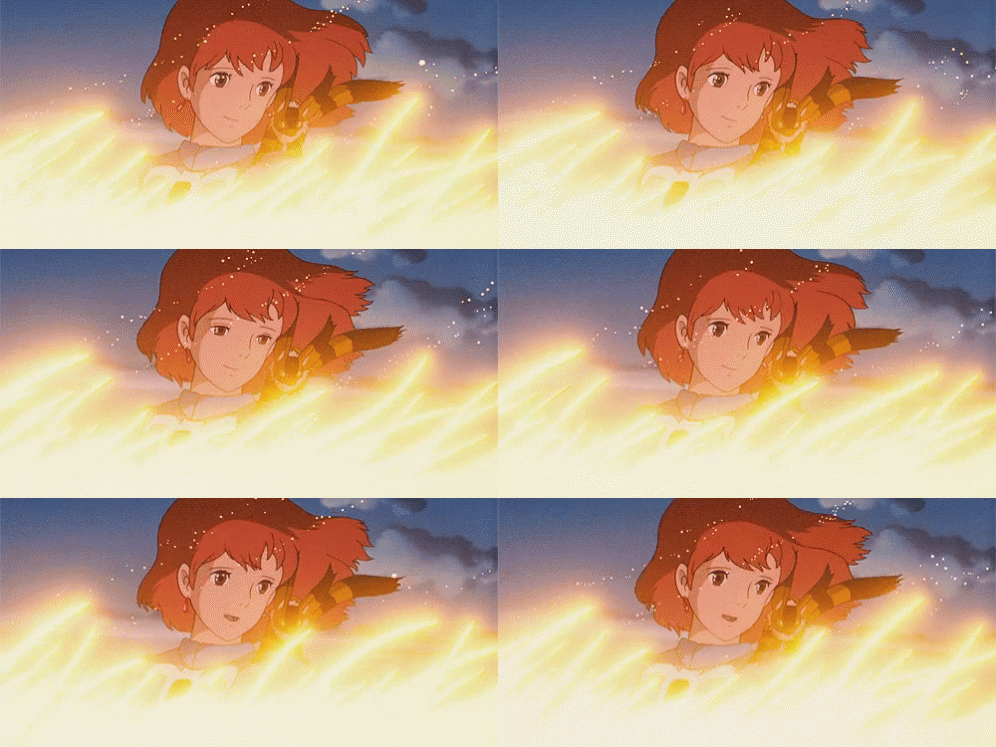
The Dorok Monks and Holy Men aren't of one accord, as the Holy Man, while blind, is able to telepathically communicate with Nausicaä to the point he realizes she might be right about the way of the world. This puts him at odds with the warrior monks. Worse yet the Dorok Emperor's brother, Lord Miralupa has had his priest develop a biological weapon - mutant spores.
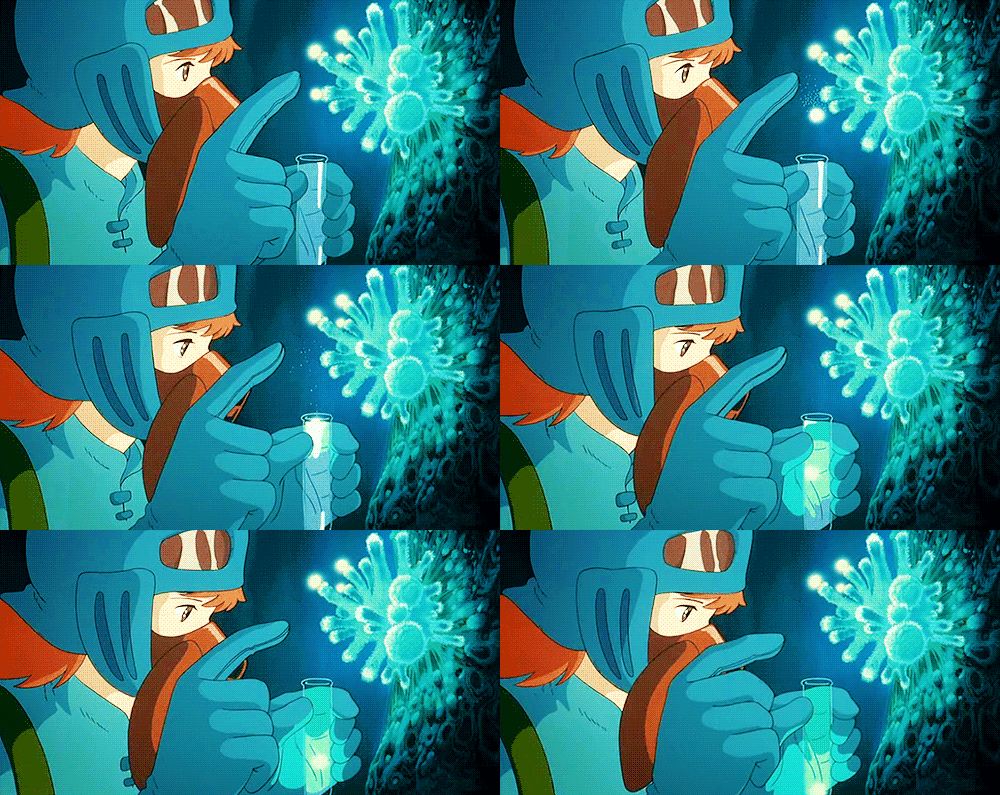
We all know where this is going because this ALWAYS happens! The mould mutates, breaks containment, begins growing uncontrollably and there's no antidote.

Volume 4 shows us the best and worst of humanity. We have Nausicaä who has done her best to ensure prisoners/refugees are released from the threat of death/slavery. On the other side we have some real war mongers who will stop at nothing to win, not realizing the cost might be just as high for their own side as the other side. It's kind of sad because it's very true to life currently with the number of wars, large and small, going on right now.
Miyazaki does a great job of show, don't tell when he has a monk warning Nausicaä that omens have showed them history is about to repeat itself. The Daikaisho, a great wave where the forest boils over to cover the land killing all in it's path, is imminent, echoing warnings from the Ohmu about the Forest in the South.
The Dorok Monks and Holy Men aren't of one accord, as the Holy Man, while blind, is able to telepathically communicate with Nausicaä to the point he realizes she might be right about the way of the world. This puts him at odds with the warrior monks. Worse yet the Dorok Emperor's brother, Lord Miralupa has had his priest develop a biological weapon - mutant spores.
We all know where this is going because this ALWAYS happens! The mould mutates, breaks containment, begins growing uncontrollably and there's no antidote.
Volume 4 shows us the best and worst of humanity. We have Nausicaä who has done her best to ensure prisoners/refugees are released from the threat of death/slavery. On the other side we have some real war mongers who will stop at nothing to win, not realizing the cost might be just as high for their own side as the other side. It's kind of sad because it's very true to life currently with the number of wars, large and small, going on right now.
December 26, 2021
Once again, pas besoin de tout détailler; les évènements guerroyant poursuivent leur cours. Bizarrement, ma copie a une dizaine de pages qui se répètent purement et simplement - j'imagine que c'est une erreur d'impression.
Le gros highlight de ce tome-ci est l'apparation du Fungus. Les Dorks on secrètement commencé à cultiver des spores de la Mer de Décomposition et à les faire muter pour s'en servir d'arme. Ils en usent contre les Tolmèques. Mais la technologie n'était pas prête, ils sont trop impatients. Du coup, le fungus croît de manière complètement incontrôlée et commence à envahir la région après avoir tué ses propres créateurs - Nausicaa y échappe d'ailleurs de peu. Le tome se finit sur l'équipage désespérant de trouver un moyen de contenir ce Fungus. Encore une fois, une belle nouvelle dimension ajoutée à l'allégorie écologique, à prendre dans son contexte du milieu des années 80.
Nous avons aussi un bref aperçu du Dieu de la Guerre que les ?Dorks préparent aussi. A nouveau, comme on le verra dans le tome suivant, ils admettent qu'ils ne sauront pas vraiment comment le contrôler, mais pourtant se précipitent à le faire croître. Cela n'augure rien de bon. On dirait que ces features d'impatience et de négligence des risques en réveillant la technologie ou en utilisant la Mer de Décomposition comme arme (spores cultivés, charge d'Ômus attirés par un bébé blessé, Dieu de la Guerre) est une caractéristique Dork que le film a donnée aux Tolmèques pour simplifier.
3.5/5
Le gros highlight de ce tome-ci est l'apparation du Fungus. Les Dorks on secrètement commencé à cultiver des spores de la Mer de Décomposition et à les faire muter pour s'en servir d'arme. Ils en usent contre les Tolmèques. Mais la technologie n'était pas prête, ils sont trop impatients. Du coup, le fungus croît de manière complètement incontrôlée et commence à envahir la région après avoir tué ses propres créateurs - Nausicaa y échappe d'ailleurs de peu. Le tome se finit sur l'équipage désespérant de trouver un moyen de contenir ce Fungus. Encore une fois, une belle nouvelle dimension ajoutée à l'allégorie écologique, à prendre dans son contexte du milieu des années 80.
Nous avons aussi un bref aperçu du Dieu de la Guerre que les ?Dorks préparent aussi. A nouveau, comme on le verra dans le tome suivant, ils admettent qu'ils ne sauront pas vraiment comment le contrôler, mais pourtant se précipitent à le faire croître. Cela n'augure rien de bon. On dirait que ces features d'impatience et de négligence des risques en réveillant la technologie ou en utilisant la Mer de Décomposition comme arme (spores cultivés, charge d'Ômus attirés par un bébé blessé, Dieu de la Guerre) est une caractéristique Dork que le film a donnée aux Tolmèques pour simplifier.
3.5/5
This entire review has been hidden because of spoilers.
Displaying 1 - 30 of 115 reviews