Interacting with theologians throughout the ages, Riches narrates the development of the church’s doctrine of Christ as an increasingly profound realization that the depth of the difference between the human being and God is realized, in fact, only in the perfect union of divinity and humanity in the one Christ. He sets the apostolic proclamation in its historical, theological, philosophical, and mystical context, showing that, as the starting point of “orthodoxy,” it forecloses every theological attempt to divide or reduce the “one Lord Jesus Christ.”
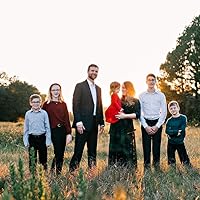
Dr. Aaron Riches teaches theology at the Seminario Mayor San Cecilio in Granada, Spain. He is a joint faculty member of the International Academy of Philosophy-Instituto de Filosofía "Edith Stein" and the Instituto de Teología “Lumen Gentium", and is a tutor in the Systematic and Philosophical Theology distance learning MA at the University of Nottingham (UK). Dr. Riches completed his PhD under the direction of Professor John Milbank at the University of Nottingham, following a Masters degree in Religious Studies from the University of Virginia (USA). Prior to his theology studies he received a Masters degree in English literature and literary criticism from York University (Canada), after studying English literature and Russian studies in Canada both at York and at the University of Guelph. Dr. Riches has published widely in peer review journals including the International Journal of Systematic Theology, Nova et Vetera, Modern Theology, Communio, Pro Ecclesia and Telos. He lives in Granada with his wife and four children.
Definitely one of the best works on Christology I’ve read. Riches takes Theotokos in some unnecessary directions, in my estimation, but on the whole: this book ought to receive a whole lot more attention (especially the first half).
This was quite good. I have numerous (and fairly significant) theological disagreements throughout which are unsurprising given it is a work of Catholic theology, but there are moments of brilliance here that make this a very valuable contribution in defense of classical Christology. Be forewarned--you'll want to be brushed up on your Latin, he is liberal in untranslated phrases.
The center of this excellent work: "The hypostatic union of divinity and humanity in Christ is the highest union of God and creation, and a perfect confirmation of the maior dissimilitudo between created and uncreated nature."
A helpful, historically-oriented treatment of Christology. I really appreciated the way Riches layers the issues one after the other, giving an excellent example of how doctrine develops, and the logic of particular choices made.
Very knowledgable in the fine tuned arguments of the councils and I also learned much about Thomas Aquino's christology. I consider myself orthodox in my christology and agree with most of Riches' conclusions, but even I think that he wants to make the important people (for him?) cohere to a greater degree than what I actually think they do. Is it necessary for Aquino to be in line with Cyril at every point?
One of the best Christological books I've ever read.
It probably took me two months to learn how to read it, but once I did, the book opened up new facets of the divine unity of Christ to me. I highly recommend it.