Homer (Greek: Όμηρος born c. 8th century BC) was a Greek poet who is credited as the author of the Iliad and the Odyssey, two epic poems that are foundational works of ancient Greek literature. Homer is considered one of the most revered and influential authors in history. Homer's Iliad centers on a quarrel between King Agamemnon and the warrior Achilles during the last year of the Trojan War. The Odyssey chronicles the ten-year journey of Odysseus, king of Ithaca, back to his home after the fall of Troy. The poems are in Homeric Greek, also known as Epic Greek, a literary language which shows a mixture of features of the Ionic and Aeolic dialects from different centuries; the predominant influence is Eastern Ionic. Most researchers believe that the poems were originally transmitted orally. Despite being predominantly known for its tragic and serious themes, the Homeric poems also contain instances of comedy and laughter. Homer's epic poems shaped aspects of ancient Greek culture and education, fostering ideals of heroism, glory, and honor. To Plato, Homer was simply the one who "has taught Greece" (τὴν Ἑλλάδα πεπαίδευκεν). In Dante Alighieri's Divine Comedy, Virgil refers to Homer as "Poet sovereign", king of all poets; in the preface to his translation of the Iliad, Alexander Pope acknowledges that Homer has always been considered the "greatest of poets". From antiquity to the present day, Homeric epics have inspired many famous works of literature, music, art, and film. The question of by whom, when, where and under what circumstances the Iliad and Odyssey were composed continues to be debated. Scholars remain divided as to whether the two works are the product of a single author. It is thought that the poems were composed at some point around the late eighth or early seventh century BC. Many accounts of Homer's life circulated in classical antiquity; the most widespread account was that he was a blind bard from Ionia, a region of central coastal Anatolia in present-day Turkey. Modern scholars consider these accounts legendary.
In my view, Stanley Lombardo's is the best translation of Homer's epic poetry. Even though the current rage is Robert Fagles' translation, Stanley Lombardo's is active, passionate, and accessible. Lombardo has full translations of both Iliad and Odyssey, though I don't find them listed on goodreads.
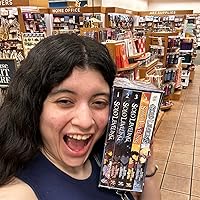
The volume pictured here features abridged versions. This is the book I use in my Mythology class. The abridgment is effective -- in fact it improves the narrative pace! Themes like the inevitability of war, the destructive nature of anger, hubris, intelligence, loyalty, courage, greed, ego -- all of humanity's virtues and vices are addressed in these two epic legends -- the earliest texts in western literature. It's also fascinating to see how the Greek's worship of the gods and creation stories are distorted remnants of the truth.
this collection contains the Iliad and the Odyssey epics. whether you want to read these stories for pleasure or academic reasons, i highly recommend this translation. it maintains the original verse format and it’s really accessible language. these stories are timeless, fast-paced, entertaining classics that everyone should read
In college, I read this book for a Foundations of Western Lit. class. My friends and I took turns reading aloud, doing voices, and generally enjoying the process of reading Homer's work. This translation, in particular, is very accessible to the modern reader (as it would have been to the Greeks at the time of its original telling) while still holding true to Homer's original words (we were assured by our professor, who knows more Greek than we do). It is epic poetry at its best and finest (and we read others in that class, so I feel confident in that judgment). I highly reccommend reading at least the Odyssey, if not the Illiad as well. I just completed a re-reading of the Odyssey, and still absolutely loved it. I mean, sure, Odysseus lets pride lead him to some pretty dumb decisions, and is kind of an asshole sometimes, but every hero has got to have some flaws, and anyway he has Athena on his side, so that's pretty kick-ass. The Odyssey is lots of little espiodes of adventures and stories of other adventures all sewn together into one giant, amazing ten-year epic. The Illiad is about a war, so there's a lot more laboring on about everyone's super awesome armor and everyone's grudges, but there's still a great narrative there chronicling the Trojan War, with some great god/goddess/superhuman battle action. Read it and love it!
Just the essentials, makes it much easier to read, but still just as good. Also, Lombardos translations are so modern but still fit really well and flow very naturally.
it’s not really news but i’ve always hated achilles. he just gets on my nerves. and i still can’t get over the whole hector thing.
with this translation, however, i can actually sympathize with the guy. dude had a short rough life (doesn’t really excuse his actions but i guess he’s not completely horrible either). although maybe this newfound sympathy was less lombardo and more my professor’s earnest lectures on understanding achilles’ mindset. either way, i’m glad that i can read these epics for a fourth(!!!!) time around and still come away with new feelings and interpretations.
movie rec for the iliad: bladerunner (the final cut) movie rec for the odyssey: big fish
technically i didn’t read the entire thing so i can’t give it a faithful rating but hey i did it! i’ve read the iliad and the odyssey! so interesting to see the source material for my fave retelling ❤️
I love this translation. They cut some books that would have been fun, but it's an easy to read and funny translation. I was not expecting that many cuss words in the Iliad. Loved this and annotated so many lines that would be amazing to quote for life.
My fave that I must quote from now on is: "I wish my stomach would let me / Cut off your flesh in strips and eat it raw / For what you've done to me." (216). Achilles is an icon. Shame about him being a victim of his own rage and arrogance. Such is the life of a demigod.
Also, I want to applaud myself for reading this on time for my course. I powered through 500 pages in 2 weeks. Insane
TWO FOR ONE REVIEW. This book contains The Iliad and The Odyssey. This is not a review of the translation - since this is the only one I’ve ever read.
THE ILIAD - 5 STARS Jaw is in the floor. I LOVED this. I’m a big fan of the movie Troy and a lot of the events of The Iliad take place in that film. This just rules. The hunt for Devine glory - the cost of ego - the realities and tragic nature of pride and warfare. This is the original inspiration for so many stories that play with those ideas. What I loved about this in comparison to Troy - is we get to read about what the Gods were doing - what they thought of the war, which sides they chose - and how they intervened at times and didn’t during others. Fascinating. Homer was in his bag - especially considering that this used to be told by performance back then. I love Greek Mythology and this book did not disappoint.
THE ODYSSEY: 4.25 STARS I also loved this one, but it was a bit slower and not as action packed as The Iliad- which is totally cool. It’s still amazing. Odysseus really went through it, and his revenge and return was epic and satisfying. I wanted to read this one in preparation for this summer when Christopher Nolan drops his latest film. I am so curious to see how he adapts this. Given that he doesn’t use CGI very much, I’m so excited to see what he does. There’s a lot of emotion in this one, and I was struck by Odysseus’ character - iconic and inspiring.
So glad I read these. I feel filtered. The Gods smile upon me while the haters are drowning in their sorrows.
I LOVED the Iliad and the Odyssey. The Iliad was a lot better… the Odyssey was very adventure-packed, and the last four-fiveish books kind of dragged. the ending was also pretty anticlimactic. After everything Odysseus went through….give me a break that was so lame to end the little skirmish with this random ass cease-fire. Thank you, Zeus for that. The Iliad was SO FUN to read. I absolutely loved the petty drama. It’s like the Odyssey was a superhero movie and then the Iliad was the tv show Jersey Shore but set during a war.
And I absolutely LIVED for the insults the all the characters slung at each other in both books. I don’t think these epic poems were supposed to be comedic, but let me tell you I laughed out loud several times and I will forever keep some of these lines in my arsenal.
Also… I’m just going to say that Pat deserved a better “friend” (you know why I’m putting that word in quotes…👬) than Achilles. Achilles was so petty, selfish, and unnecessarily dramatic. Although the drama was entertaining.
And Hector deserved SO MUCH BETTER. I am very much team Hector.
Anyways…. 5/5. Read these poems. And I’m not saying that because they’re classics. Read them bc they are super entertaining. But read this translation.
found it on a shelf in my basement, figure it’s a college book an older sibling left behind after they moved out. it’s hard to keep up with if you’re not really familiar with names. the first part, the Iliad, i read in one sitting. it was really captivating, i liked it. the Iliad is narrated in a way that doesn’t make anybody look guileless, which is different from how i was introduced to it in seventh grade social studies. repeating characters are often explored in enough depth that it makes it difficult to love or hate them. Hector, for instance, who’s fighting his brothers battle has a touching departure with his wife and beloved son. He kills Patroclus in a dishonorable way, and then begs Achilles to let him have an honorable death. you can’t really hold anybody up to anything because everybodies just doing the most outrageous shit on both sides. even within each side they're going at each other— that really knocked me out. my favorite part is when Achilles says some really crazy shit like “stop whining you piece of shit, if my stomach could bear it id tear your skin off in strips and eat it” that really knocked me out. it’s really good. i haven't started the odyssey.
This entire review has been hidden because of spoilers.
Classic stories told with an incredibly easy to follow and entertaining translation - this is a modified version, so not every book or line of both stories (Iliad/Odyssey) are included however they do explain what was cut out in parenthesis which still made the stories easy to follow. What else can I say...it's Homer lol. Everytime I read an excerpt or even a line from either I can just imagine being in ancient Greece and listening to someone perform it and how beautiful it would be to listen to and enjoy. 4/5 stars.
I read The Illiad in this volume (abridged). I have switched to The Odyssey as translated by Emily Wilson (2018). What I learned: 1) Homer is not difficult to read. For some reason, I assumed these tales are dense with a lot of difficult words but that is not the case. There are a lot of characters yet the story is not hard to follow.
2) The Illiad, being the story of the battle of Troy, is a war story. Battle after battle...so many men are slaughtered.
I read this in like 2017? in college as part of a course, while I don't remember much about the book specifically, I remember as a whole the course teaching me a lot more about greek mythology and history. Still am a big greek mythology fan, and I think this book (and the class) definitely helped fill in gaps and also spark enough interest to still seek out other lesser known greek legends and retellings
I will say, despite this being a book for class, I found myself enjoying large chunks of it. Sometime in the future, I would like to go back through and read more than the selected passages I had to read. Also, this translation in particular made the story very clear to understand, which definitely helped!
Read this for Classic Myth class, but it was actually pretty entertaining?? I wasn’t expecting to like it as much as I did, but this made me want to read modern Greek retellings, so I guess it was good enough to get me interested. The Iliad especially was awesome, but The Odyssey wasn’t half bad either.
Lombardo's emphasis on translating the performative aspect of Homer is admirable, and suitable for an enjoyable casual reading, but this edition leaves out far too much of the original text to really help a more in-depth examination of the source material.
This was a fantastic translation of the Iliad and the Odyssey. The story flowed smoothly, and the prose portrayed the drama and emotion in the same way that someone telling you the story around a campfire might.
read this for a class but i actually thoroughly enjoyed it and annotated the whole thing. it was nice bc i got to read the stories of the iliad and the odyssey, but in a condensed, easy-to-understand and follow sort of way!
read for school so n.r., but i say for certain i liked both the iliad and the odyssey. i'm intrigued to see if my five star on the song of achilles holds up now that i'm familiar with the homeric version of the events
I read this book for an art history class in school, it was extremely helpful in connecting the stories to ancient Greek art and the myths behind the vases, paintings and sculptures. There were certain aspects of the book that I would have enjoyed to continue reading instead of them being cut out, especially during the Odyssey. There were however more books cut out in the Iliad, due to the large amounts of battle scenes and warfare. I thought the translation was done well with a few modern sayings and slang towards the end of the Odyssey book. Overall, I loved the Odyssey and I loved the Iliad even more, if you are someone who studies art, specifically ancient Greek art, or you're just someone who loves Homer, I would definitely recommend!
While the translation was easier to read, the sudden change in tone of language can sometimes be jarring. Sometimes, some of the abridgments can make later portions a little confusing.