

What do you think?

Blood on the Forge
This brutally gripping novel about the African-American Great Migration follows the three Moss brothers, who flee the rural South to work in industries up North. Delivered by day into the searing inferno of the steel mills, by night they encounter a world of surreal devastation, crowded with dogfighters, whores, cripples, strikers, and scabs. Keenly sensitive to character, prophetic in its depiction of environmental degradation and globalized labor, Attaway's novel is an unprecedented confrontation with the realities of American life, offering an apocalyptic vision of the melting pot not as an icon of hope but as an instrument of destruction.
Blood on the Forge was first published in 1941, when it attracted the admiring attention of Richard Wright and Ralph Ellison. It is an indispensable account of a major turning point in black history, as well as a triumph of individual style, charged with the concentrated power and poignance of the blues.
Blood on the Forge was first published in 1941, when it attracted the admiring attention of Richard Wright and Ralph Ellison. It is an indispensable account of a major turning point in black history, as well as a triumph of individual style, charged with the concentrated power and poignance of the blues.
264 pages, Paperback
First published January 1, 1941
About the author
William Attaway
10 books15 followersWilliam Attaway (1911–1986) was born in Mississippi, the son of a physician who moved his family to Chicago to escape the segregated South.
Attaway was an indifferent student in high school, but after hearing a Langston Hughes poem read in class and discovering that Hughes was black, he was inspired with an urgent ambition to write.
Rebelling against his middle-class origins, Attaway dropped out of the University of Illinois and spent some time as a hobo before returning to complete his college degree in 1936. He then worked variously as a seaman, a salesman, a union organizer, and as part of the Federal Writers’ Project, where he made friends with Richard Wright. Attaway moved to New York, published his first novel, 'Let Me Breathe Thunder' (1939), the story of two white vagrants traveling with a young Mexican boy, and quickly followed it with 'Blood on the Forge' (1941), about the fate of three African-American brothers in the Great Migration to the North.
Attaway never produced another novel, but went on to prosper as a writer of radio and television scripts, screenplays, and numerous songs, including the “Banana Boat Song (Day-O),” which was a hit for his friend Harry Belafonte.
A resident for many years of Barbados, Attaway returned to the United States toward the end of his life. He died in Los Angeles while working on a script.
Attaway was an indifferent student in high school, but after hearing a Langston Hughes poem read in class and discovering that Hughes was black, he was inspired with an urgent ambition to write.
Rebelling against his middle-class origins, Attaway dropped out of the University of Illinois and spent some time as a hobo before returning to complete his college degree in 1936. He then worked variously as a seaman, a salesman, a union organizer, and as part of the Federal Writers’ Project, where he made friends with Richard Wright. Attaway moved to New York, published his first novel, 'Let Me Breathe Thunder' (1939), the story of two white vagrants traveling with a young Mexican boy, and quickly followed it with 'Blood on the Forge' (1941), about the fate of three African-American brothers in the Great Migration to the North.
Attaway never produced another novel, but went on to prosper as a writer of radio and television scripts, screenplays, and numerous songs, including the “Banana Boat Song (Day-O),” which was a hit for his friend Harry Belafonte.
A resident for many years of Barbados, Attaway returned to the United States toward the end of his life. He died in Los Angeles while working on a script.
Ratings & Reviews
Friends & Following
Create a free account to discover what your friends think of this book!
Community Reviews
Displaying 1 - 30 of 73 reviews

July 13, 2021
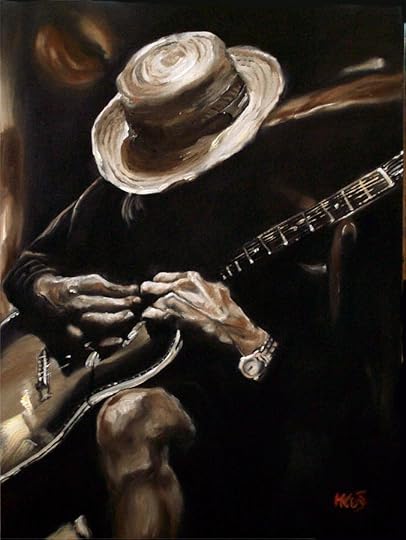
The blues is what it is.
Those feelings, those disappointments.
That anger that you can't explain because that's all you've ever known.
It builds and builds, exploding with embers, forging steel with fire. The fire inside burning indefinitely.
Don't you hear that guitar a-playin'? Singing its tune?
Sure you do, it's always there. Your fingers are moving, making that music. We can all hear it, whether we're in the North or the South.
"These would be good days. Sun behind the thin gray clouds, the earth trim under his shoes. These would be good days for sick men to feel the earth."
Yesterday's problems are today's spoils, at least on the surface.
Big Mat is a metaphor for what it is to be black in this society, yet being treated the same no matter where you are.
This anger is still relevant today.

Read
December 17, 2017Get in the line, the conga line. A party, a reception, a wedding after sufficient drink. Jackets tossed; high heels lost. Day, me say day-o. Hands on your waist from behind; your hands around the waist in front. Day-O. The singer smiles. He shakes maracas. He is colorfully costumed to please. Me say Day-O. You could be forgiven for not hearing the alternating words. Work all night on a drink of rum/Stack banana 'til de mornin' come/Come, mister tally man, tally me banana/Daylight come and me wan' go home/A beautiful bunch o' ripe banana/Hide the deadly black tarantula/Daylight come and me wan' go home.
William Attaway co-wrote The Banana Boat Song and looking in the Calypso singer's eyes you might feel the resentment behind the smile and the maracas. He wrote this novel, his last of just two, before Day-O. There's labor and strife and music; but blues here:
At night the hills ain't red no more. There ain't no crab-apple trees squat in the hills, no more land to hoe in the red-hot sun -- white the same as black. . . . Where the mule gone at? He only a voice in the pature land. . . .
A blinded man wants a red pop, but he can't taste the red anymore.
This book starts in a very Jim Crow Kentucky but soon finds it way to Pittsburgh, where I live. The racism is less overt, less definitive. The violence is not diminished, however, just skewed. Workers suffer; animals suffer; and women. Things get temporal, cultural, situational. Feeling uncomfortable yet? Good. What the banana hides.
William Attaway co-wrote The Banana Boat Song and looking in the Calypso singer's eyes you might feel the resentment behind the smile and the maracas. He wrote this novel, his last of just two, before Day-O. There's labor and strife and music; but blues here:
At night the hills ain't red no more. There ain't no crab-apple trees squat in the hills, no more land to hoe in the red-hot sun -- white the same as black. . . . Where the mule gone at? He only a voice in the pature land. . . .
A blinded man wants a red pop, but he can't taste the red anymore.
This book starts in a very Jim Crow Kentucky but soon finds it way to Pittsburgh, where I live. The racism is less overt, less definitive. The violence is not diminished, however, just skewed. Workers suffer; animals suffer; and women. Things get temporal, cultural, situational. Feeling uncomfortable yet? Good. What the banana hides.
April 27, 2016
I measure the worth of a novel by how long, upon finishing, it makes me sit there, staring straight ahead feeling (fill-in-hyperbolic emotion). This one disturbed the shit out of me with its stark beauty and almost feral sensibility and poeticism.
It's easier to make comparisons, so I'd call this a Zola-esque portrait of southern black migrants into the steel hells of the North. It does hearken much to the naturalism/realism of Z-bag, but it is so much more. It drips red with the vernacular, you burn in this book, the brutality of the experience of these three black brothers from Kentucky in a steel mill in Pennsylvania is horrifying and unsettling. They move from Hell to Hell, sharecroppers who scrape for food who become tenders to unending and vengeful fire.
Sadly overlooked, it seems. Put this on a list somewhere.
It's easier to make comparisons, so I'd call this a Zola-esque portrait of southern black migrants into the steel hells of the North. It does hearken much to the naturalism/realism of Z-bag, but it is so much more. It drips red with the vernacular, you burn in this book, the brutality of the experience of these three black brothers from Kentucky in a steel mill in Pennsylvania is horrifying and unsettling. They move from Hell to Hell, sharecroppers who scrape for food who become tenders to unending and vengeful fire.
Sadly overlooked, it seems. Put this on a list somewhere.
March 3, 2020
3.5/5
TW: underage gang rape
TW: underage gang rape
For a man who had so lately worked from dawn to dark in the fields twelve hours and the long shift were not killing. For a man who had ended each year in debt any wage at all was a wonderful thing. For a man who had known no personal liberties even the iron hand of the mills was an advancement. In his own way he thought these things. As yet he could not see beyond them.I hadn't realized how much I was missing this concise yet rolling, understandable yet evocative, early mid 20thc. US writing until I was finishing up with a relative ease of comprehension and underlying appreciation of prose. Don't get me wrong, the themes are beyond rough, and if you're looking for some kind of character development crescendo that so often shows in various forms of well-intentioned propaganda, look elsewhere. However, the creative prose structure of rhythmic, ever so often call and response intonations, the swift but sure portraits of the North and South, capitalism and sharecropping as two sides of the cursed coin, the juxtaposition of xenophobia and racism and fascist breeding of the two, the narrative structure that was borderline almost but not quite too obvious in its mirroring and its foreshadowing, all was something I could put up with, even appreciate, long enough to like it more than most of what else I've been reading of late. Too much machismo by far, and yet an end stage conversation between a black steel foundry worker and a white sex worker had all of the humanity that every other book I've read this year that dragged in sex work chose to forgo for the sake of sentiment or punch down satire. So, keep the trigger warning in mind, and don't expect any Faulknerian fireworks or an uplift beyond what a deep and brutal blues breed of naturalism affords. This is a tragedy, take it or leave it, and is a truer portrayal of where the blues come from in terms of musicality, sorrow, and going through it all nonetheless, than I've seen in a while.
He was trying to figure out if he had done this to himself purposely.In some ways, this work is begging to be taught as literary fiction, perhaps in the American lit section that US junior high students are commonly saddled with in public schools. In other ways, the subject material is in no way sanitized, and the challenges to material such as Huck Finn and 'To Kill a Mockingbird' would pale in comparison to the veritable whirlwind that this would generate as assigned reading outside of a college classroom. Still, there is some very interesting analysis one could generate if one didn't worry too much about loose ends and inconclusive conclusions: nature; politics; shifting cultural landscapes; the post Civil War, post WWI confluence of race, religion, gender, industrialization, work, unions, and human rights, all thrown together into a maelstrom of unspoken rules that get along just fine until those up top begin to pit one against another down below. It is not the ideal of those who made it, but what could very well happen in high stake environments where it as much as your money or your life as it is your eyes or your life, your legs or your life, your mind or your life, the chance for progress or your life. If you can get past the rape culture of certain events that are not exactly normalized so much as testified, the reading experience is a rolling meditation on one time and place that generated some of the most profound words, rhythms, and melodies that have ever been brought to life by someone residing in the United States. A variation on Shelley's idea that beauty cannot exist without abject poverty, albeit with the poverty directly birthing the beauty. All I can think is, one or more of the characters would have been saved had they taken to preaching, but that is a story of a bright hoped road to hell for another book.
No telling what a man might do if he were given a chance to stand and think.Love this I did not, but if I stumble across Attaway's other severely underread work, Let Me Breathe Thunder, I'll be acquiring it simply for the sake of augmenting the record already in place on this site. I don't harbor dreams of bringing buried classics to the masses anymore, but this is one of the more promising works NYRB Classics has brought to my attention, and I'd like to commit to it further. It's no surprise that both Wright and Ellison blurbed this work, and I'm also not surprised Wright liked it more, as this has a definite Native Son cast to it, for better or for worse. What I can say is that Attaway has a way with words, and while the characterization is very all or nothing along the gender line, I still stand by my saying he treated sex work as a far more serious and complex topic than many 21st century writers do today. Another author who I would have liked to see more from, but not, in this case, due to a less than impressive first introduction.
Maybe somewhere in these mills a new Mr Johnston was creating riding bosses, making a difference where none existed.
The steel-foundries belched huge flames that reflected the Allegheny hills blood-red and filled the air with soot and smoke. We made our way past the sheds where human beings, half man, half beast, were working like the galley-slaves of an era long past. Their naked bodies, covered only with small trunks, shone like copper in the glare of the red-hot chunks of iron they were snatching from the mouths of the flaming monsters. From time to time the steam rising from the water thrown on the hot metal would completely envelop the men; then they would emerge again like shadows. “The children of hell,” I said, “damned to the everlasting inferno of heat and noise.”
-Emma Goldman, Living My Life

July 10, 2021
Language shapes experience. We tell ourselves stories to explain who we are, and who we hope to be. Our stories are filled with hope, regret, and purpose. The absence of language is a form of powerlessness. Intention and impulse become impossible to differentiate. Lust is just another version of possessiveness.
Paradoxically, author William Attaway has chosen three such inarticulate characters to tell his story. He is able to do this because of his own acute mastery of language. He filters the most primal emotions into a subjective prism. Hunger: “He had never thought about white pork, molasses and salt water cornbread as food anyhow. They were just something to take the wrinkles out of his stomach.” (Location 175) Despair: “Now he was a paper sack, full of nothing – like an empty paper sack. He looked as though he were too empty for anything ever to fill him again.” (Location 2151) Fear: “Hiding in the red-clay hills was something always in the backs of their heads. It was something to be thought of along with bloodhound dogs and lynching.” (Location 637)
His characters are three half-brothers, Chinatown, Melody, and Big Mat. As Kentucky sharecroppers, their only future is a descent into ever deepening debt. The story of their lives, however, is loss. Their mother recently died behind the plow. The mule dragged her body all the way to the end of the furrow. What we are viewing is the beginnings of an unmooring rather than grief.
Their relocation to Pennsylvania is an uprooting. “The old folks make crop here afore we were born,” Big Mat reflects. “Now the land done got tired. All the land got tired, 'ceptin' the muck in the bottoms. It do somethin' to a man when the corn come up like tired old gents. Somehow it seems like I know why the land git tired. And it jest seem like it come time to git off. The land has just give up, and I guess it's good for things to come out like this. Now us got to give up too.” (Location 667)
As they are plunged into the hostile world of Allegheny County's steel mills, one might wonder what is left to lose. That question will be answered in the most brutal of terms. This is a dehumanizing world. They are not workers. They are Labor. They are expendable. They serve a commodity. An injured mill worker named Smothers spews jeremiads that reverberate with apocalyptic horror. “It's a sin, Steel bound to git ever'-body 'cause o' that sin. They say I crazy, but mills gone crazy 'cause men bringin' trainloads of ground in here and meltin' it up.” (Location 2113)
We alone discern the forces at work: racial and ethnic conflict engineered to keep wages low. The law employed as a violent tool to crush unionization. Yet, we are helpless spectators. The Great Migration is a narrative of loss. Nothing has really changed for the three brothers, and the losses are beyond the characters' ability to interpret. Melody's expressive voice had always been music. Now, “Melody's hand was out of the bandage, but he couldn't make any music. The corns were gone from his picking hand. He couldn't get tone from the strings without those corns. It was all off key. He couldn't feel the music.” (Location 2267) Back in Kentucky Chinatown had from childhood loved the treat of red soda pop. Now, both his sight and his enjoyment of that treat are gone. “'It don't feel right,' said Chinatown. He bit off the cap. When he turned up the bottle it spilled down both his cheeks. He tasted the first mouthful only. 'Ugh! I knew it.' He gagged. 'This don't taste right neither. It ain't red pop.' He spat out the stuff. Melody did not know what was the matter. 'That there's red pop,' he insisted. But Chinatown could not taste the color red.” (Location 2334)
It is impossible to empathize with these damaged characters. It is not even possible to have sympathy for them. We are impotent spectators and can only recoil at the successive horrors. In the end, we feel drained. It is impossible to “like” this book in the conventional sense. Yet, we cannot avert our eyes from the brutal authenticity of the writing. Attaway captures a historical continuity that cannot be dismissed. The story opens in 1919. It was written in 1941. It is a story still being played out today.
I read this book after listening to the podcast “Marlon and Jake Read Dead People.” The idea was floated to discuss the best book you've never read. In Episode 10, “Short Novels and Novellas,” the last ten minutes of the 47 minute podcast are devoted to a discussion of this book. While I disliked this book, I cannot deny its greatness.
NOTES:
https://www.penguinrandomhouse.com/ar...
Paradoxically, author William Attaway has chosen three such inarticulate characters to tell his story. He is able to do this because of his own acute mastery of language. He filters the most primal emotions into a subjective prism. Hunger: “He had never thought about white pork, molasses and salt water cornbread as food anyhow. They were just something to take the wrinkles out of his stomach.” (Location 175) Despair: “Now he was a paper sack, full of nothing – like an empty paper sack. He looked as though he were too empty for anything ever to fill him again.” (Location 2151) Fear: “Hiding in the red-clay hills was something always in the backs of their heads. It was something to be thought of along with bloodhound dogs and lynching.” (Location 637)
His characters are three half-brothers, Chinatown, Melody, and Big Mat. As Kentucky sharecroppers, their only future is a descent into ever deepening debt. The story of their lives, however, is loss. Their mother recently died behind the plow. The mule dragged her body all the way to the end of the furrow. What we are viewing is the beginnings of an unmooring rather than grief.
Their relocation to Pennsylvania is an uprooting. “The old folks make crop here afore we were born,” Big Mat reflects. “Now the land done got tired. All the land got tired, 'ceptin' the muck in the bottoms. It do somethin' to a man when the corn come up like tired old gents. Somehow it seems like I know why the land git tired. And it jest seem like it come time to git off. The land has just give up, and I guess it's good for things to come out like this. Now us got to give up too.” (Location 667)
As they are plunged into the hostile world of Allegheny County's steel mills, one might wonder what is left to lose. That question will be answered in the most brutal of terms. This is a dehumanizing world. They are not workers. They are Labor. They are expendable. They serve a commodity. An injured mill worker named Smothers spews jeremiads that reverberate with apocalyptic horror. “It's a sin, Steel bound to git ever'-body 'cause o' that sin. They say I crazy, but mills gone crazy 'cause men bringin' trainloads of ground in here and meltin' it up.” (Location 2113)
We alone discern the forces at work: racial and ethnic conflict engineered to keep wages low. The law employed as a violent tool to crush unionization. Yet, we are helpless spectators. The Great Migration is a narrative of loss. Nothing has really changed for the three brothers, and the losses are beyond the characters' ability to interpret. Melody's expressive voice had always been music. Now, “Melody's hand was out of the bandage, but he couldn't make any music. The corns were gone from his picking hand. He couldn't get tone from the strings without those corns. It was all off key. He couldn't feel the music.” (Location 2267) Back in Kentucky Chinatown had from childhood loved the treat of red soda pop. Now, both his sight and his enjoyment of that treat are gone. “'It don't feel right,' said Chinatown. He bit off the cap. When he turned up the bottle it spilled down both his cheeks. He tasted the first mouthful only. 'Ugh! I knew it.' He gagged. 'This don't taste right neither. It ain't red pop.' He spat out the stuff. Melody did not know what was the matter. 'That there's red pop,' he insisted. But Chinatown could not taste the color red.” (Location 2334)
It is impossible to empathize with these damaged characters. It is not even possible to have sympathy for them. We are impotent spectators and can only recoil at the successive horrors. In the end, we feel drained. It is impossible to “like” this book in the conventional sense. Yet, we cannot avert our eyes from the brutal authenticity of the writing. Attaway captures a historical continuity that cannot be dismissed. The story opens in 1919. It was written in 1941. It is a story still being played out today.
I read this book after listening to the podcast “Marlon and Jake Read Dead People.” The idea was floated to discuss the best book you've never read. In Episode 10, “Short Novels and Novellas,” the last ten minutes of the 47 minute podcast are devoted to a discussion of this book. While I disliked this book, I cannot deny its greatness.
NOTES:
https://www.penguinrandomhouse.com/ar...

May 17, 2019
Typically when one thinks of works pigeonholed in categories like "social protest novel" or "Proletarian literature" or more broadly "philosophical literature," the books that come to mind are either straight allegories ("Animal Farm") or turgid preachy tracts in which the characters are just ciphers for the ideas of the author (see Ayn Rand's oeuvre). A much smaller group of books in this category work seamlessly on all levels, telling us something not just about the author's political beliefs, but about the human condition, and manage to really set some flesh on the bones of their characters.
William Attaway's "Blood on the Forge" is in that small group, with classics like "Of Mice and Men" or Upton Sinclair's "The Jungle" that deals with the human condition as much as it does with the problems of the day plaguing man.
The book follows a small group of black sharecroppers whose hard days under the glare of the sun, subservient to white men with the whip-hand, are offset by gentle nights and moments of reprieve in the humble pleasures to be found in love, food, and music. When one of the sharecroppers has a violent brush with a white man (a death sentence in Dixie at the time) all three decide to take up the offer of some rabble-rousing "jacklegs" looking for manpower to head north and work in factories, in what became known after the fact as "the Great Migration."
These are hard, bitter lives, where most of the lessons imparted are brutal, and the meager pleasures the men find up north are even more brutal (romps in cathouses, sitting ringside at dog fights). When the eponymous forges aren't threatening to scorch the men to cinders and piles of ash, they still must learn to navigate this new, treacherous, and harsh world of the North, where being accused of being a "scab" is more hazardous to one's health than being perceived as an "uppity Negro", and where white men unlike any they've seen down South- "Slavs," "Bohunks," and "Micks"- don't ask for subservience but are brutal just as a matter of trying to survive as everyone jockeys for the same limited number of jobs.
The book is poignant, written in a terse, minimalist style, that sometimes flowers into something expansive, especially when the men pine for the red clay hills and molasses cane fields of the Deep South. The book will not be an easy read for many sensibilities. It features everything from rape to extremely graphic language and some truly tragic scenes of violence, which, even when they don't kill the men involved, break them so that their fate is even more tragic that death.
A masterpiece. Highest recommendation.
William Attaway's "Blood on the Forge" is in that small group, with classics like "Of Mice and Men" or Upton Sinclair's "The Jungle" that deals with the human condition as much as it does with the problems of the day plaguing man.
The book follows a small group of black sharecroppers whose hard days under the glare of the sun, subservient to white men with the whip-hand, are offset by gentle nights and moments of reprieve in the humble pleasures to be found in love, food, and music. When one of the sharecroppers has a violent brush with a white man (a death sentence in Dixie at the time) all three decide to take up the offer of some rabble-rousing "jacklegs" looking for manpower to head north and work in factories, in what became known after the fact as "the Great Migration."
These are hard, bitter lives, where most of the lessons imparted are brutal, and the meager pleasures the men find up north are even more brutal (romps in cathouses, sitting ringside at dog fights). When the eponymous forges aren't threatening to scorch the men to cinders and piles of ash, they still must learn to navigate this new, treacherous, and harsh world of the North, where being accused of being a "scab" is more hazardous to one's health than being perceived as an "uppity Negro", and where white men unlike any they've seen down South- "Slavs," "Bohunks," and "Micks"- don't ask for subservience but are brutal just as a matter of trying to survive as everyone jockeys for the same limited number of jobs.
The book is poignant, written in a terse, minimalist style, that sometimes flowers into something expansive, especially when the men pine for the red clay hills and molasses cane fields of the Deep South. The book will not be an easy read for many sensibilities. It features everything from rape to extremely graphic language and some truly tragic scenes of violence, which, even when they don't kill the men involved, break them so that their fate is even more tragic that death.
A masterpiece. Highest recommendation.

March 24, 2009
this is more of a three-and-a-half, really. i wish the goodreads rating system had more options. i really like this book, but i feel pretty conflicted about it too.
blood on the forge is a nasty, honest account of three black men who flee the racism and agrarian life of the south to work in a steel mill in chicago. there's real honesty and sincerity to the story-telling. the characters feel pretty organic, and the novel does a nice job of rendering the multicultural world of mill-workers. i'm kind of a sucker for deflecting the most interesting character away from the center, and i appreciated its depiction of big mat as the eventual epicenter of tension and conflict (instead of melody, who initially appears to be the sensitive artist type i expected to anchor the story).
at the same time, the women characters don't fair well. as honest as the novel's depictions of gang rape and domestic abuse appear to be (not that i have any real way of gauging what this world might really be like), attaway isn't sufficiently critical about them. the mexican woman at the center of its drama rarely rises above "jezebel" status, and the narrative surrounding her becomes less and less interesting accordingly. there's also an idealized assessment of the "natural" world that seems a bit dated. once the brothers arrive at the steel mill, they immediately long for the simple farming life again. i couldn't help wondering why, since their lives at its beginning seemed even worse than what they encounter in chicago. there's an anti-technology streak to the novel that feels much thinner than most of its insights.
but my hesitations set aside the context blood was written in. if i encountered the atrocities these people experience day in and day out, i might fear technology myself. and i probably would have less enlightened opinions about the opposite sex, unfortunately. in the end, this book is well worth it. warts and all.
blood on the forge is a nasty, honest account of three black men who flee the racism and agrarian life of the south to work in a steel mill in chicago. there's real honesty and sincerity to the story-telling. the characters feel pretty organic, and the novel does a nice job of rendering the multicultural world of mill-workers. i'm kind of a sucker for deflecting the most interesting character away from the center, and i appreciated its depiction of big mat as the eventual epicenter of tension and conflict (instead of melody, who initially appears to be the sensitive artist type i expected to anchor the story).
at the same time, the women characters don't fair well. as honest as the novel's depictions of gang rape and domestic abuse appear to be (not that i have any real way of gauging what this world might really be like), attaway isn't sufficiently critical about them. the mexican woman at the center of its drama rarely rises above "jezebel" status, and the narrative surrounding her becomes less and less interesting accordingly. there's also an idealized assessment of the "natural" world that seems a bit dated. once the brothers arrive at the steel mill, they immediately long for the simple farming life again. i couldn't help wondering why, since their lives at its beginning seemed even worse than what they encounter in chicago. there's an anti-technology streak to the novel that feels much thinner than most of its insights.
but my hesitations set aside the context blood was written in. if i encountered the atrocities these people experience day in and day out, i might fear technology myself. and i probably would have less enlightened opinions about the opposite sex, unfortunately. in the end, this book is well worth it. warts and all.
October 6, 2025
A fantastic novel about the Great Migration out of the South. As expected, laughs are not the order of the day. But you lovers of Faulkner’s agrarianism that may be curious what a novel working in a similar milieu to Faulkner, told from the perspective of those acted upon by the royal Faulkners, might possibly look like, this is it. You’ve found it. El Dorado.
Except, mercifully, the work here is drained of the optics of writing-as-Art; this is letting blood pass without the post-structuralist Barthesian sieve or the tendency to land blows glancingly a la postmodernism. This is a grinder’s novel, whatever school you’d assign it means nothing. l will offer that a little someone knew where the fucking period and comma keys were AND when to hit ‘em.
Not so fast, Billy…sit your ass down, with your little mustache comb. Asshole. And give back “Moses” while you’re at it.
Except, mercifully, the work here is drained of the optics of writing-as-Art; this is letting blood pass without the post-structuralist Barthesian sieve or the tendency to land blows glancingly a la postmodernism. This is a grinder’s novel, whatever school you’d assign it means nothing. l will offer that a little someone knew where the fucking period and comma keys were AND when to hit ‘em.
Not so fast, Billy…sit your ass down, with your little mustache comb. Asshole. And give back “Moses” while you’re at it.

August 21, 2023
"But steel had to be made. No matter how many men were hurt, the furnaces must be kept going. A furnace that lost its fire was like a dead thing. It had to be torn down to the ground and built anew. That cost money. So the new men, like the new men before them, worked, and some of them died. But the flow of steel did not stop.
Somehow it seemed to the men from the red hills that the idea of flesh-and-blood striking was a crazy thing. The fire and flow of metal seemed an eternal act which had grown beyond men's control. It was not to be compared with crops that one man nursed to growth and ate at his own table. The nearness of a farmer to his farm was easily understood. But no man was close to steel. It was shipped across endless tracks to all the world. On the consignment slips were Chicago, Los Angeles, New York, rails for South America, tin for Africa, tool steel for Europe. This hard metal held up the new world. Some were shortsighted and thought they understood. Steel is born in the flames and sent out to live and grow old. It comes back to the flames and has a new birth. But no one man could calculate its beginning or end. It was old as earth. It would ended when the earth ended. It seemed deathless.
But men were going to strike against steel and the way it was made. That was sure to be. The talk of stool pigeons and the discharging of union men did not stop the meetings of the steel men. The threats of the police and the arrest and fining of union organizers did not stop the threat against steel. Steel would not bend, and the men who made steel became as hard as that metal. Yes, there was going to be a strike."
Somehow it seemed to the men from the red hills that the idea of flesh-and-blood striking was a crazy thing. The fire and flow of metal seemed an eternal act which had grown beyond men's control. It was not to be compared with crops that one man nursed to growth and ate at his own table. The nearness of a farmer to his farm was easily understood. But no man was close to steel. It was shipped across endless tracks to all the world. On the consignment slips were Chicago, Los Angeles, New York, rails for South America, tin for Africa, tool steel for Europe. This hard metal held up the new world. Some were shortsighted and thought they understood. Steel is born in the flames and sent out to live and grow old. It comes back to the flames and has a new birth. But no one man could calculate its beginning or end. It was old as earth. It would ended when the earth ended. It seemed deathless.
But men were going to strike against steel and the way it was made. That was sure to be. The talk of stool pigeons and the discharging of union men did not stop the meetings of the steel men. The threats of the police and the arrest and fining of union organizers did not stop the threat against steel. Steel would not bend, and the men who made steel became as hard as that metal. Yes, there was going to be a strike."
January 9, 2016
The foundries of that era must have been as close to hell on earth as any mortal is likely to get! Three brothers escape the racism of sharecropping in the south for an equally brutal existence in a Pittsburgh foundry. Not a novel for the faint-hearted! Read Dec 2015

April 11, 2017
First published in 1941, Blood on the Forge is Attaway’s second and last novel. It is a powerful and taut story of the Great Migration, a very fitting, gritty companion to Isabel Wilkerson’s The Warmth of Other Suns. Set in 1919, it begins on a Kentucky sharecropper farm which the three Moss brothers, Big Mat, Chinatown, and Melody, work with their mother. Things change when their mother dies while plowing a field behind a mule. The mule, unaware of the collapse of the old woman continues pulling the plow down the long furrow, dragging the poor woman over hard, rocky soil. In his grief, Big Mat beats the mule to death, which puts the family deeper into debt to the landowner.
It’s a Ponzi scheme, sharecropping, under the best of circumstances. However, with the Great War and the growth of a world economy in the US, southern blacks are being recruited to go north to work in steel mills, factories, and slaughterhouses. The Moss family’s landowner, Mr. Johnston, is uncharacteristically tolerant of Big Mat’s rash act, even promises a new mule to help the family. He also warns Big Mat against listening to “jacklegs” trying to get blacks to move north for work. Big Mat hasn’t run into any jacklegs, but unbeknownst to both of them, one has stopped by the Moss plot and talked with Chinatown and Melody.
Johnston’s overseer, however, refuses the mule to Big Mat when he comes to claim it and curses and threaten him instead. Big Mat knocks the overseer out. That night he leaves his wife behind and goes with his two brothers to meet up with the jackleg who packs them into a closed freight car heading north to Pennsylvania.
Most of the novel takes place in the Pennsylvanian steel mill, not far from Pittsburgh on the Monongahela River. Attaway captures the sights and sounds, even the smells, of the mill, its barracks, and surrounding town. Race, politics, economics, culture, conflict, the raw and naked power of the furnaces, with very real danger to life and limb, class and gender, music, sex, alcohol and violence are all seamlessly woven into Attaway’s tightly plotted and expertly written narrative. He is a contemporary of Wright and Ellison, a precursor of August Wilson, whose dialogue echoes Attaway’s blues poetry.
Despite good reviews, Attaway turned his attention to more lucrative avenues, writing scripts for radio and, later, television, and to songwriting. (One of his songs was made famous by Harry Belafonte, "The Banana Boat Song," aka "Day-O.") But Blood on the Forge belongs on the shelf of great American fiction. It might remind you in part of Upton Sinclair’s The Jungle or Steinbeck’s In Dubious Battle, but it is not just an essential muckraker novel or a protest novel for the working poor. It is that and more. The three Moss brothers, their late mother, who is only referred to because her passing occurs before the novel begins, Hattie, Big Mat’s wife, Anna, Rosie, Smothers, Sugar Mama, Zanski, Mr. Johnston, and all the minor characters come to life and reveal the complexity of lives scuffling at the margins. In their conversations and interactions, significant and small, all the blunt truths and subtle nuances of racial politics, class, and gender are made plain and tragic with moments of heroism and brutality. The novel is unforgettable.
It’s a Ponzi scheme, sharecropping, under the best of circumstances. However, with the Great War and the growth of a world economy in the US, southern blacks are being recruited to go north to work in steel mills, factories, and slaughterhouses. The Moss family’s landowner, Mr. Johnston, is uncharacteristically tolerant of Big Mat’s rash act, even promises a new mule to help the family. He also warns Big Mat against listening to “jacklegs” trying to get blacks to move north for work. Big Mat hasn’t run into any jacklegs, but unbeknownst to both of them, one has stopped by the Moss plot and talked with Chinatown and Melody.
Johnston’s overseer, however, refuses the mule to Big Mat when he comes to claim it and curses and threaten him instead. Big Mat knocks the overseer out. That night he leaves his wife behind and goes with his two brothers to meet up with the jackleg who packs them into a closed freight car heading north to Pennsylvania.
Most of the novel takes place in the Pennsylvanian steel mill, not far from Pittsburgh on the Monongahela River. Attaway captures the sights and sounds, even the smells, of the mill, its barracks, and surrounding town. Race, politics, economics, culture, conflict, the raw and naked power of the furnaces, with very real danger to life and limb, class and gender, music, sex, alcohol and violence are all seamlessly woven into Attaway’s tightly plotted and expertly written narrative. He is a contemporary of Wright and Ellison, a precursor of August Wilson, whose dialogue echoes Attaway’s blues poetry.
Despite good reviews, Attaway turned his attention to more lucrative avenues, writing scripts for radio and, later, television, and to songwriting. (One of his songs was made famous by Harry Belafonte, "The Banana Boat Song," aka "Day-O.") But Blood on the Forge belongs on the shelf of great American fiction. It might remind you in part of Upton Sinclair’s The Jungle or Steinbeck’s In Dubious Battle, but it is not just an essential muckraker novel or a protest novel for the working poor. It is that and more. The three Moss brothers, their late mother, who is only referred to because her passing occurs before the novel begins, Hattie, Big Mat’s wife, Anna, Rosie, Smothers, Sugar Mama, Zanski, Mr. Johnston, and all the minor characters come to life and reveal the complexity of lives scuffling at the margins. In their conversations and interactions, significant and small, all the blunt truths and subtle nuances of racial politics, class, and gender are made plain and tragic with moments of heroism and brutality. The novel is unforgettable.

September 4, 2021
Gritty and devastating. One of the saddest books I've ever read. I had some problems understanding the African American dialect, but it didn't ruin the efficiency of the story.

June 24, 2015
Unrelentingly bleak. There is no absolution for the characters, just a life made brutish by circumstance. The text has difficulties with its representations of women (not really characters, just foils) and is too quick to accept male violence against women as a product of economic circumstance (it was written in 1941). The text is incorrect in some of its descriptions of the economic climate -- American capitalism of 1919 had already faced some regulation and the 10-hour work day (as opposed to the 12-14, or 24 of the text) was de facto practice in 1890, let alone 1920. Finally, the text is unsatisfying -- the Moss brothers are exploited time and again, do not really arrive at any sort of political or experiential consciousness, and in turn exploit others, before meeting their fate. The brothers are manipulated by all around them, and their experiences do not provide them with any sort of narrative that can be used to resist their exploitation. There is no salvation, no path of resistance, just blood. While this is the point of the book, it is excessively pessimistic (too much commitment to naturalism), and seems like only half of the characters' journey.

October 13, 2013
Stunning. I have a deep interest in Rust Belt literature and am surprised I overlooked this masterpiece. But I think this novel will move anyone at any time. The prose is beautiful and terse. Southern Blacks migrating to the steel valley in the later twenties. Brothers trying to survive. Far surpasses Thomas Bell's, "Out Of This Furnace," in terms of literature, (rich prose that, unlike Bell's, succeeds with humor amidst the tragedy. And where "Furnace" is long and drawn out, "Forge" is short, concise and rhapsodic). Read in tandem, however, both novels provide an interesting comparison. A peculiar side note: William Attaway also wrote "The Banana Boat Song" made famous by Harry Belafonte. Too bad he didn't write a shelf full of books.

January 8, 2015
I'm torn on this. There's some good stuff in this book, particularly the sections on the racial strife around the unionization of the steel mill. However, it's really dragged down by its treatment of women, and its emphasis on masculinity. If I never read another book about men feeling humiliated by women and lashing out with violence, it'll be too soon.

June 29, 2020
Only calling whiskey "corn" from now on.

December 18, 2022
"William Attaway was most well-known for the novel, Blood on the Forge, a story of three brothers who escape sharecropping life in the south to migrate north and find a new life of freedom in Pittsburgh, Pennsylvania. Exemplifying a common pattern of movement by many black Americans in the 1920s and 1930sknown as the ‘Great Migration,’ the Moss brothers arrive to work in the steel mills in the north, only to discover inequality in a different context in their new life....
"Blood on the Forge, like many novels about the Great Migration, was centered on themes of class struggles and the hardships black American workers faced during the period of the Great Depression. The characters of the three Moss brothers, Big Matt, Chinatown, and Melody, personify the issues of class and race-driven economic disparities of the Depression era. The brothers escape a miserable life as sharecroppers in Kentucky to work in a steel mill in Pittsburgh in anticipation of better wages and working conditions. Instead, they arrive at the mill to find a different set of treacherous conditions that challenge their physical endurance, their dignity, and their spirit. In addition, in the steel mill the men encounter overt hostility from other workers. It turns out that the mill solicited large numbers of black men to come north with the promise of more freedom, improved wages and conditions, but in reality, used them as pawns in an attempt to break a strike organized by current workers, and did not deliver on any of the aforementioned promises. Instead, the brothers faced a hostile work environment with many of the immigrant and white workers who were fearful that this new influx of workers from the South would usurp their jobs..."
From this review:
https://arthurashe.ucla.edu/2014/02/2...
Highly recommended; 4stars.
"Blood on the Forge, like many novels about the Great Migration, was centered on themes of class struggles and the hardships black American workers faced during the period of the Great Depression. The characters of the three Moss brothers, Big Matt, Chinatown, and Melody, personify the issues of class and race-driven economic disparities of the Depression era. The brothers escape a miserable life as sharecroppers in Kentucky to work in a steel mill in Pittsburgh in anticipation of better wages and working conditions. Instead, they arrive at the mill to find a different set of treacherous conditions that challenge their physical endurance, their dignity, and their spirit. In addition, in the steel mill the men encounter overt hostility from other workers. It turns out that the mill solicited large numbers of black men to come north with the promise of more freedom, improved wages and conditions, but in reality, used them as pawns in an attempt to break a strike organized by current workers, and did not deliver on any of the aforementioned promises. Instead, the brothers faced a hostile work environment with many of the immigrant and white workers who were fearful that this new influx of workers from the South would usurp their jobs..."
From this review:
https://arthurashe.ucla.edu/2014/02/2...
Highly recommended; 4stars.

February 14, 2026
Raw, nasty, and at times chillingly cruel, Blood on the Forge has a hypnotically violent quality to its prose, a latent tension that will spring at any moment or lay in wait for a better attack on its prey. The temptation is to cast this off as a dated book: workaday violence like this would be considered all too savage now, and the way it portrays women is arguably *quite* dated and problematic. But that would be to eschew its modern cultural relevance and disregard whole swaths of humanity currently suffering under systemic and literal chains today. While this is mostly a well-executed vision of hell, I felt some of the characterizations were a little reliant on archetypes, with the exception of the police, who are characterized here as just as evil and corrupt as they've always been.
This one's imagery will be hard to forget. The ending resonates as an indication of the madness of humanity in the wake of God's abject silence. Overall a haunting book with some hard-to-pin-down flaws. But with guitar and my hometown so heavily involved, how could I resist this?
This one's imagery will be hard to forget. The ending resonates as an indication of the madness of humanity in the wake of God's abject silence. Overall a haunting book with some hard-to-pin-down flaws. But with guitar and my hometown so heavily involved, how could I resist this?

Read
May 23, 2018The story of the Moss Brothers, who come north from Kentucky to work in a hellish steel mill in the Alleghany, is a rare wonder which deserves to be rediscovered. Attaway came from a well-to-do family and his life seems to have very little resembled that of his protagonists but reading this book you’d swear he had toiled away in a foundry. There is an honest rawness here, not only in his intimate-seeming knowledge of the conditions of his character’s lives, but in the sort of even-handedness which few writers can offer about a foreign milieu. The prose is potent, biblical almost, with Attaway working (successfully) to imbue the story with enormous, mythical force. Very, very strong rec.

September 13, 2021
A very powerful novel about three black Kentucky brothers who go to work in a steel mill in the Mon Valley not far from Pittsburgh. The dialogue is excellent and some of the third-person omniscient prose descriptions are incredible. A singular novel.

October 17, 2021
I was put onto this by the podcast Marlon and Jake Read Dead People. They described it as “the black Grapes of Wrath” which more or less rings true. The prose isn’t quite as spectacular but the family being put through the wringer of economic hardship aspect is right there and shows it from an angle that I don’t think many writers, before or since, have covered the America of the 1920s. This is a worthwhile read but an unapologetically bleak one too for obvious reasons. A good recommendation for fans of Ralph Ellison’s “Invisible Man”.

September 5, 2017
Blood on the Forge
is the story of 3 African-American brothers who leave sharecropping in Kentucky to work in a steel mill in western Pennsylvania. We see the action through two of the brother’s experiences in clear and unornamented prose that nevertheless contains a hint of poetry, or perhaps, given one brother’s blues guitar playing, music. The action takes place over most of the year 1919, and historic themes of the Great Migration and the union movement and resistance to it are presented exclusively in terms of the events in the brothers’ lives; the author offers no overviews or interpretations of history and does not make his characters into heroes and villains. Much of the story is told through dialogue which only indirectly expresses the characters’ thoughts and concerns:
Attaway’s Moss brothers are shown as an isolated trio, largely alienated even from their fellow African-Americans at the steel mill - Bo, the only African-American supervisor at the mill holds members of his race at arm’s length lest he be accused of favoritism - forming temporary bonds on the job with their shiftmates of varied ethnicity, bonds which are thin during off-hours and break completely when stressed by the pressure of unionization.
”It is talk around mill,” said Zanski. “Lots of colored fella leave job. They go to big mill near Pittsburgh. More pay for same job.”
“Why didn’t I hear ‘bout this?” fumed Chinatown.
Zanski looked hard at Chinatown before he spoke. “You would not want to go. They get more pay for job because trouble comin’.” He leaned back behind the stove.
Attaway’s Moss brothers are shown as an isolated trio, largely alienated even from their fellow African-Americans at the steel mill - Bo, the only African-American supervisor at the mill holds members of his race at arm’s length lest he be accused of favoritism - forming temporary bonds on the job with their shiftmates of varied ethnicity, bonds which are thin during off-hours and break completely when stressed by the pressure of unionization.

January 24, 2019
A searing and brutal story of three brothers who travel from rural Kentucky to the steel mills of Pennsylvania in 1919, during the Great Migration. What at first seems like an escape from the racism, near-slavery, and oppression of the share-cropping South turns out to be nearly the same thing just in another form.
This story was unrelenting in its harshness and grim reality, from white farmers, union organizers, union breakers, whores, drunks, black migrants, white immigrants, violence, and danger. The unraveling of the relationship among the three brothers was sad but unsurprising, as nothing good and true could possibly survive in the conditions in which they found themselves.
An important - and strongly told - novel, that should be better known.
This story was unrelenting in its harshness and grim reality, from white farmers, union organizers, union breakers, whores, drunks, black migrants, white immigrants, violence, and danger. The unraveling of the relationship among the three brothers was sad but unsurprising, as nothing good and true could possibly survive in the conditions in which they found themselves.
An important - and strongly told - novel, that should be better known.

March 14, 2015
This is probably one of the worst books I've ever read. There is a practically negative amount of characterization, which caused me not to care at all about any of the characters. The plot was almost nonexistent, and the end offered nothing new to highlight the whole novel. Had I not had to read it for class, I wouldn't have finished it.

February 22, 2018
Blood on the Forge is one of the New York Review books - lost classics. It is that. A powerful story of three brothers who migrate from sharecropping to Pennsylvania steel mills. It is a brutal novel, unforgiving in its vision of the world. Attaway's language draws you into the noise of the mills, the constant pounding, beating, screaming, and violence.

September 12, 2007
Very, very fascinating look into labor relations and racial tensions in pre-Depression America. Beyond the important historical and social implications, however, the characters and the plot were very moving. Great book.

August 2, 2014
An original, and horrifying, look at the experiences of black individuals during migration to the north in the post WWI era. There is realism to the prose, but it is tempered with touches of hallucinatory lunacy that proves Attaway was a deft stylist.

December 1, 2018
Interesting take on the controversial themes surrounding "black rage"--the setting and characters were incredibly engaging, and the exploration of the three principle characters and their morals was intriguing to say the least.
Read
February 4, 2015Interesting story about exploitation of blacks and immigrants in early steel mills. And you think your job sucks?

December 14, 2018
Read this in college–loved it
Displaying 1 - 30 of 73 reviews