“This volume is small but weighty and a solid addition for all modern Christianity collections.” —Ray Olson, Booklist
With a foreword by James Martin, this classic reader on the Reformation by Martin Marty answers the Why is the Reformation relevant today?
Most importantly, this book is about how the Reformation impacts us devotionally as Christians of any denomination.
Accessible for church groups or personal reading, this is not a historical narrative of Reformation events, but an explanation of the issues that led to Luther’s posting of the 95 Theses and their implications for the Church and the world.
As one of the world’s preeminent Luther scholars, Martin Marty also explores the concept of repentance as a central theme of the Theses. In a foreword, James Martin, SJ, offers context and a shared vision. This year began with the joint ecumenical commemoration in Lund, Sweden, on October 31, 2016, attended by Pope Francis and members of the Lutheran World Federation and other Christian churches. Martin Marty explains how this event, and indeed all ecumenical dialogue that has happened over the past few hundred years and will happen in this coming year, represents a change of heart.
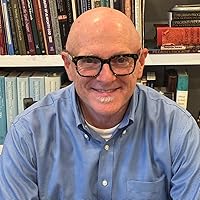
Martin E. Marty was an American religious scholar and historian known for his extensive work on religion in the United States. A Lutheran pastor before transitioning into academia, he became a leading voice in religious studies, particularly in the areas of American Protestantism, fundamentalism, and public religion. He was a longtime professor at the University of Chicago Divinity School, where he mentored numerous doctoral students and held the prestigious Fairfax M. Cone Distinguished Service Professorship. Marty wrote or edited a book for nearly every year of his academic career, producing influential works such as Righteous Empire: The Protestant Experience in America, which won the National Book Award, and the five-volume Fundamentalism Project, co-edited with R. Scott Appleby. He was a prolific columnist for The Christian Century and wrote extensively on religion's role in American public life. A recipient of numerous honors, including the National Humanities Medal and over 80 honorary doctorates, Marty also served as president of several academic societies and participated in U.S. presidential commissions. The Martin Marty Center for the Advanced Study of Religion at the University of Chicago was named in his honor.
500 years ago a monk challenged the religious power of the Catholic Church. I am always fascinated how some ideas become doctrine; why do some ideas gain followers while other ideas just fall away? This small book does an excellent job of explaining Luther's 95 Thesis (with an appendix of Luther's 95 Thesis). Really helped me understand what Martin Luther was trying to say and do.
I haven't given a one star review in a long time. Partly why I am doing it is because Dr. Martin Marty really misled people on what this book is about. You ever fall for the 'click bait' article that misleads you into what you are about to read and then after you get halfway through you are like 'why did they put this picture on the cover and why did they name it this?' Well that's what I felt as I read this book. This book took advantage of the fact that it was the 500 year anniversary of the Reformation, slapped Luther's face on it, and October 31, 1517 to make everybody think this was a short biography of Luther that focused around that significant event and how it changed the world. The book should have had a picture of the Second Vatican Council on it next to a picture of the Evangelical Lutheran Church in America denominational meeting. Dr. Martin Marty is a member of the ELCA. This is a mainline Protestant denomination that is theologically liberal. This book was a push towards ecumenicalism. It really had nothing to do with Martin Luther. I read the whole thing hoping it would get better but it didn't. It is very sad because Dr. Marty is an extremely respected theologian so I'm not sure why he would intentionally market this book in a way that misled people. Change the name to 'Ecumenicalism and the last 500 years of Roman Catholic & ELCA Church Relations' but please don't try to trick people.
Bleh. About a chapter on Luther and a few on Catholic-Lutheran ecumenism in recent decades. Reads like a weekend lecture converted to a book, with the 95 theses tacked on to push the book to 100 pages to justify publishing.
Repetitive and dull. The actual content of the book has little to do with the title. I was looking for a brief history of Luther, but what I got was a discussion of Lutheran and Catholic reconciliation.
An excellent book by acclaimed author and historian Martin Marty, this brief but focused work contemplates the history, meaning, challenges and impact of Martin Luther's 95 Theses. It provides a reflection on repentance (a central idea in the theses) and the role it has played, in various expressions, among religions and in the world since Luther. It is poetically written, and Marty elegantly weaves its themes and ideas, making this book as enjoyable as it is thought-provoking. "October 31, 1517" offers an approachable review of the history of what lies at the "heart" of the theses and how this idea has developed over half a millennium. The book asks the reader to reflect not only upon the role the theses play in inter-religious dialogue today, but also, subtly, what they ask of the reader him- or herself. (The appendix - a reprinting of the 95 theses - is a good idea, as it offers the chance to examine them immediately after reading Marty's insightful work; in this way, the theses come alive in new and interesting ways.)
What insight esteemed University of Chicago professor and church historian Martin E. Marty packs into less than 100 pages of text as he considers the events of 500 years ago and the implications for ecumenical dialogue over the past several decades and in the years to come. A wonderfully rich, insightful, helpful resource. Highly recommended.
I thought this book's perspective was unique and valuable. Whereas other books on the topic of the Reformation focus on glorifying Luther and the reforms he sparked, Marty talks in an unbiased way about Luther's influence. He celebrates the unity that has come in recent times between Catholics and Lutherans and focuses on bringing more understanding between these two branches of Christianity. While this book honors what Luther stood for, it primarily gets to the heart of Luther's main exhortation which is a life of repentance (beautifully phrased by the way!). This book has a lot packed in it for such a short volume (90 pages and then an appendix of Luther's 95 Thesis), and I found it very informative and thought provoking. Both Catholics, Lutherans, and all the denominations in between will learn something from this little book and be convicted towards the kind of whole-life-encompassing, inside-out repentance that Luther advocated as it relates to being one bride of Christ. Well-researched and graceful, Marty has a great perspective on a potentially explosive topic.
Martin Luther was a German professor of theology, composer, priest and monk. On October 31, 1517, Luther promulgated his 95 Theses. Martin Marty, a renown writer of Christian history gives us an amazing, detailed recounting of the day that changed the world. Most of us reading this book had perhaps thirty minute lecture on this topic back in This book brings that lecture to life in eleven chapters. I highly recommend it for those closely examining the split off from Christianity.
Not ashamed to admit that i did not understand most of the discourse in this book, having neither grown up Lutheran nor Catholic. It did, however, lead me to read the 95 Theses for the first time and understand that, like most religious events, the actual content is much more complex. I’m so excited to be thinking about these things again, and feeling thankful, especially with Reformation Day just around the corner.
I also am reminded of when I was studying abroad in Spain, I had a little crew of Spanish friends that I ran around with on Halloween and one of them dressed up like Martin Luther, had us walk down to the cathedral and made us film him while he fake nailed a copy of the 95 Theses to the ancient door of this ancient glorious cathedral in Seville.
Marty is a good writer, enjoyable to read. It's an attractive little volume as well. But I found no spiritual kinship with him as he attempted to use Luther and specifically a supposed fidelity to the first of his famous 95 Theses as a basis for a call to reconciliation of Catholics and Protestants. While I certainly do not believe the 95 Theses were written by the great reformer (they were written rather by a troubled but devoted Catholic monk), his legacy as a reformer is a recovery of the Gospel, while the ongoing legacy of the Catholic church is a corruption of that Gospel. While Protestantism has its sins and aberrations, to diminish the centrality of the Gospel of justification by God's grace alone through faith alone in order to seek a restoration of unity with a false church and a false gospel would be their greatest sin of all. Surely Marty and I have widely divergent viewpoints. But in my opinion, the best section of writing in this book is at the very end: the still-very-Catholic writings of a monk from 500 years ago--The 95 Theses. Though still not the least representative of the Evangelical faith, and unlike the rest of the book, they represent in history a step in the right direction--away from Rome and toward the Cross.
The book wasn't what I expected. It took the idea of repentance and hit everyone on how we have done a poor job doing it in the past and how the ecumenical movement is doing it now. It even questioned its own title suggesting that this wasn't a day that changed the world and maybe Luther was a little crazy. I didn't give it one star because it did have some decent material even if it didn't fit what it was selling by the cover.
Sadly this book was not what I was expecting. It was boring and seemed to be more about Lutheran and Catholic reconciliation (at least the latter portion) and wasn't really focusing completely on Martin Luther - it did in part, but not as much as I had hoped. It was a difficult book to read, even though it was a short read. All in all, I didn't like this book.
The forward and first few chapters were stimulating and insightful, but the rest was dense and seemed aimed at theologians rather than lay readers. still, with the 500th anniversary of the Reformation approaching, this slim book (more of a long essay) provided some interesting background on the impact of Luther's actions in 1517 and how he, without intending to, changed the world.
As we remember the 500th anniversary of the Reformation this year, many questions come to mind. What caused the split in Western Christendom 500 years ago? How did this "family quarrel" get far worse in the following centuries, and what has led to a phenomenal improvement in Roman Catholic-Lutheran relations since Vatican II? What areas of agreement do Lutherans and Roman Catholics hold in common -- and where does more work need to be done?
Dr. Marty, in this small but powerful book, reviews all of these questions -- and much more -- in an effort to bring a fuller understanding of all these issues by taking a fresh look at the document that started it all -- Martin Luther's 95 Theses (a translation of which is included at the back of the book). He finds the heart of Lutheran teaching -- in fact, the heart of ecumenical Christian teaching -- in the call to repentance (a change of heart) that echoes throughout the 95 Theses. This is a thoughtful and accessible work that will enlighten Christians of all denominations -- and people from other faith traditions -- about what the 500th anniversary is all about, where we've come from, and where we're headed.
I like Martin Marty a lot and I read his earlier biography of Martin Luther . I was expecting this to be a similar historical account. It wasn't. Martin Luther's nailing the 95 theses to the door, is a reference point for discussing ecumenical dialogue between Protestants and Catholics 500 years later. Still some helpful and insightful stuff here, Marty offers good analysis; however if you are expecting church history this book offers only a superficial analysis on the original event (except for the final chapter). I liked the book, but I think my favorite part was James Martin's forward where he reflects on how the Jesuit history related to Luther (SPOILER ALERT: not much at all).
I was really hoping this would be a piece written about The Day of the Theses, but it's not. I even read the other reviews that said it wasn't about the day! But I forged ahead anyways, excited about this Lutheran anniversary. He's my man! He's the guy who made a list of complaints (I love lists!) and angrily nailed it on the door of his dumbass neighbors. And got people talking about it! And CHANGED how people interacted with God. And reinvigorated their relationship with God.
This is a loose collection of essays and I'm still not entirely sure if there was a central theme. I think I'm going back to my dusty shelves and re-reading "Here I Stand."
As other reviewers have noted, this is not a book about Luther, the story behind the 95 Theses, or the Reformation. This is really a book about the rifts between Catholics and Lutherans. It's pretty good and I would not have picked it up if it were accurately titled The Doctrine of Repentance as a Stumbling Bock in Ecumenicism. But it was interesting, especially about how what seem to be arcane and esoteric sticking points of doctrine trickle down to practitioners. It can also be read in a single sitting.
I was expecting a more historical/biographical look at Luther and the events of the time surrounding the posting of the 95 Theses. This is more a theology study. Also focused a lot on the modern Christian church and moves toward reconciliation now 500 years after the start of the Reformation. It got a little heavy at times. Liked the writing style and I'm sure Reformation scholars and theologians can get a lot out of it. It just wasn't what I was expecting.
This book nearly jumped in my lap off the library shelf so noticeable was it for me. I have a passion for renaissance Christian books and love to read about Martin Luther. This was completely worth my time.
The premise was mainly on how Martin Luther’s main teaching that started it all was that we should be repenting daily- living a life of repentance. I fully agree and so does the religion I belong to.
Here are some quotes that were meaningful to me.
“Whether one should "confess" through a penance system or whether one should let or cause "repentance" to be the focus of life every day. Does it matter? Yet that call to repentance is what happened in an apparently overlookable day, October 31, 1517.”
“…[C]elebrating "grace," which is generally music to Catholic ears, they nevertheless heard attacks on "works" that seemed to witness to a God who was capricious, who did not honor the good to which Jesus commended them, and left the believers passive. No, said Lutherans in dialogue: watch us and listen to us: we celebrate human participation, but we want to see "works" as a consequence of belief in the works of God through believing humans and not a contributor to salvation itself, in which God is the sole agent.”
“How can our repentance effect change, since we cannot change the past? That past is done, finished, closed. What can be changed, and is changed in the act of repentance, and in an entire life of repentance, is one's attitude to the past as it affects the present. Believers today know that their ancestors often did terrible things. In a world of conflicts, many foreparents used power to build empires that led to the killing of millions of God's children in wars, the enslavement of others, the exploitation of the weak. But when believers are asked to repent, they cannot change the inherited past. They can only deal with the present, with today, which is why the confession of evil acts, thoughts, words, and ways is to occur daily.”
“From Luther's first thesis, that Jesus wills that our entire life be one of repentance, his focus connecting the formal word, repentance, to the formal word justification may seem to many of us to be a long stretch. But not to Luther, who saw "repentance" as a "change of heart" from sin to grace, as a joyful act of response to God's activity, a liberating turn.”
“"Catholic" is commonly said to mean "universal," a term from the Latin universalis. The equation is not quite exact. If "universal" is the adequate meaning of "catholic" why did the Latin church, which in its vernacular language had the word universalis, not use this word but rather borrowed from Greek the term katholikos instead? The etymological history of universalis is not in every detail clear; but it certainly involves the concepts of "one," and vertere, "turn." It suggests using a compass to make a circle around a central point. It is an inclusive concept in the sense that the circle includes everything within it. But by the same token it also excludes everything outside it. Universalis contains a subtle note of negativity. Katholikos does not. It is more unequivocally positive. It means simply "through the whole" or "throughout the-whole"-kata or kath, or through-or throughout-holos, whole, from the same Indo European roots as our English ‘whole.‘“
“Christian entities overcome their own pasts to view the other and the path to unity in a new way? Catholics stressed the role of human effort in cooperation with the Holy Spirit to realize different levels and stages of grace. Lutherans, upon hearing of "efforts" or "works" or "cooperation," were suspicious of and opposed to such approaches. For them, the whole process of justification was marked by divine grace. Luther was so emphatic about this that when he translated the Bible, he had even-scandalously, in Catholic eyes-inserted the word "alone," as in "faith alone," into Romans 1:17 (quoted above from the New Revised Standard Version) even though it was not there in the original Greek text.”
October 31, 1517: Martin Luther and the Day that Changed the World by Martin E. Marty
An unimpassioned lecture and a half-hearted review.
I was extremely disappointed by this book. It did not address much of the actual history of the date in the title. It addressed, ironically, the more obscure consequences of The Reformation. At first, I felt the book may be written to staunch Lutherans and Catholics as opposed to a casual reader looking into that background of this year's quincentenary, but as I read on to the end, it appeared more clearly that perhaps the author under valued the motives for The Reformation, calling Luther's theological discrepancy an "obscure issue". How pathetic! He reduces his actions to his youth, ignoring his life long passion and efforts to reform. Without getting into it fully, translation of the Latin Vulgate, thanks to Erasmus' translations, revealed a severe abuse of the true character of God and his heart and idea of true repentance. It seemed in this book, the other took eleven chapters repenting, in a Vulgate sense, or doing penance, in response to the reformation. I will be the last to say that I don't want to see a truly ecumenical spirit rise up amongst all Christians, but there are some issues that, like understanding our call to repentance as a change of heart rather than an act of punishment to ourselves that makes us right with God, which is the earliest point made in this book, before we can really take the biggest steps to total unity. I found it odd that the writer neglected the long lasting social effects of the reformation and rather focused on the small ecumenical moves the Lutheran and Catholic Churches have made towards on another in the last half century. In lieu of this, he repented for there ever having been a schism. It's great to go for unity, but not at the expense of the truth.
Did not finish this one What did i read? Failed in making this understandable. Read like a lot of introduction and build up to something that never came, missed the point.
And in reading through the 95 theses, I'm left kinda let down as it doesn't read as though Luther said to do away with indulgences but made provisions for them?? And then while calling indulgences out, there is the matter of the misplaced power he was giving to the Pope which doesn't jive with the 5 Solas.
Theses #: 1,49,63,64,95
pg 20 Catholic understanding...people who died had sinned, and these sins displease God the Judge and had to be "purged" before the resurrected person could experience the fullness of divine reward. "Purged?" Yes, there was in their teachings and grasp a situation and a place called purgatory. It was anything but a pleasant circumstance, but it had to occur in order to help even up the record of the believer and the divine Judge, who had to keep the standards and exact punishment. pg 21 goes on to describe it in more detail
pg 28 Luther who saw "repentance" as a "change of heart" from sin to grace, as a joyful act of response to God's activity, a liberating turn.
Awful. The book was not about Reformation history but rather about ecumenism between Lutherans and Catholics which has developed in the 20th/21st century. Marty seems to combine the first of Luther's 95 Theses concerning a Christian's life being characterised by continual repentance and the Apostle's Creed declaration of belief in "one, holy, catholic, and apostolic church" by saying that we should repent of our disunity and pursue the catholic (universal) church which Christ has established, which involves aforementioned ecumenism. This pursuit of unity is blatantly wrong because unity should not be pursued at the cost of Gospel fundamentals, and Rome follows a false Gospel. Any language that can accommodate both the Roman Catholic view and the Protestant view is language that is too vague. Any conservative Catholic would agree with me, but they would say that Protestantism presents a false Gospel. Marty also seems to push for or at least reference without rejection the idea of ordaining females and homosexuals into ministry on the basis that no explicit list of qualifications for ordination is given in Scripture. Paul's pastoral epistles apparently are not Scripture!
“Of course, the Catholics also believed in grace and faith. But they disagreed on how grace and faith were effected and experienced and what part the church to which they all belonged was to play.”
I put this book on my to-read shelf back in 2017, the 500th anniversary of the day when Martin Luther started a revolution. I am sure that when I saw that Marty wrote a book about the Reformation, I thought it would be worth reading. I was right, but for the wrong reasons.
Marty is a good writer, great even. He tackles religious subjects with rigor and makes them interesting to many. He has been communicating about religion for more than sixty years. I just didn’t know what he was writing about in this work. It turns out that the Reformation was only part of this.
A Catholic press published this book, so maybe it isn’t a surprise that Marty writes about the Catholic reaction to Martin Luther. I then discovered that Marty’s main topic was the subject of redemption. As part of the conversation about redemption, Marty covers the ecumenical conversation that has happened between the Catholic and Lutheran churches. It didn’t occur to me that this was a subject that I would want to know more about.
It turns out that I was slightly more interested in Lutheran/Catholic dialogues than I expected. I am not sorry that I picked this book up. I am just glad it wasn’t longer.
Honestly, rather bland. I appreciated the foreword more than the book itself. The first sentence of the foreword spoke to me:
"My favorite kind of writing is a short book on a big topic written by an expert." -James Martin
That's the genre of this book: ~120 pages, about the Reformation's impact on Christianity today. His belief was easily understandable as a Lutheran without an actual declaration of it. He continued to speak of repentance as his "key theme" throughout the entire book, and it became annoying to a point. He was obsessed with the definition of "repentance" and how the Reformation had modified or amplified the definition of repentance today.
I did enjoy reading all 95 of Luther's theses; they were the last chapter in the book. Either way, intriguing book and it was a good thought, but in my opinion poorly executed.
Reader be warned, this is not a historical review of the Reformation. It’s an ecumenical book published by a Benedictine monastic press calling for restoration between Lutherans and Catholics. The book’s thesis is literally the opposite of Luther’s Theses of October 31st 1517.
I don’t believe in not finishing books. This one I got for free and it sat on my shelf for a while. It will return to the nearest free-book table, if not the trash.
The author ended his misguided work with a call to what he called, “repentance.” Specifically, he called for repentance to restore the division between Protestants and Catholics. Like Luther, the author should have been more concerned about the repentance needed to restore the division between a Holy God and unholy man—a division that can only be restored by faith alone in the justification brought by One Mediator, Jesus Christ.
This book is very short—around 90 pages. One might assume it is about Luther, his life, and the Reformation writ large. Disappointingly not the case. The book deals more with the relationship between the Catholic Church and the Lutheran Church leading up to its current state of affairs. While the tenants that led to the Reformation are tangentially discussed as it relates to the current relationship between the two churches, it isn’t very through and barely spends any time on the actual Reformation.
If one is looking for a book about the relationship between Catholics and Lutherans, this is a good book. If you want a book about the Reformation as the title implies—this is not the book for you, hence the low star score.
Listed in the appendix are the subject of the book, the ninety-five theses of Martin Luther. Something I was hoping to read and have a copy of. The rest of the book was a study and history of trying to get Catholics and Lutherans to bind together again without insulting themselves too much. I was hoping for an analysis of the individual theses themselves. It may be Christian charity alone which allowed the third star, imagine putting the subject of the book in the appendix only. Good grief...
I was disappointed in this -- I like the idea, a very short book (114 pages), written by an expert about a specific subject. But the author didn't seem to have a clear idea what he was writing ABOUT -- repentance seemed to be the big theme, also the efforts made by Catholic and Lutheran churches recently for ecumenical rapport. Didn't really seem to be about the 95 theses. Also very wordy; editing could have helped with word choice.