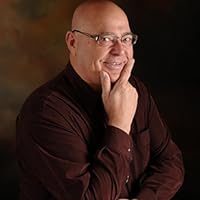
Edward Elmer Smith (also E.E. Smith, E.E. Smith, Ph.D., E.E. “Doc” Smith, Doc Smith, “Skylark” Smith, or—to his family—Ted), was an American food engineer (specializing in doughnut and pastry mixes) and an early science fiction author, best known for the Lensman and Skylark series. He is sometimes called the father of space opera.
I cut my teeth on Science fiction by reading Smith's four books onboard ship, while off duty. While the copyright for the series date back to the late 1920s and 1930s I found then entertaining. A great escape for the tedium of shipboard life. And by the way the third book is SKYLARK OF VALERON (Not Baleron, I'm looking at the cover of my copy)
I realize that this is supposed to be one of the 'original' works of Space Opera, and it's old. But old doesn't have to mean tepid, and that the thing was first on the scene doesn't make the cliches riddling the work any less galling to me as a reader.
If Skylark is part of the movement that set Science Fiction rolling, Skylark is also one of the reasons SF had a reputation as crap. Hackneyed plots, two dimensional characters, casual attempts at genocide, some very questionable theories about the universality of nudism in an infinity of worlds occupied by human beings - and human beings who are, in some cases, described specifically as being caucasian in what feels like some kind of budding racial issue, a focus on 'science' and 'evolution' and the protagonists being the pinnacle of both 'science' and 'evolution', and epic battles the likes of which man has never seen ended in an instant because Dick Seaton, protagonist of power, showed up and flipped a switch on his science box.
I read it. I was, in some places, entertained. I avoided actually throwing this book at a wall. But for an author whose work is so frequently regarded as the wellspring from which Space Opera sprung, this annoys the hell out of me. It's a deep, dark pit of what feels like unimaginative recycling of itself over and over across the course of four books.
If medievalish secondary world fantasy sprung from Tolkien's work, all of it sub-par in comparison, I dub Doc Smith the Anti-Tolkien, for all that has followed him has been far, far better.
I like to read the "classics" of the sci-fi genre. And I don't mean the "big 3" or Heinlein, Asimov and Clarke (I've already read most of their stuff). I mean what came before, in the 20s-40s, authors like Stapledon, Gernsback, and van Vogt.
This is an omnibus from the Science Fiction Book Club (sadly no longer around) that collects: - **The Skylark of Space**: Serialized in _Amazing Stories_ from **August to October 1928**. - **Skylark Three**: Serialized in _Amazing Stories_ from **August to October 1930**. - **Skylark of Valeron**: Serialized in _Astounding Stories_ from **August 1934 to February 1935**. - **Skylark DuQuesne**: Serialized in _If_ from **June to October 1965**.
This is my first time reading EE "Doc" Smith, but I've known about him for a long time. Sadly this did not age well. This is not deep philosophical reading, or even hard science fiction, it is more of an adventure story within technobabble throughout to make it sound scientific. It strikes me as a cross between Heinlein's juveniles and the black & white sci-fi video serials of the 30s. I could easily see Buster Crabbe playing Dick Seaton. It is definitely a piece of it's time; - out-of-date science; the ether, faster the light travel (without the plot devices of "warp"). I mean partly this is OK since at the time things like the General Theory, and Quantum Mechanics were still be explored; definitely not settled. But as a trained engineer I found it took me out of the story a bit. - the characterization of the women (not unique to Smith), The two main male character are the heroes, and they have their ladies with them on the adventure. But the ladies are really just there as window dressing, saying encouraging things to their beaus. Not characters in their own right, even merely just love interests. - the societal themes of higher and lower races/species based on brain size, evolutionary progress being directional, hints of eugenics, etc. Very 1930s. And the "white saviour" trope where Dick Seaton keeps being appointed "warlord" of this or that planet.
I did manage to finish the first book: Skylark of Space, but only got half way through Skylark Three before I gave up. I just wasn't enjoying it, and for this kind of reading enjoyment is what I'm shooting at.
(FYI I tend to only review one book per series, unless I want to change my scoring by 0.50 or more of a star. -- I tend not to read reviews until after I read a book, so I go in with an open mind.)
3.5*
First time read the author's work?: No
Will you be reading more?: Yes
Would you recommend?: Yes
------------ How I rate Stars: 5* = I loved (must read all I can find by the author) 4* = I really enjoyed (got to read all the series and try other books by the author). 3* = I enjoyed (I will continue to read the series) or 3* = Good book just not my thing (I realised I don't like the genre or picked up a kids book to review in error.)
All of the above scores means I would recommend them! - 2* = it was okay (I might give the next book in the series a try, to see if that was better IMHO.) 1* = Disliked
Note: adding these basic 'reviews' after finding out that some people see the stars differently than I do - hoping this clarifies how I feel about the book. :-)
I first read the Skylark series on a road trip with my family, back in the 60s. I loved the amazing, galaxy-spanning vistas and exciting action of the stories back then. I just recently completed a reread of the series in this omnibus edition, and still enjoyed it. Yes, its a product of its time. The protagonists' and antagonists are all male and the women are there mainly as the hero's love interests. Still, I think it avoids the extremes that make some older books so hard to read these days. YMMV.
If you want to explore the roots of science fiction and space opera, then I think this series in not a bad place to start.
Whilst the lensmen series by the author is still basically readable, I'm afraid the same can not be said about this earlier series. A curiosity only for those wanting to understand the dawn time of American SF.
I didn't get very far in the book, because I didn't read the first two in the series. Based on what I've read thus far, it's not high on my bucket list to read the entire series.