A revolutionary examination of why we age, what it means for our health, and how we just might be able to fight it.
In Cracking the Aging Code, theoretical biologist Josh Mitteldorf and award-winning writer and ecological philosopher Dorion Sagan reveal that evolution and aging are even more complex and breathtaking than we originally thought. Using meticulous multidisciplinary science, as well as reviewing the history of our understanding about evolution, this book makes the case that aging is not something that “just happens,” nor is it the result of wear and tear or a genetic inevitability. Rather, aging has a fascinating evolutionary purpose: to stabilize populations and ecosystems, which are ever-threatened by cyclic swings that can lead to extinction.
When a population grows too fast it can put itself at risk of a wholesale wipeout. Aging has evolved to help us adjust our growth in a sustainable fashion as well as prevent an ecological crisis from starvation, predation, pollution, or infection.
This dynamic new understanding of aging is provocative, entertaining, and pioneering, and will challenge the way we understand aging, death, and just what makes us human.
I was generous with 2 stars. This entire book is simply trying to prove (to the public, or the science community, I couldn't tell where it was aimed) that group selection is the main culprit behind why we are programmed to age. They do this by attacking the viewpoint of every single other theory accepted by science up to this point. Is somebody detesting the 'Disposable Soma Theory' from 92 separate approaches something that may hold your interest? Would you mind hearing the term 'Neo-Darwinian theory' 492 times? If so this book is for you. But that's not what I was looking for. And the cherry on top was the fact that the narrator of the audio book sounds like Spicoli from Fast Times Ridgemont High, making things even less bearable. Would not recommend this to a friend.
This polemical book does more disservice than service overall.
The authors have three agendas: - sow seeds against theoretical evolutionary sciences to promote their favourite group selection theories - link group selection conclusions to the concept of ageing as their own revolutionary idea - promote what they deem as the best practical methods to slow down the ageing.
On the first count, the authors are actually fighting the self-created strawmen to denounce professional scientists while establishing the own claims of some sort of discoverers. The authors destroy the so-called selfish gene theory: the counterarguments are well presented and worth reading although they severally misrepresent the actual theory.
Every serious "selfish gene" theory protagonists know that a gene that leads to excessively predatory behaviour is self-destructive. As a result, these theorists never claim that successful "selfish" gene are genes that try to devour everything available without concern for the long-term. Almost all the examples used by the authors to debunk this theory have been used to solidify the theory for decades. The main difference is that the proponents of "selfish gene theory" never mean the term "selfish" in the way the authors denote it. The authors may feel cheated that their adversaries distort the meaning of "selfish" in somewhat self-serving ways but that's why:
- it pays to read in detail what you are refuting particularly when something established by career professionals, experts over long periods - stay away from completely human language terms and forms to describe intricate sciences.
When the authors scoff at the use of formal constructs (particularly math) in the development of evolutionary sciences, they lay bare their own lack of preparations rather than provide any genuine critics. There is enough wrong with the selfish gene theory or many mathematical models in genetics, but the authors' criticisms are too naive to really point to any of the genuine points.
The authors' never truly expand on the real group selection theory. They try to show that evolution favours those who live for some larger purpose - for the survival of the group, if not of the entire biosphere or may be bigger. The authors, while dissing the structured knowledge, feel no need to provide the proximate biochemical or genetical factors that lead to such behaviour. The Group Selection theory is asserted with the authority of a lawyer or a polemicist rather than a scientist.
The book deteriorates much more while linking the group selection to the ageing and taking a completely disjointed turn to discuss the anti-ageing solutions in real life based on authors' personal experiences.
There is a lot of good information in between. The definition of ageing or senescence is without a doubt the biggest highlight, in my viewpoint. Even the concept of ageing as an evolutionary necessity is well argued in many ways (even though this reviewer would maintain that a good argument does not make a scientifically proven, valid theory).
Why does eating too much food make you die earlier? Why does intermittent fasting make you live longer? This book answers the evolutionary answer to the above two questions, as well as shows you how to live longer (although you may not want to with a society full of more and more spiteful mutations [see Sarraf et al. 2020] to come).
The answer is this: Nature (led by God or not) has programmed humans to live a set length, although there are differences in this set length in individuals and groups. Some species (e.g. some trees) can literally live forever if they did not get taken down by random events: they are amortal. When humans eat too little, we live longer because Nature "sees" a person starving, and says "Oh, this guy's species is going to die, so I am going to let this individual live longer". This would maintain the homeostatic population size in a Darwinian environment. On the other hand, if someone sits on the couch all day and eats stupidly large amounts of food, Nature will say, "This guy's species is overpopulating! If I don't kill this one fast enough, the species is going to multiply rapidly and crash!"
In other words, we are evolved (via group selection) to not have a mass extinction via over-population, and one of the measures to prevent this is that individuals' lifespan changes in relation to their consumption of food. By "destroying" your body — destroying microfibers of bone and muscle via exercise — you set off signals in your body that act as if the species is going to die out, meaning that it makes you, the individual, live longer. Pretty neat idea, I think.
The authors try too hard to rewrite natural selection. Quite painful to read the first half of the book. I considered to leave the book unfinished but quite happy I skipped many pages instead.
All in all, I only enjoyed the bits about calorie-restrictions and telomerase.
This entire review has been hidden because of spoilers.
Not a book about anti-aging tips, but an argument opposing the neo-Darwin focus on the individual in evolution--survival of the fittest. Turns out there is a "Black Queen" gene built into living organisms that assures species survival by aging out and killing the individual. Makes sense. Cooperation, not competition, being the key to success.
Lots of information about the foundations of evolution theory, genetic science, scientific biases and experimental results on aging that are counter-intuitive but compelling. In a nutshell if you want to prolong lifespan, you should probably take a daily dose of aspirin and vitamin D for starters. More supplements are also entertained in the last couple of chapters.
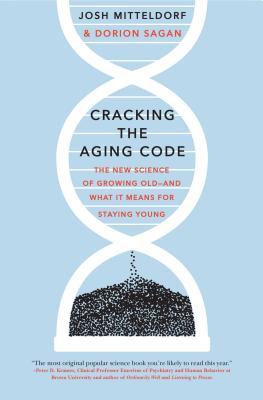
For a book dedicated to cracking the aging code, it sure does spend a lot of time denying the sciences of modern evolution, which he repeatedly undermines as “Neo Darwinian evolution”, a word which he will not hesitate to bring up a million times, which is funny because Josh Mitteldorf is apparently an evolutionary biologist in aging. All the while implying that biologists are a hivemind which do not know what they are talking about since they are humans therefore their conclusions must be flawed, and this hivemind of biologists are trying to suppress the freedom of speech of anyone who dares disagree with them. He gets a lot of information right as well as shares new information which I didn’t know, a lot related to how animals/plants age in respect to their reproduction, as well as offers a new perspective on how single celled organisms “age”. I loved that section of the book, which is concentrated in chapter 2. He also shares a lot of biological information which might be new to many readers, but is common knowledge to undergraduate biology students. Still, his trying to undermine the modern theory of evolution does not make sense despite of the information he brings up. He relies a lot on logic, which logic isn’t necessarily factual. If you are familiar with evolution down to the molecular level, you might easily smell his errors from miles away. But to the layman, his strong use of logic can easily appeal to them, especially since he presents the information as “I know something the scientists think is blasphemy!”. The front cover quote “The most original popular science book you’re likely to read this year” perfectly highlights that this is pop science, made for the layman. He brings up genes involved in cell suicide, that’s great. But he also brings up group evolution, which is a concept he’s trying way too hard to push by denying basic evolution, and the more you read about it, the more you realize he’s just talking about “energy flow”, a concept in ecology. Let’s say that there is an algal bloom, where algae have reproduced so much that they’re blocking light from reaching the water, trapping wastes, blocking oxygen, literally killing off fish, is it some group genetics that will kill them off or is it going to be the imbalance of the ecosystem? He brings up a similar example with Locusts, where they bred so much they lead to their own demise, was that their own genes triggered to kill them off or was it because the ecosystem was disrupted? Sure, humans can make babies, too many and they will use up all our recourses, take up a lot of space and energy. It’s actually not natural for humans to have a lot of babies, we live kinda long lives already, a lot of time spent for us is time growing, aka consuming a lot of energy, then as adults, the time is spent regenerating, getting stronger, or withering away if you’re a gluttonous couch potato. Also, since women are brought up several times about how we have a limited time frame to make kids, the time frame being from when we are teenagers, ie when our body isn’t even fully developed, to our twenties, which is alright, at 30 though, the body is at its prime and most mature, and after that do we start losing our fertility, not rapidly, it’s a decade, at 40, the chances of having a child is significantly extremely low, then at 50 is where many women hit menopause. Ah, so why don’t women die when they are no longer fertile, they are useless to reproduction! No! They live long enough because evolutionarily speaking, they live long to become grandmothers! Men on the other hand, they’re still fertile, so it makes sense that they’re still alive as they only slowly lose fertility as they age, but nowhere is it mentioned that the older a man is, the lower quality their sperm is as it has a higher amount of genetic mutations, so they are more likely to not only pass on genetic mutations, (which genetic mutations are mostly harmful according to the writer), but since genetic mutations are passed down, they are likely to impact a wider generation of people. So writer, riddle me this- why don’t men die after their sperm becomes of a lower quality as they age? Where’s the “for the good” of the species argument now? Hold up a minute, all this talk, and yet where is the mention of cracking the code of aging? At the beginning of the book, the arthur hooks the reader with basic knowledge on living a longer life, exercise, diet, extreme temperatures, and a low level of radiation, he explains it, which was fun to read, but that’s about it… Until chapter 9 and 10, where he goes over the potential ways in which humans could increase longetivity, but makes it clear that it’s just his own guesswork based on studies and basic concepts in biology (which again, relies more on logic rather than how biology actually works). It’s as good as any guess a layman could come up with.
Extensive Approach to Refresh Our Perspective on Aging - “Cracking the Aging Code” uses historical research to recent studies as well as wider references to provide a fresh perspective on aging or “senescence” as termed by scientists.
Initially, I heard Josh Mitteldorf on a public radio program and was impressed with the way he spoke about the book. He seemed to offer a wealth of information on how aging has been studied and for understanding the life cycle. On obtaining the book, I was intrigued by the dedication page and the coauthors’ intent to go to public to help address the current thinking in the aging field.
Put simply, the authors present major views on aging related to mortality “in the wild” gradually addressed by “selfish genes,” or as a tradeoff between longevity and fertility versus a third view of aging as a mechanism for population control and species survival (opportunities for progeny).
After a helpful Preface, Prologue, and Introduction that conveys the authors’ intent and outlines the book, Chapters 1-8 are about theories of aging and the authors’ case for the third view (60+%). Chapters 9-11 are about dealing with aging (20+%). Finally, an Epilogue summarizes and provides perspective.
My favorite parts included the figures and aspects of the book dealing with the ecological aspects of aging. I also particularly liked references to use of more sophisticated computer modeling as well as presentation of individual stories and wider forces. Explanation of scientific information geared for the layman as well references to literature assisted in informing and enlightening.
More specifically, Figure 1 on page 67 shows ways animal and plant life spans and fertility periods differ. Graphs for12 species ranging from humans to viburnum shrubs illustrate how fertility rise and survival decline varies widely. Figure 2 has graphs depicting ways the fastest breeding rabbits take a one-way trip to extinction; they illustrate the reproduction rate, decline in survival with decreased environment/resource support. In this manner, evolution tries to find an appropriate degree of reproduction to optimize food, water, and other requirements. Coverage of science from Darwin and Mendel to Watson and Crick and beyond helps provide explanatory text. References such as those to Oscar Wilde’s novel “The Picture of Dorian Gray” to Lewis Carol’s “Alice in Wonderland” and the Red Queen (of running faster to stay in place), Bob Fosse’s musical “All That Jazz” with its stages, Big Joe Turner’s blues about flipping, flopping and dying, and the poetry of death by Emily Dickinson offer color commentary.
To broaden one’s perspective on aging and for an example of a work that effectively combines science, literature and other disciplines to make its case see “Cracking the Aging Code.”
In perhaps the last book I'll read for 2022, Mitteldorf and Sagan wrote about their hypothesis for why four billion years of evolution allowed organisms to grow old and die, and in doing so reminded me that the best popular science books are those that are not merely mechanistic and descriptive, but first and foremost, philosophical.
⭐⭐⭐⭐
The first 80% of this book expounded on the authors' view of aging as an evolved mechanism for controlling rampant population growth and ensuring the maintenance of stable ecosystems. In other words, aging is not a failure of biology, but an essential tool in nature's toolkit. The most fascinating thing about this part of the book concerns the diversity of aging patterns in nature. It turns out that not all organisms age like humans, dogs, or roundworms. Some organisms, like hydras and hermit crabs, do not age at all, while some, like tortoises and oak trees, age in reverse! (Aging here is defined as an increase in the probability of dying with each additional year of life.)
The one thing I didn't like about this book was that after convincing me that aging is a hedge against rampant, destructive population growth, it spent one chapter on how humans can live longer, using studies on technologies and molecules still in their infancy. The authors, to be fair, acknowledged this contradiction, but their justification wasn't convincing.
Every now and then, the book introduced snippets of mythology that shed light on nature and the human condition. It was interesting to read about the origins of "semelparity" in the Greek myth of Semele and Zeus, or the tragic love story of the Titan Eos and the mortal Tithonus suggesting at the inevitability of death and decay. These reminded me of one of the benefits of reading great works of fiction: they allow us to see the events of our own lives with greater understanding.
An interesting in depth look into many aging theories, some of which may not be of interest to the causal reader, but none the less explain years and centuries on the topic of aging. Some of the theories seem to contradict each other so the science is not clear in some cases. There are a few strong arguments on how to age well or better and living longer but this book does not suggest there is a holy grail. Some space is devoted to research that may open up extending our lives but that is probably not too likely in the future to change a lot of things.
I don't remember where I first heard the idea of aging being a evolutionary trait but it was something that stuck with me for a while. I enjoyed this book because it hit on a topic I was already interested in. I don't think I'm smart enough to refute any of the ideas, there was a ton of information, and in the end there was so much I almost felt like I skimmed it rather than reading it all. Even thought it was dense I did enjoy it and if the topic ever gets on my mind again I may reread it.
Evolution and aging are both journeys. One is a billion year process. The other each of us experiences in a lifetime. I’ve never read a more interesting and complete overview of the history of evolution and the main theories in the field. You’ll also learn practical recommendations to ward off aging by ten years. Sagan’s writing dances. Complex topics are smoothed into understandable messaging about healthy aging.
I do recommend skimming the first 30%, which is a lot of academic buildup to making the main points later in the book. I love that he addresses WHY we age. And of course, an expert's view on what's most likely to slow one's own aging, based on what we know today. Fascinating.
This book had a lot of repetitions and could have been substantially shorter without diluting the message. And I wonder how much of the attack on "neo-darwinians" is a straw man.
Still, the points made are very strong: That aging is a programmed feature shaped by group selection.
This is a message that differ quite a bit from the consensus nowadays and I hope it gets more widely shared.
The big issue I have with Josh is that, for one, he looks rather old for his age. Second, I often see him make claims that are not really backed the way he claims they are. Third, he's rather unoriginal.
Probably the best book on why we age. Highlights the inherent altruistic cellular motivation to stopping repair in times of abundance to ensure that society renews. No wonder the only methods that work in slowing aging simulate resource scarcity (eg fasting).
Not the easiest book to read for a review. I got this fascinating book from Goodreads in return for an honest review. I kept putting it down do do other things this summer. Perhaps the busiest summer that I can remember in past years. When winter rolls around I will revisit this book and read it with more purpose. This does not mean that I did not like the book. When you are in your sixties and contemplating the last quarter of your life, a book such as this can be sobering. If this were just a textbook I would never have finished it. The content of this book was made readable, and oftentimes humorous, by Mitteldorf and Sagan. When you put these two men together you have far more than something you might be forced to read in a college level biology class. In truth, this book would be more suitable to ecology and philosophy courses. What I appreciated most about this book is that I didn't just come away with a smattering of facts that I might soon forget the half of, but had instead a desire to ask my own questions about life itself.
Written to enable a person who isn't a scientist to understand aging, Josh Mitteldorf's and Dorion Sagan's book states that aging "...has evolved as part of nature's four-billion-year construction kit." It's no secret that we're living longer, healthier lives. The authors stress the importance of an exercise program that fits one's temperament. Also, they emphasize caloric restriction and offer recipes at FMDrecipes.org. The information presented will not resonate with every reader, but I found it fascinating.
I received this book from Goodreads First Reads in exchange for an honest review...
Interesting book, has some unique information that might impress, surprise, or bore you. I found this book to be on the boring end and lost interest less than half-way through. It was kind of difficult to keep up with, as it jumped around a lot. I think I gave it so few stars because I felt like the book was poorly organized/put-together.
Before ChatGPT, people had to make their own slop. The authors of this book have produced some grade-A artisanal slop. The writing is sloppy. The reasoning is sloppy. The structure is sloppy. The history is sloppy. I’m not going to go into detail here, but if you’re interested in reading about just a few of the many ways the authors get the biology of aging massively wrong, follow the link below.
This is definitely not your typical research style book. The writing style is engaging, funny and filled with interesting facts. I would stop and read out loud to my family, some of the interesting tidbits contained within. This is actually a fun book to read while providing insight into the ageing process. I received this book as Goodreads Giveaway.
The authors argue that natural selection builds aging into a species to prevent mass extinctions and to ensure the diversity needed to survive in a changing environment. Nevertheless, there are actions we can take "to buy some more time"; and further research will provide more options. For now, restrict calories, exercise, take fish oil and, by all means, protect the length of your telomeres!
Interesting book! It puts together all potential theories of evolution and compares them. Since this book has many biological terms, it is a bit difficult to keep track of them as you read. But the book full of interesting facts and experiments. Overall I had good time reading this book.
Understanding the in-depth concepts of aging supports better health. Cracking the Aging Code has given me a keen awareness of my personal self and I feel healthier because of it. Awesome!